
Search
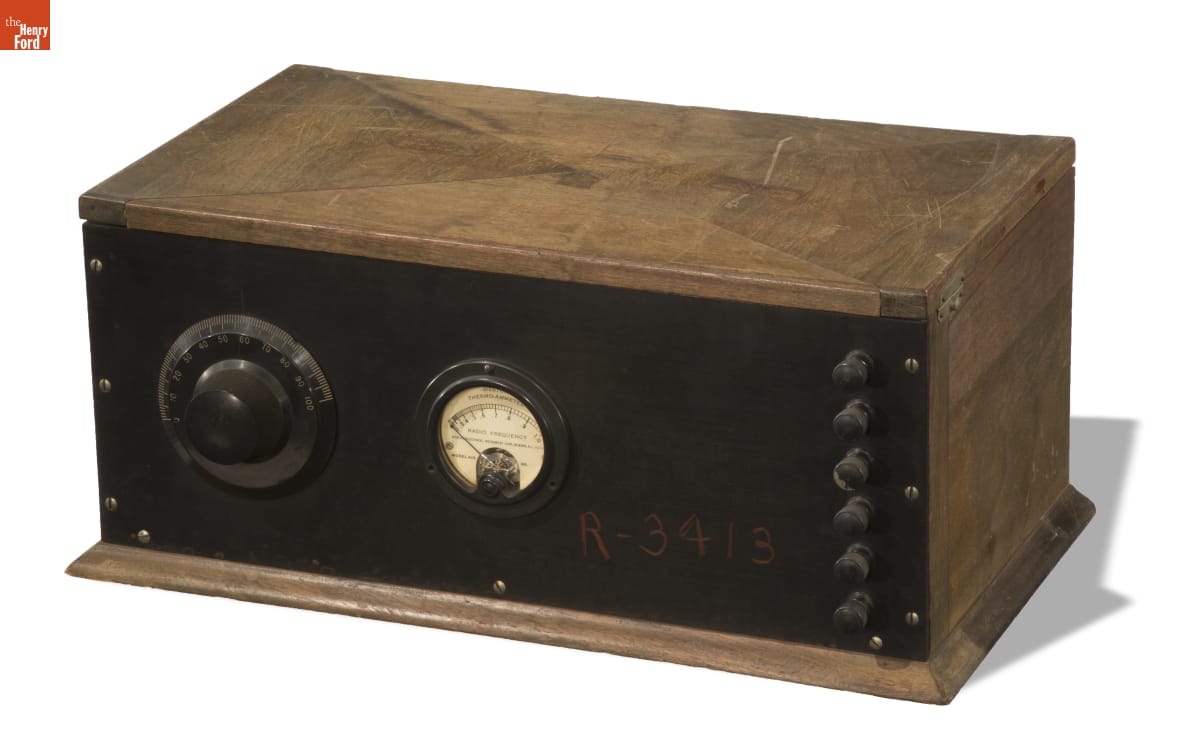
- Radio Beacon Transmitter, Patented by Ford Motor Company, 1928 - In 1926, Ford Motor Company commenced regular freighting between Dearborn, Chicago and Lansing airports using their Tri-Motor aircraft. Eugene S. Donovan, a Ford radio engineer, invented this radio beacon. When an aircraft was safely over its landing destination, it communicated a signal to the pilot. Useful in inclement weather, these safety devices were adopted in airports across the nation.
- 1926-1927
- Collections - Artifact
Radio Beacon Transmitter, Patented by Ford Motor Company, 1928
In 1926, Ford Motor Company commenced regular freighting between Dearborn, Chicago and Lansing airports using their Tri-Motor aircraft. Eugene S. Donovan, a Ford radio engineer, invented this radio beacon. When an aircraft was safely over its landing destination, it communicated a signal to the pilot. Useful in inclement weather, these safety devices were adopted in airports across the nation.
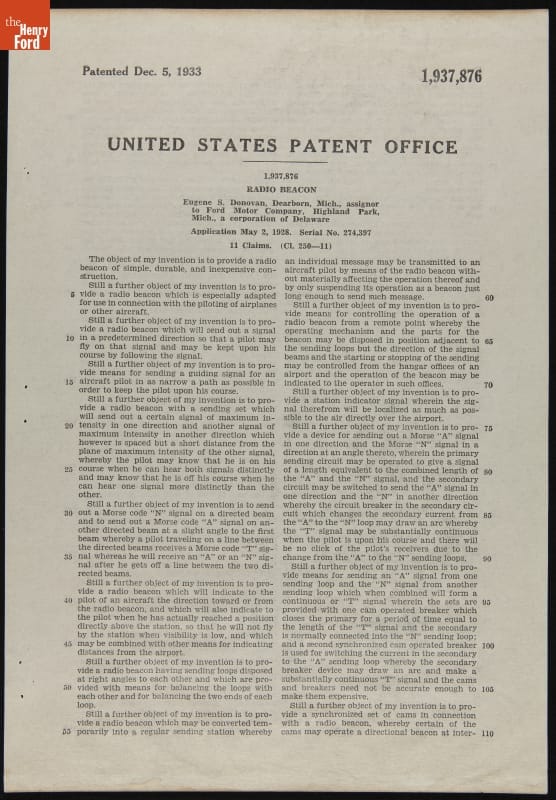
- Radio Beacon Patent, #1,937,876, Granted December 5, 1933 - The radio beacon may be Henry Ford's most important contribution to aviation. Early pilots depended on landmarks, preventing reliable navigation in bad weather. Ford's engineers developed a radio beacon that simultaneously transmitted the Morse code letter "A" (dot-dash) in one direction and the letter "N" (dash-dot) in another. The pilot steered until the separate signals merged into a steady hum.
- December 05, 1933
- Collections - Artifact
Radio Beacon Patent, #1,937,876, Granted December 5, 1933
The radio beacon may be Henry Ford's most important contribution to aviation. Early pilots depended on landmarks, preventing reliable navigation in bad weather. Ford's engineers developed a radio beacon that simultaneously transmitted the Morse code letter "A" (dot-dash) in one direction and the letter "N" (dash-dot) in another. The pilot steered until the separate signals merged into a steady hum.
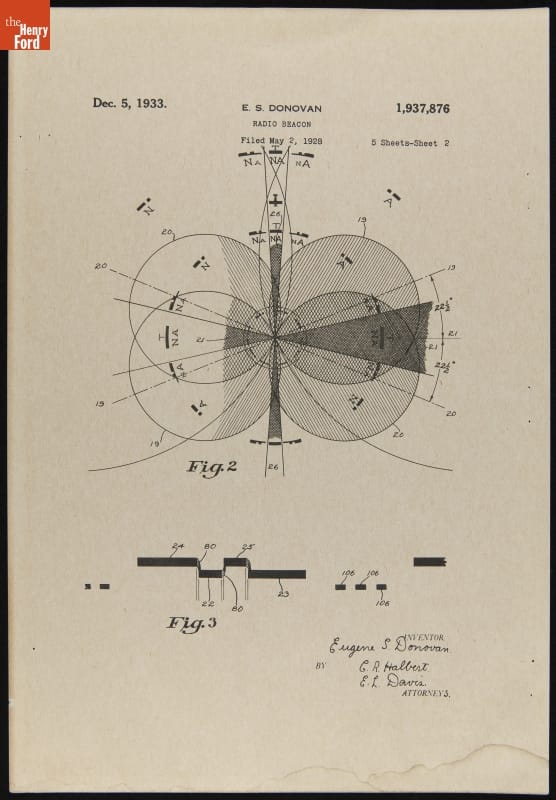
- Diagram for Radio Beacon Patent, #1,937,876, Granted December 5, 1933 - The radio beacon may be Henry Ford's most important contribution to aviation. Early pilots depended on landmarks, preventing reliable navigation in bad weather. Ford's engineers developed a radio beacon that simultaneously transmitted the Morse code letter "A" (dot-dash) in one direction and the letter "N" (dash-dot) in another. The pilot steered until the separate signals merged into a steady hum.
- December 05, 1933
- Collections - Artifact
Diagram for Radio Beacon Patent, #1,937,876, Granted December 5, 1933
The radio beacon may be Henry Ford's most important contribution to aviation. Early pilots depended on landmarks, preventing reliable navigation in bad weather. Ford's engineers developed a radio beacon that simultaneously transmitted the Morse code letter "A" (dot-dash) in one direction and the letter "N" (dash-dot) in another. The pilot steered until the separate signals merged into a steady hum.
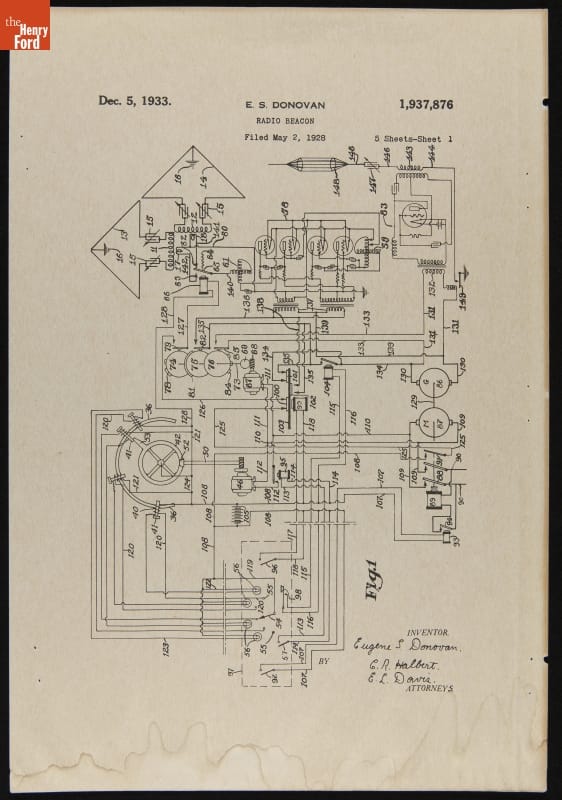
- Diagram for Radio Beacon Patent, #1,937,876, Granted December 5, 1933 - The radio beacon may be Henry Ford's most important contribution to aviation. Early pilots depended on landmarks, preventing reliable navigation in bad weather. Ford's engineers developed a radio beacon that simultaneously transmitted the Morse code letter "A" (dot-dash) in one direction and the letter "N" (dash-dot) in another. The pilot steered until the separate signals merged into a steady hum.
- December 05, 1933
- Collections - Artifact
Diagram for Radio Beacon Patent, #1,937,876, Granted December 5, 1933
The radio beacon may be Henry Ford's most important contribution to aviation. Early pilots depended on landmarks, preventing reliable navigation in bad weather. Ford's engineers developed a radio beacon that simultaneously transmitted the Morse code letter "A" (dot-dash) in one direction and the letter "N" (dash-dot) in another. The pilot steered until the separate signals merged into a steady hum.
- Diagrams for Radio Beacon Patent, #1,937,876, Granted December 5, 1933 - The radio beacon may be Henry Ford's most important contribution to aviation. Early pilots depended on landmarks, preventing reliable navigation in bad weather. Ford's engineers developed a radio beacon that simultaneously transmitted the Morse code letter "A" (dot-dash) in one direction and the letter "N" (dash-dot) in another. The pilot steered until the separate signals merged into a steady hum.
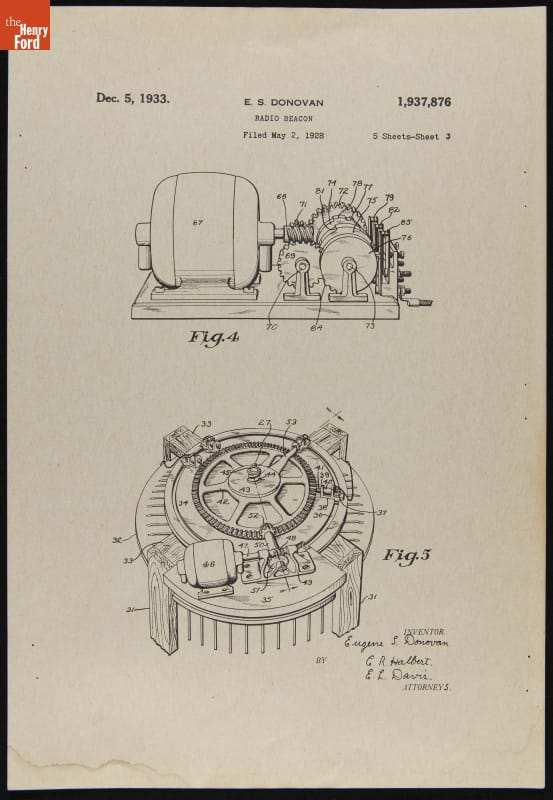
- December 05, 1933
- Collections - Artifact
Diagrams for Radio Beacon Patent, #1,937,876, Granted December 5, 1933
The radio beacon may be Henry Ford's most important contribution to aviation. Early pilots depended on landmarks, preventing reliable navigation in bad weather. Ford's engineers developed a radio beacon that simultaneously transmitted the Morse code letter "A" (dot-dash) in one direction and the letter "N" (dash-dot) in another. The pilot steered until the separate signals merged into a steady hum.
- Diagrams for Radio Beacon Patent, #1,937,876, Granted December 5, 1933 - The radio beacon may be Henry Ford's most important contribution to aviation. Early pilots depended on landmarks, preventing reliable navigation in bad weather. Ford's engineers developed a radio beacon that simultaneously transmitted the Morse code letter "A" (dot-dash) in one direction and the letter "N" (dash-dot) in another. The pilot steered until the separate signals merged into a steady hum.
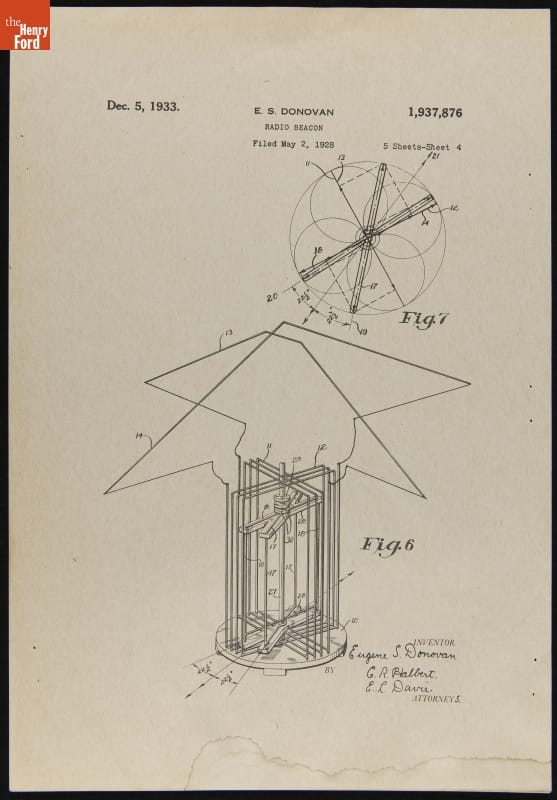
- December 05, 1933
- Collections - Artifact
Diagrams for Radio Beacon Patent, #1,937,876, Granted December 5, 1933
The radio beacon may be Henry Ford's most important contribution to aviation. Early pilots depended on landmarks, preventing reliable navigation in bad weather. Ford's engineers developed a radio beacon that simultaneously transmitted the Morse code letter "A" (dot-dash) in one direction and the letter "N" (dash-dot) in another. The pilot steered until the separate signals merged into a steady hum.
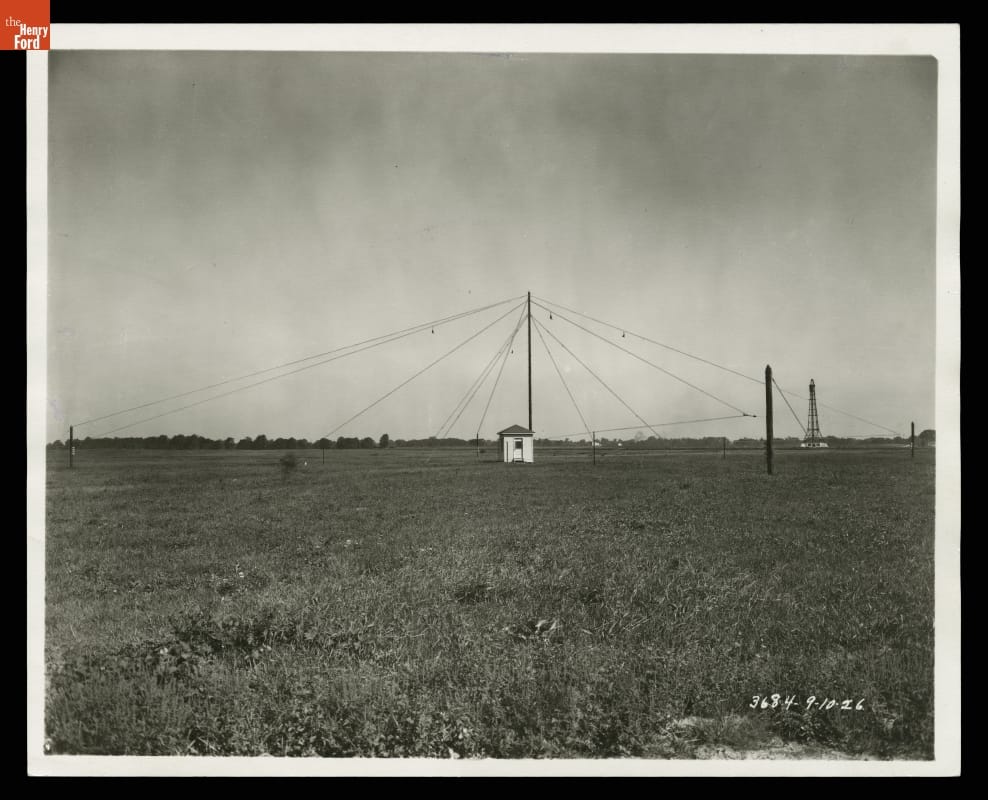
- Ford Radio Beacon Station - Early pilots depended on landmarks, preventing reliable navigation in bad weather. Henry Ford's engineers developed a radio beacon that simultaneously transmitted two Morse code letters, allowing pilots to steer until the separate signals merged into a steady hum. The original beacon station at Ford Airport (shown here) was removed in 1933 and is now on display inside the museum.
- October 31, 2016
- Collections - Set
Ford Radio Beacon Station
Early pilots depended on landmarks, preventing reliable navigation in bad weather. Henry Ford's engineers developed a radio beacon that simultaneously transmitted two Morse code letters, allowing pilots to steer until the separate signals merged into a steady hum. The original beacon station at Ford Airport (shown here) was removed in 1933 and is now on display inside the museum.
- "A Handbook of Yoga for Modern Living," 1966 -
- 1966
- Collections - Artifact
"A Handbook of Yoga for Modern Living," 1966
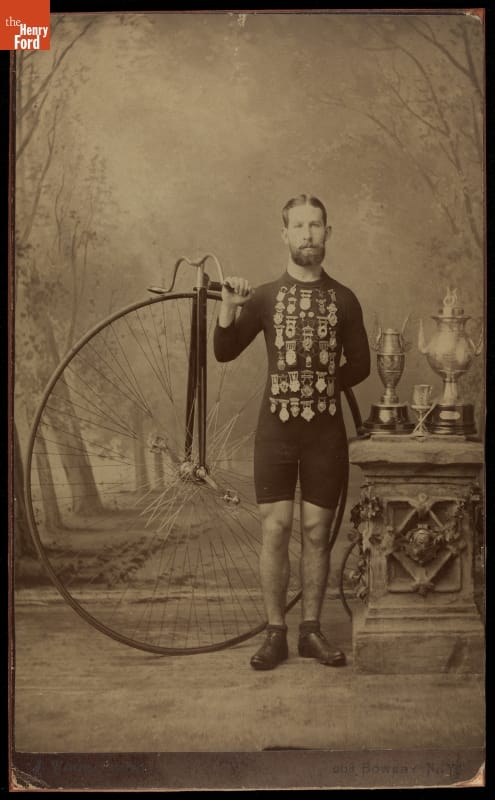
- Cyclist Eugene Valentine with Bicycle and Medals, 1870-1887 - Cyclist Eugene Valentine posed with his high-wheel bicycle in this 1887 cabinet card photograph. Valentine adorned his jersey with a number of medals and pins probably awarded at cycling competitions. Three trophies also appear in the image.
- December 29, 1887
- Collections - Artifact
Cyclist Eugene Valentine with Bicycle and Medals, 1870-1887
Cyclist Eugene Valentine posed with his high-wheel bicycle in this 1887 cabinet card photograph. Valentine adorned his jersey with a number of medals and pins probably awarded at cycling competitions. Three trophies also appear in the image.
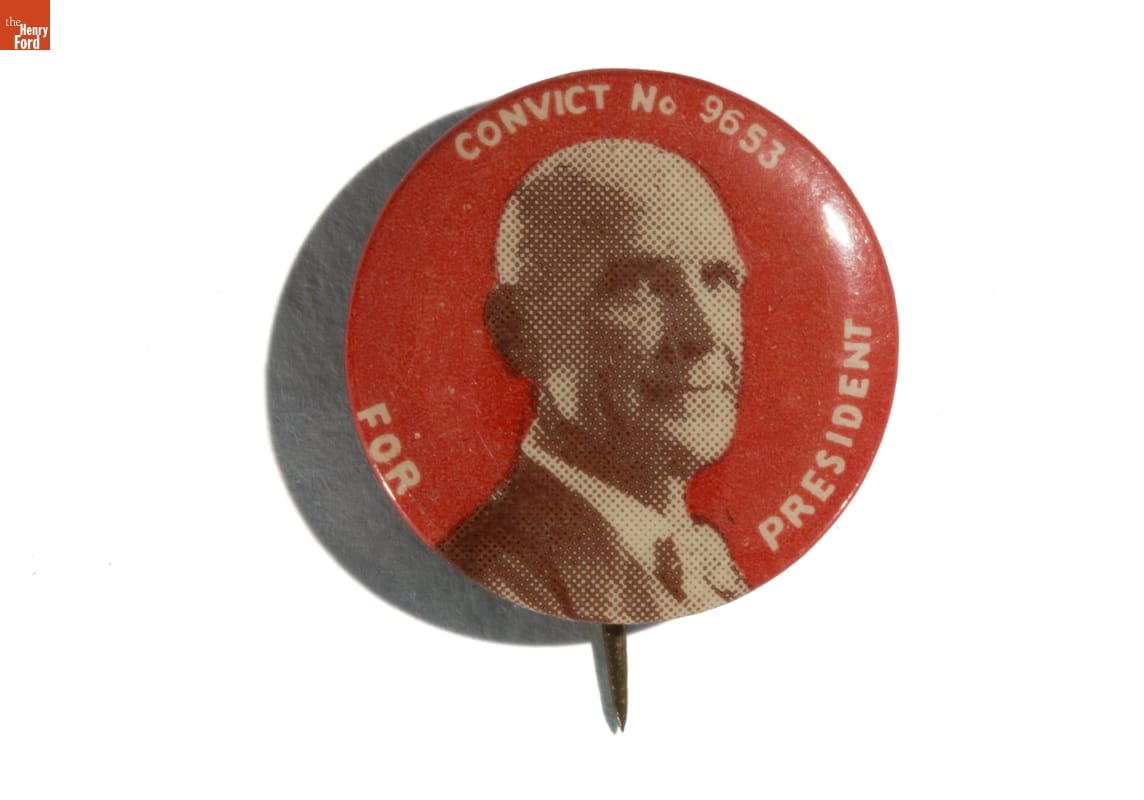
- Eugene V. Debs Campaign Button, 1920 - Eugene V. Debs was a five-time Socialist Party candidate for president in the early 1900s. During the First World War, Debs publicly railed against the war and the military draft. He was jailed in 1918 for his continued agitation against the government. Two years later, Debs made his fifth and final run -- this time from a federal prison. He lost, but still received over 900,000 votes.
- 1920
- Collections - Artifact
Eugene V. Debs Campaign Button, 1920
Eugene V. Debs was a five-time Socialist Party candidate for president in the early 1900s. During the First World War, Debs publicly railed against the war and the military draft. He was jailed in 1918 for his continued agitation against the government. Two years later, Debs made his fifth and final run -- this time from a federal prison. He lost, but still received over 900,000 votes.