
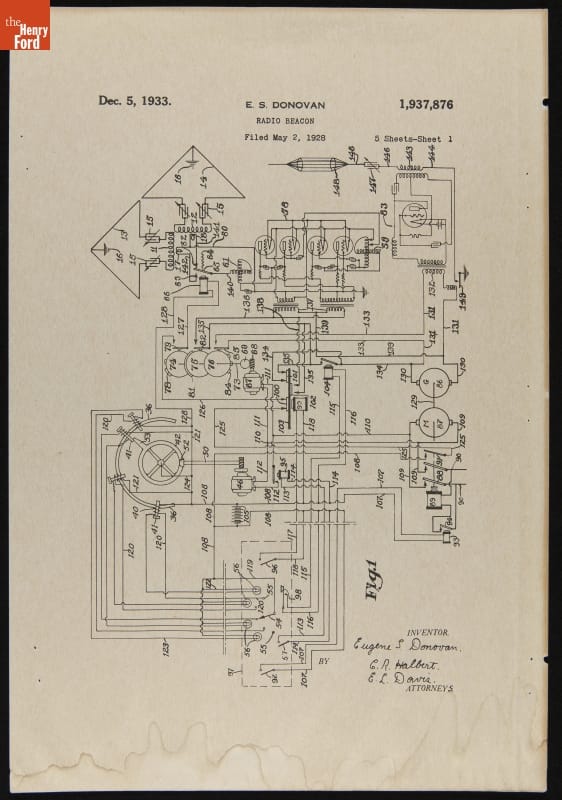
Diagram for Radio Beacon Patent, #1,937,876, Granted December 5, 1933
THF255158 / Diagram for Radio Beacon Patent, #1,937,876, Granted December 5, 1933
01
Artifact Overview
The radio beacon may be Henry Ford's most important contribution to aviation. Early pilots depended on landmarks, preventing reliable navigation in bad weather. Ford's engineers developed a radio beacon that simultaneously transmitted the Morse code letter "A" (dot-dash) in one direction and the letter "N" (dash-dot) in another. The pilot steered until the separate signals merged into a steady hum.
Artifact Details
Artifact
Patent
Date Made
05 December 1933
Subject Date
05 December 1933
Creators
Place of Creation
Collection Title
Location
By Request in the Benson Ford Research Center
Object ID
44.150.4.2
Credit
From the Collections of The Henry Ford. Gift of Ford Motor Company
Material
Paper (Fiber product)
Technique
Printing (Process)
Dimensions
Height: 11 in
Width: 7.75 in
Keywords |
|---|
02
Related Artifacts
 Artifact
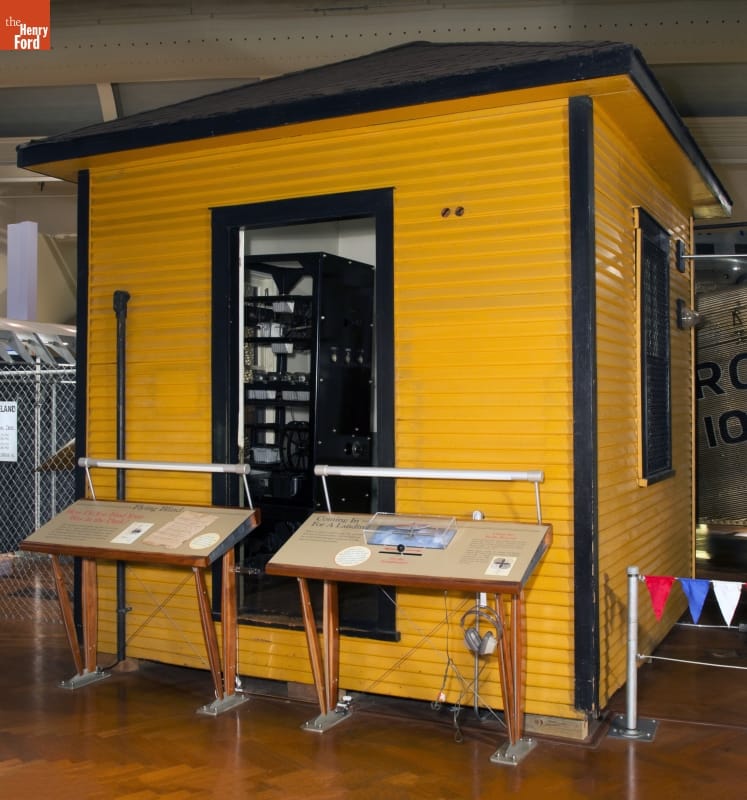
Radio Beacon Station Building Used at Ford Airport, 1927
Early pilots depended on visible landmarks, preventing reliable navigation in bad weather. Henry Ford's engineers developed a radio beacon that simultaneously transmitted two Morse code letters. Pilots steered until the separate signals merged into one steady hum. The original beacon station building at Ford Airport was removed in 1933 and is now displayed in Henry Ford Museum of American Innovation.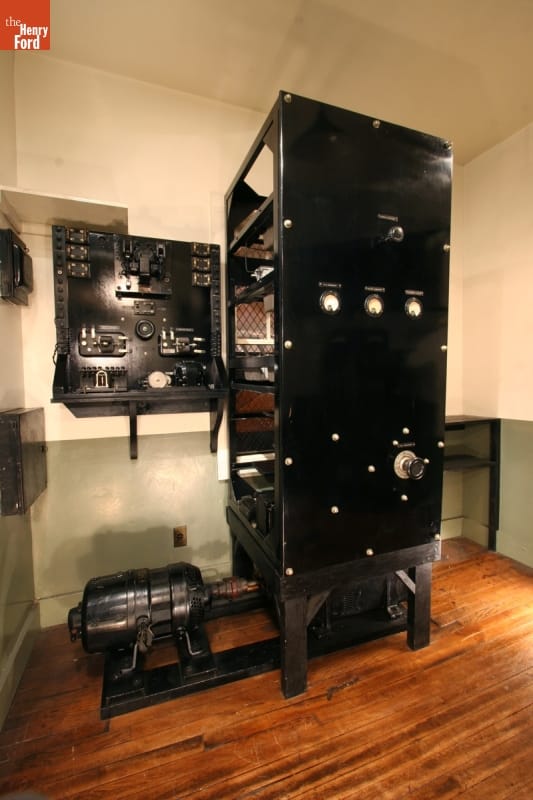 Artifact
Radio Beacon Transmitter Used at Ford Airport, 1927
The radio beacon may be Henry Ford's most important contribution to aviation. Early pilots depended on landmarks, preventing reliable navigation in bad weather. Ford's engineers developed a radio beacon that simultaneously transmitted the Morse code letter "A" (dot-dash) in one direction and the letter "N" (dash-dot) in another. The pilot steered until the separate signals merged into a steady hum.
03
Related Content
 Set
SetThe Patent Process
- 20 Artifacts
The radio beacon may be Henry Ford's most important contribution to aviation. Early pilots depended on landmarks, preventing reliable navigation in bad weather. Ford's engineers developed a radio beacon that simultaneously transmitted the Morse code letter "A" (dot-dash) in one direction and the letter "N" (dash-dot) in another. The pilot steered until the separate signals merged into a steady hum.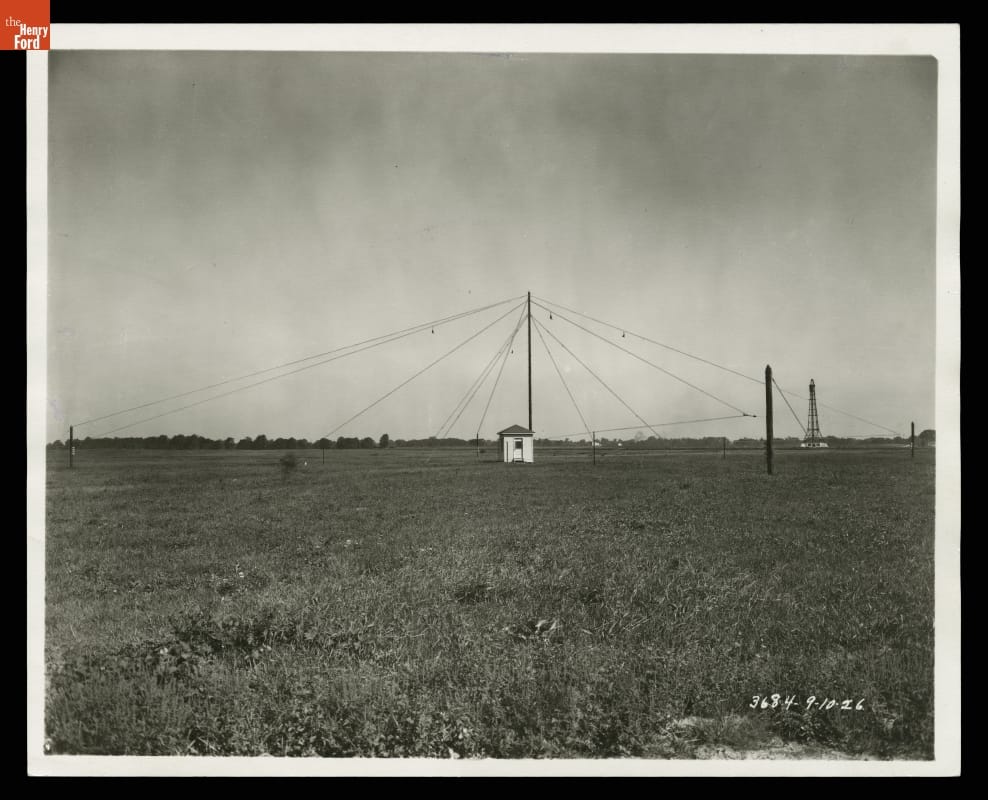 Set
SetFord Radio Beacon Station
- 8 Artifacts
Early pilots depended on landmarks, preventing reliable navigation in bad weather. Henry Ford's engineers developed a radio beacon that simultaneously transmitted two Morse code letters, allowing pilots to steer until the separate signals merged into a steady hum. The original beacon station at Ford Airport (shown here) was removed in 1933 and is now on display inside the museum.