
Search
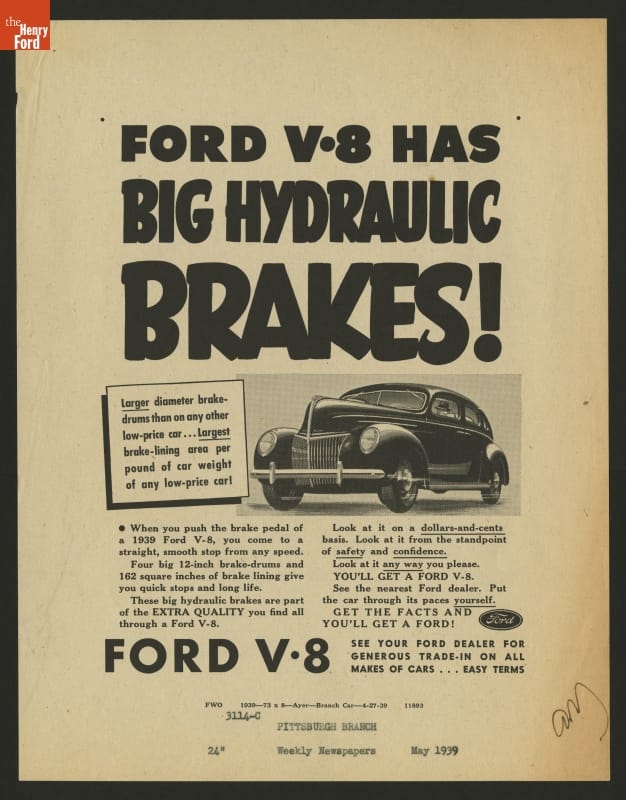
- 1939 Ford V-8 Advertisement, "Ford V-8 Has Big Hydraulic Brakes!" - As Americans drove farther and faster in the 1930s, good brakes became a selling point. Ford added hydraulic brakes to their cars for 1939, as seen in this advertisement. This was several years after their competitors had adopted them.
- May 01, 1939
- Collections - Artifact
1939 Ford V-8 Advertisement, "Ford V-8 Has Big Hydraulic Brakes!"
As Americans drove farther and faster in the 1930s, good brakes became a selling point. Ford added hydraulic brakes to their cars for 1939, as seen in this advertisement. This was several years after their competitors had adopted them.
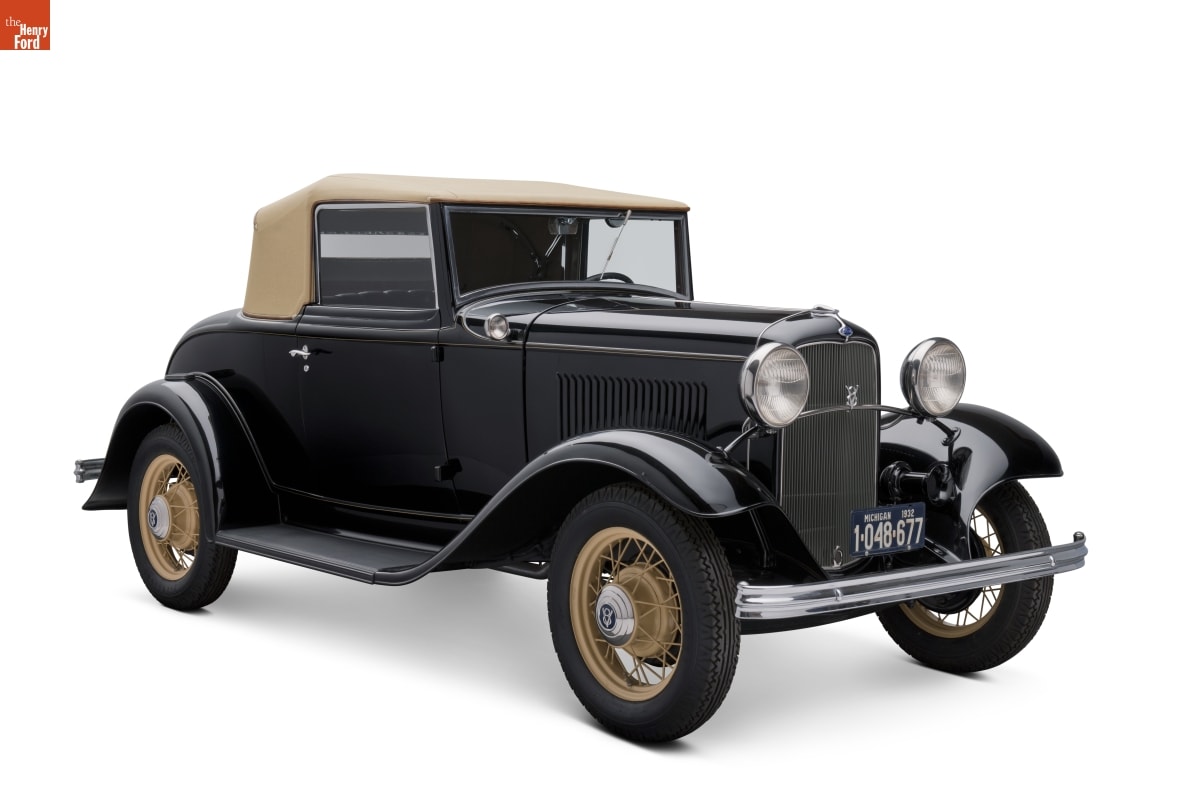
- 1932 Ford V-8 Cabriolet - The 1932 Ford automobile combines the attractive facelift of the 1931 Model A with the world's first low-priced, cast-in-one-piece V-8 engine. Powered by Henry Ford's latest personal engineering triumph, his "en block", or one piece, V-8 engine, the 1932 Ford outperformed all other popular competitors. The vehicle's improved proportions and styling reflected Edsel Ford's, Henry's son, genius for design.
- 1932
- Collections - Artifact
1932 Ford V-8 Cabriolet
The 1932 Ford automobile combines the attractive facelift of the 1931 Model A with the world's first low-priced, cast-in-one-piece V-8 engine. Powered by Henry Ford's latest personal engineering triumph, his "en block", or one piece, V-8 engine, the 1932 Ford outperformed all other popular competitors. The vehicle's improved proportions and styling reflected Edsel Ford's, Henry's son, genius for design.
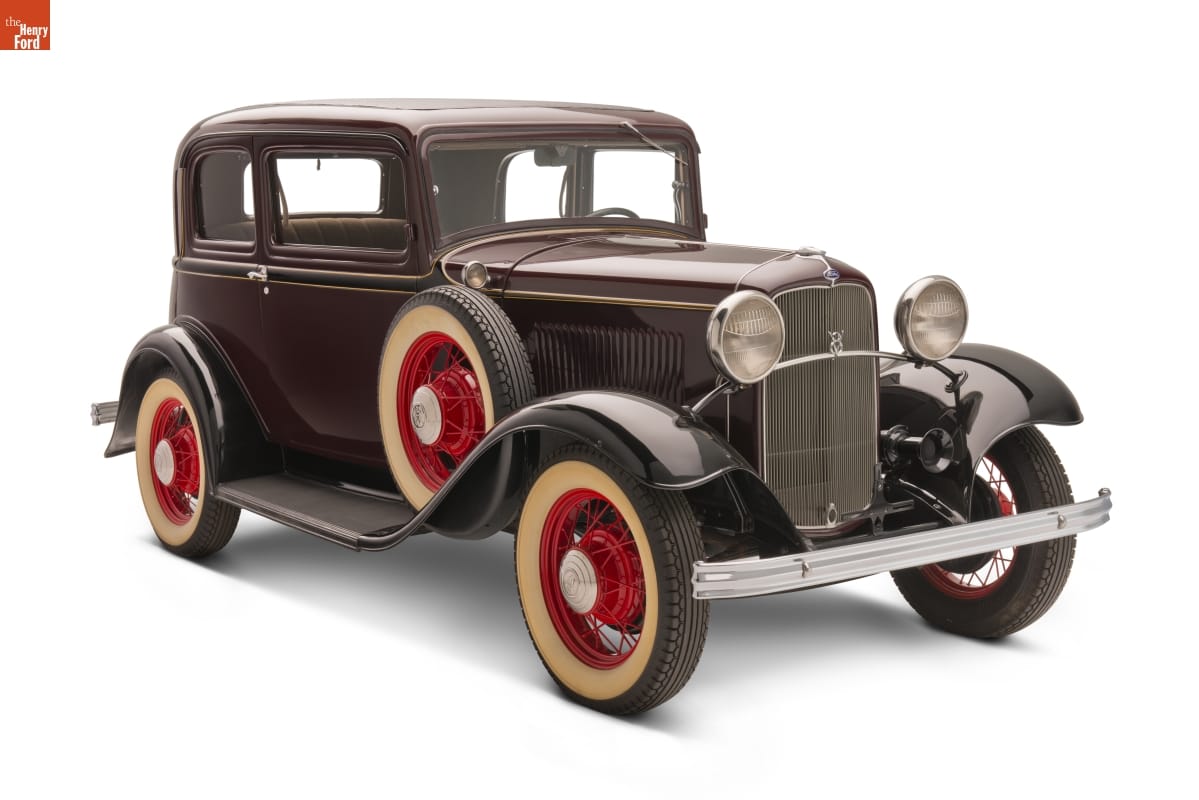
- 1932 Ford V-8 Victoria - The 1932 Ford was attractive, but its real innovation sat under the hood. Henry Ford insisted on an affordable V-8 engine to upstage Chevrolet's low-priced six. By casting his engine's crankcase and cylinders as a single unit, Ford cut production costs and held his car's starting price under $500. Ford's enduring engine stayed in production until 1953.
- 1932
- Collections - Artifact
1932 Ford V-8 Victoria
The 1932 Ford was attractive, but its real innovation sat under the hood. Henry Ford insisted on an affordable V-8 engine to upstage Chevrolet's low-priced six. By casting his engine's crankcase and cylinders as a single unit, Ford cut production costs and held his car's starting price under $500. Ford's enduring engine stayed in production until 1953.
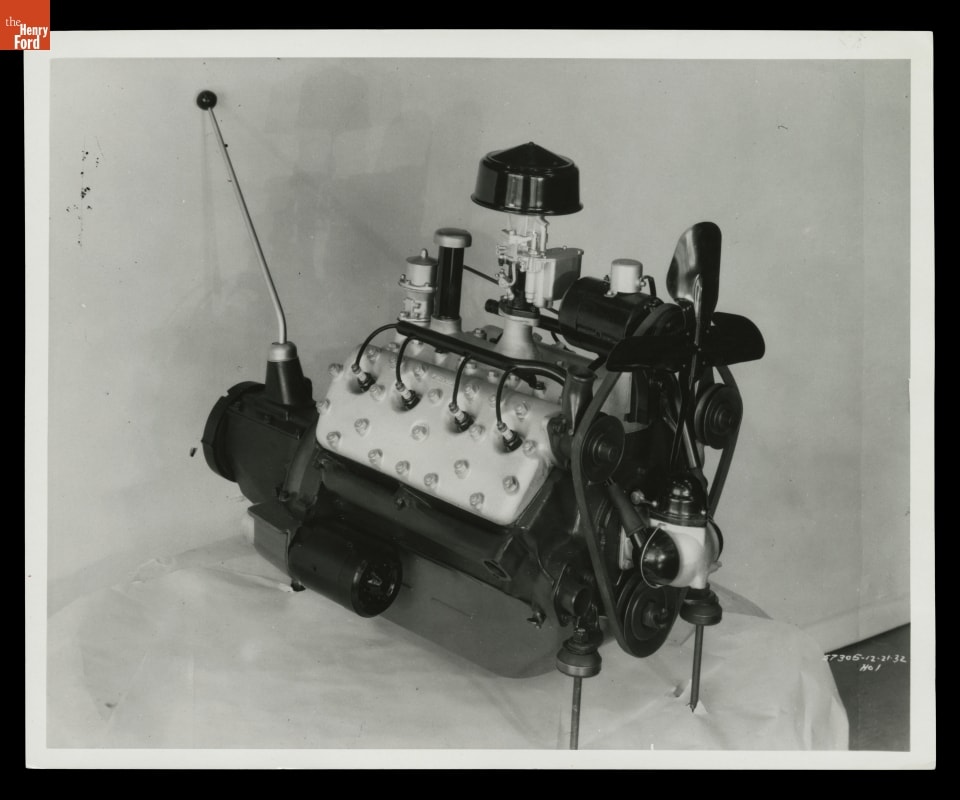
- 1932 Ford V-8 Engine - Henry Ford and Ford Motor Company revolutionized the automobile market again in 1932 with the introduction of the company's V-8 engine. By casting the engine's block as single piece, Ford kept manufacturing costs down and made the engine affordable to more motorists. The venerable engine remained in production until 1953.
- December 21, 1932
- Collections - Artifact
1932 Ford V-8 Engine
Henry Ford and Ford Motor Company revolutionized the automobile market again in 1932 with the introduction of the company's V-8 engine. By casting the engine's block as single piece, Ford kept manufacturing costs down and made the engine affordable to more motorists. The venerable engine remained in production until 1953.
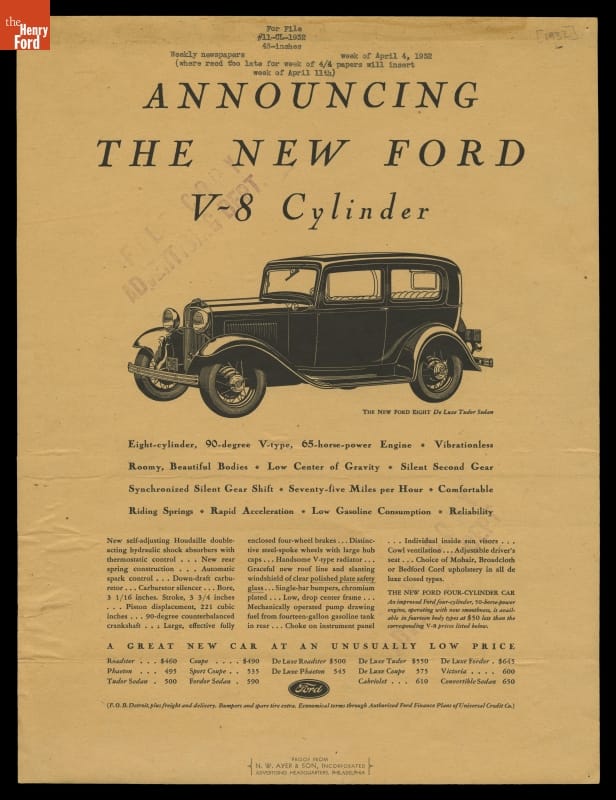
- Advertisement for the 1932 Ford V-8 Car, "Announcing the New Ford V-8 Cylinder" - Henry Ford and Ford Motor Company revolutionized the automobile market again in 1932 with the introduction of the company's V-8 engine. By casting the engine's block as single piece, Ford kept manufacturing costs down and made the engine affordable to more motorists. The venerable engine remained in production until 1953.
- 1932
- Collections - Artifact
Advertisement for the 1932 Ford V-8 Car, "Announcing the New Ford V-8 Cylinder"
Henry Ford and Ford Motor Company revolutionized the automobile market again in 1932 with the introduction of the company's V-8 engine. By casting the engine's block as single piece, Ford kept manufacturing costs down and made the engine affordable to more motorists. The venerable engine remained in production until 1953.
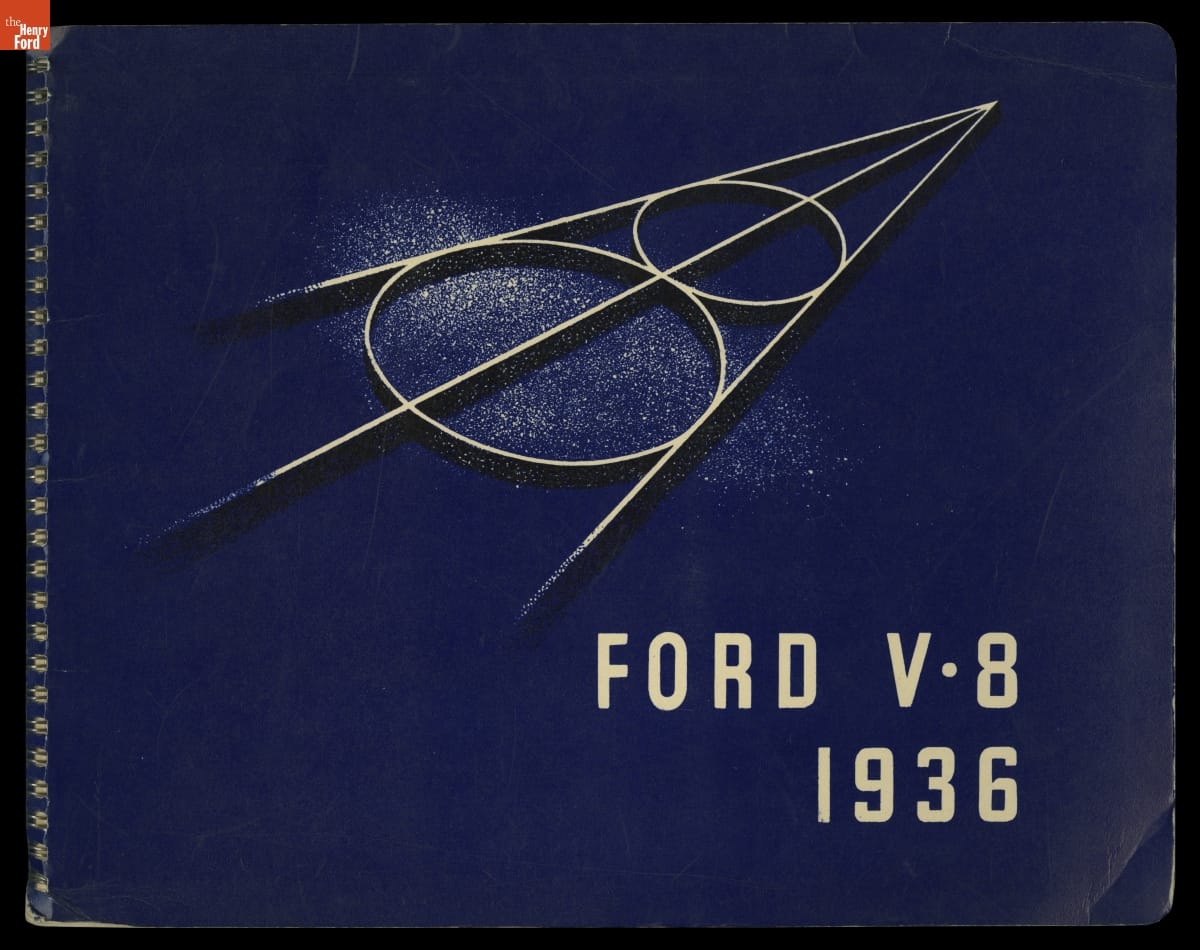
- Sales Catalog, "Ford V-8 1936" - Ford's low-priced V-8 engine, introduced in 1932, was still going strong four years later. The automaker's cars received a facelift for 1936 that included a restyled front end and new side louvers in the hood. Factory prices started at $550 for a two-door roadster. Calendar year production totaled 791,812 units.
- 1936
- Collections - Artifact
Sales Catalog, "Ford V-8 1936"
Ford's low-priced V-8 engine, introduced in 1932, was still going strong four years later. The automaker's cars received a facelift for 1936 that included a restyled front end and new side louvers in the hood. Factory prices started at $550 for a two-door roadster. Calendar year production totaled 791,812 units.
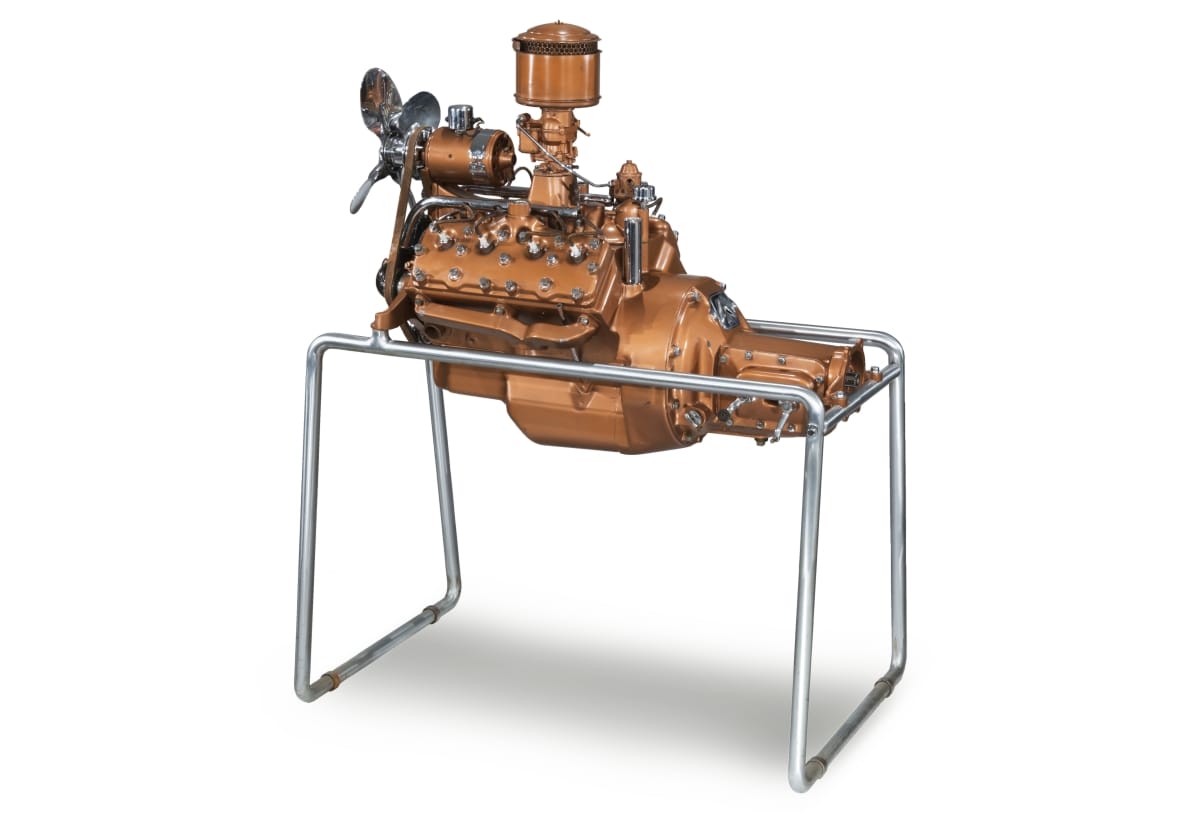
- Ford V-8 Automobile Engine, 1937 - Ford's affordable V-8 engine, introduced in 1932, proved so popular that the company stopped selling four-cylinder cars beginning with the 1935 model year. For 1937, Ford attracted economy-minded customers with a smaller 60-horsepower version of its V-8. The "60" engine had a displacement of 136 cubic inches compared with the larger 85-horsepower V-8's 221 cubic inches.
- 1937
- Collections - Artifact
Ford V-8 Automobile Engine, 1937
Ford's affordable V-8 engine, introduced in 1932, proved so popular that the company stopped selling four-cylinder cars beginning with the 1935 model year. For 1937, Ford attracted economy-minded customers with a smaller 60-horsepower version of its V-8. The "60" engine had a displacement of 136 cubic inches compared with the larger 85-horsepower V-8's 221 cubic inches.
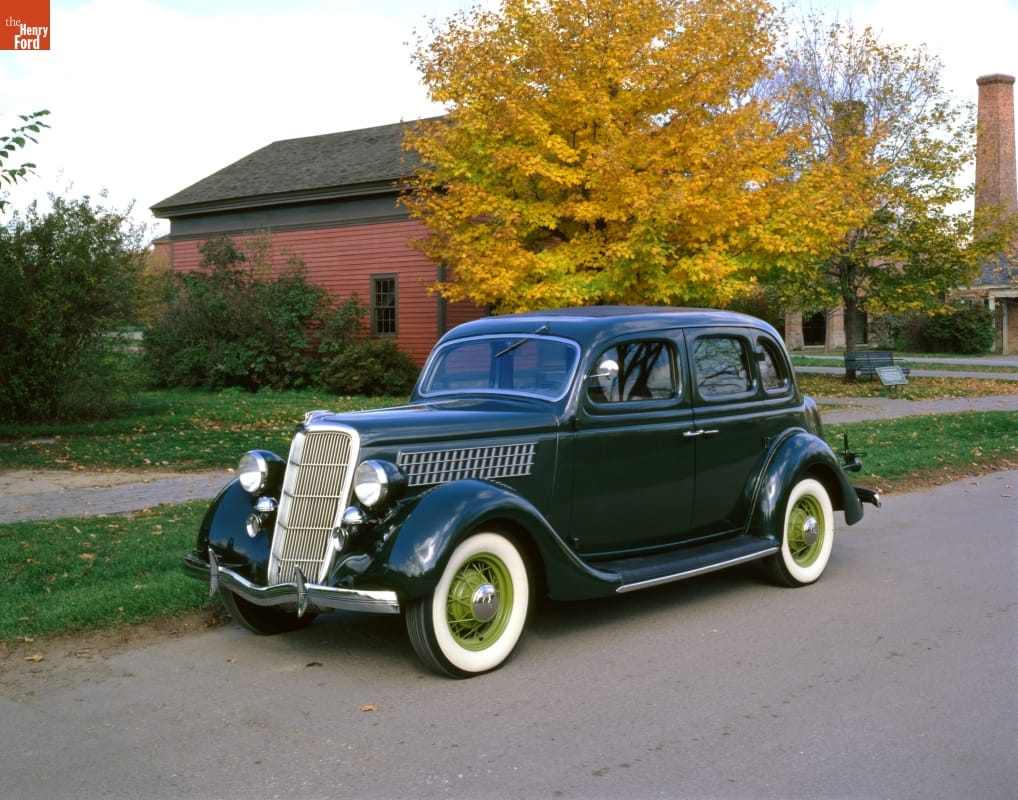
- 1935 Ford V-8 Touring Sedan - With car sales ravaged by the Great Depression, styling became a key marketing tool. At Ford, Eugene T. "Bob" Gregorie established a formal styling department in 1935. Ford's cars for that year had a lower, more streamlined appearance enhanced by a more sloped windshield. The integrated trunk and roomier interior on sedan models appealed to families.
- 1935
- Collections - Artifact
1935 Ford V-8 Touring Sedan
With car sales ravaged by the Great Depression, styling became a key marketing tool. At Ford, Eugene T. "Bob" Gregorie established a formal styling department in 1935. Ford's cars for that year had a lower, more streamlined appearance enhanced by a more sloped windshield. The integrated trunk and roomier interior on sedan models appealed to families.
- Servicing Ford V-8 Coupe, 1935 - The first uniformed gas station attendants appeared around 1914. Attendants worked long hours in all weather, possessed a thorough knowledge of service requirements for various automobile makes and models, improvised quick repairs on the spot, provided directions to lost travelers, and did it all with a smile. Attendants disappeared with the widespread adoption of self-service pumps in the 1970s.
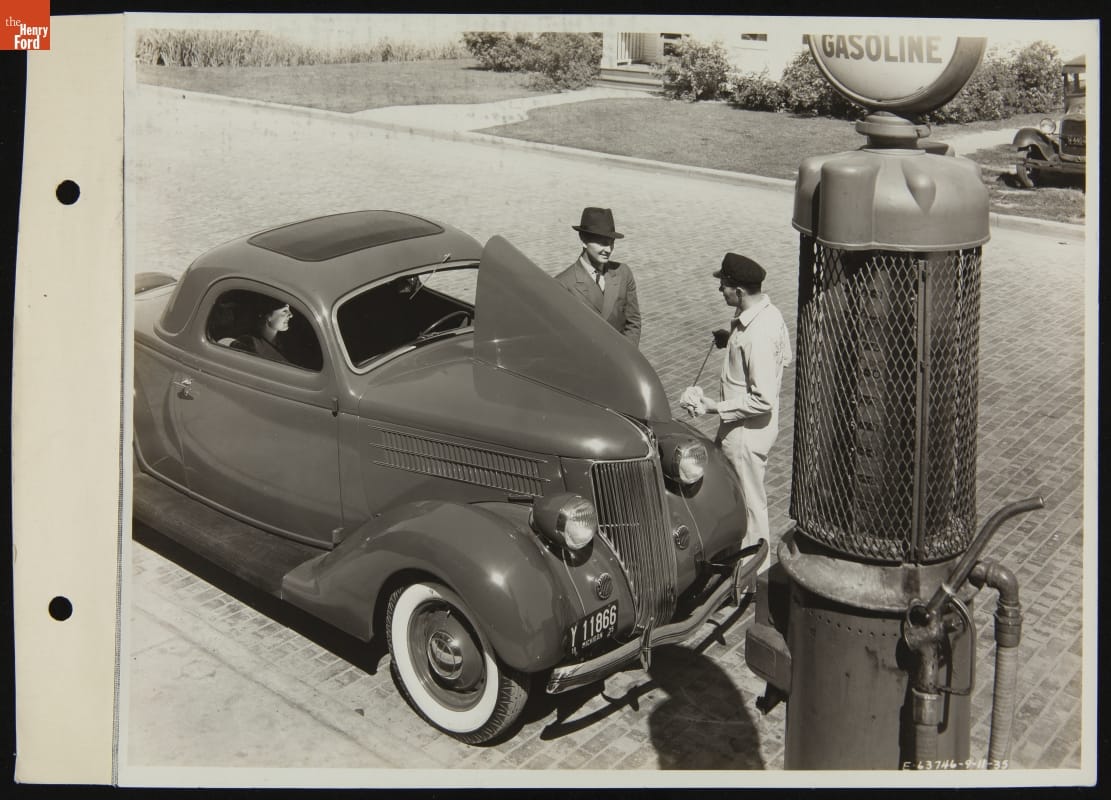
- September 11, 1935
- Collections - Artifact
Servicing Ford V-8 Coupe, 1935
The first uniformed gas station attendants appeared around 1914. Attendants worked long hours in all weather, possessed a thorough knowledge of service requirements for various automobile makes and models, improvised quick repairs on the spot, provided directions to lost travelers, and did it all with a smile. Attendants disappeared with the widespread adoption of self-service pumps in the 1970s.
- Servicing Ford V-8 Coupe, 1935 - The first uniformed gas station attendants appeared around 1914. Attendants worked long hours in all weather, possessed a thorough knowledge of service requirements for various automobile makes and models, improvised quick repairs on the spot, provided directions to lost travelers, and did it all with a smile. Attendants disappeared with the widespread adoption of self-service pumps in the 1970s.
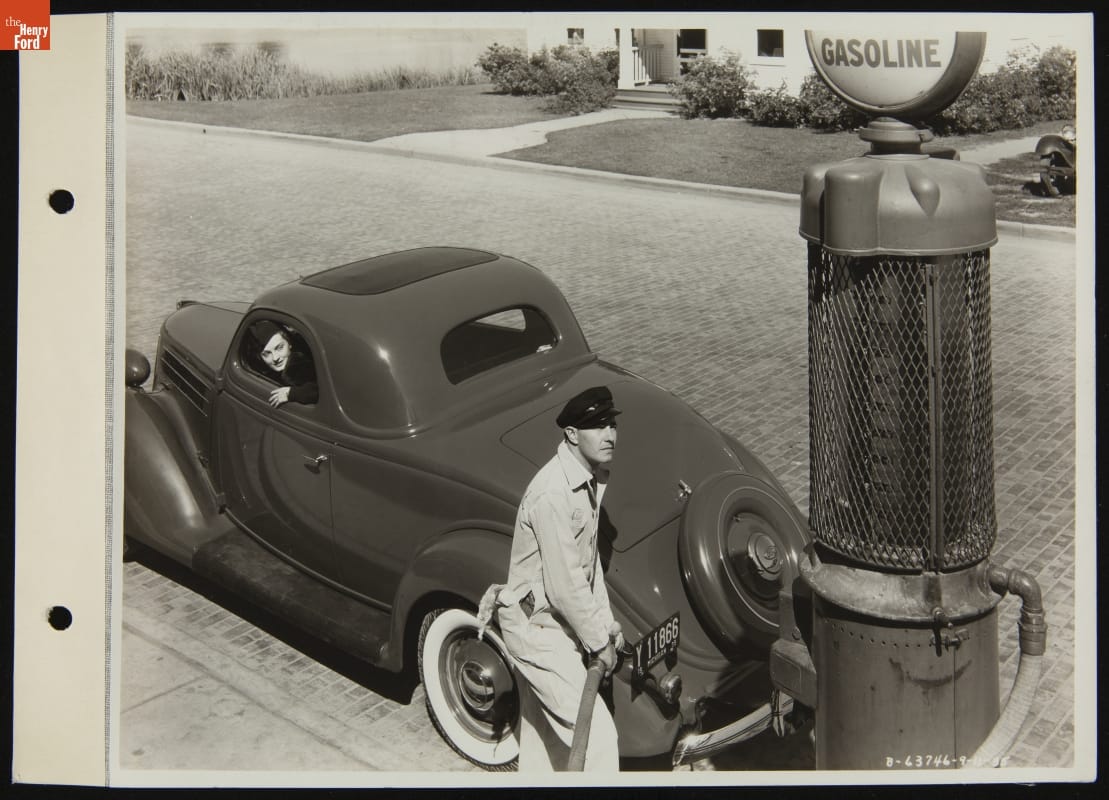
- September 11, 1935
- Collections - Artifact
Servicing Ford V-8 Coupe, 1935
The first uniformed gas station attendants appeared around 1914. Attendants worked long hours in all weather, possessed a thorough knowledge of service requirements for various automobile makes and models, improvised quick repairs on the spot, provided directions to lost travelers, and did it all with a smile. Attendants disappeared with the widespread adoption of self-service pumps in the 1970s.