
Search
- Toy Horse Drawn Wagon, 1900-1910 -
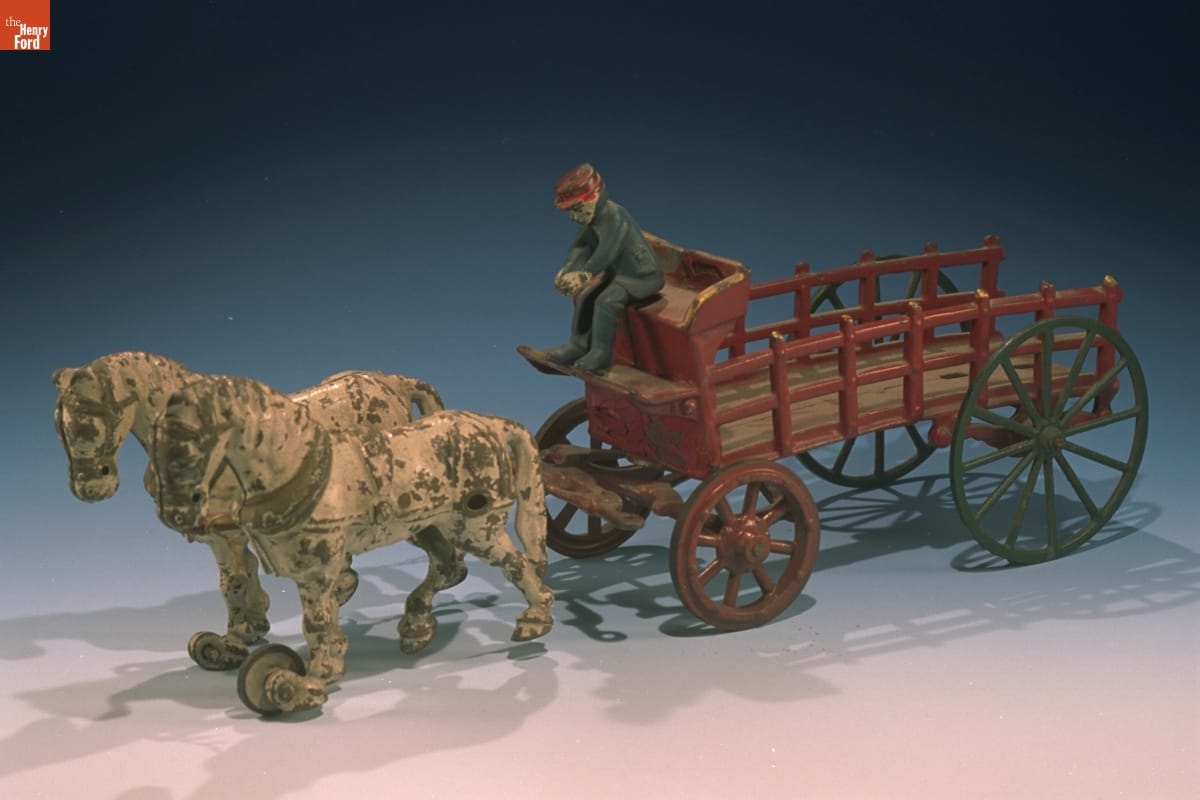
- 1900-1910
- Collections - Artifact
Toy Horse Drawn Wagon, 1900-1910
- Toy Horse Drawn Wagon, 1890-1910 -
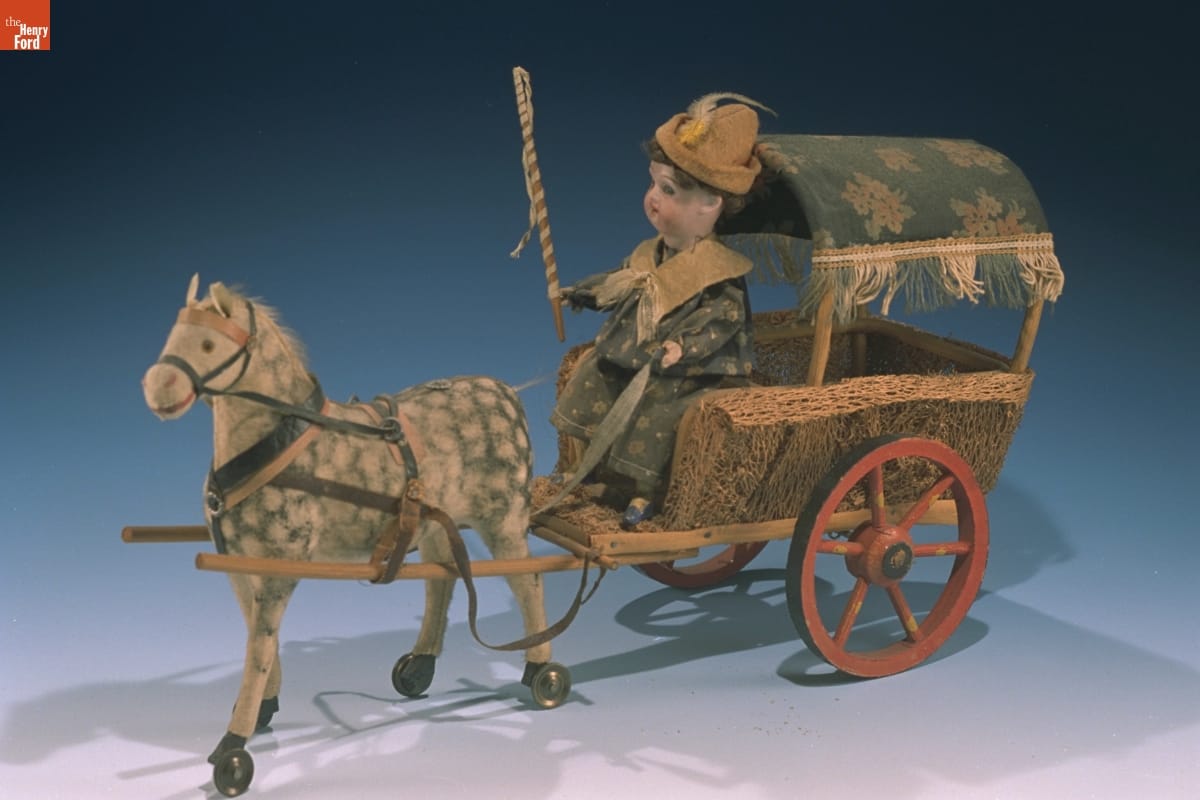
- 1890-1910
- Collections - Artifact
Toy Horse Drawn Wagon, 1890-1910
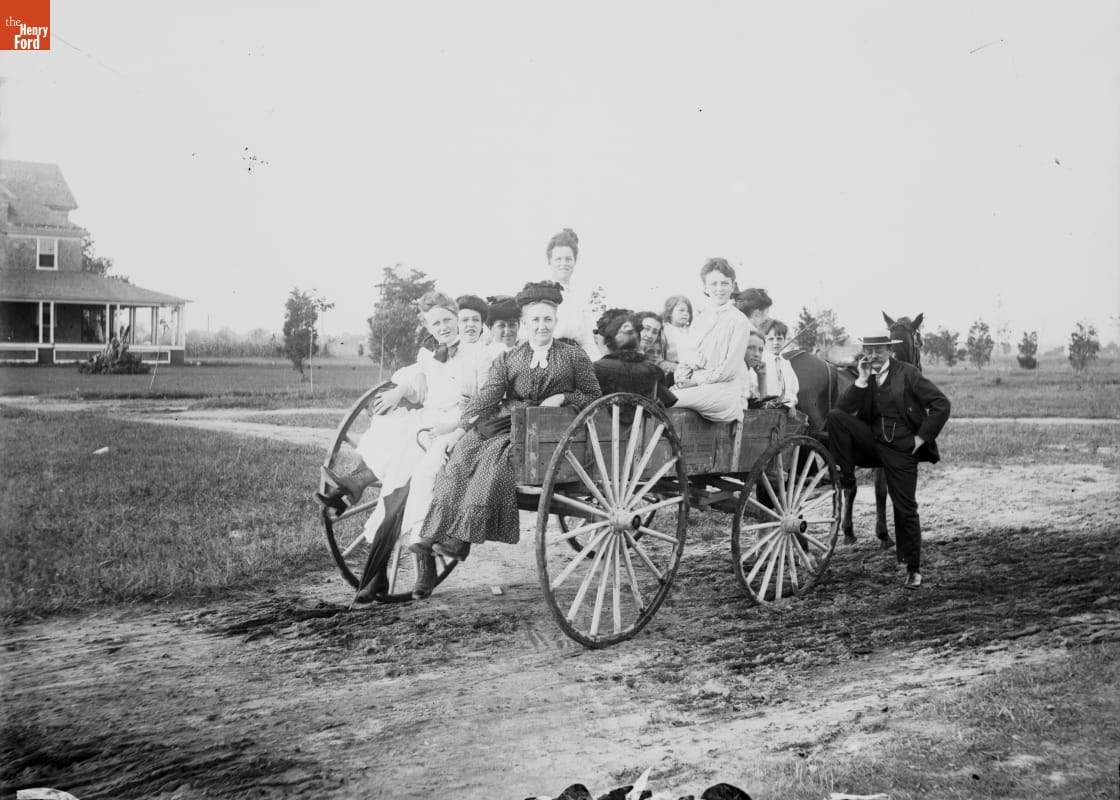
- Group with Horse-Drawn Wagon, 1890-1910 - In 1890, Jenny Young Chandler, 25 years old and recently widowed, began working for the <EM>New York Herald</EM>. As a photojournalist and feature writer, Chandler captured life in Brooklyn, New York, and vicinity. By 1922, the time of her death, she had produced over 800 glass plate negatives. Her sensitive, insightful photographs depict people from all walks of life and the world in which they lived.
- 1890-1915
- Collections - Artifact
Group with Horse-Drawn Wagon, 1890-1910
In 1890, Jenny Young Chandler, 25 years old and recently widowed, began working for the New York Herald. As a photojournalist and feature writer, Chandler captured life in Brooklyn, New York, and vicinity. By 1922, the time of her death, she had produced over 800 glass plate negatives. Her sensitive, insightful photographs depict people from all walks of life and the world in which they lived.
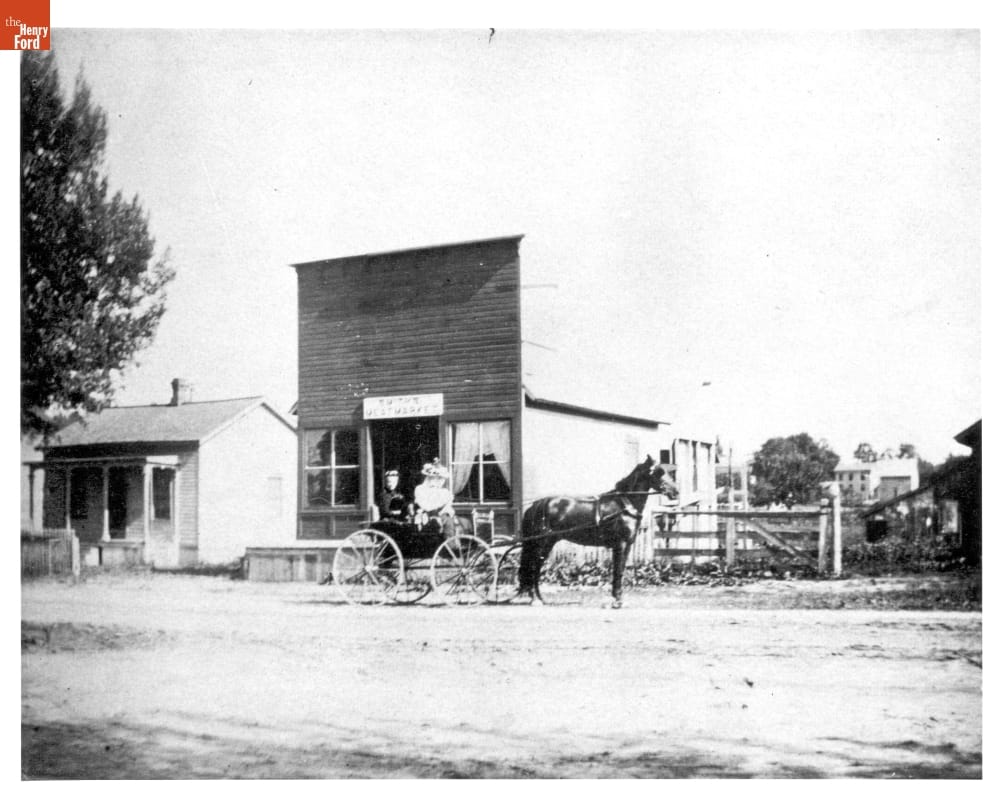
- Horse-Drawn Wagon in Dearborn, Michigan, circa 1890 - Before cars, America relied on horses and horse-drawn vehicles to move people, freight, money, and information to places railroads and waterways didn't go. This photograph, taken around 1890 in the then-small village of Dearborn, Michigan, shows female passengers in a horse-drawn wagon.
- circa 1890
- Collections - Artifact
Horse-Drawn Wagon in Dearborn, Michigan, circa 1890
Before cars, America relied on horses and horse-drawn vehicles to move people, freight, money, and information to places railroads and waterways didn't go. This photograph, taken around 1890 in the then-small village of Dearborn, Michigan, shows female passengers in a horse-drawn wagon.
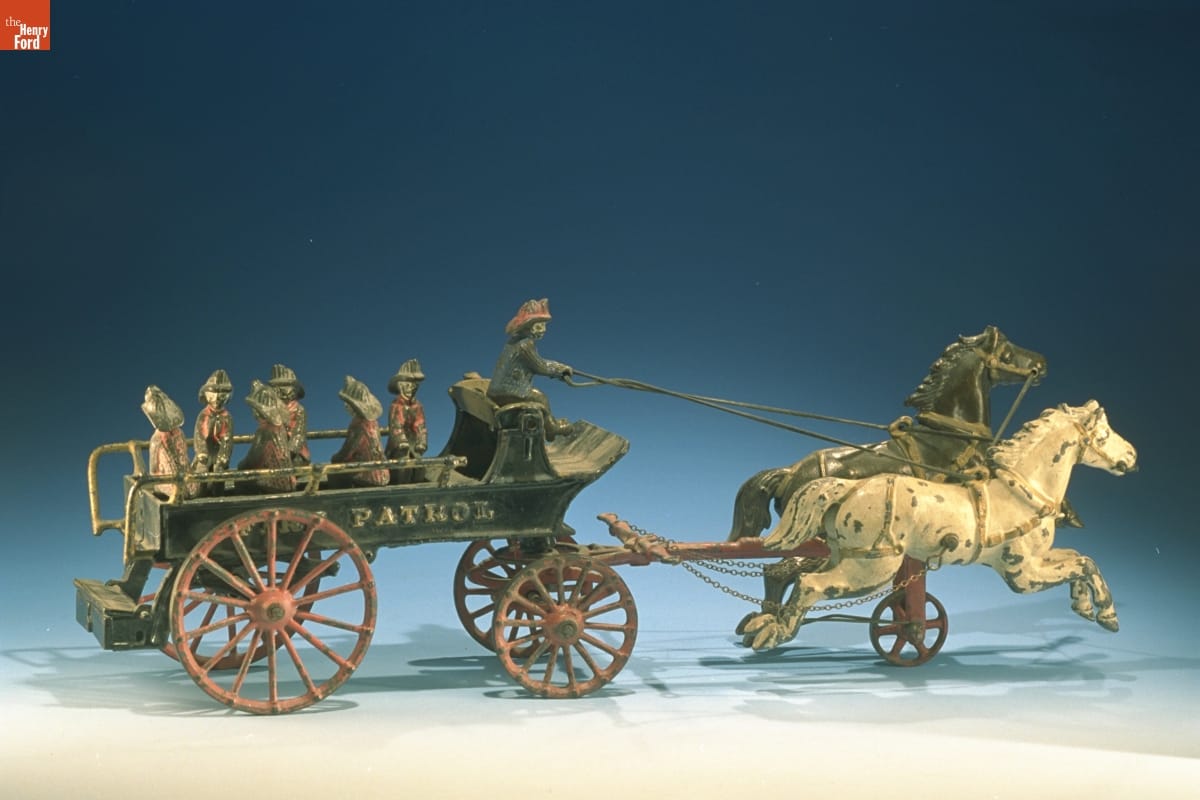
- Toy Horse Drawn Fire Patrol Wagon, 1890-1910 -
- 1890-1910
- Collections - Artifact
Toy Horse Drawn Fire Patrol Wagon, 1890-1910
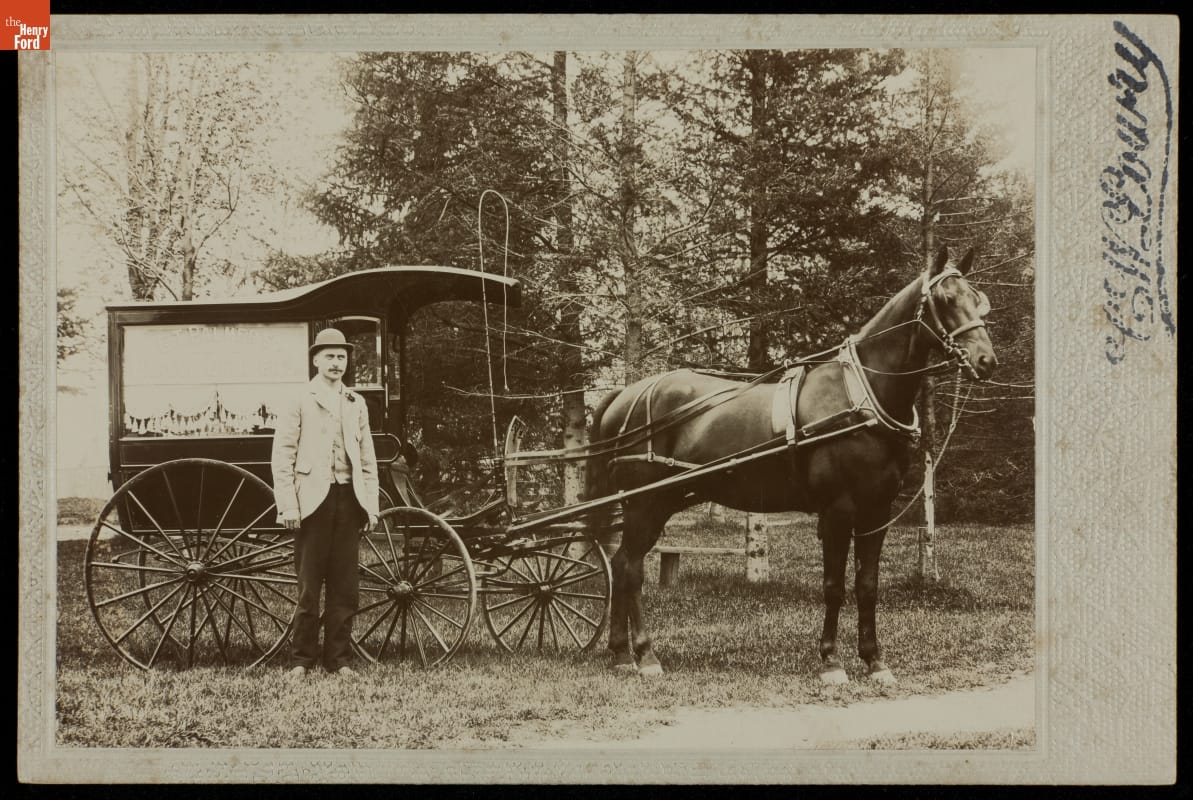
- Man with Horse-Drawn Delivery Wagon, circa 1890 - Professional photographers began producing cabinet cards in 1867, and people soon preferred these photographic prints on cardboard stock to the earlier, smaller cartes-de-visite. American commonly collected and exchanged cabinet photographs through the early 1900s. This example, made by C. W. Lowry around 1890, shows a man near a horse-drawn "Parcel Delivery" wagon.
- circa 1890
- Collections - Artifact
Man with Horse-Drawn Delivery Wagon, circa 1890
Professional photographers began producing cabinet cards in 1867, and people soon preferred these photographic prints on cardboard stock to the earlier, smaller cartes-de-visite. American commonly collected and exchanged cabinet photographs through the early 1900s. This example, made by C. W. Lowry around 1890, shows a man near a horse-drawn "Parcel Delivery" wagon.
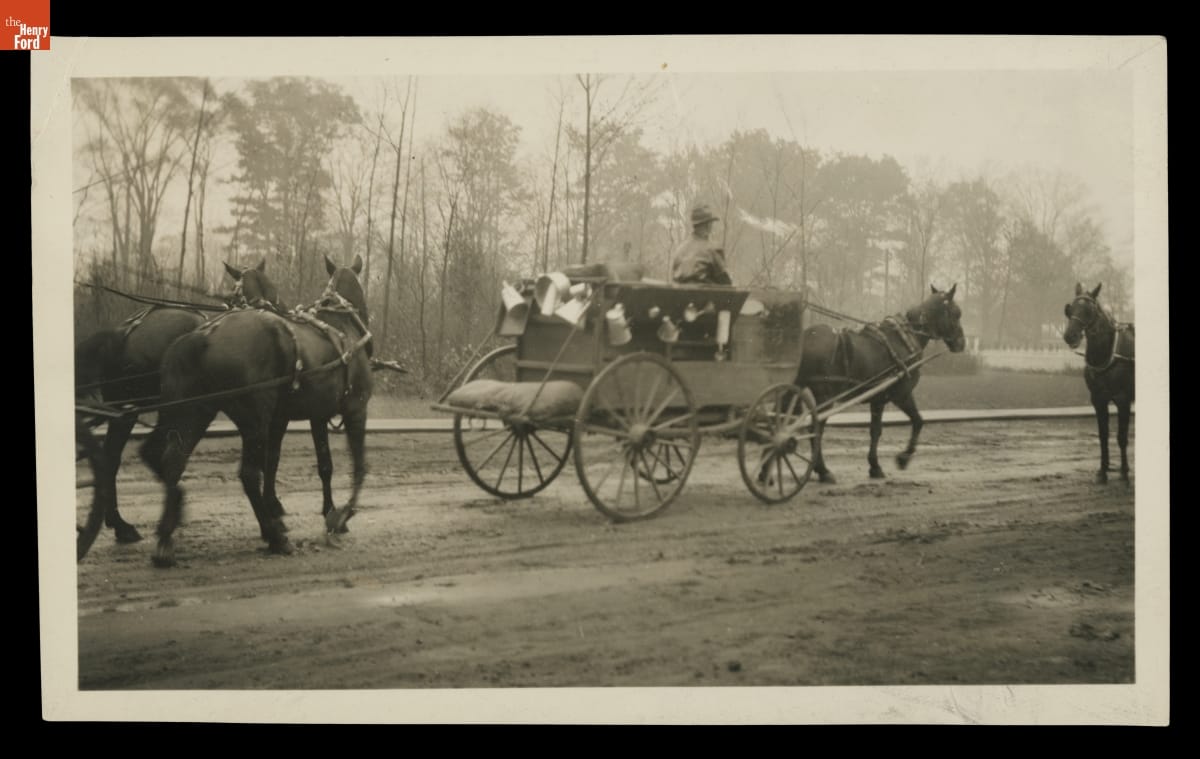
- Tin Peddler in Horse-Drawn Wagon, 1900-1920 - Tinsmiths came up with ingenious ways to sell their wares, retailing them in their shops, at local general stores, and through traveling peddlers. Some peddlers worked directly for or under contract to a tinsmith, but many were independent. They bought stock from tin shop owners and sold it in open markets or from portable carts or wagons like the one shown here.
- 1900-1920
- Collections - Artifact
Tin Peddler in Horse-Drawn Wagon, 1900-1920
Tinsmiths came up with ingenious ways to sell their wares, retailing them in their shops, at local general stores, and through traveling peddlers. Some peddlers worked directly for or under contract to a tinsmith, but many were independent. They bought stock from tin shop owners and sold it in open markets or from portable carts or wagons like the one shown here.
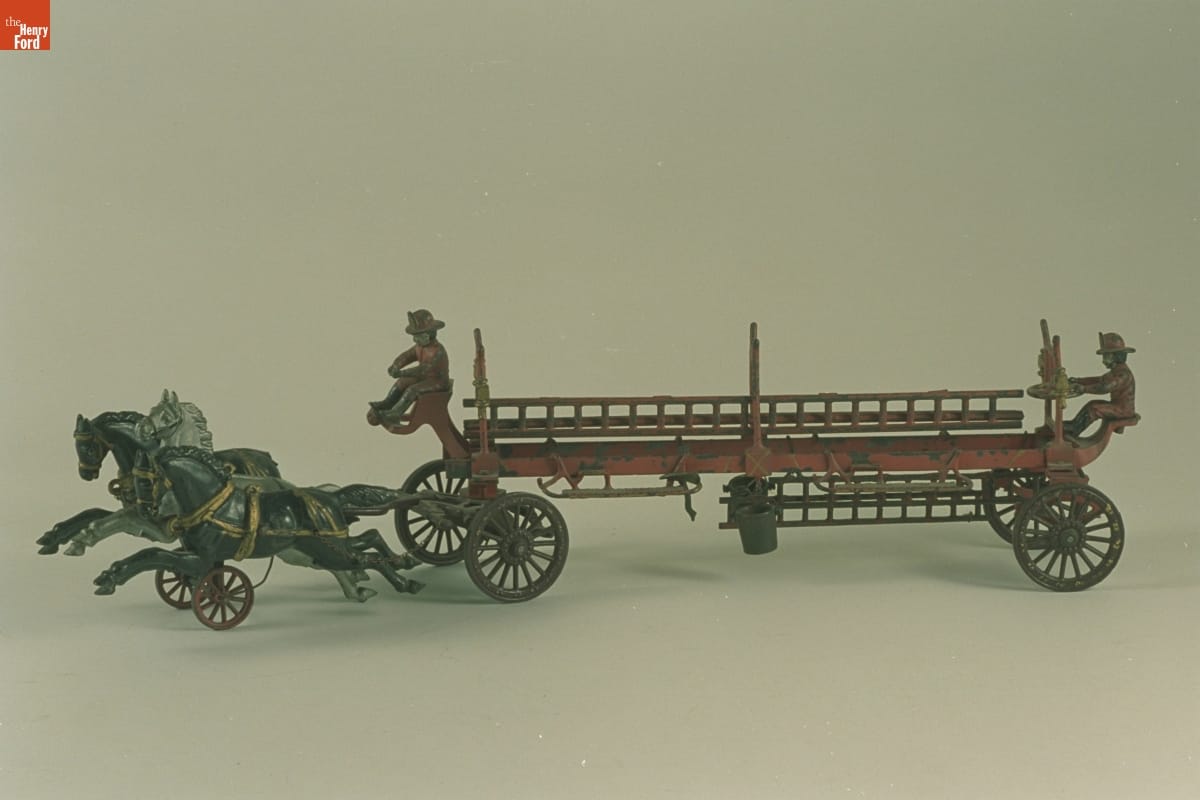
- Toy Horse Drawn Hook and Ladder Wagon, 1890-1910 -
- 1890-1910
- Collections - Artifact
Toy Horse Drawn Hook and Ladder Wagon, 1890-1910
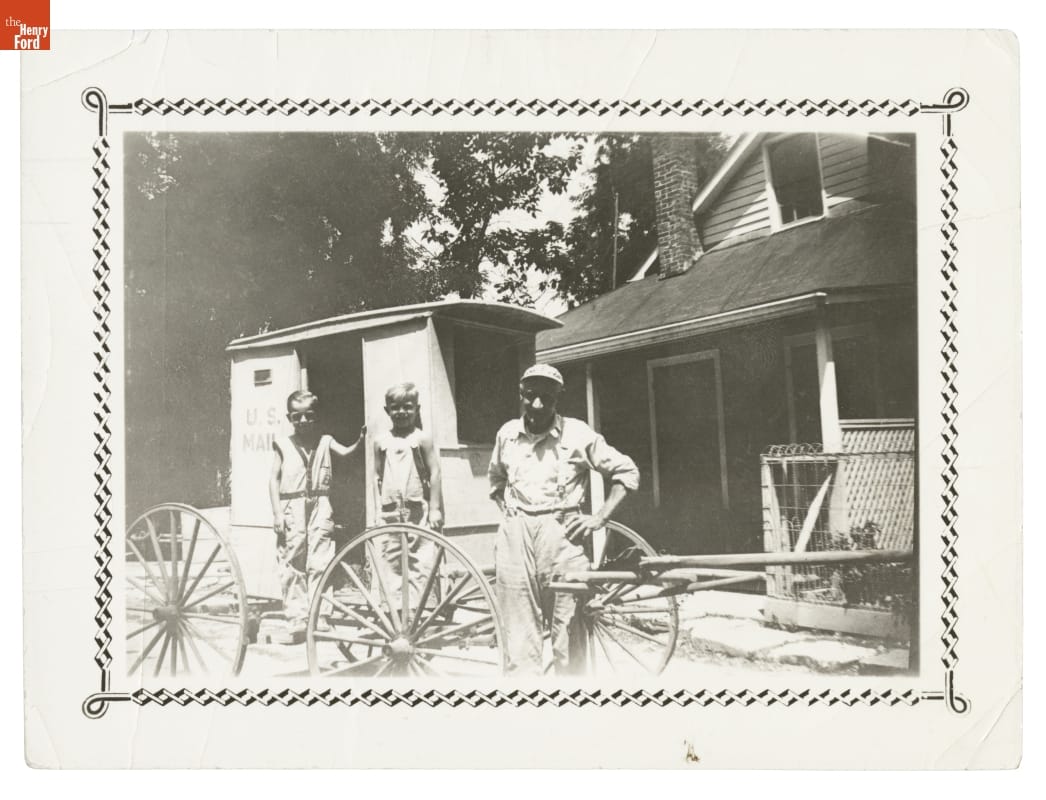
- August Edinger with Horse-Drawn Mail Wagon, circa 1933 - Officially adopted in 1896, Rural Free Delivery was a boon to residents who were previously required to collect their mail in the nearest town. Rural routes were long and served hundreds of customers, so carriers often purchased horse-drawn wagons to facilitate their perennial labor. Here, August Edinger of Kimmswick, Missouri, poses with the wagon he used from 1902 to 1925.
- circa 1933
- Collections - Artifact
August Edinger with Horse-Drawn Mail Wagon, circa 1933
Officially adopted in 1896, Rural Free Delivery was a boon to residents who were previously required to collect their mail in the nearest town. Rural routes were long and served hundreds of customers, so carriers often purchased horse-drawn wagons to facilitate their perennial labor. Here, August Edinger of Kimmswick, Missouri, poses with the wagon he used from 1902 to 1925.
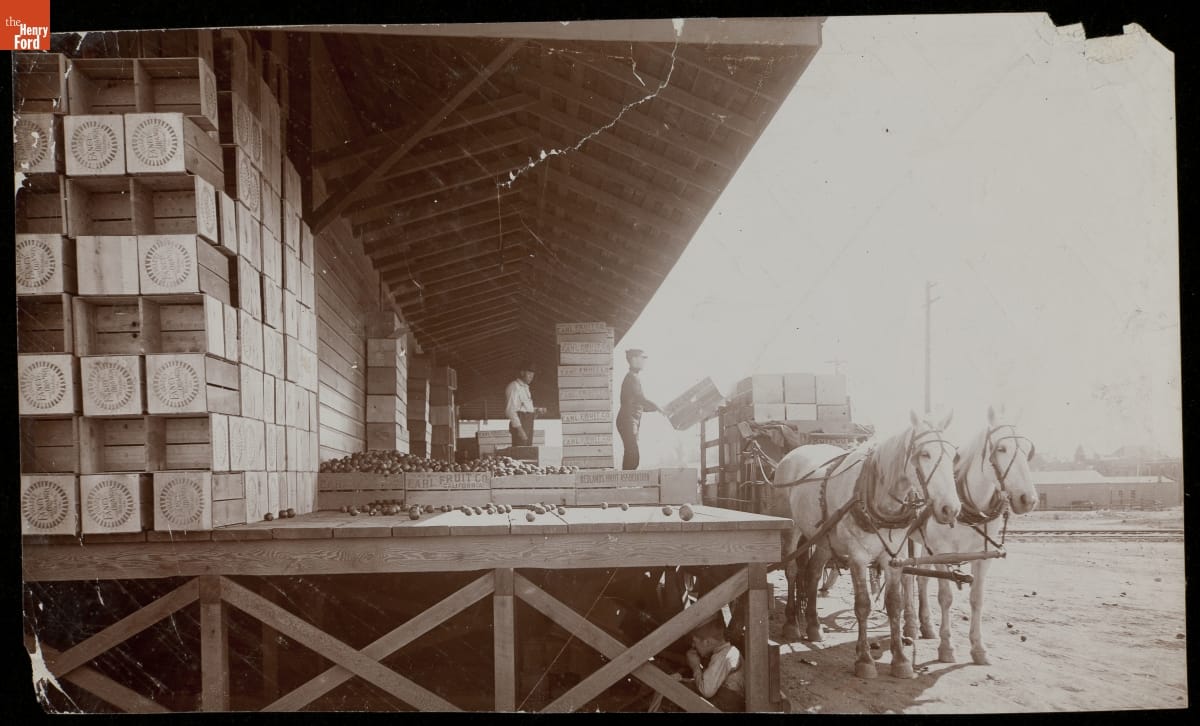
- Men Loading Fruit Boxes onto Horse-Drawn Wagons, circa 1905 - California farmers grew a lot of fruit. Beginning in the 1890s, the Earl Fruit Company's refrigerated railroad cars transported the produce to hungry consumers back east. But first the fruit needed to be packed for shipping at plants like this one in Redlands, a citrus town in southern California. Workers are loading boxes of oranges onto a horse-drawn wagon.
- circa 1905
- Collections - Artifact
Men Loading Fruit Boxes onto Horse-Drawn Wagons, circa 1905
California farmers grew a lot of fruit. Beginning in the 1890s, the Earl Fruit Company's refrigerated railroad cars transported the produce to hungry consumers back east. But first the fruit needed to be packed for shipping at plants like this one in Redlands, a citrus town in southern California. Workers are loading boxes of oranges onto a horse-drawn wagon.