
Search
- Bakelite, “The Material of a Thousand Uses” - When Leo Baekeland finally succeeded in developing the first chemically synthetic plastic in 1907, he knew he'd created a versatile material with broad appeal. Indeed, "Bakelite" proved suitable for a wide range of industrial and commercial applications. Touted as "the material of a thousand uses," Bakelite became a household name and helped usher in the age of plastics.

- July 08, 2022
- Collections - Set
Bakelite, “The Material of a Thousand Uses”
When Leo Baekeland finally succeeded in developing the first chemically synthetic plastic in 1907, he knew he'd created a versatile material with broad appeal. Indeed, "Bakelite" proved suitable for a wide range of industrial and commercial applications. Touted as "the material of a thousand uses," Bakelite became a household name and helped usher in the age of plastics.
- Bakelite: The "Material of a Thousand Uses" - Learn the history of Bakelite, the first truly synthetic plastic, and the conservation issues it poses for artifacts.

- October 15, 2015
- Collections - article
Bakelite: The "Material of a Thousand Uses"
Learn the history of Bakelite, the first truly synthetic plastic, and the conservation issues it poses for artifacts.
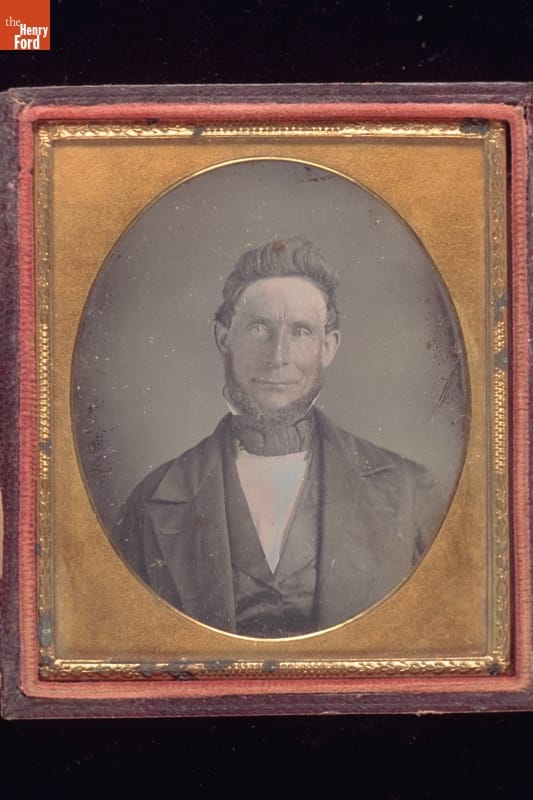
- Portrait of Leo Adler, Wisconsin, 1860 - The daguerreotype, popular in the early 1840s-late 1850s, was the first form of photography available to the public. Sheets of silver-plated copper--polished to a mirror finish--were bathed in photosensitive vapors, and exposed in cameras. In formal studios and traveling booths, photographers created affordable portraits. For the first time, people saw their likenesses--fixed permanently in time and place.
- 1860
- Collections - Artifact
Portrait of Leo Adler, Wisconsin, 1860
The daguerreotype, popular in the early 1840s-late 1850s, was the first form of photography available to the public. Sheets of silver-plated copper--polished to a mirror finish--were bathed in photosensitive vapors, and exposed in cameras. In formal studios and traveling booths, photographers created affordable portraits. For the first time, people saw their likenesses--fixed permanently in time and place.
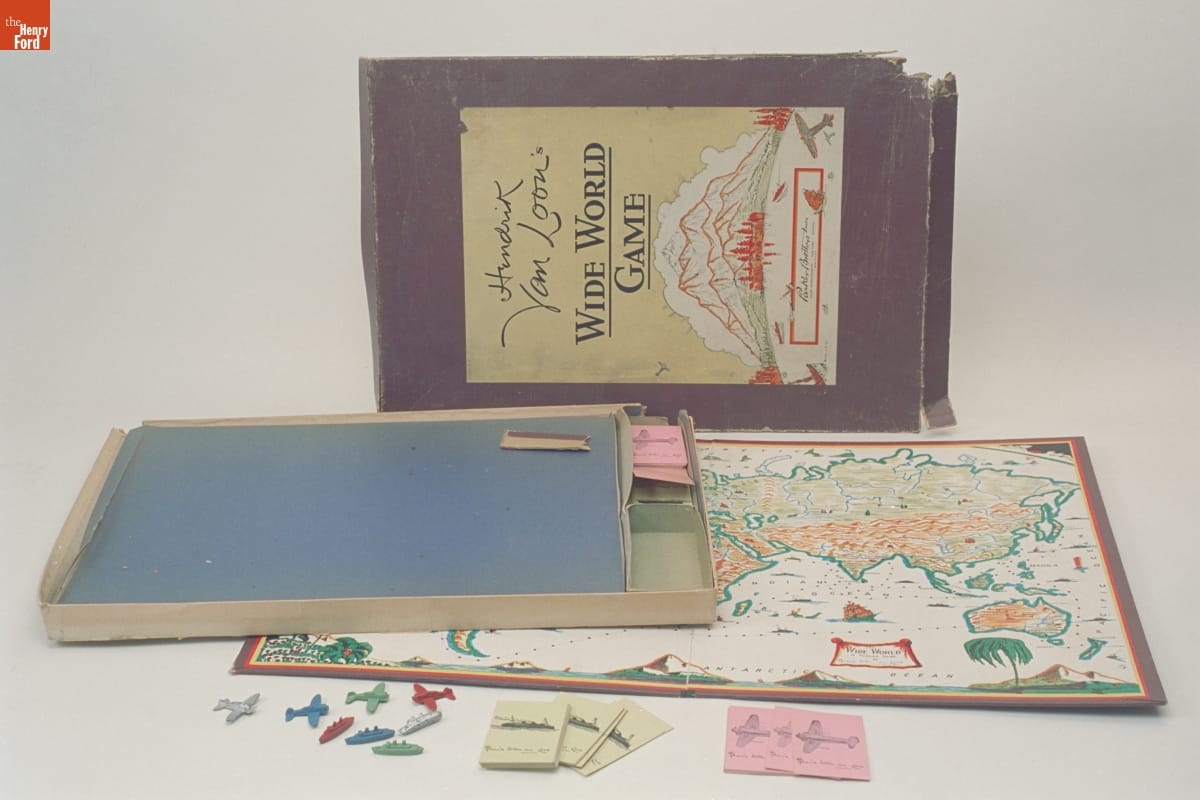
- Hendrik Van Loon's Wide World Game, circa 1933 - Inspired by historian and journalist Hendrik van Loon's 1921 Newberry Award-winning book, "The Story of Mankind," this 1930s game featured a stylized map of the world. The object of the game was to complete a trip from San Francisco to Manila, Philippines via dice rolls and game cards. Players moved metal airplanes and steamships between the two locations.
- circa 1933
- Collections - Artifact
Hendrik Van Loon's Wide World Game, circa 1933
Inspired by historian and journalist Hendrik van Loon's 1921 Newberry Award-winning book, "The Story of Mankind," this 1930s game featured a stylized map of the world. The object of the game was to complete a trip from San Francisco to Manila, Philippines via dice rolls and game cards. Players moved metal airplanes and steamships between the two locations.
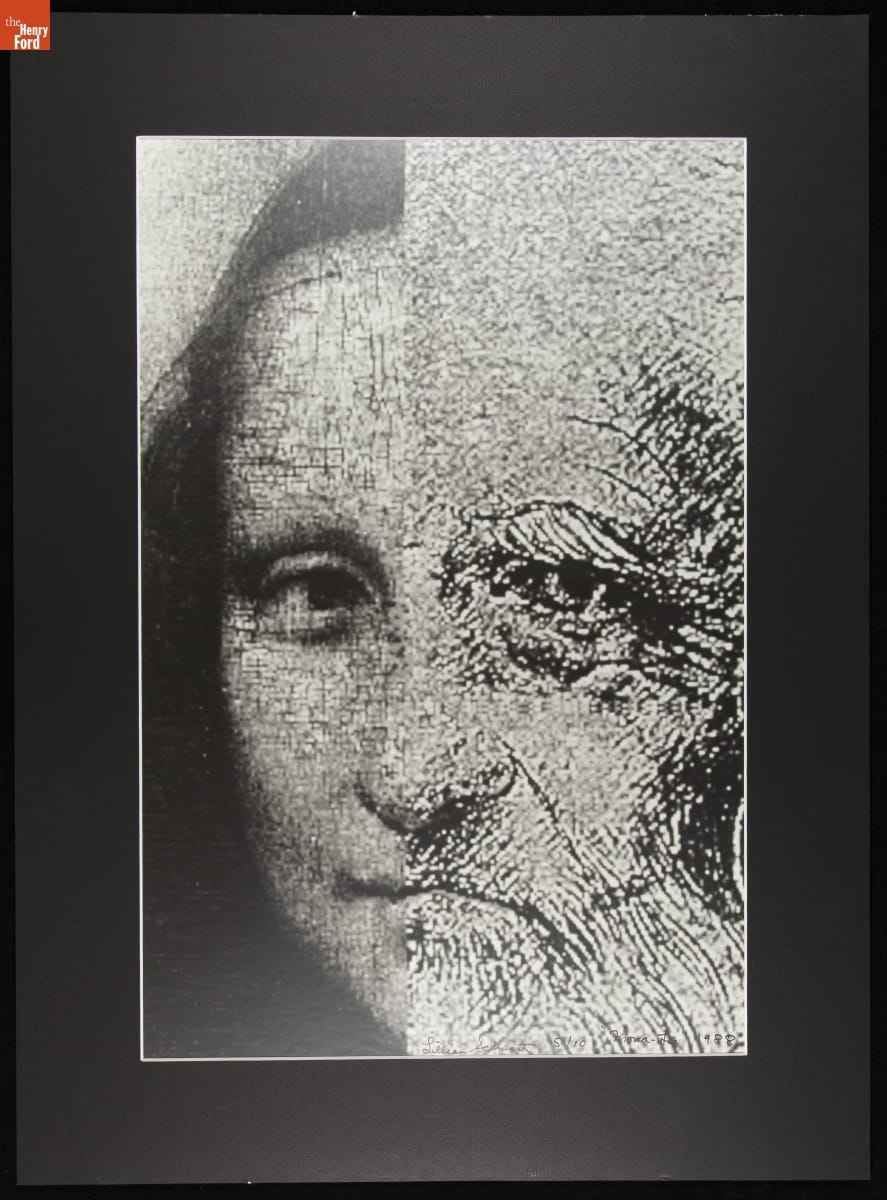
- "Mona-Leo" by Lillian F. Schwartz, 1988 - Lillian Schwartz is a pioneer of computer-generated art. From 1969-2002, she was a "resident visitor" at Bell Laboratories, producing groundbreaking films, videos, and multimedia works. The Schwartz Collection spans Lillian's childhood into her late career, documenting an expansive mindset, mastery over traditional and experimental mediums alike--and above all--an ability to create inspirational connections between science, art, and technology.
- 1988
- Collections - Artifact
"Mona-Leo" by Lillian F. Schwartz, 1988
Lillian Schwartz is a pioneer of computer-generated art. From 1969-2002, she was a "resident visitor" at Bell Laboratories, producing groundbreaking films, videos, and multimedia works. The Schwartz Collection spans Lillian's childhood into her late career, documenting an expansive mindset, mastery over traditional and experimental mediums alike--and above all--an ability to create inspirational connections between science, art, and technology.
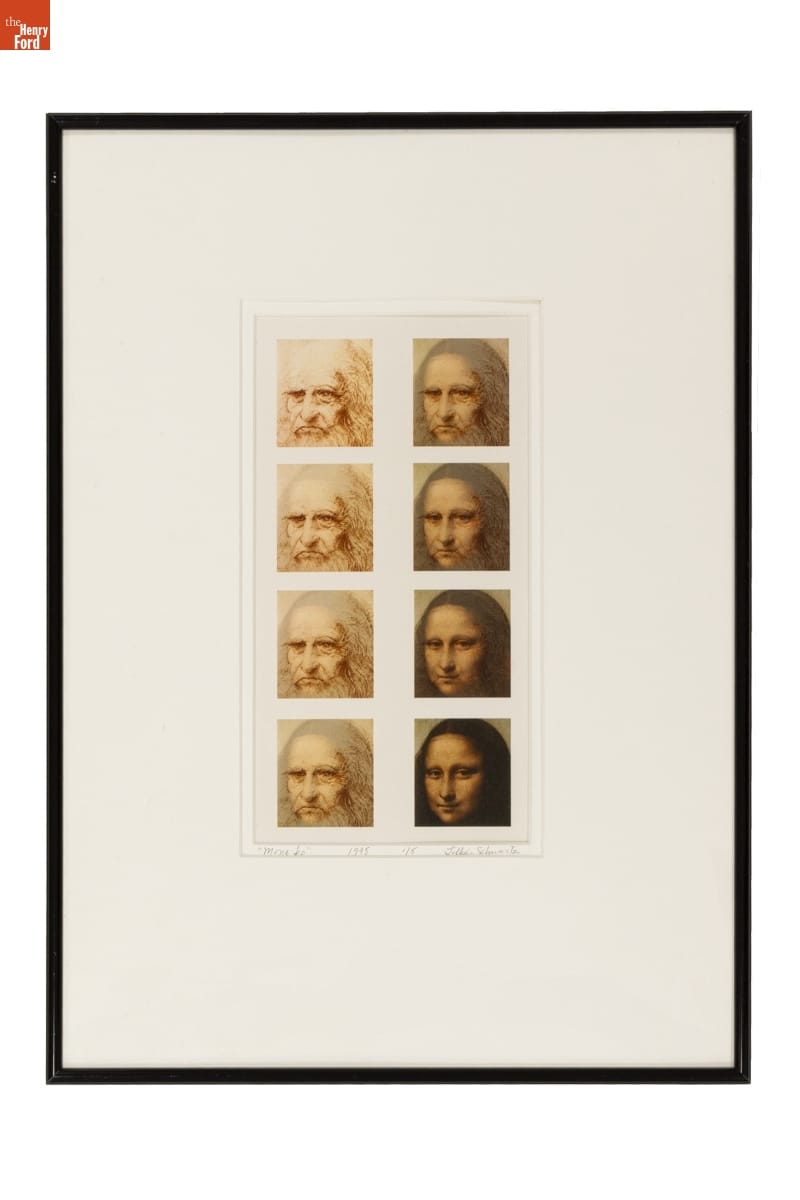
- "Mona-Leo" by Lillian F. Schwartz, 1995 - Lillian Schwartz is a pioneer of computer-generated art. From 1969-2002, she was a "resident visitor" at Bell Laboratories, producing groundbreaking films, videos, and multimedia works. The Schwartz Collection spans Lillian's childhood into her late career, documenting an expansive mindset, mastery over traditional and experimental mediums alike--and above all--an ability to create inspirational connections between science, art, and technology.
- 1995
- Collections - Artifact
"Mona-Leo" by Lillian F. Schwartz, 1995
Lillian Schwartz is a pioneer of computer-generated art. From 1969-2002, she was a "resident visitor" at Bell Laboratories, producing groundbreaking films, videos, and multimedia works. The Schwartz Collection spans Lillian's childhood into her late career, documenting an expansive mindset, mastery over traditional and experimental mediums alike--and above all--an ability to create inspirational connections between science, art, and technology.
- Leo Goossen - Learn the story of Leo Goossen — automotive draftsman, engineer, and one of the most influential engine designers in American auto racing — in this installment of our History Outside the Box program.

- November 21, 2022
- Collections - article
Leo Goossen
Learn the story of Leo Goossen — automotive draftsman, engineer, and one of the most influential engine designers in American auto racing — in this installment of our History Outside the Box program.
- Christmas Card, "Peaceful Night," Artwork by Leo J. Meissner, 1945 - The American Artists Group was founded in 1934 to bring contemporary art into American homes at affordable prices and help artists earn a living during the Depression. The organization quickly turned to publishing Christmas cards, which remains the focus of its activities. More than 400 artists, like Michigan-born painter, pastelist, and printmaker Leo J. Meissner, have supplied artwork for these holiday greetings.
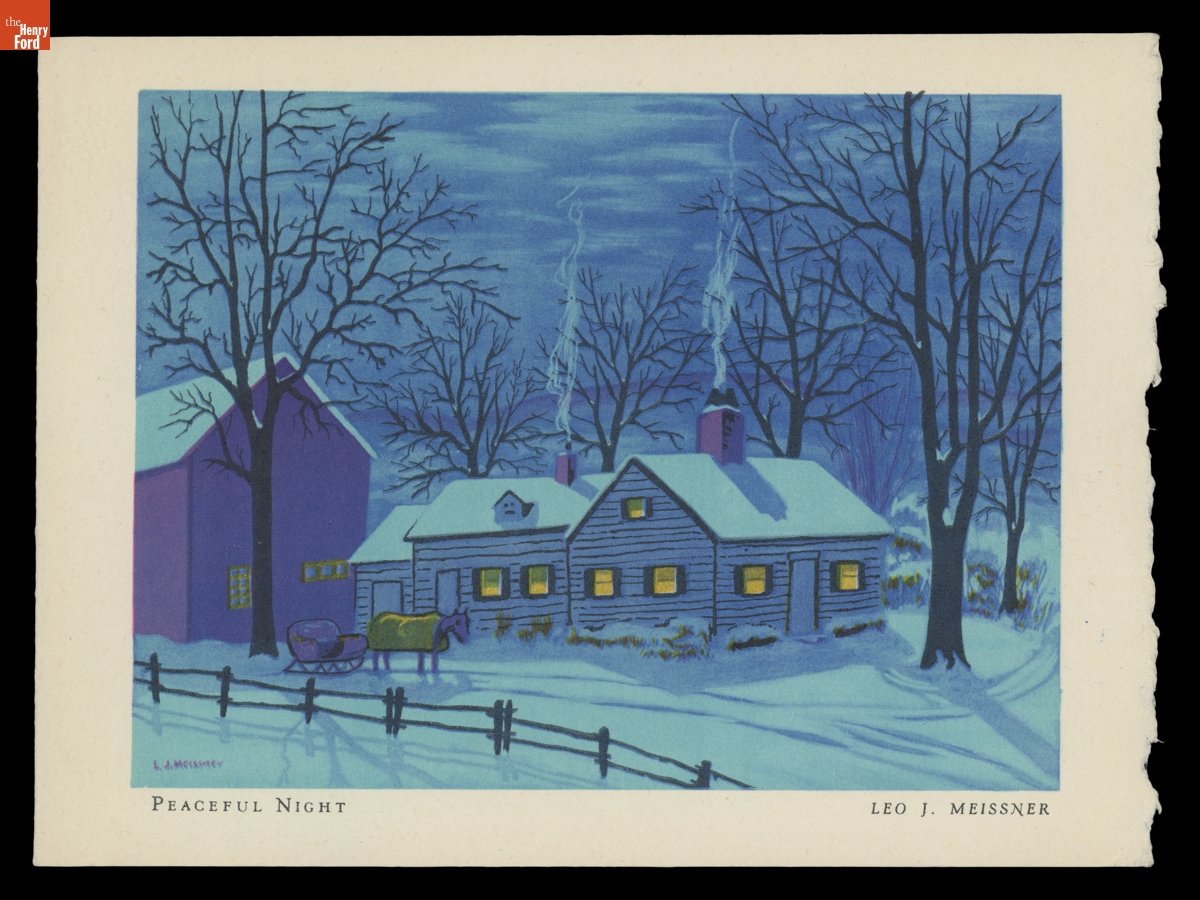
- 1945
- Collections - Artifact
Christmas Card, "Peaceful Night," Artwork by Leo J. Meissner, 1945
The American Artists Group was founded in 1934 to bring contemporary art into American homes at affordable prices and help artists earn a living during the Depression. The organization quickly turned to publishing Christmas cards, which remains the focus of its activities. More than 400 artists, like Michigan-born painter, pastelist, and printmaker Leo J. Meissner, have supplied artwork for these holiday greetings.
- Christmas Card with Artwork by Leo J. Meissner, 1945 - The American Artists Group was founded in 1934 to bring contemporary art into American homes at affordable prices and help artists earn a living during the Depression. The organization quickly turned to publishing Christmas cards, which remains the focus of its activities. More than 400 artists, like Michigan-born painter, pastelist, and printmaker Leo J. Meissner, have supplied artwork for these holiday greetings.
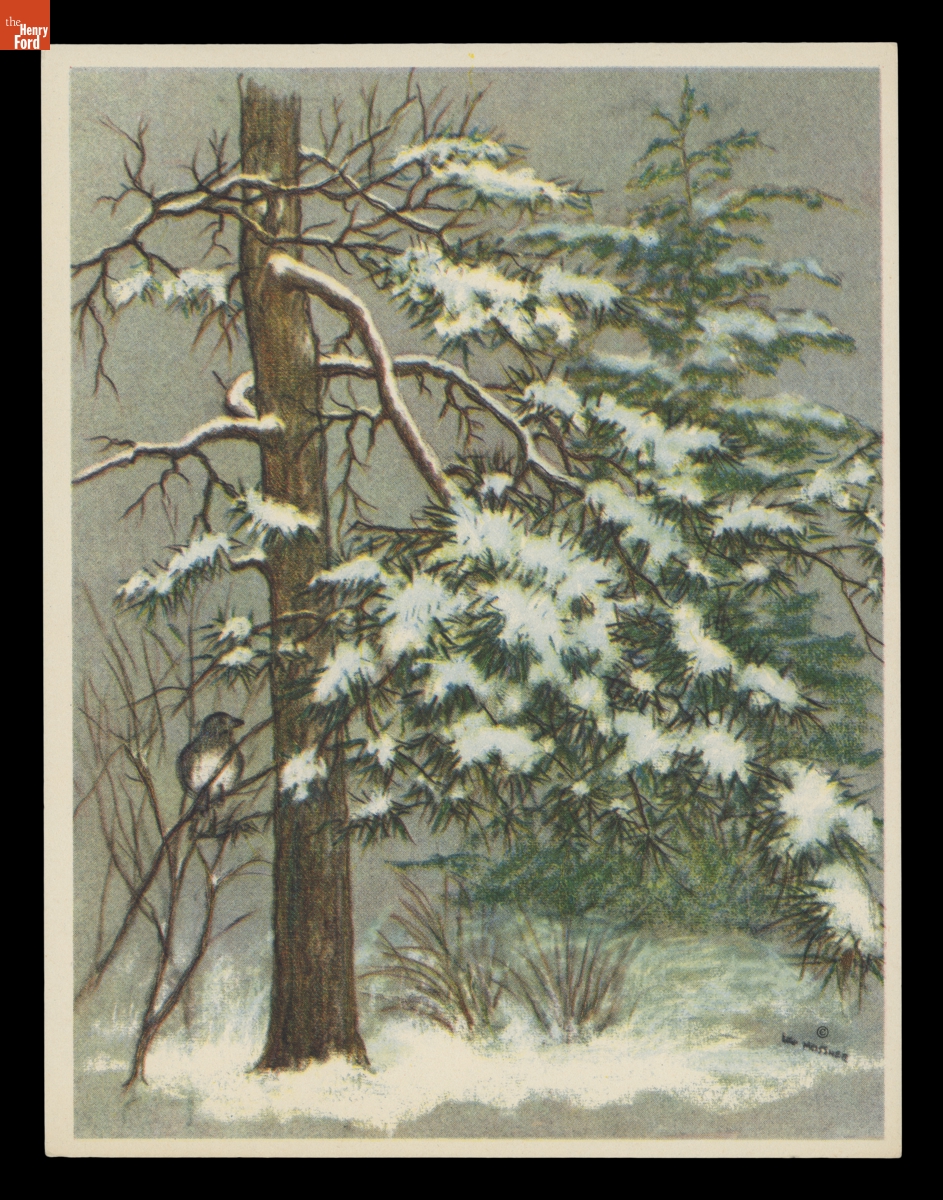
- 1945
- Collections - Artifact
Christmas Card with Artwork by Leo J. Meissner, 1945
The American Artists Group was founded in 1934 to bring contemporary art into American homes at affordable prices and help artists earn a living during the Depression. The organization quickly turned to publishing Christmas cards, which remains the focus of its activities. More than 400 artists, like Michigan-born painter, pastelist, and printmaker Leo J. Meissner, have supplied artwork for these holiday greetings.
- Christmas Card with Artwork by Leo J. Meissner, 1946 - The American Artists Group was founded in 1934 to bring contemporary art into American homes at affordable prices and help artists earn a living during the Depression. The organization quickly turned to publishing Christmas cards, which remains the focus of its activities. More than 400 artists, like Michigan-born painter, pastelist, and printmaker Leo J. Meissner, have supplied artwork for these holiday greetings.
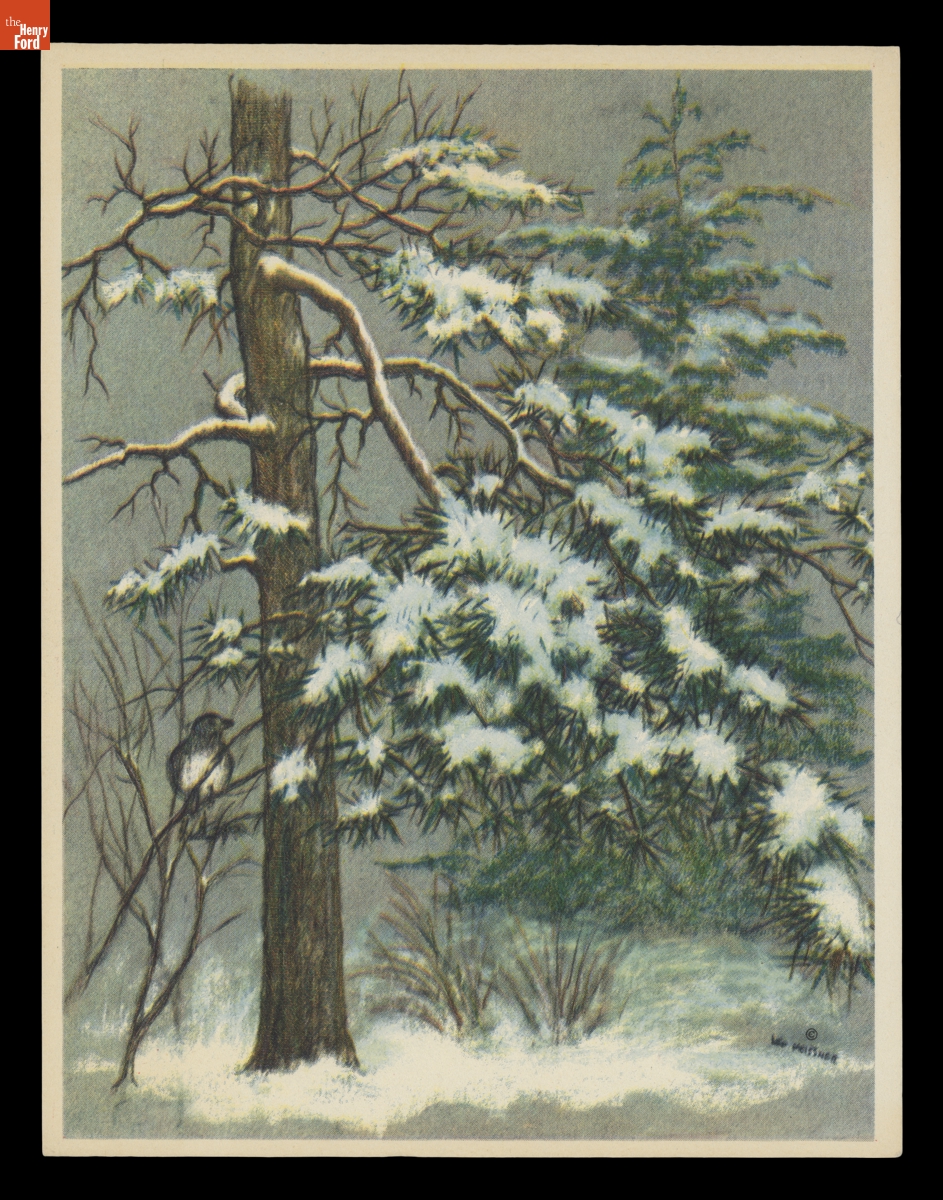
- 1946
- Collections - Artifact
Christmas Card with Artwork by Leo J. Meissner, 1946
The American Artists Group was founded in 1934 to bring contemporary art into American homes at affordable prices and help artists earn a living during the Depression. The organization quickly turned to publishing Christmas cards, which remains the focus of its activities. More than 400 artists, like Michigan-born painter, pastelist, and printmaker Leo J. Meissner, have supplied artwork for these holiday greetings.