
Search
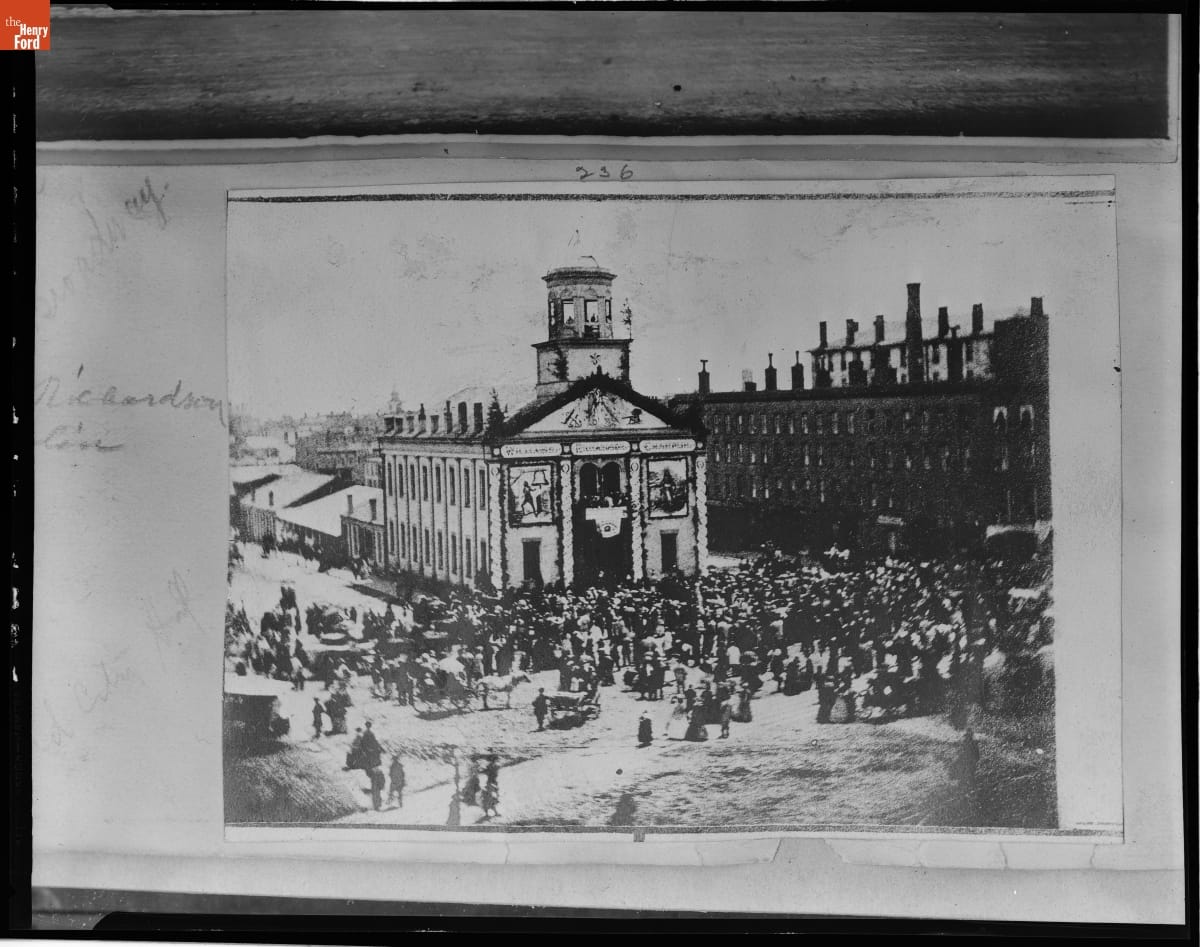
- Detroit's Original City Hall Building with Market Sheds Behind, 1861-1871 -
- 1857-1871
- Collections - Artifact
Detroit's Original City Hall Building with Market Sheds Behind, 1861-1871
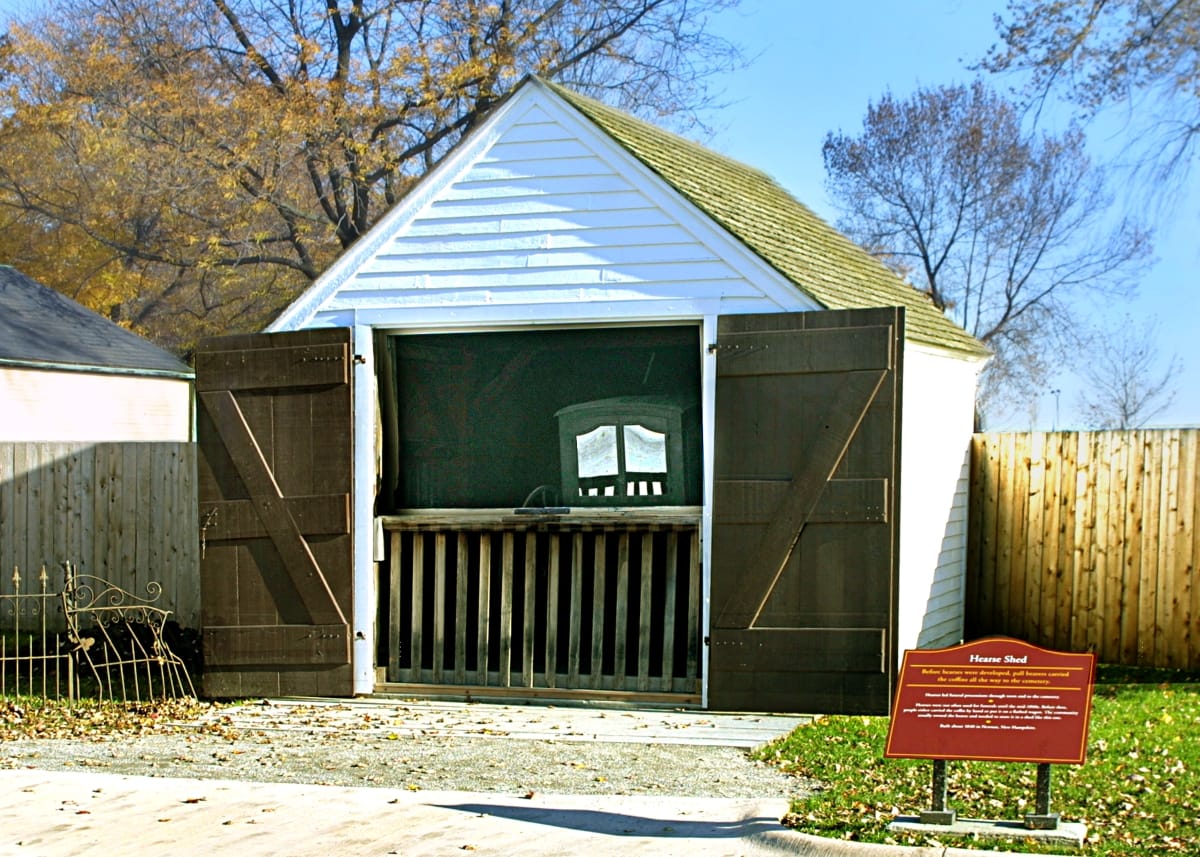
- Hearse Shed - This shed, originally built in Newton, New Hampshire, around 1850, was located near the local cemetery. Horse-drawn hearses, usually owned by the local community, were used to carry the coffin during funeral processions through town to the cemetery.
- circa 1850
- Collections - Artifact
Hearse Shed
This shed, originally built in Newton, New Hampshire, around 1850, was located near the local cemetery. Horse-drawn hearses, usually owned by the local community, were used to carry the coffin during funeral processions through town to the cemetery.
- A Market Shed in Its 160th Year - The vegetable building from Detroit’s Central Market holds over a century of stories – from the vendors and shoppers who brought it bustling to life in the 19th century, to the curators, preservationists and experts reconstructing it in Greenfield Village today. In this exclusive panel program, we’ll peek behind the scenes of the construction project and reveal plans for the 2022 opening.

- August 26, 2021
- Collections - Video
A Market Shed in Its 160th Year
The vegetable building from Detroit’s Central Market holds over a century of stories – from the vendors and shoppers who brought it bustling to life in the 19th century, to the curators, preservationists and experts reconstructing it in Greenfield Village today. In this exclusive panel program, we’ll peek behind the scenes of the construction project and reveal plans for the 2022 opening.
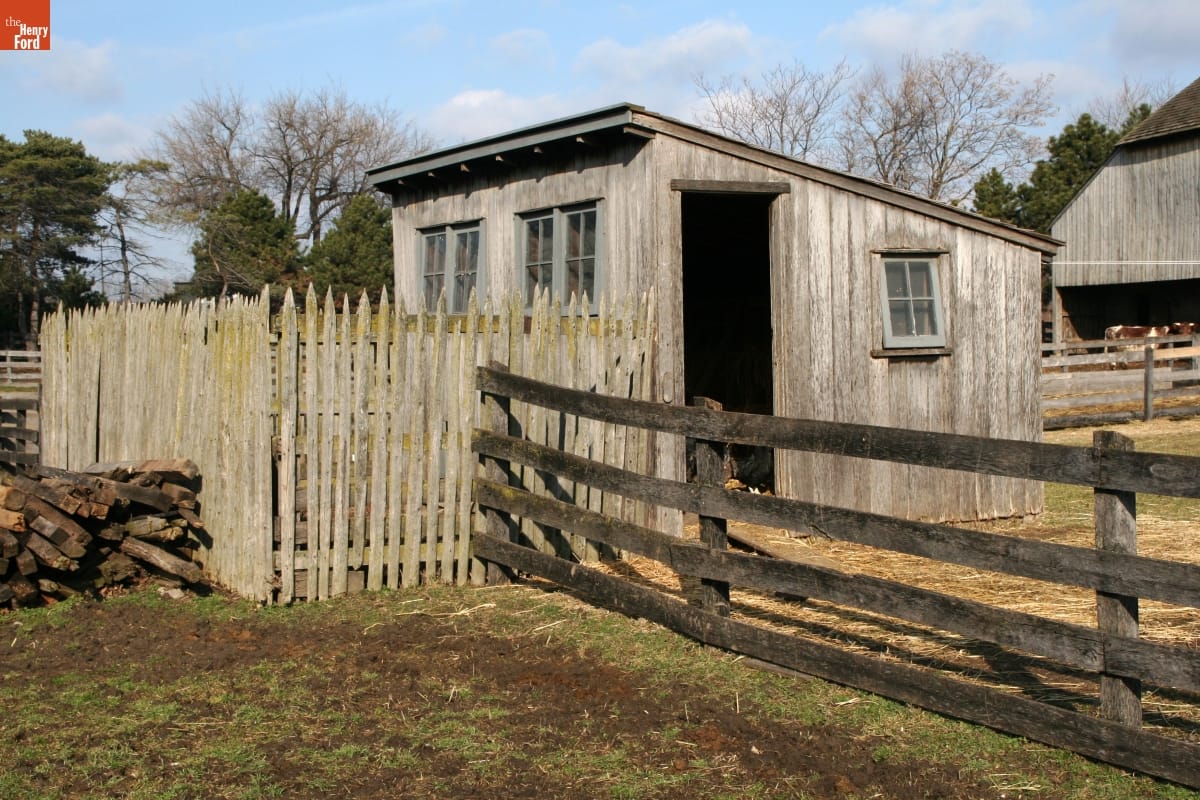
- Firestone Chicken Shed - This is a replica of the Firestones' chicken house in Ohio. Chickens spend their days in the farmyard, foraging for seeds and bugs for food. They spend their nights on their roosts in the chicken house, which provides warmth, protection from predators, and keeps the eggs in one place, making them easier to gather.
- 1880-1889
- Collections - Artifact
Firestone Chicken Shed
This is a replica of the Firestones' chicken house in Ohio. Chickens spend their days in the farmyard, foraging for seeds and bugs for food. They spend their nights on their roosts in the chicken house, which provides warmth, protection from predators, and keeps the eggs in one place, making them easier to gather.
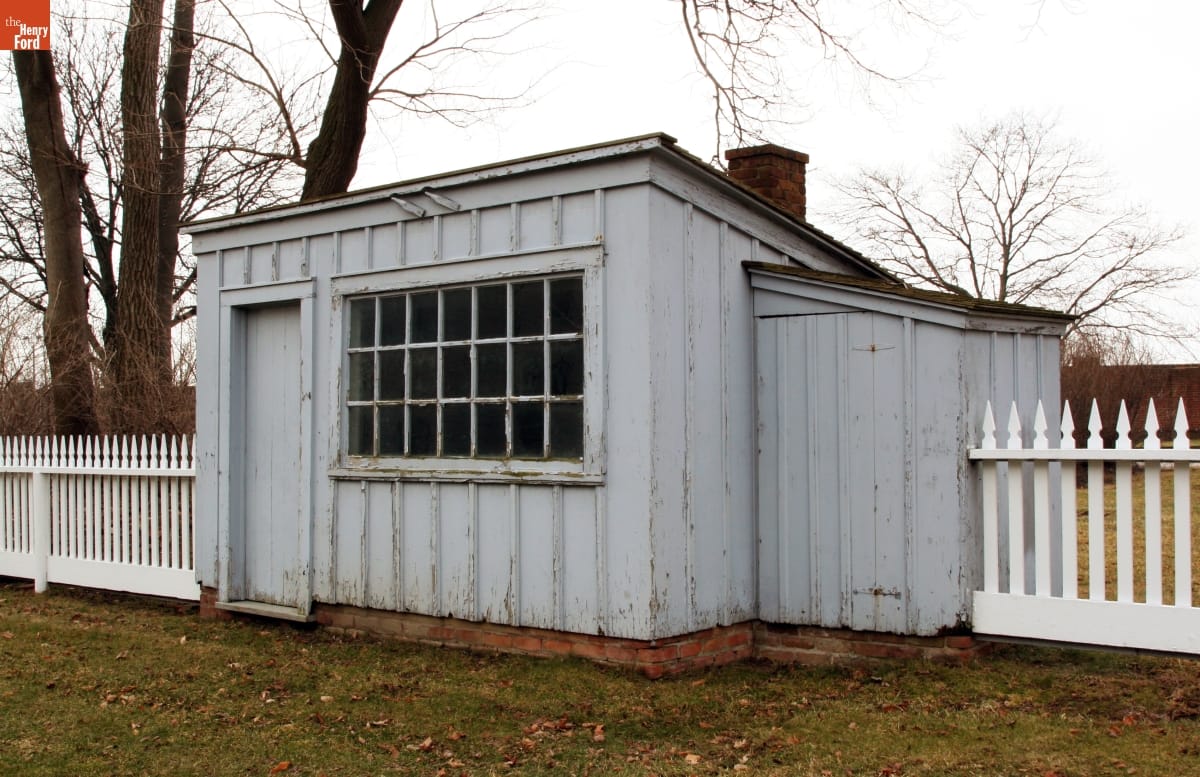
- Menlo Park Carbon Shed - Edison's invention of the carbon telephone transmitter in 1877 is what made the telephone commercially practical. This small wooden shed housed a battery of kerosene lamps, kept lit and set to produce carbon soot. The soot was collected and compressed into carbon tablets for telephone transmitters. Edison also used the carbon produced in this shed for various other experiments.
- circa 1879
- Collections - Artifact
Menlo Park Carbon Shed
Edison's invention of the carbon telephone transmitter in 1877 is what made the telephone commercially practical. This small wooden shed housed a battery of kerosene lamps, kept lit and set to produce carbon soot. The soot was collected and compressed into carbon tablets for telephone transmitters. Edison also used the carbon produced in this shed for various other experiments.
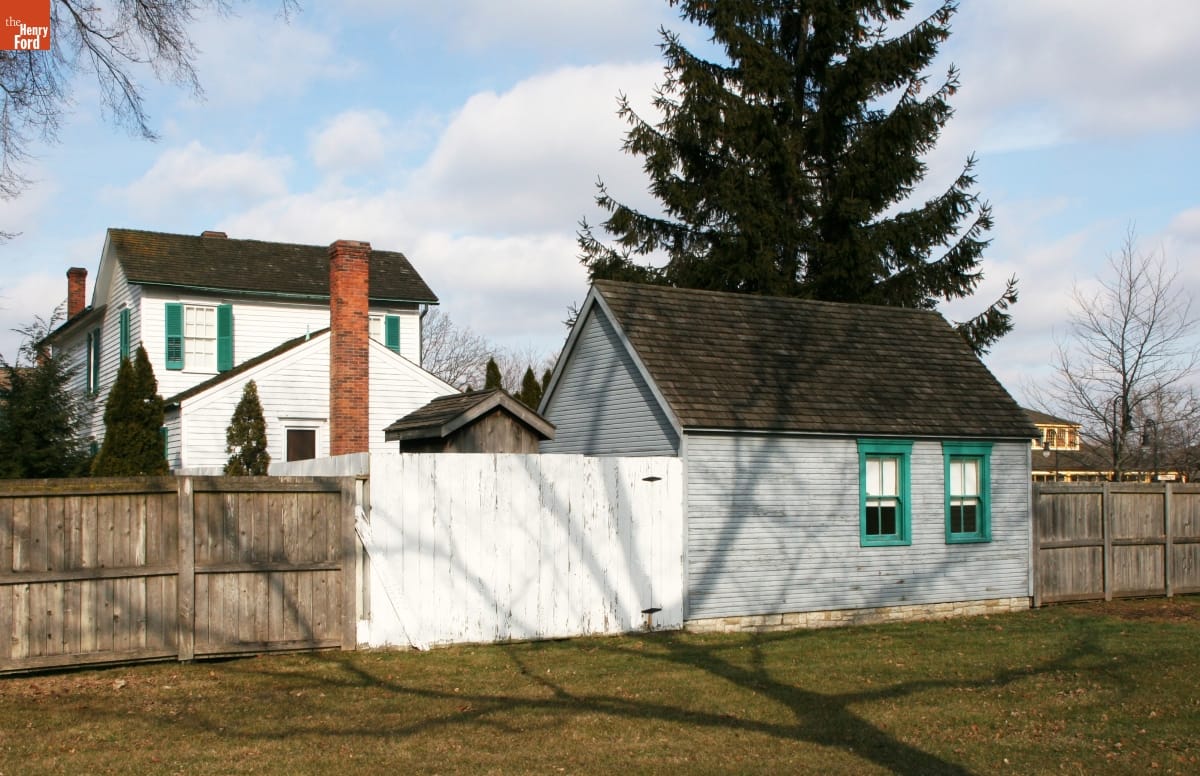
- Wright Brothers Garden Shed - Orville and Wilbur Wright were enthusiastic photographers who took many shots of their family and friends. They also took numerous photos of their gliders and airplanes, and those images remain vital records of the airplane's invention. The brothers developed their glass plate negatives in a darkroom they built in the shed behind the family home.
- 1870-1900
- Collections - Artifact
Wright Brothers Garden Shed
Orville and Wilbur Wright were enthusiastic photographers who took many shots of their family and friends. They also took numerous photos of their gliders and airplanes, and those images remain vital records of the airplane's invention. The brothers developed their glass plate negatives in a darkroom they built in the shed behind the family home.
- Reading an Artifact: The Reconstructed Detroit Central Market Vegetable Shed - Become a building detective by exploring architectural highlights from the new Detroit Central Market vegetable building in Greenfield Village.

- April 13, 2022
- Collections - article
Reading an Artifact: The Reconstructed Detroit Central Market Vegetable Shed
Become a building detective by exploring architectural highlights from the new Detroit Central Market vegetable building in Greenfield Village.
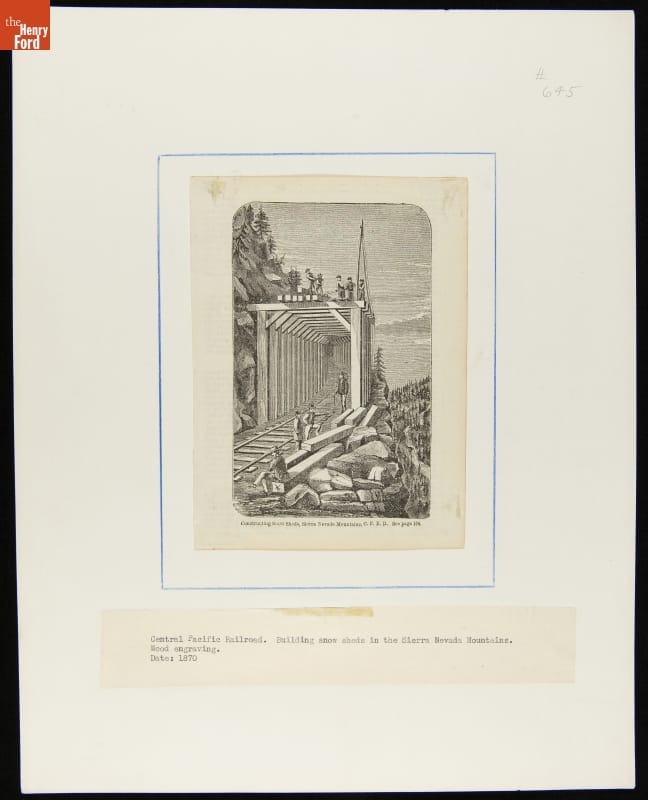
- Constructing Snow Sheds, Sierra Nevada Mountains, 1870 - The Central Pacific Railroad crossed the Sierra Nevada Mountains through Donner Pass, some 7,000 feet above sea level. Winter snows -- up to 40 feet in a season -- were a menace, first to the railroad's construction and then to its operation. CP dealt with the problem by building some 40 miles of sheds to protect its track from snowfalls and snowslides.
- 1870
- Collections - Artifact
Constructing Snow Sheds, Sierra Nevada Mountains, 1870
The Central Pacific Railroad crossed the Sierra Nevada Mountains through Donner Pass, some 7,000 feet above sea level. Winter snows -- up to 40 feet in a season -- were a menace, first to the railroad's construction and then to its operation. CP dealt with the problem by building some 40 miles of sheds to protect its track from snowfalls and snowslides.
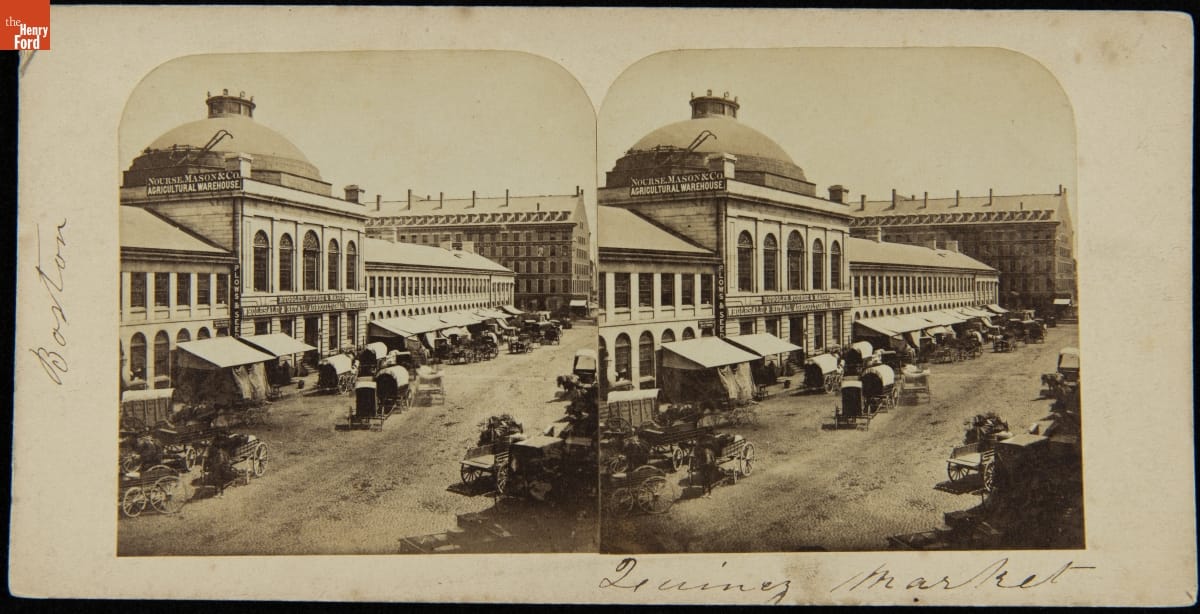
- Boston, Quincy Market -
- Collections - Artifact
Boston, Quincy Market
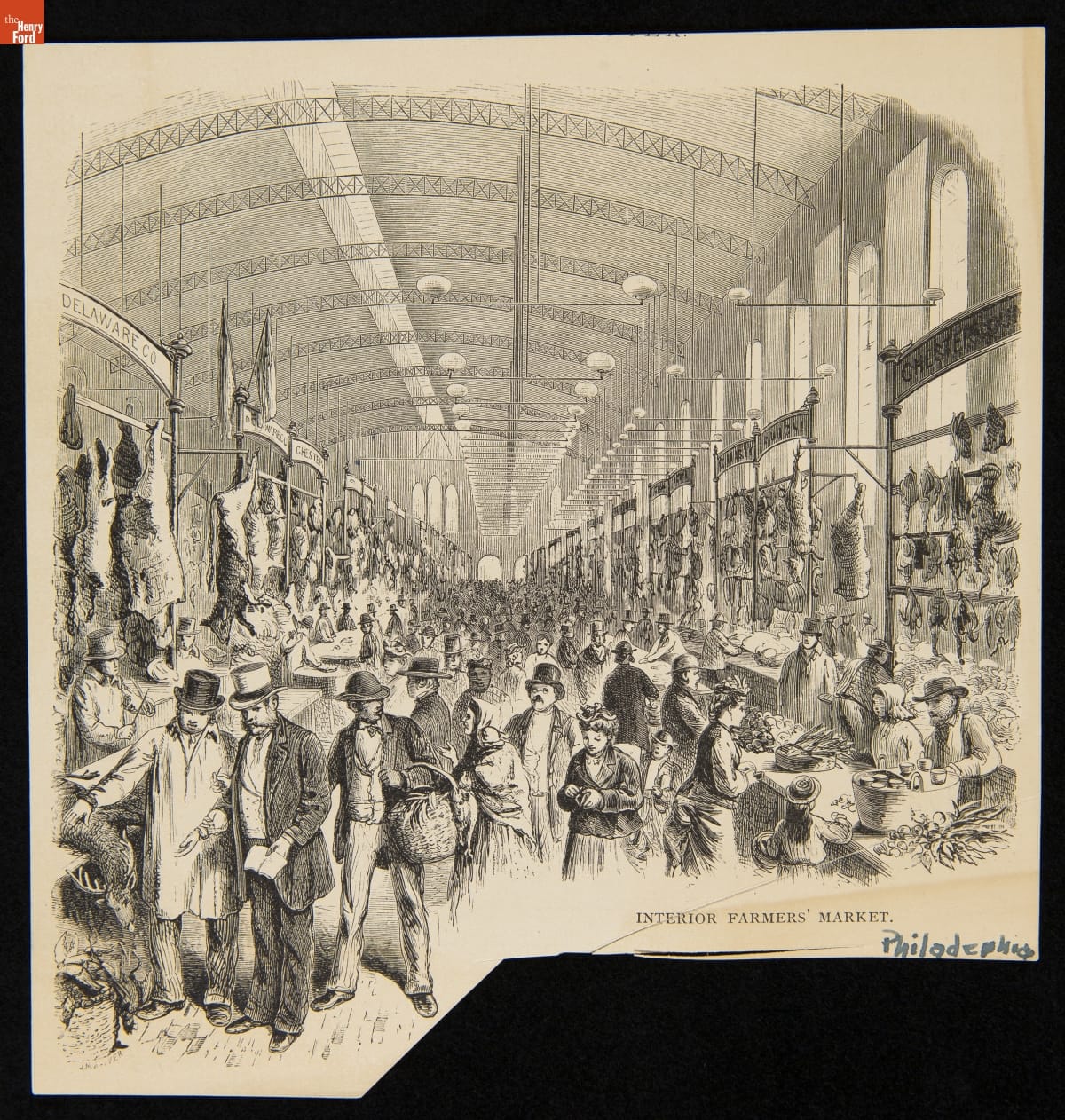
- Interior Farmers' Market, 1875 -
- 1875
- Collections - Artifact
Interior Farmers' Market, 1875