
Search
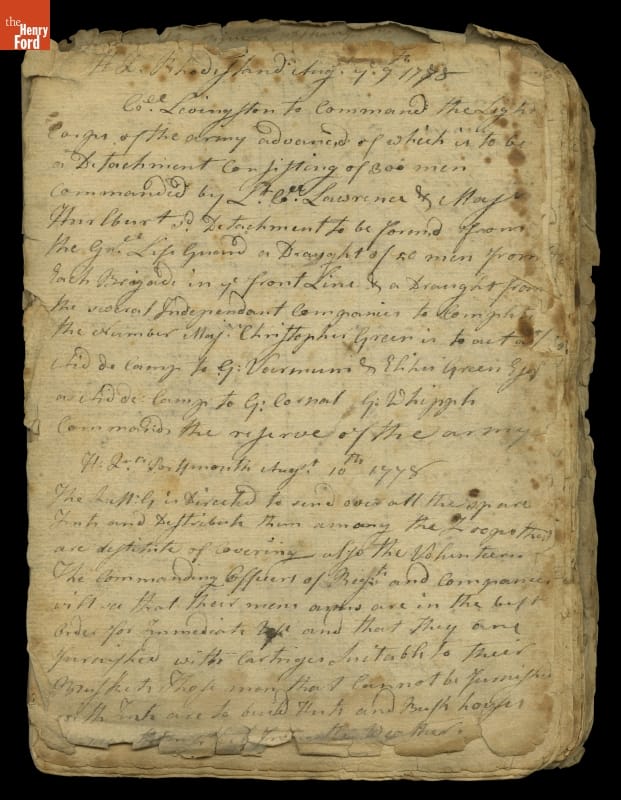
- Connecticut Militia Orderly Book, August-September 1778 - During August 1778, a regiment from the Connecticut militia joined other Continental forces at the Battle of Rhode Island as they attempted to retake the city of Newport from the British. The militia's time in Rhode Island was documented in this orderly book, a journal that kept track of general orders, muster rolls, and the day-to-day happenings of each military unit.
- August 1778-September 1778
- Collections - Artifact
Connecticut Militia Orderly Book, August-September 1778
During August 1778, a regiment from the Connecticut militia joined other Continental forces at the Battle of Rhode Island as they attempted to retake the city of Newport from the British. The militia's time in Rhode Island was documented in this orderly book, a journal that kept track of general orders, muster rolls, and the day-to-day happenings of each military unit.
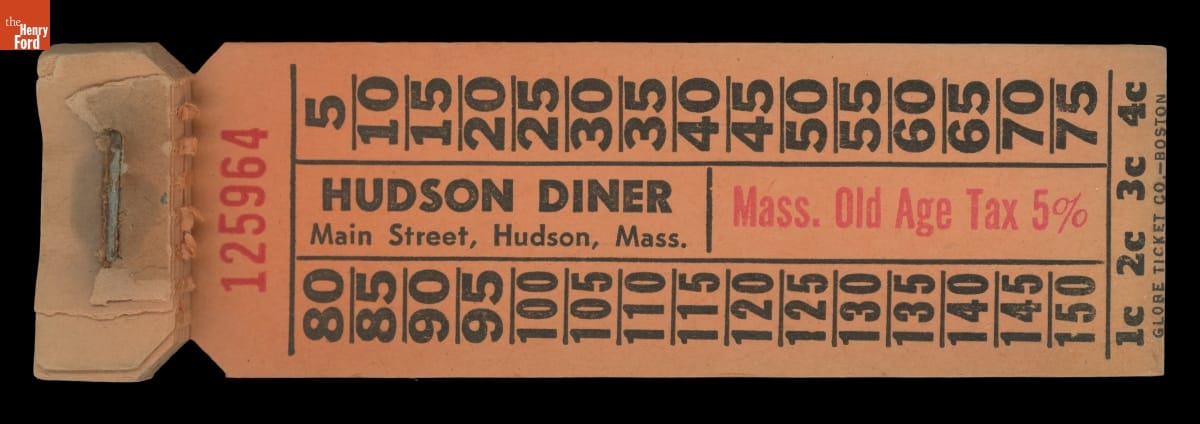
- Meal Order Ticket Book for Hudson Diner, Hudson, Massachusetts, 1950-1955 -
- 1950-1955
- Collections - Artifact
Meal Order Ticket Book for Hudson Diner, Hudson, Massachusetts, 1950-1955
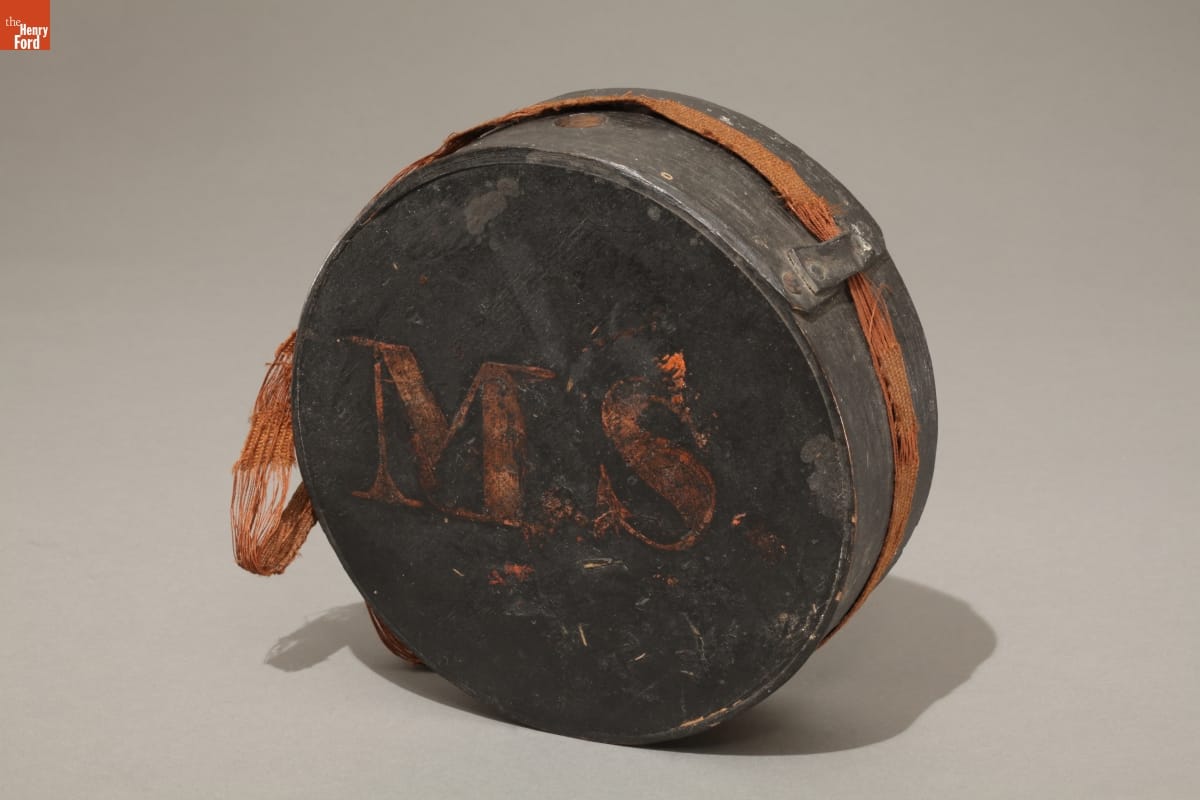
- Canteen, Made for a Massachusetts Militia, circa 1810 - This canteen, called a "cheesebox" for its similarity to boxes made to hold wheels of cheese, identifies the Massachusetts Militia (M.S.). A number of similarly decorated canteens survive. The reverse is labeled N.R., possibly a maker's mark. The O B scratched into the surface may be the militia member's initials or those of a later owner.
- circa 1810
- Collections - Artifact
Canteen, Made for a Massachusetts Militia, circa 1810
This canteen, called a "cheesebox" for its similarity to boxes made to hold wheels of cheese, identifies the Massachusetts Militia (M.S.). A number of similarly decorated canteens survive. The reverse is labeled N.R., possibly a maker's mark. The O B scratched into the surface may be the militia member's initials or those of a later owner.
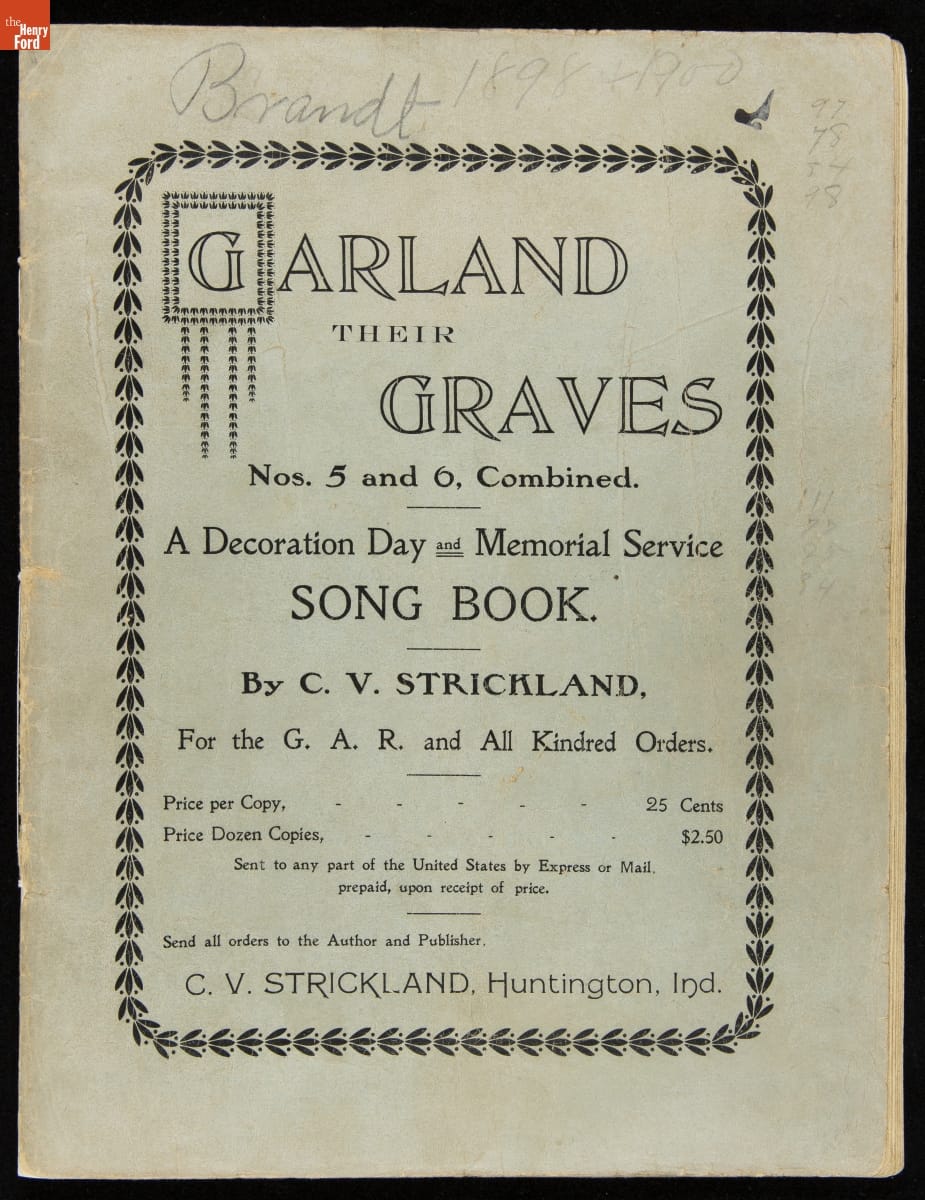
- Garland Their Graves: A Decoration Day and Memorial Service Song Book, for the G.A.R. and Kindred Orders, 1900 -
- 1900
- Collections - Artifact
Garland Their Graves: A Decoration Day and Memorial Service Song Book, for the G.A.R. and Kindred Orders, 1900
- Quartermaster Locke W. Winchester, 7th New York State Militia, 1861-1865 -
- 1861-1865
- Collections - Artifact
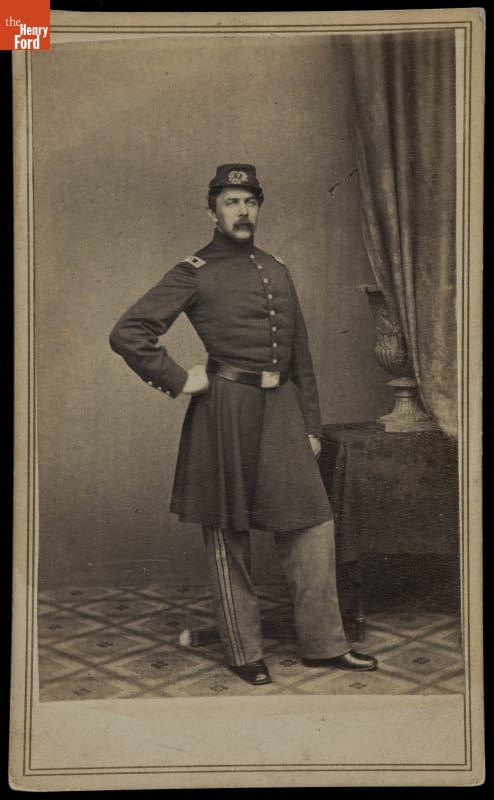
Quartermaster Locke W. Winchester, 7th New York State Militia, 1861-1865
- Forage Cap or Kepi, 1888-1895 -
- 1888-1895
- Collections - Artifact
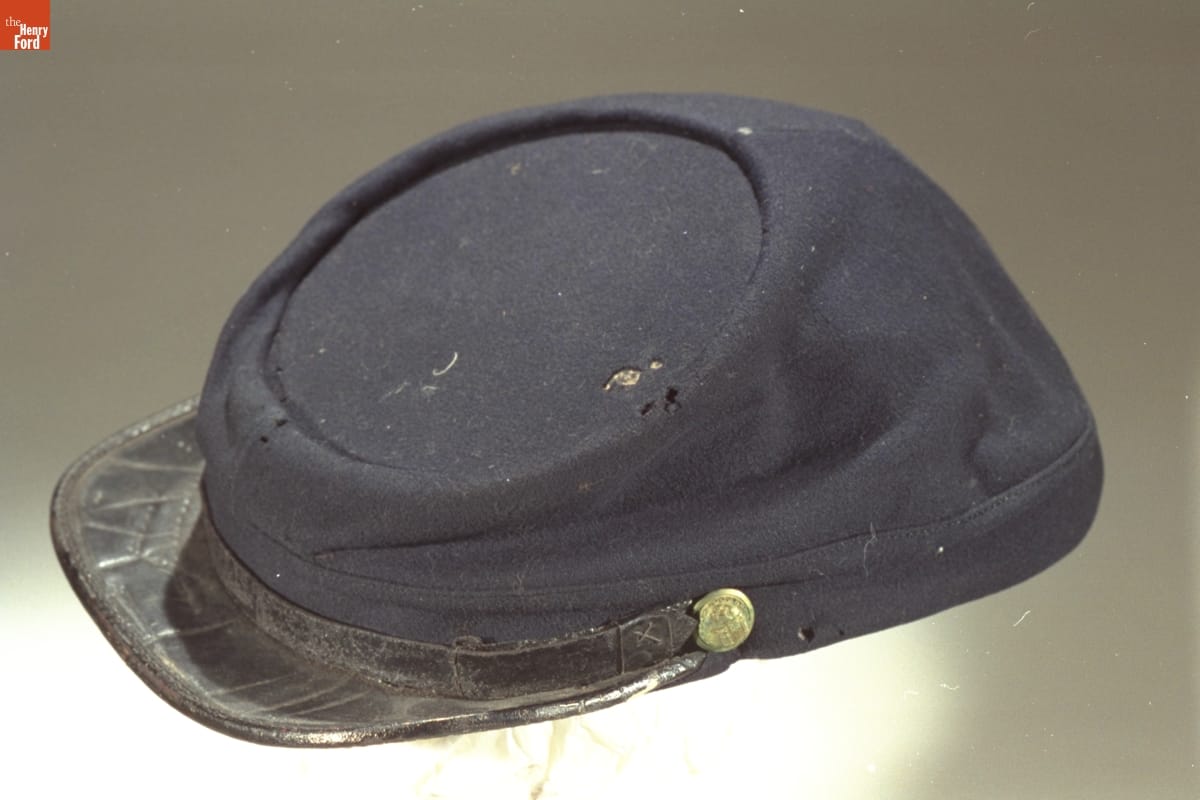
Forage Cap or Kepi, 1888-1895
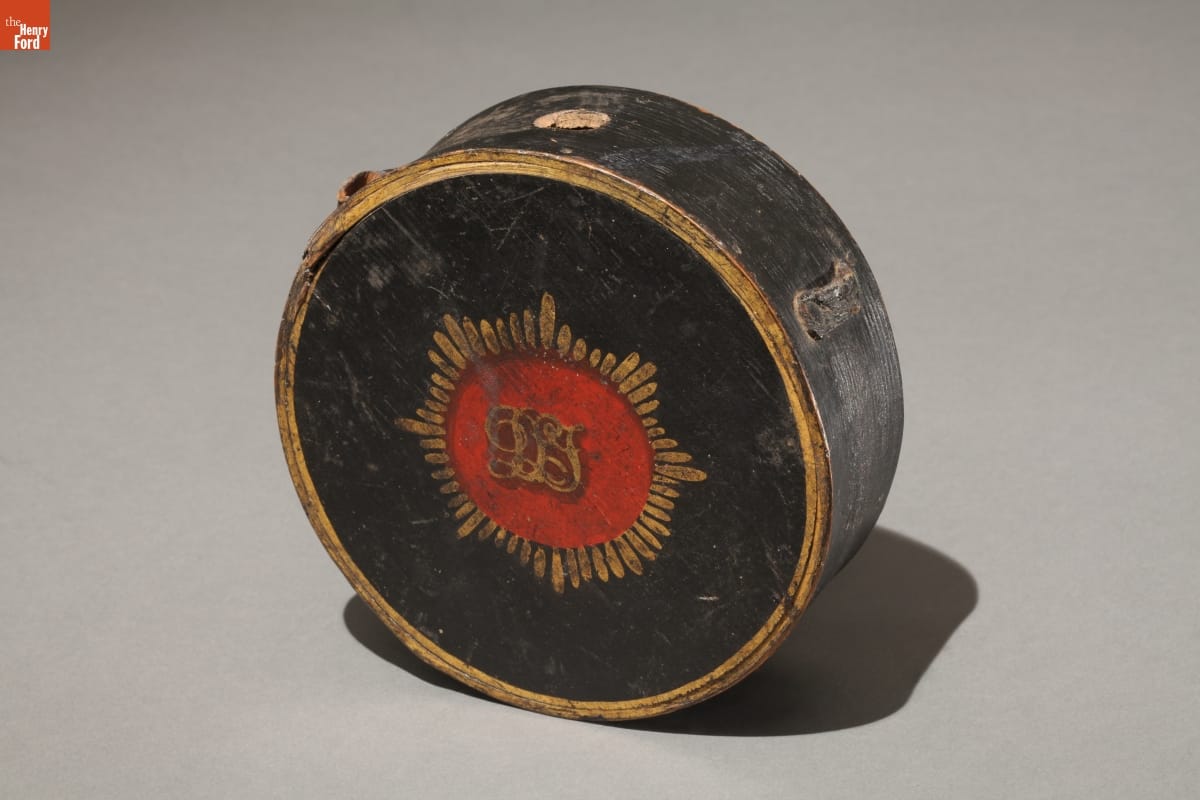
- Canteen, Made for a New York State Militia, circa 1810 - The number 21 on the reverse of this canteen refers to the New York State Militia soldier who used it. As with many New York canteens, the script initials stand for State of New York. But this example's gold rim and decorative painting distinguish it as a rare and ornate survival.
- circa 1810
- Collections - Artifact
Canteen, Made for a New York State Militia, circa 1810
The number 21 on the reverse of this canteen refers to the New York State Militia soldier who used it. As with many New York canteens, the script initials stand for State of New York. But this example's gold rim and decorative painting distinguish it as a rare and ornate survival.
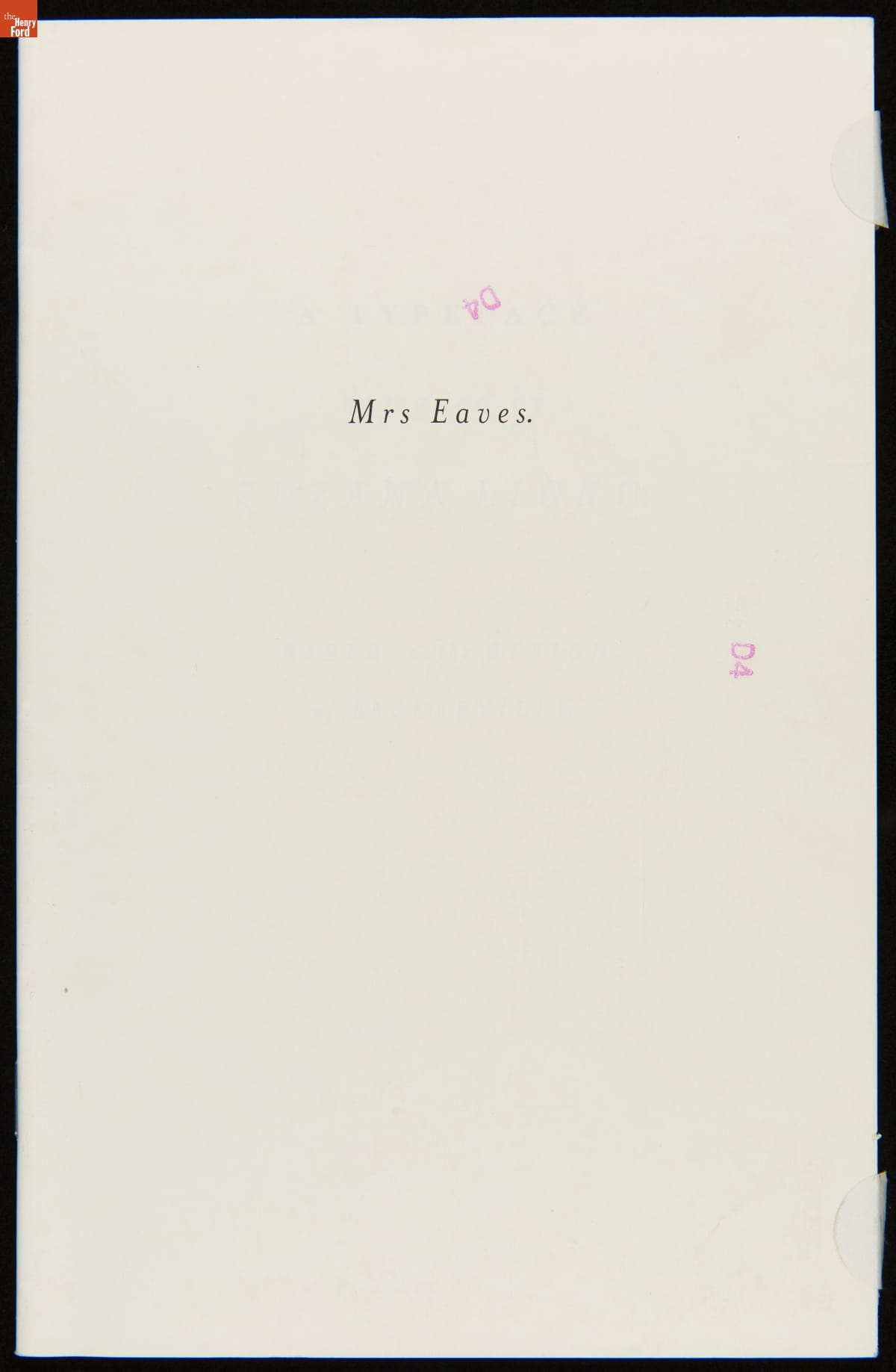
- Mail Order Catalog, "Mrs. Eaves," 1996 - Emigre is a digital type foundry established by Rudy VanderLans and Zuzana Licko. The company's history is linked with the introduction of the 1984 Macintosh computer, used to design their early bitmapped typefaces. Emigre's digital work gained notoriety -- defying visual communication standards with fractured, layered combinations of text and image. This item advertised fonts or other items available for purchase.
- 1996
- Collections - Artifact
Mail Order Catalog, "Mrs. Eaves," 1996
Emigre is a digital type foundry established by Rudy VanderLans and Zuzana Licko. The company's history is linked with the introduction of the 1984 Macintosh computer, used to design their early bitmapped typefaces. Emigre's digital work gained notoriety -- defying visual communication standards with fractured, layered combinations of text and image. This item advertised fonts or other items available for purchase.
- Notes regarding Binary Orders for Photoelectric Cells, 1963 -
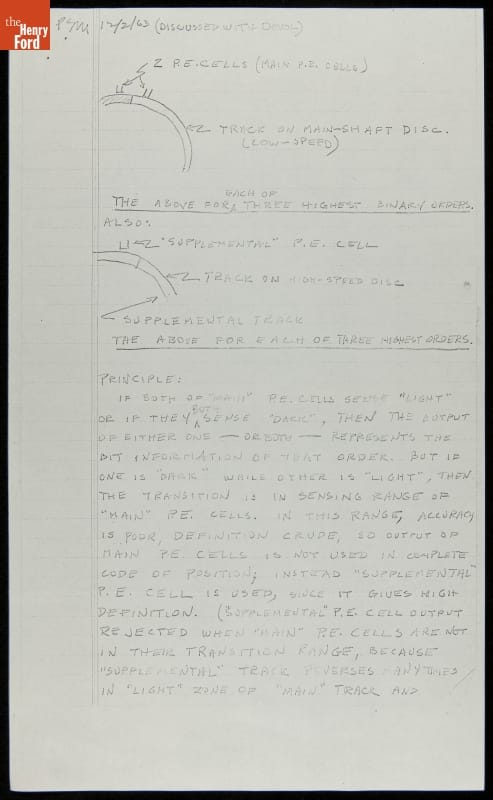
- December 02, 1963
- Collections - Artifact
Notes regarding Binary Orders for Photoelectric Cells, 1963
- Book, "Successful Farming's Soils Book," 1959 -
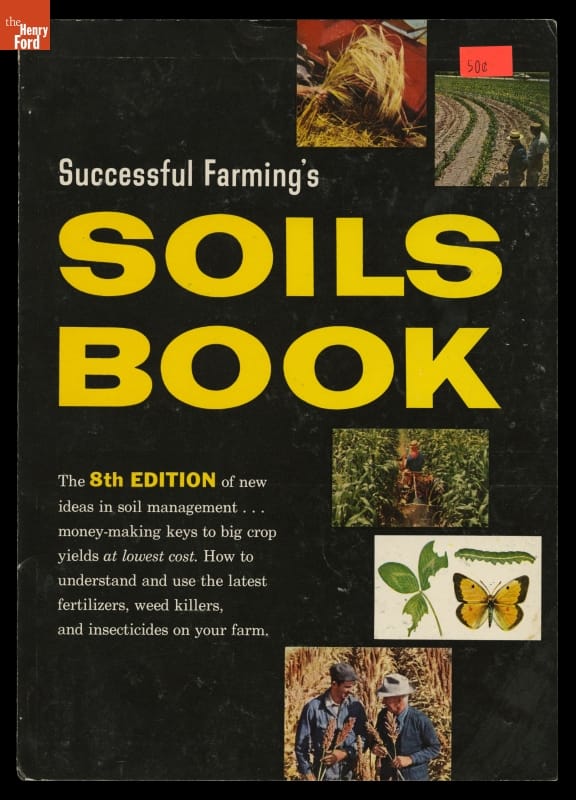
- 1959
- Collections - Artifact
Book, "Successful Farming's Soils Book," 1959