
Search
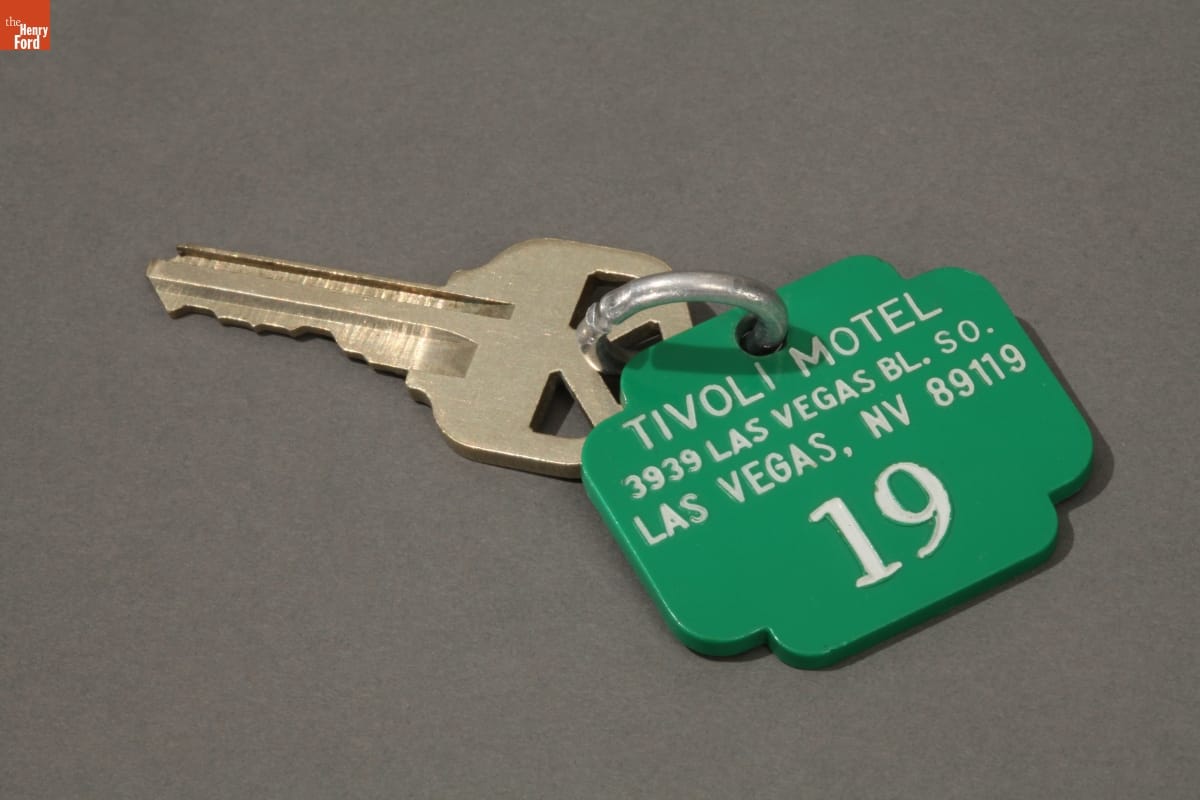
- Tivoli Motel Key, 1955-1980 - Weary mid-20th century travelers received keys to their rooms after they checked in. Today, many motels use electronic key cards to let customers access their rooms.
- 1955-1980
- Collections - Artifact
Tivoli Motel Key, 1955-1980
Weary mid-20th century travelers received keys to their rooms after they checked in. Today, many motels use electronic key cards to let customers access their rooms.
- Circle "S" Motel, 1956 -
- 1956
- Collections - Artifact
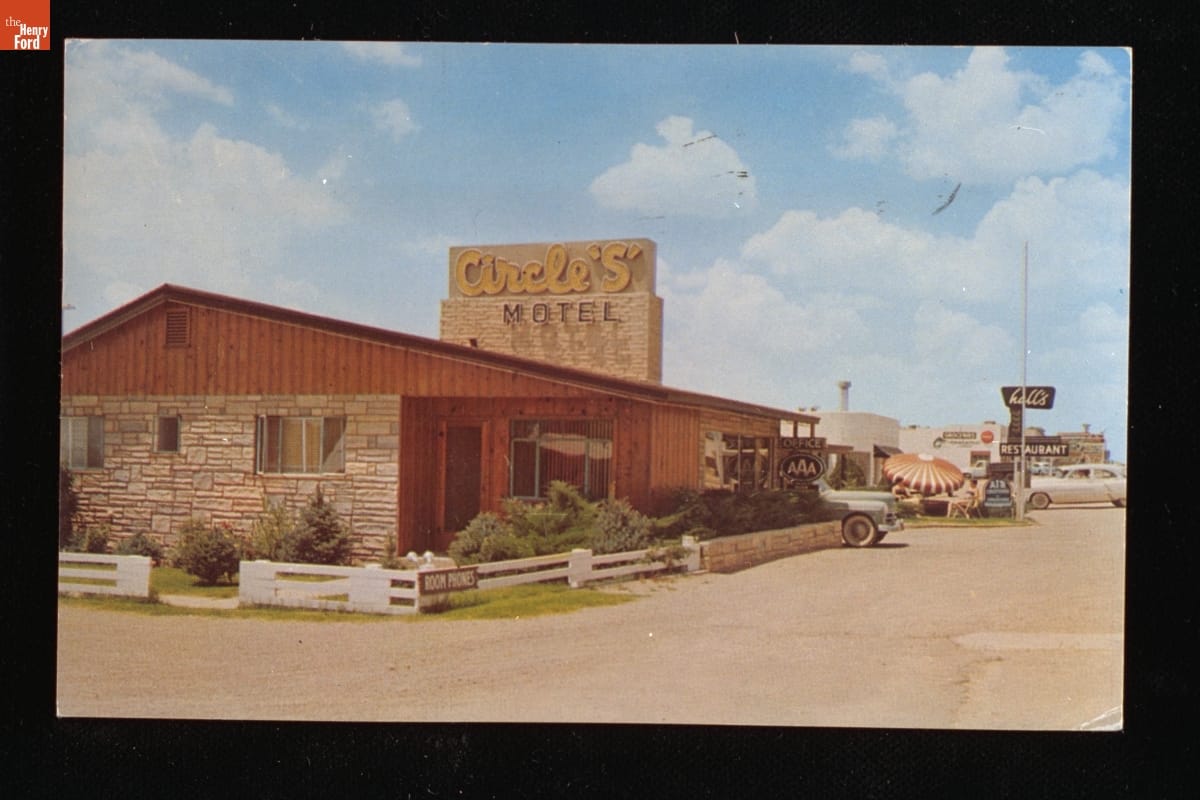
Circle "S" Motel, 1956
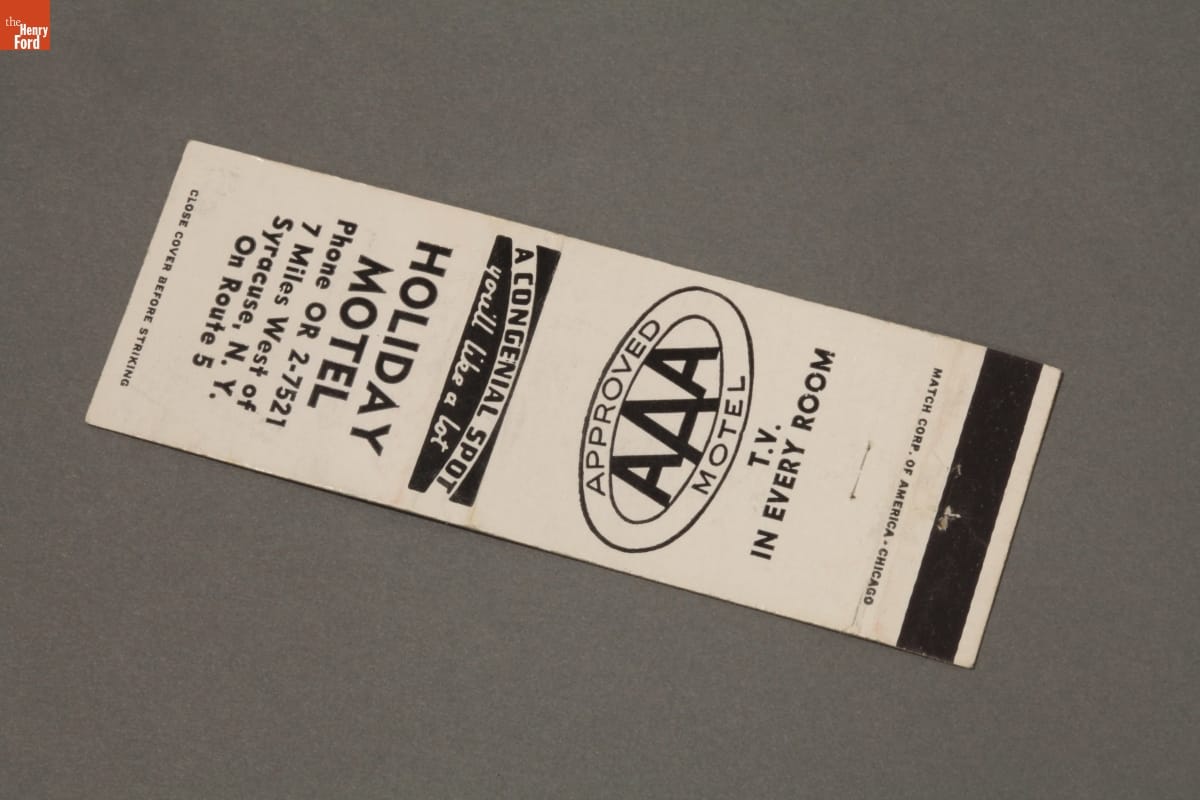
- Holiday Motel Matchbook, 1950-1960 - During the 1930s, primitive tourist cabins and cottage courts evolved into integrated lodging units called motels. As competition between motels increased, matches and ashtrays -- imprinted with the motel's name -- were often set on the dresser to advertise that motel and to encourage guests to keep their cigarette ashes contained. Matches often served as souvenirs of the stay.
- 1950-1960
- Collections - Artifact
Holiday Motel Matchbook, 1950-1960
During the 1930s, primitive tourist cabins and cottage courts evolved into integrated lodging units called motels. As competition between motels increased, matches and ashtrays -- imprinted with the motel's name -- were often set on the dresser to advertise that motel and to encourage guests to keep their cigarette ashes contained. Matches often served as souvenirs of the stay.
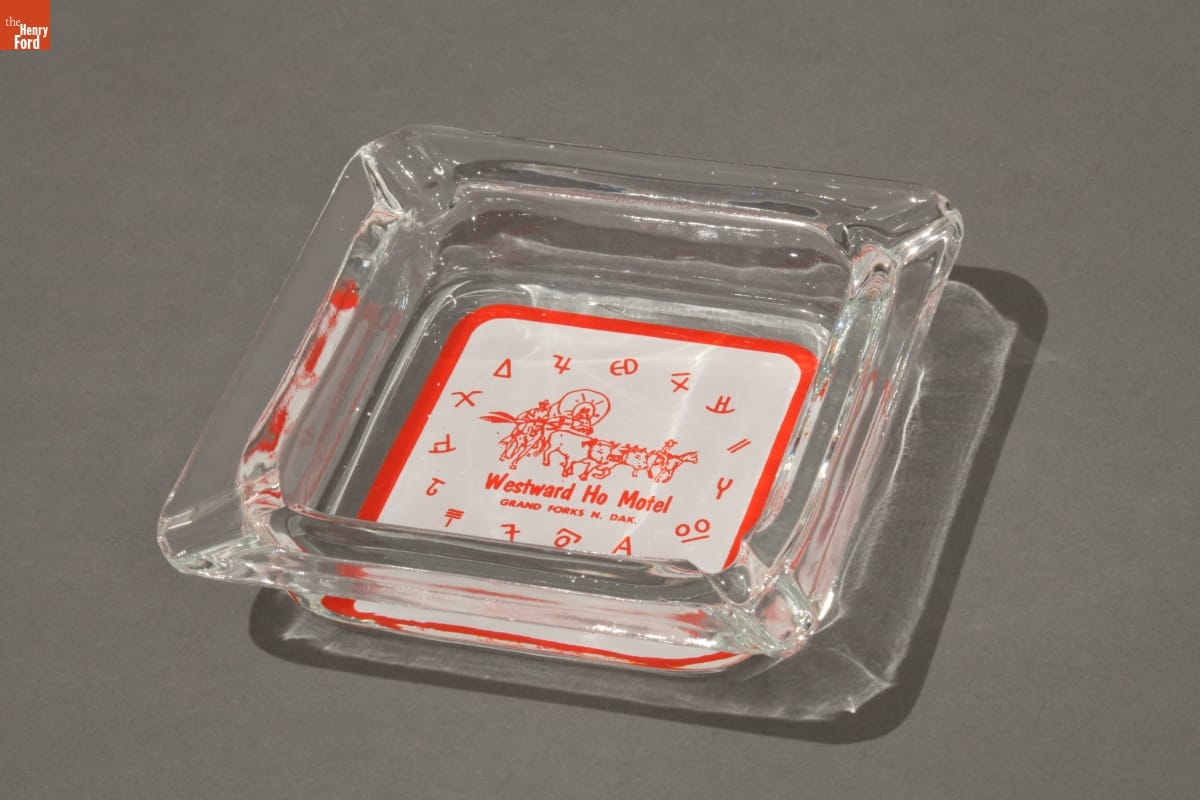
- Westward Ho Motel Ashtray, 1955-1970 - Local motels advertised on a variety of in-room, lobby, and restaurant furnishings. Ashtrays, such as this one from the Westward Ho Motel in Grand Forks, North Dakota, reminded travelers where to stay the next time they passed through town.
- 1955-1970
- Collections - Artifact
Westward Ho Motel Ashtray, 1955-1970
Local motels advertised on a variety of in-room, lobby, and restaurant furnishings. Ashtrays, such as this one from the Westward Ho Motel in Grand Forks, North Dakota, reminded travelers where to stay the next time they passed through town.
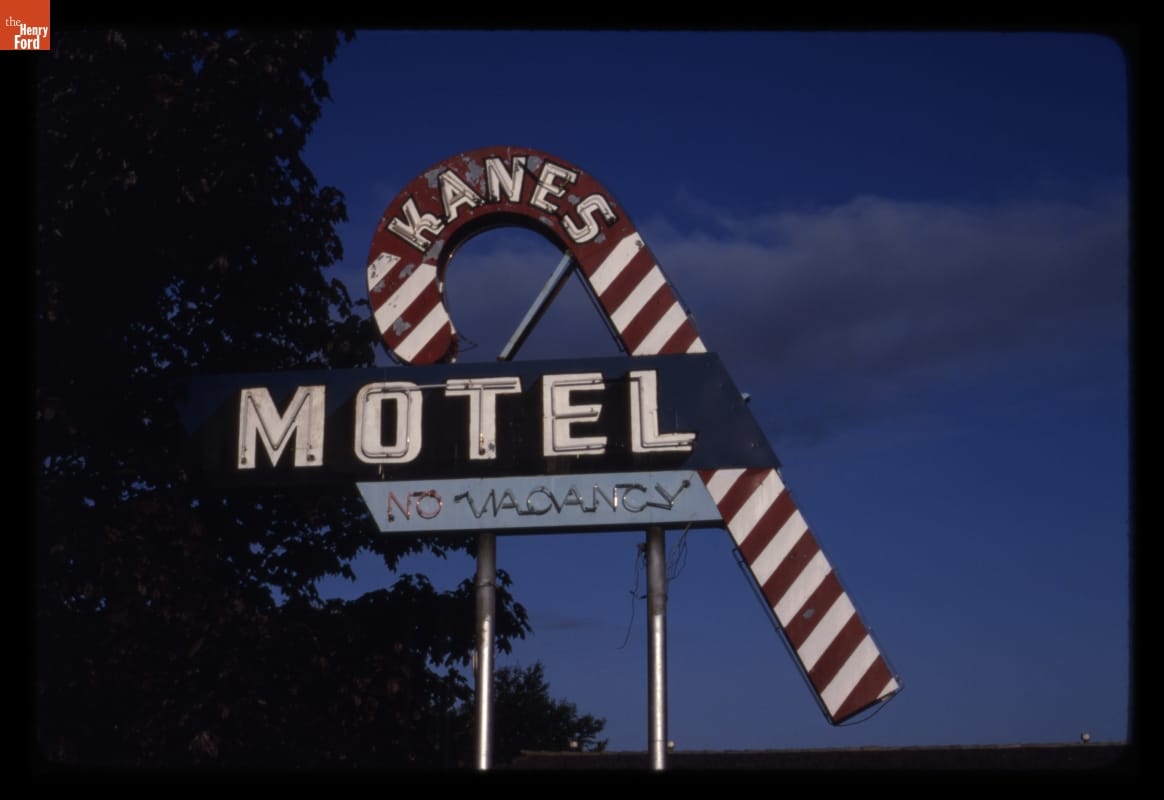
- Kane's Motel Sign, Bellevue, Washington, 1980 - In the mid-1970s, John Margolies began to assemble a visual record of America's built roadside landscape. Over the following three decades, he traveled thousands of miles to photograph the overlooked and often quickly vanishing structures that had grown out of American automobile culture and main street commerce. His photographs of hotels, motels, diners, service stations, drive-ins and attractions celebrate and capture a unique chapter of American history.
- 1980
- Collections - Artifact
Kane's Motel Sign, Bellevue, Washington, 1980
In the mid-1970s, John Margolies began to assemble a visual record of America's built roadside landscape. Over the following three decades, he traveled thousands of miles to photograph the overlooked and often quickly vanishing structures that had grown out of American automobile culture and main street commerce. His photographs of hotels, motels, diners, service stations, drive-ins and attractions celebrate and capture a unique chapter of American history.
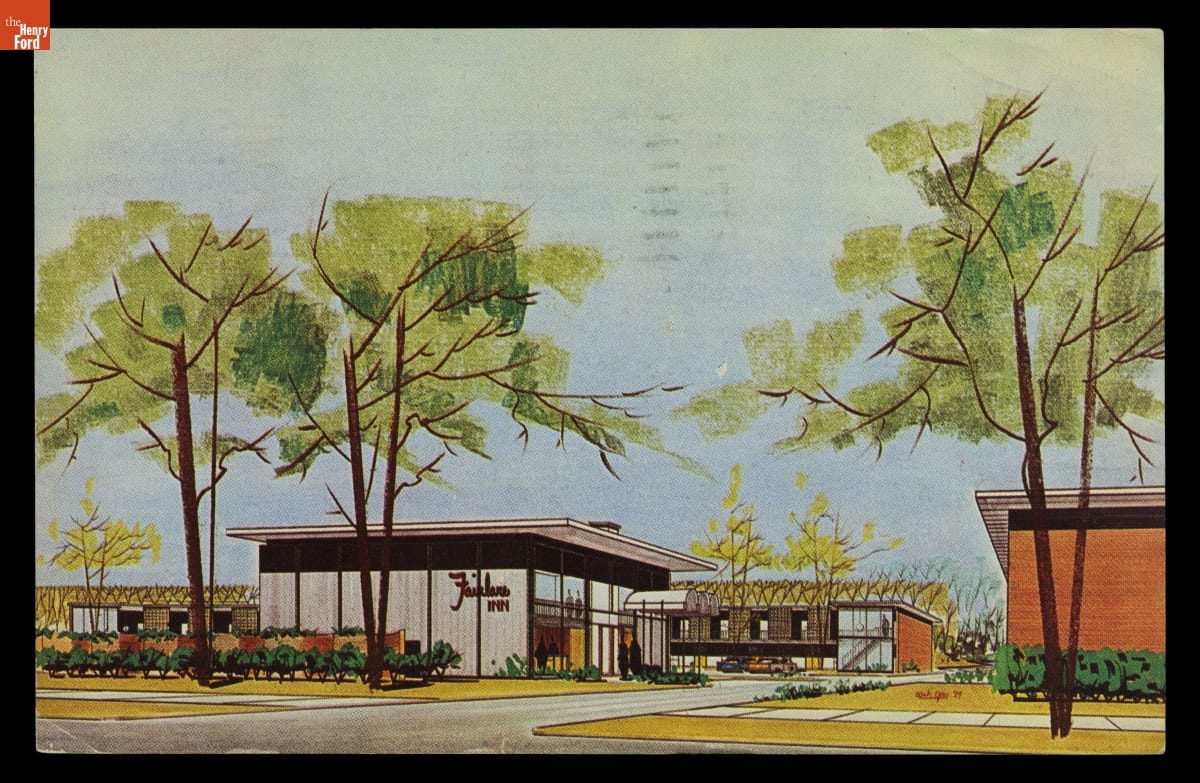
- "Fairlane Inn Motel, Dearborn, Michigan," 1960 - The Fairlane Inn opened in Dearborn, Michigan, in the mid-1950s and operated under various names until 2005. In 1961, the motel was home to a series of discreet meetings between Ford Motor Company vice president Lee Iacocca and other senior Ford executives. This "Fairlane Committee" conceived a sporty new car aimed at the growing baby boomer market: the Ford Mustang.
- June 27, 1960
- Collections - Artifact
"Fairlane Inn Motel, Dearborn, Michigan," 1960
The Fairlane Inn opened in Dearborn, Michigan, in the mid-1950s and operated under various names until 2005. In 1961, the motel was home to a series of discreet meetings between Ford Motor Company vice president Lee Iacocca and other senior Ford executives. This "Fairlane Committee" conceived a sporty new car aimed at the growing baby boomer market: the Ford Mustang.
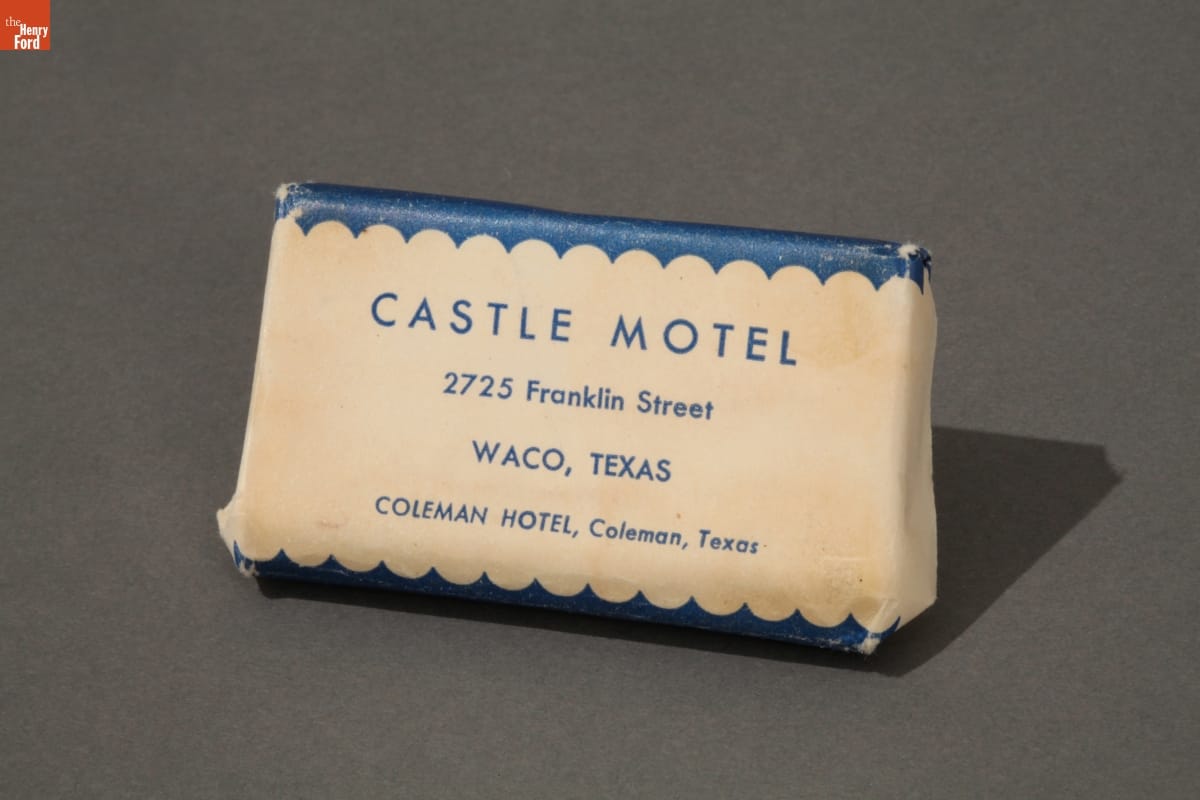
- Castle Motel Bar Soap, 1928-1965 - During the 1930s, primitive tourist cabins and cottage courts evolved into integrated lodging units called motels. Most of these were small-scale and independently owned. Bars of soap imprinted with the motel's name provided a homey touch and souvenir of a motel stay. The Castle Motel, in Waco, Texas, boasted 46 rooms and a "castle-like" tower in the center.
- 1928-1965
- Collections - Artifact
Castle Motel Bar Soap, 1928-1965
During the 1930s, primitive tourist cabins and cottage courts evolved into integrated lodging units called motels. Most of these were small-scale and independently owned. Bars of soap imprinted with the motel's name provided a homey touch and souvenir of a motel stay. The Castle Motel, in Waco, Texas, boasted 46 rooms and a "castle-like" tower in the center.
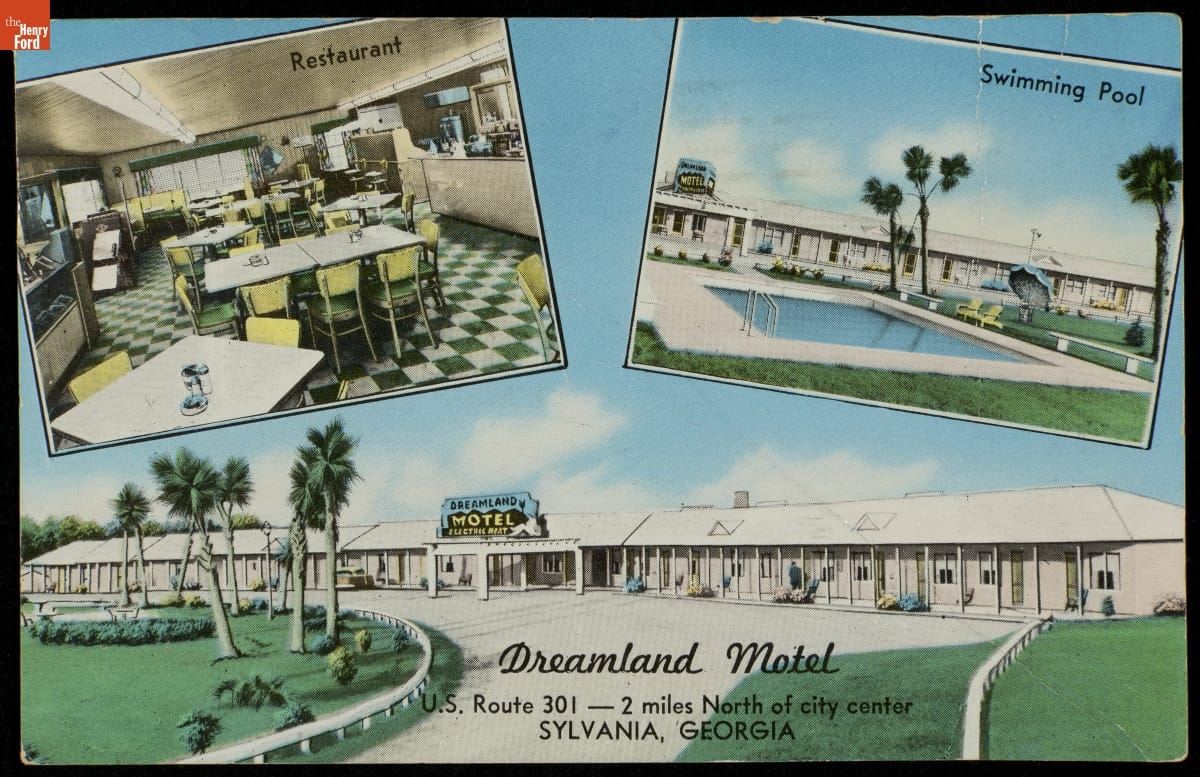
- "Dreamland Motel," Sylvania, Georgia, 1960 - A motel postcard was usually a free souvenir for guests, but it also served as advertisement for the owner. This postcard shows the Dreamland Motel and its amenities -- a pool and restaurant. A patron sent this postcard to friends in Dearborn, Michigan. Perhaps these friends -- the motel owner hoped -- would stop and stay when they passed through on their way to Florida.
- 1960
- Collections - Artifact
"Dreamland Motel," Sylvania, Georgia, 1960
A motel postcard was usually a free souvenir for guests, but it also served as advertisement for the owner. This postcard shows the Dreamland Motel and its amenities -- a pool and restaurant. A patron sent this postcard to friends in Dearborn, Michigan. Perhaps these friends -- the motel owner hoped -- would stop and stay when they passed through on their way to Florida.
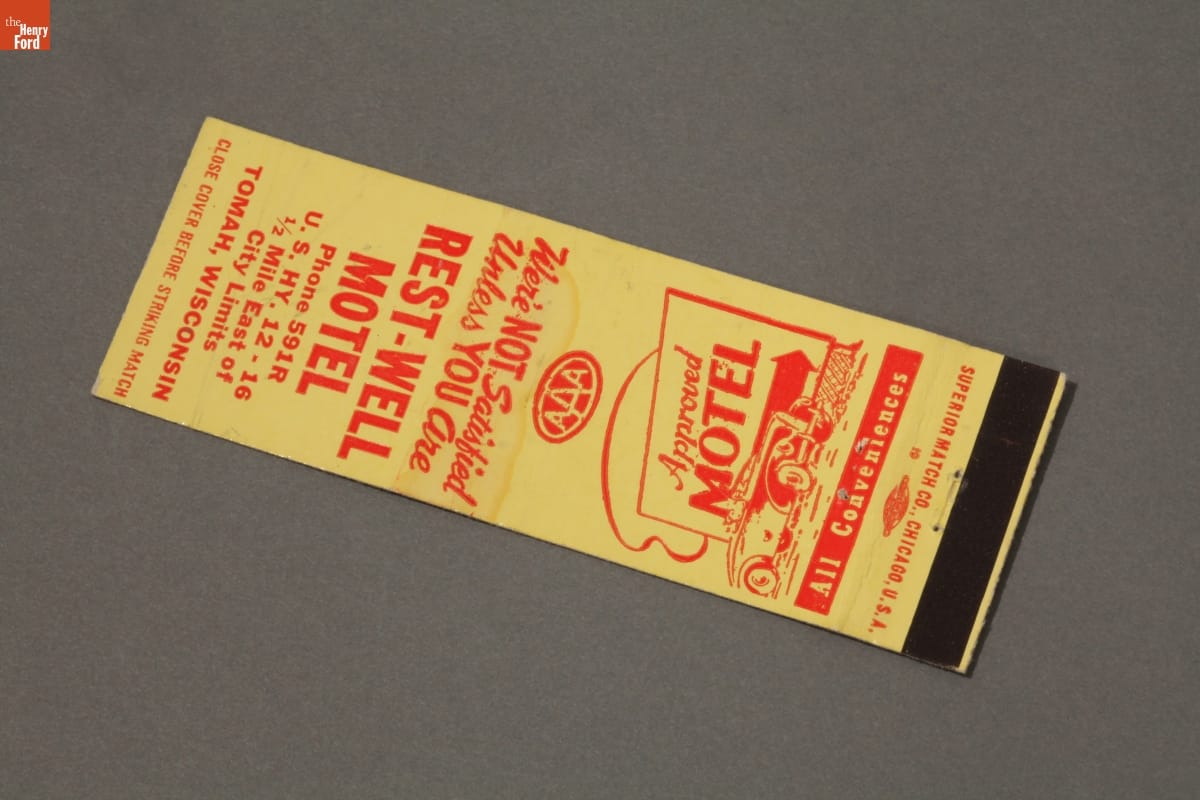
- Rest-Well Motel Matchbook, 1945-1960 - During the 1930s, primitive tourist cabins and cottage courts evolved into integrated lodging units called motels. As competition between motels increased, matches and ashtrays -- imprinted with the motel's name -- were often set on the dresser to advertise that motel and to encourage guests to keep their cigarette ashes contained. Matches often served as souvenirs of the stay.
- 1945-1960
- Collections - Artifact
Rest-Well Motel Matchbook, 1945-1960
During the 1930s, primitive tourist cabins and cottage courts evolved into integrated lodging units called motels. As competition between motels increased, matches and ashtrays -- imprinted with the motel's name -- were often set on the dresser to advertise that motel and to encourage guests to keep their cigarette ashes contained. Matches often served as souvenirs of the stay.
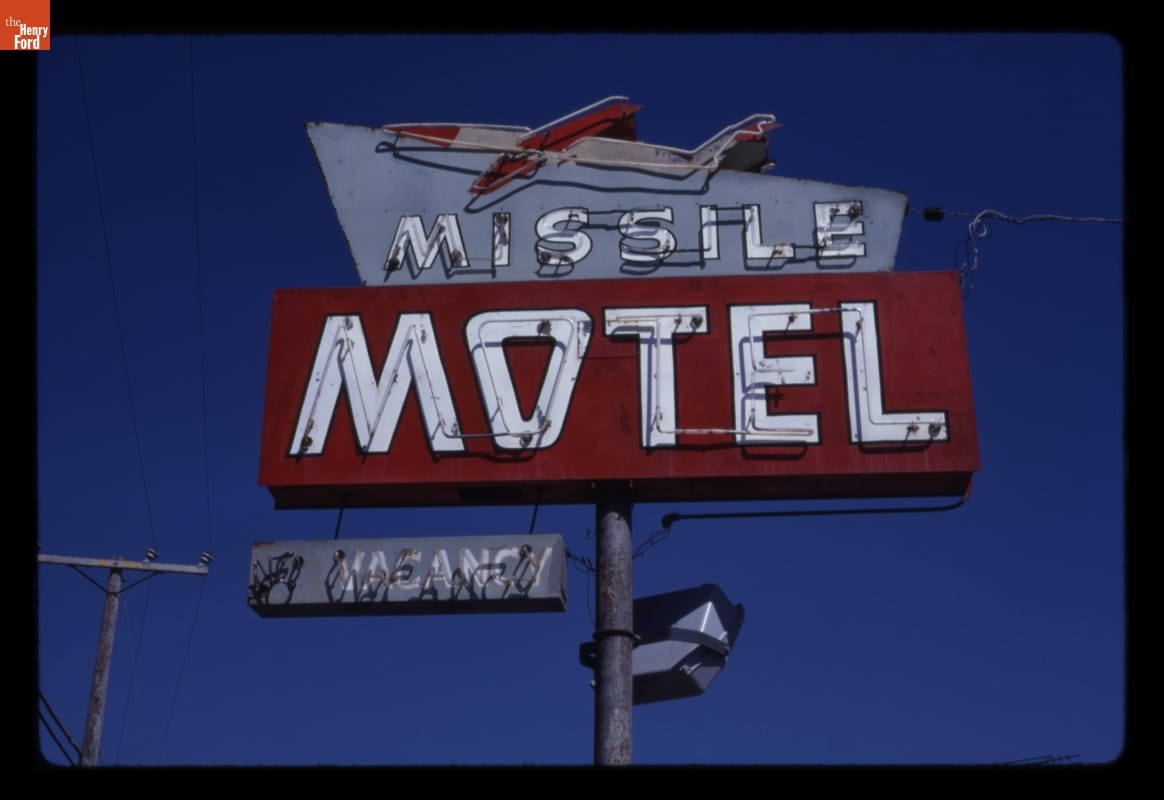
- Missile Motel Sign, Oxnard, California, 1981 - In the mid-1970s, John Margolies began to assemble a visual record of America's built roadside landscape. Over the following three decades, he traveled thousands of miles to photograph the overlooked and often quickly vanishing structures that had grown out of American automobile culture and main street commerce. His photographs of hotels, motels, diners, service stations, drive-ins and attractions celebrate and capture a unique chapter of American history.
- 1981
- Collections - Artifact
Missile Motel Sign, Oxnard, California, 1981
In the mid-1970s, John Margolies began to assemble a visual record of America's built roadside landscape. Over the following three decades, he traveled thousands of miles to photograph the overlooked and often quickly vanishing structures that had grown out of American automobile culture and main street commerce. His photographs of hotels, motels, diners, service stations, drive-ins and attractions celebrate and capture a unique chapter of American history.