
Search
- The New York Times Cook Book -

- August 28, 2015
- Collections - Cookbook
The New York Times Cook Book
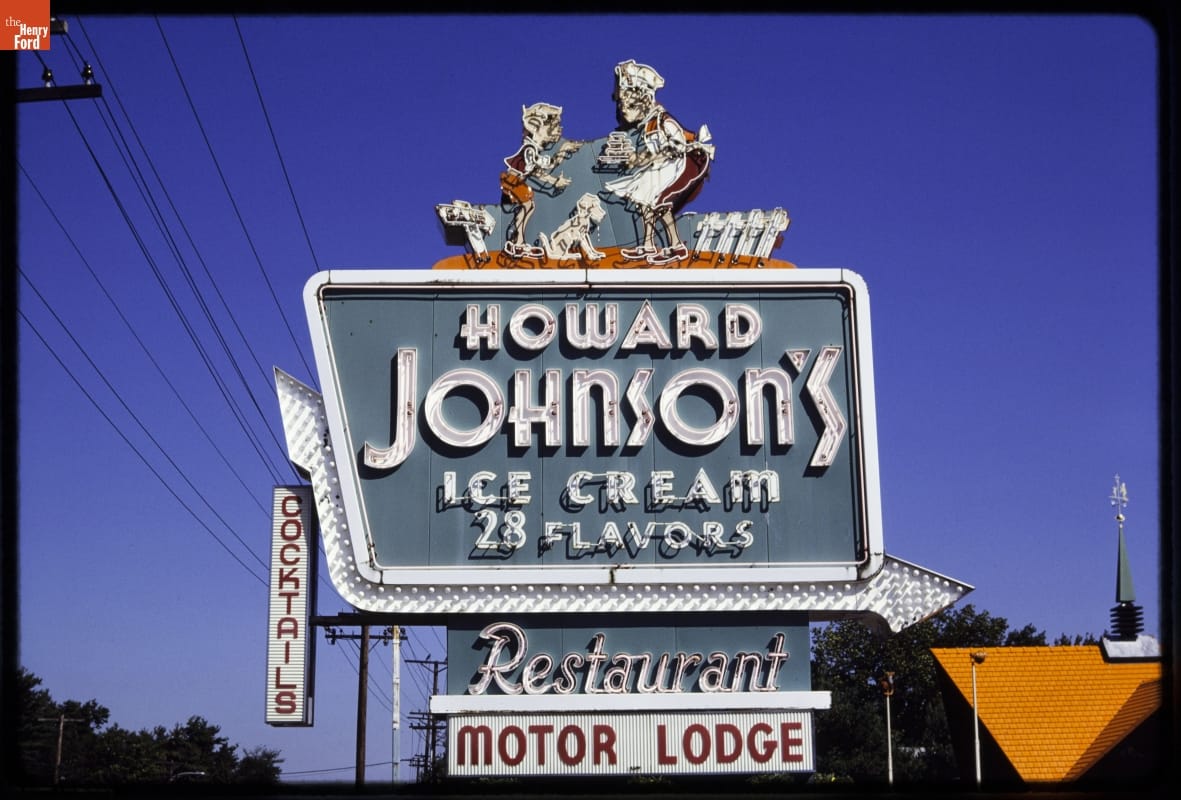
- Howard Johnson's Sign, New York, New York, 1984 - In the mid-1970s, John Margolies began to assemble a visual record of America's built roadside landscape. Over the following three decades, he traveled thousands of miles to photograph the overlooked and often quickly vanishing structures that had grown out of American automobile culture and main street commerce. His photographs of hotels, motels, diners, service stations, drive-ins and attractions celebrate and capture a unique chapter of American history.
- 1984
- Collections - Artifact
Howard Johnson's Sign, New York, New York, 1984
In the mid-1970s, John Margolies began to assemble a visual record of America's built roadside landscape. Over the following three decades, he traveled thousands of miles to photograph the overlooked and often quickly vanishing structures that had grown out of American automobile culture and main street commerce. His photographs of hotels, motels, diners, service stations, drive-ins and attractions celebrate and capture a unique chapter of American history.
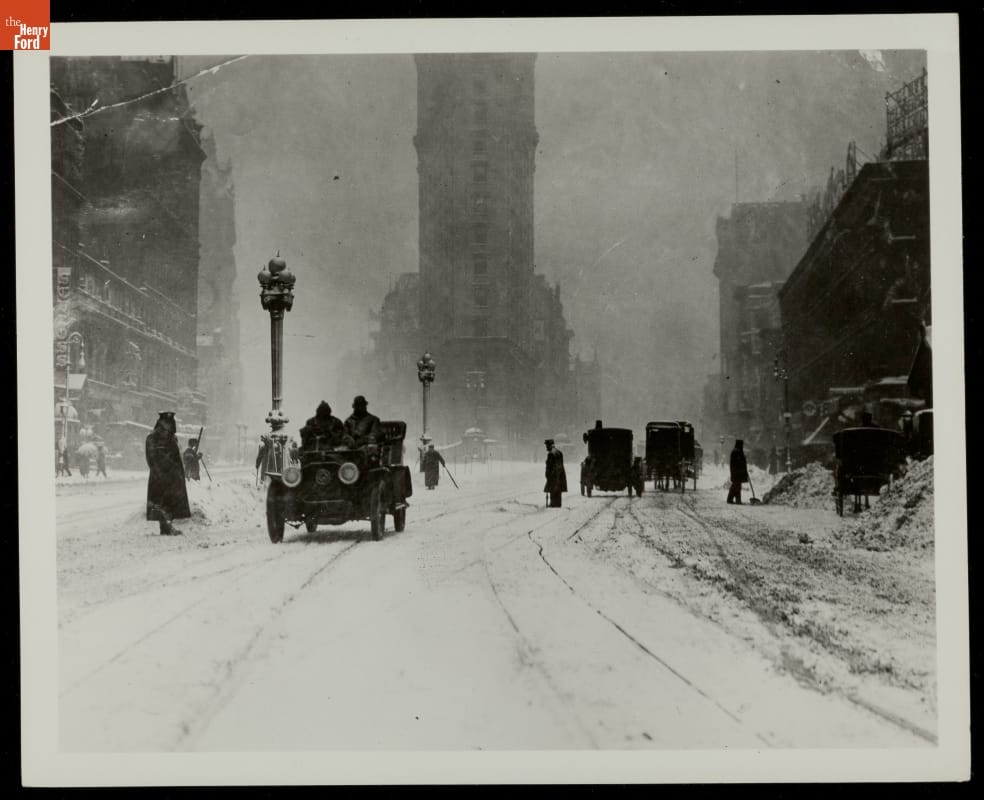
- Driving in Snow, New York, New York, 1910-1920 - Early motorists tended to avoid wintertime driving, especially in rural areas where roads were poor even in warm weather. But in cities like New York, where people and goods had to move every day of the year, snow-removal programs kept streets clear for motorized and horse-drawn traffic. Even so, driving an open car in winter required warm clothing and steely determination.
- circa 1909
- Collections - Artifact
Driving in Snow, New York, New York, 1910-1920
Early motorists tended to avoid wintertime driving, especially in rural areas where roads were poor even in warm weather. But in cities like New York, where people and goods had to move every day of the year, snow-removal programs kept streets clear for motorized and horse-drawn traffic. Even so, driving an open car in winter required warm clothing and steely determination.
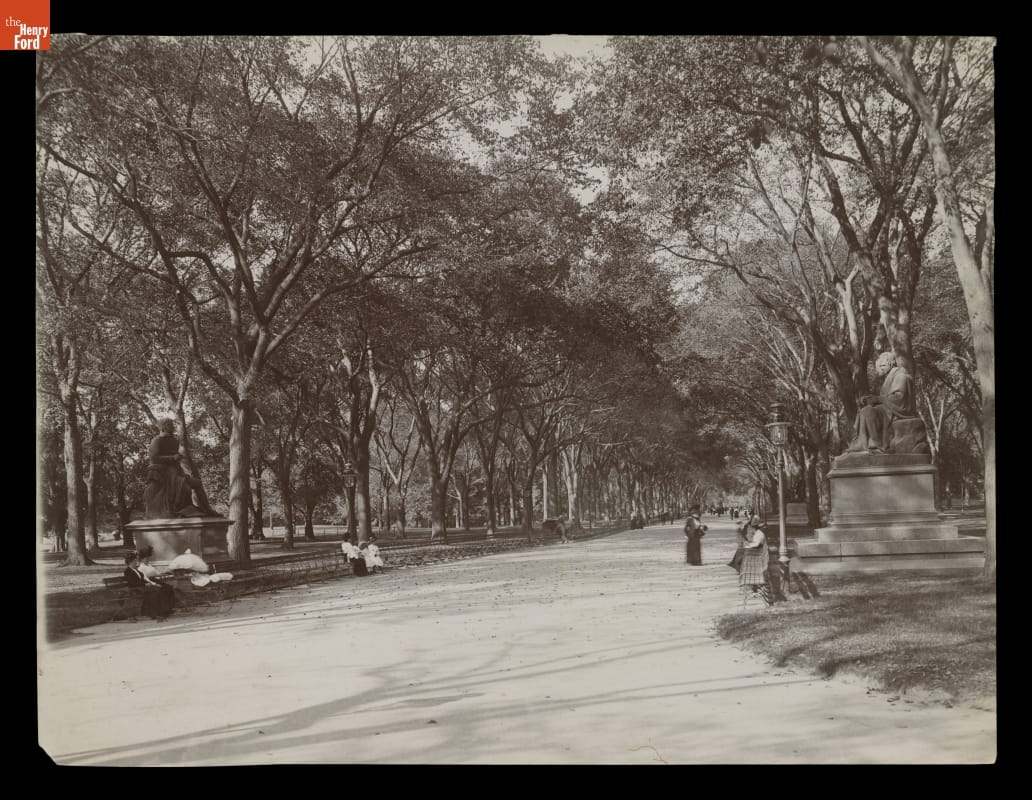
- The Mall, Central Park, New York, New York, circa 1900 - Central Park was the first and most influential of America's landscaped parks. Created in 1858, it was intended to provide recreational opportunities not only for the well-to-do but for the population as a whole. This turn-of-the-century photograph was taken by pioneering photographer William Henry Jackson for the Detroit Publishing Company.
- circa 1900
- Collections - Artifact
The Mall, Central Park, New York, New York, circa 1900
Central Park was the first and most influential of America's landscaped parks. Created in 1858, it was intended to provide recreational opportunities not only for the well-to-do but for the population as a whole. This turn-of-the-century photograph was taken by pioneering photographer William Henry Jackson for the Detroit Publishing Company.
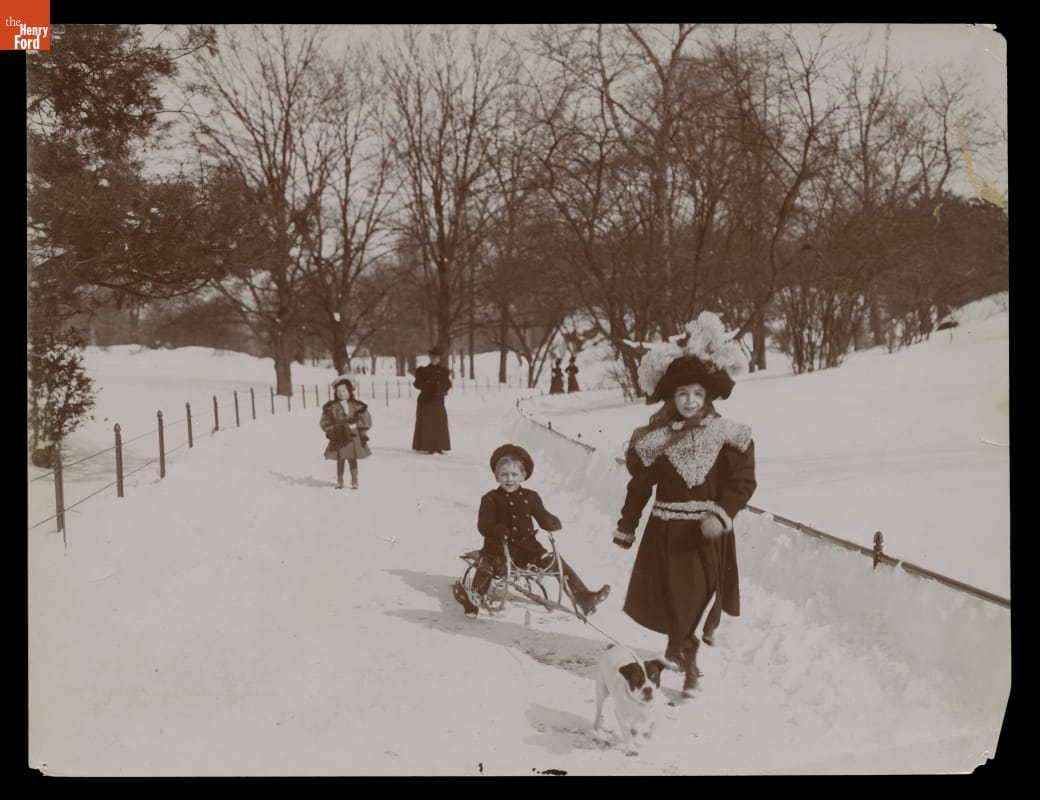
- Central Park in Winter, New York, New York, circa 1900 - From 1895 to 1924, the Detroit Publishing Company was one of the major image publishers in the world. The company's wide-ranging stock of original photographs documented life and landscapes from across the nation and around the globe. From the tens of thousands of negatives, the company created prints, postcards, lantern slides, panoramas, and other merchandise for sale to educators, businessmen, advertisers, homeowners and travelers.
- circa 1900
- Collections - Artifact
Central Park in Winter, New York, New York, circa 1900
From 1895 to 1924, the Detroit Publishing Company was one of the major image publishers in the world. The company's wide-ranging stock of original photographs documented life and landscapes from across the nation and around the globe. From the tens of thousands of negatives, the company created prints, postcards, lantern slides, panoramas, and other merchandise for sale to educators, businessmen, advertisers, homeowners and travelers.
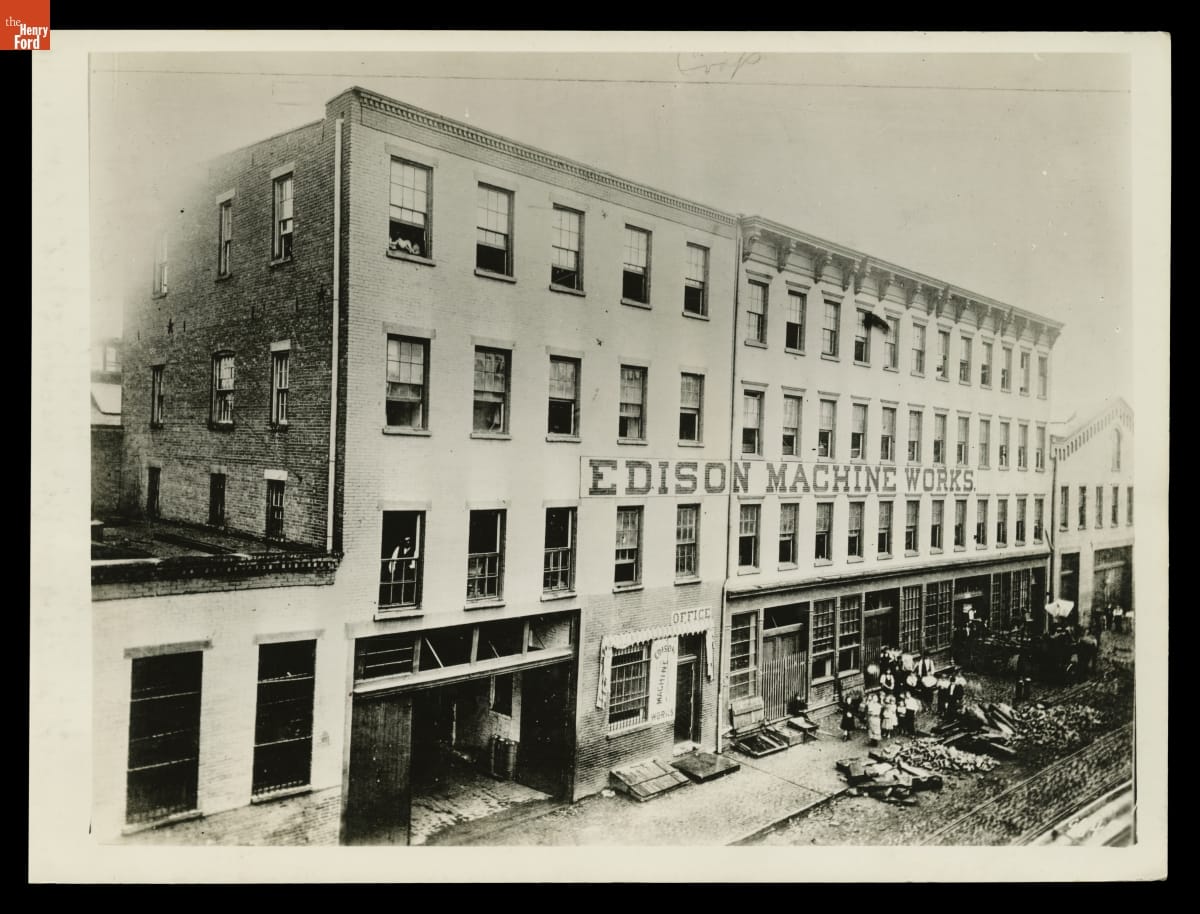
- Edison Machine Works, Goerck Street, New York, New York, 1881 - In 1881, Thomas Edison formed the Edison Machine Works to produce dynamos that would generate the electricity used to light homes and businesses outfitted with his newly invented incandescent lamps. In addition to making direct current generators, Edison Machine Works employees designed, and tested new equipment. Nikola Tesla worked there for six months in 1884 before leaving to develop an alternating current arc lighting system.
- 1881
- Collections - Artifact
Edison Machine Works, Goerck Street, New York, New York, 1881
In 1881, Thomas Edison formed the Edison Machine Works to produce dynamos that would generate the electricity used to light homes and businesses outfitted with his newly invented incandescent lamps. In addition to making direct current generators, Edison Machine Works employees designed, and tested new equipment. Nikola Tesla worked there for six months in 1884 before leaving to develop an alternating current arc lighting system.
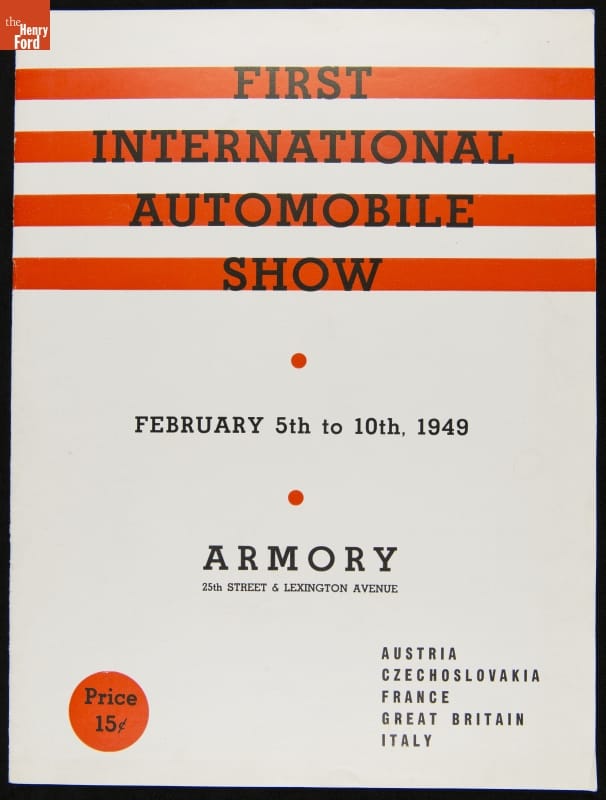
- First International Automobile Show Program, New York, New York, February 1949 - Auto shows allowed automakers to share their latest models with the press and the public, and they gave visitors a chance to review and research. They were part trade show and part show business -- and they're nearly as old as the automobile itself. The 1900 New York Auto Show is considered the first major all-automobile show in the United States.
- 05 February 1949-10 February 1949
- Collections - Artifact
First International Automobile Show Program, New York, New York, February 1949
Auto shows allowed automakers to share their latest models with the press and the public, and they gave visitors a chance to review and research. They were part trade show and part show business -- and they're nearly as old as the automobile itself. The 1900 New York Auto Show is considered the first major all-automobile show in the United States.
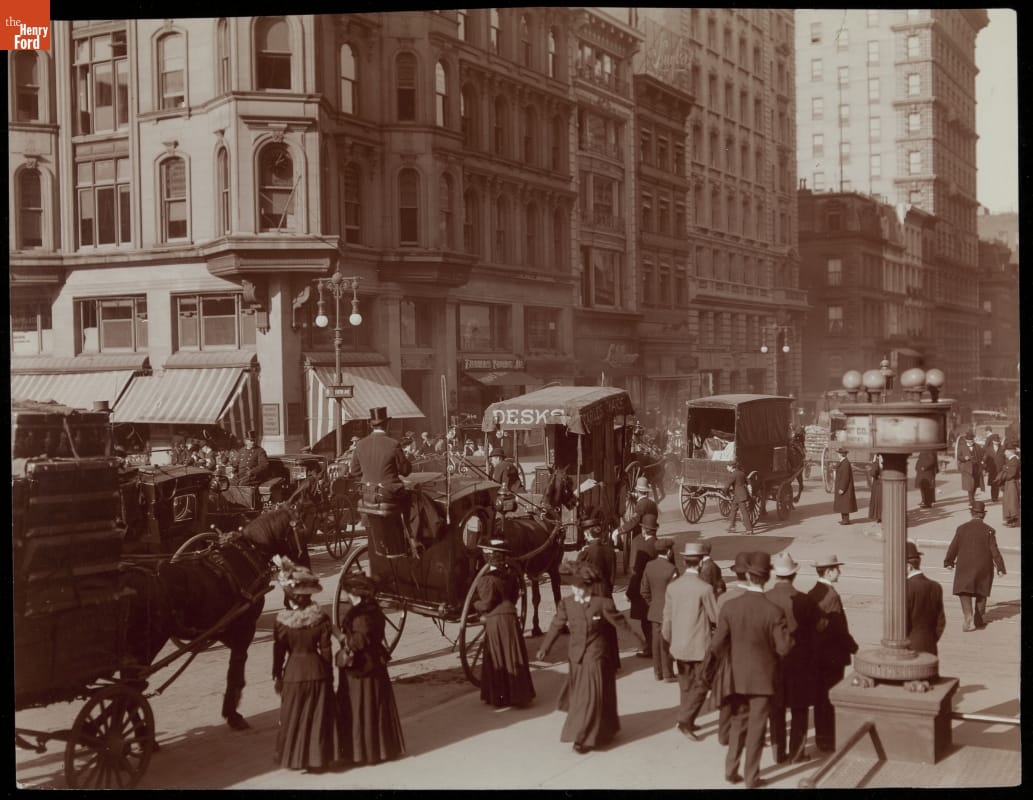
- Fifth Avenue and 42nd Street, New York, New York, 1900-1910 - Pedestrians and horse-drawn vehicles shared the New York City streets, about 1900.
- 1900-1910
- Collections - Artifact
Fifth Avenue and 42nd Street, New York, New York, 1900-1910
Pedestrians and horse-drawn vehicles shared the New York City streets, about 1900.
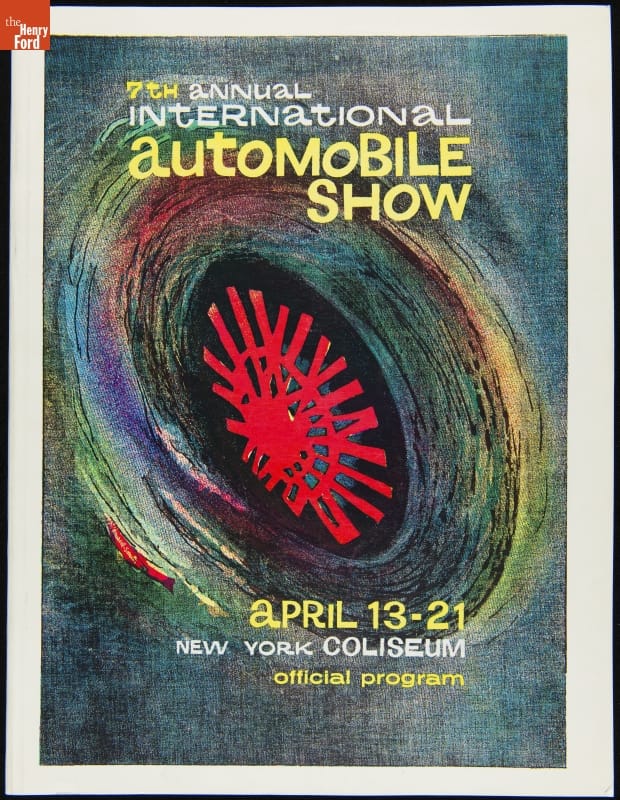
- Seventh Annual International Automobile Show Program, New York, New York, April 1963 - Auto shows allowed automakers to share their latest models with the press and the public, and they gave visitors a chance to review and research. They were part trade show and part show business -- and they're nearly as old as the automobile itself. The 1900 New York Auto Show is considered the first major all-automobile show in the United States.
- 13 April 1963-21 April 1963
- Collections - Artifact
Seventh Annual International Automobile Show Program, New York, New York, April 1963
Auto shows allowed automakers to share their latest models with the press and the public, and they gave visitors a chance to review and research. They were part trade show and part show business -- and they're nearly as old as the automobile itself. The 1900 New York Auto Show is considered the first major all-automobile show in the United States.
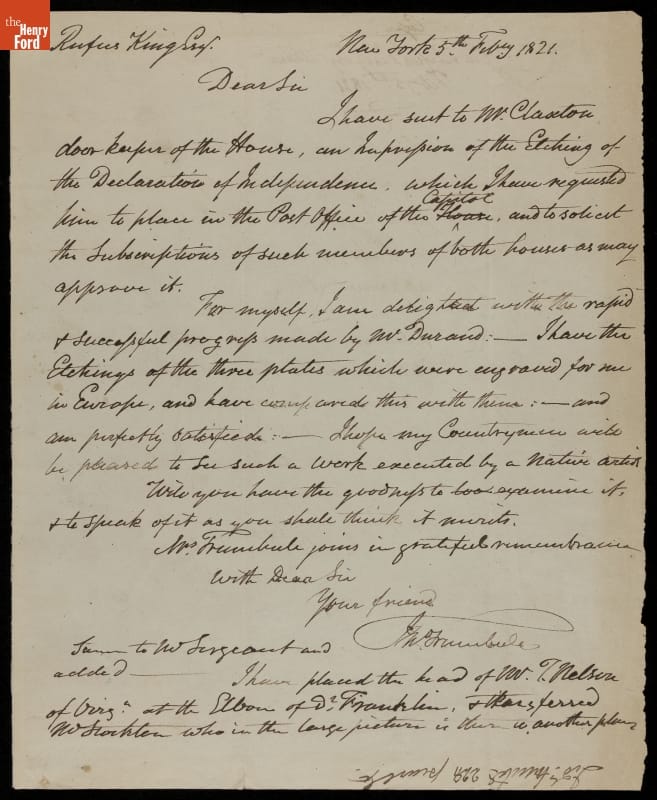
- Letter from John Trumbull to Rufus King, New York, New York, 1821 - In 1817, the U.S. Congress commissioned John Trumbull to paint four Revolutionary-era scenes for the Capitol. As Trumbull completed <EM>Declaration of Independence</EM>, he authorized Asher Durand to create engraving plates of the painting and sent a print to the Capitol Post Office. Trumbull hoped prominent, patriotic citizens, like Senator Rufus King, would approve of the engraver's talent and the print's artistic merit and purchase one.
- February 05, 1821
- Collections - Artifact
Letter from John Trumbull to Rufus King, New York, New York, 1821
In 1817, the U.S. Congress commissioned John Trumbull to paint four Revolutionary-era scenes for the Capitol. As Trumbull completed Declaration of Independence, he authorized Asher Durand to create engraving plates of the painting and sent a print to the Capitol Post Office. Trumbull hoped prominent, patriotic citizens, like Senator Rufus King, would approve of the engraver's talent and the print's artistic merit and purchase one.