
Search
- Brochure, "This Is No Ordinary Mercury Comet," 1962-1968 - Ford Motor Company returned to racing in a big way in the 1960s with its "Total Performance" campaign. The marketing push put Ford vehicles into every major form of American motorsports. The automaker promoted its Mercury Comet for NHRA drag racing's stock classes. Comet's drag-ready factory options included larger engines, heavy-duty suspensions, and heavier tires.

- 1962-1968
- Collections - Artifact
Brochure, "This Is No Ordinary Mercury Comet," 1962-1968
Ford Motor Company returned to racing in a big way in the 1960s with its "Total Performance" campaign. The marketing push put Ford vehicles into every major form of American motorsports. The automaker promoted its Mercury Comet for NHRA drag racing's stock classes. Comet's drag-ready factory options included larger engines, heavy-duty suspensions, and heavier tires.
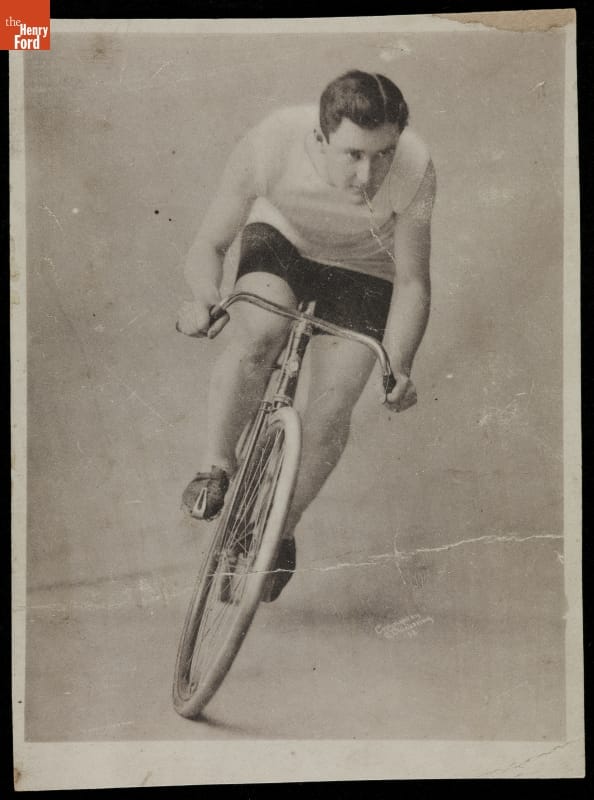
- Bicycle Racer, 1898 - An unidentified racer poses atop a bicycle in this studio photograph from the late 1890s. The image was taken by Boston photographer, Elmer Chickering, famed for his images of politicians, actors, athletes and other public figures.
- 1898
- Collections - Artifact
Bicycle Racer, 1898
An unidentified racer poses atop a bicycle in this studio photograph from the late 1890s. The image was taken by Boston photographer, Elmer Chickering, famed for his images of politicians, actors, athletes and other public figures.
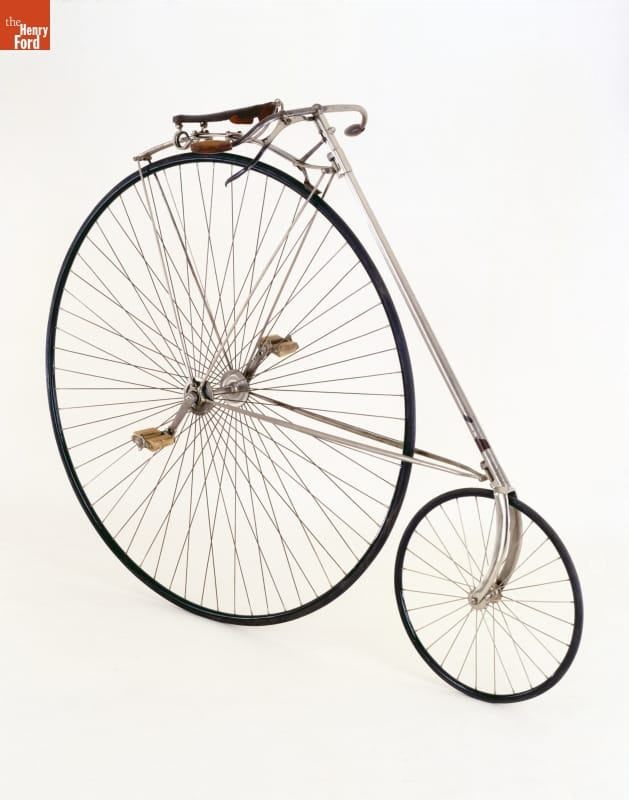
- Eagle Bicycle, 1891 - The Eagle Bicycle Manufacturing Company built this high-wheel safety in 1891. The Connecticut company copied other manufacturers by placing the small wheel up front and the large drive wheel in back -- preventing the dreaded "header." Still, it was difficult to mount; cyclists had to swing their leg over the large wheel. Low-mount safeties with equal-sized wheels solved this problem.
- 1891
- Collections - Artifact
Eagle Bicycle, 1891
The Eagle Bicycle Manufacturing Company built this high-wheel safety in 1891. The Connecticut company copied other manufacturers by placing the small wheel up front and the large drive wheel in back -- preventing the dreaded "header." Still, it was difficult to mount; cyclists had to swing their leg over the large wheel. Low-mount safeties with equal-sized wheels solved this problem.
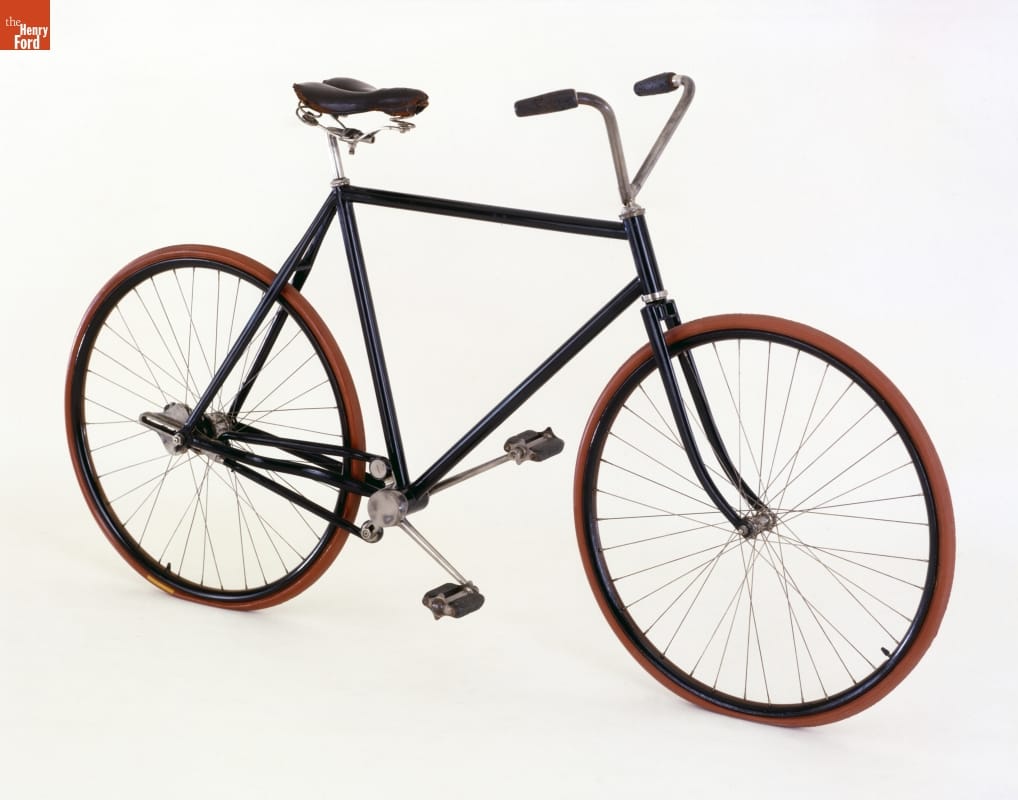
- "Regina" Bicycle, 1895 - Louis Ives of Dearborn, Michigan, applied a different drive system to the early safety bicycle. If you look closely at this 1890s bicycle it has no chain. The pedals operated a ratchet gear system to turn the back wheel. This drive system, like the shaft-drive chainless, failed to catch on and few were manufactured.
- 1895
- Collections - Artifact
"Regina" Bicycle, 1895
Louis Ives of Dearborn, Michigan, applied a different drive system to the early safety bicycle. If you look closely at this 1890s bicycle it has no chain. The pedals operated a ratchet gear system to turn the back wheel. This drive system, like the shaft-drive chainless, failed to catch on and few were manufactured.
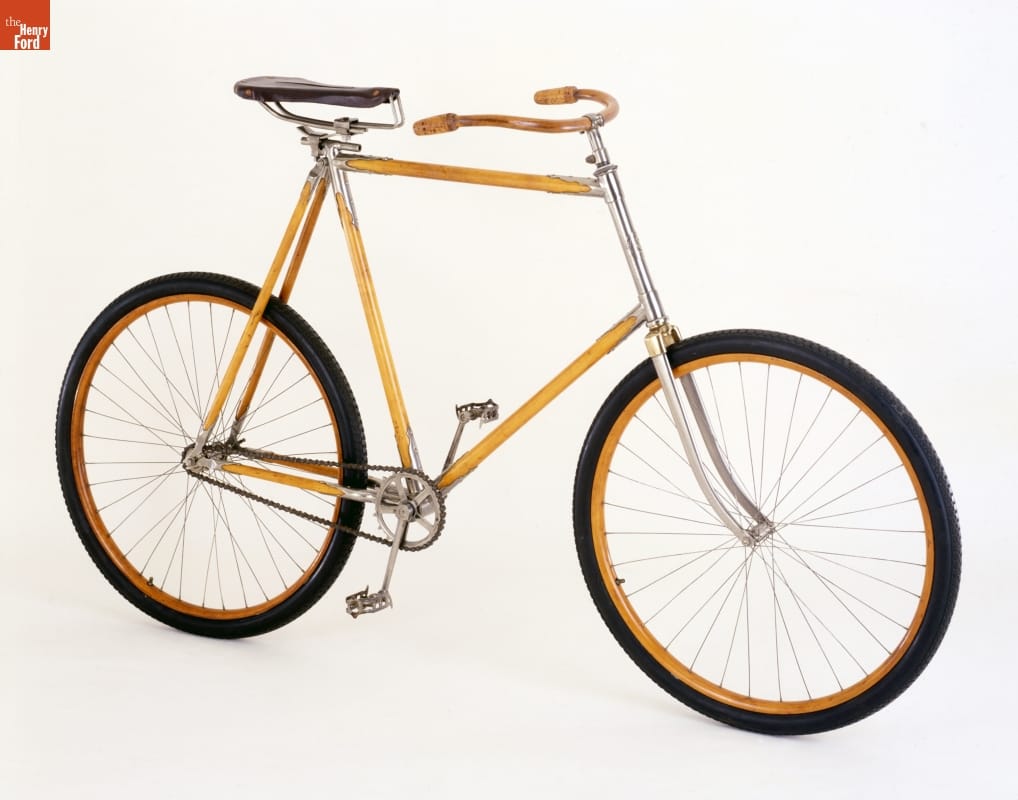
- Chilion Bicycle, 1897 - M.D. Stebbins Manufacturing Company of Springfield, Massachusetts, was one of the largest makers of wood-frame safety bicycles. This 1897 Chilion bicycle used polished-hickory frame rods connected with aluminum-bronze lugs. The company claimed this distinctive bike would not buckle when riders hit obstructions, as metal rods would. And, of course, the bike would not rust.
- 1897
- Collections - Artifact
Chilion Bicycle, 1897
M.D. Stebbins Manufacturing Company of Springfield, Massachusetts, was one of the largest makers of wood-frame safety bicycles. This 1897 Chilion bicycle used polished-hickory frame rods connected with aluminum-bronze lugs. The company claimed this distinctive bike would not buckle when riders hit obstructions, as metal rods would. And, of course, the bike would not rust.
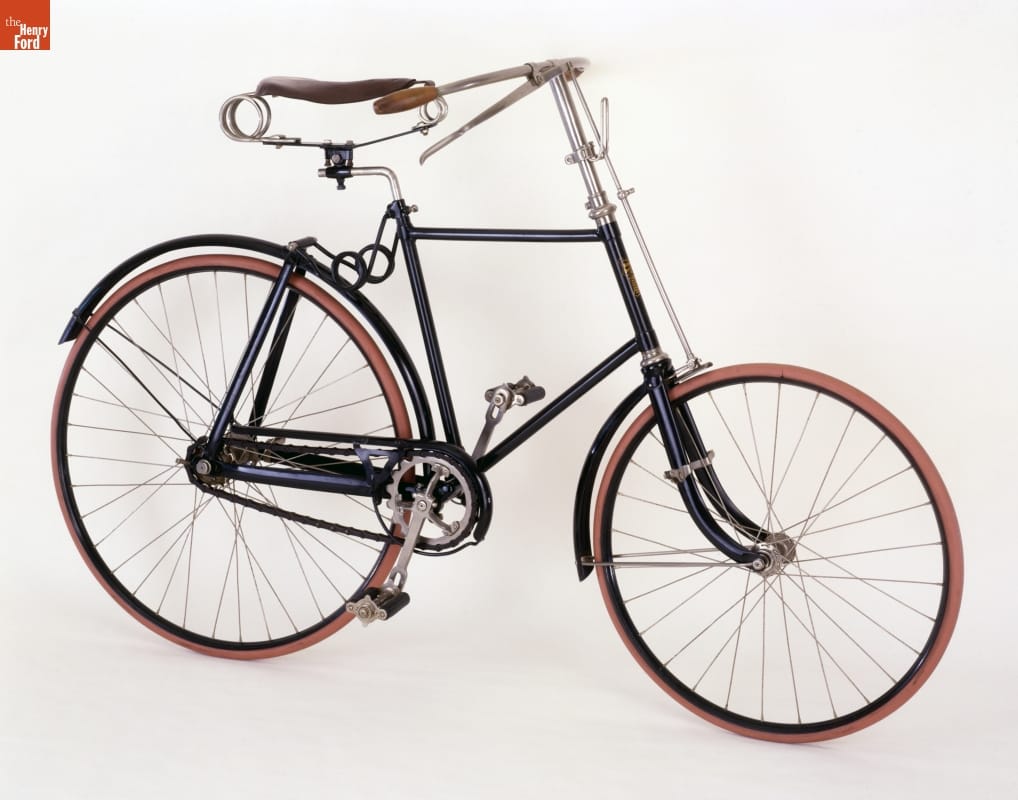
- Rambler Bicycle, 1892 - Gormully and Jeffery Manufacturing Company created the successful and popular Rambler brand. This early 1890s Diamond Rambler with its nearly same-sized wheels could be easily mounted by men, women, young, and old. Its spring frame and cushion tires also provided a more comfortable ride. These and other features made cycling more accessible and enjoyable to a growing number of Americans.
- 1892
- Collections - Artifact
Rambler Bicycle, 1892
Gormully and Jeffery Manufacturing Company created the successful and popular Rambler brand. This early 1890s Diamond Rambler with its nearly same-sized wheels could be easily mounted by men, women, young, and old. Its spring frame and cushion tires also provided a more comfortable ride. These and other features made cycling more accessible and enjoyable to a growing number of Americans.
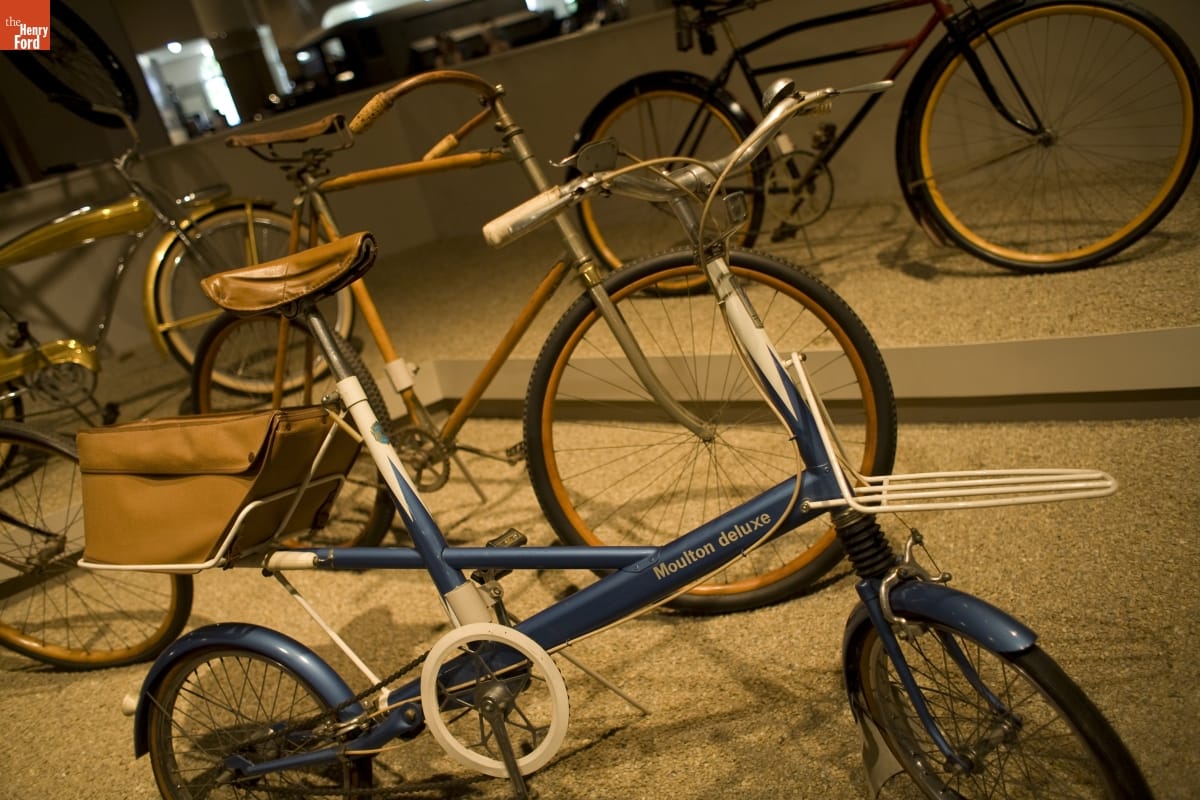
- Moulton Bicycle, 1963 - Dr. Alex Moulton took his knowledge of automobile shock absorbing systems (he worked on the suspension of the original Austin Mini) and applied it to a completely new bicycle design. The design integrated several innovative features -- a lightweight F-shaped frame, small wheels, high-pressure tires, advanced suspension -- with standard saddle, crank, pedals, and brakes.
- 1963
- Collections - Artifact
Moulton Bicycle, 1963
Dr. Alex Moulton took his knowledge of automobile shock absorbing systems (he worked on the suspension of the original Austin Mini) and applied it to a completely new bicycle design. The design integrated several innovative features -- a lightweight F-shaped frame, small wheels, high-pressure tires, advanced suspension -- with standard saddle, crank, pedals, and brakes.
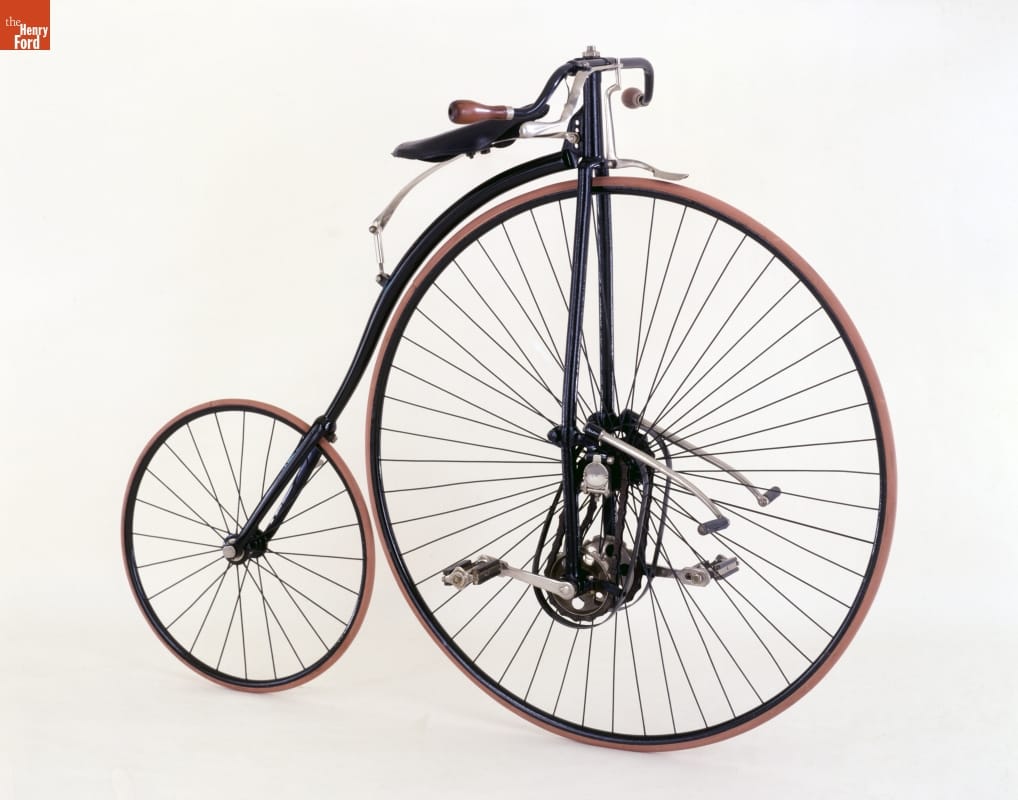
- Kangaroo Bicycle, 1885 - Cyclists in the early 1880s experienced a safer and faster ride on a British-made "Kangaroo." Its small 36-inch front wheel (compared to wheels over 50 inches on traditional bicycles) made the bicycle easier to mount -- and safer if the cyclist fell. Also, the innovative chain drive made the bicycle fast. A cyclist pedaling a "Kangaroo" traveled 100 miles in a little over seven hours -- a record in 1884.
- 1885
- Collections - Artifact
Kangaroo Bicycle, 1885
Cyclists in the early 1880s experienced a safer and faster ride on a British-made "Kangaroo." Its small 36-inch front wheel (compared to wheels over 50 inches on traditional bicycles) made the bicycle easier to mount -- and safer if the cyclist fell. Also, the innovative chain drive made the bicycle fast. A cyclist pedaling a "Kangaroo" traveled 100 miles in a little over seven hours -- a record in 1884.
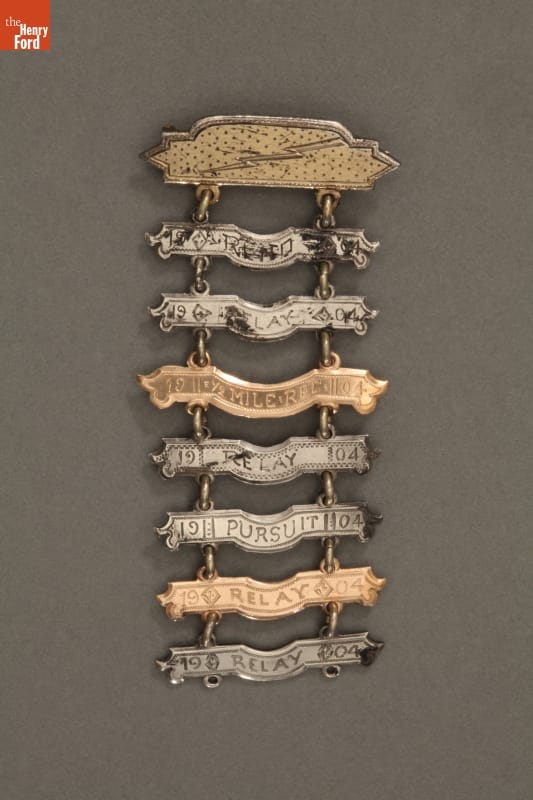
- Bicycling Medals, 1904 - Cyclists in the late 1800s and early 1900s joined clubs to promote bicycle issues, to tour the countryside, and -- for many athletic young men -- to race. Club members proudly displayed badges and medals that recalled their racing accomplishments. Henry McWhirter, a member of San Francisco's New Century Wheelmen, wore these competition bars.
- 1904
- Collections - Artifact
Bicycling Medals, 1904
Cyclists in the late 1800s and early 1900s joined clubs to promote bicycle issues, to tour the countryside, and -- for many athletic young men -- to race. Club members proudly displayed badges and medals that recalled their racing accomplishments. Henry McWhirter, a member of San Francisco's New Century Wheelmen, wore these competition bars.
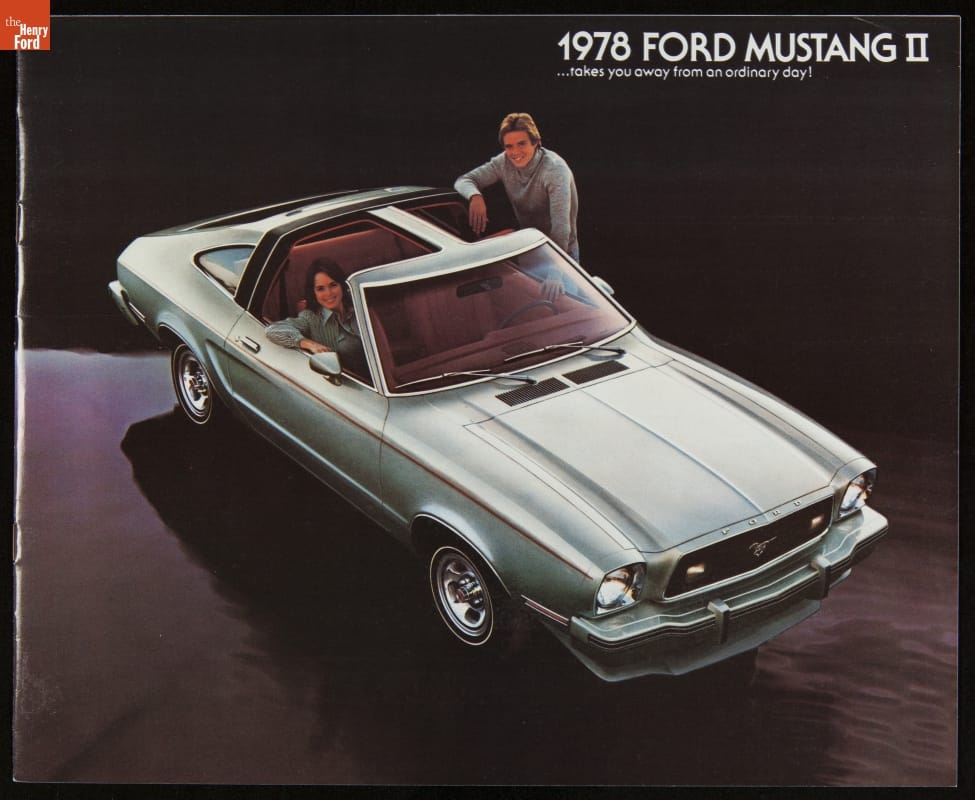
- Sales Brochure, "1978 Ford Mustang II... Takes You Away From an Ordinary Day" - Measuring 19 inches shorter than its 1973 predecessor, the 1974 Mustang II returned the pony car to its compact roots. Ford advertised it as "the right car at the right time," and Mustang II's fuel-friendly inline-4 and V-6 engines were well suited to rising gas prices. The design remained in production through 1978, with an optional V-8 added for 1975.
- July 01, 1977
- Collections - Artifact
Sales Brochure, "1978 Ford Mustang II... Takes You Away From an Ordinary Day"
Measuring 19 inches shorter than its 1973 predecessor, the 1974 Mustang II returned the pony car to its compact roots. Ford advertised it as "the right car at the right time," and Mustang II's fuel-friendly inline-4 and V-6 engines were well suited to rising gas prices. The design remained in production through 1978, with an optional V-8 added for 1975.