
Search
- Home Television Broadcast of NASA's Apollo 11 Moon Landing, July 20, 1969 - NASA's Apollo lunar missions captivated audiences watching the live events on their home televisions. When video recording technology was not widely available, people captured the events with what was available - the family camera. These images document many layers of technology, which united to make the missions possible. They also capture public fascination and desire to commemorate one's place in historical moments.
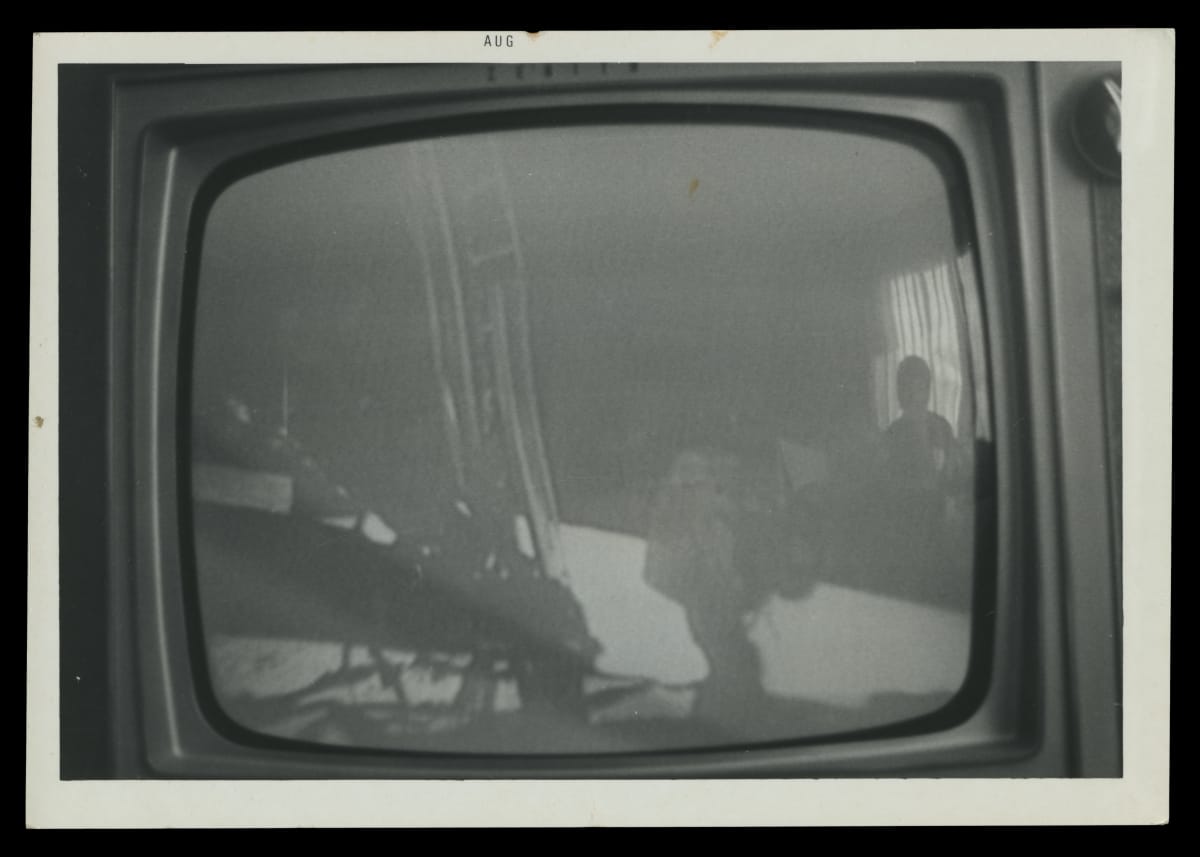
- July 20, 1969
- Collections - Artifact
Home Television Broadcast of NASA's Apollo 11 Moon Landing, July 20, 1969
NASA's Apollo lunar missions captivated audiences watching the live events on their home televisions. When video recording technology was not widely available, people captured the events with what was available - the family camera. These images document many layers of technology, which united to make the missions possible. They also capture public fascination and desire to commemorate one's place in historical moments.
- Home Television Broadcast of NASA's Apollo 11 Moon Landing, July 20, 1969 - NASA's Apollo lunar missions captivated audiences watching the live events on their home televisions. When video recording technology was not widely available, people captured the events with what was available - the family camera. These images document many layers of technology, which united to make the missions possible. They also capture public fascination and desire to commemorate one's place in historical moments.
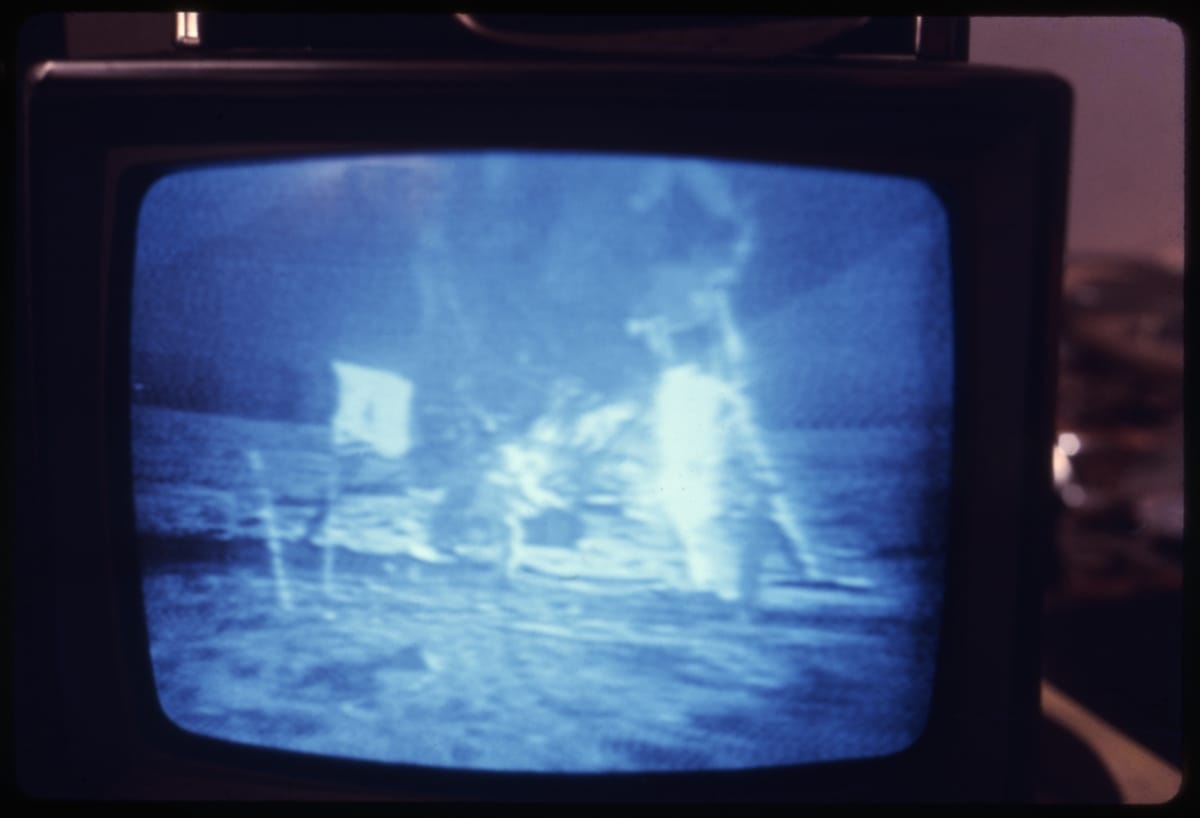
- July 20, 1969
- Collections - Artifact
Home Television Broadcast of NASA's Apollo 11 Moon Landing, July 20, 1969
NASA's Apollo lunar missions captivated audiences watching the live events on their home televisions. When video recording technology was not widely available, people captured the events with what was available - the family camera. These images document many layers of technology, which united to make the missions possible. They also capture public fascination and desire to commemorate one's place in historical moments.
- Recruiting Advertisement for NASA, "This is NASA's Project Apollo," May 1962 - President John F. Kennedy's vision to explore the "new frontier" of space ignited the public's imagination. It was also an overt Cold War strategy against the Soviet Union which launched the first man in space April 12, 1961. NASA published this ad series in 1962 to convince aerospace engineers and scientists to join them for the U.S. effort to conquer space.
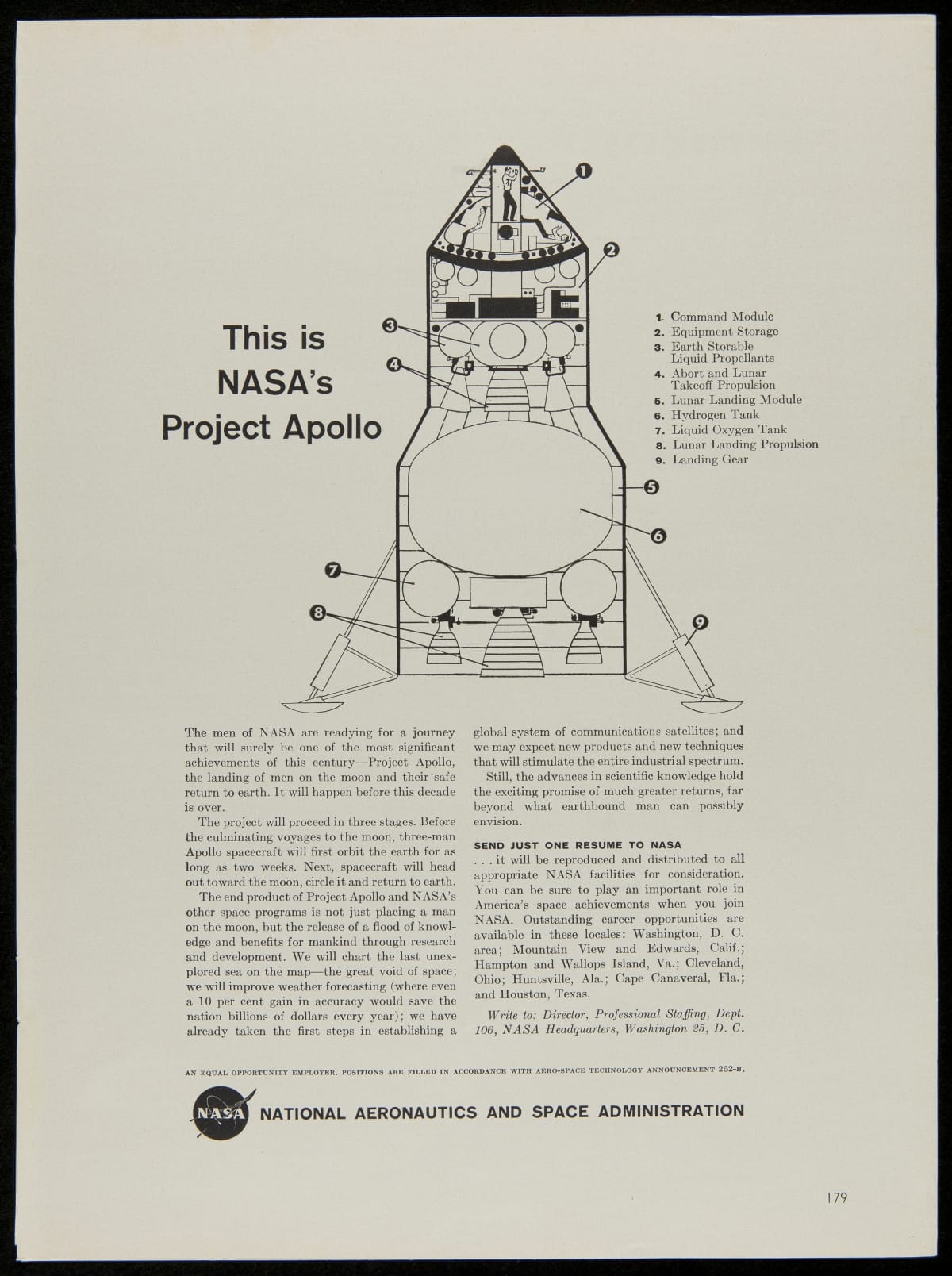
- May 01, 1962
- Collections - Artifact
Recruiting Advertisement for NASA, "This is NASA's Project Apollo," May 1962
President John F. Kennedy's vision to explore the "new frontier" of space ignited the public's imagination. It was also an overt Cold War strategy against the Soviet Union which launched the first man in space April 12, 1961. NASA published this ad series in 1962 to convince aerospace engineers and scientists to join them for the U.S. effort to conquer space.
- Brochure, "Exploring Space: Projects Mercury and Apollo of the United States Manned Space Program," 1961 -
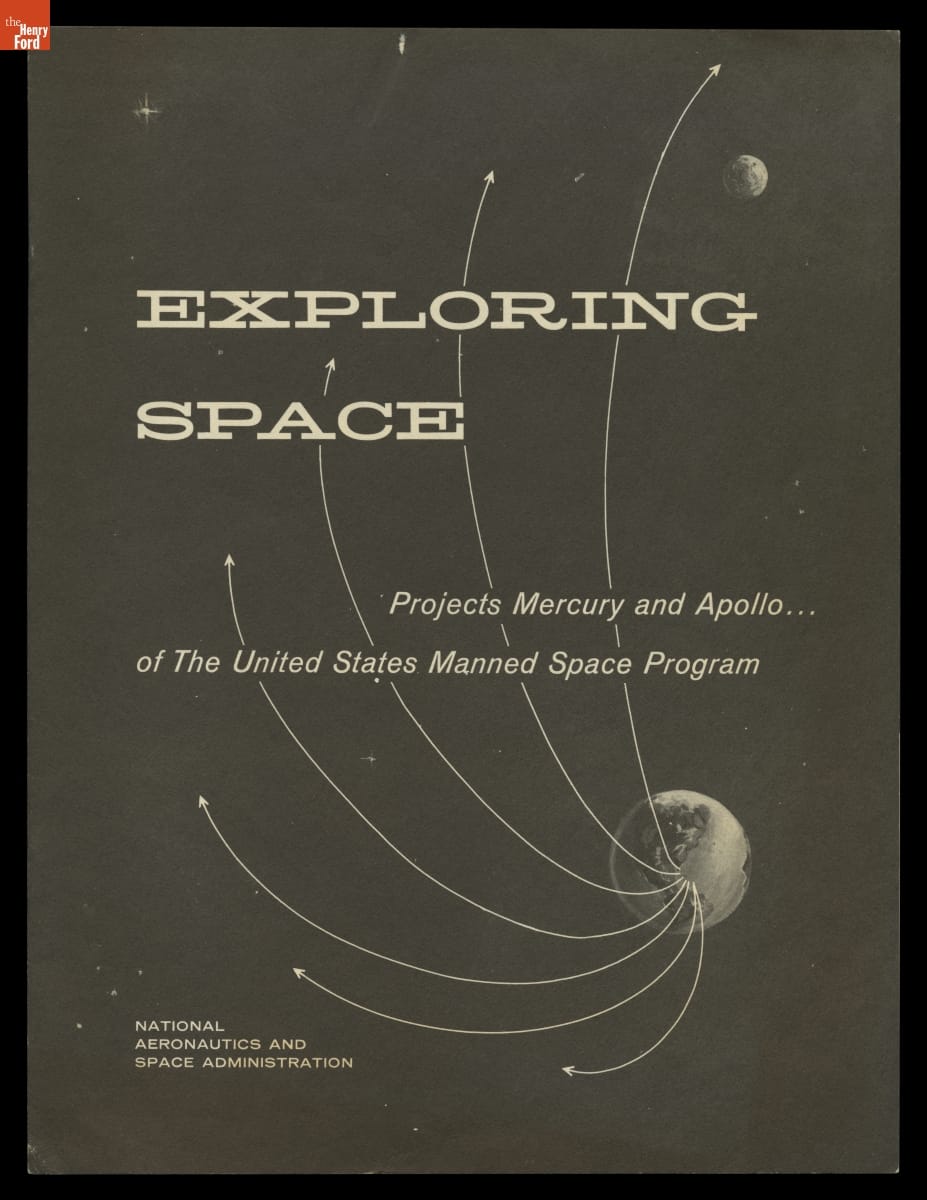
- 1961
- Collections - Artifact
Brochure, "Exploring Space: Projects Mercury and Apollo of the United States Manned Space Program," 1961
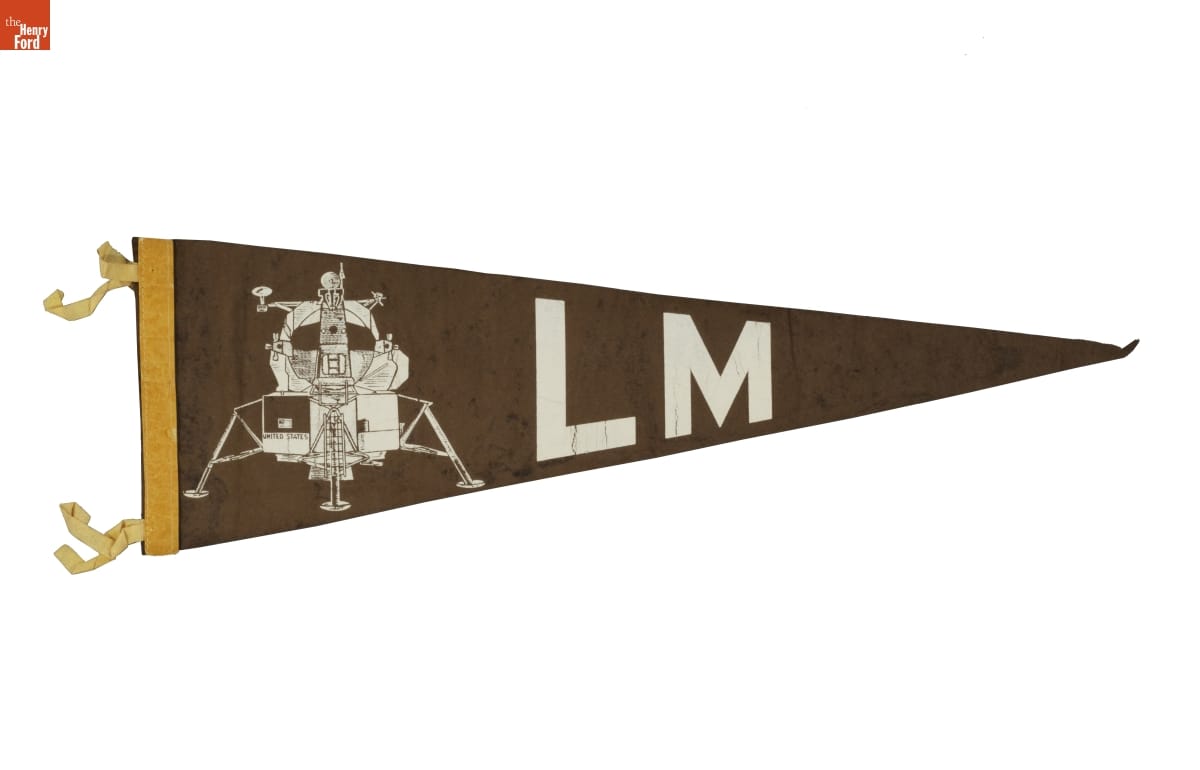
- Apollo Lunar Module "LM" Pennant, circa 1969 - The Lunar Module, or LM, depicted on this pennant allowed the Apollo astronauts to land on the Moon. The LM consisted of an ascent stage and a descent stage. Between 1969 and 1972, six Lunar Modules successfully landed and returned twelve astronauts from the lunar surface.
- circa 1969
- Collections - Artifact
Apollo Lunar Module "LM" Pennant, circa 1969
The Lunar Module, or LM, depicted on this pennant allowed the Apollo astronauts to land on the Moon. The LM consisted of an ascent stage and a descent stage. Between 1969 and 1972, six Lunar Modules successfully landed and returned twelve astronauts from the lunar surface.
- Apollo Ware "Confetti" Bowl, 1960-1965 -

- 1960-1965
- Collections - Artifact
Apollo Ware "Confetti" Bowl, 1960-1965
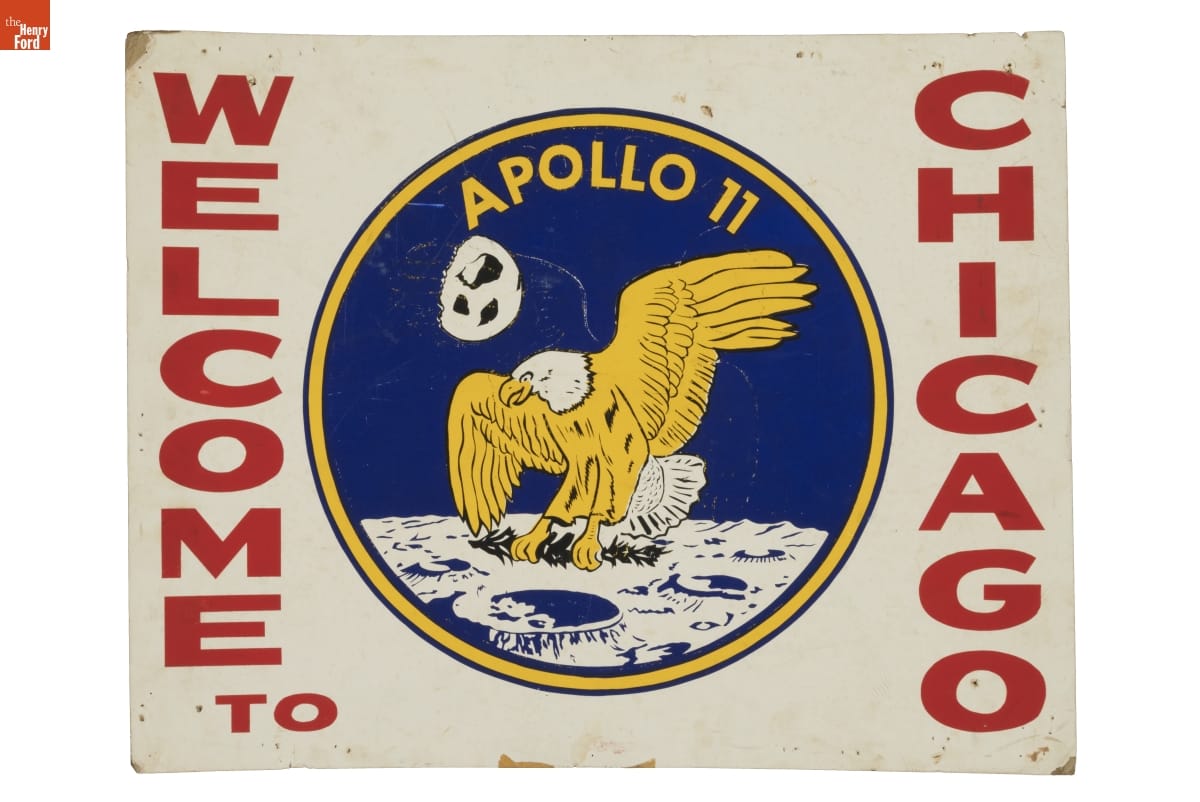
- Apollo 11 Ticker Tape Parade Sign, 1969 - The crew of Apollo 11 -- Neil Armstrong, Edwin "Buzz" Aldrin (the first men to walk on the Moon) and Michael Collins (command module pilot) -- were given a hero's welcome upon their return from space. On August 13, 1969, Chicago, Illinois, hosted a ticker-tape parade for the astronauts. This sign was one of many that lined the parade route.
- August 13, 1969
- Collections - Artifact
Apollo 11 Ticker Tape Parade Sign, 1969
The crew of Apollo 11 -- Neil Armstrong, Edwin "Buzz" Aldrin (the first men to walk on the Moon) and Michael Collins (command module pilot) -- were given a hero's welcome upon their return from space. On August 13, 1969, Chicago, Illinois, hosted a ticker-tape parade for the astronauts. This sign was one of many that lined the parade route.
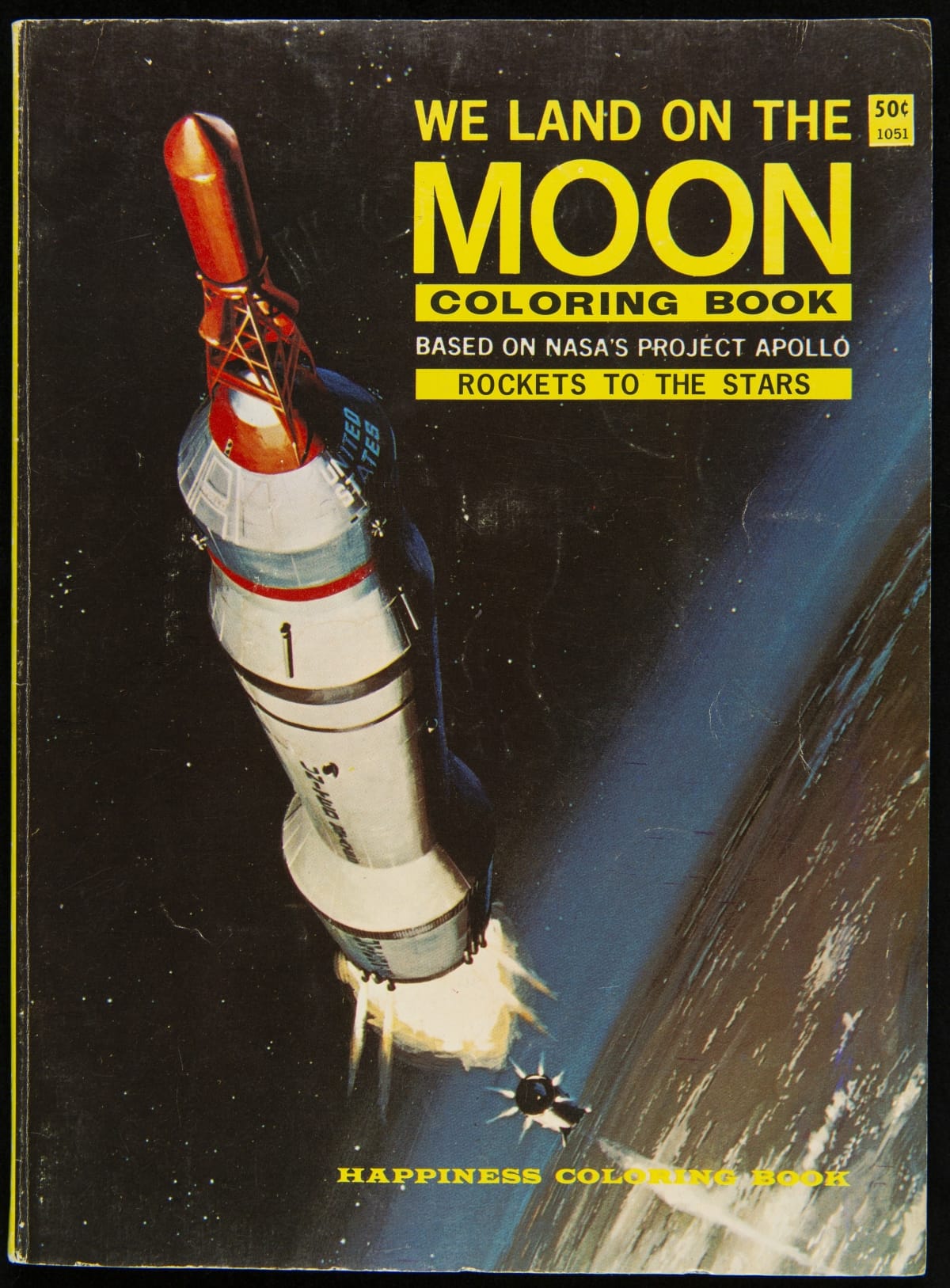
- We Land on the Moon Coloring Book Based on NASA's Project Apollo Rockets to the Stars, 1969 - This coloring book from 1969 was created to excite youngsters about the space program and especially about the moon landing of July 20. It covered the Mercury, Apollo, and Saturn vehicles and astronauts, as well as some history of the space program.
- 1969
- Collections - Artifact
We Land on the Moon Coloring Book Based on NASA's Project Apollo Rockets to the Stars, 1969
This coloring book from 1969 was created to excite youngsters about the space program and especially about the moon landing of July 20. It covered the Mercury, Apollo, and Saturn vehicles and astronauts, as well as some history of the space program.
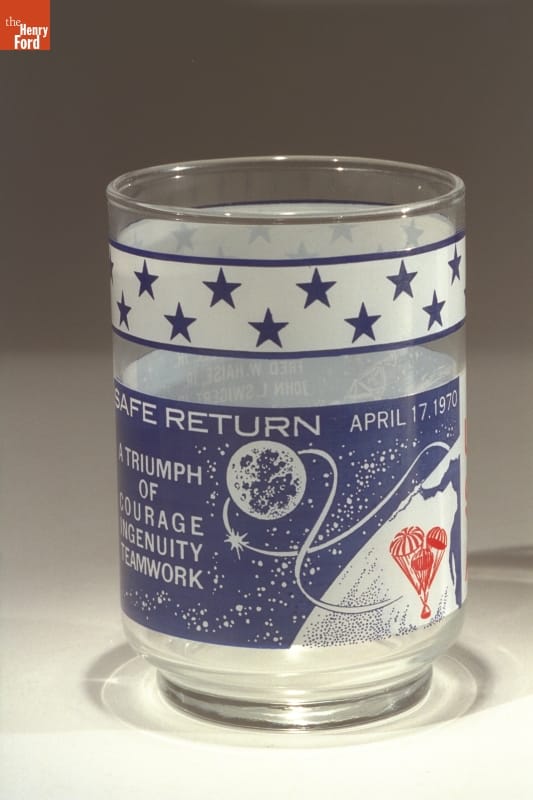
- Tumbler Commemorating Return of Apollo 13 Astronauts, 1975-1985 - NASA marked some of its finest hours in April 1970 when Apollo 13, crewed by Jim Lovell, Jack Swigert and Fred Haise, returned safely to Earth despite a potentially lethal explosion aboard the spacecraft. Crew and support staff were celebrated as heroes. This tumbler commemorates the courage, ingenuity and teamwork of the astronauts and the American space agency.
- 1975-1985
- Collections - Artifact
Tumbler Commemorating Return of Apollo 13 Astronauts, 1975-1985
NASA marked some of its finest hours in April 1970 when Apollo 13, crewed by Jim Lovell, Jack Swigert and Fred Haise, returned safely to Earth despite a potentially lethal explosion aboard the spacecraft. Crew and support staff were celebrated as heroes. This tumbler commemorates the courage, ingenuity and teamwork of the astronauts and the American space agency.
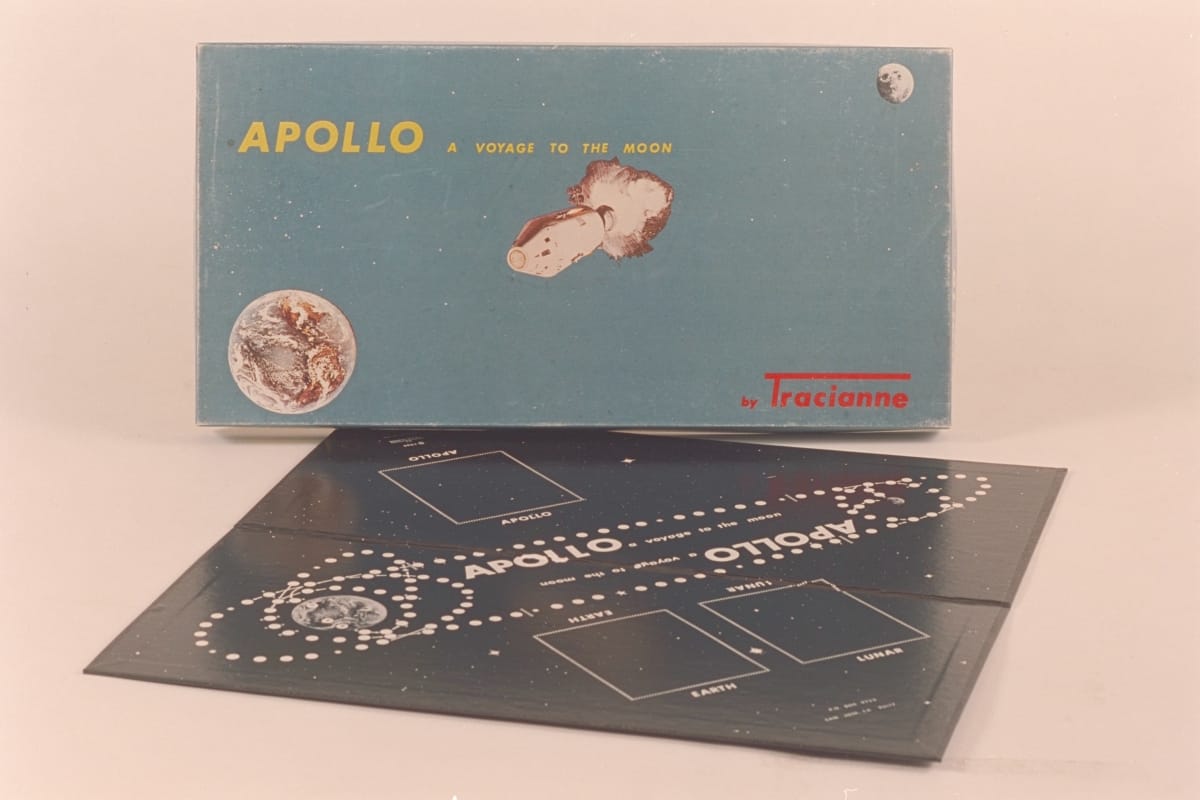
- "Apollo: A Voyage to the Moon" Game, 1969-1975 - On July 20, 1969, American astronauts, Neil Armstrong and Edwin Aldrin, became the first to land on the moon. Players of this moon landing-inspired board game could participate in the extraordinary space adventure of these Apollo 11 astronauts. The object of the game was to be the first to "land" on the moon, collect moon rocks, and return safely to earth.
- 1969-1975
- Collections - Artifact
"Apollo: A Voyage to the Moon" Game, 1969-1975
On July 20, 1969, American astronauts, Neil Armstrong and Edwin Aldrin, became the first to land on the moon. Players of this moon landing-inspired board game could participate in the extraordinary space adventure of these Apollo 11 astronauts. The object of the game was to be the first to "land" on the moon, collect moon rocks, and return safely to earth.