
Search
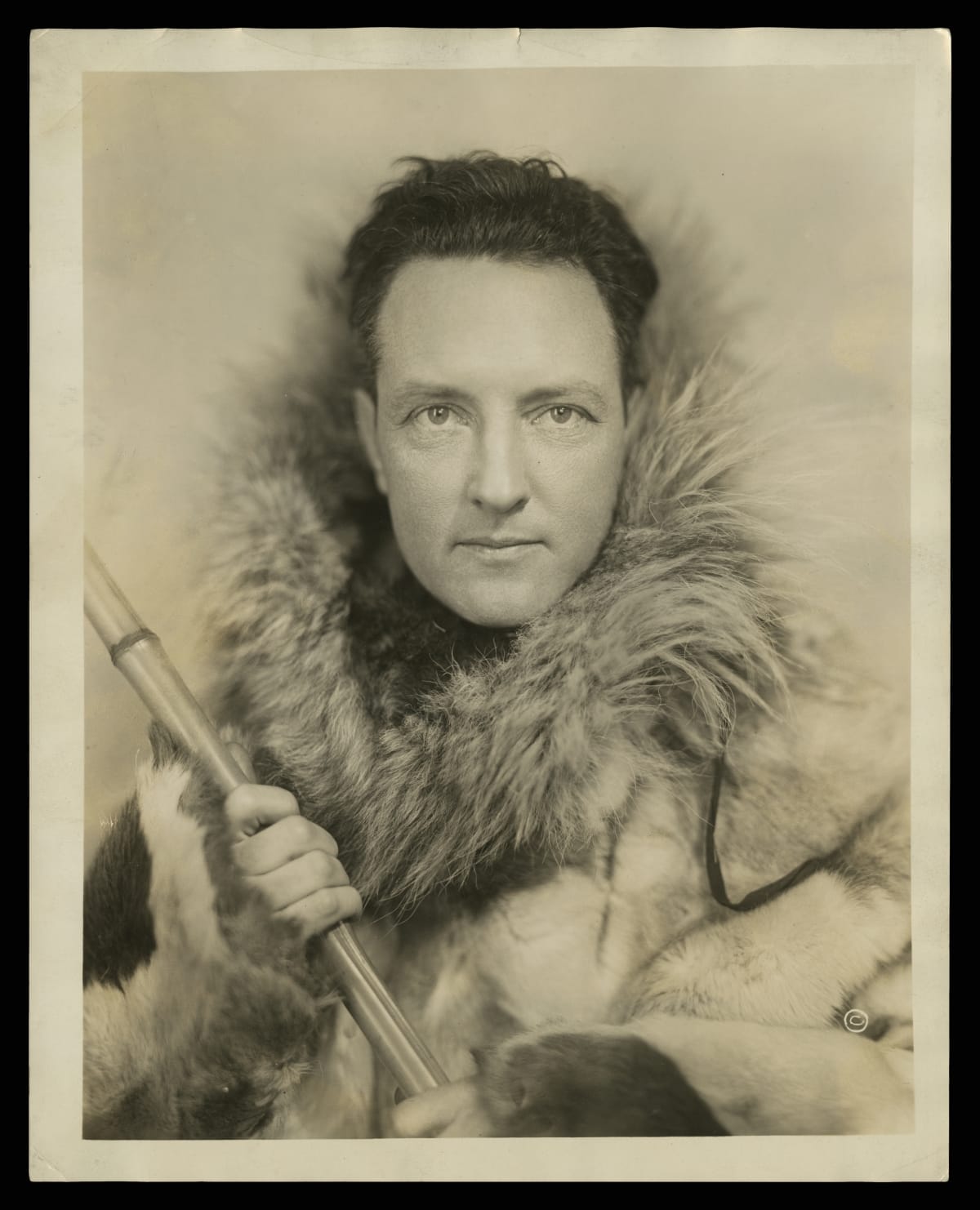
- Portrait of Richard Byrd, 1928 - Richard E. Byrd learned to fly while serving as an officer in the U.S. Navy during World War I. In 1926, he led a flight toward the North Pole and is generally credited with success, though controversy remains over whether Byrd reached the actual pole. Three years later, Byrd led a verified flight over the South Pole.
- 1928
- Collections - Artifact
Portrait of Richard Byrd, 1928
Richard E. Byrd learned to fly while serving as an officer in the U.S. Navy during World War I. In 1926, he led a flight toward the North Pole and is generally credited with success, though controversy remains over whether Byrd reached the actual pole. Three years later, Byrd led a verified flight over the South Pole.
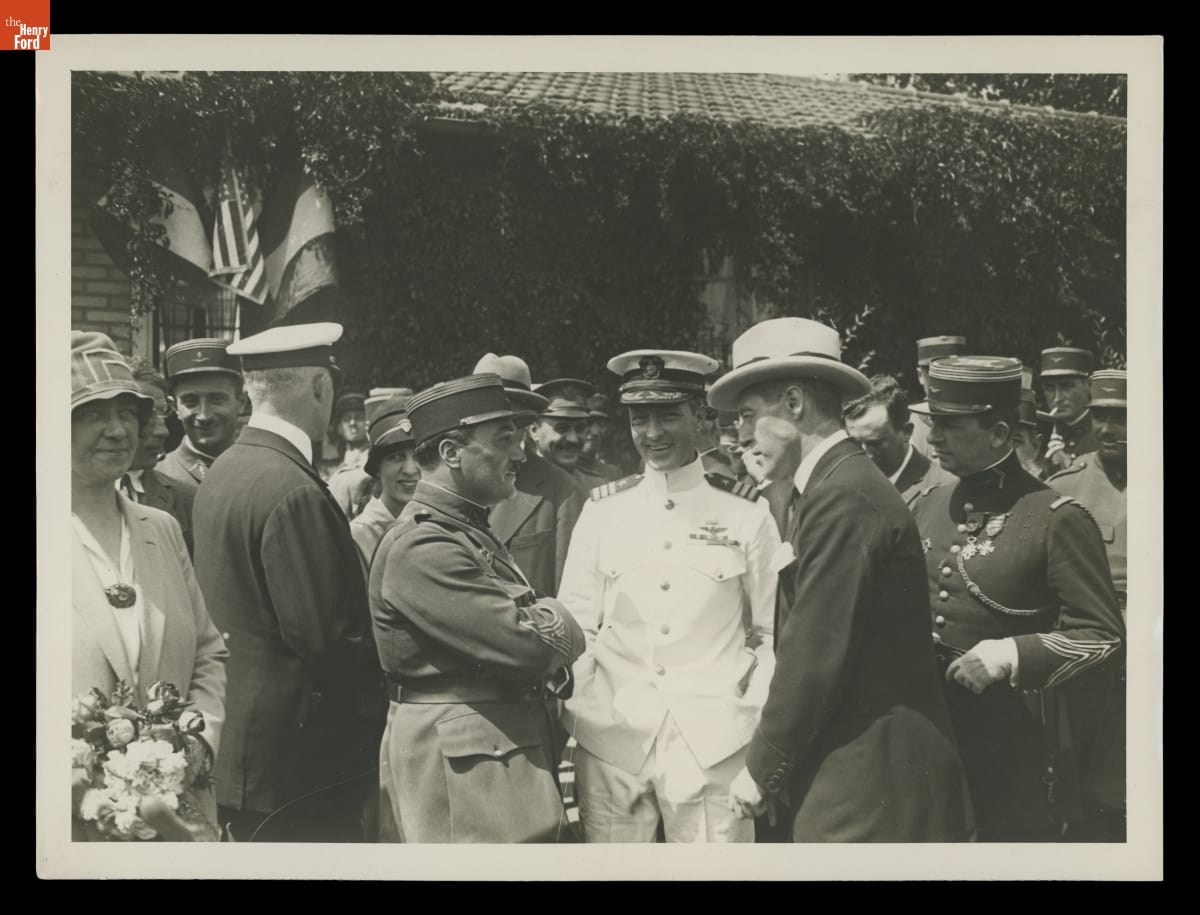
- Armand Pinsard, Richard E. Byrd, and Sheldon Whitehouse in France Following Byrd's Transatlantic Flight, 1927 - Richard Byrd, Bernt Balchen, Bert Acosta, and George Noville made a nonstop flight from New York to France in 1927 with their Fokker Tri-Motor <em>America</em>. They intended to land in Paris, but instead landed off the Normandy coast. Byrd and his team were honored for their accomplishment. He and Noville -- both Navy officers -- received the Navy's Distinguished Flying Cross.
- 1927
- Collections - Artifact
Armand Pinsard, Richard E. Byrd, and Sheldon Whitehouse in France Following Byrd's Transatlantic Flight, 1927
Richard Byrd, Bernt Balchen, Bert Acosta, and George Noville made a nonstop flight from New York to France in 1927 with their Fokker Tri-Motor America. They intended to land in Paris, but instead landed off the Normandy coast. Byrd and his team were honored for their accomplishment. He and Noville -- both Navy officers -- received the Navy's Distinguished Flying Cross.
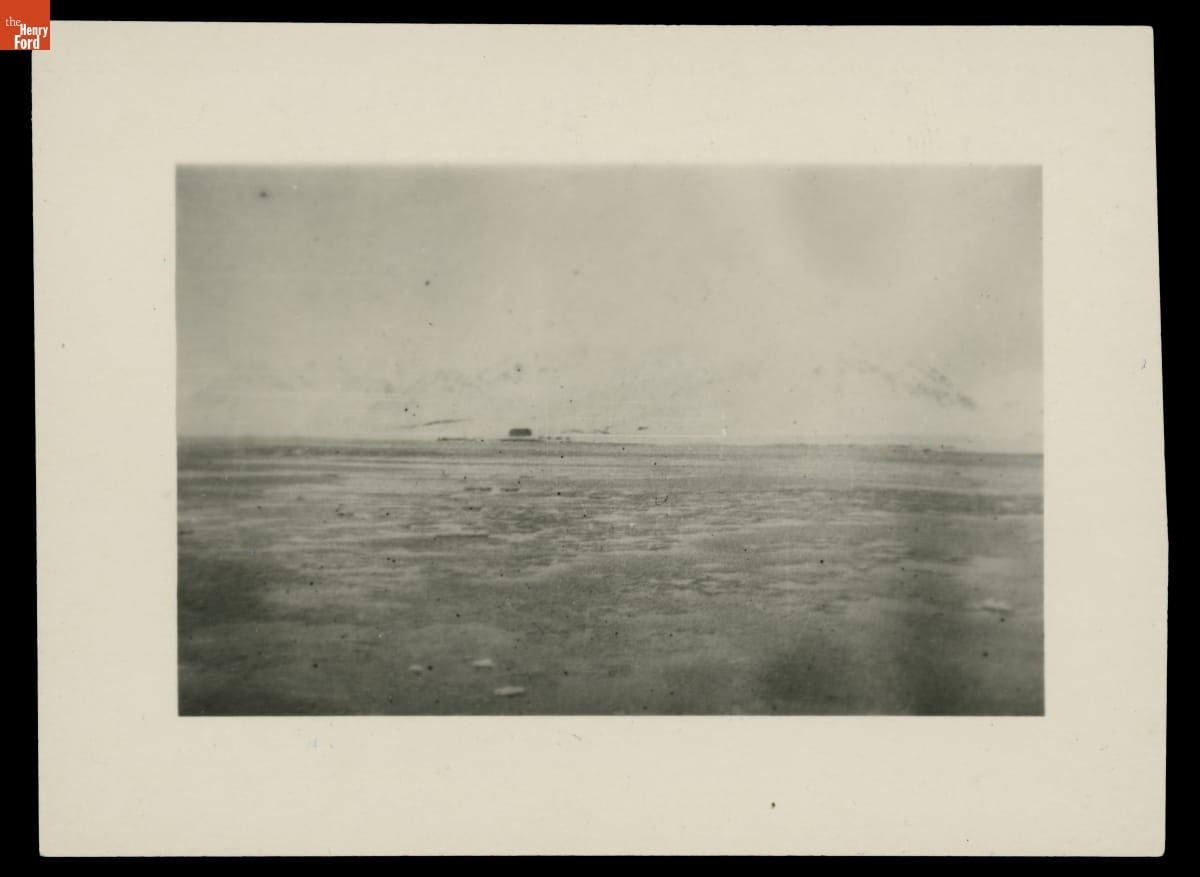
- Kings Bay, Svalbard, Norway during Richard E. Byrd's Arctic Expedition, 1926 - On May 9, 1926, explorer Richard Byrd and pilot Floyd Bennett took off from Spitzbergen, Norway, on a 16-hour, round-trip flight to the North Pole in their Fokker Tri-Motor <em>Josephine Ford</em>. Though Byrd is generally credited with reaching the pole, controversy remains over whether he could have made the 1,350-mile journey in the elapsed time.
- 1926
- Collections - Artifact
Kings Bay, Svalbard, Norway during Richard E. Byrd's Arctic Expedition, 1926
On May 9, 1926, explorer Richard Byrd and pilot Floyd Bennett took off from Spitzbergen, Norway, on a 16-hour, round-trip flight to the North Pole in their Fokker Tri-Motor Josephine Ford. Though Byrd is generally credited with reaching the pole, controversy remains over whether he could have made the 1,350-mile journey in the elapsed time.
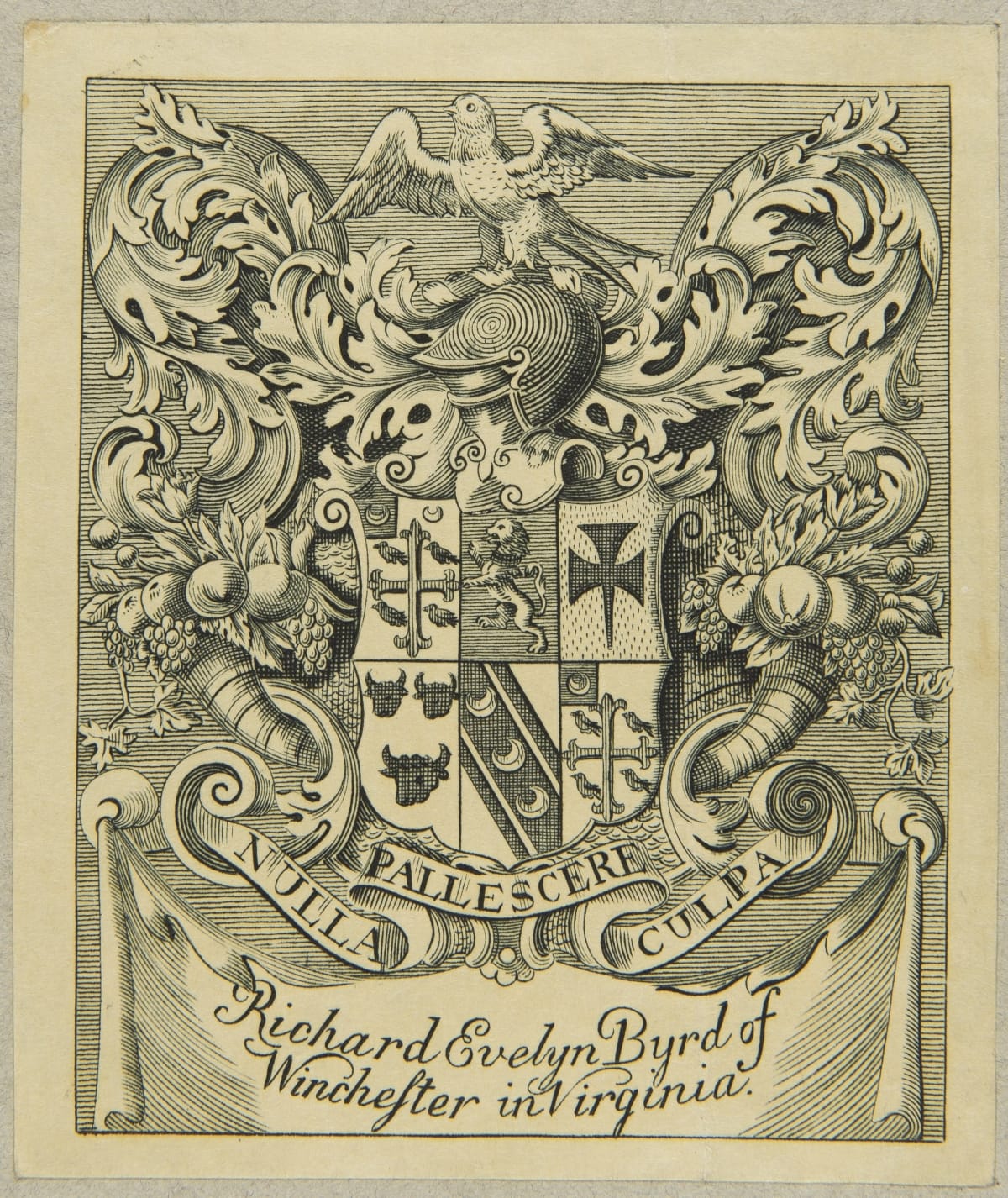
- Bookplate of Richard Evelyn Byrd, 1893-1906 - Bookplates show ownership, but they can also tell us more. Often pasted on the inside of a book's front cover or endpaper, these printed labels contain the owner's name and sometimes the words "ex-libris" (Latin for "from the library of"). Coats of arms, crests, other decorative images, poems, mottoes, and even font type provide insight into the beliefs, passions, and interests of the book's owner.
- 1893-1906
- Collections - Artifact
Bookplate of Richard Evelyn Byrd, 1893-1906
Bookplates show ownership, but they can also tell us more. Often pasted on the inside of a book's front cover or endpaper, these printed labels contain the owner's name and sometimes the words "ex-libris" (Latin for "from the library of"). Coats of arms, crests, other decorative images, poems, mottoes, and even font type provide insight into the beliefs, passions, and interests of the book's owner.
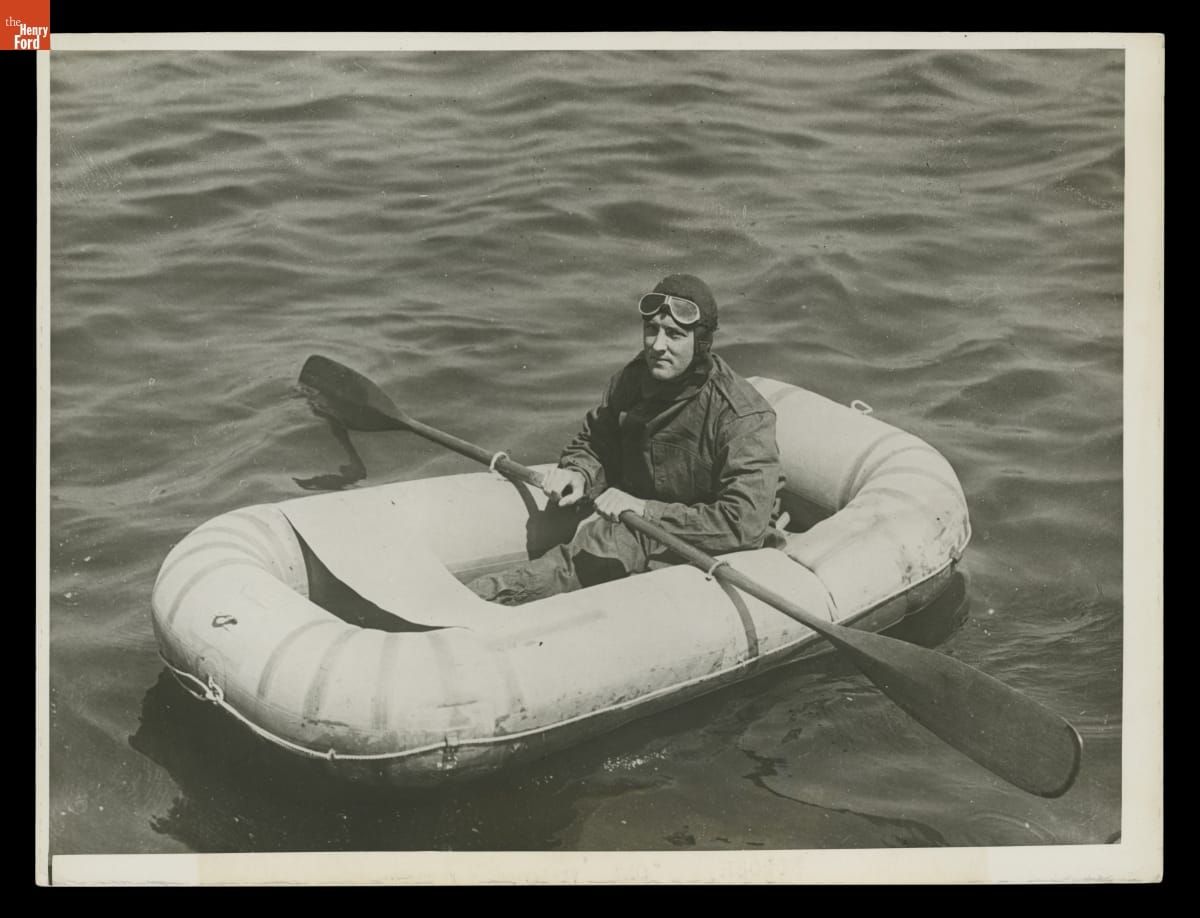
- Richard E. Byrd in a Lifeboat, 1927 - Richard Byrd, Bernt Balchen, Bert Acosta, and George Noville made a nonstop flight from New York to France in 1927 with their Fokker Tri-Motor <em>America</em>. They intended to land in Paris, but poor weather there forced them to land in shallow water off the Normandy coast. For this photo, Byrd recreated his arrival to France in a rubber lifeboat.
- 1927
- Collections - Artifact
Richard E. Byrd in a Lifeboat, 1927
Richard Byrd, Bernt Balchen, Bert Acosta, and George Noville made a nonstop flight from New York to France in 1927 with their Fokker Tri-Motor America. They intended to land in Paris, but poor weather there forced them to land in shallow water off the Normandy coast. For this photo, Byrd recreated his arrival to France in a rubber lifeboat.
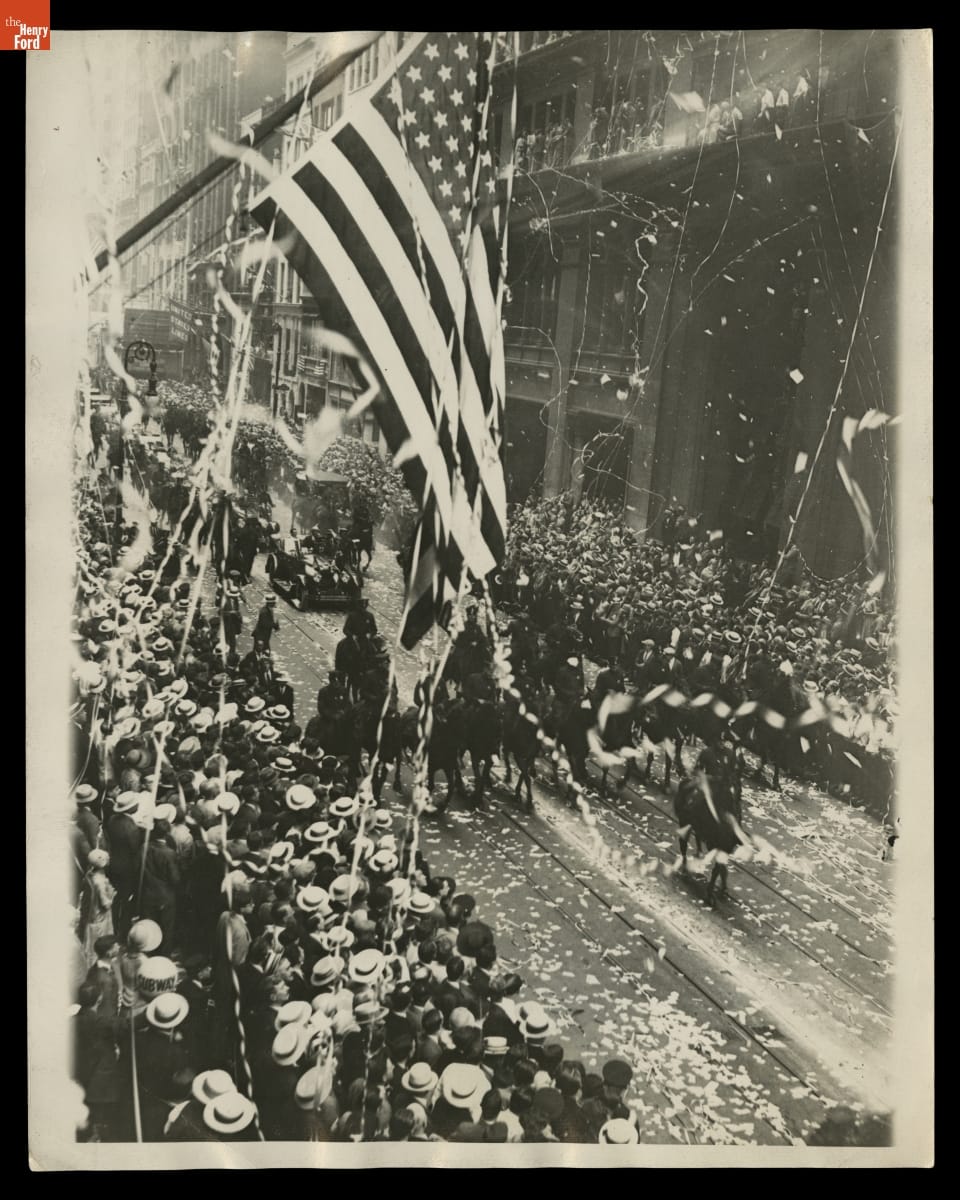
- Parade in New York City in Honor of Richard Byrd's Transatlantic Flight, 1927 - Richard Byrd, Bernt Balchen, Bert Acosta, and George Noville made a nonstop flight from New York to France in 1927 with their Fokker Tri-Motor <em>America</em>. They intended to land in Paris, but instead landed off the Normandy coast. Byrd and his team were honored for their accomplishment. He and Noville -- both Navy officers -- received the Navy's Distinguished Flying Cross.
- 1927
- Collections - Artifact
Parade in New York City in Honor of Richard Byrd's Transatlantic Flight, 1927
Richard Byrd, Bernt Balchen, Bert Acosta, and George Noville made a nonstop flight from New York to France in 1927 with their Fokker Tri-Motor America. They intended to land in Paris, but instead landed off the Normandy coast. Byrd and his team were honored for their accomplishment. He and Noville -- both Navy officers -- received the Navy's Distinguished Flying Cross.
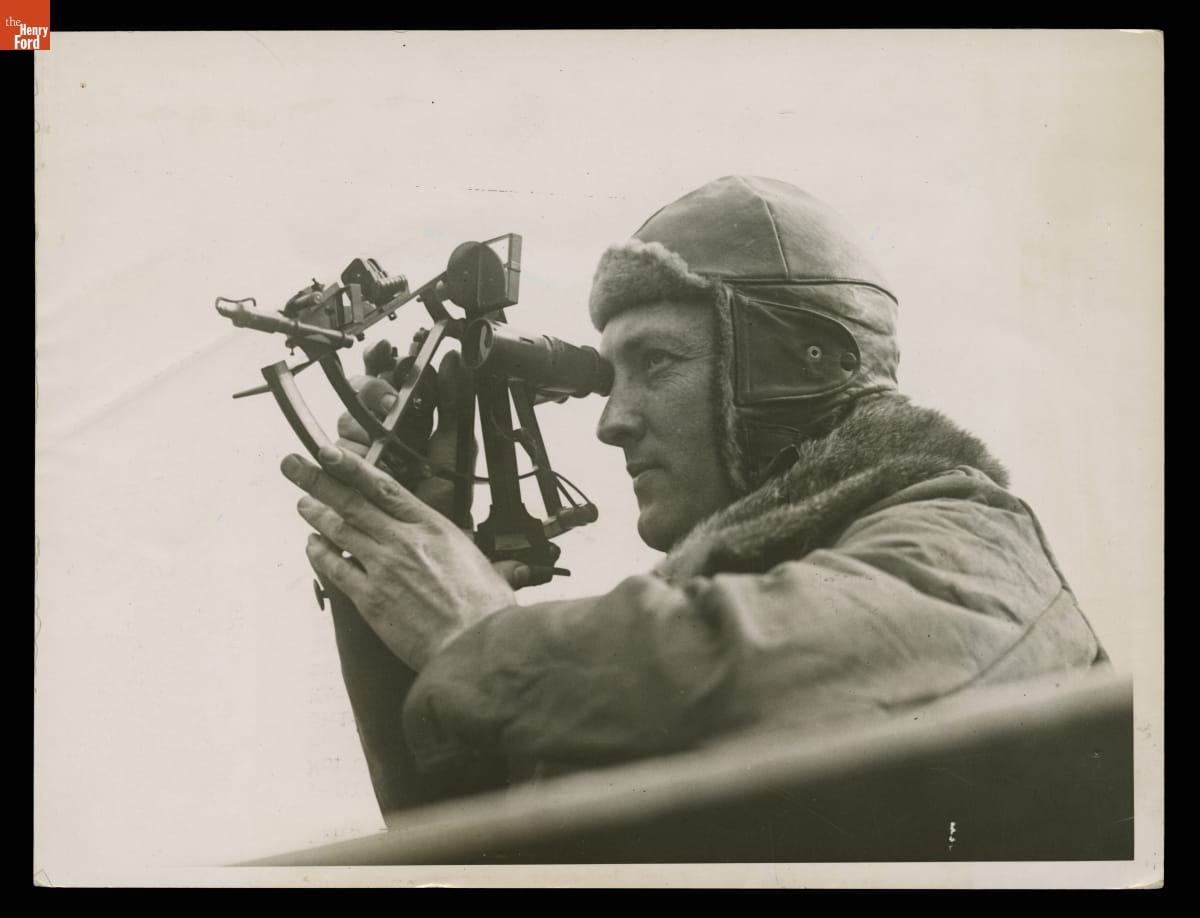
- Richard E. Byrd Using a Sextant, circa 1927 - During his polar expeditions, Richard E. Byrd relied on navigational instruments not much changed in 200 years. Byrd's sextant measured the angle between an astronomical object -- the Sun or a star -- and the horizon. Based on the time of day it was measured, this angle was used to determine Byrd's position on a navigational chart.
- circa 1927
- Collections - Artifact
Richard E. Byrd Using a Sextant, circa 1927
During his polar expeditions, Richard E. Byrd relied on navigational instruments not much changed in 200 years. Byrd's sextant measured the angle between an astronomical object -- the Sun or a star -- and the horizon. Based on the time of day it was measured, this angle was used to determine Byrd's position on a navigational chart.
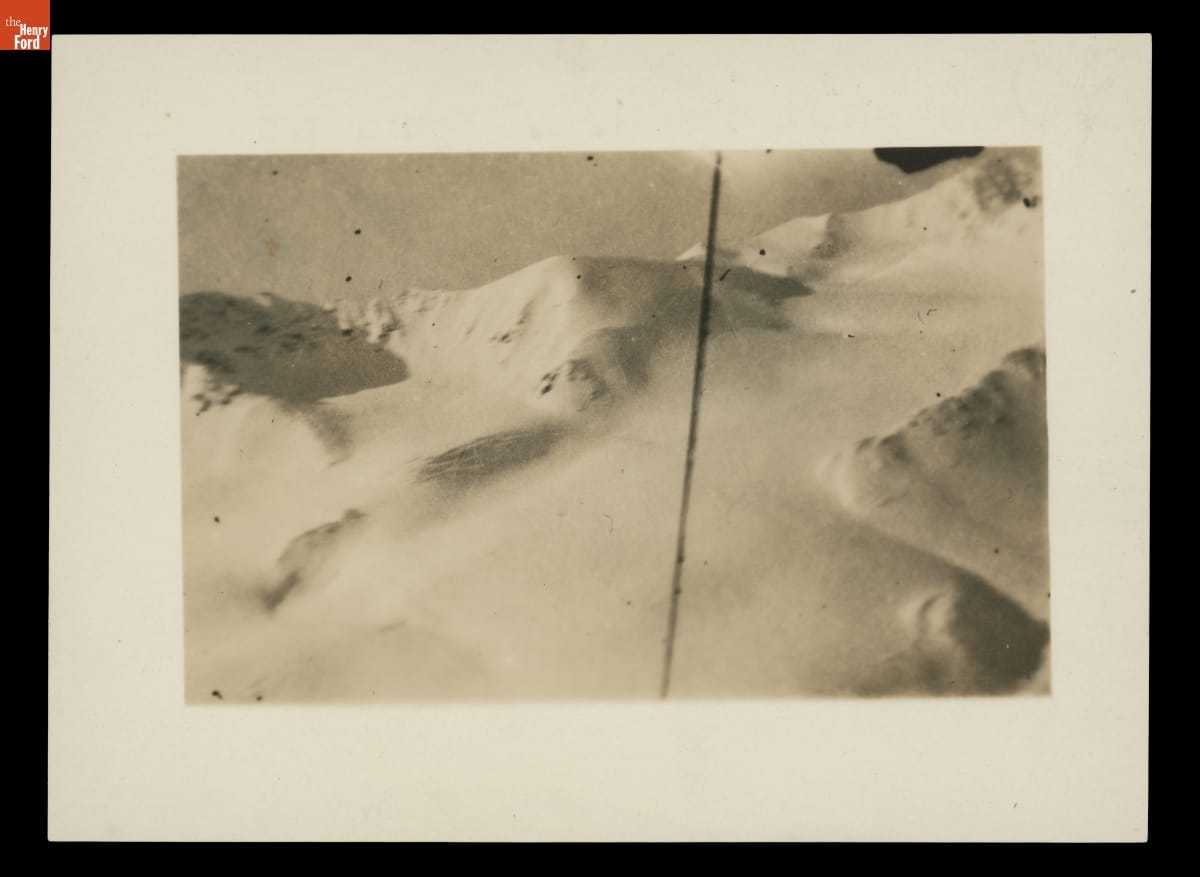
- Aerial View of Kings Bay, Svalbard, Norway during Richard E. Byrd's Arctic Expedition, 1926 - On May 9, 1926, explorer Richard Byrd and pilot Floyd Bennett took off from Spitzbergen, Norway, on a 16-hour, round-trip flight to the North Pole in their Fokker Tri-Motor <em>Josephine Ford</em>. Though Byrd is generally credited with reaching the pole, controversy remains over whether he could have made the 1,350-mile journey in the elapsed time.
- 1926
- Collections - Artifact
Aerial View of Kings Bay, Svalbard, Norway during Richard E. Byrd's Arctic Expedition, 1926
On May 9, 1926, explorer Richard Byrd and pilot Floyd Bennett took off from Spitzbergen, Norway, on a 16-hour, round-trip flight to the North Pole in their Fokker Tri-Motor Josephine Ford. Though Byrd is generally credited with reaching the pole, controversy remains over whether he could have made the 1,350-mile journey in the elapsed time.
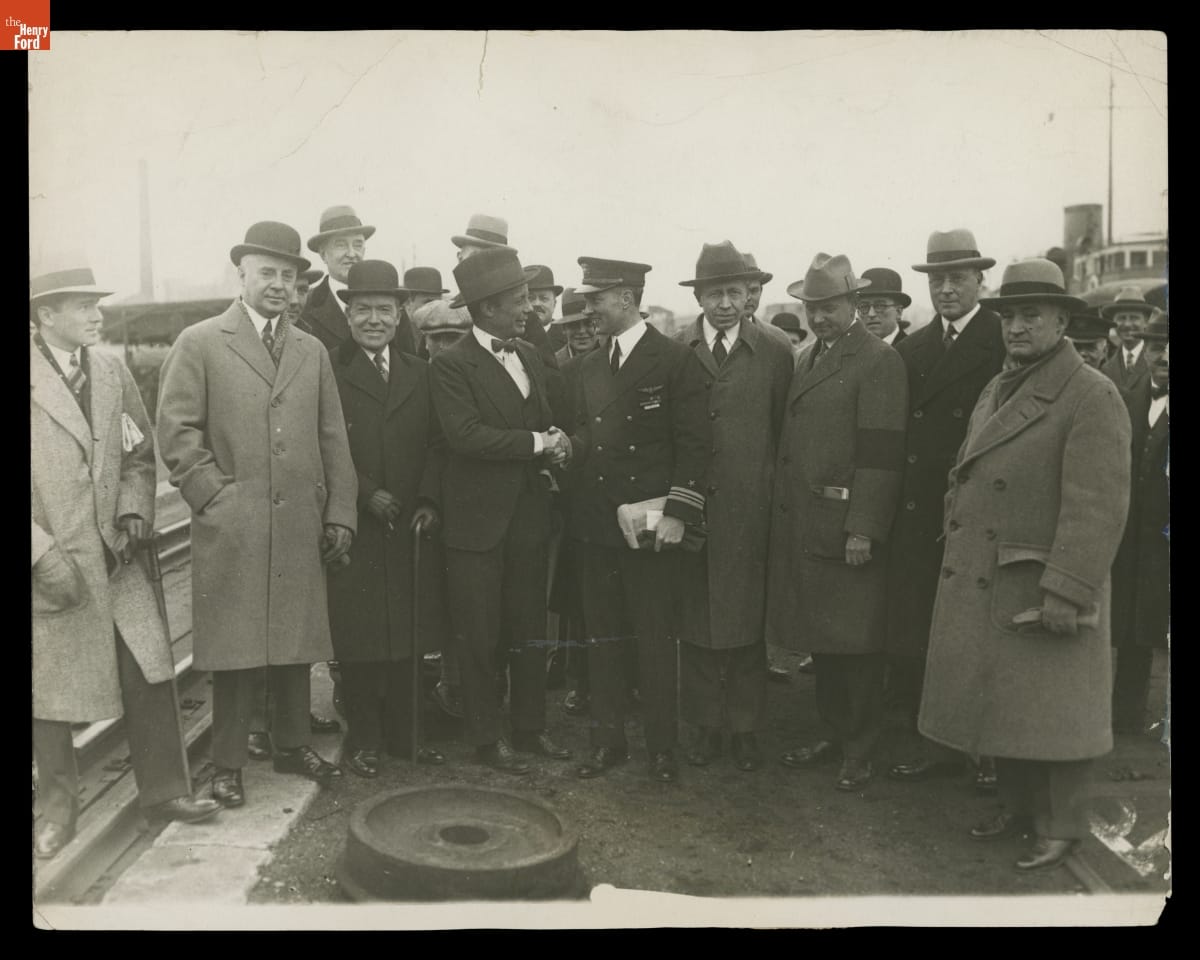
- Richard E. Byrd with a Group of Men, 1926 - On May 9, 1926, explorer Richard Byrd and pilot Floyd Bennett took off from Spitzbergen, Norway, on a 16-hour, round-trip flight to the North Pole in their Fokker Tri-Motor <em>Josephine Ford</em>. Though Byrd is generally credited with reaching the pole, controversy remains over whether he could have made the 1,350-mile journey in the elapsed time.
- 1926
- Collections - Artifact
Richard E. Byrd with a Group of Men, 1926
On May 9, 1926, explorer Richard Byrd and pilot Floyd Bennett took off from Spitzbergen, Norway, on a 16-hour, round-trip flight to the North Pole in their Fokker Tri-Motor Josephine Ford. Though Byrd is generally credited with reaching the pole, controversy remains over whether he could have made the 1,350-mile journey in the elapsed time.
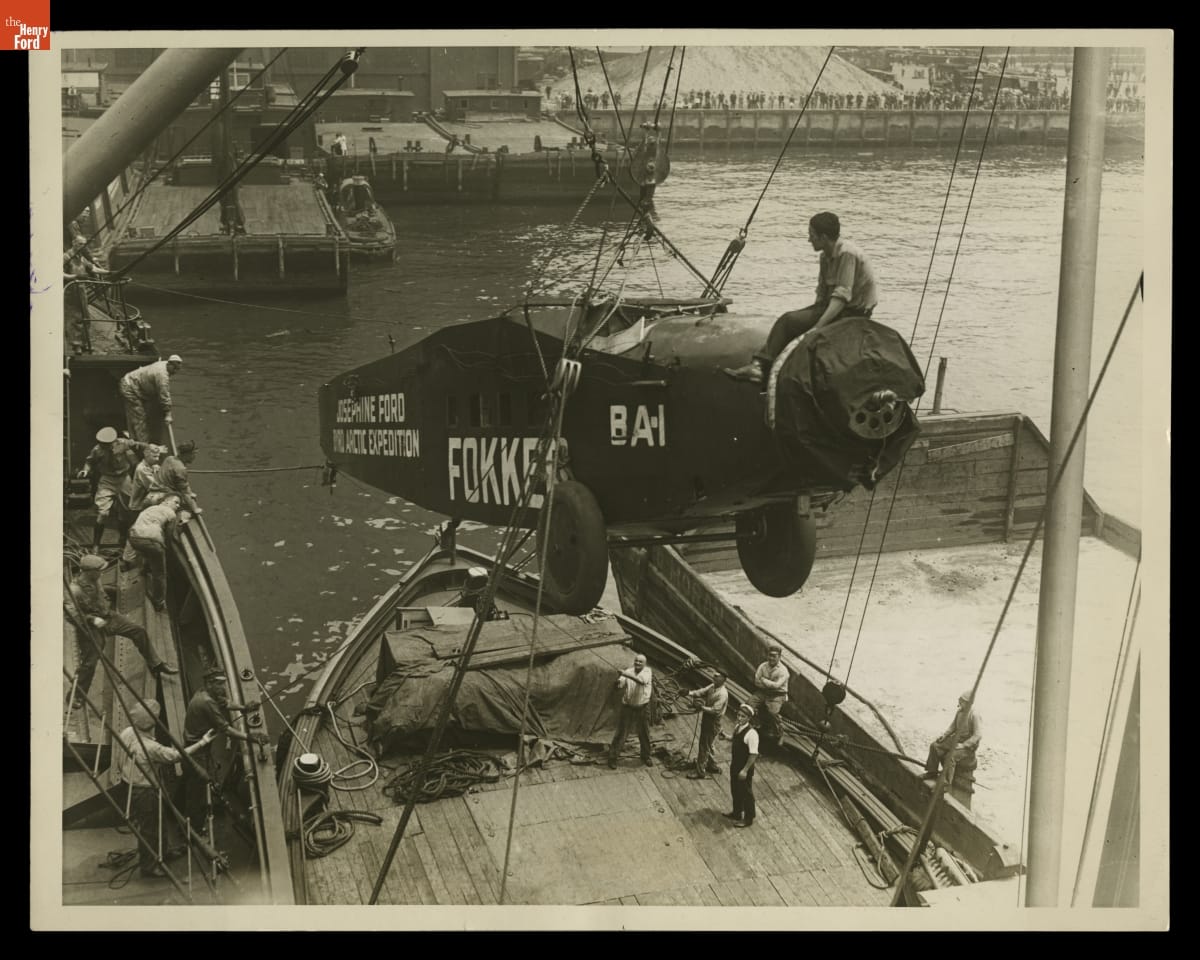
- Richard E. Byrd's Fokker Airplane, "Josephine Ford," Hoisted from the Deck of a Ship, 1926 - On May 9, 1926, explorer Richard Byrd and pilot Floyd Bennett flew toward the North Pole in a Fokker F.VII Tri-Motor airplane. Edsel Ford provided considerable financial support to the expedition, and Byrd named his airplane <em>Josephine Ford</em> to honor Mr. Ford's young daughter. Though Byrd is generally credited with reaching the pole, controversy remains.
- 1926
- Collections - Artifact
Richard E. Byrd's Fokker Airplane, "Josephine Ford," Hoisted from the Deck of a Ship, 1926
On May 9, 1926, explorer Richard Byrd and pilot Floyd Bennett flew toward the North Pole in a Fokker F.VII Tri-Motor airplane. Edsel Ford provided considerable financial support to the expedition, and Byrd named his airplane Josephine Ford to honor Mr. Ford's young daughter. Though Byrd is generally credited with reaching the pole, controversy remains.