
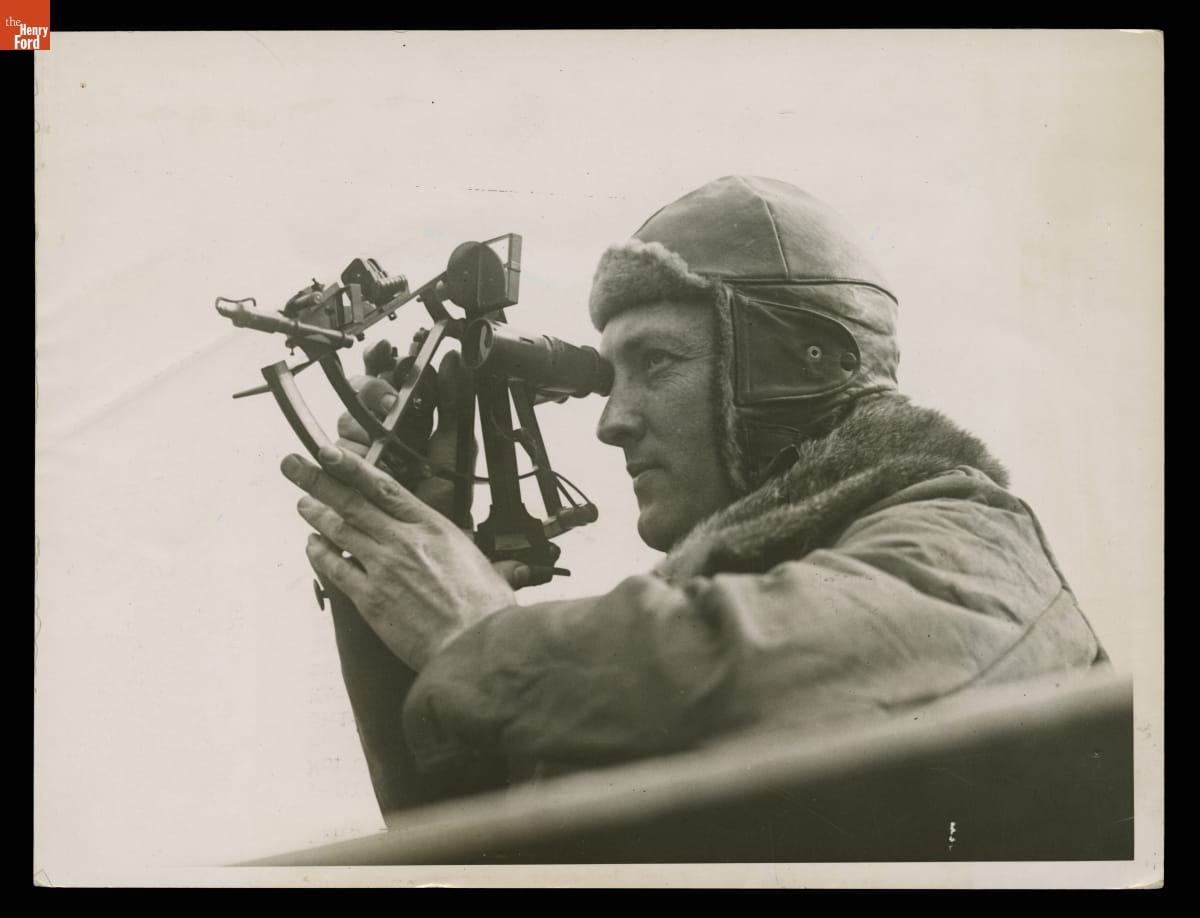
Richard E. Byrd Using a Sextant, circa 1927
THF123645 / Richard E. Byrd Using a Sextant, circa 1927
01
Artifact Overview
During his polar expeditions, Richard E. Byrd relied on navigational instruments not much changed in 200 years. Byrd's sextant measured the angle between an astronomical object -- the Sun or a star -- and the horizon. Based on the time of day it was measured, this angle was used to determine Byrd's position on a navigational chart.
Artifact Details
Artifact
Photographic print
Date Made
circa 1927
Subject Date
circa 1927
Creators
Place of Creation
Collection Title
Location
Not on exhibit to the public.
Object ID
2001.0.107.7
Credit
From the Collections of The Henry Ford.
Material
Paper (Fiber product)
Technique
Gelatin silver process
Color
Black-and-white (Colors)
Dimensions
Height: 6.063 in
Width: 8 in
Inscriptions
attached piece of paper at bottom in part:
BYRD SCANS THE SKIES. ...SHOWN WITH A SEXTANT THAT HE USED ON HIS FLIGHT IN THE ARCTIC, AND WHICH HE WILL USE ON HIS ATTEMPTED FLIGHT FROM NEW YORK TO PARIS.. etc.
ink stamp on back:
...HERBERT PHOTOS, Inc. N.Y. NEWS FEATURES... NOT FOR SYNDICATION ...
other ink stamp on back:
1927
Keywords |
|---|
02
Related Content

Set
Air-to-Ground Communication
- 10 Artifacts
During his polar expeditions, Richard E. Byrd relied on navigational instruments not much changed in 200 years. Byrd's sextant measured the angle between an astronomical object -- the Sun or a star -- and the horizon. Based on the time of day it was measured, this angle was used to determine Byrd's position on a navigational chart.
Set
Space: Our Quest to Understand
- 10 Artifacts
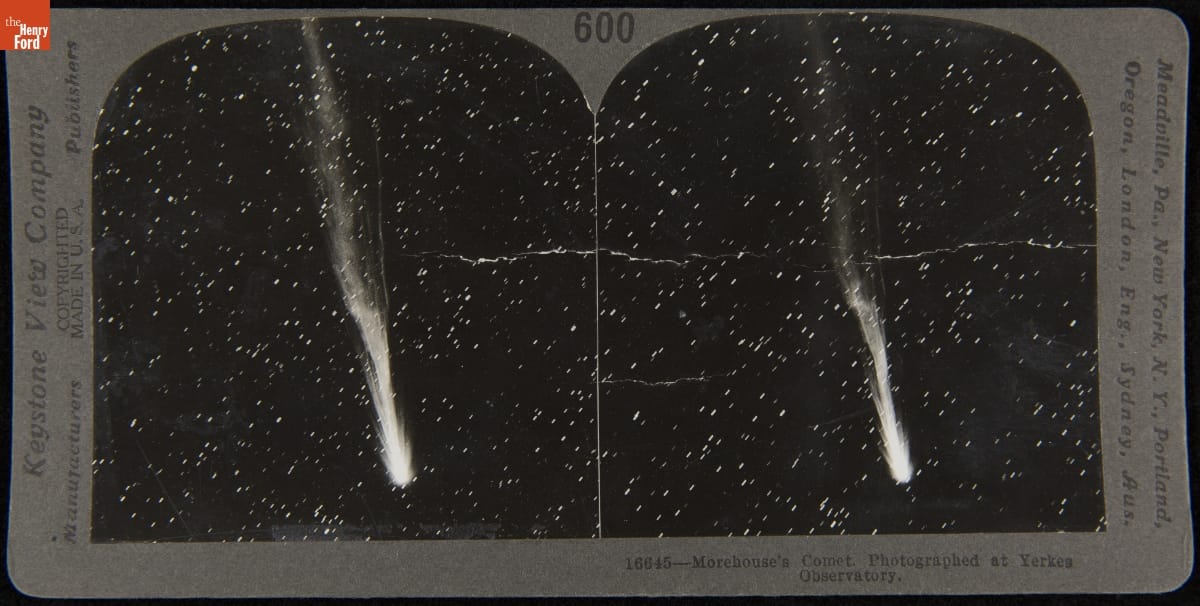
In this set, a number of our staff highlight favorite space-related artifacts from The Henry Ford's collections. The objects they picked all speak to the underlying tools and technologies that have allowed our understanding of the universe to grow. Whether we are observing celestial bodies or venturing into space, humankind has designed innovative ways to overcome the many challenges of comprehending and exploring the cosmos.
Set
Polar Exploration
- 18 Artifacts
In the first four decades of the 20th century, polar explorers set off to discover what lay in the vast cold regions surrounding the North and South Poles. Their expeditions navigated a long-sought-for passage, crossed frozen oceans, charted a continent, and conquered the Earth's poles.
Set
Richard Byrd’s North Pole Flight
- 25 Artifacts
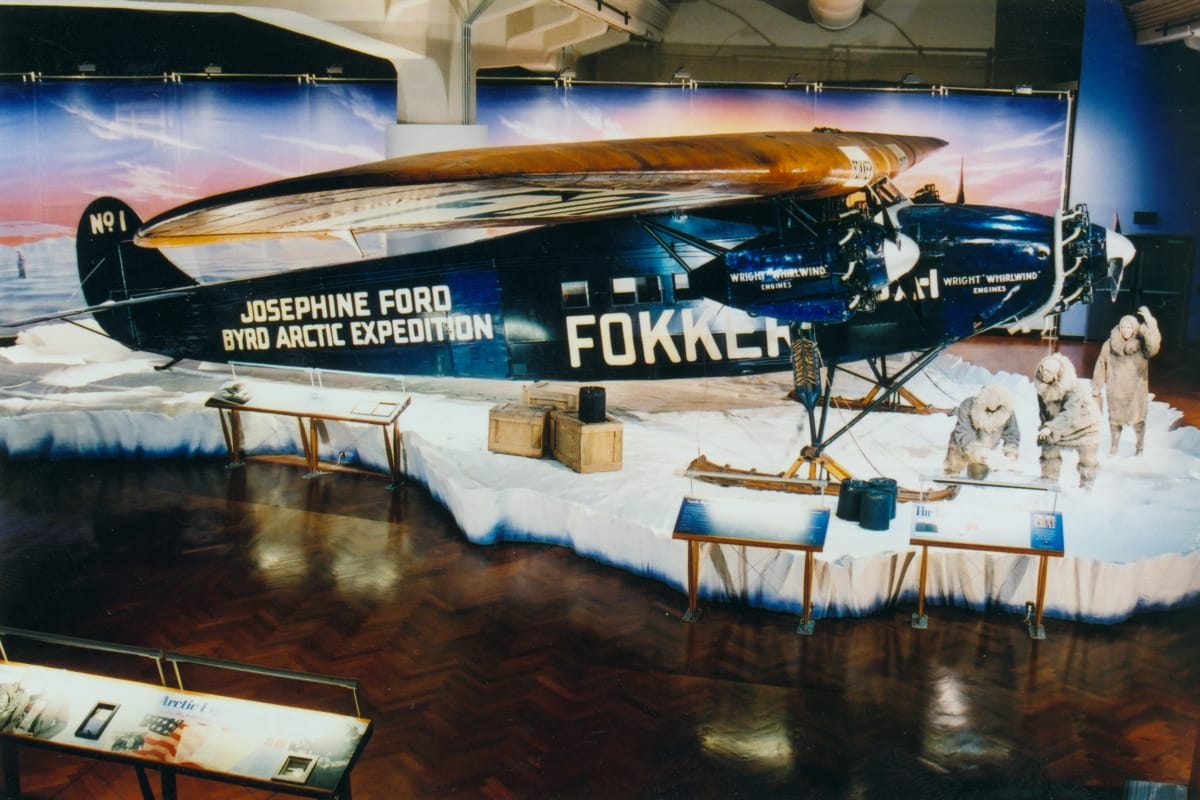
On May 9, 1926, explorer Richard Byrd and pilot Floyd Bennett took off from Norway on a round-trip flight to the North Pole in their Fokker Tri-Motor airplane Josephine Ford. Though Byrd is generally credited with reaching the pole, controversy remains over whether he could have made the 1,350-mile journey in the 16 hours he and Bennett spent aloft. Whatever doubts remain today, Byrd was celebrated as a leading polar explorer of his time.

article
Historical Graffiti
When does vandalizing an artifact become part of the historical record itself? One of our staff muses on this question during a taping of The Henry Ford's Innovation Nation.