
Search
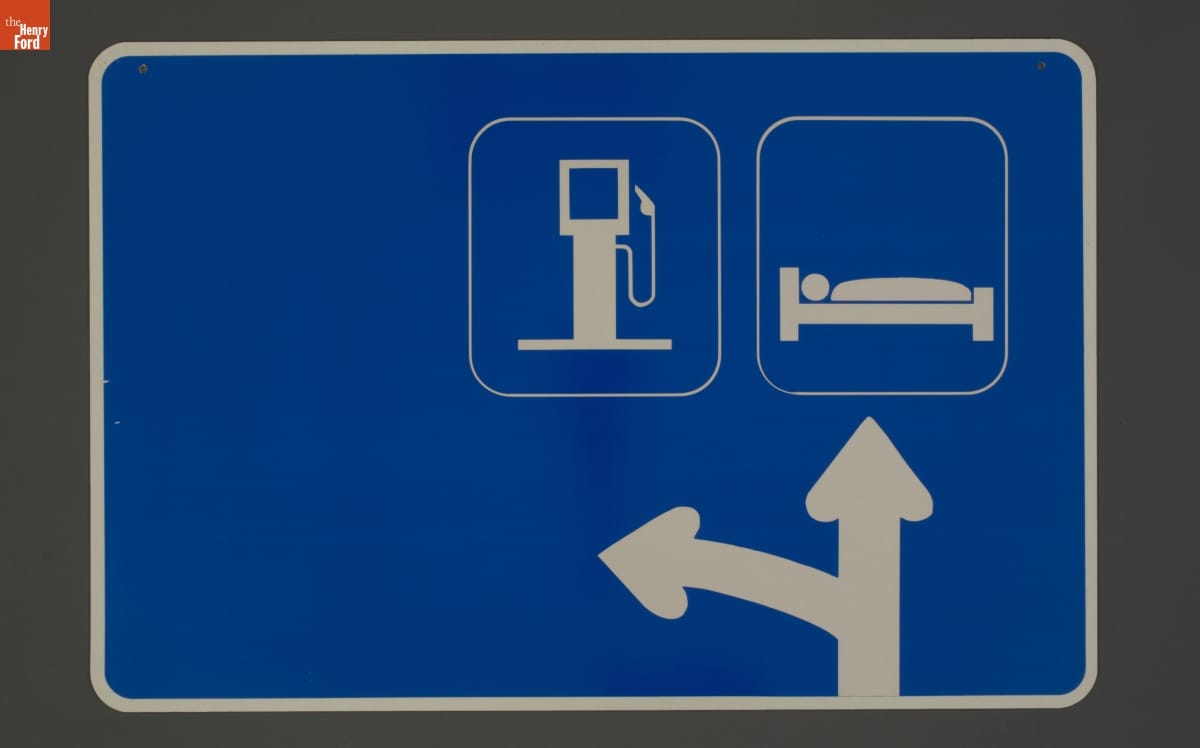
- Gas & Lodging Sign, 1975-1987 - During the 1970s, the American Institute of Graphic Arts (AIGA) collaborated with the U.S. Department of Transportation to produce 50 standard symbols to be used on signs. Before this, numerous international, national, and local organizations used a variety of visuals to get across their messages. This road sign with arrows displays the symbols for gas and lodging.
- 1975-1987
- Collections - Artifact
Gas & Lodging Sign, 1975-1987
During the 1970s, the American Institute of Graphic Arts (AIGA) collaborated with the U.S. Department of Transportation to produce 50 standard symbols to be used on signs. Before this, numerous international, national, and local organizations used a variety of visuals to get across their messages. This road sign with arrows displays the symbols for gas and lodging.
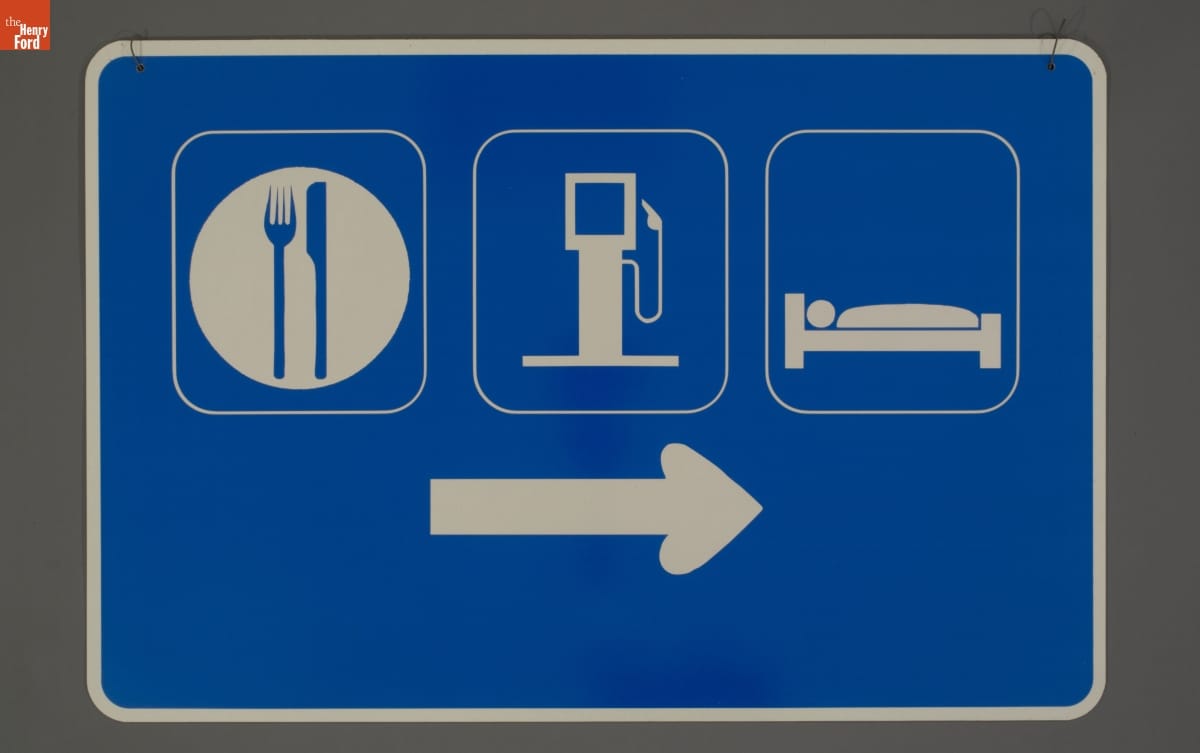
- Food, Gas, & Lodging Sign, 1975-1987 - During the 1970s, the American Institute of Graphic Arts (AIGA) collaborated with the U.S. Department of Transportation to produce 50 standard symbols to be used on signs. Before this, numerous international, national, and local organizations used a variety of visuals to get across their messages. This road sign with arrow displays the symbols for food, gas, and lodging.
- 1975-1987
- Collections - Artifact
Food, Gas, & Lodging Sign, 1975-1987
During the 1970s, the American Institute of Graphic Arts (AIGA) collaborated with the U.S. Department of Transportation to produce 50 standard symbols to be used on signs. Before this, numerous international, national, and local organizations used a variety of visuals to get across their messages. This road sign with arrow displays the symbols for food, gas, and lodging.
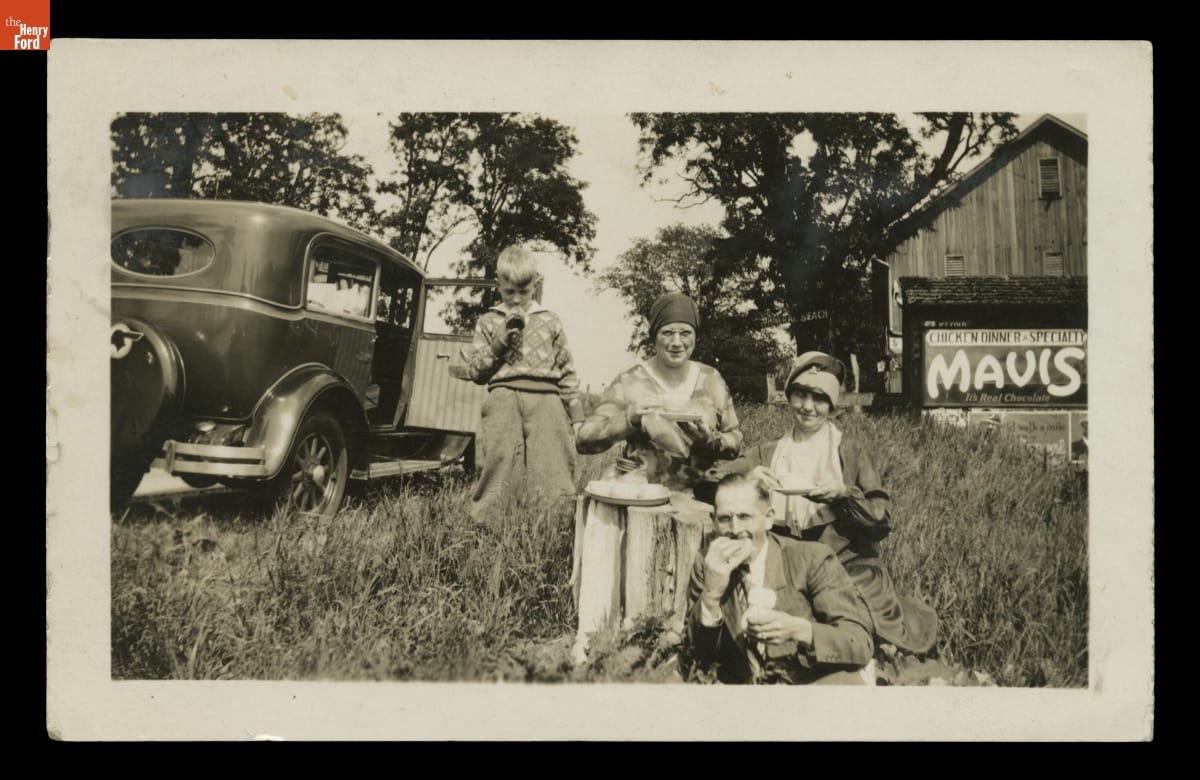
- Roadside Picnic, circa 1930 - Motorists taking long trips often packed their own meals. This photograph shows a family stopped alongside the road having a meal and using a tree stump as a table.
- circa 1930
- Collections - Artifact
Roadside Picnic, circa 1930
Motorists taking long trips often packed their own meals. This photograph shows a family stopped alongside the road having a meal and using a tree stump as a table.
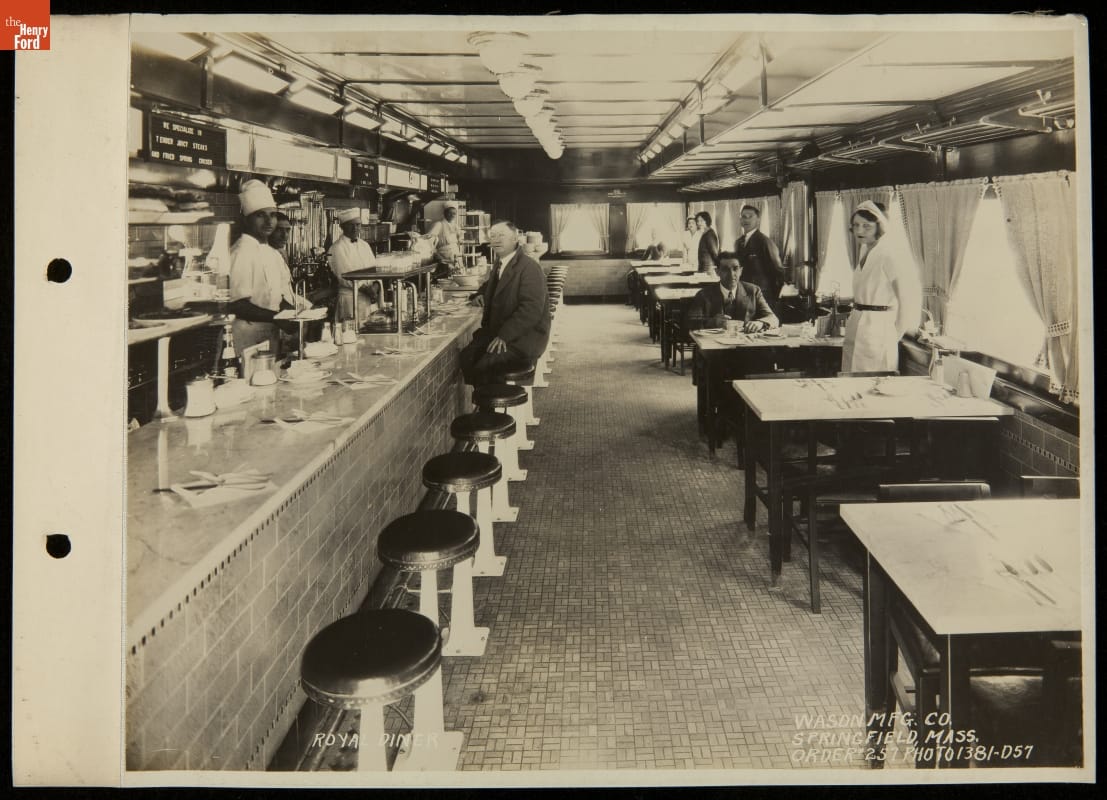
- View inside a Roadside Diner, 1927-1929 - Entrepreneurs could start a business easily by purchasing a fully outfitted diner. Wason Manufacturing Company, a noted streetcar and railway passenger vehicle manufacturer, produced the Royal Diner in Los Angeles, California, pictured here. Owners wanting to attract women and families purchased diners with space for tables or booths with more comfortable seating and hired waitresses to serve customers.
- 1927-1929
- Collections - Artifact
View inside a Roadside Diner, 1927-1929
Entrepreneurs could start a business easily by purchasing a fully outfitted diner. Wason Manufacturing Company, a noted streetcar and railway passenger vehicle manufacturer, produced the Royal Diner in Los Angeles, California, pictured here. Owners wanting to attract women and families purchased diners with space for tables or booths with more comfortable seating and hired waitresses to serve customers.
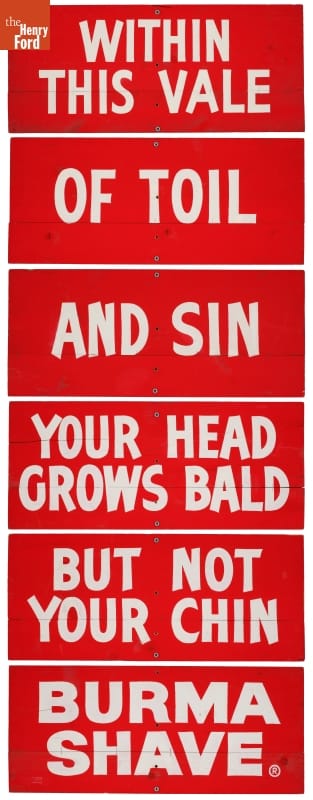
- Burma-Shave Roadside Signs, 1964-1965 - While this "jingle" was first composed in 1933, the Burma-Vita company manufactured this set of signs for display at the 1965 Detroit Auto Show. From the late 1920s to the early 1960s, sets of six signs like these marketed the company's famous "brushless" men's shaving cream along rural roads in most states.
- 1933-1940
- Collections - Artifact
Burma-Shave Roadside Signs, 1964-1965
While this "jingle" was first composed in 1933, the Burma-Vita company manufactured this set of signs for display at the 1965 Detroit Auto Show. From the late 1920s to the early 1960s, sets of six signs like these marketed the company's famous "brushless" men's shaving cream along rural roads in most states.
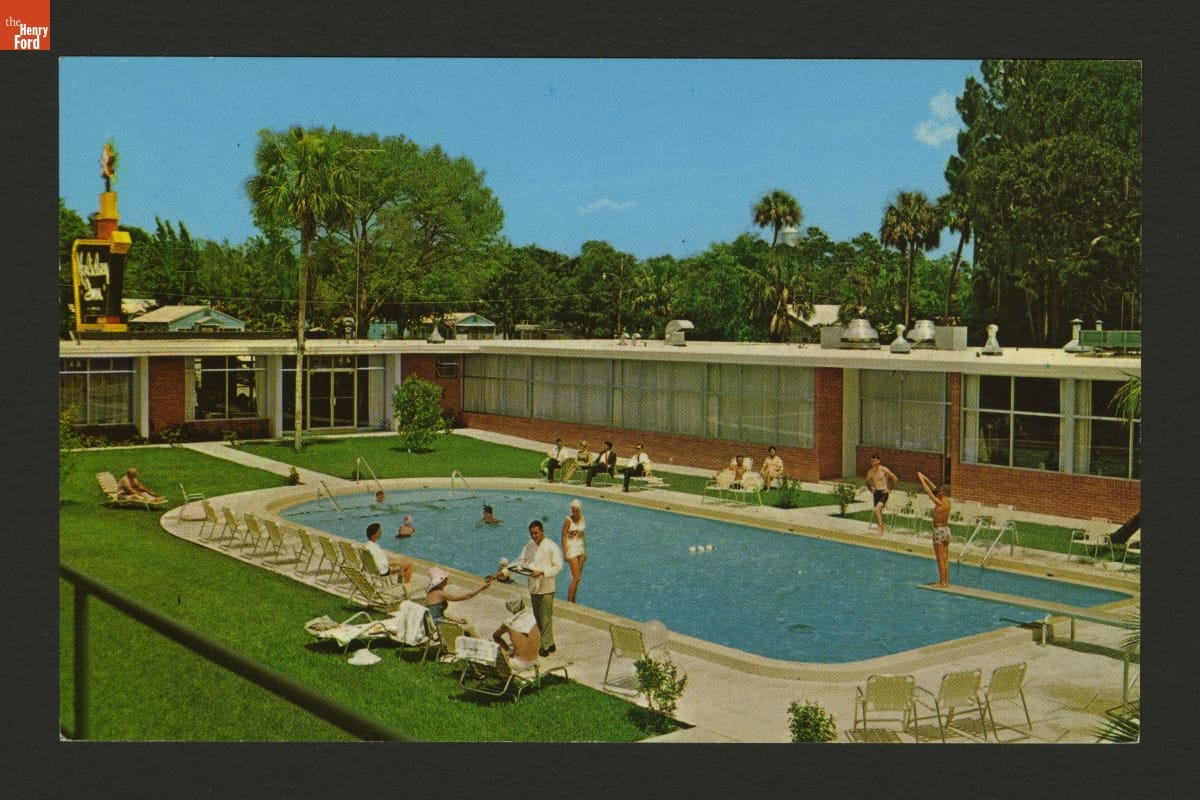
- Holiday Inns: Revolutionizing an Industry - On a family road trip in 1951, building developer Kemmons Wilson spent nights in motel rooms that he found to be overpriced and uncomfortable. When the entrepreneur returned home to Memphis, Tennessee, he decided to build his own motel that offered consistent, quality service and amenities at family-friendly prices. Within a few years, Wilson’s Holiday Inns had revolutionized industry standards and become the nation’s largest lodging chain.
- March 23, 2018
- Collections - Set
Holiday Inns: Revolutionizing an Industry
On a family road trip in 1951, building developer Kemmons Wilson spent nights in motel rooms that he found to be overpriced and uncomfortable. When the entrepreneur returned home to Memphis, Tennessee, he decided to build his own motel that offered consistent, quality service and amenities at family-friendly prices. Within a few years, Wilson’s Holiday Inns had revolutionized industry standards and become the nation’s largest lodging chain.
- Safety Girl Roadside Emergency Kit, 2011 -

- 2011
- Collections - Artifact
Safety Girl Roadside Emergency Kit, 2011
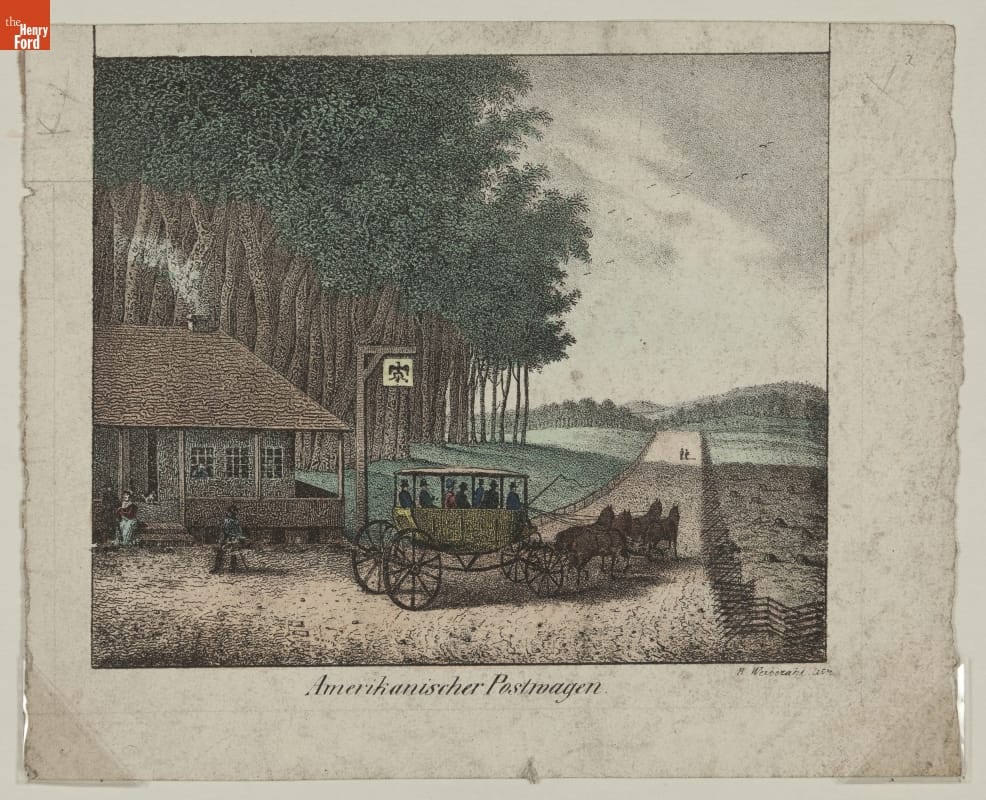
- Roadside Taverns - Stage wagons were light and open, though not as comfortable as later Concord stagecoaches. They could go about five miles per hour, barring bad weather or road obstructions. The gaily painted signboards of roadside taverns beckoned weary travelers, promising rest, meals, and a chance to catch up on news. Stage wagon drivers used the stop to care for their horses.
- May 26, 2015
- Collections - Set
Roadside Taverns
Stage wagons were light and open, though not as comfortable as later Concord stagecoaches. They could go about five miles per hour, barring bad weather or road obstructions. The gaily painted signboards of roadside taverns beckoned weary travelers, promising rest, meals, and a chance to catch up on news. Stage wagon drivers used the stop to care for their horses.
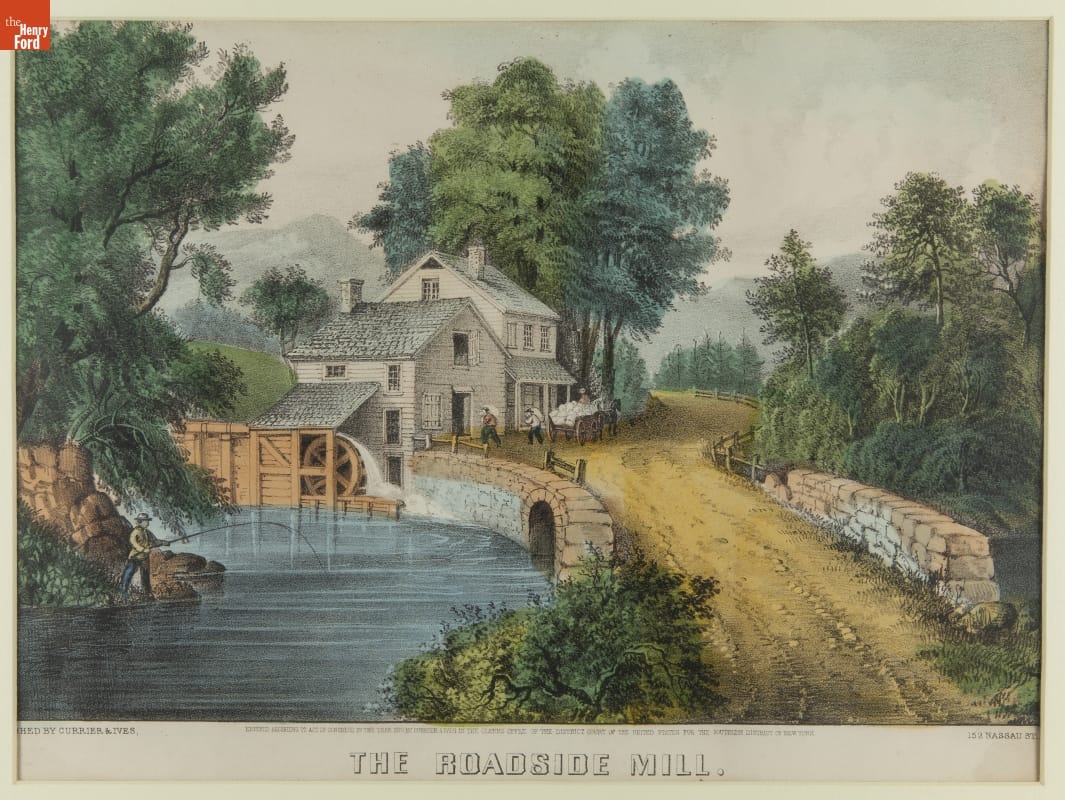
- Lithograph by Currier & Ives, "The Roadside Mill," 1870 -
- 1870
- Collections - Artifact
Lithograph by Currier & Ives, "The Roadside Mill," 1870
- Kemmons Wilson’s Holiday Inns - At a time when Americans are traveling less and the lodging industry is making big changes, let’s take a look back at the story of Kemmons Wilson, whose Holiday Inns revolutionized roadside lodging in the mid-20th century.

- May 28, 2020
- Collections - article
Kemmons Wilson’s Holiday Inns
At a time when Americans are traveling less and the lodging industry is making big changes, let’s take a look back at the story of Kemmons Wilson, whose Holiday Inns revolutionized roadside lodging in the mid-20th century.