
Search
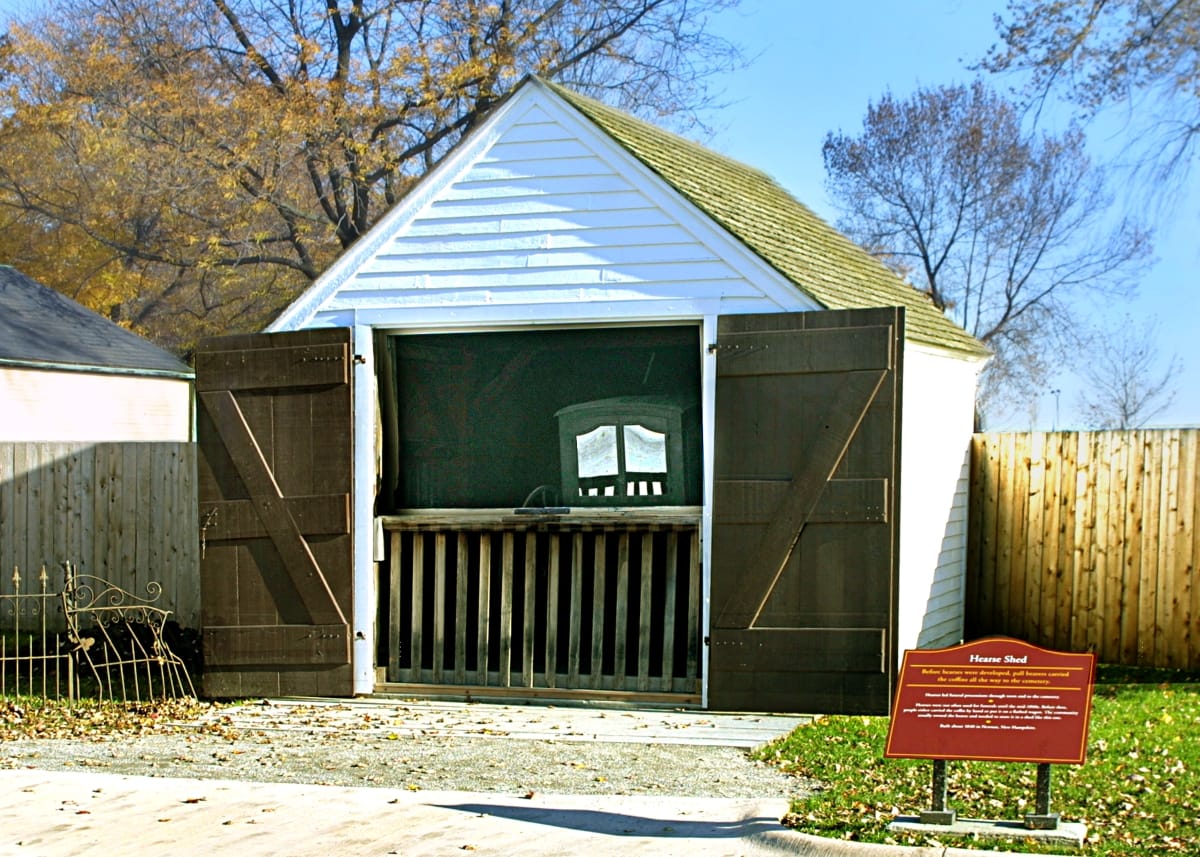
- Hearse Shed - This shed, originally built in Newton, New Hampshire, around 1850, was located near the local cemetery. Horse-drawn hearses, usually owned by the local community, were used to carry the coffin during funeral processions through town to the cemetery.
- circa 1850
- Collections - Artifact
Hearse Shed
This shed, originally built in Newton, New Hampshire, around 1850, was located near the local cemetery. Horse-drawn hearses, usually owned by the local community, were used to carry the coffin during funeral processions through town to the cemetery.
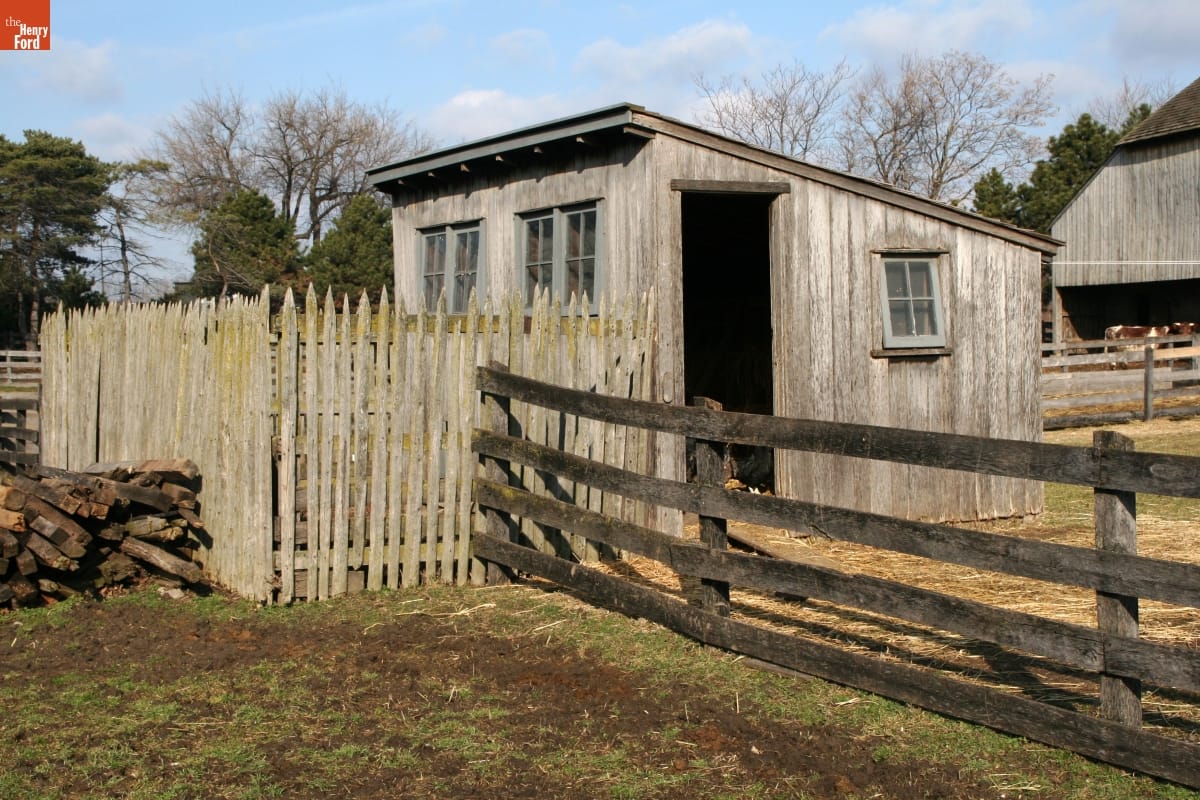
- Firestone Chicken Shed - This is a replica of the Firestones' chicken house in Ohio. Chickens spend their days in the farmyard, foraging for seeds and bugs for food. They spend their nights on their roosts in the chicken house, which provides warmth, protection from predators, and keeps the eggs in one place, making them easier to gather.
- 1880-1889
- Collections - Artifact
Firestone Chicken Shed
This is a replica of the Firestones' chicken house in Ohio. Chickens spend their days in the farmyard, foraging for seeds and bugs for food. They spend their nights on their roosts in the chicken house, which provides warmth, protection from predators, and keeps the eggs in one place, making them easier to gather.
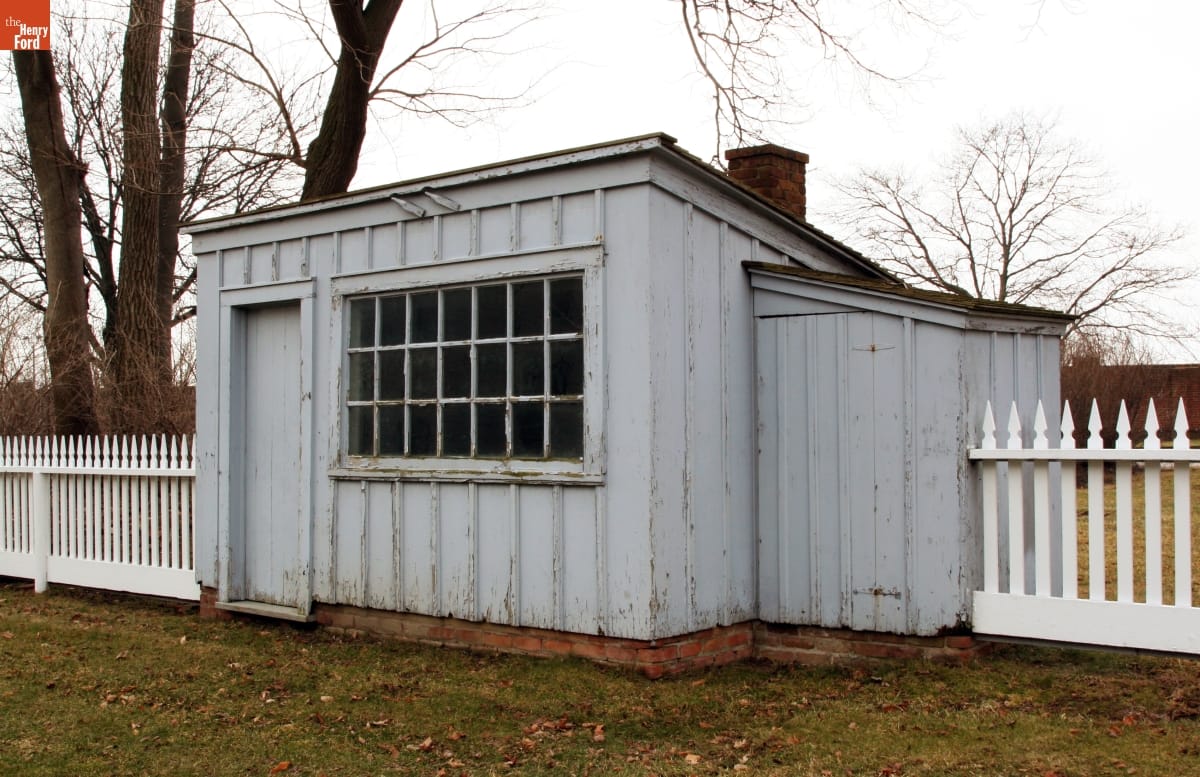
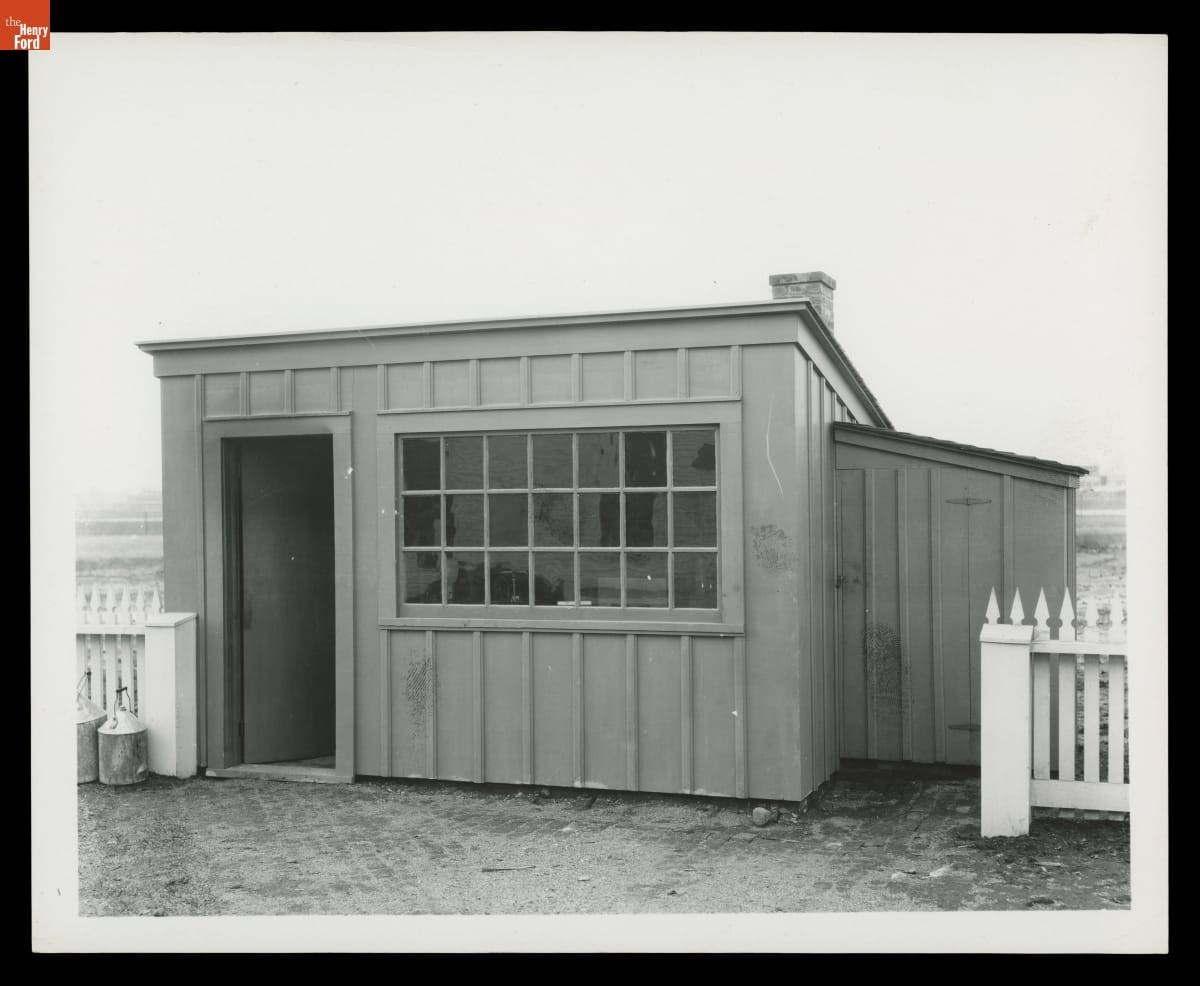
- Menlo Park Carbon Shed - Edison's invention of the carbon telephone transmitter in 1877 is what made the telephone commercially practical. This small wooden shed housed a battery of kerosene lamps, kept lit and set to produce carbon soot. The soot was collected and compressed into carbon tablets for telephone transmitters. Edison also used the carbon produced in this shed for various other experiments.
- circa 1879
- Collections - Artifact
Menlo Park Carbon Shed
Edison's invention of the carbon telephone transmitter in 1877 is what made the telephone commercially practical. This small wooden shed housed a battery of kerosene lamps, kept lit and set to produce carbon soot. The soot was collected and compressed into carbon tablets for telephone transmitters. Edison also used the carbon produced in this shed for various other experiments.
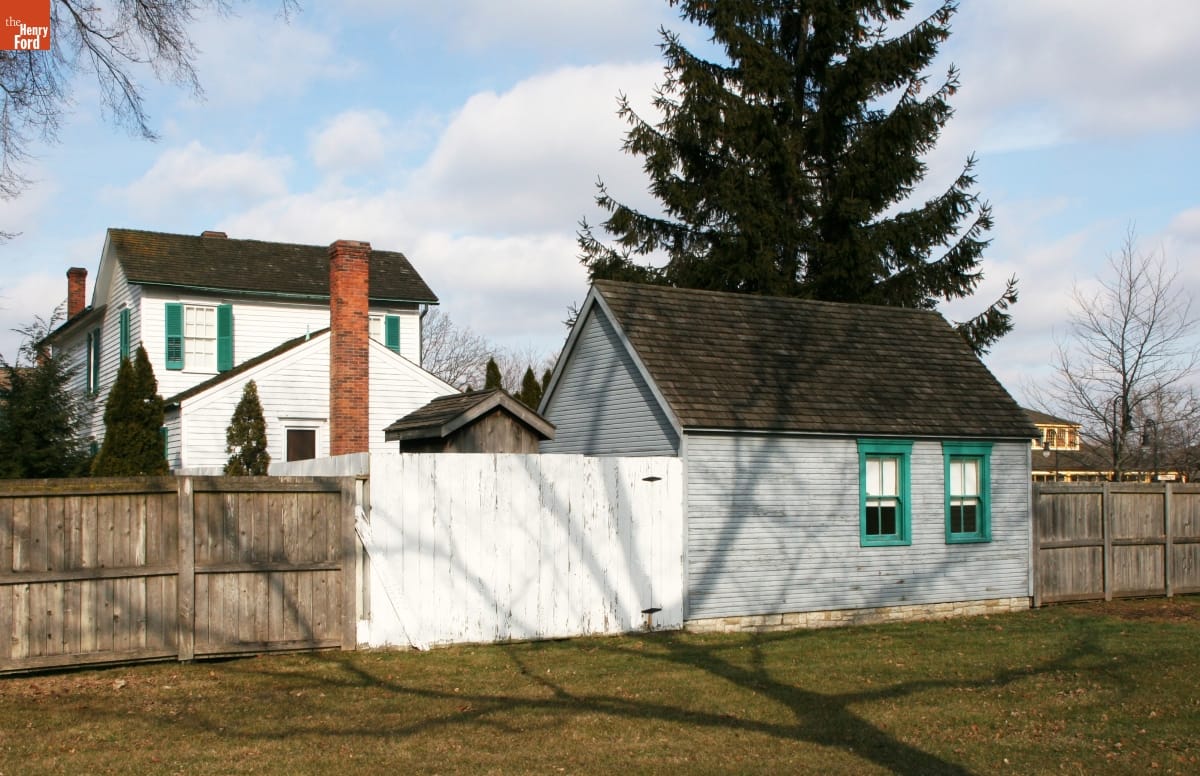
- Wright Brothers Garden Shed - Orville and Wilbur Wright were enthusiastic photographers who took many shots of their family and friends. They also took numerous photos of their gliders and airplanes, and those images remain vital records of the airplane's invention. The brothers developed their glass plate negatives in a darkroom they built in the shed behind the family home.
- 1870-1900
- Collections - Artifact
Wright Brothers Garden Shed
Orville and Wilbur Wright were enthusiastic photographers who took many shots of their family and friends. They also took numerous photos of their gliders and airplanes, and those images remain vital records of the airplane's invention. The brothers developed their glass plate negatives in a darkroom they built in the shed behind the family home.
- Constructing Snow Sheds, Sierra Nevada Mountains, 1870 - The Central Pacific Railroad crossed the Sierra Nevada Mountains through Donner Pass, some 7,000 feet above sea level. Winter snows -- up to 40 feet in a season -- were a menace, first to the railroad's construction and then to its operation. CP dealt with the problem by building some 40 miles of sheds to protect its track from snowfalls and snowslides.
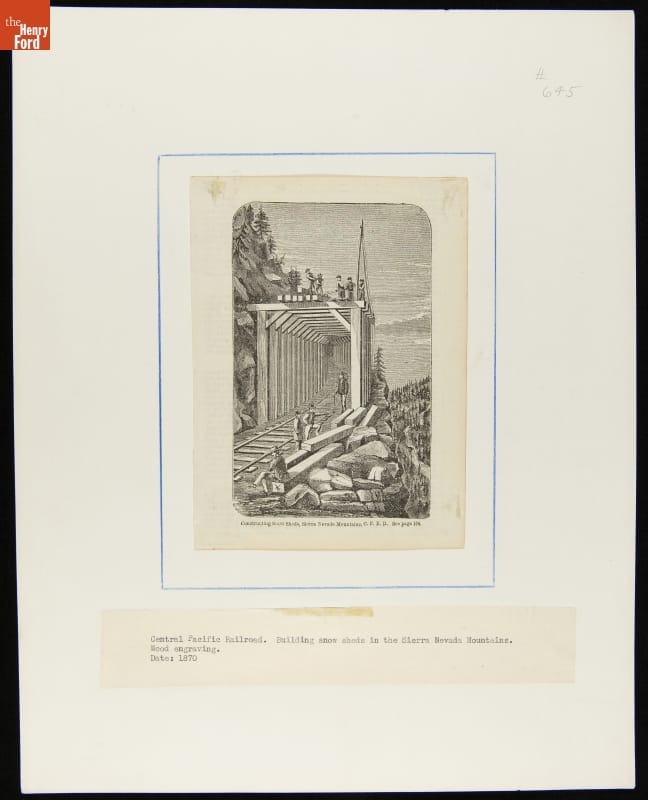
- 1870
- Collections - Artifact
Constructing Snow Sheds, Sierra Nevada Mountains, 1870
The Central Pacific Railroad crossed the Sierra Nevada Mountains through Donner Pass, some 7,000 feet above sea level. Winter snows -- up to 40 feet in a season -- were a menace, first to the railroad's construction and then to its operation. CP dealt with the problem by building some 40 miles of sheds to protect its track from snowfalls and snowslides.
- Menlo Park Carbon Shed in Greenfield Village, circa 1934 - Irving Bacon, a Ford Motor Company employee and Henry Ford's personal artist, created pen-and-ink drawings to illustrate guidebooks for the Edison Institute Museum and Greenfield Village (now The Henry Ford) when they officially opened to the public in 1933. An illustrated souvenir guidebook helped visitors navigate the exhibits and grounds. Ford also used these drawings in other company publications.
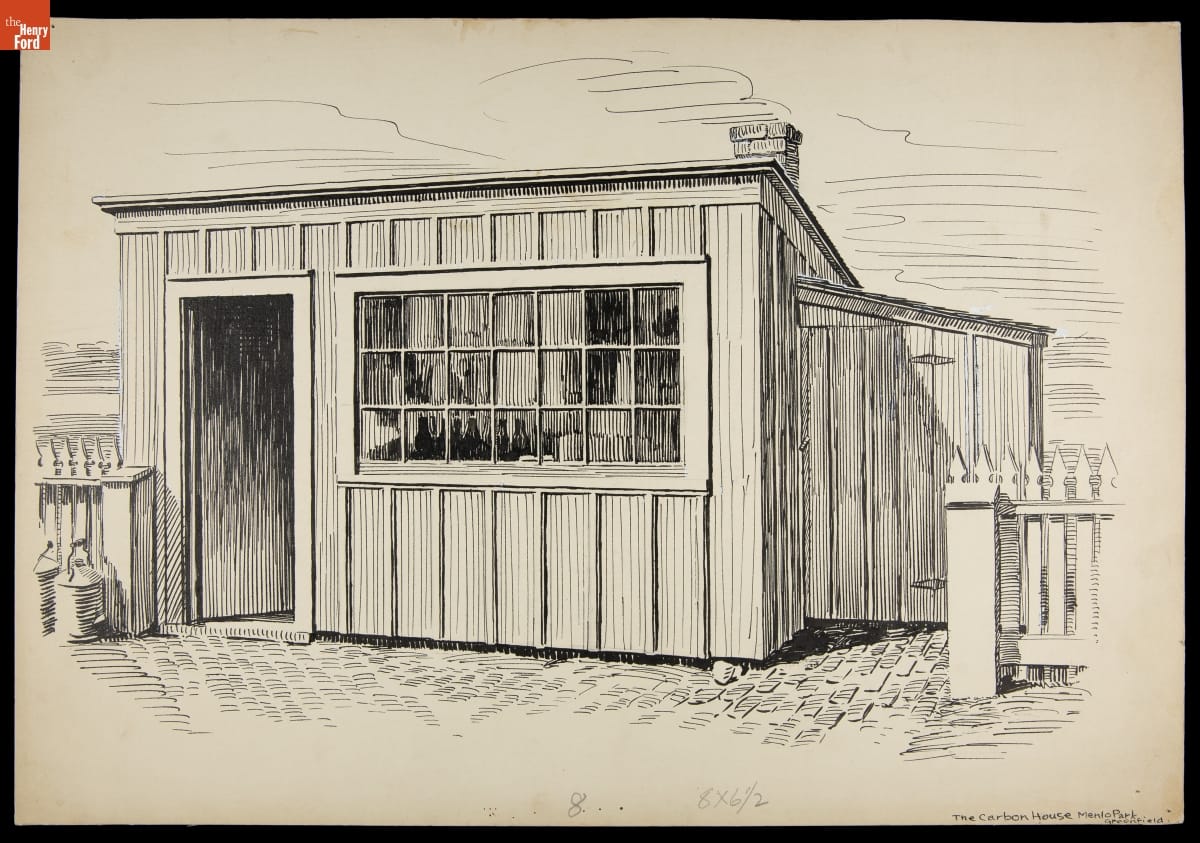
- circa 1934
- Collections - Artifact
Menlo Park Carbon Shed in Greenfield Village, circa 1934
Irving Bacon, a Ford Motor Company employee and Henry Ford's personal artist, created pen-and-ink drawings to illustrate guidebooks for the Edison Institute Museum and Greenfield Village (now The Henry Ford) when they officially opened to the public in 1933. An illustrated souvenir guidebook helped visitors navigate the exhibits and grounds. Ford also used these drawings in other company publications.
- Weather Balloon inside a Storage Shed, 1915-1930 -
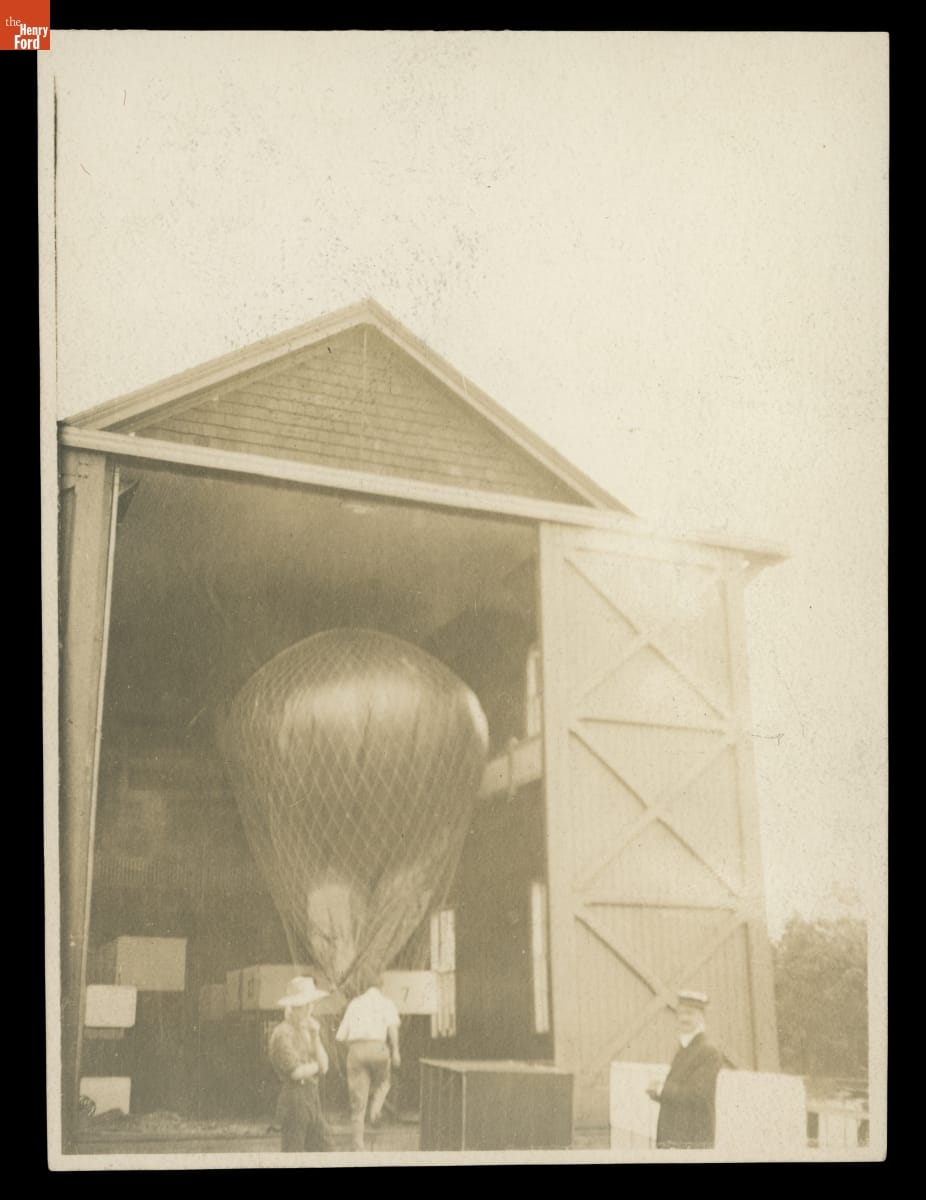
- 1915-1930
- Collections - Artifact
Weather Balloon inside a Storage Shed, 1915-1930
- Woodchuck Lodge and Shed, Roxbury, New York, 1944 - John Burroughs (1837-1921) was an internationally known naturalist and essayist. In 1913, with financial assistance from Henry Ford, Burroughs purchased the house built by his brother Curtis on land near Burroughs's birthplace in Roxbury, New York. Woodchuck Lodge, as Burroughs referred to it, became his summer retreat. Henry Ford purchased the property after Burroughs's death. It was sold back to the Burroughs's son, Julian, in 1947.
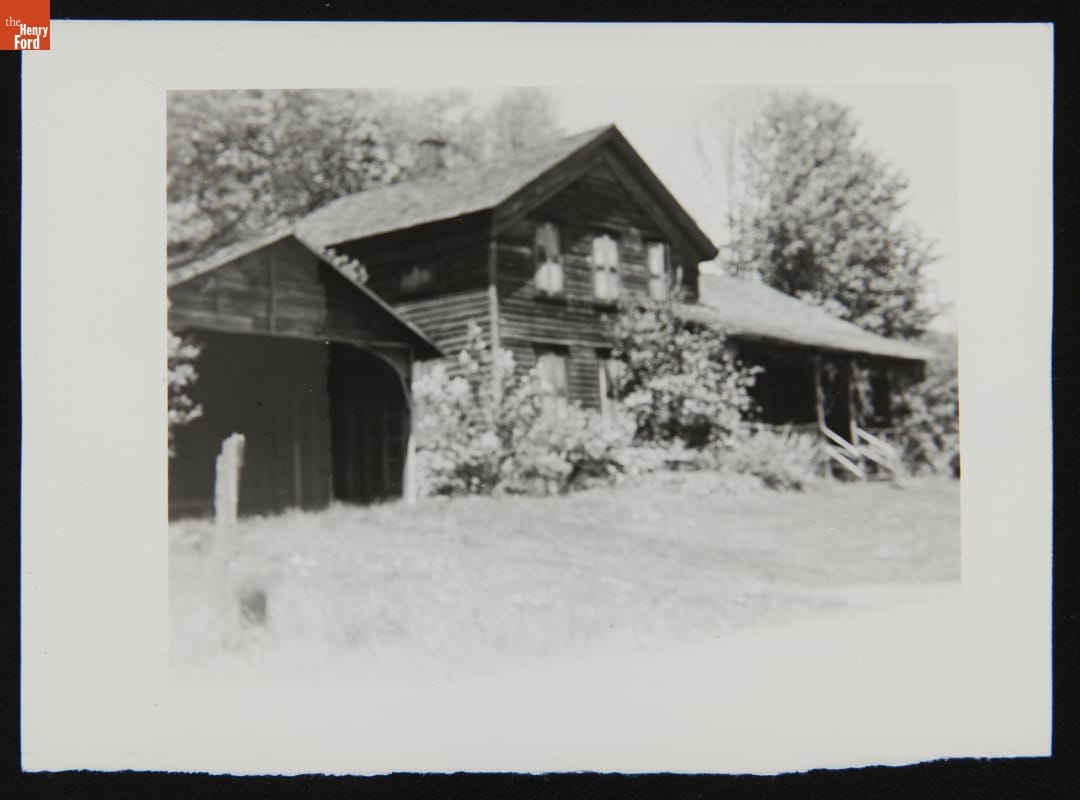
- May 19, 1944
- Collections - Artifact
Woodchuck Lodge and Shed, Roxbury, New York, 1944
John Burroughs (1837-1921) was an internationally known naturalist and essayist. In 1913, with financial assistance from Henry Ford, Burroughs purchased the house built by his brother Curtis on land near Burroughs's birthplace in Roxbury, New York. Woodchuck Lodge, as Burroughs referred to it, became his summer retreat. Henry Ford purchased the property after Burroughs's death. It was sold back to the Burroughs's son, Julian, in 1947.
- Menlo Park Carbon Shed in Greenfield Village, October 1929 -
- October 27, 1929
- Collections - Artifact
Menlo Park Carbon Shed in Greenfield Village, October 1929
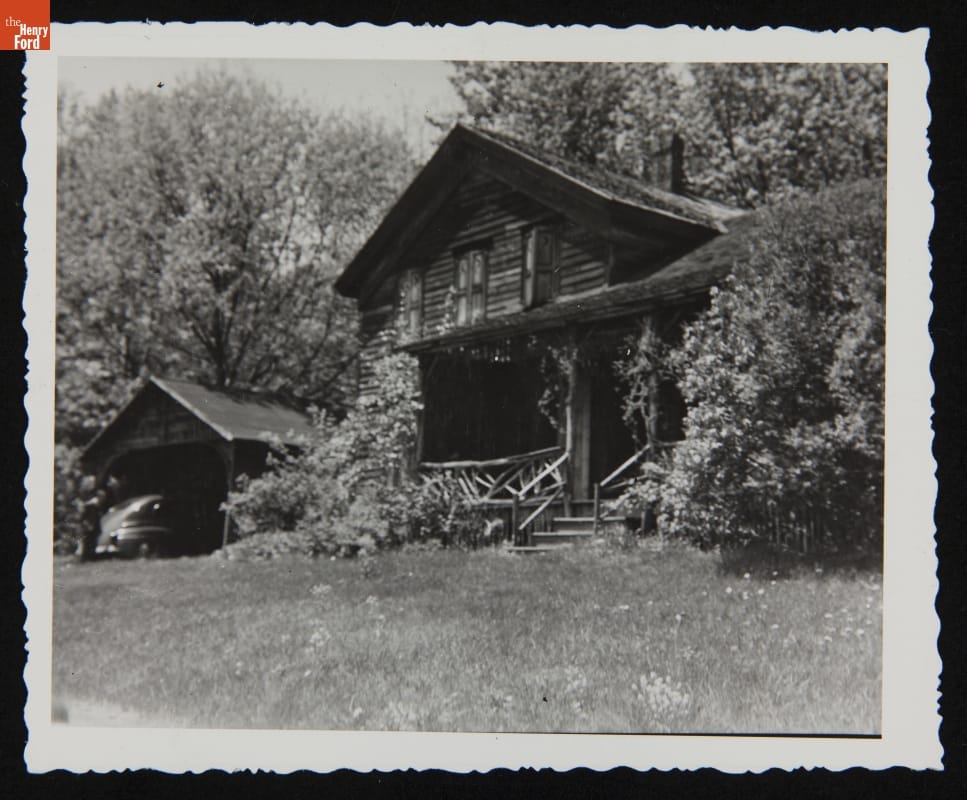
- Woodchuck Lodge and Parking Shed, Roxbury, New York, 1944 - John Burroughs (1837-1921) was an internationally known naturalist and essayist. In 1913, with financial assistance from Henry Ford, Burroughs purchased the house built by his brother Curtis on land near Burroughs's birthplace in Roxbury, New York. Woodchuck Lodge, as Burroughs referred to it, became his summer retreat. Henry Ford purchased the property after Burroughs's death. It was sold back to the Burroughs's son, Julian, in 1947.
- 1944
- Collections - Artifact
Woodchuck Lodge and Parking Shed, Roxbury, New York, 1944
John Burroughs (1837-1921) was an internationally known naturalist and essayist. In 1913, with financial assistance from Henry Ford, Burroughs purchased the house built by his brother Curtis on land near Burroughs's birthplace in Roxbury, New York. Woodchuck Lodge, as Burroughs referred to it, became his summer retreat. Henry Ford purchased the property after Burroughs's death. It was sold back to the Burroughs's son, Julian, in 1947.