
Search
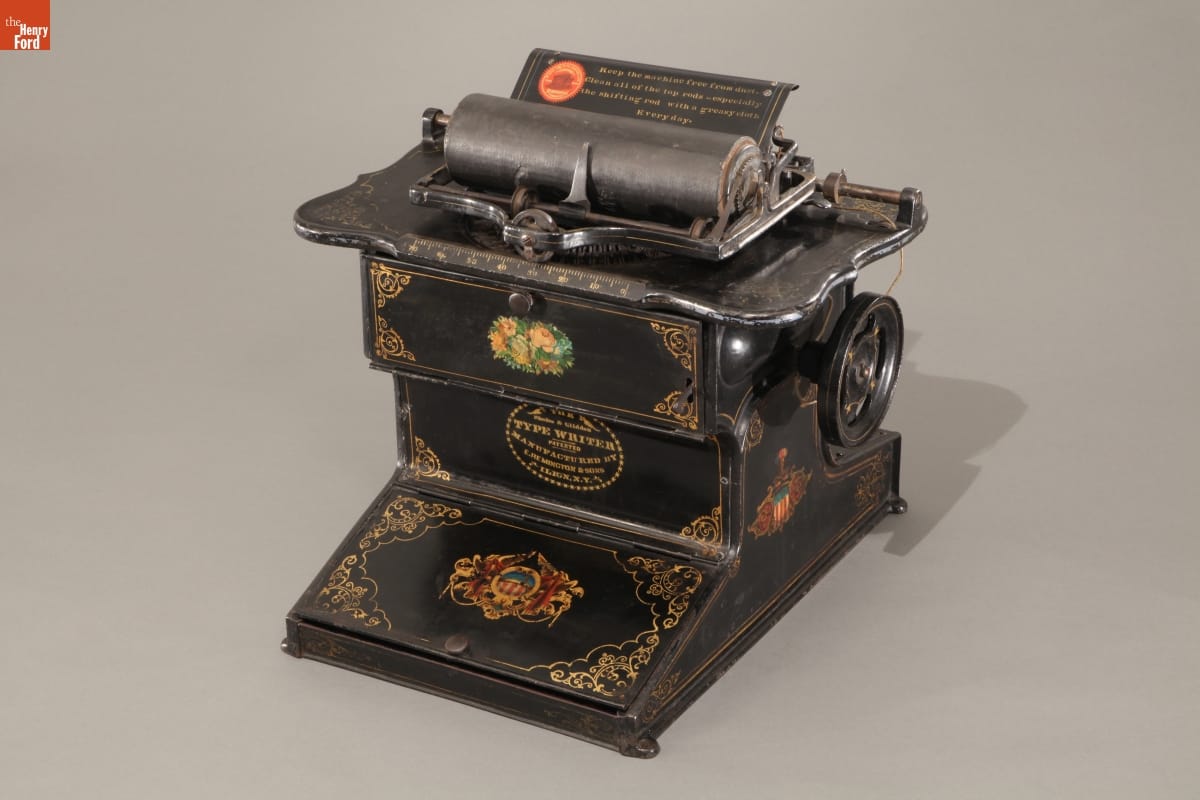
- Sholes & Glidden Desk Typewriter, 1874-1876 - Developed by Christopher Glidden in the 1860s and manufactured by the Remington arms company beginning in 1873, the Sholes & Glidden was the first commercially successful typewriter. Its adoption by large corporations kickstarted the typewriter industry and contributed to the speedup of American work life. The innovations of the Sholes & Glidden, particularly its keyboard layout, were widely adopted. This typewriter is why your computer keyboard reads QWERTYUIOP.
- 1874-1876
- Collections - Artifact
Sholes & Glidden Desk Typewriter, 1874-1876
Developed by Christopher Glidden in the 1860s and manufactured by the Remington arms company beginning in 1873, the Sholes & Glidden was the first commercially successful typewriter. Its adoption by large corporations kickstarted the typewriter industry and contributed to the speedup of American work life. The innovations of the Sholes & Glidden, particularly its keyboard layout, were widely adopted. This typewriter is why your computer keyboard reads QWERTYUIOP.
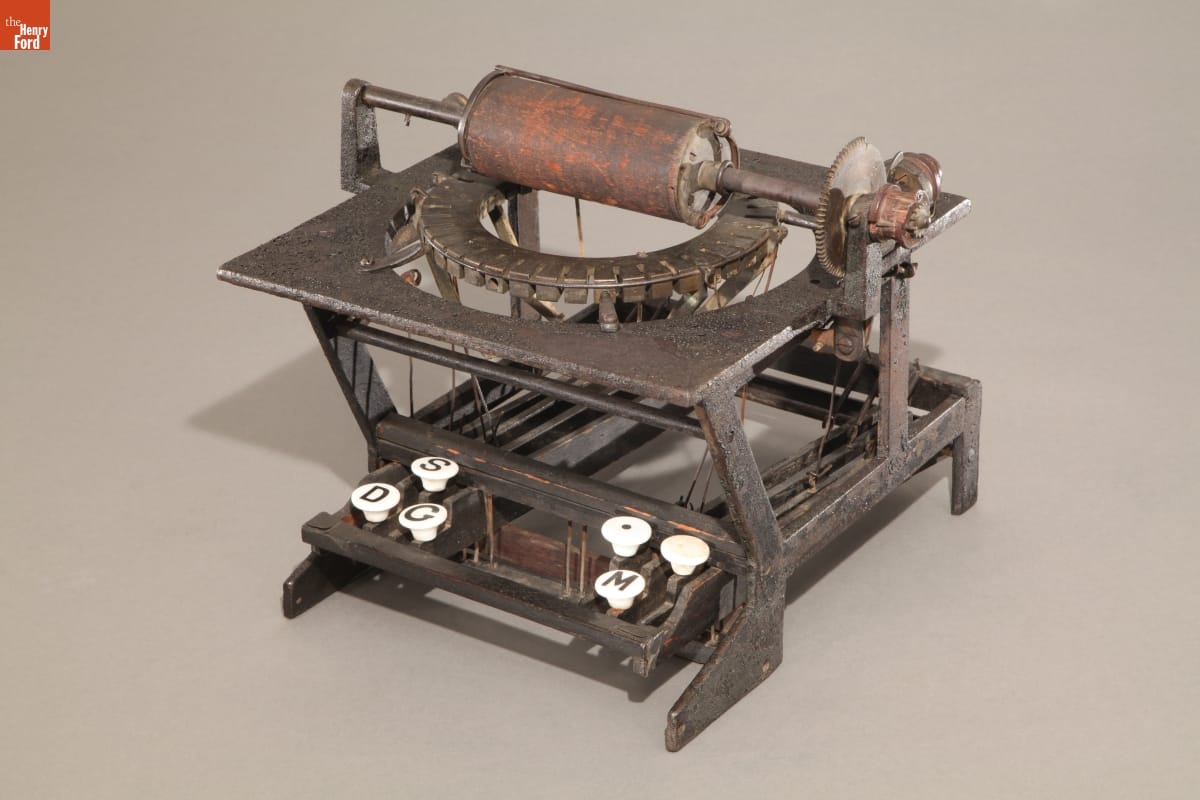
- Patent Model of Sholes & Glidden Typewriter, 1874-1878 - From 1790 to 1880, the U.S. Patent Office required applicants to submit a miniature model along with diagrams and written descriptions detailing the operation of their invention. Patent models could be no larger than 12" by 12" by 12". Though they were usually not operational, these models helped explain an inventor's idea and protect it from competitors.
- 1874-1878
- Collections - Artifact
Patent Model of Sholes & Glidden Typewriter, 1874-1878
From 1790 to 1880, the U.S. Patent Office required applicants to submit a miniature model along with diagrams and written descriptions detailing the operation of their invention. Patent models could be no larger than 12" by 12" by 12". Though they were usually not operational, these models helped explain an inventor's idea and protect it from competitors.
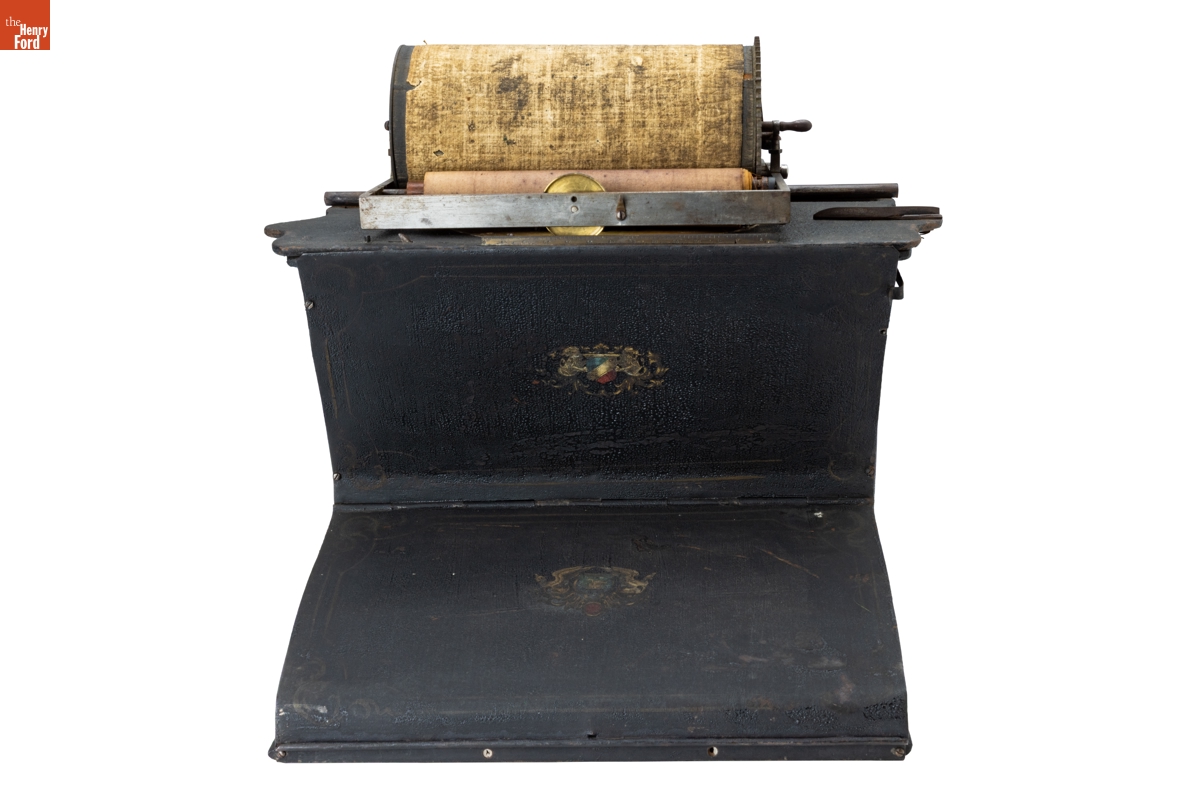
- Sholes & Glidden Desk Typewriter, Model No. 1, 1873-1876 - Developed by Christopher Glidden in the 1860s and manufactured by the Remington arms company beginning in 1873, the Sholes & Glidden was the first commercially successful typewriter. Its adoption by large corporations kickstarted the typewriter industry and contributed to the speedup of American work life. The innovations of the Sholes & Glidden, particularly its keyboard layout, were widely adopted. This typewriter is why your computer keyboard reads QWERTYUIOP.
- 1873-1876
- Collections - Artifact
Sholes & Glidden Desk Typewriter, Model No. 1, 1873-1876
Developed by Christopher Glidden in the 1860s and manufactured by the Remington arms company beginning in 1873, the Sholes & Glidden was the first commercially successful typewriter. Its adoption by large corporations kickstarted the typewriter industry and contributed to the speedup of American work life. The innovations of the Sholes & Glidden, particularly its keyboard layout, were widely adopted. This typewriter is why your computer keyboard reads QWERTYUIOP.
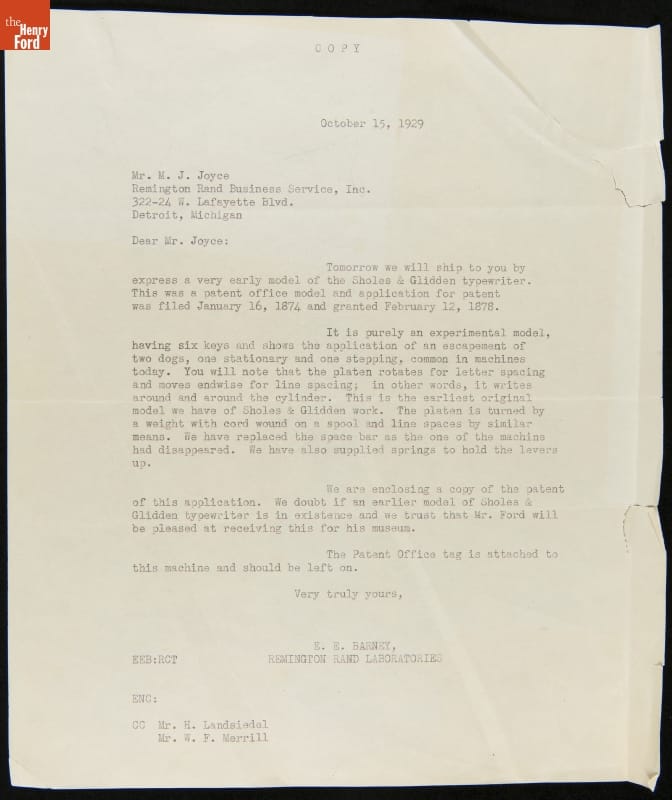
- Correspondence regarding Donation of Sholes & Glidden Typewriter Patent Model, 1929 -
- October 15, 1929
- Collections - Artifact
Correspondence regarding Donation of Sholes & Glidden Typewriter Patent Model, 1929
- Letter from Christopher Latham Sholes to William Markoe, with Enclosures Made on Sholes & Glidden Typewriters, April 6, 1872 -
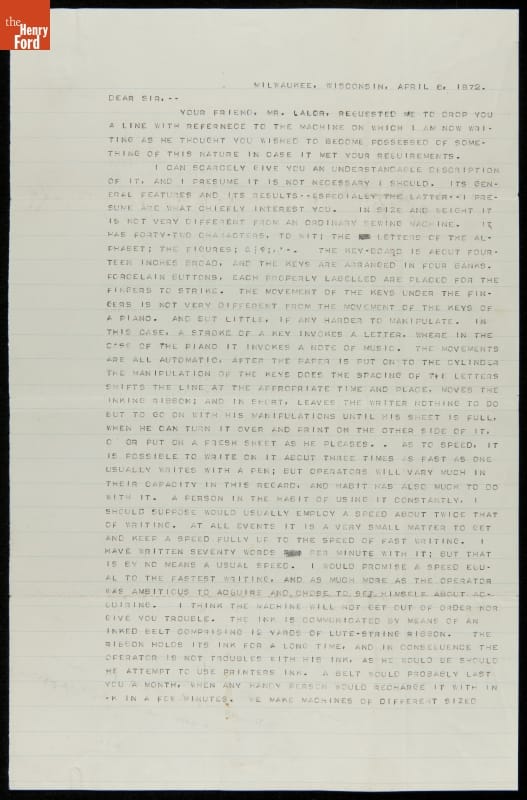
- April 06, 1872
- Collections - Artifact
Letter from Christopher Latham Sholes to William Markoe, with Enclosures Made on Sholes & Glidden Typewriters, April 6, 1872
- Letter from Christopher Latham Sholes to William Markoe regarding Purchase of a Sholes & Glidden Typewriter, April 15, 1872 -
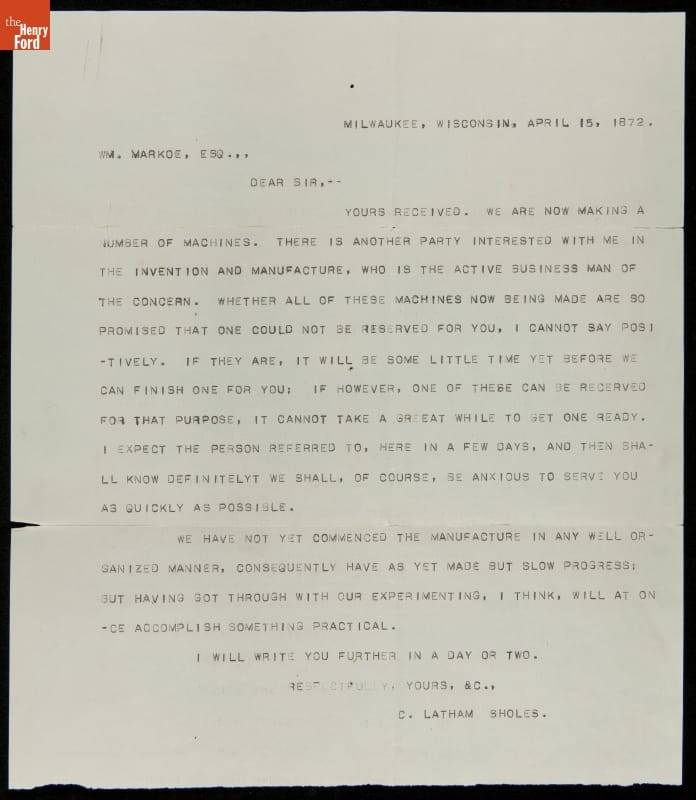
- April 15, 1872
- Collections - Artifact
Letter from Christopher Latham Sholes to William Markoe regarding Purchase of a Sholes & Glidden Typewriter, April 15, 1872
- Glidden's "Winner" (Common Variation) Barbed Wire, Patented 1874 - Inventors received hundreds of patents for barbed wire during the late 1800s. Some innovators created strands of fencing with sharp metal points cut into the wire; others incorporated small wire spurs twisted and attached to the wire to create a painful barrier. Each inventor believed their variation made the best fencing to keep livestock out of crop fields or confine them to pastures.
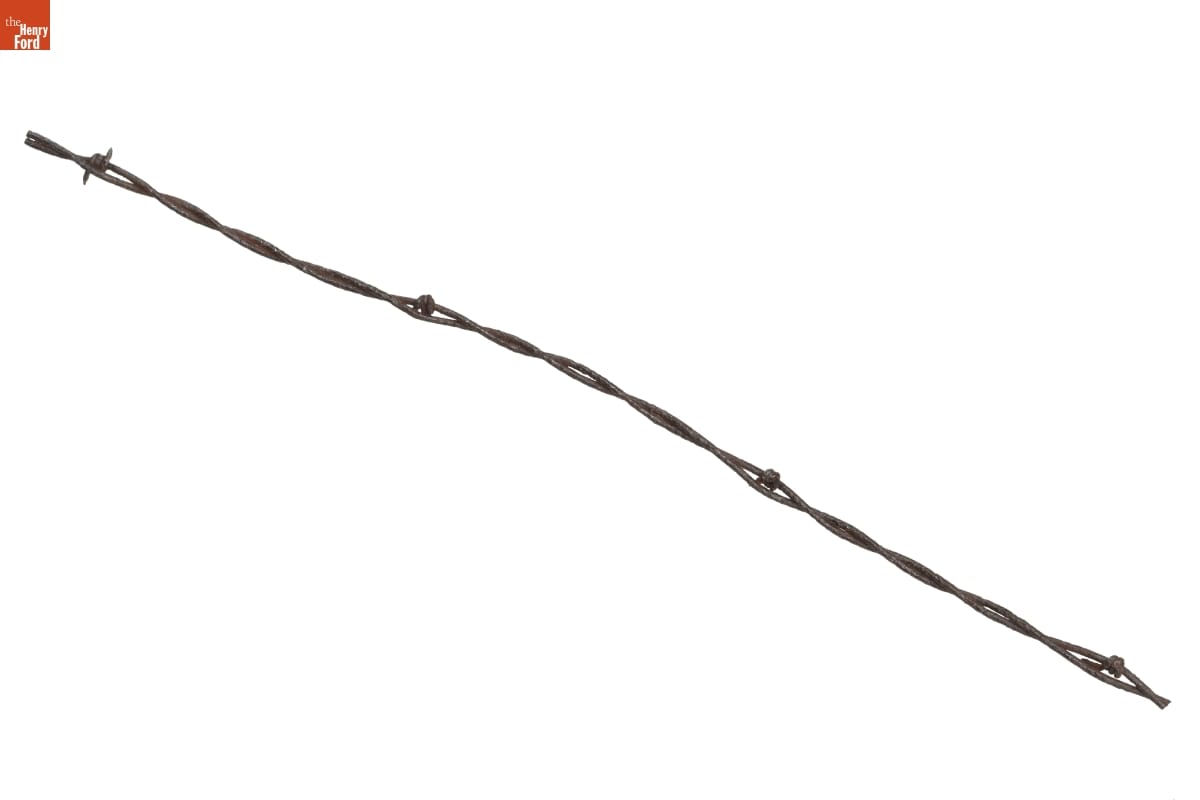
- 1874
- Collections - Artifact
Glidden's "Winner" (Common Variation) Barbed Wire, Patented 1874
Inventors received hundreds of patents for barbed wire during the late 1800s. Some innovators created strands of fencing with sharp metal points cut into the wire; others incorporated small wire spurs twisted and attached to the wire to create a painful barrier. Each inventor believed their variation made the best fencing to keep livestock out of crop fields or confine them to pastures.
- Glidden's "Winner" (Three-Line Variation) Barbed Wire, Patented 1874 - Inventors received hundreds of patents for barbed wire during the late 1800s. Some innovators created strands of fencing with sharp metal points cut into the wire; others incorporated small wire spurs twisted and attached to the wire to create a painful barrier. Each inventor believed their variation made the best fencing to keep livestock out of crop fields or confine them to pastures.
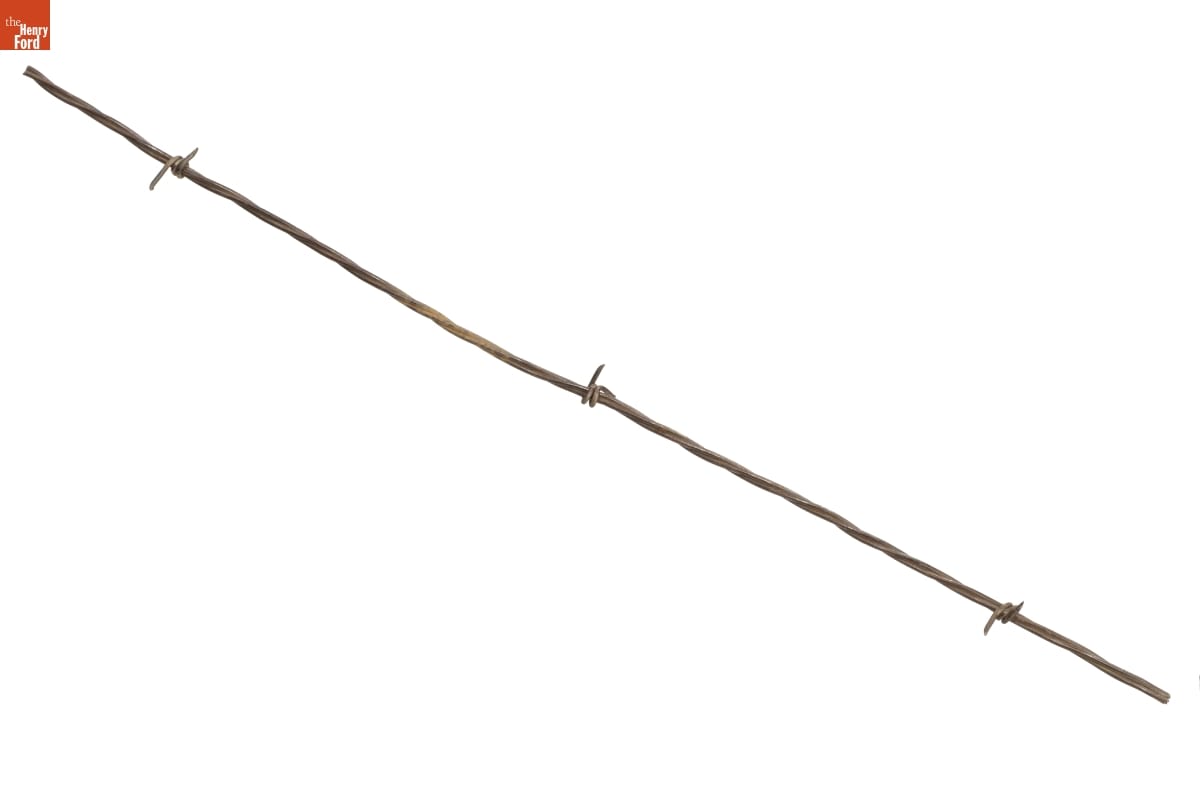
- 1874
- Collections - Artifact
Glidden's "Winner" (Three-Line Variation) Barbed Wire, Patented 1874
Inventors received hundreds of patents for barbed wire during the late 1800s. Some innovators created strands of fencing with sharp metal points cut into the wire; others incorporated small wire spurs twisted and attached to the wire to create a painful barrier. Each inventor believed their variation made the best fencing to keep livestock out of crop fields or confine them to pastures.
- Sholes Visible Desk Typewriter, 1901-1905 - Christopher Latham Sholes, a Milwaukee journalist, politician, and printer, invented the first commercially successful typewriter, the Sholes and Glidden, in the 1860s. He continued to make improvements in typewriter design throughout his career. This Sholes Visible, manufactured by a Wisconsin typewriter company, has an unusual feature: typebars at angles to the platen. This was Sholes' last patented typewriter design, ending a mostly successful career.
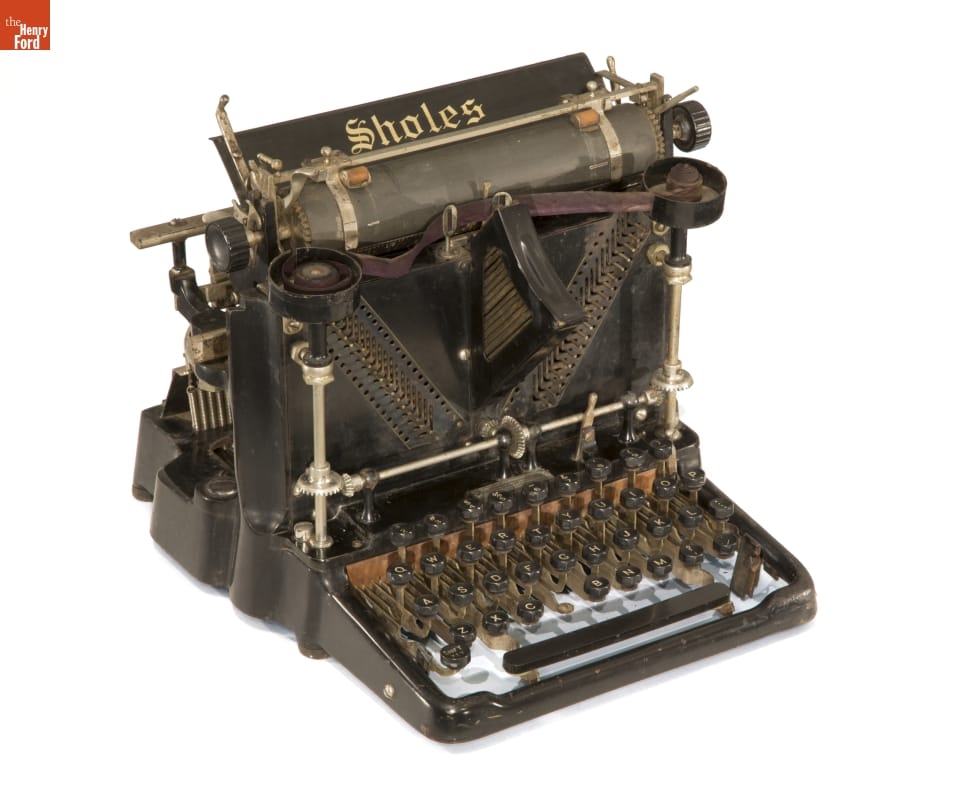
- 1901-1905
- Collections - Artifact
Sholes Visible Desk Typewriter, 1901-1905
Christopher Latham Sholes, a Milwaukee journalist, politician, and printer, invented the first commercially successful typewriter, the Sholes and Glidden, in the 1860s. He continued to make improvements in typewriter design throughout his career. This Sholes Visible, manufactured by a Wisconsin typewriter company, has an unusual feature: typebars at angles to the platen. This was Sholes' last patented typewriter design, ending a mostly successful career.
- Glidden Pottery Planter, 1940-1957 -
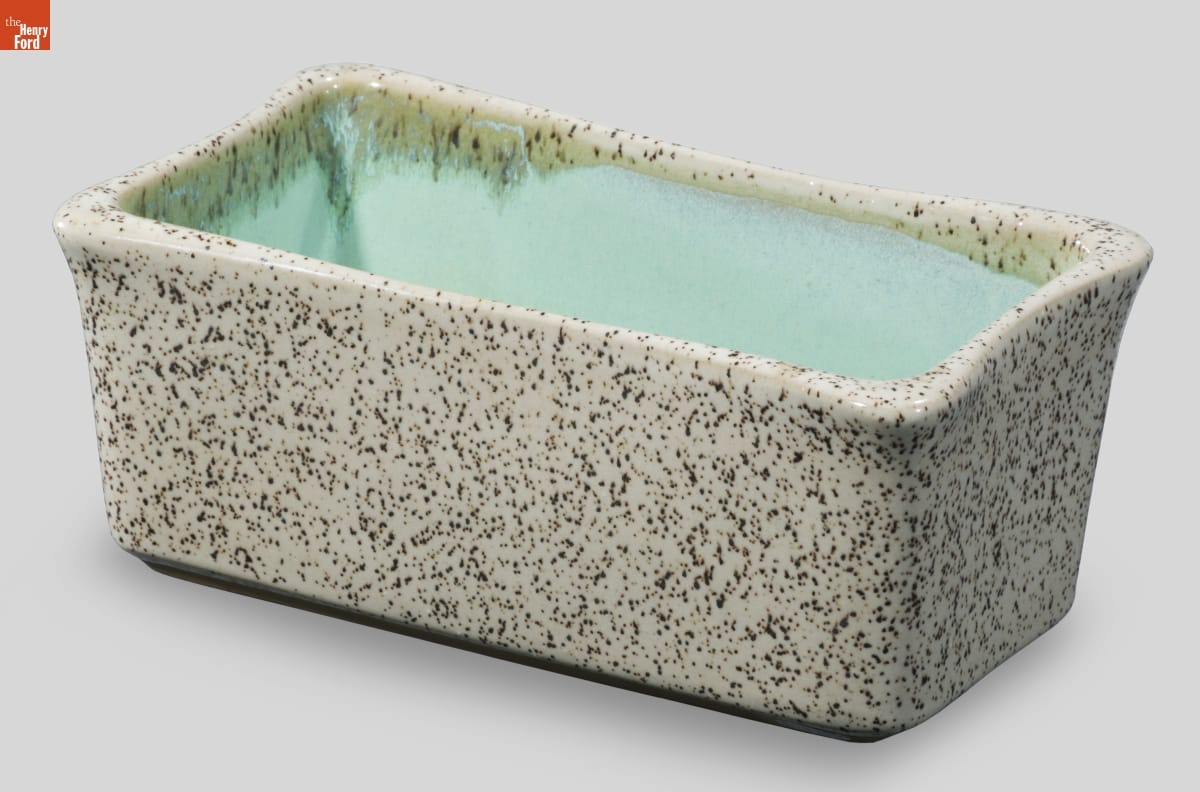
- 1940-1957
- Collections - Artifact
Glidden Pottery Planter, 1940-1957