
Search
- Apollo and the U.S. Space & Rocket Center - Join Matt Anderson, Curator of Transportation at The Henry Ford, as he learns more about the origins of our latest limited-engagement exhibition, “Apollo: When We Went to the Moon,” with Kay Taylor, Vice President of Education at the U.S. Space & Rocket Center®. Working with industry partner Flying Fish, the U.S. Space & Rocket Center® created “Apollo” in celebration of the 50th anniversary of the 1969 lunar landing, pulling from their vast collections and archives. During this conversation we will not only dig deeper into the exhibit’s origins and what you can expect when visiting, but we will look to the future as we ponder where the next generation of space travel will take us.

- February 24, 2022
- Collections - Video
Apollo and the U.S. Space & Rocket Center
Join Matt Anderson, Curator of Transportation at The Henry Ford, as he learns more about the origins of our latest limited-engagement exhibition, “Apollo: When We Went to the Moon,” with Kay Taylor, Vice President of Education at the U.S. Space & Rocket Center®. Working with industry partner Flying Fish, the U.S. Space & Rocket Center® created “Apollo” in celebration of the 50th anniversary of the 1969 lunar landing, pulling from their vast collections and archives. During this conversation we will not only dig deeper into the exhibit’s origins and what you can expect when visiting, but we will look to the future as we ponder where the next generation of space travel will take us.
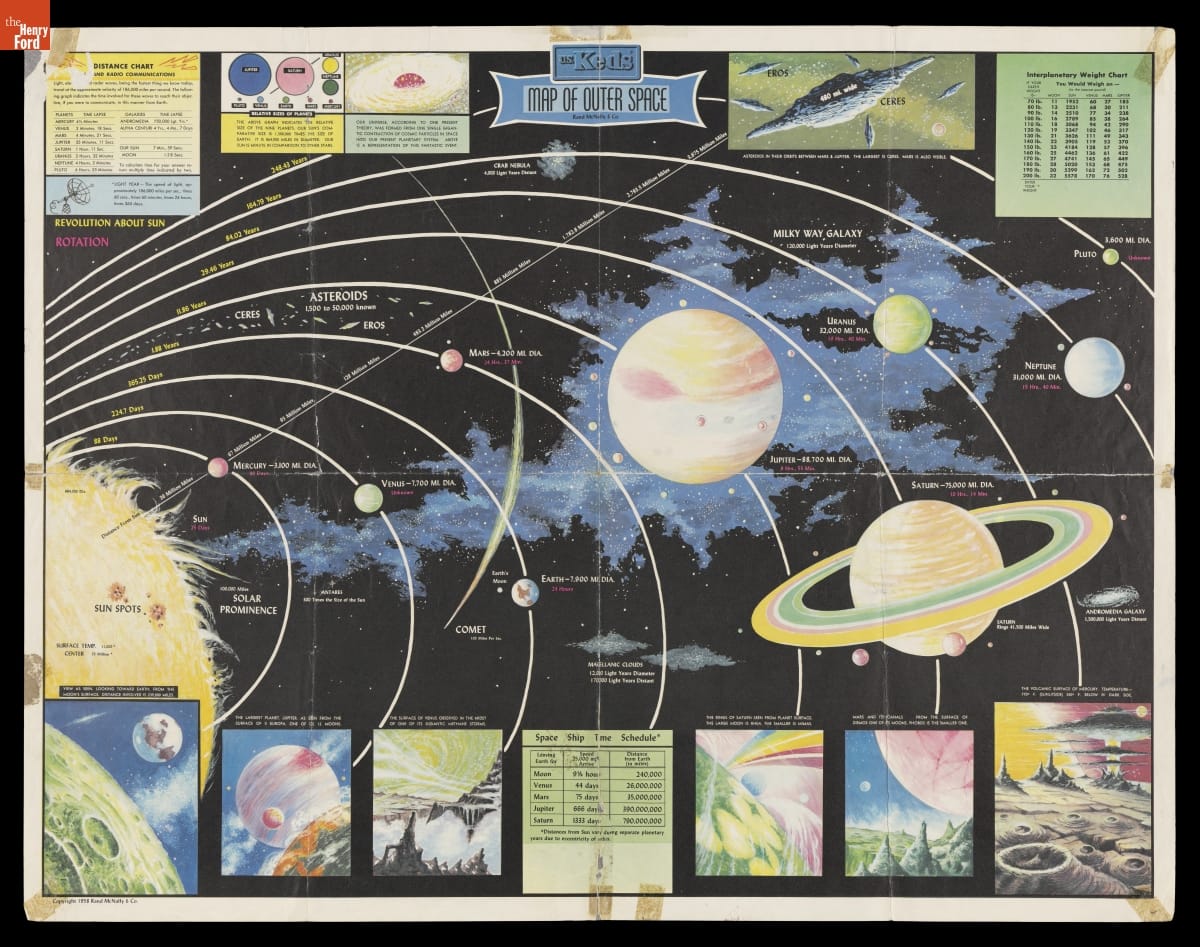
- U.S. Ked's Map of Outer Space, 1958 - Humans have long been interested in space -- observing the night skies and pondering the movement of the Sun, Moon, and stars. Many Americans viewed outer space through a fantastical and futuristic lens until the launch of a Soviet satellite in 1957. This space map from the early years of the Space Race depicts a more realistic view of the solar system and space exploration.
- 1958
- Collections - Artifact
U.S. Ked's Map of Outer Space, 1958
Humans have long been interested in space -- observing the night skies and pondering the movement of the Sun, Moon, and stars. Many Americans viewed outer space through a fantastical and futuristic lens until the launch of a Soviet satellite in 1957. This space map from the early years of the Space Race depicts a more realistic view of the solar system and space exploration.
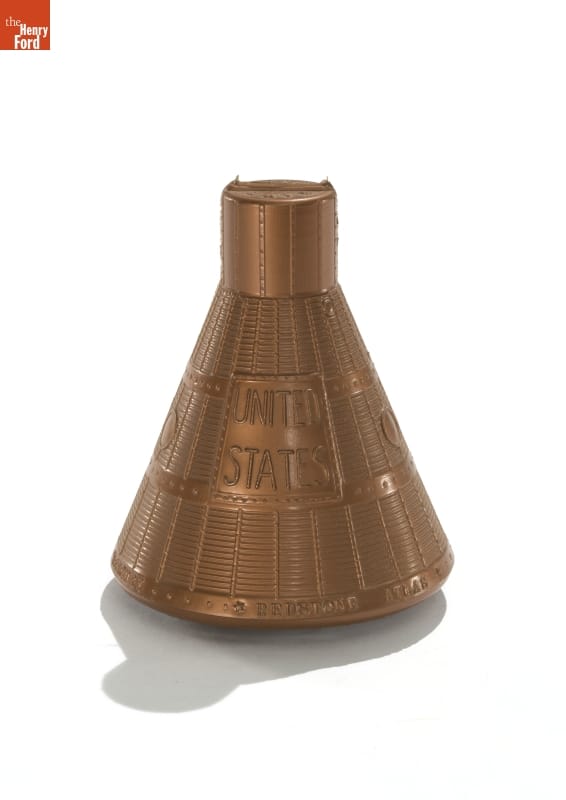
- Souvenir Bank Commemorating "First U.S. Astronaut Space Flights," 1963 - This souvenir bank, shaped like a space capsule, commemorated the U.S. flights of astronauts Alan Shepard (May 5, 1961) and John Glenn (February 20, 1962). President John F. Kennedy's vision to explore the "new frontier" of space ignited the public's imagination. For children in the 1960s, the idea of space flight was wondrous. For parents, it had the added value of encouraging children to save money.
- 1961-1962
- Collections - Artifact
Souvenir Bank Commemorating "First U.S. Astronaut Space Flights," 1963
This souvenir bank, shaped like a space capsule, commemorated the U.S. flights of astronauts Alan Shepard (May 5, 1961) and John Glenn (February 20, 1962). President John F. Kennedy's vision to explore the "new frontier" of space ignited the public's imagination. For children in the 1960s, the idea of space flight was wondrous. For parents, it had the added value of encouraging children to save money.
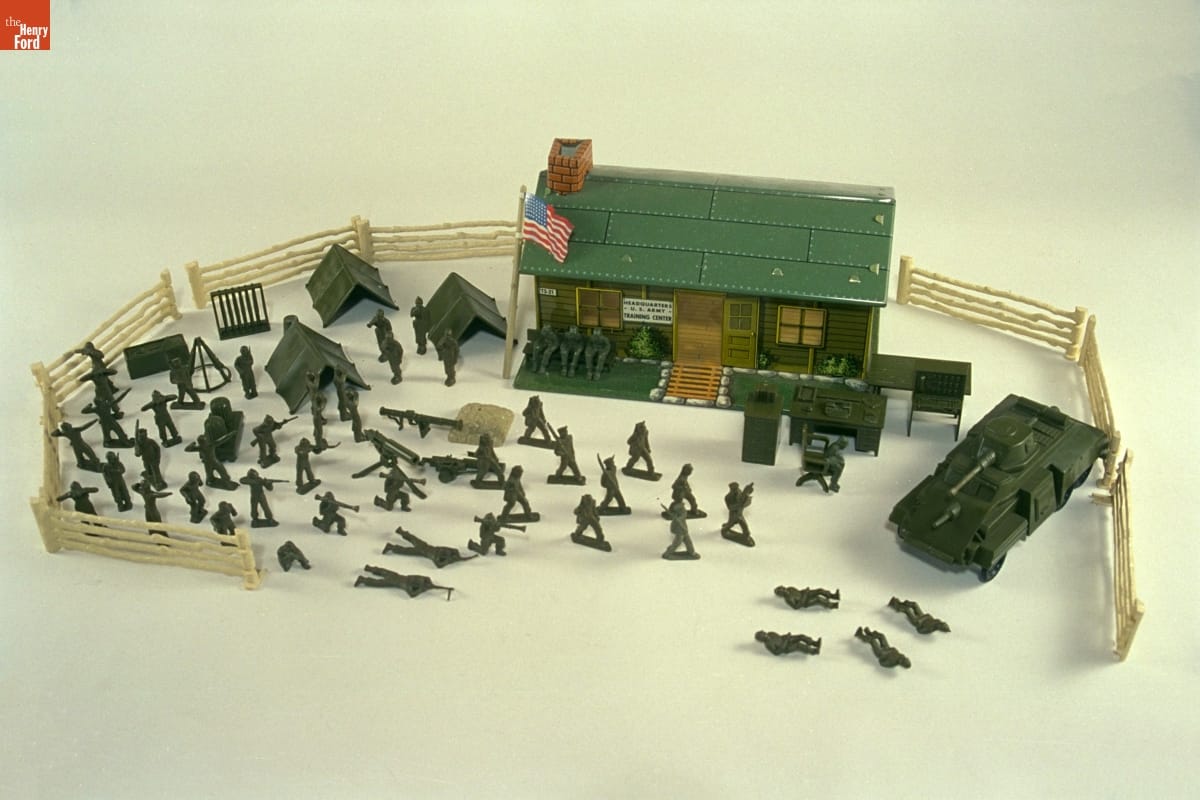
- U.S. Army Training Center Play Set, 1945-1955 -
- 1945-1955
- Collections - Artifact
U.S. Army Training Center Play Set, 1945-1955
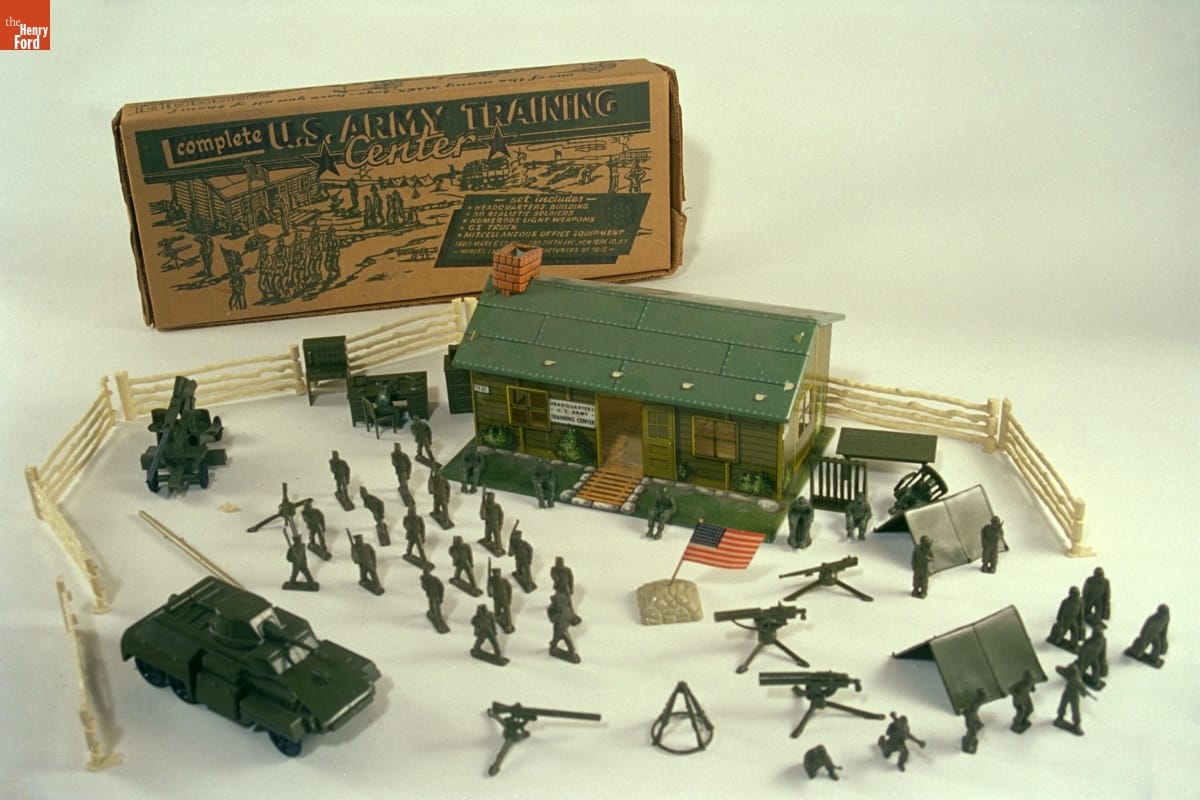
- U.S. Army Training Center Play Set, 1945-1955 -
- 1945-1955
- Collections - Artifact
U.S. Army Training Center Play Set, 1945-1955
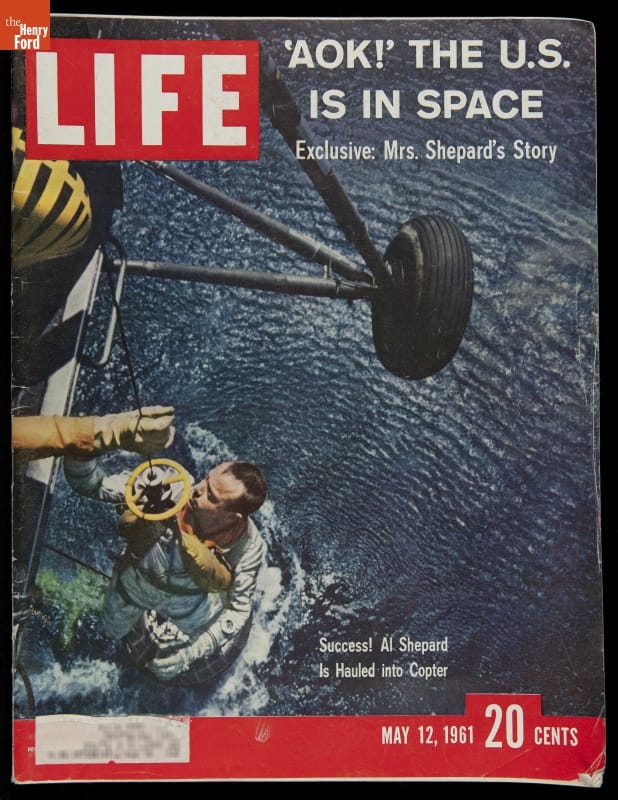
- Life Magazine for May 12, 1961, "'AOK!' The U.S. is in Space" - President John F. Kennedy's vision to explore the "new frontier" of space was an overt Cold War strategy against the Soviet Union which launched the first man in space April 12, 1961. This cover story featured the first U.S astronaut in space, Alan Shepard. His Freedom 7 capsule reached 116.5 miles above the earth before splashing down on May 5, 1961.
- May 05, 1961
- Collections - Artifact
Life Magazine for May 12, 1961, "'AOK!' The U.S. is in Space"
President John F. Kennedy's vision to explore the "new frontier" of space was an overt Cold War strategy against the Soviet Union which launched the first man in space April 12, 1961. This cover story featured the first U.S astronaut in space, Alan Shepard. His Freedom 7 capsule reached 116.5 miles above the earth before splashing down on May 5, 1961.
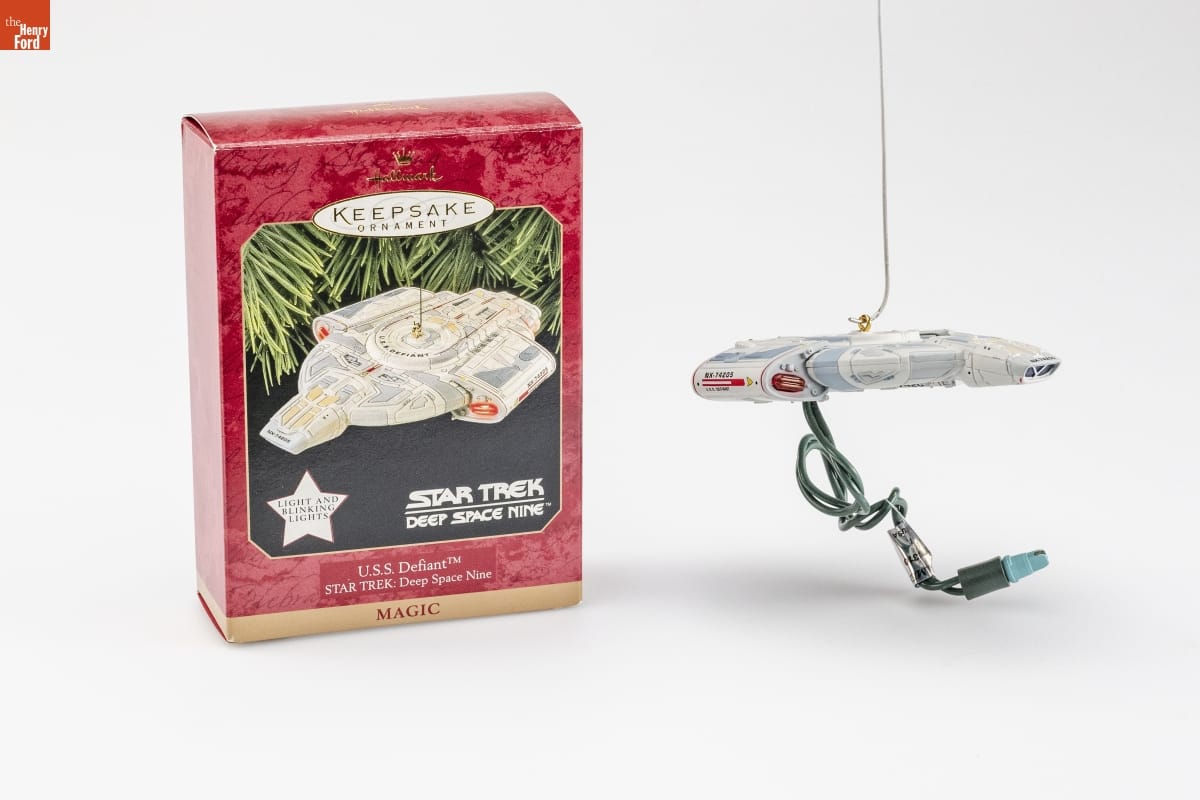
- Hallmark "STAR TREK Deep Space Nine: U.S.S. Defiant" Christmas Ornament, 1997 - Already known for greeting cards, Hallmark introduced a line of Christmas ornaments in 1973. The company's annual release of an increasing array of ornaments revolutionized Christmas decorating, appealing to customers' interest in marking memories and milestones as well as expressing one's personality and unique tastes.
- 1997
- Collections - Artifact
Hallmark "STAR TREK Deep Space Nine: U.S.S. Defiant" Christmas Ornament, 1997
Already known for greeting cards, Hallmark introduced a line of Christmas ornaments in 1973. The company's annual release of an increasing array of ornaments revolutionized Christmas decorating, appealing to customers' interest in marking memories and milestones as well as expressing one's personality and unique tastes.
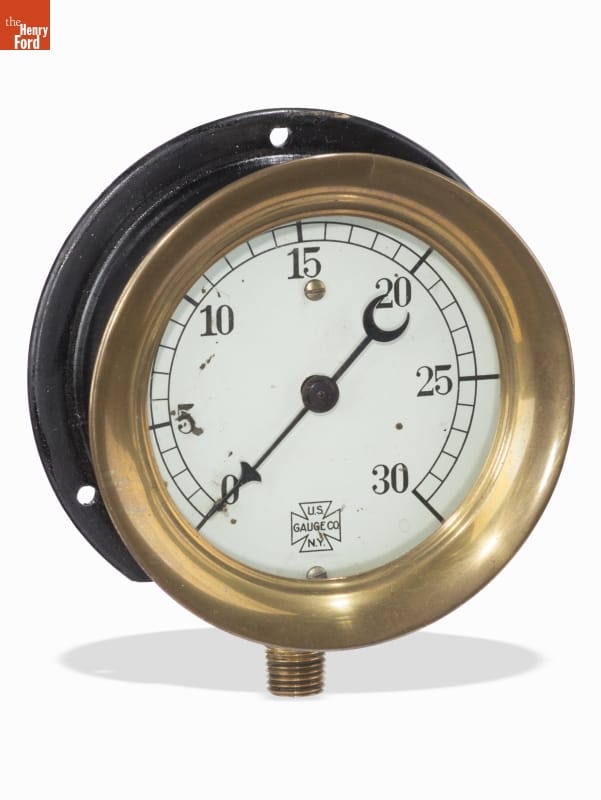
- U.S. Gauge Co. Gauge -
- Collections - Artifact
U.S. Gauge Co. Gauge
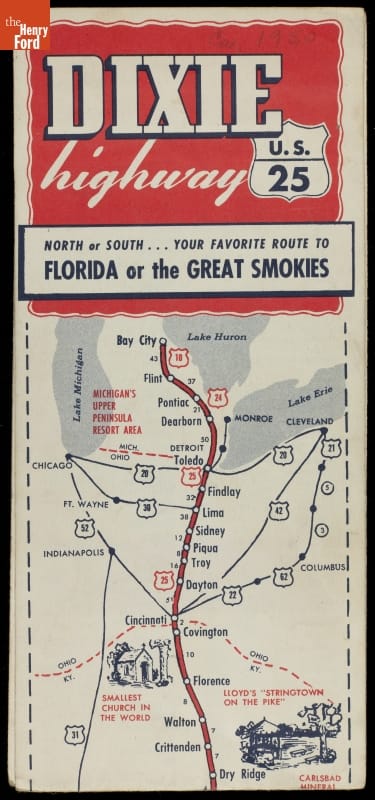
- "Dixie Highway, U.S. 25," circa 1950 - This brochure from about 1950 uses the more familiar trail name for Route 25 from Michigan to Florida -- the Dixie Highway.
- circa 1950
- Collections - Artifact
"Dixie Highway, U.S. 25," circa 1950
This brochure from about 1950 uses the more familiar trail name for Route 25 from Michigan to Florida -- the Dixie Highway.
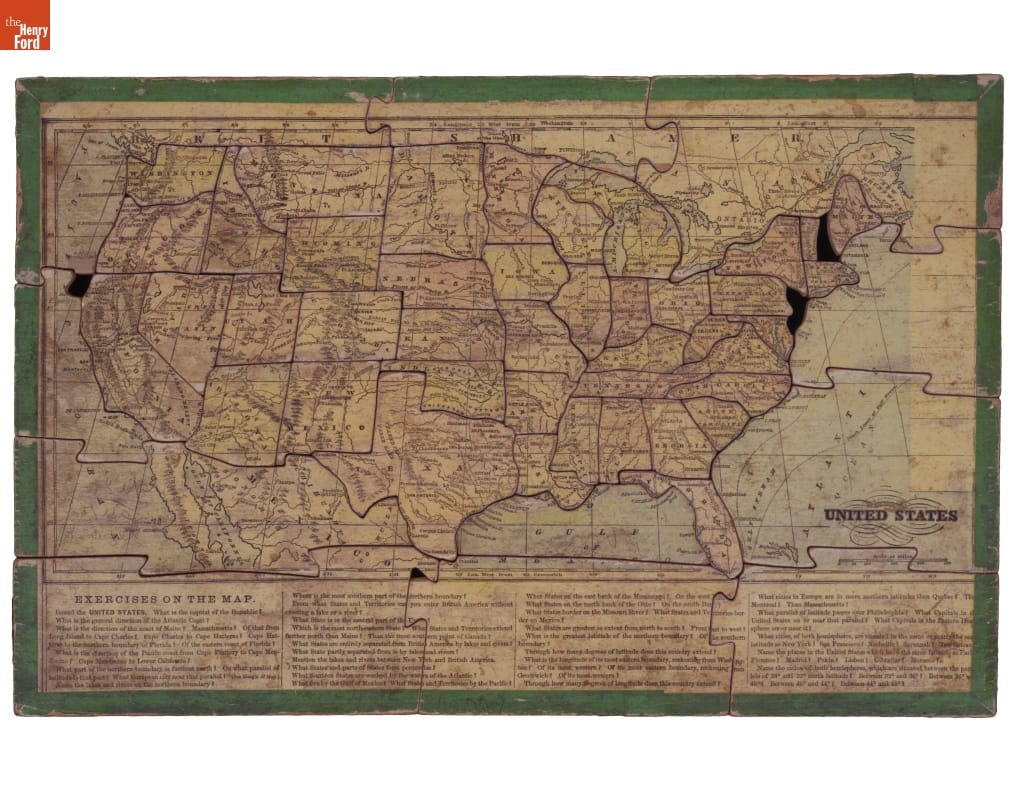
- U.S. Map Puzzle, 1880-1890 - In the late 1800s, American children could learn about the geography of the United States by correctly fitting together this puzzle's state-shaped pieces. On the reverse is a colorful advertisement for the White Sewing Machine Company -- the maker of this puzzle.
- 1880-1890
- Collections - Artifact
U.S. Map Puzzle, 1880-1890
In the late 1800s, American children could learn about the geography of the United States by correctly fitting together this puzzle's state-shaped pieces. On the reverse is a colorful advertisement for the White Sewing Machine Company -- the maker of this puzzle.