
Search
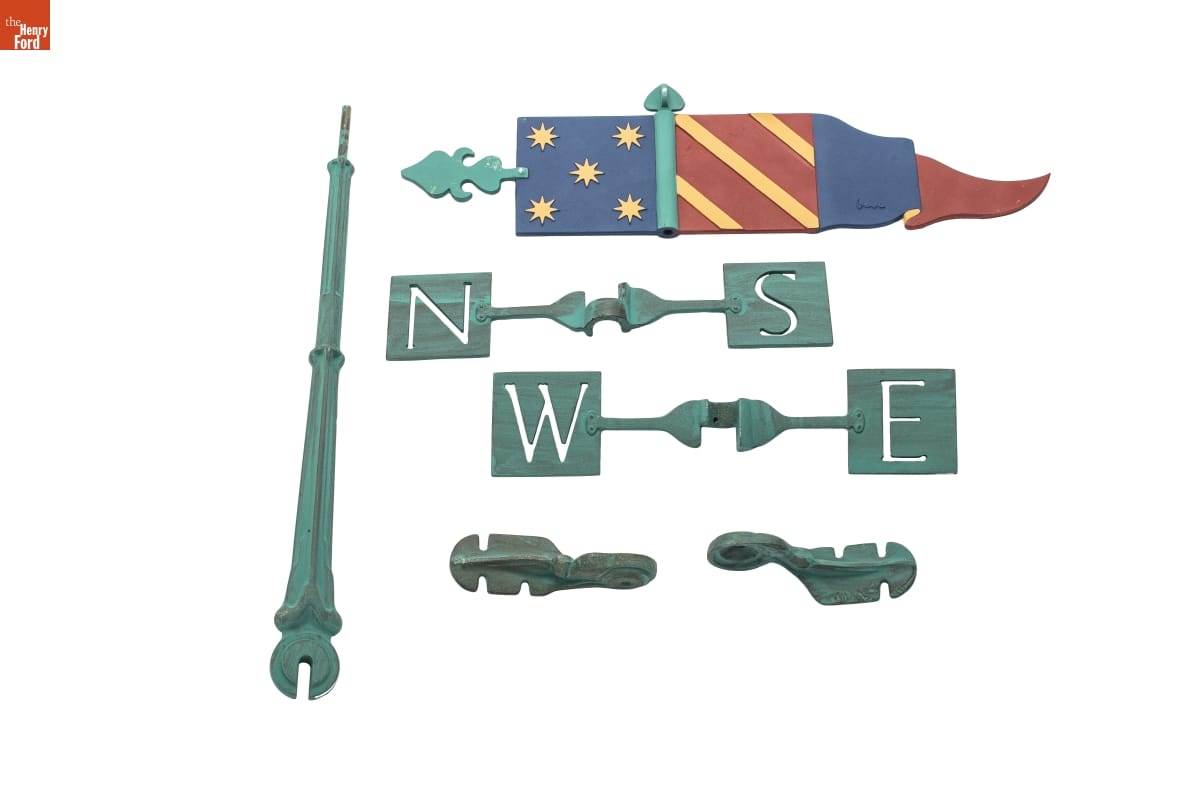
- Weathervane, 1992 - Starting in the early 1980s--and already established as an internationally recognized architect--Michael Graves began to pursue a parallel career as a product designer. Over the following three and a half decades he and his collaborators designed everything from humble household goods to limited edition luxury items for clients as diverse as Steuben, Alessi, Target, J. C. Penney, and Disney.
- 1992
- Collections - Artifact
Weathervane, 1992
Starting in the early 1980s--and already established as an internationally recognized architect--Michael Graves began to pursue a parallel career as a product designer. Over the following three and a half decades he and his collaborators designed everything from humble household goods to limited edition luxury items for clients as diverse as Steuben, Alessi, Target, J. C. Penney, and Disney.
- Weathervane, 1887-1900 - Weathervanes point into the direction of the wind. This helped viewers anticipate weather changes before local forecasts became common after 1920. Functional vanes required a basic pointing device and directional arms, but manufacturers added decorative elements, or ornaments, to appeal to consumer interests. Changing transportation technologies became popular symbols of modernity during the late-19th and early-20th centuries.

- 1887-1900
- Collections - Artifact
Weathervane, 1887-1900
Weathervanes point into the direction of the wind. This helped viewers anticipate weather changes before local forecasts became common after 1920. Functional vanes required a basic pointing device and directional arms, but manufacturers added decorative elements, or ornaments, to appeal to consumer interests. Changing transportation technologies became popular symbols of modernity during the late-19th and early-20th centuries.
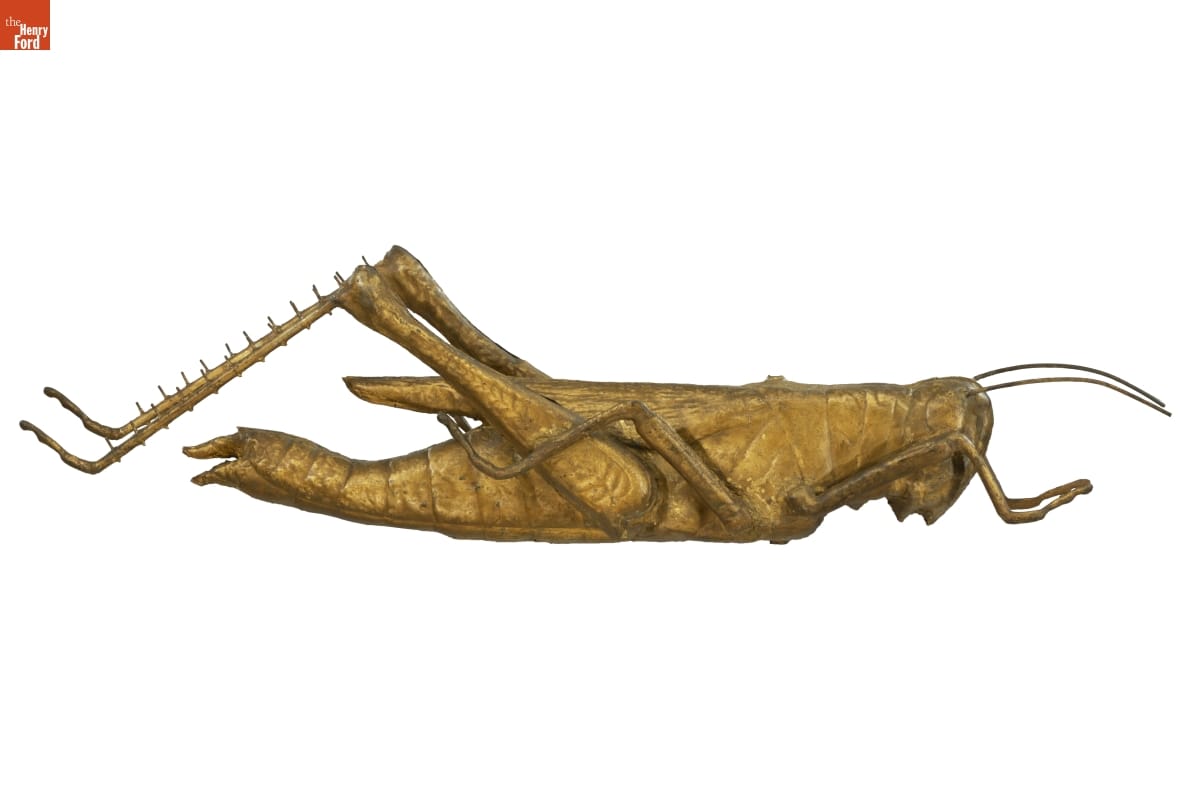
- Grasshopper Weathervane, 1840-1875 - Weathervanes point into the direction of the wind. This helped viewers anticipate weather changes before local forecasts became common after 1920. Functional weathervanes required a basic pointing device and directional arms, but manufacturers added decorative elements, or ornaments, to appeal to consumer interests. Before they were mass-produced as symbols of commerce, grasshopper weathervanes appeared atop London's Royal Exchange and Boston's Faneuil Hall.
- 1840-1875
- Collections - Artifact
Grasshopper Weathervane, 1840-1875
Weathervanes point into the direction of the wind. This helped viewers anticipate weather changes before local forecasts became common after 1920. Functional weathervanes required a basic pointing device and directional arms, but manufacturers added decorative elements, or ornaments, to appeal to consumer interests. Before they were mass-produced as symbols of commerce, grasshopper weathervanes appeared atop London's Royal Exchange and Boston's Faneuil Hall.
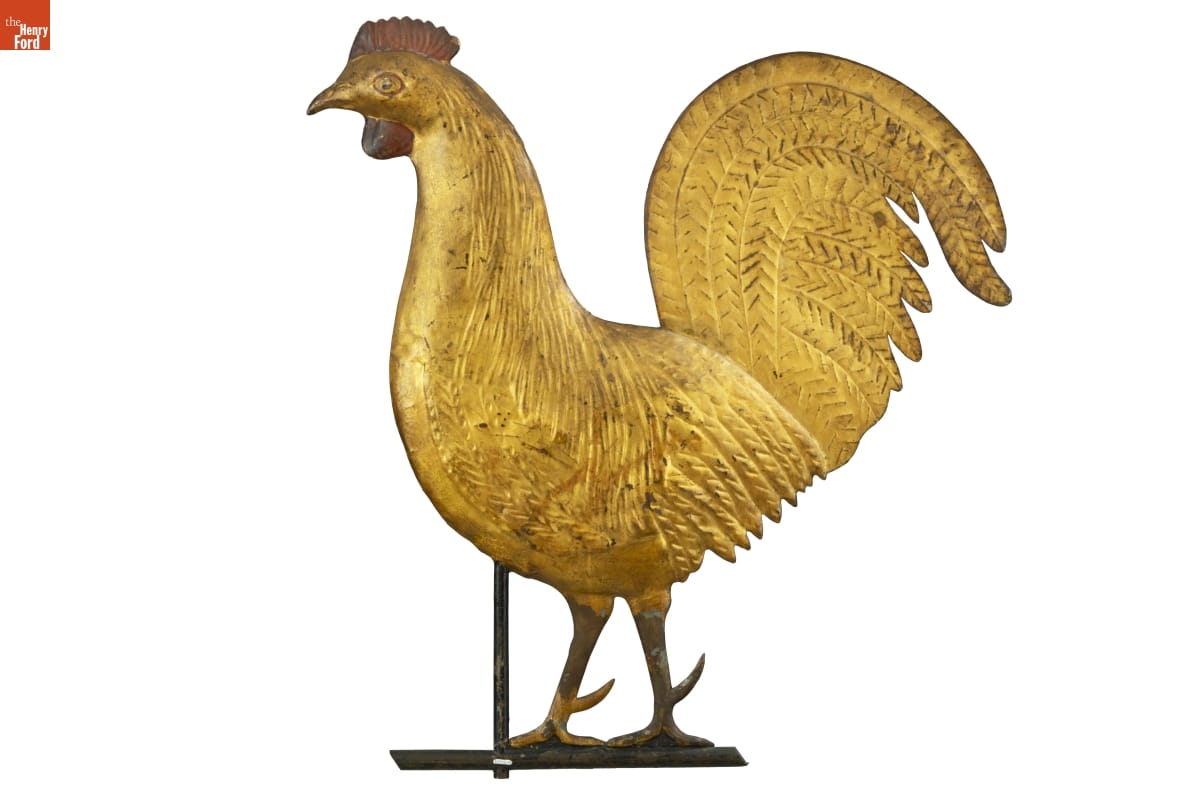
- Rooster Weathervane, circa 1875 - Weathervanes point into the direction of the wind. This helped viewers anticipate weather changes before local forecasts became common after 1920. Functional vanes required a basic pointing device and directional arms, but manufacturers added decorative elements, or ornaments, to appeal to consumer interests. Many churches installed a rooster, or weathercock, atop their spires to convey a moral lesson based in Christian gospels.
- circa 1875
- Collections - Artifact
Rooster Weathervane, circa 1875
Weathervanes point into the direction of the wind. This helped viewers anticipate weather changes before local forecasts became common after 1920. Functional vanes required a basic pointing device and directional arms, but manufacturers added decorative elements, or ornaments, to appeal to consumer interests. Many churches installed a rooster, or weathercock, atop their spires to convey a moral lesson based in Christian gospels.
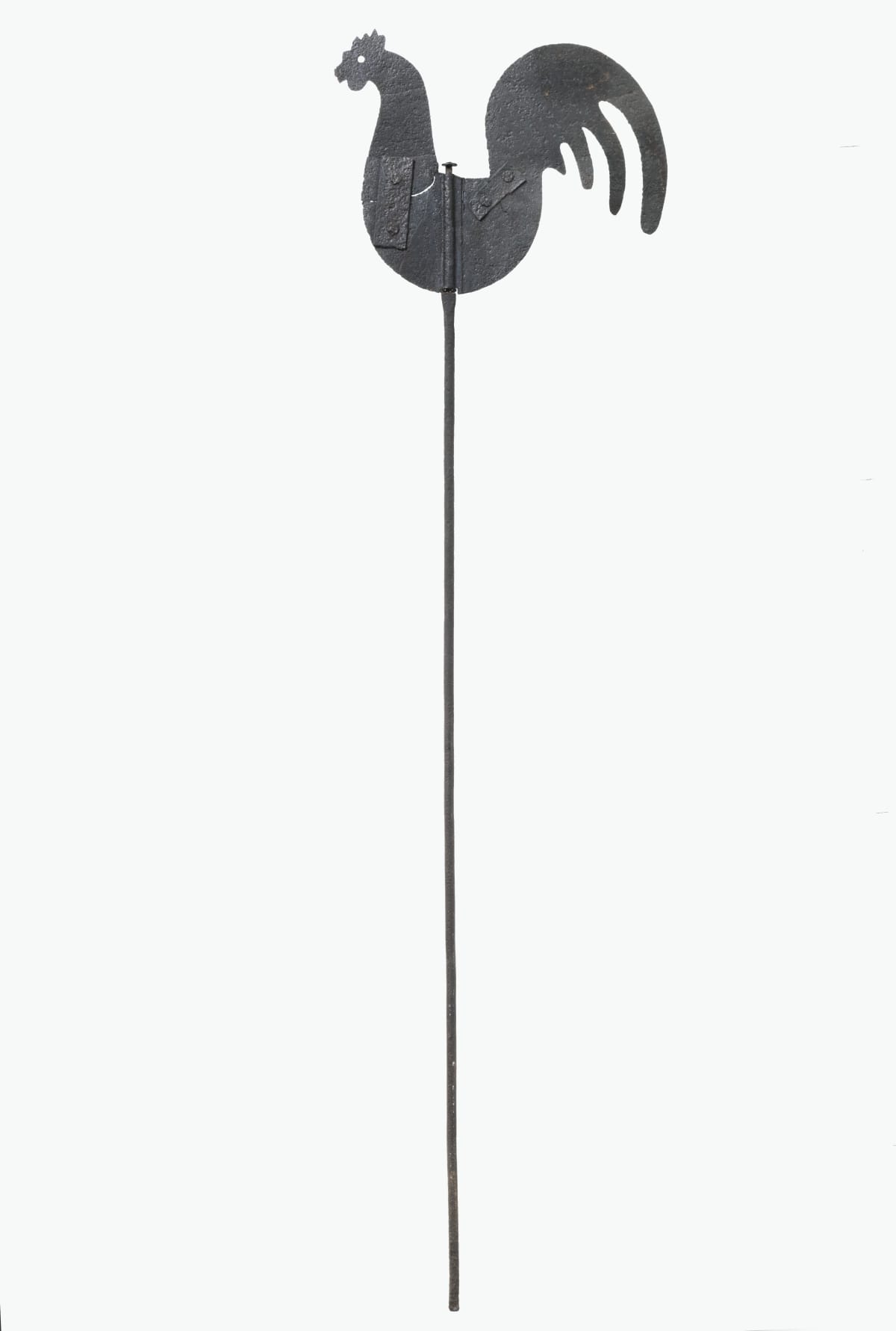
- Weathervane Ornament, circa 1800 - Artisans often made weathervanes from durable sheet metal. They attached pieces and reinforced stress points with straps of metal fastened with rivets. This rooster, or weathercock, may have set atop a church spire to convey a moral lesson based in Christian gospels.
- circa 1800
- Collections - Artifact
Weathervane Ornament, circa 1800
Artisans often made weathervanes from durable sheet metal. They attached pieces and reinforced stress points with straps of metal fastened with rivets. This rooster, or weathercock, may have set atop a church spire to convey a moral lesson based in Christian gospels.
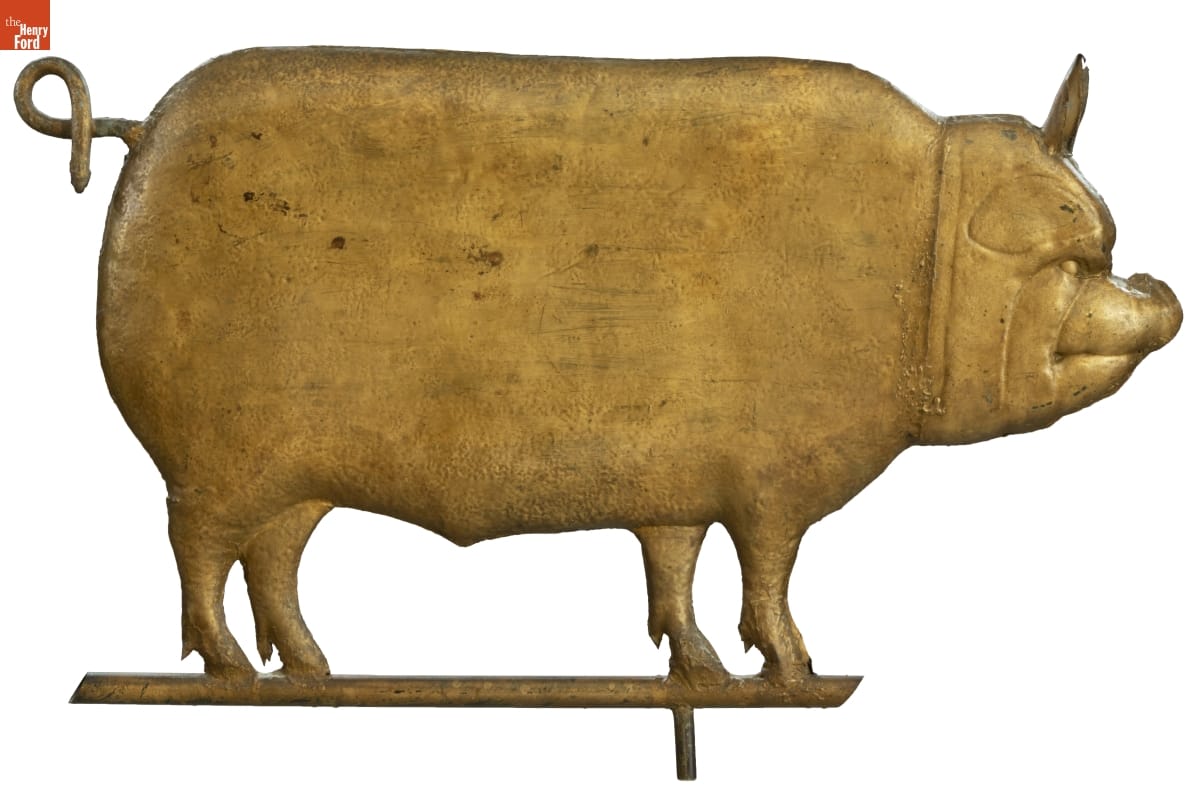
- Pig Weathervane, 1875-1885 - Weathervanes point into the direction of the wind. This helped viewers anticipate weather changes before local forecasts became common after 1920. Functional weathervanes required a basic pointing device and directional arms, but manufacturers added decorative elements, or ornaments, to appeal to consumer interests. Livestock ornaments were popular among farmers eager to promote the business of agriculture.
- 1875-1885
- Collections - Artifact
Pig Weathervane, 1875-1885
Weathervanes point into the direction of the wind. This helped viewers anticipate weather changes before local forecasts became common after 1920. Functional weathervanes required a basic pointing device and directional arms, but manufacturers added decorative elements, or ornaments, to appeal to consumer interests. Livestock ornaments were popular among farmers eager to promote the business of agriculture.
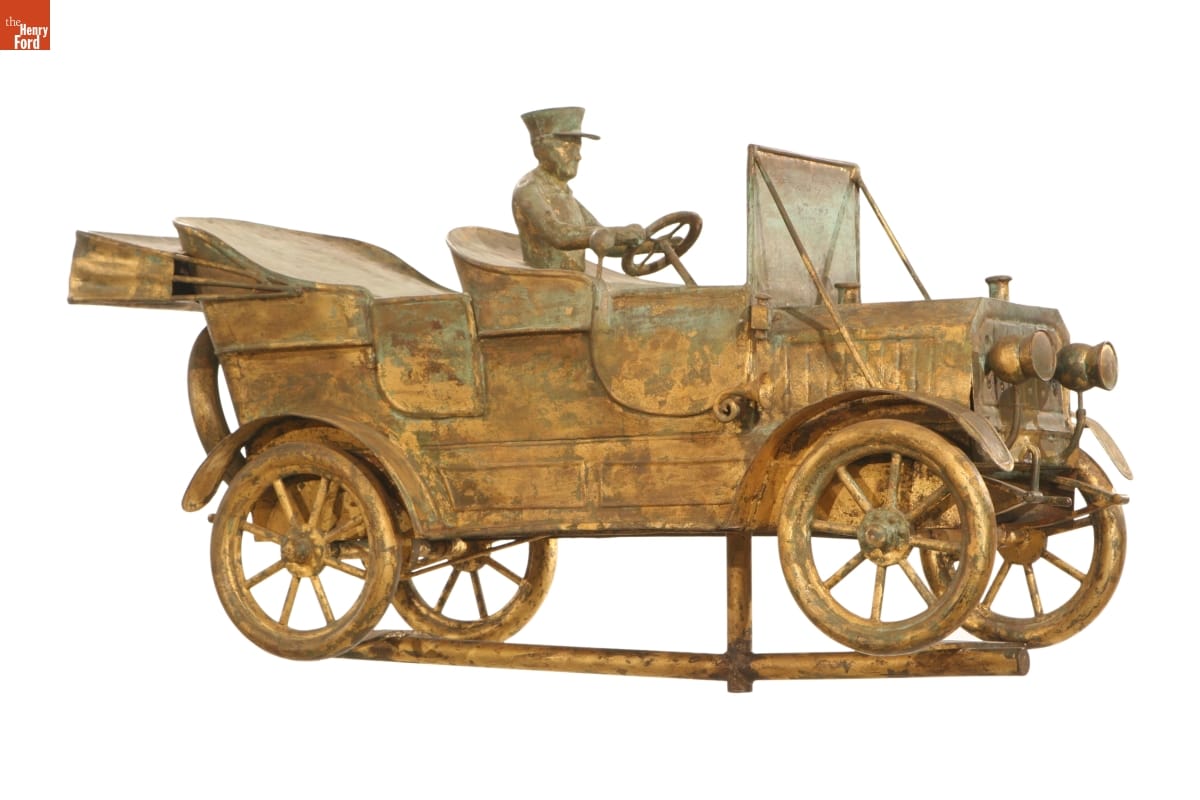
- Automobile Weathervane, 1910-1920 - Weathervanes point into the direction of the wind. This helped viewers anticipate weather changes before local forecasts became common after 1920. Functional vanes required a basic pointing device and directional arms, but manufacturers added decorative elements, or ornaments, to appeal to consumer interests. Changing transportation technologies became popular symbols of modernity during the late-19th and early-20th centuries.
- 1910-1920
- Collections - Artifact
Automobile Weathervane, 1910-1920
Weathervanes point into the direction of the wind. This helped viewers anticipate weather changes before local forecasts became common after 1920. Functional vanes required a basic pointing device and directional arms, but manufacturers added decorative elements, or ornaments, to appeal to consumer interests. Changing transportation technologies became popular symbols of modernity during the late-19th and early-20th centuries.
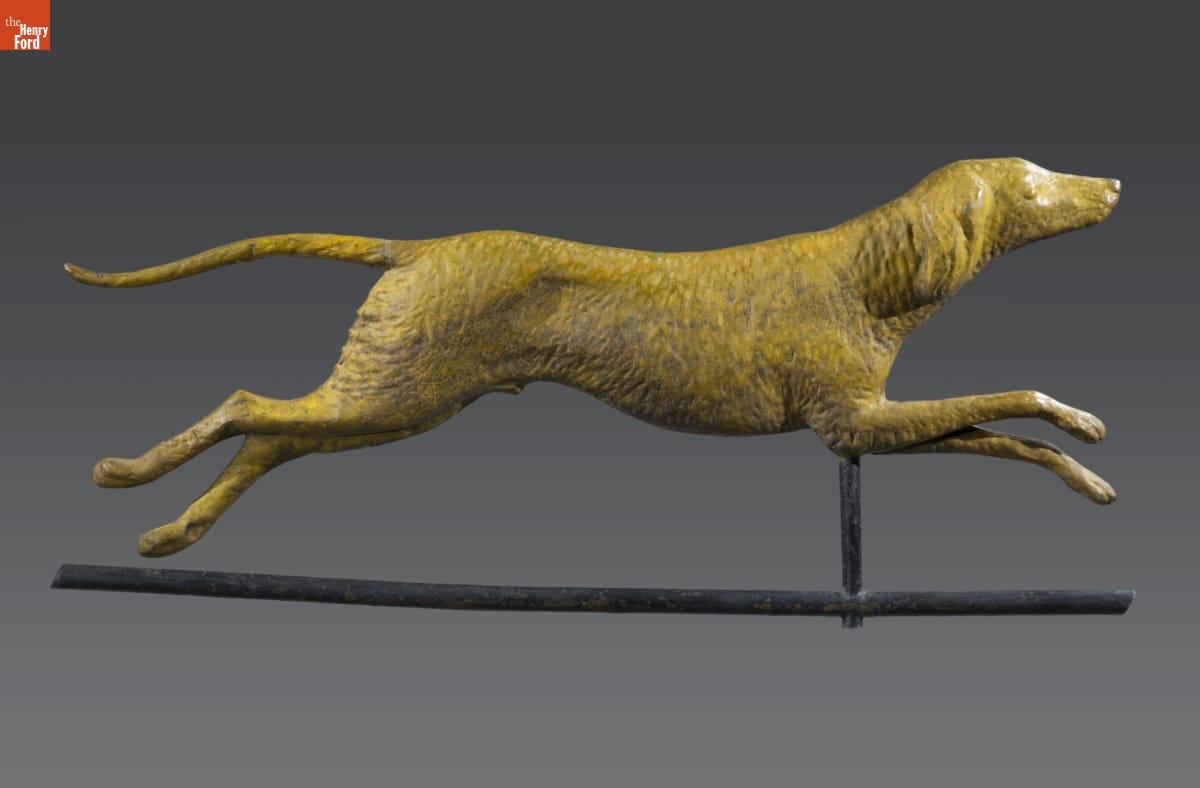
- Fox Hound Weathervane, 1875-1885 - Weathervanes point into the direction of the wind. This helped viewers anticipate weather changes before local forecasts became common after 1920. Functional weathervanes required a basic pointing device and directional arms, but manufacturers added decorative elements, or ornaments, to appeal to consumer interests. Domestic and wild animals in motion, as if running or jumping through the air, were popular.
- 1875-1885
- Collections - Artifact
Fox Hound Weathervane, 1875-1885
Weathervanes point into the direction of the wind. This helped viewers anticipate weather changes before local forecasts became common after 1920. Functional weathervanes required a basic pointing device and directional arms, but manufacturers added decorative elements, or ornaments, to appeal to consumer interests. Domestic and wild animals in motion, as if running or jumping through the air, were popular.
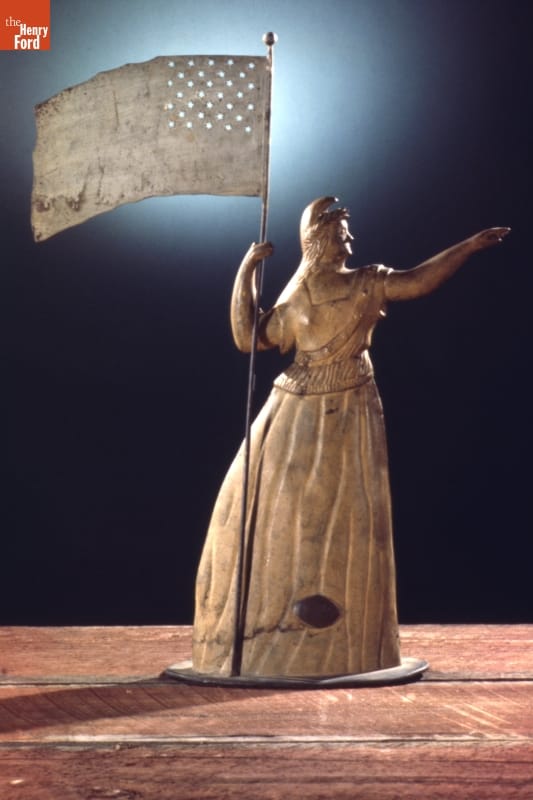
- "Goddess of Liberty" Weathervane, 1867-1872 - Weathervanes point into the direction of the wind. This helped viewers anticipate weather changes before local forecasts became common after 1920. Functional weathervanes required a basic pointing device and directional arms, but manufacturers added decorative elements, or ornaments, to appeal to consumer interests. Patriotic symbols became common around the time of the Civil War. This figure carried the 32-star flag adopted in 1858.
- 1867-1872
- Collections - Artifact
"Goddess of Liberty" Weathervane, 1867-1872
Weathervanes point into the direction of the wind. This helped viewers anticipate weather changes before local forecasts became common after 1920. Functional weathervanes required a basic pointing device and directional arms, but manufacturers added decorative elements, or ornaments, to appeal to consumer interests. Patriotic symbols became common around the time of the Civil War. This figure carried the 32-star flag adopted in 1858.
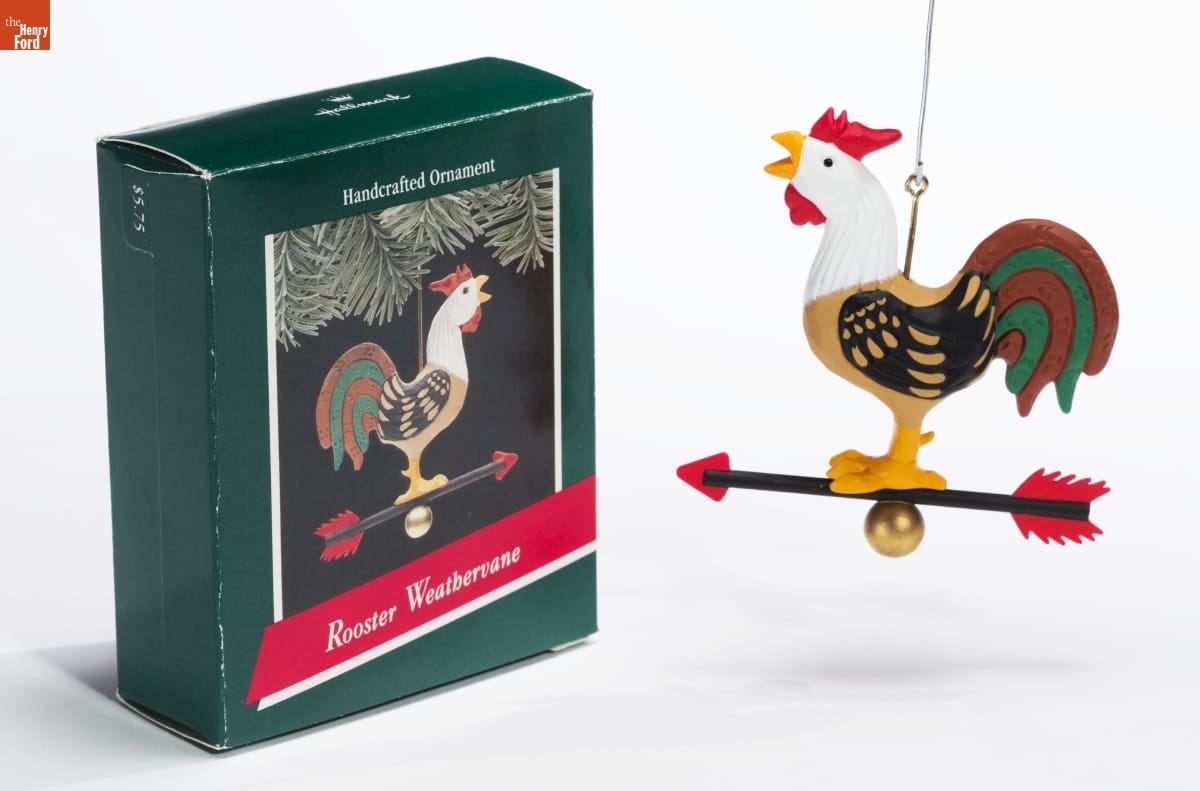
- Hallmark "Rooster Weathervane" Christmas Ornament, 1989 - Already known for greeting cards, Hallmark introduced a line of Christmas ornaments in 1973. The company's annual release of an increasing array of ornaments revolutionized Christmas decorating, appealing to customers' interest in marking memories and milestones as well as expressing one's personality and unique tastes.
- 1989
- Collections - Artifact
Hallmark "Rooster Weathervane" Christmas Ornament, 1989
Already known for greeting cards, Hallmark introduced a line of Christmas ornaments in 1973. The company's annual release of an increasing array of ornaments revolutionized Christmas decorating, appealing to customers' interest in marking memories and milestones as well as expressing one's personality and unique tastes.