
Search
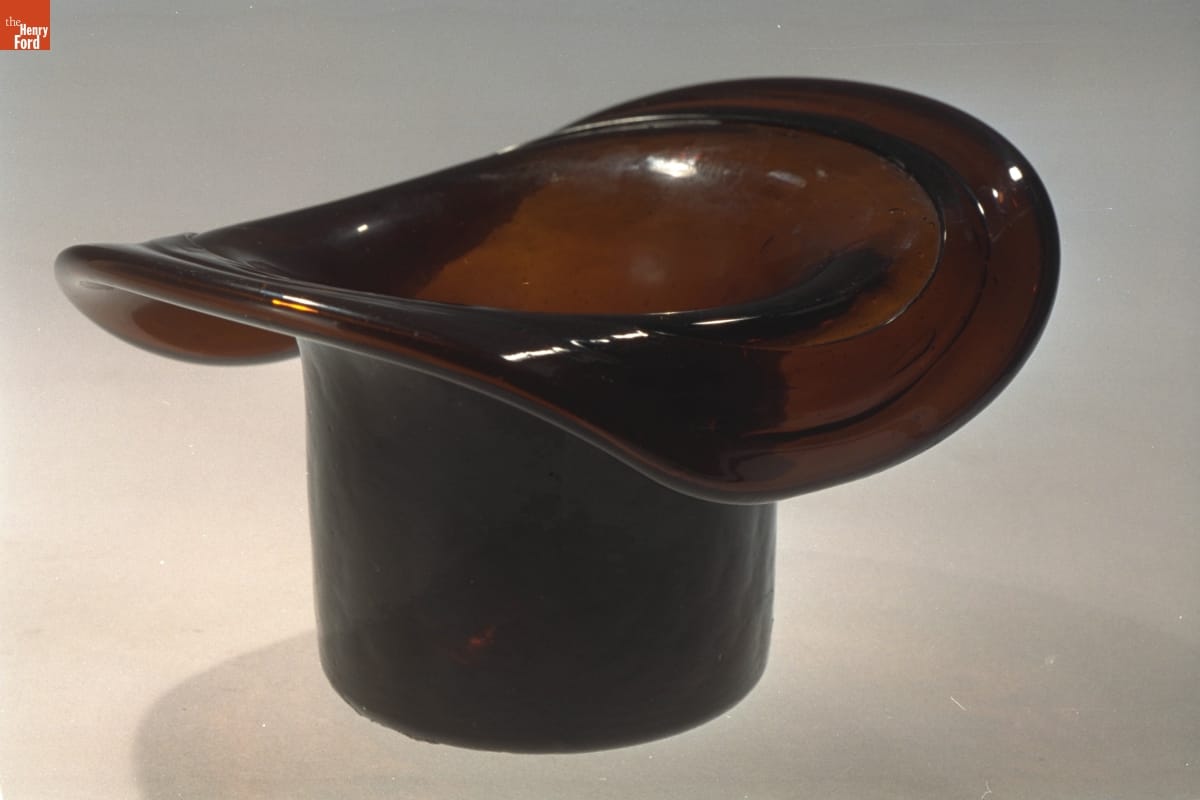
- Whimsey, 1881-1886 - Glassworkers of the 19th and early 20th centuries created fanciful or humorous objects called whimsies to show off their skill and creativity. These pieces were usually made during breaks or at the end of a long day working in a hot factory. Various forms of whimsies include animals, canes, pipes, chains, rolling pins, or curiosities like this hat -- whatever struck a worker's fancy.
- 1881-1886
- Collections - Artifact
Whimsey, 1881-1886
Glassworkers of the 19th and early 20th centuries created fanciful or humorous objects called whimsies to show off their skill and creativity. These pieces were usually made during breaks or at the end of a long day working in a hot factory. Various forms of whimsies include animals, canes, pipes, chains, rolling pins, or curiosities like this hat -- whatever struck a worker's fancy.
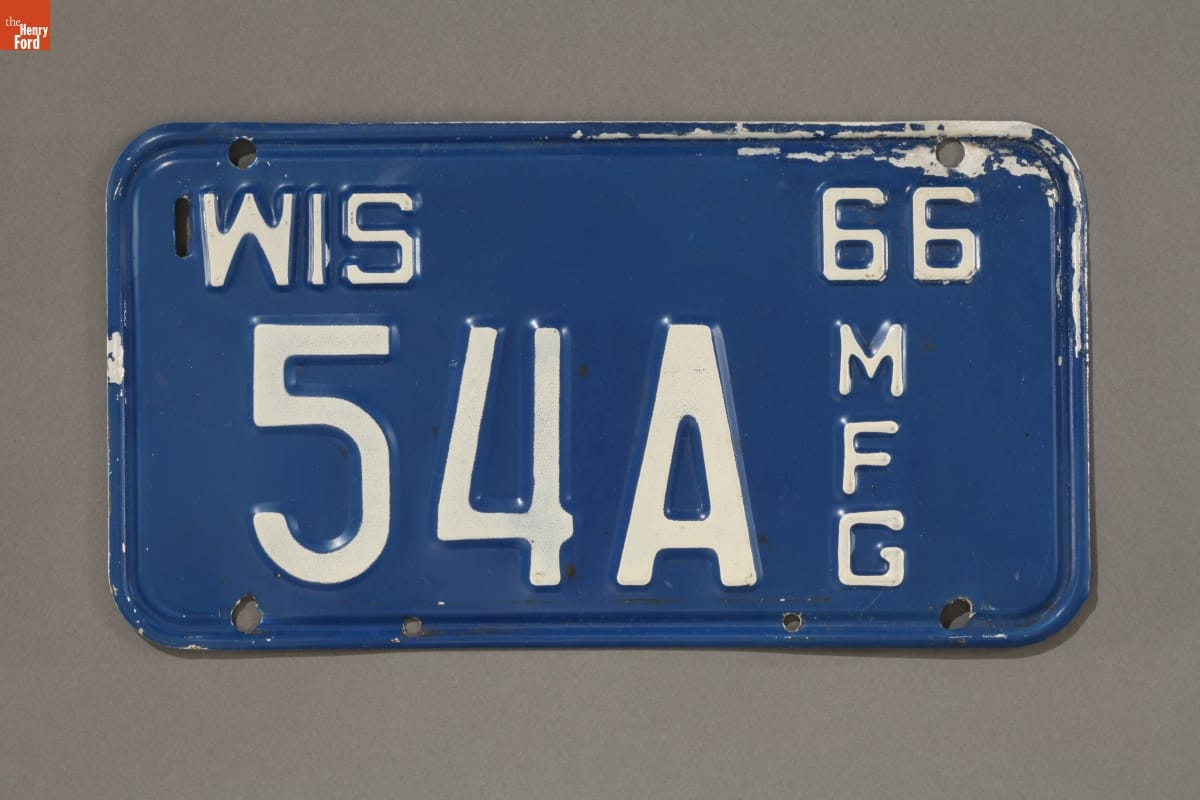
- Wisconsin License Plate, 1966 - Early state-issued license plates were made of porcelain-coated iron. Later, states stamped tin, steel, or even copper to make plates. During the Second World War several states used fiberboard. Plate colors varied and some states added symbols, mottoes, or other design elements. Today, states use reflective sheeting to coat a standard-sized aluminum blank which is then stamped and decorated.
- 1966
- Collections - Artifact
Wisconsin License Plate, 1966
Early state-issued license plates were made of porcelain-coated iron. Later, states stamped tin, steel, or even copper to make plates. During the Second World War several states used fiberboard. Plate colors varied and some states added symbols, mottoes, or other design elements. Today, states use reflective sheeting to coat a standard-sized aluminum blank which is then stamped and decorated.
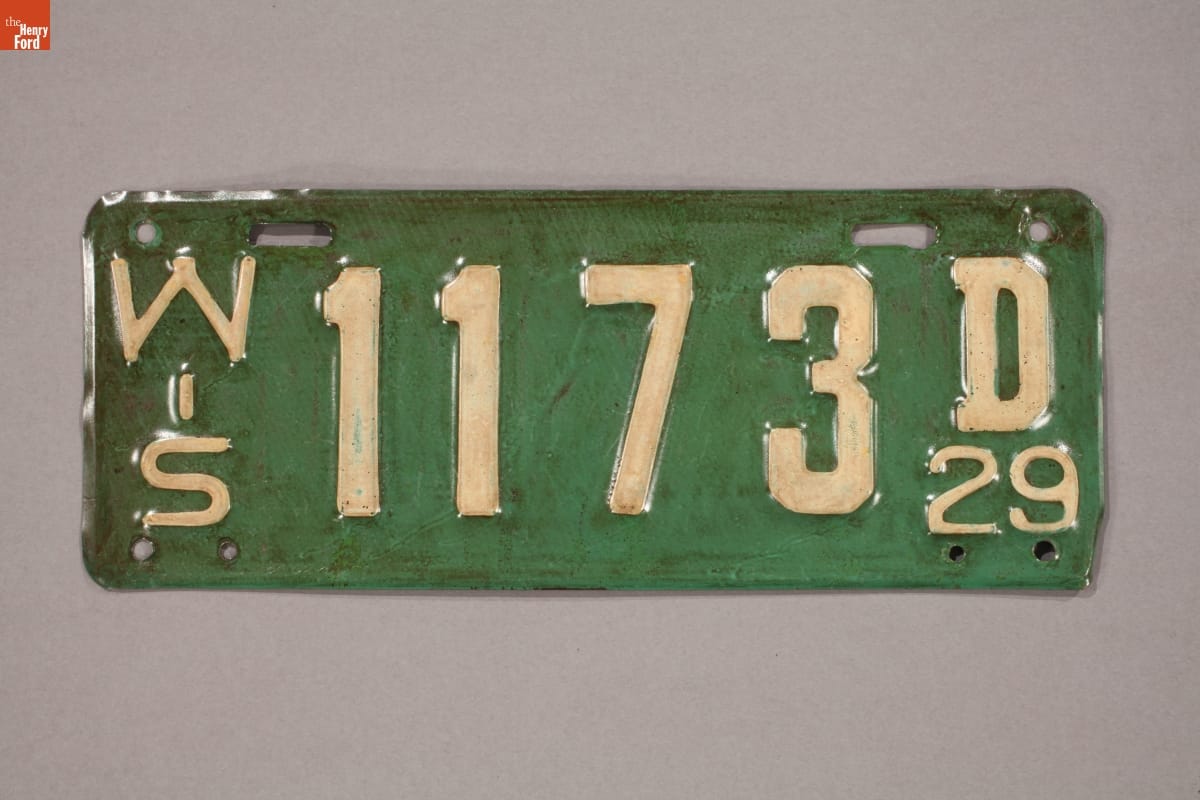
- Wisconsin License Plate, 1929 - Early state-issued license plates were made of porcelain-coated iron. Later, states stamped tin, steel, or even copper to make plates. During the Second World War several states used fiberboard. Plate colors varied and some states added symbols, mottoes, or other design elements. Today, states use reflective sheeting to coat a standard-sized aluminum blank which is then stamped and decorated.
- 1929
- Collections - Artifact
Wisconsin License Plate, 1929
Early state-issued license plates were made of porcelain-coated iron. Later, states stamped tin, steel, or even copper to make plates. During the Second World War several states used fiberboard. Plate colors varied and some states added symbols, mottoes, or other design elements. Today, states use reflective sheeting to coat a standard-sized aluminum blank which is then stamped and decorated.
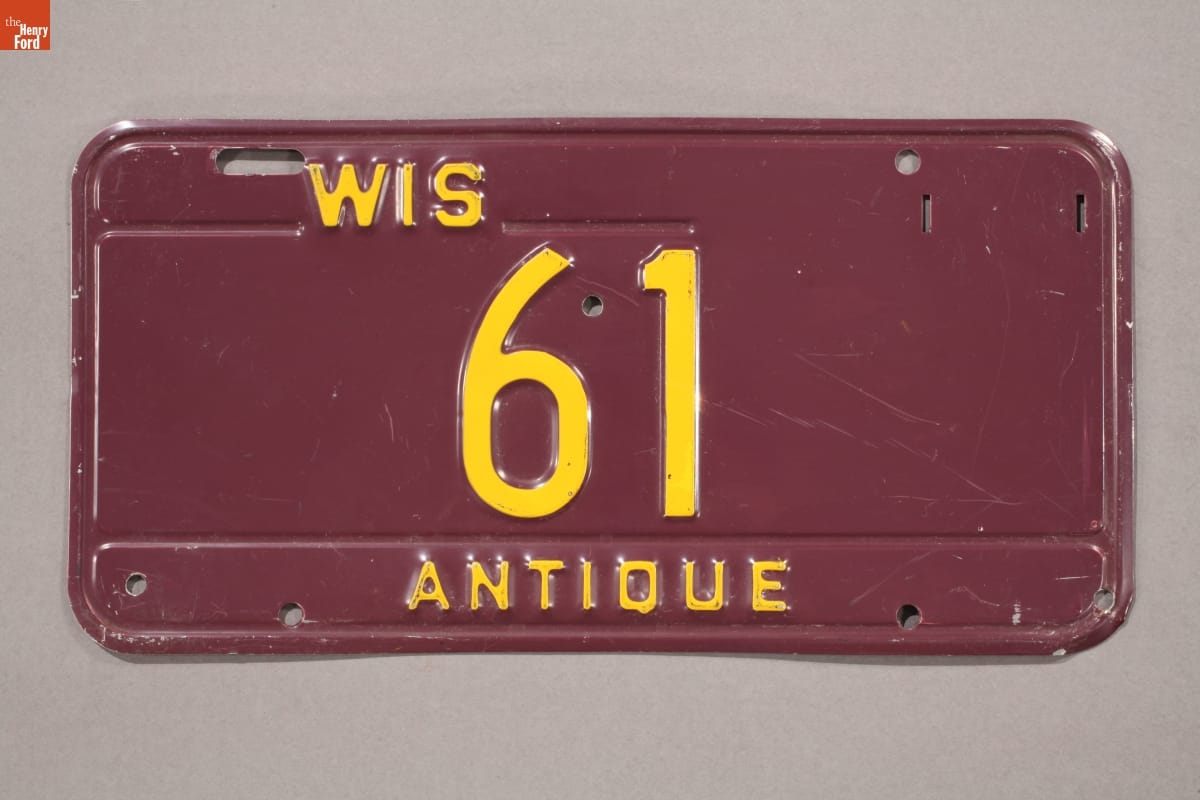
- Wisconsin License Plate, 1961 - In Wisconsin in 1961, historic vehicle owners received an "Antique" license plate, like this one, for qualifying automobiles. Many states have set definitions of what an "Antique" or "Historic" vehicle is. These qualifications usually include cars over a certain age and ones used for specific, limited purposes and not as a main source of transportation.
- 1961
- Collections - Artifact
Wisconsin License Plate, 1961
In Wisconsin in 1961, historic vehicle owners received an "Antique" license plate, like this one, for qualifying automobiles. Many states have set definitions of what an "Antique" or "Historic" vehicle is. These qualifications usually include cars over a certain age and ones used for specific, limited purposes and not as a main source of transportation.
- Xanadu Foam House of Tomorrow, Wisconsin Dells, Wisconsin, 1988 - In the mid-1970s, John Margolies began to assemble a visual record of America's built roadside landscape. Over the following three decades, he traveled thousands of miles to photograph the overlooked and often quickly vanishing structures that had grown out of American automobile culture and main street commerce. His photographs of hotels, motels, diners, service stations, drive-ins and attractions celebrate and capture a unique chapter of American history.
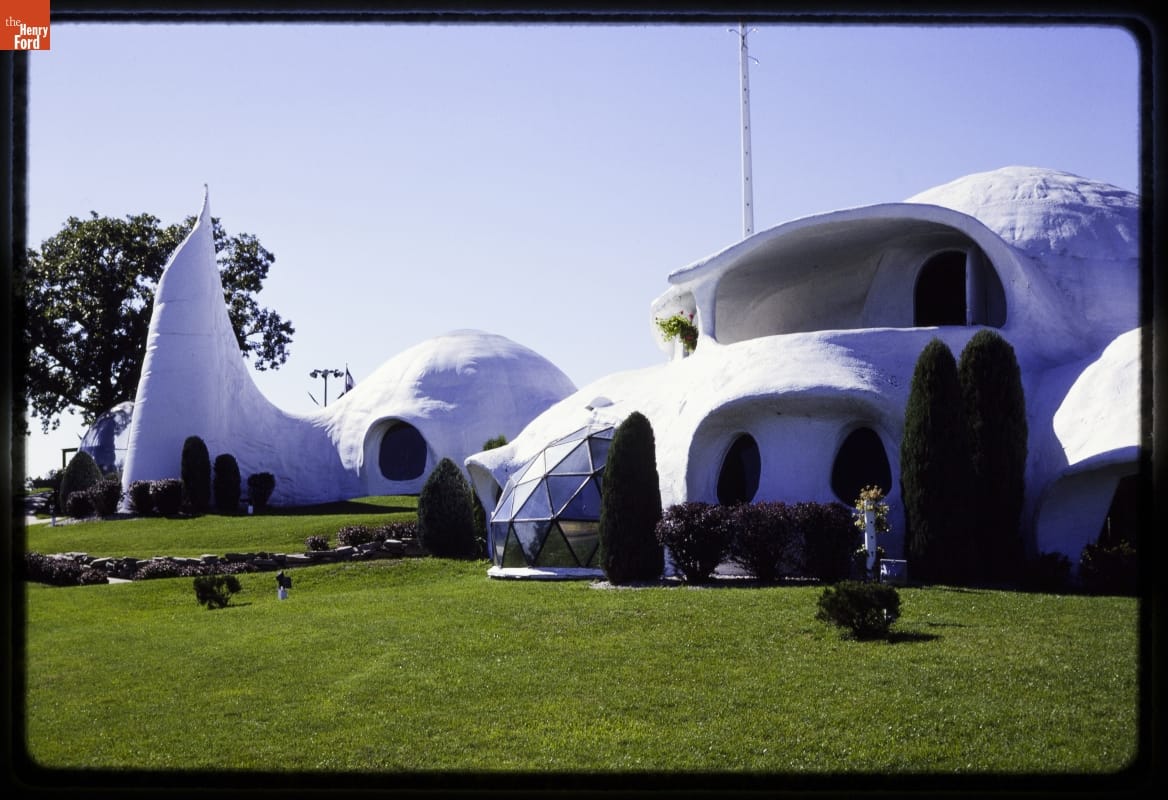
- 1988
- Collections - Artifact
Xanadu Foam House of Tomorrow, Wisconsin Dells, Wisconsin, 1988
In the mid-1970s, John Margolies began to assemble a visual record of America's built roadside landscape. Over the following three decades, he traveled thousands of miles to photograph the overlooked and often quickly vanishing structures that had grown out of American automobile culture and main street commerce. His photographs of hotels, motels, diners, service stations, drive-ins and attractions celebrate and capture a unique chapter of American history.
- Wisconsin License Plate, 1918 - Early state-issued license plates were made of porcelain-coated iron. Later, states stamped tin, steel, or even copper to make plates. During the Second World War several states used fiberboard. Plate colors varied and some states added symbols, mottoes, or other design elements. Today, states use reflective sheeting to coat a standard-sized aluminum blank which is then stamped and decorated.
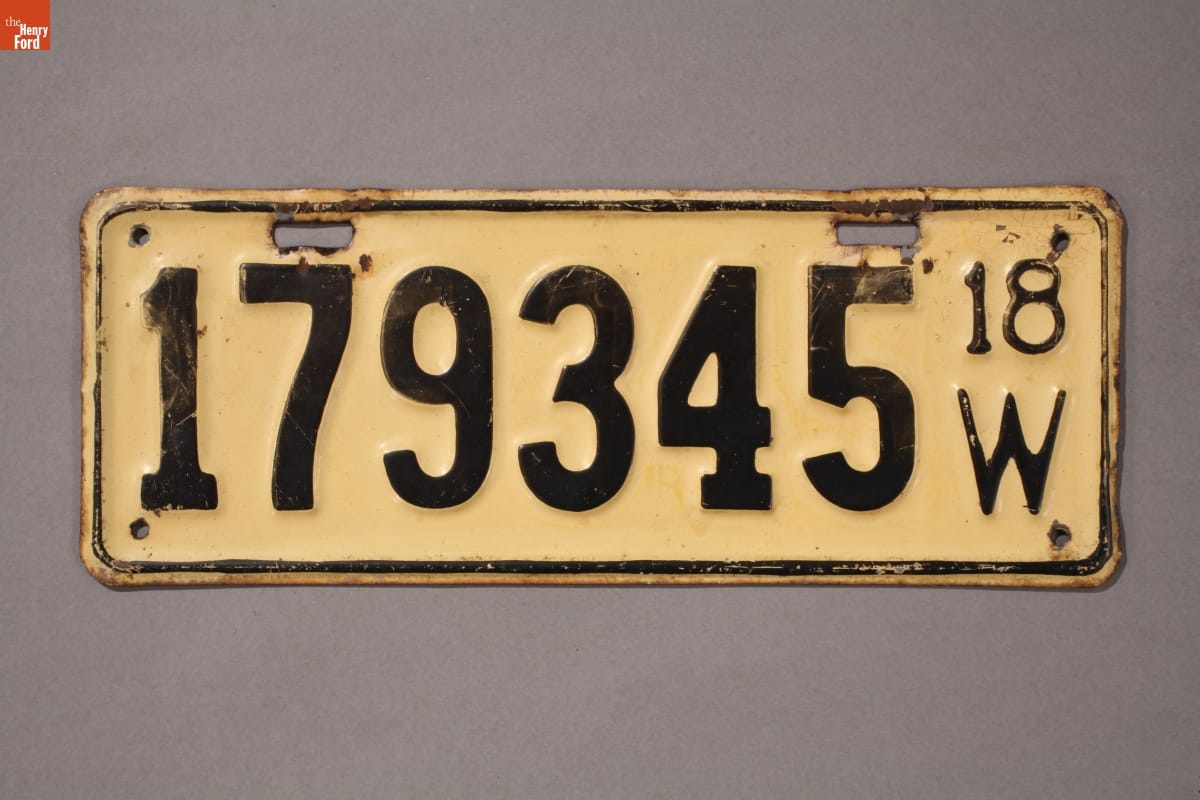
- 1918
- Collections - Artifact
Wisconsin License Plate, 1918
Early state-issued license plates were made of porcelain-coated iron. Later, states stamped tin, steel, or even copper to make plates. During the Second World War several states used fiberboard. Plate colors varied and some states added symbols, mottoes, or other design elements. Today, states use reflective sheeting to coat a standard-sized aluminum blank which is then stamped and decorated.
- "Oneida Bingo & Casino," Wisconsin, 1994 - Vacationers define fun differently. Some travelers head to casinos to have "Fun, Fun, Fun!"
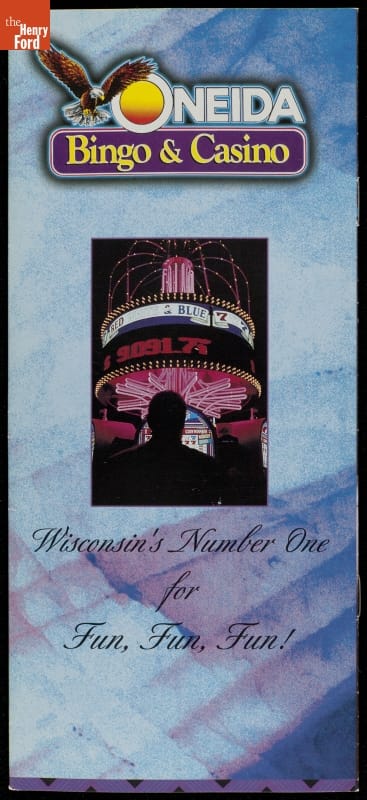
- 1994
- Collections - Artifact
"Oneida Bingo & Casino," Wisconsin, 1994
Vacationers define fun differently. Some travelers head to casinos to have "Fun, Fun, Fun!"
- High School, Janesville, Wisconsin, circa 1910 - The first high school in Janesville, Wisconsin, was organized in 1856. By the end of the century, Janesville residents had built this new, larger facility to house classrooms, laboratories, and a manual training department for more than 450 students. The building served as a high school until a new facility opened in 1923 and was later demolished.
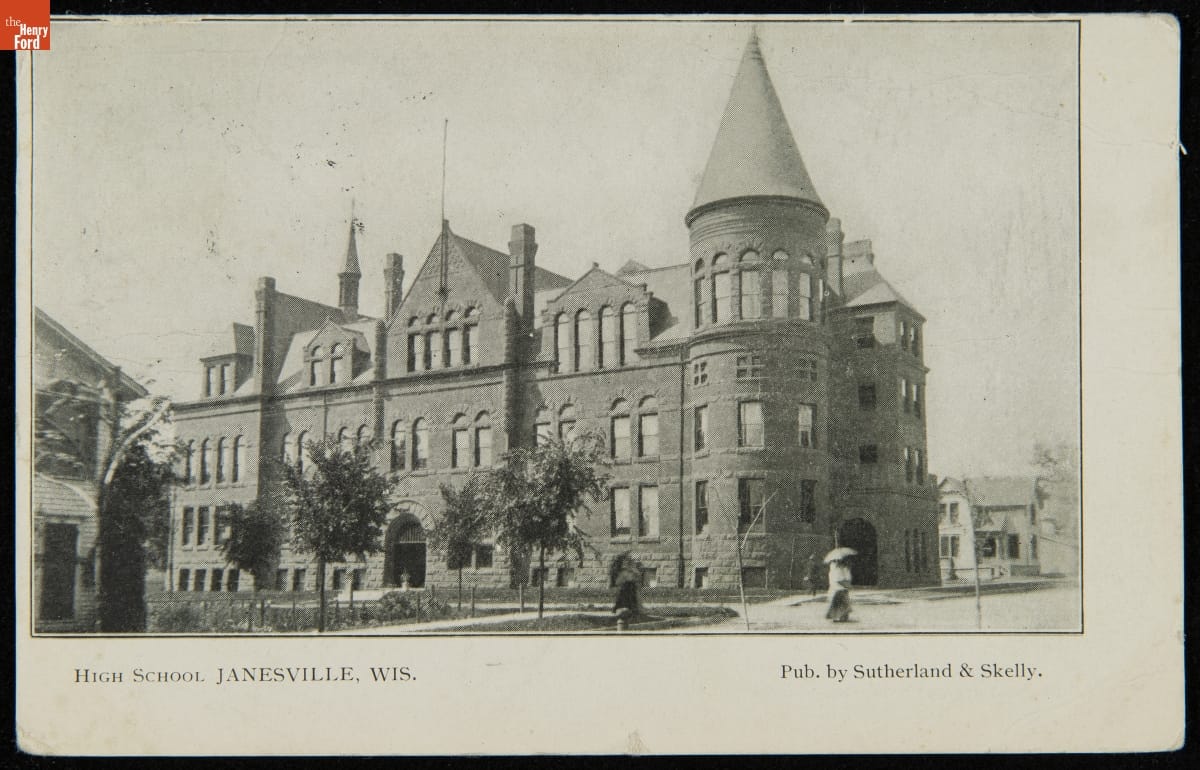
- circa 1910
- Collections - Artifact
High School, Janesville, Wisconsin, circa 1910
The first high school in Janesville, Wisconsin, was organized in 1856. By the end of the century, Janesville residents had built this new, larger facility to house classrooms, laboratories, and a manual training department for more than 450 students. The building served as a high school until a new facility opened in 1923 and was later demolished.
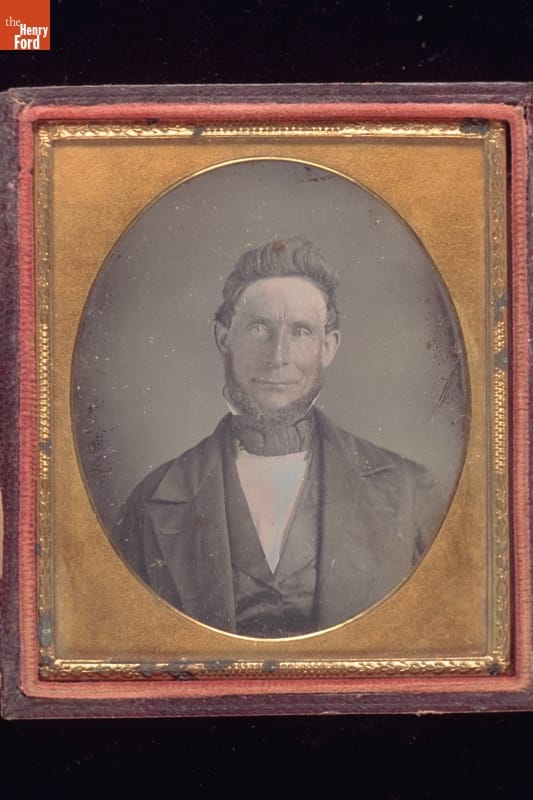
- Portrait of Leo Adler, Wisconsin, 1860 - The daguerreotype, popular in the early 1840s-late 1850s, was the first form of photography available to the public. Sheets of silver-plated copper--polished to a mirror finish--were bathed in photosensitive vapors, and exposed in cameras. In formal studios and traveling booths, photographers created affordable portraits. For the first time, people saw their likenesses--fixed permanently in time and place.
- 1860
- Collections - Artifact
Portrait of Leo Adler, Wisconsin, 1860
The daguerreotype, popular in the early 1840s-late 1850s, was the first form of photography available to the public. Sheets of silver-plated copper--polished to a mirror finish--were bathed in photosensitive vapors, and exposed in cameras. In formal studios and traveling booths, photographers created affordable portraits. For the first time, people saw their likenesses--fixed permanently in time and place.
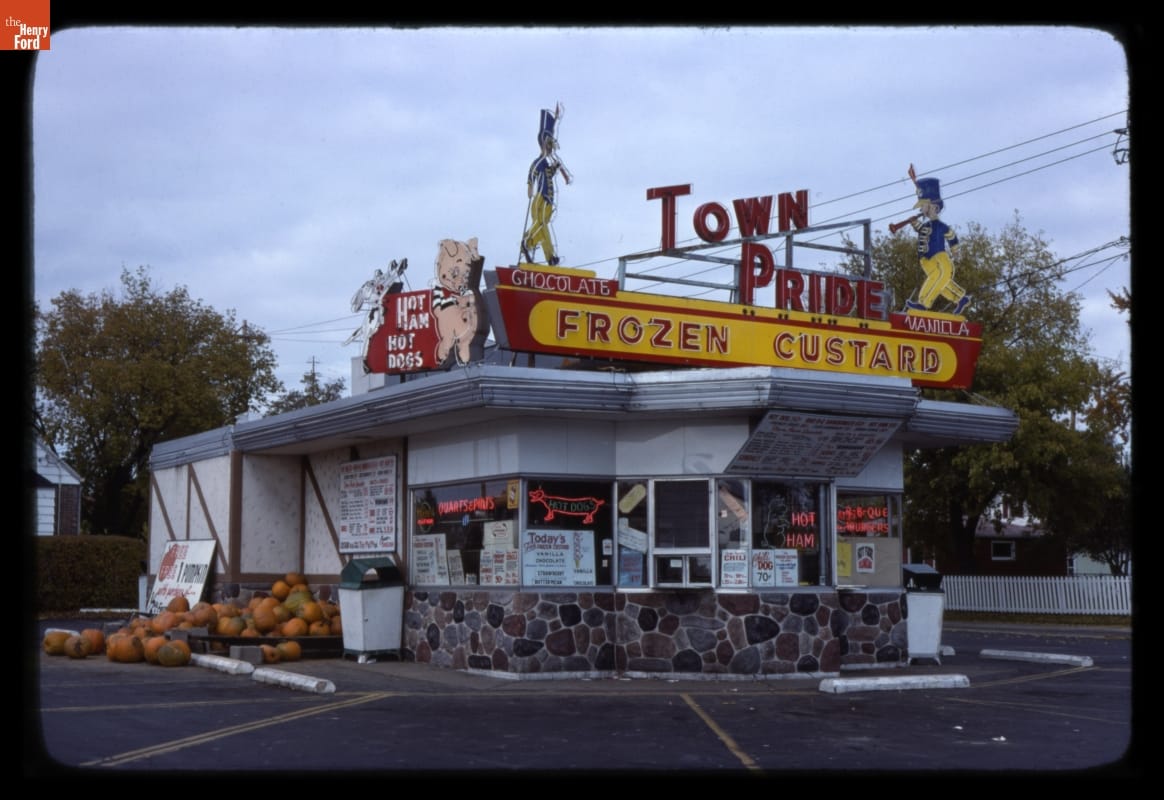
- Town Pride Frozen Custard, Milwaukee, Wisconsin, 1977 - In the mid-1970s, John Margolies began to assemble a visual record of America's built roadside landscape. Over the following three decades, he traveled thousands of miles to photograph the overlooked and often quickly vanishing structures that had grown out of American automobile culture and main street commerce. His photographs of hotels, motels, diners, service stations, drive-ins and attractions celebrate and capture a unique chapter of American history.
- 1977
- Collections - Artifact
Town Pride Frozen Custard, Milwaukee, Wisconsin, 1977
In the mid-1970s, John Margolies began to assemble a visual record of America's built roadside landscape. Over the following three decades, he traveled thousands of miles to photograph the overlooked and often quickly vanishing structures that had grown out of American automobile culture and main street commerce. His photographs of hotels, motels, diners, service stations, drive-ins and attractions celebrate and capture a unique chapter of American history.