
Search
- Women's March in Chicago, Illinois, January 21, 2017 -

- January 21, 2017
- Collections - Artifact
Women's March in Chicago, Illinois, January 21, 2017
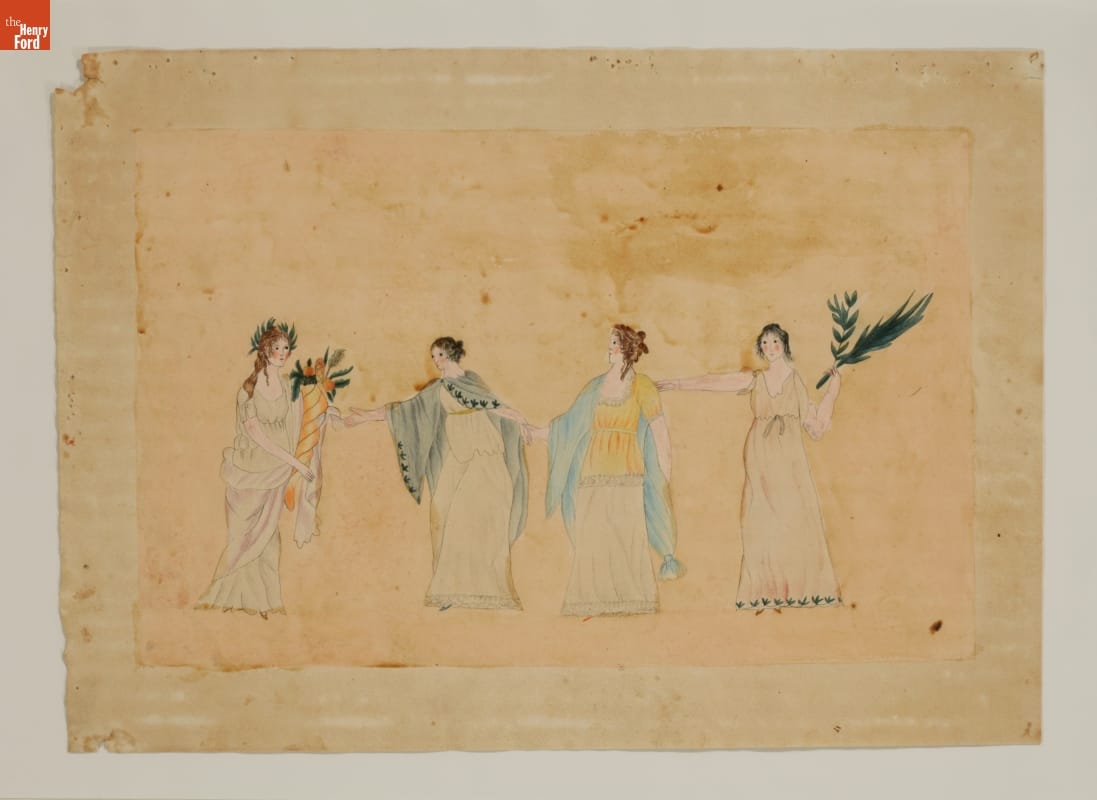
- Women in Classical Dress, 1790-1810 - Mehetabel Wingate (1772 - 1846) likely painted these fanciful images as a school girl, before her marriage in 1792. They represent an idealized vision of classical antiquity that was the height of taste in the years following the Revolution, when Americans viewed themselves as the inheritors of the ideals of the ancient world--democracy from Greece and representative government from Rome.
- 1790-1810
- Collections - Artifact
Women in Classical Dress, 1790-1810
Mehetabel Wingate (1772 - 1846) likely painted these fanciful images as a school girl, before her marriage in 1792. They represent an idealized vision of classical antiquity that was the height of taste in the years following the Revolution, when Americans viewed themselves as the inheritors of the ideals of the ancient world--democracy from Greece and representative government from Rome.
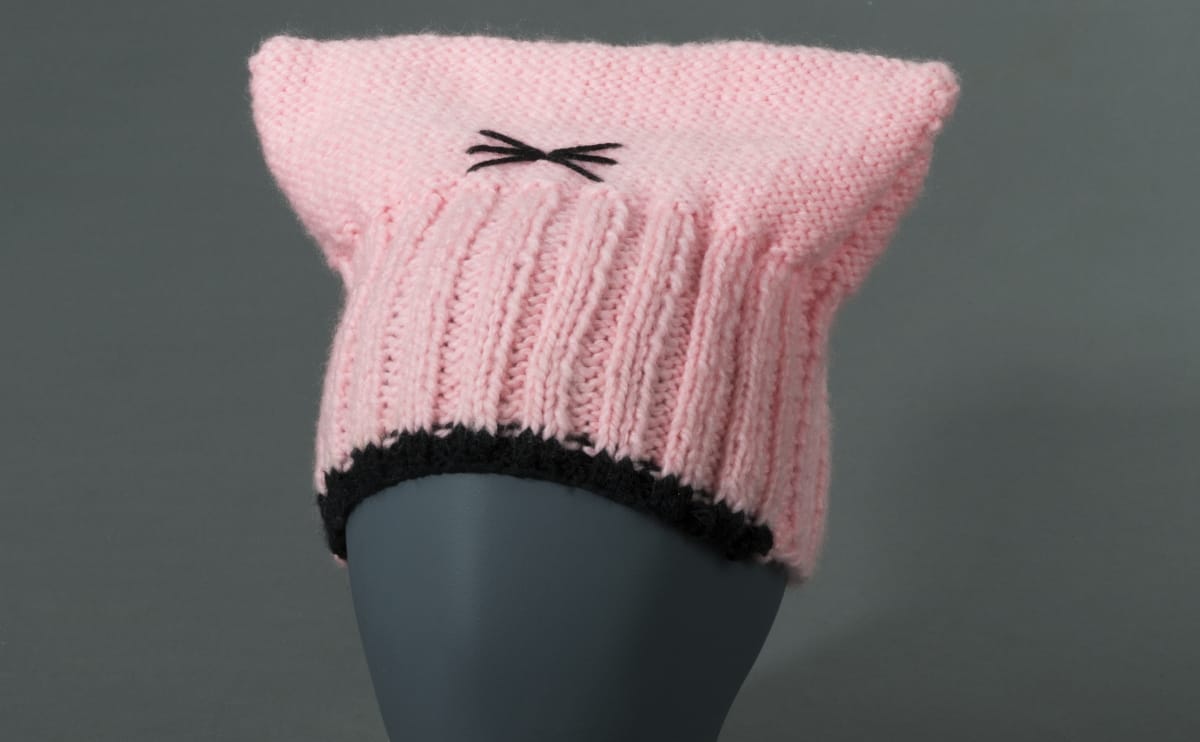
- "Pussyhat," Worn during the Women's March in Lansing, Michigan, January 2017 - In January 2017, millions of women--some donning pink knitted hats--gathered across America in a show of solidarity for women's rights and to protest the demeaning rhetoric made during the 2016 Presidential elections. (This hat's name refers to a derogatory comment made by Donald Trump in 2005.) This call to action brought a greater awareness of women's issues and an increased participation in electoral decision making in the following years.
- January 21, 2017
- Collections - Artifact
"Pussyhat," Worn during the Women's March in Lansing, Michigan, January 2017
In January 2017, millions of women--some donning pink knitted hats--gathered across America in a show of solidarity for women's rights and to protest the demeaning rhetoric made during the 2016 Presidential elections. (This hat's name refers to a derogatory comment made by Donald Trump in 2005.) This call to action brought a greater awareness of women's issues and an increased participation in electoral decision making in the following years.
- "Gathering" at the Women's March in Lansing, Michigan, January 21, 2017 -

- January 21, 2017
- Collections - Artifact
"Gathering" at the Women's March in Lansing, Michigan, January 21, 2017
- Safety Pin Earrings, Made for the 2017 Women's March in Washington, D.C. -
- January 21, 2017
- Collections - Artifact
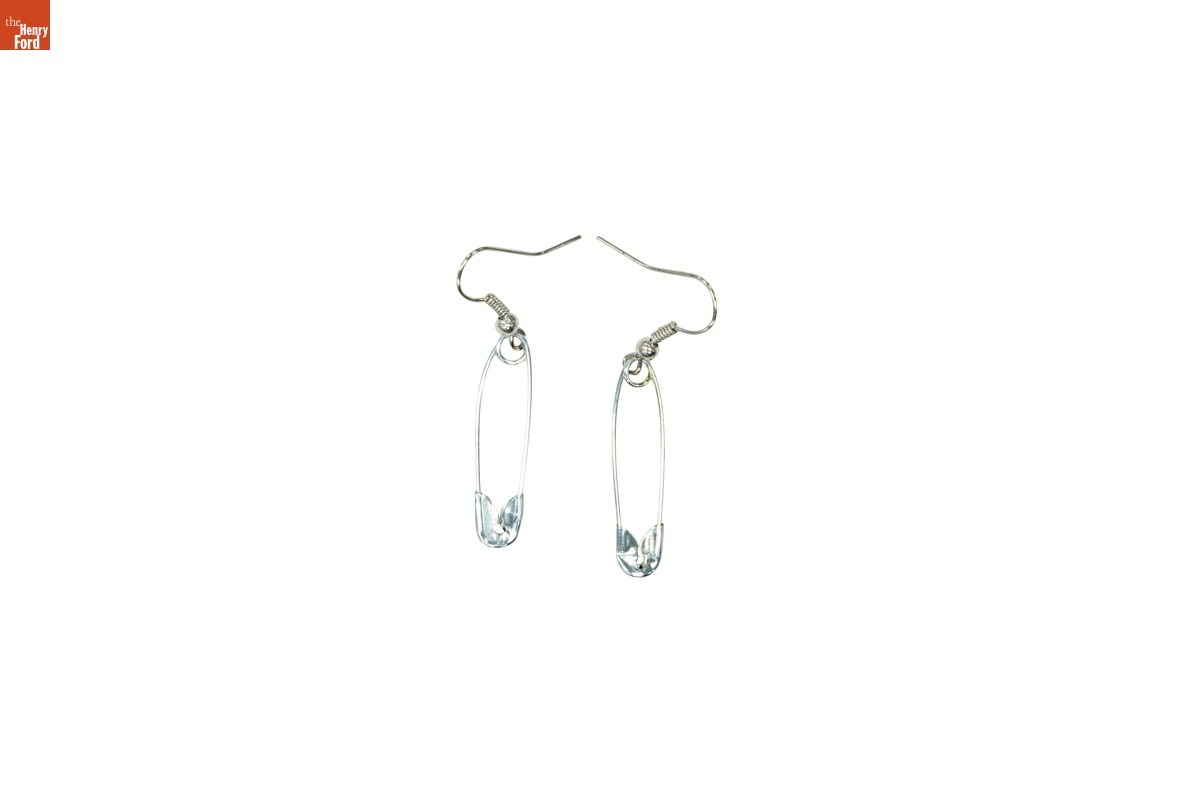
Safety Pin Earrings, Made for the 2017 Women's March in Washington, D.C.
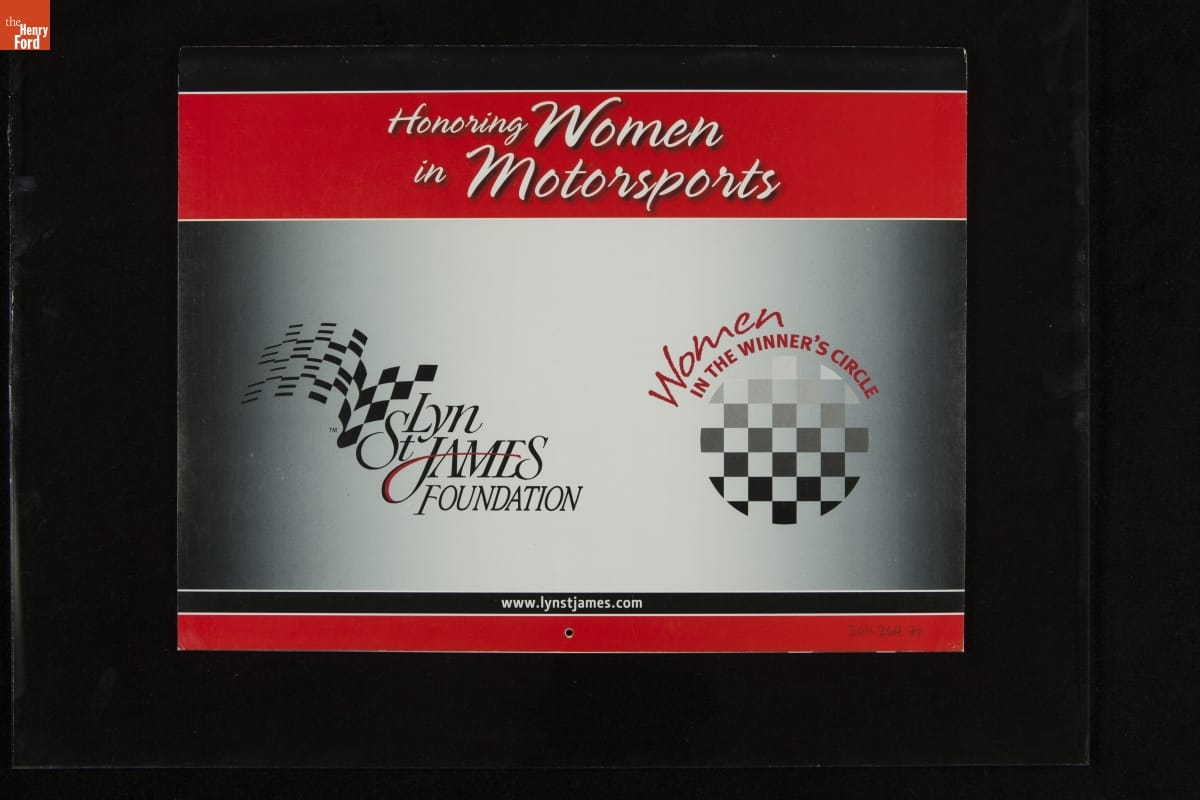
- Calendar, "Honoring Women in Motorsports," 2006-2007 - The Lyn St. James Foundation created this calendar honoring women in racing. Featured racers included Janet Guthrie, first woman to start the Indianapolis 500 and Daytona 500; Shirley Muldowney, four-time NHRA Top Fuel champion; and Desire Wilson, only woman to win an F1 race of any kind. Proceeds from the calendar's sale supported the foundation's mission to advocate for women in motorsports.
- 2006-2007
- Collections - Artifact
Calendar, "Honoring Women in Motorsports," 2006-2007
The Lyn St. James Foundation created this calendar honoring women in racing. Featured racers included Janet Guthrie, first woman to start the Indianapolis 500 and Daytona 500; Shirley Muldowney, four-time NHRA Top Fuel champion; and Desire Wilson, only woman to win an F1 race of any kind. Proceeds from the calendar's sale supported the foundation's mission to advocate for women in motorsports.
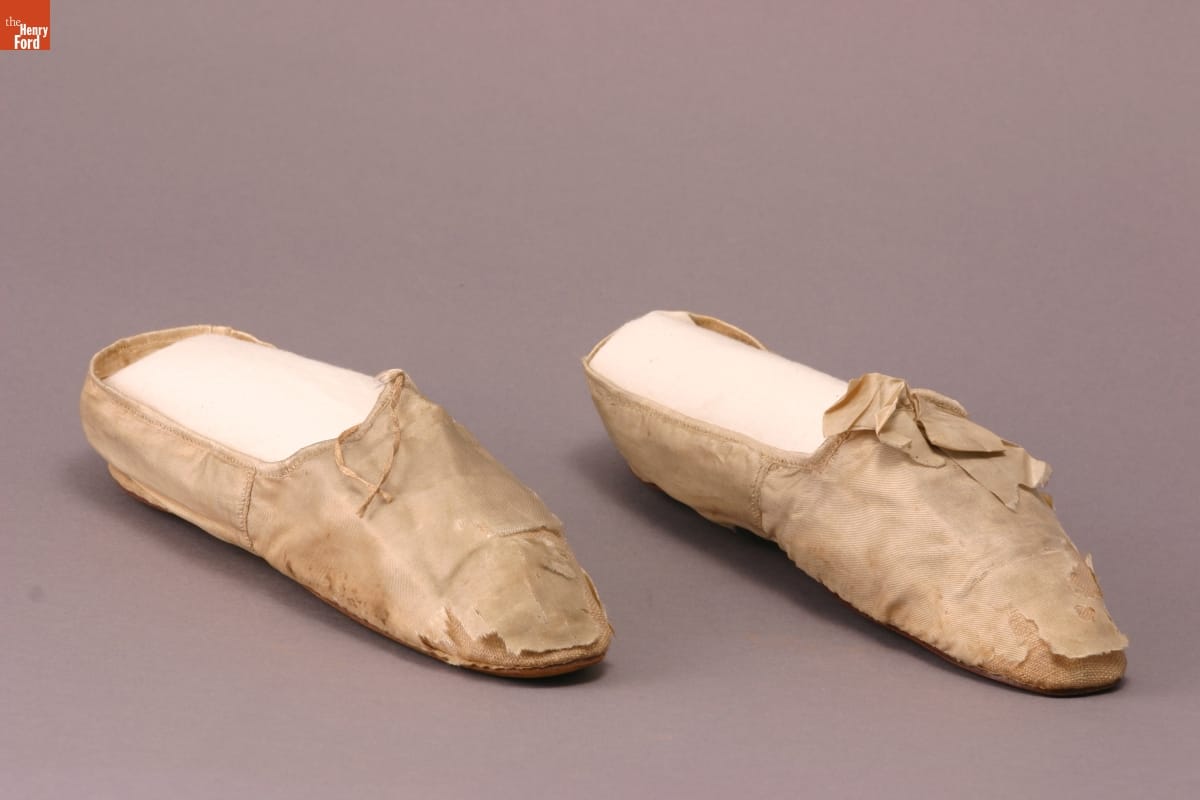
- Women's Slippers, 1815-1830 - Ladies in early-nineteenth-century America wore delicate slippers with their stylish dresses. While fashionable, these types of shoes were notoriously unhealthy: they quickly became damp and soiled, provided no foot support, and were occasionally purchased a size or two too small so that the wearer's foot appeared dainty. These slippers were all about looking great -- not being comfortable.
- 1815-1830
- Collections - Artifact
Women's Slippers, 1815-1830
Ladies in early-nineteenth-century America wore delicate slippers with their stylish dresses. While fashionable, these types of shoes were notoriously unhealthy: they quickly became damp and soiled, provided no foot support, and were occasionally purchased a size or two too small so that the wearer's foot appeared dainty. These slippers were all about looking great -- not being comfortable.
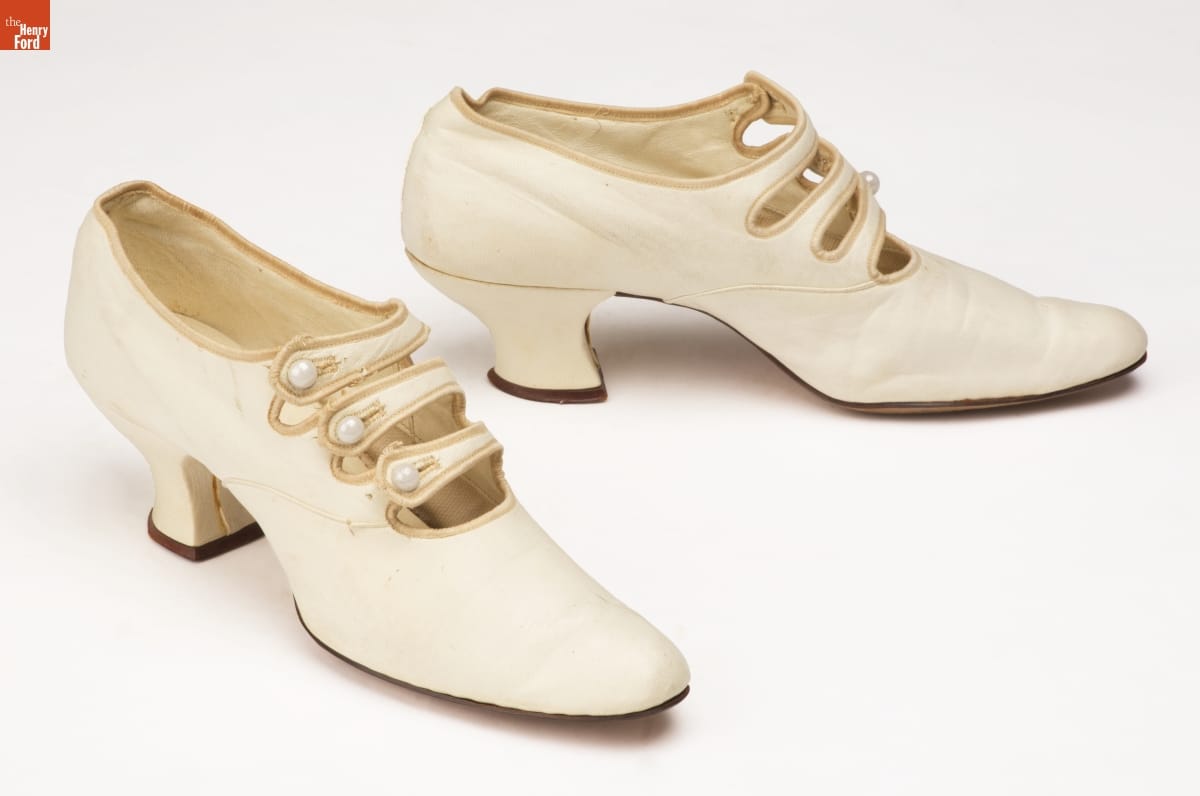
- Women's Shoes, 1914-1916 -
- 1914-1916
- Collections - Artifact
Women's Shoes, 1914-1916
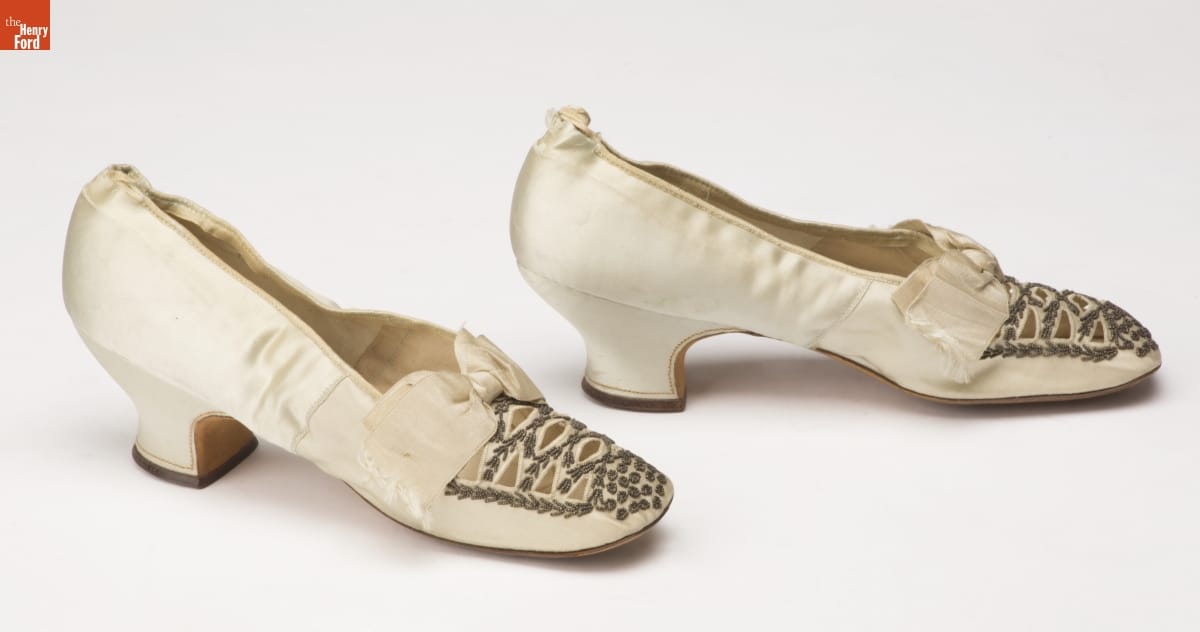
- Women's Slippers, 1870-1890 -
- 1870-1890
- Collections - Artifact
Women's Slippers, 1870-1890
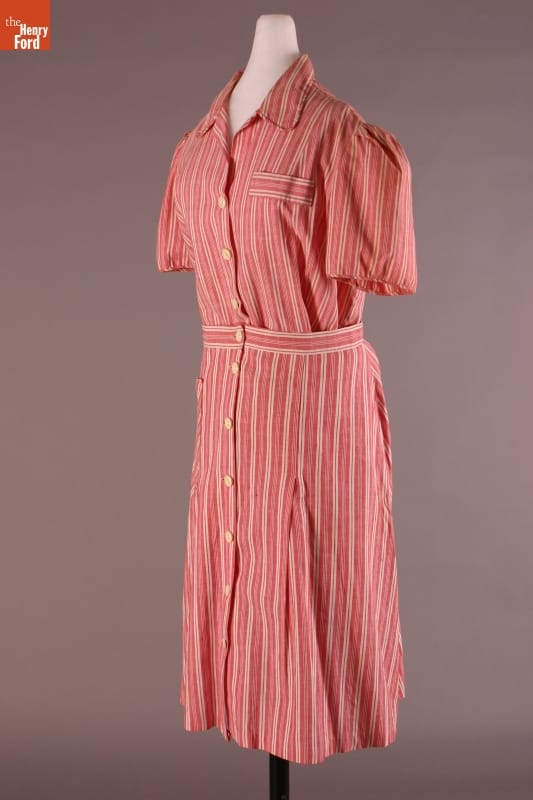
- Women's Playsuit, 1940-1945 -
- 1940-1945
- Collections - Artifact
Women's Playsuit, 1940-1945