
Search
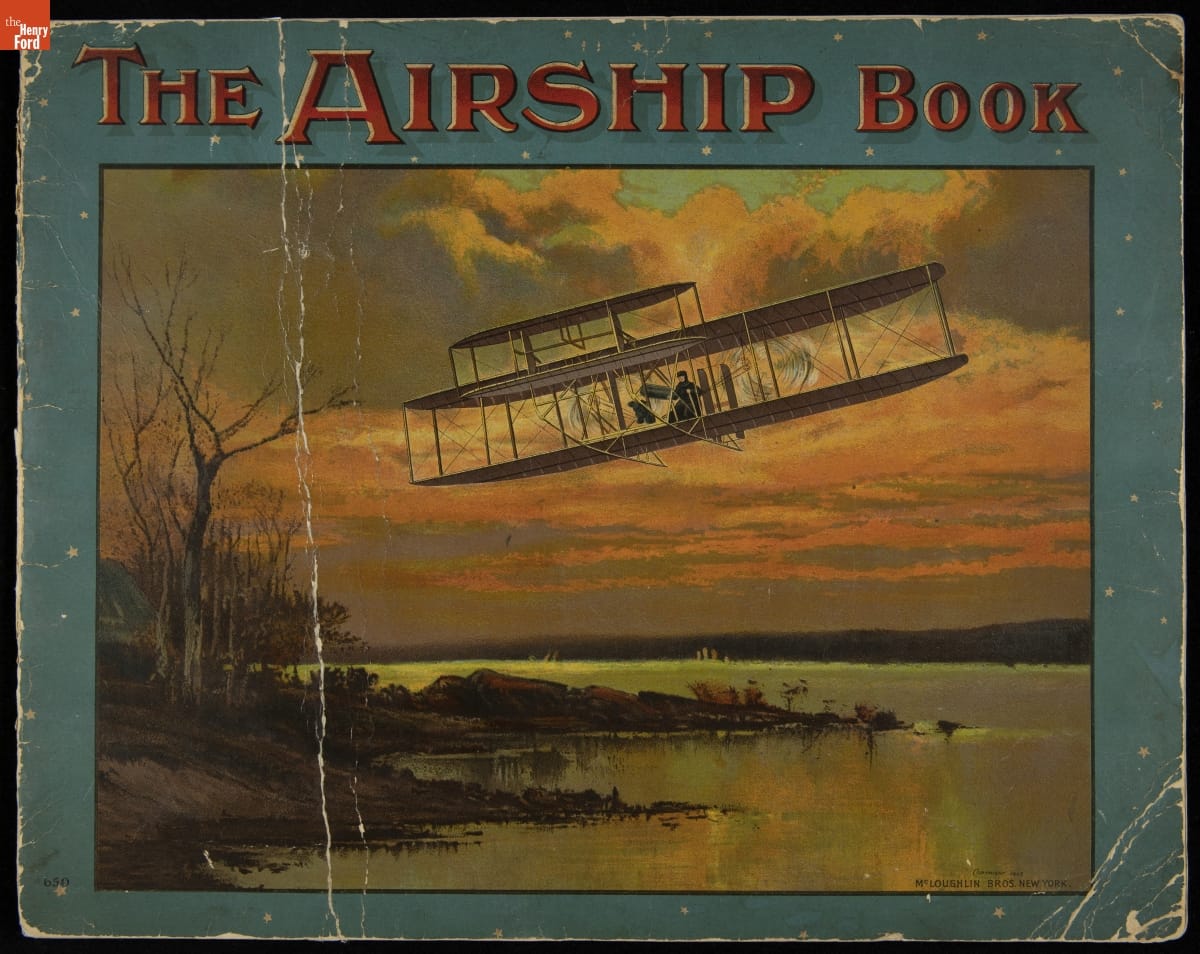
- The Airship Book, 1905 - The McLoughlin Bros. publishing firm produced "The Airship Book" in 1905. It features detailed, brightly colored illustrations of famous balloons, airships, and airplanes. The book represented the highest technology -- both in the fields of color printing and aviation -- but also marked McLoughlin Bros. decline. John McLoughlin, Jr., the company's visionary leader, died the same year it was published.
- 1905
- Collections - Artifact
The Airship Book, 1905
The McLoughlin Bros. publishing firm produced "The Airship Book" in 1905. It features detailed, brightly colored illustrations of famous balloons, airships, and airplanes. The book represented the highest technology -- both in the fields of color printing and aviation -- but also marked McLoughlin Bros. decline. John McLoughlin, Jr., the company's visionary leader, died the same year it was published.
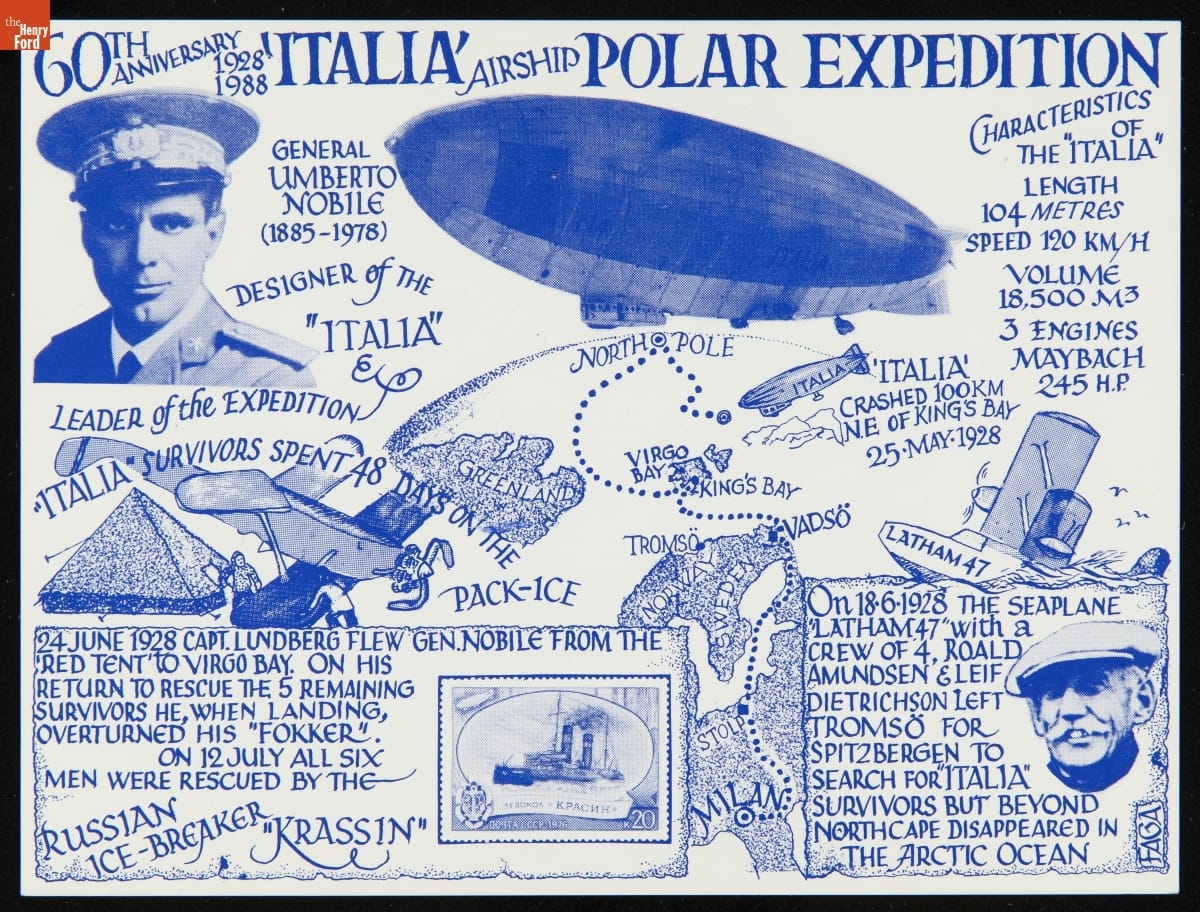
- 60th Anniversary "Italia" Airship Polar Expedition, 1988 - This postcard commemorated the 60th anniversary of the 1928 <em>Italia</em> Polar Expedition. The airship <em>Italia</em> was designed by Italian engineer Umberto Nobile, who developed and promoted semi-rigid airships during the 1920s and 1930s. <em>Italia</em> reached the North Pole successfully on May 24, 1928, but it crashed on its return to Norway. Seven members of the expedition died.
- 1928-1988
- Collections - Artifact
60th Anniversary "Italia" Airship Polar Expedition, 1988
This postcard commemorated the 60th anniversary of the 1928 Italia Polar Expedition. The airship Italia was designed by Italian engineer Umberto Nobile, who developed and promoted semi-rigid airships during the 1920s and 1930s. Italia reached the North Pole successfully on May 24, 1928, but it crashed on its return to Norway. Seven members of the expedition died.
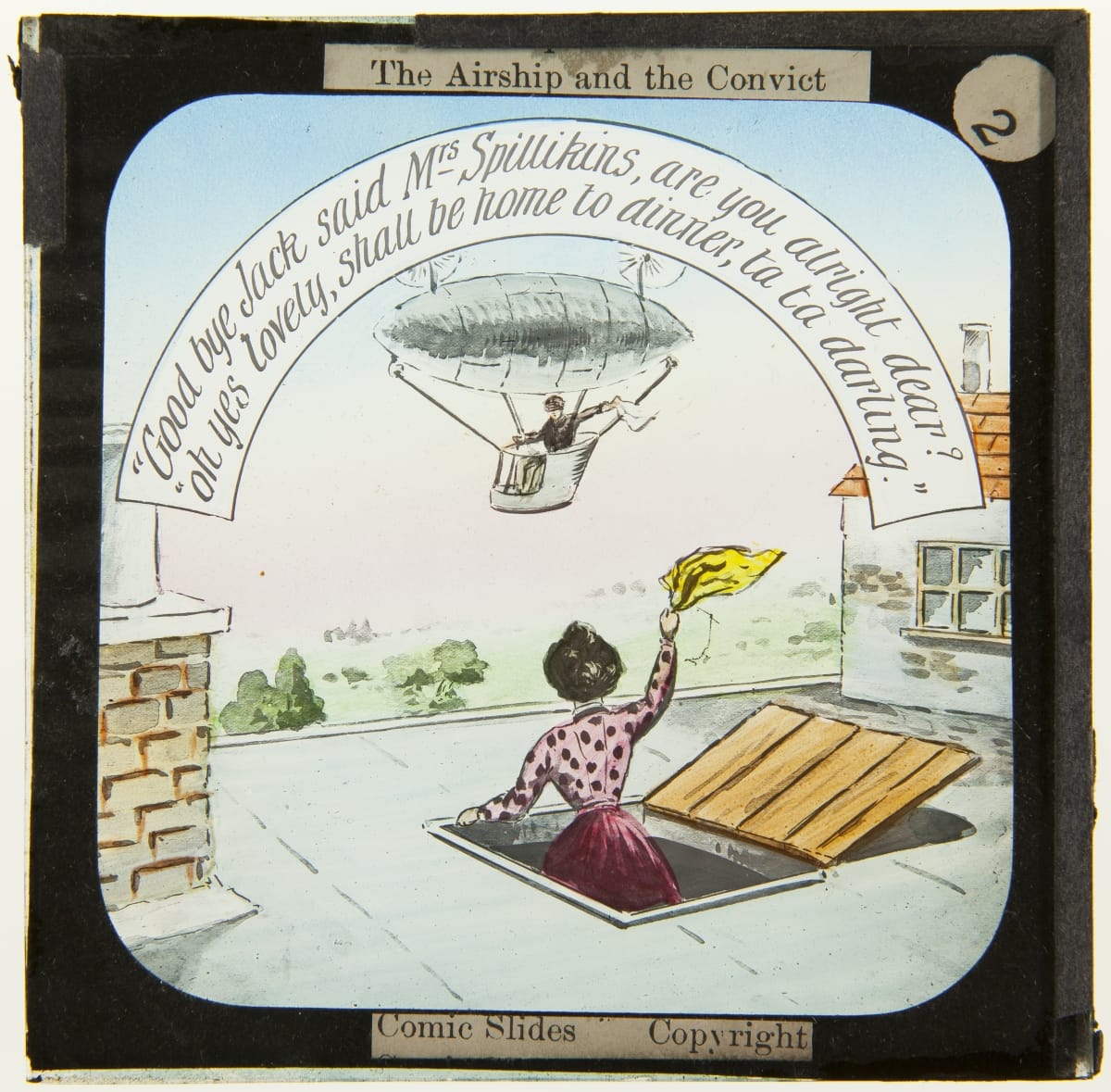
- Lantern Slide, "The Airship and the Convict," 1890-1899 - Magic lanterns use a concave mirror and light source to project images on glass slides with painted or photographic scenes. Developed in the 17th century, magic lanterns predate slide projectors and motion pictures. In the hands of magicians, they became "lanterns of fright," projecting wondrous images and apparitions. Slide themes ranged widely: exotic travel, folklore, advertising, history, science, and art.
- 1890-1899
- Collections - Artifact
Lantern Slide, "The Airship and the Convict," 1890-1899
Magic lanterns use a concave mirror and light source to project images on glass slides with painted or photographic scenes. Developed in the 17th century, magic lanterns predate slide projectors and motion pictures. In the hands of magicians, they became "lanterns of fright," projecting wondrous images and apparitions. Slide themes ranged widely: exotic travel, folklore, advertising, history, science, and art.
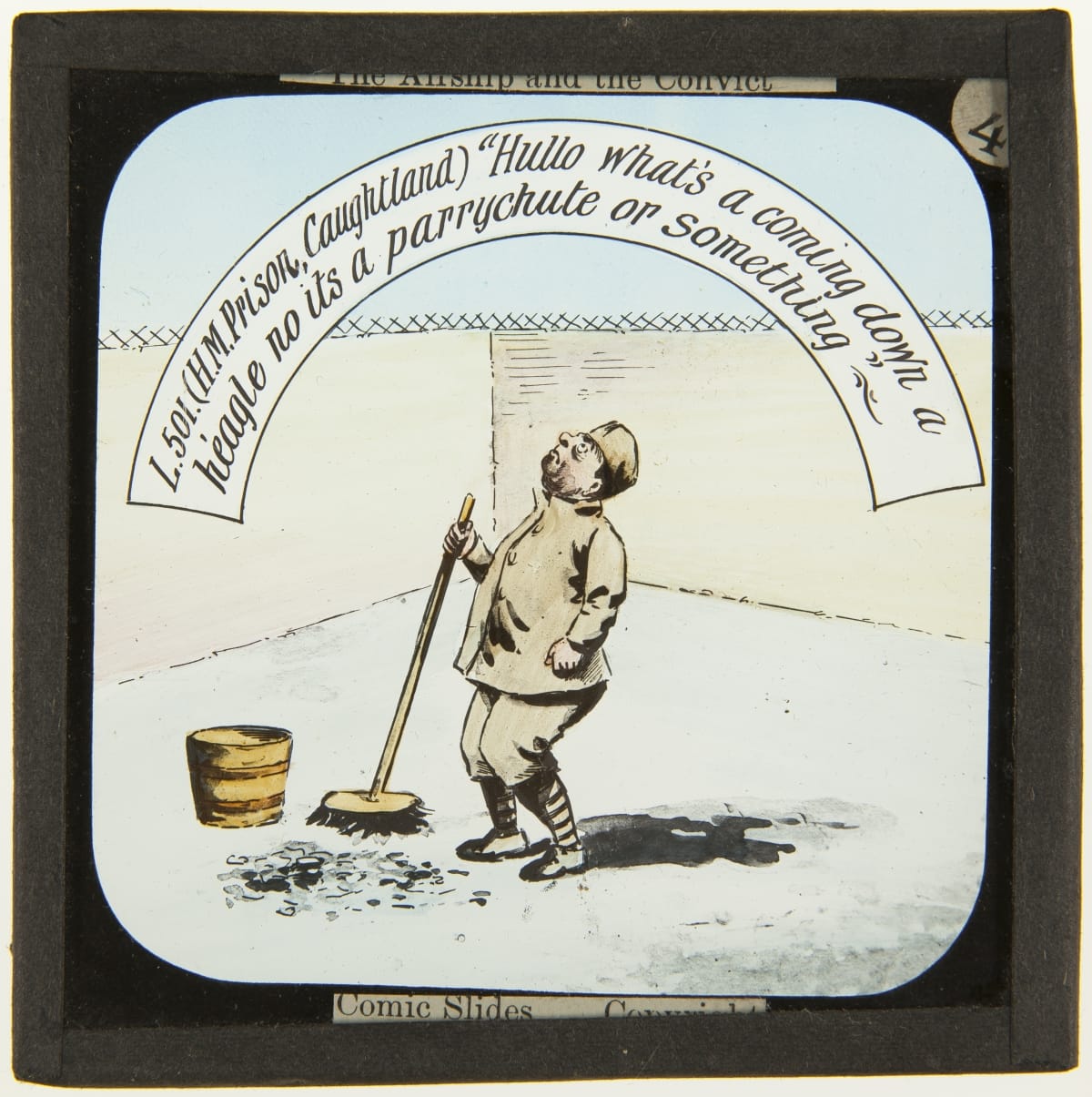
- Lantern Slide, "The Airship and the Convict," 1890-1899 - Magic lanterns use a concave mirror and light source to project images on glass slides with painted or photographic scenes. Developed in the 17th century, magic lanterns predate slide projectors and motion pictures. In the hands of magicians, they became "lanterns of fright," projecting wondrous images and apparitions. Slide themes ranged widely: exotic travel, folklore, advertising, history, science, and art.
- 1890-1899
- Collections - Artifact
Lantern Slide, "The Airship and the Convict," 1890-1899
Magic lanterns use a concave mirror and light source to project images on glass slides with painted or photographic scenes. Developed in the 17th century, magic lanterns predate slide projectors and motion pictures. In the hands of magicians, they became "lanterns of fright," projecting wondrous images and apparitions. Slide themes ranged widely: exotic travel, folklore, advertising, history, science, and art.
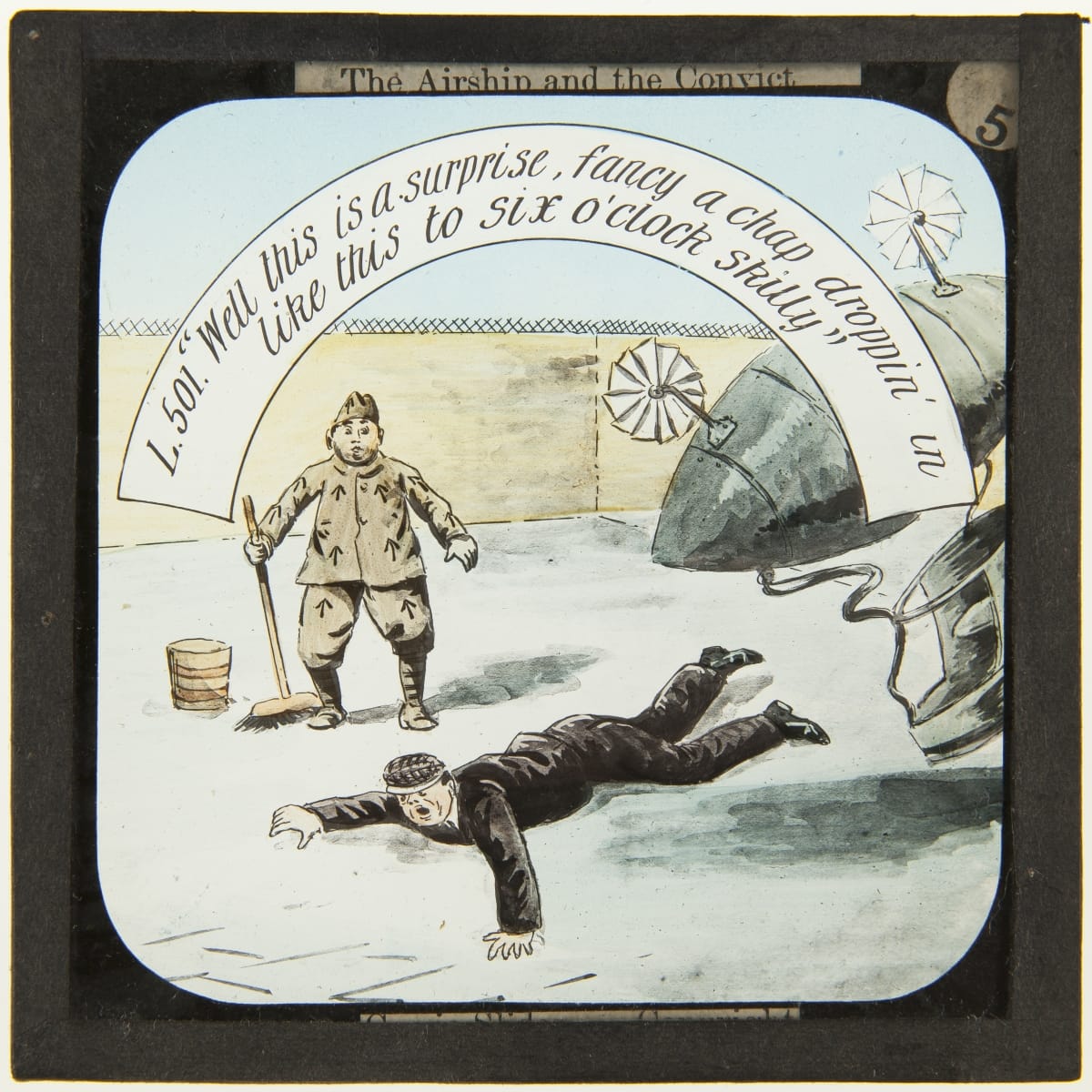
- Lantern Slide, "The Airship and the Convict," 1890-1899 - Magic lanterns use a concave mirror and light source to project images on glass slides with painted or photographic scenes. Developed in the 17th century, magic lanterns predate slide projectors and motion pictures. In the hands of magicians, they became "lanterns of fright," projecting wondrous images and apparitions. Slide themes ranged widely: exotic travel, folklore, advertising, history, science, and art.
- 1890-1899
- Collections - Artifact
Lantern Slide, "The Airship and the Convict," 1890-1899
Magic lanterns use a concave mirror and light source to project images on glass slides with painted or photographic scenes. Developed in the 17th century, magic lanterns predate slide projectors and motion pictures. In the hands of magicians, they became "lanterns of fright," projecting wondrous images and apparitions. Slide themes ranged widely: exotic travel, folklore, advertising, history, science, and art.
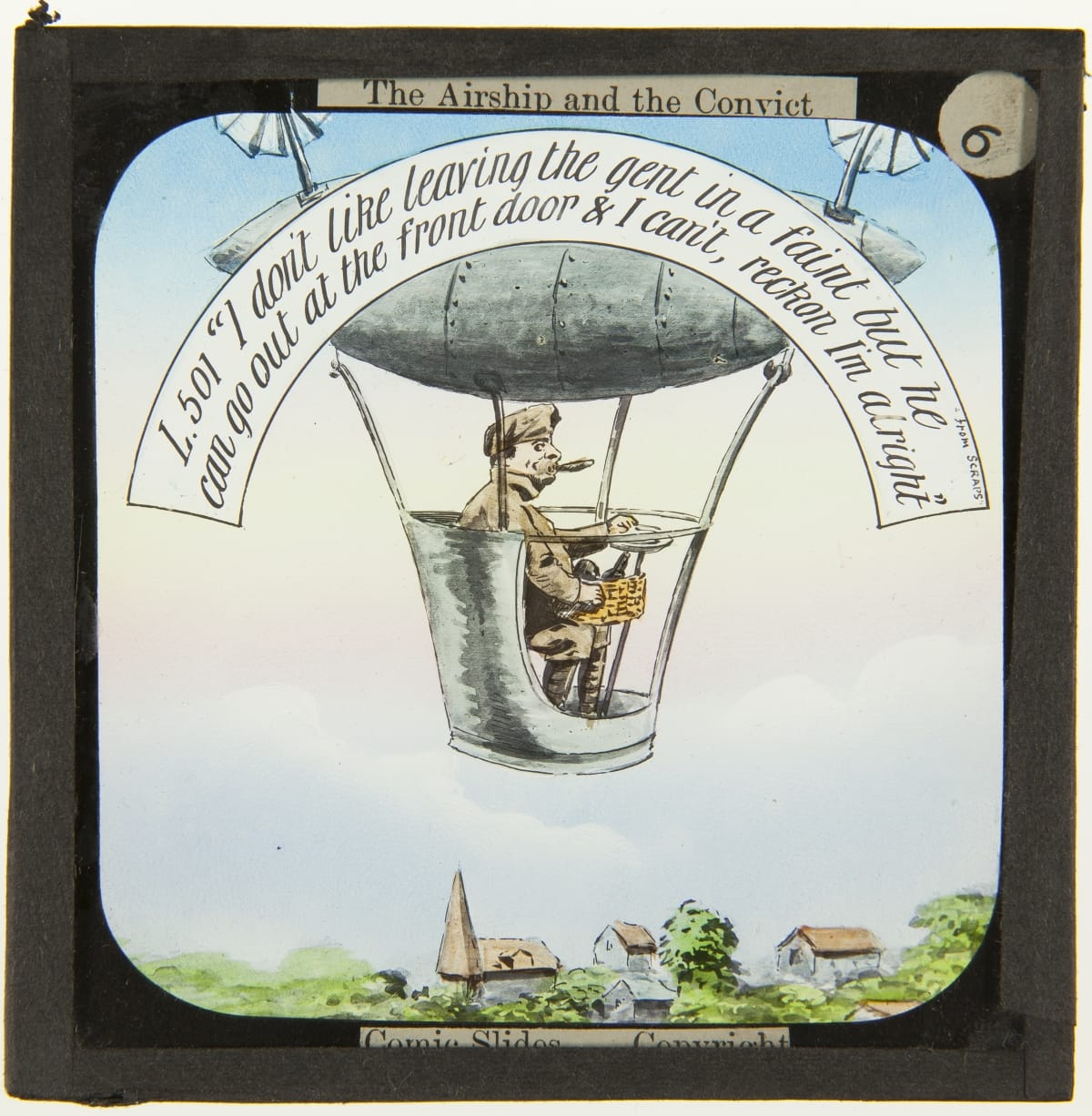
- Lantern Slide, "The Airship and the Convict," 1890-1990 - Magic lanterns use a concave mirror and light source to project images on glass slides with painted or photographic scenes. Developed in the 17th century, magic lanterns predate slide projectors and motion pictures. In the hands of magicians, they became "lanterns of fright," projecting wondrous images and apparitions. Slide themes ranged widely: exotic travel, folklore, advertising, history, science, and art.
- 1890-1899
- Collections - Artifact
Lantern Slide, "The Airship and the Convict," 1890-1990
Magic lanterns use a concave mirror and light source to project images on glass slides with painted or photographic scenes. Developed in the 17th century, magic lanterns predate slide projectors and motion pictures. In the hands of magicians, they became "lanterns of fright," projecting wondrous images and apparitions. Slide themes ranged widely: exotic travel, folklore, advertising, history, science, and art.
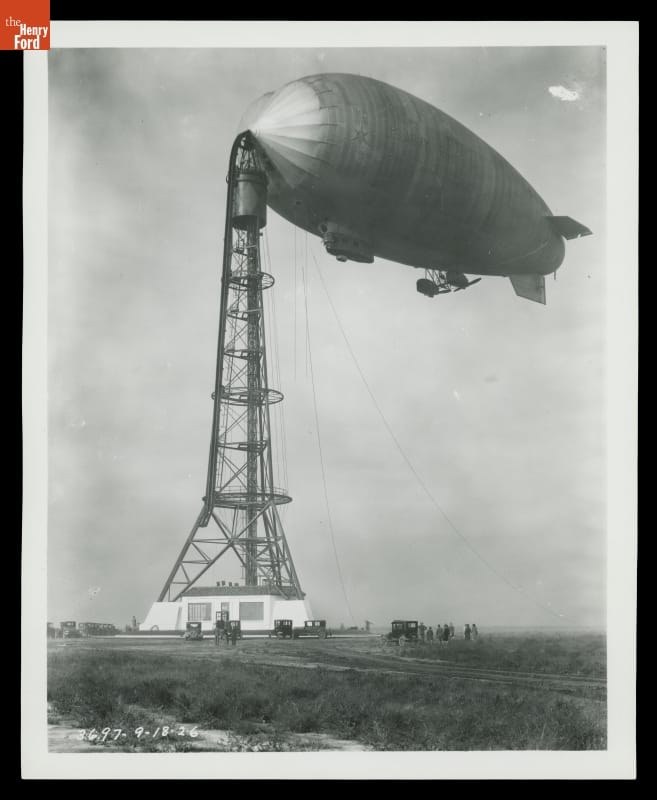
- United States Army Airship at Ford Airport, September 18, 1926 - In 1925, Henry Ford erected the only privately owned airship mooring mast in the world at Ford Airport in Dearborn, Michigan. This is U.S. Army airship <EM>RS-1</EM>, the first to dock at Ford Airport. U.S. Navy airship <EM>Los Angeles</EM> also docked here in October of 1926, but the use of these aircraft declined and the Ford mooring mast was never used again.
- September 19, 1926
- Collections - Artifact
United States Army Airship at Ford Airport, September 18, 1926
In 1925, Henry Ford erected the only privately owned airship mooring mast in the world at Ford Airport in Dearborn, Michigan. This is U.S. Army airship RS-1, the first to dock at Ford Airport. U.S. Navy airship Los Angeles also docked here in October of 1926, but the use of these aircraft declined and the Ford mooring mast was never used again.
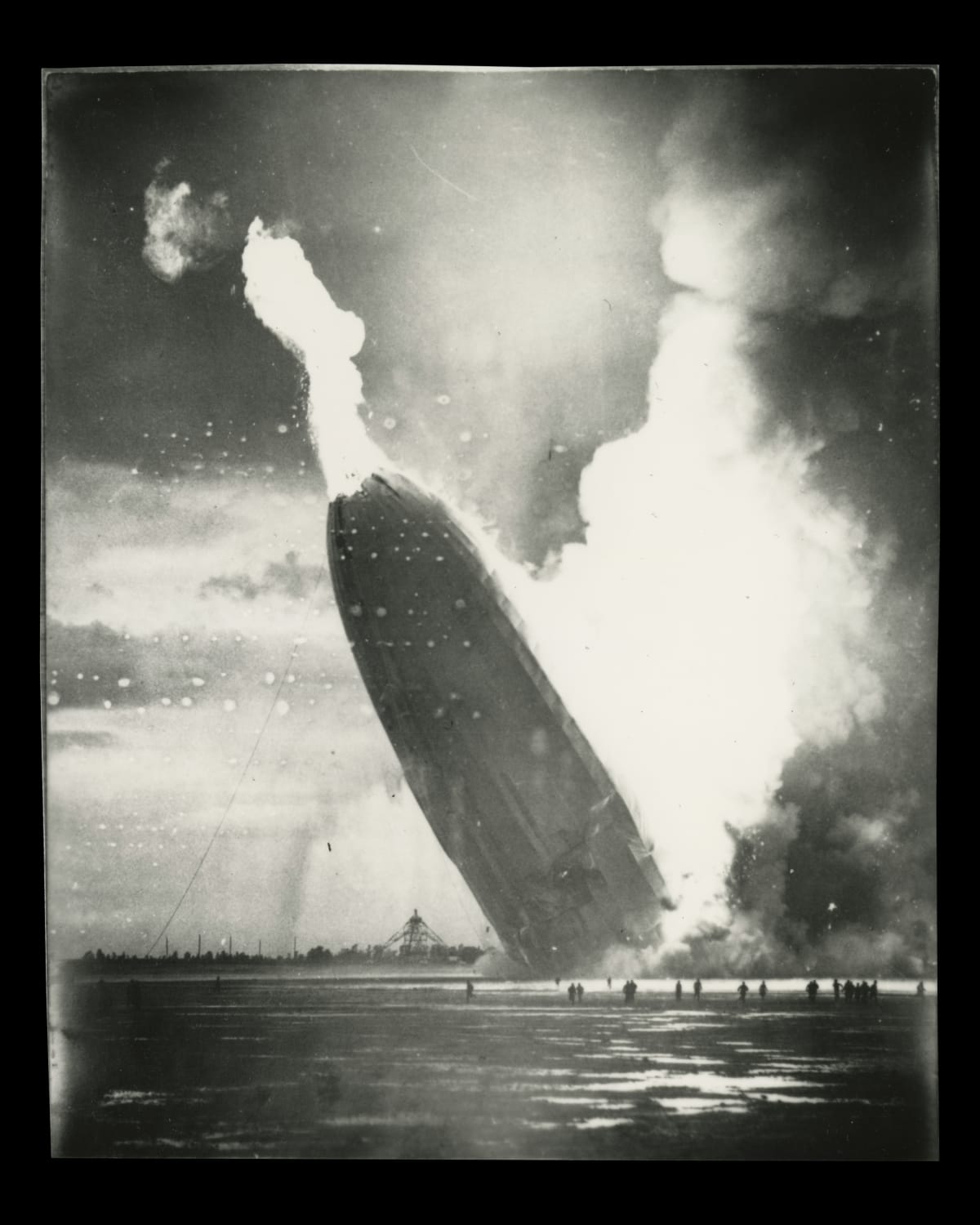
- Airship "Hindenburg" Disaster, Naval Air Station Lakehurst in Manchester Township, New Jersey, May 6, 1937 - The German airship <EM>Hindenburg</EM> was just minutes away from completing a transatlantic flight when it burst into flames at Lakehurst, New Jersey, on May 6, 1937. The fierce inferno, fueled by the airship's hydrogen lifting gas, claimed 36 lives. Debate continues about the fire's origin. Investigators considered everything from static electricity, to lightning, to deliberate sabotage.
- May 06, 1937
- Collections - Artifact
Airship "Hindenburg" Disaster, Naval Air Station Lakehurst in Manchester Township, New Jersey, May 6, 1937
The German airship Hindenburg was just minutes away from completing a transatlantic flight when it burst into flames at Lakehurst, New Jersey, on May 6, 1937. The fierce inferno, fueled by the airship's hydrogen lifting gas, claimed 36 lives. Debate continues about the fire's origin. Investigators considered everything from static electricity, to lightning, to deliberate sabotage.
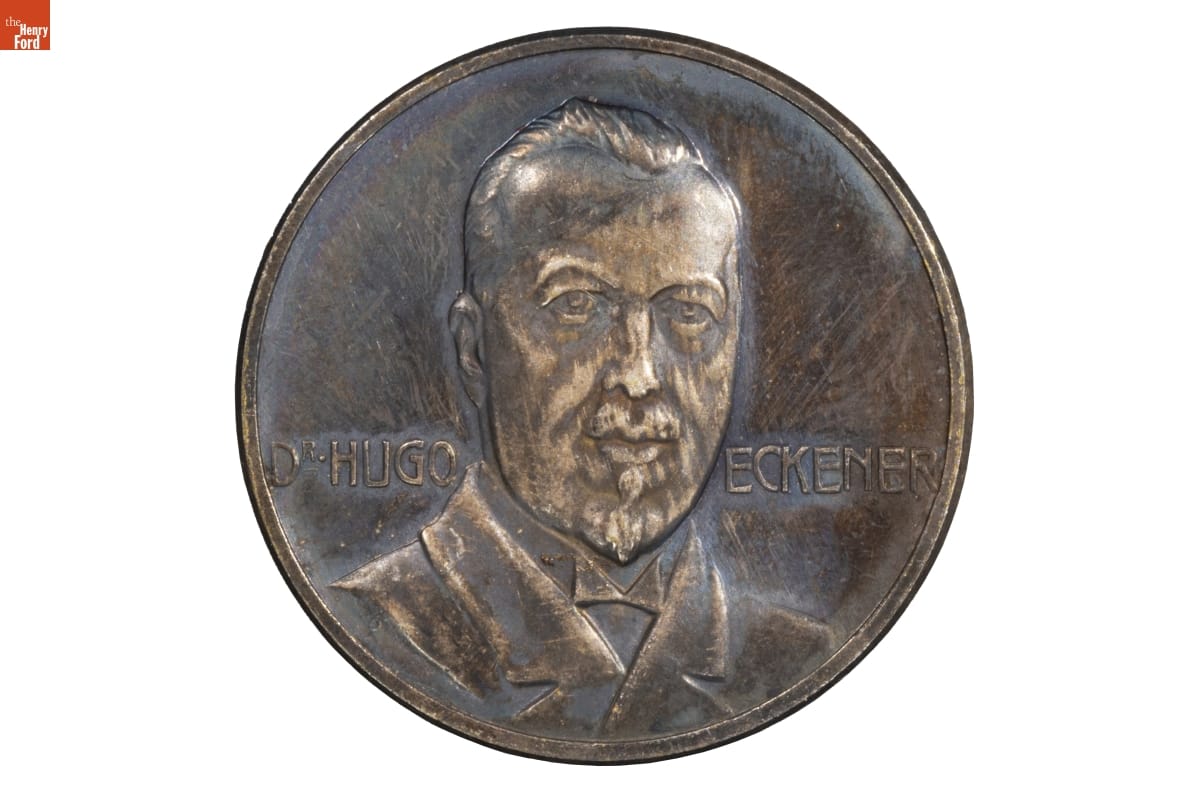
- Medallion Commemorating Dr. Hugo Eckener and the Trans-Atlantic Flight of the LZ 126 Airship (USS Los Angeles), 1924 - This medallion commemorated Dr. Hugo Eckener's successful delivery of the airship LZ126 (later the USS <em>Los Angeles</em>) to the United States Navy in 1924. The airship was part of Germany's reparations following World War I. Eckener, depicted on the front, headed up the Zeppelin Company--the airship's manufacturer. He later commanded another airship, <em>Graf Zeppelin</em>, on its famous around-the-world flight.
- 1924
- Collections - Artifact
Medallion Commemorating Dr. Hugo Eckener and the Trans-Atlantic Flight of the LZ 126 Airship (USS Los Angeles), 1924
This medallion commemorated Dr. Hugo Eckener's successful delivery of the airship LZ126 (later the USS Los Angeles) to the United States Navy in 1924. The airship was part of Germany's reparations following World War I. Eckener, depicted on the front, headed up the Zeppelin Company--the airship's manufacturer. He later commanded another airship, Graf Zeppelin, on its famous around-the-world flight.
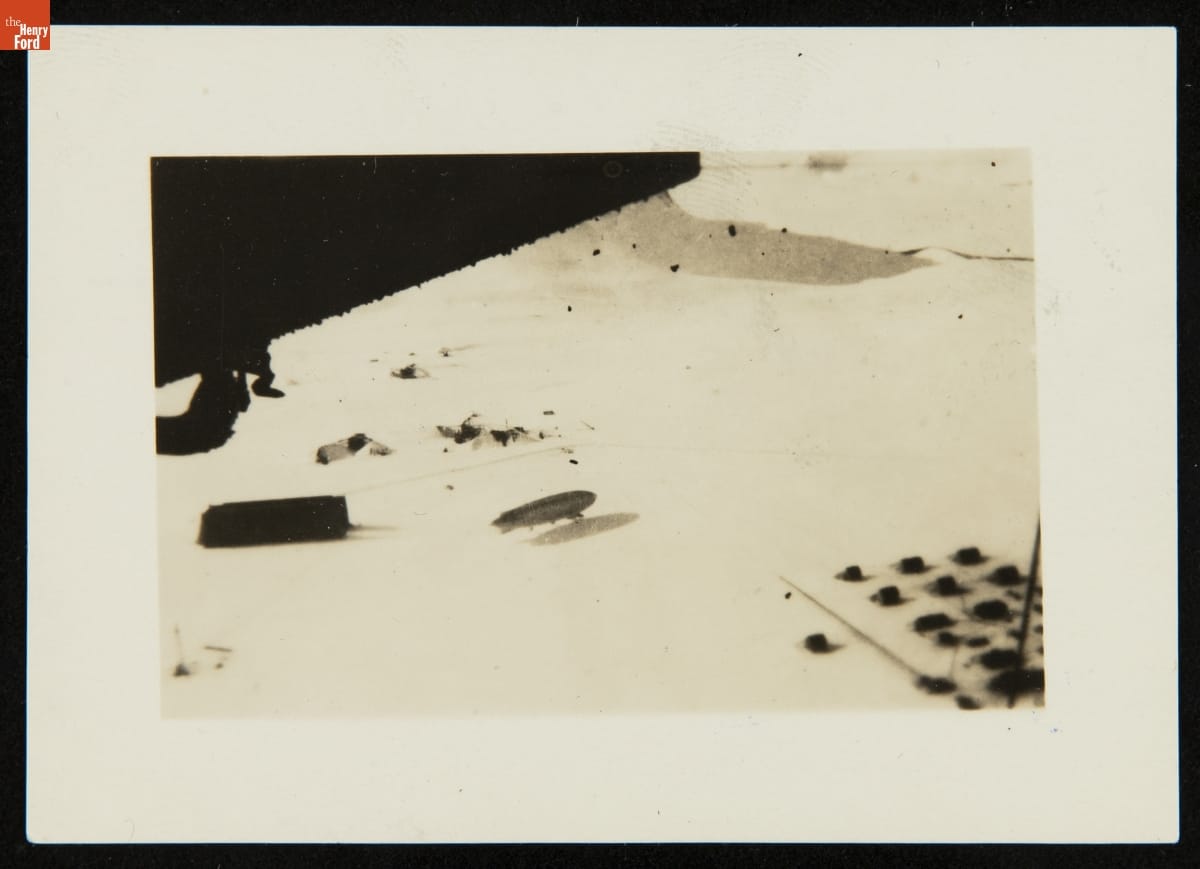
- Airship "Norge" before the Amundsen-Ellsworth-Nobile Transpolar Flight, May 1926 - The semi-rigid airship <em>Norge</em> flew over the North Pole on May 12, 1926. It was the first confirmed visit of any kind to the pole. Norwegian explorer Roald Amundsen headed the expedition. He was joined by American adventurer Lincoln Ellsworth, who helped fund the mission, Italian aviator Umberto Nobile, who designed the <em>Norge</em>, and a crew of 13 others.
- May 01, 1926
- Collections - Artifact
Airship "Norge" before the Amundsen-Ellsworth-Nobile Transpolar Flight, May 1926
The semi-rigid airship Norge flew over the North Pole on May 12, 1926. It was the first confirmed visit of any kind to the pole. Norwegian explorer Roald Amundsen headed the expedition. He was joined by American adventurer Lincoln Ellsworth, who helped fund the mission, Italian aviator Umberto Nobile, who designed the Norge, and a crew of 13 others.