
Search
- Firestone Barn, a Pennsylvania Bank Barn - Discover what we can learn from Firestone Barn, part of the Firestone Farm living history complex in Greenfield Village.

- August 25, 2014
- Collections - article
Firestone Barn, a Pennsylvania Bank Barn
Discover what we can learn from Firestone Barn, part of the Firestone Farm living history complex in Greenfield Village.
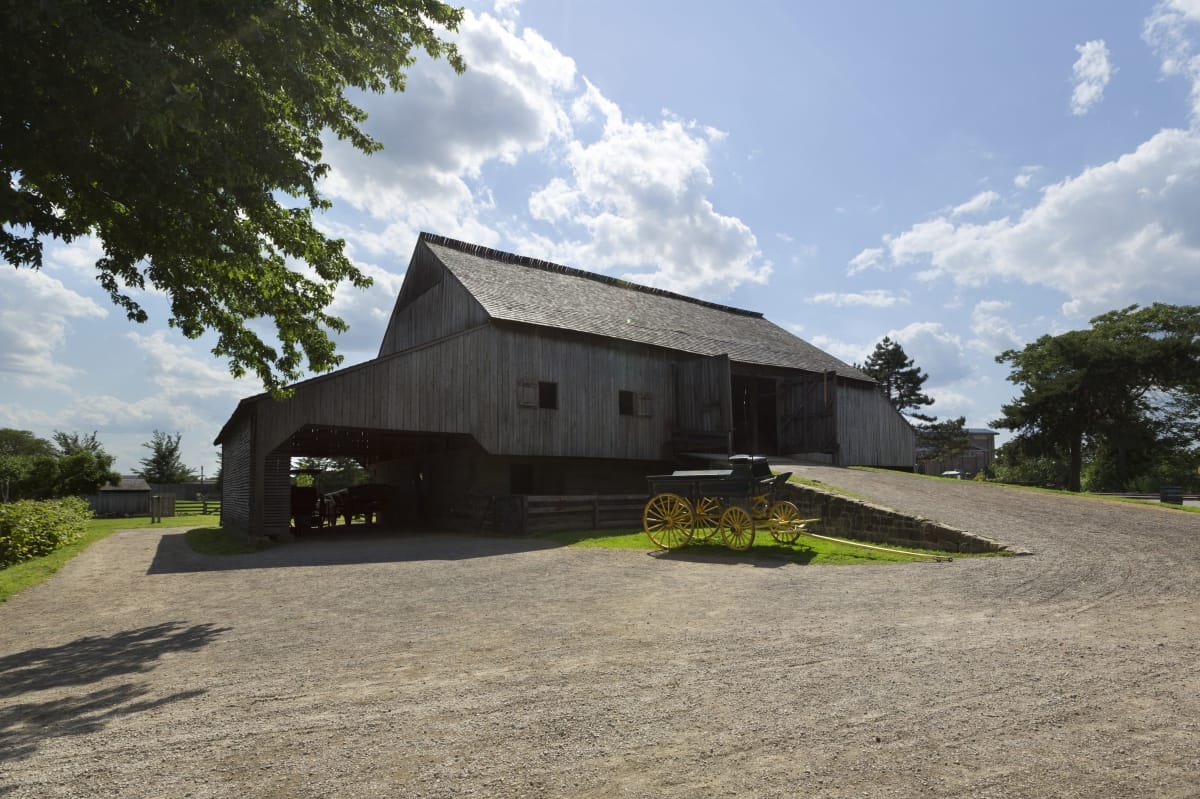
- Firestone Barn - The Firestone barn is a Pennsylvania-German bank barn, an American barn type with Swiss origins. They are called bank barns because the barn is built into a bank, allowing wagons to be driven into the upper floor. Bank barns combined multiple farm functions under a single roof. Livestock were kept in the lower floor, crops on the upper floor.
- circa 1830
- Collections - Artifact
Firestone Barn
The Firestone barn is a Pennsylvania-German bank barn, an American barn type with Swiss origins. They are called bank barns because the barn is built into a bank, allowing wagons to be driven into the upper floor. Bank barns combined multiple farm functions under a single roof. Livestock were kept in the lower floor, crops on the upper floor.
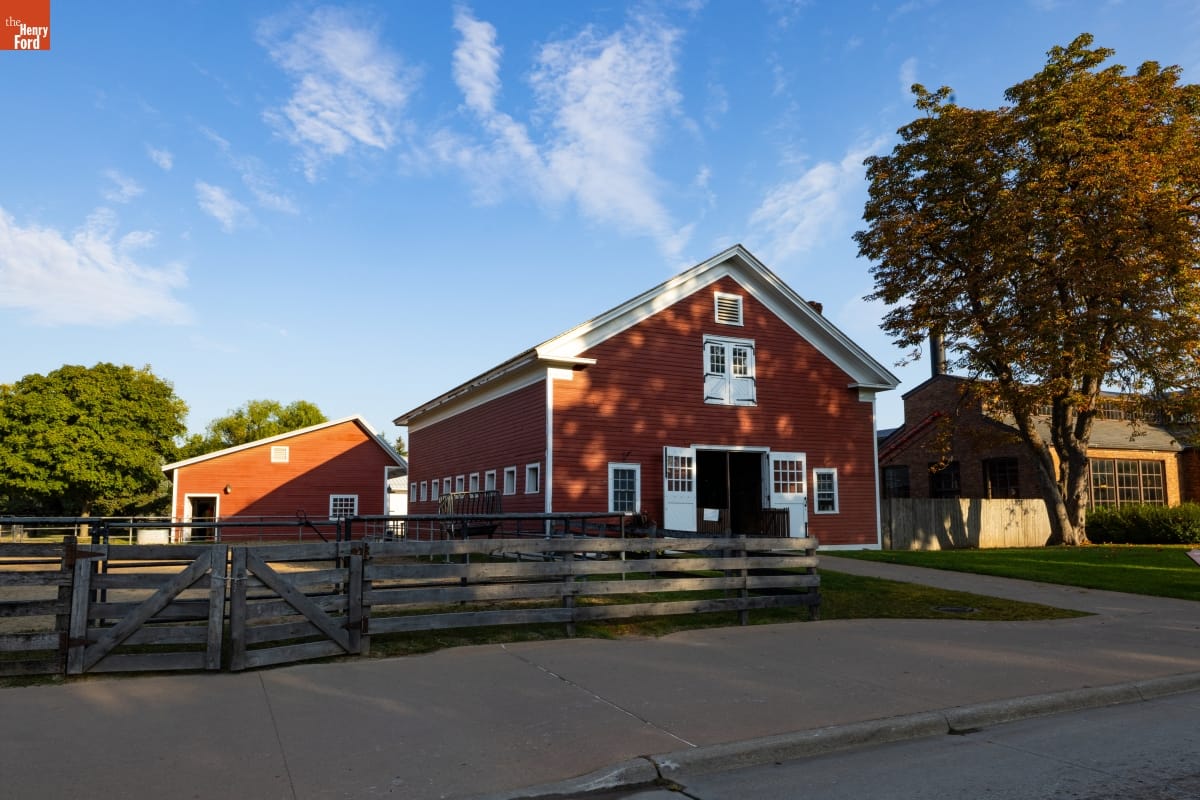
- William Ford Barn - William Ford built this barn near present-day Dearborn, Michigan, in 1863 -- the same year his son Henry was born. Ford mainly used it to store grain and hay, though livestock and tools were occasionally housed in the structure. The barn was moved to The Henry Ford in 1934. Today it's used by Greenfield Village's horses.
- 1863
- Collections - Artifact
William Ford Barn
William Ford built this barn near present-day Dearborn, Michigan, in 1863 -- the same year his son Henry was born. Ford mainly used it to store grain and hay, though livestock and tools were occasionally housed in the structure. The barn was moved to The Henry Ford in 1934. Today it's used by Greenfield Village's horses.
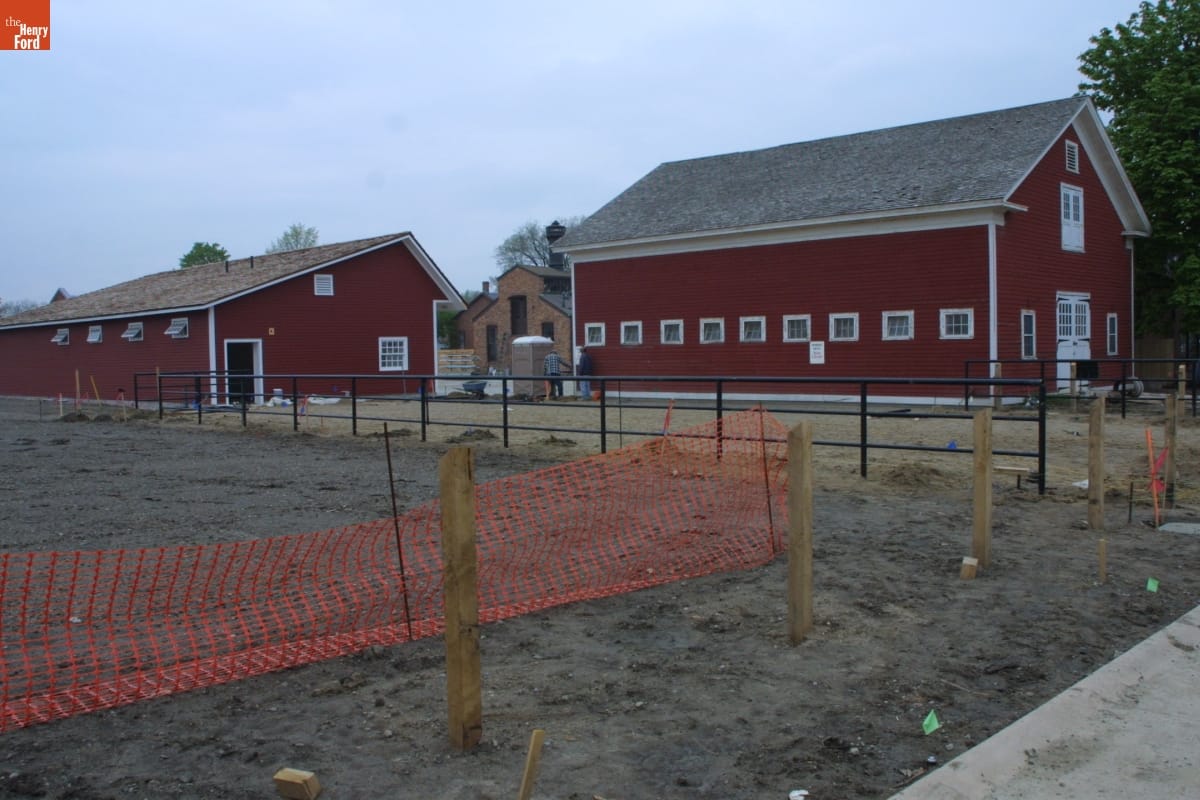
- Carriage Barn and William Ford Barn during the Greenfield Village Restoration Project, May 2003 - By 2000, Greenfield Village began showing its age. Buildings and crumbling infrastructure desperately needed repair. Museum planners envisioned a revitalized village. They created themed "Historic Districts" by relocating and refurbishing the historic structures. Workers repaved streets and upgraded water, sewer, electric, and gas lines. In June 2003, nine months after restoration began, visitors passed through a new entrance into a reborn Greenfield Village.
- May 01, 2003
- Collections - Artifact
Carriage Barn and William Ford Barn during the Greenfield Village Restoration Project, May 2003
By 2000, Greenfield Village began showing its age. Buildings and crumbling infrastructure desperately needed repair. Museum planners envisioned a revitalized village. They created themed "Historic Districts" by relocating and refurbishing the historic structures. Workers repaved streets and upgraded water, sewer, electric, and gas lines. In June 2003, nine months after restoration began, visitors passed through a new entrance into a reborn Greenfield Village.
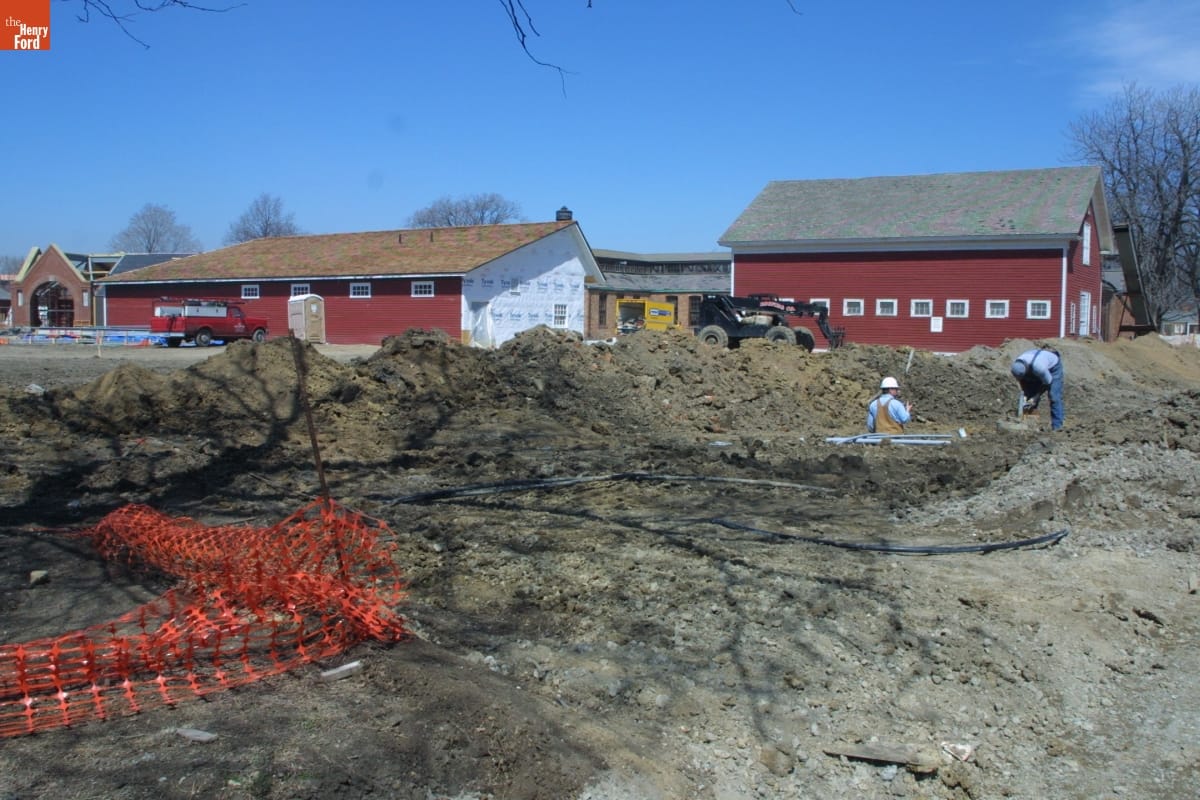
- William Ford Barn and Carriage Barn during the Greenfield Village Restoration Project, April 2003 - By 2000, Greenfield Village began showing its age. Buildings and crumbling infrastructure desperately needed repair. Museum planners envisioned a revitalized village. They created themed "Historic Districts" by relocating and refurbishing the historic structures. Workers repaved streets and upgraded water, sewer, electric, and gas lines. In June 2003, nine months after restoration began, visitors passed through a new entrance into a reborn Greenfield Village.
- April 01, 2003
- Collections - Artifact
William Ford Barn and Carriage Barn during the Greenfield Village Restoration Project, April 2003
By 2000, Greenfield Village began showing its age. Buildings and crumbling infrastructure desperately needed repair. Museum planners envisioned a revitalized village. They created themed "Historic Districts" by relocating and refurbishing the historic structures. Workers repaved streets and upgraded water, sewer, electric, and gas lines. In June 2003, nine months after restoration began, visitors passed through a new entrance into a reborn Greenfield Village.
- Carriage Barn William Ford Barn and Pasture, Greenfield Village Restoration Project, May 2003 - By 2000, Greenfield Village began showing its age. Buildings and crumbling infrastructure desperately needed repair. Museum planners envisioned a revitalized village. They created themed "Historic Districts" by relocating and refurbishing the historic structures. Workers repaved streets and upgraded water, sewer, electric, and gas lines. In June 2003, nine months after restoration began, visitors passed through a new entrance into a reborn Greenfield Village.
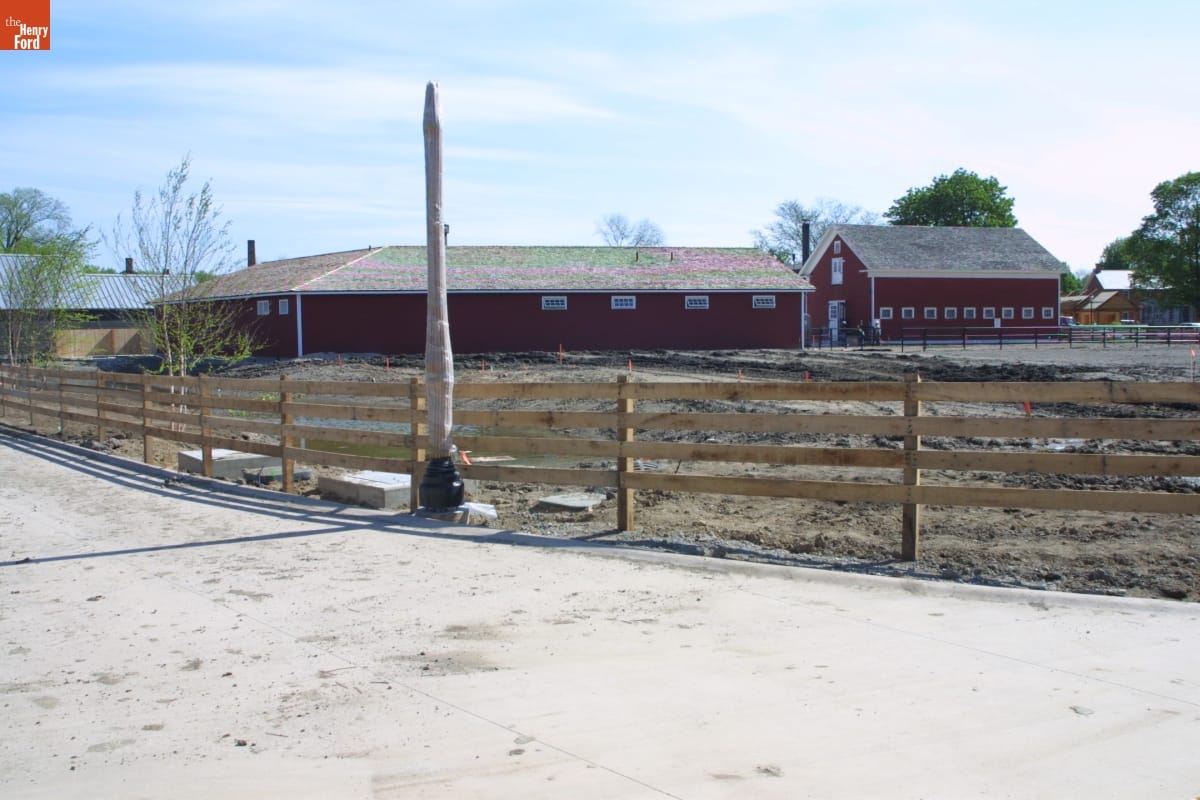
- May 01, 2003
- Collections - Artifact
Carriage Barn William Ford Barn and Pasture, Greenfield Village Restoration Project, May 2003
By 2000, Greenfield Village began showing its age. Buildings and crumbling infrastructure desperately needed repair. Museum planners envisioned a revitalized village. They created themed "Historic Districts" by relocating and refurbishing the historic structures. Workers repaved streets and upgraded water, sewer, electric, and gas lines. In June 2003, nine months after restoration began, visitors passed through a new entrance into a reborn Greenfield Village.
- William Ford Barn and Carriage Barn during the Greenfield Village Restoration Project, April 2003 - By 2000, Greenfield Village began showing its age. Buildings and crumbling infrastructure desperately needed repair. Museum planners envisioned a revitalized village. They created themed "Historic Districts" by relocating and refurbishing the historic structures. Workers repaved streets and upgraded water, sewer, electric, and gas lines. In June 2003, nine months after restoration began, visitors passed through a new entrance into a reborn Greenfield Village.
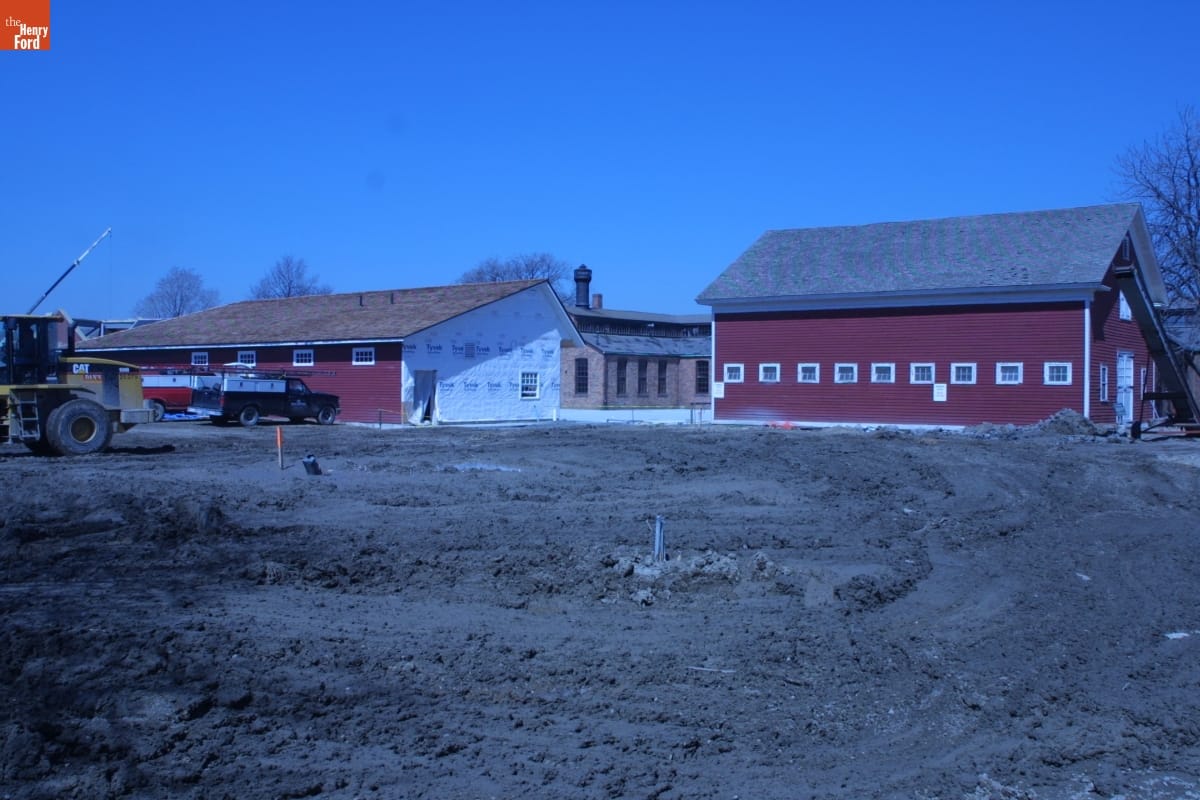
- April 01, 2003
- Collections - Artifact
William Ford Barn and Carriage Barn during the Greenfield Village Restoration Project, April 2003
By 2000, Greenfield Village began showing its age. Buildings and crumbling infrastructure desperately needed repair. Museum planners envisioned a revitalized village. They created themed "Historic Districts" by relocating and refurbishing the historic structures. Workers repaved streets and upgraded water, sewer, electric, and gas lines. In June 2003, nine months after restoration began, visitors passed through a new entrance into a reborn Greenfield Village.
- Red Barn in the Snow, 1955 - The artist Eyvind Earle (1916-2000) is best known for his work on the 1959 Walt Disney Studios animated film <em>Sleeping Beauty</em>, but he also designed Christmas cards. Earle began producing cards in his early twenties, selling them through his own company. Later, Earle joined the American Artists Group and continued designing Christmas cards. He would produce more than 800 designs throughout his career.
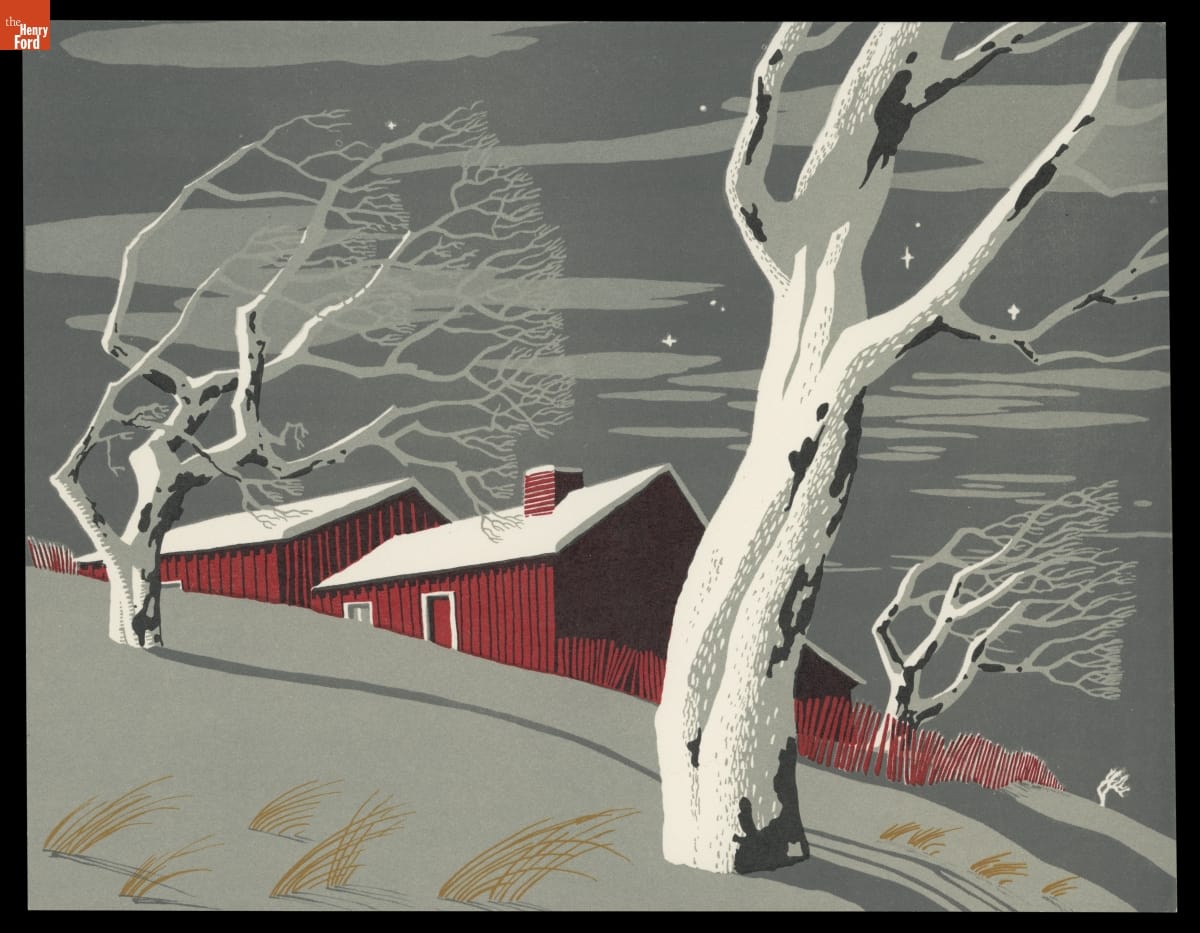
- 1955
- Collections - Artifact
Red Barn in the Snow, 1955
The artist Eyvind Earle (1916-2000) is best known for his work on the 1959 Walt Disney Studios animated film Sleeping Beauty, but he also designed Christmas cards. Earle began producing cards in his early twenties, selling them through his own company. Later, Earle joined the American Artists Group and continued designing Christmas cards. He would produce more than 800 designs throughout his career.
- Library (General Barnes), 1890-1915 - In 1890, Jenny Young Chandler, 25 years old and recently widowed, began working for the <EM>New York Herald</EM>. As a photojournalist and feature writer, Chandler captured life in Brooklyn, New York, and vicinity. By 1922, the time of her death, she had produced over 800 glass plate negatives. Her sensitive, insightful photographs depict people from all walks of life and the world in which they lived.
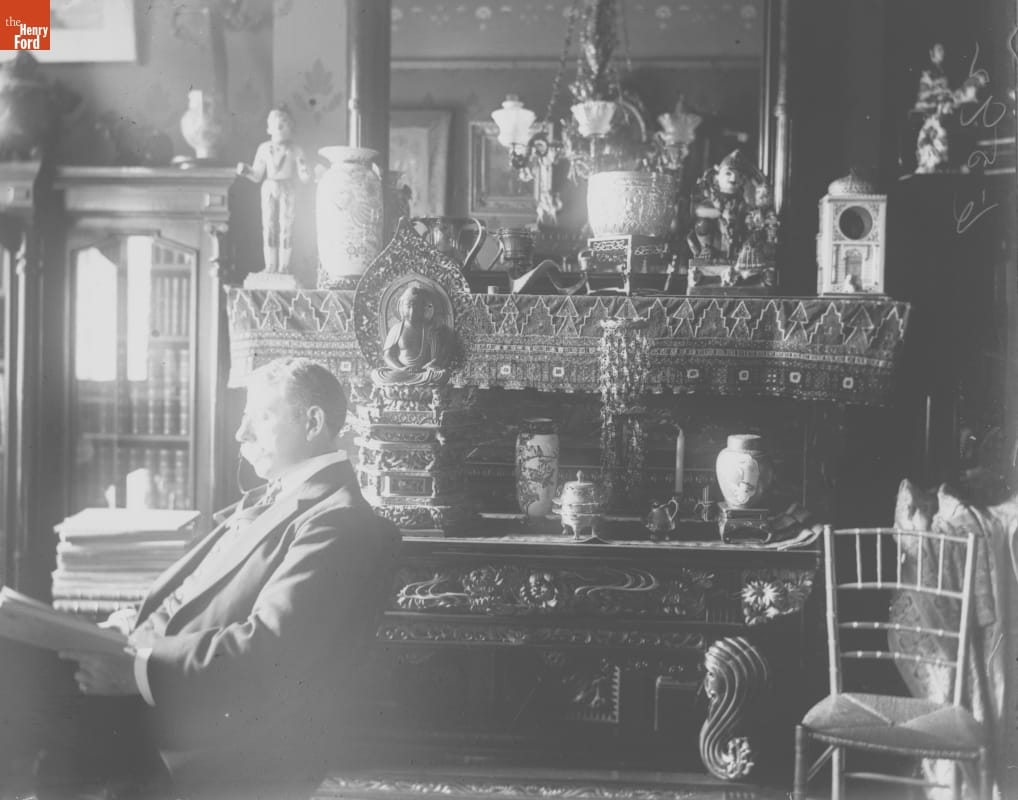
- 1890-1915
- Collections - Artifact
Library (General Barnes), 1890-1915
In 1890, Jenny Young Chandler, 25 years old and recently widowed, began working for the New York Herald. As a photojournalist and feature writer, Chandler captured life in Brooklyn, New York, and vicinity. By 1922, the time of her death, she had produced over 800 glass plate negatives. Her sensitive, insightful photographs depict people from all walks of life and the world in which they lived.
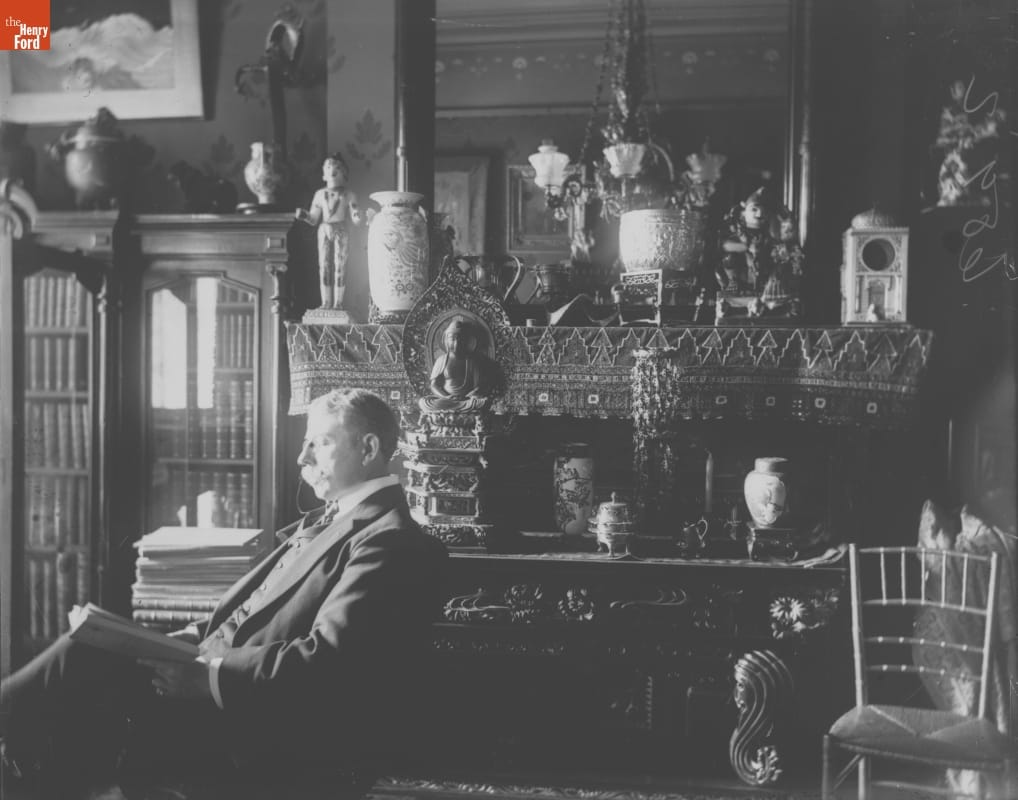
- Library (General Barnes), 1890-1915 - In 1890, Jenny Young Chandler, 25 years old and recently widowed, began working for the <EM>New York Herald</EM>. As a photojournalist and feature writer, Chandler captured life in Brooklyn, New York, and vicinity. By 1922, the time of her death, she had produced over 800 glass plate negatives. Her sensitive, insightful photographs depict people from all walks of life and the world in which they lived.
- 1890-1915
- Collections - Artifact
Library (General Barnes), 1890-1915
In 1890, Jenny Young Chandler, 25 years old and recently widowed, began working for the New York Herald. As a photojournalist and feature writer, Chandler captured life in Brooklyn, New York, and vicinity. By 1922, the time of her death, she had produced over 800 glass plate negatives. Her sensitive, insightful photographs depict people from all walks of life and the world in which they lived.