
Search
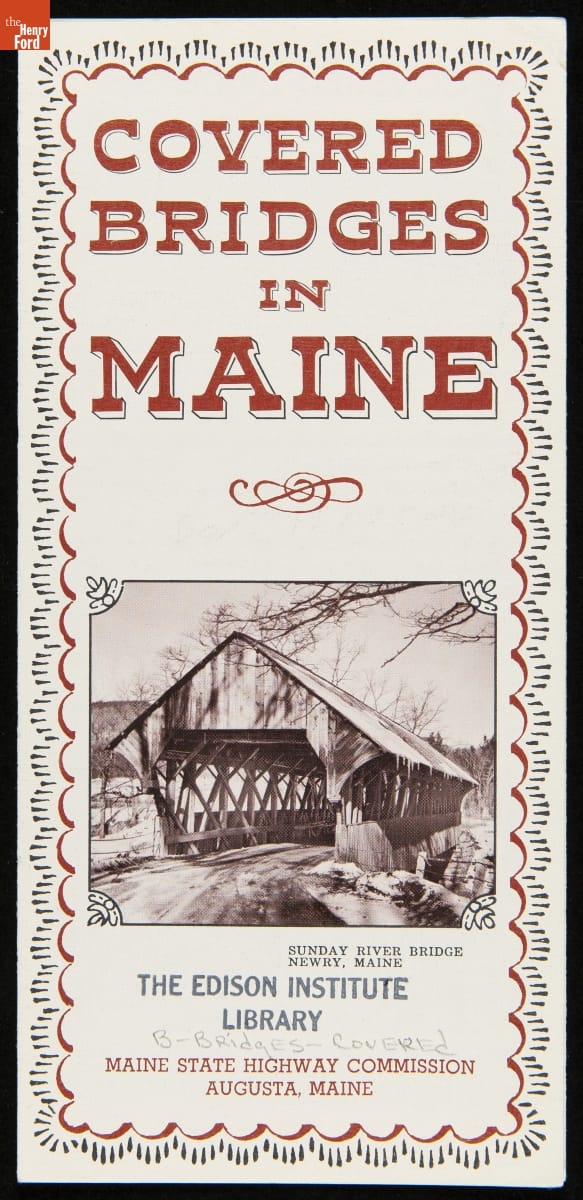
- Covered Bridges in Maine, 1956 - In the days before weatherproofed lumber, siding and a roof protected a wooden bridge's truss system and kept its structural timbers dry. Despite this purely practical design, covered bridges had nostalgic appeal. Decades after their utility faded, tourists sought out surviving examples. Some states featured covered bridges in marketing campaigns, erected signage, and developed tours to facilitate sightseeing.
- 1956
- Collections - Artifact
Covered Bridges in Maine, 1956
In the days before weatherproofed lumber, siding and a roof protected a wooden bridge's truss system and kept its structural timbers dry. Despite this purely practical design, covered bridges had nostalgic appeal. Decades after their utility faded, tourists sought out surviving examples. Some states featured covered bridges in marketing campaigns, erected signage, and developed tours to facilitate sightseeing.
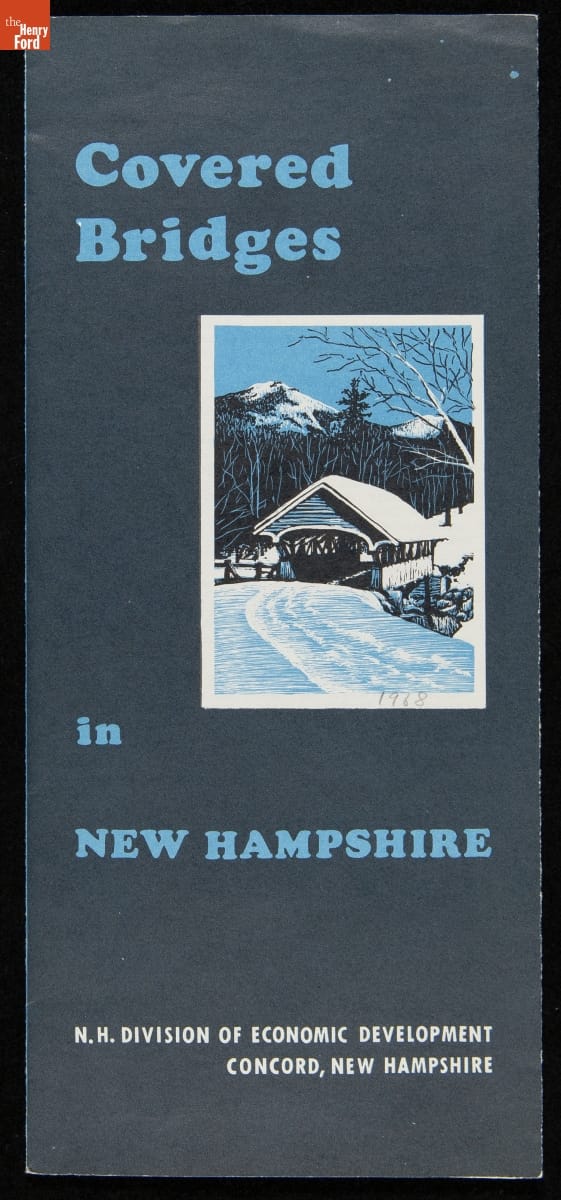
- Covered Bridges in New Hampshire, 1969 - In the days before weatherproofed lumber, siding and a roof protected a wooden bridge's truss system and kept its structural timbers dry. Despite this purely practical design, covered bridges had nostalgic appeal. Decades after their utility faded, tourists sought out surviving examples. Some states featured covered bridges in marketing campaigns, erected signage, and developed tours to facilitate sightseeing.
- 1969
- Collections - Artifact
Covered Bridges in New Hampshire, 1969
In the days before weatherproofed lumber, siding and a roof protected a wooden bridge's truss system and kept its structural timbers dry. Despite this purely practical design, covered bridges had nostalgic appeal. Decades after their utility faded, tourists sought out surviving examples. Some states featured covered bridges in marketing campaigns, erected signage, and developed tours to facilitate sightseeing.
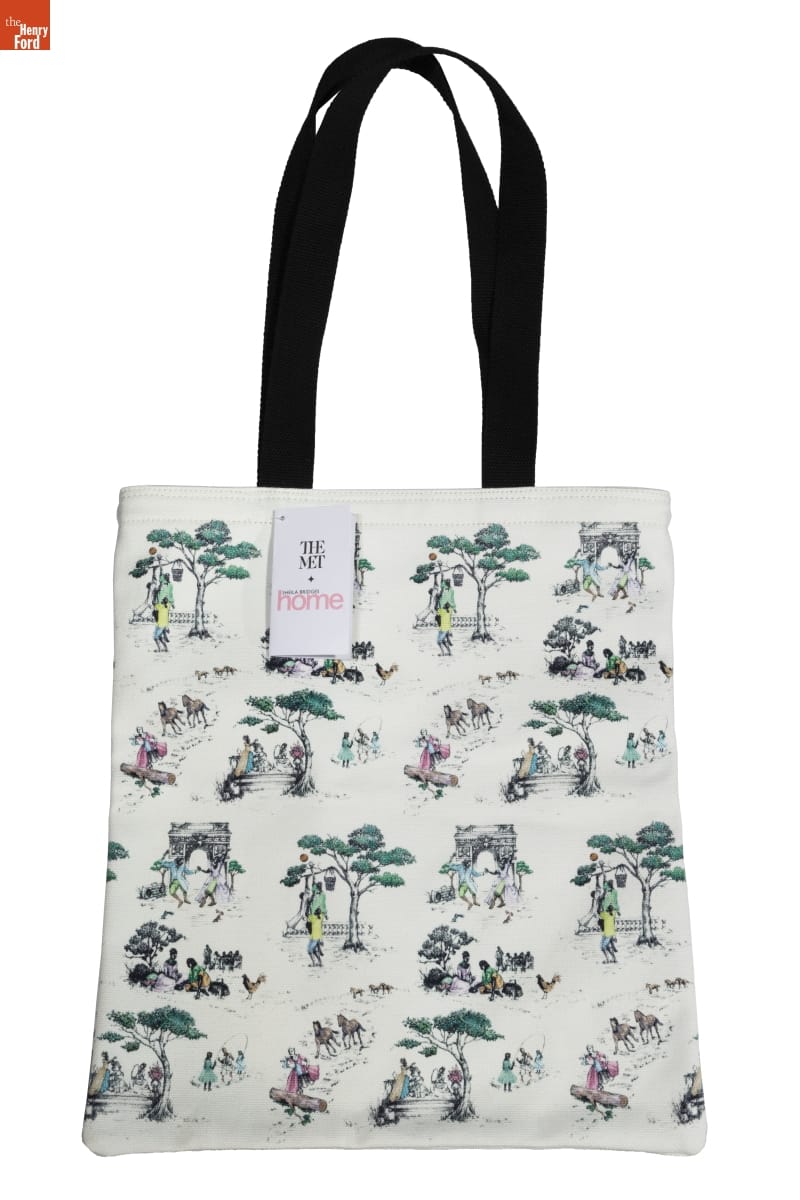
- Tote Bag Designed by Sheila Bridges, 2021 - Sheila Bridges' Harlem Toile de Jouy pattern is a singular example of a historical design that has been successfully reimagined and speaks to Americans in the 21st century. Originally designed in 2007, the pattern featuring African Americans engaged in leisurely activities has morphed from a wallpaper design to appearing on a variety of objects, from clothing to dinnerware, both high style and vernacular.
- 2021
- Collections - Artifact
Tote Bag Designed by Sheila Bridges, 2021
Sheila Bridges' Harlem Toile de Jouy pattern is a singular example of a historical design that has been successfully reimagined and speaks to Americans in the 21st century. Originally designed in 2007, the pattern featuring African Americans engaged in leisurely activities has morphed from a wallpaper design to appearing on a variety of objects, from clothing to dinnerware, both high style and vernacular.
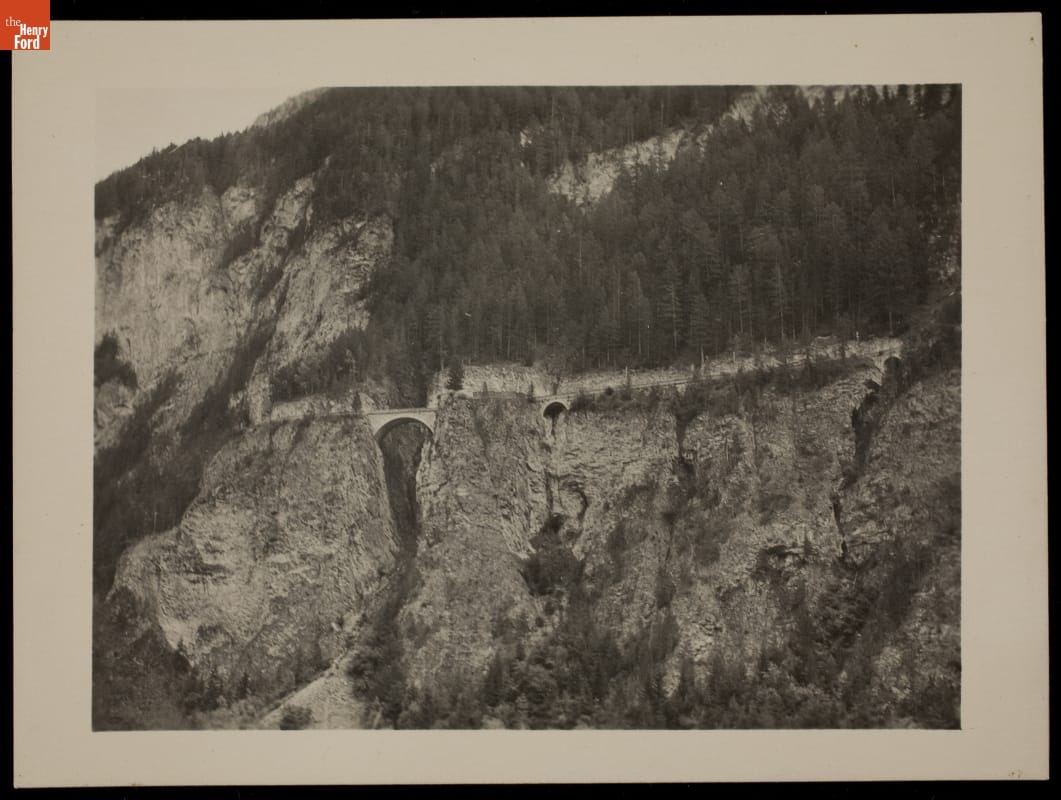
- Arched Bridges near Fluela Pass, Switzerland, circa 1935 - In 1913, Henry Ford established Ford Motor Company's photographic department. Though few internal records describe company photography, remaining photographs reveal a wide range of departmental activity. Over nearly 100 years, Ford photographers documented company ventures, personal affairs, and daily life around the world. This photograph shows Fluela Pass, a historic route through the Swiss Alps.
- circa 1935
- Collections - Artifact
Arched Bridges near Fluela Pass, Switzerland, circa 1935
In 1913, Henry Ford established Ford Motor Company's photographic department. Though few internal records describe company photography, remaining photographs reveal a wide range of departmental activity. Over nearly 100 years, Ford photographers documented company ventures, personal affairs, and daily life around the world. This photograph shows Fluela Pass, a historic route through the Swiss Alps.
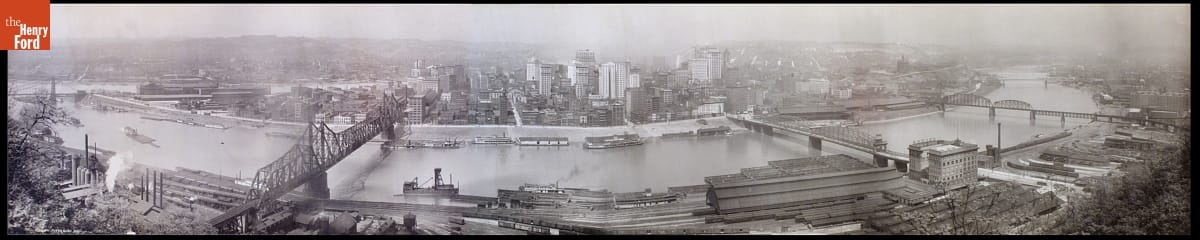
- Panoramic View of Rivers and Bridges, Pittsburgh, Pennsylvania, 1908 - From 1895 to 1924, the Detroit Publishing Company was one of the major image publishers in the world. The company's wide-ranging stock of original photographs documented life and landscapes from across the nation and around the globe. From the tens of thousands of negatives, the company created prints, postcards, lantern slides, panoramas, and other merchandise for sale to educators, businessmen, advertisers, homeowners and travelers.
- 1908
- Collections - Artifact
Panoramic View of Rivers and Bridges, Pittsburgh, Pennsylvania, 1908
From 1895 to 1924, the Detroit Publishing Company was one of the major image publishers in the world. The company's wide-ranging stock of original photographs documented life and landscapes from across the nation and around the globe. From the tens of thousands of negatives, the company created prints, postcards, lantern slides, panoramas, and other merchandise for sale to educators, businessmen, advertisers, homeowners and travelers.
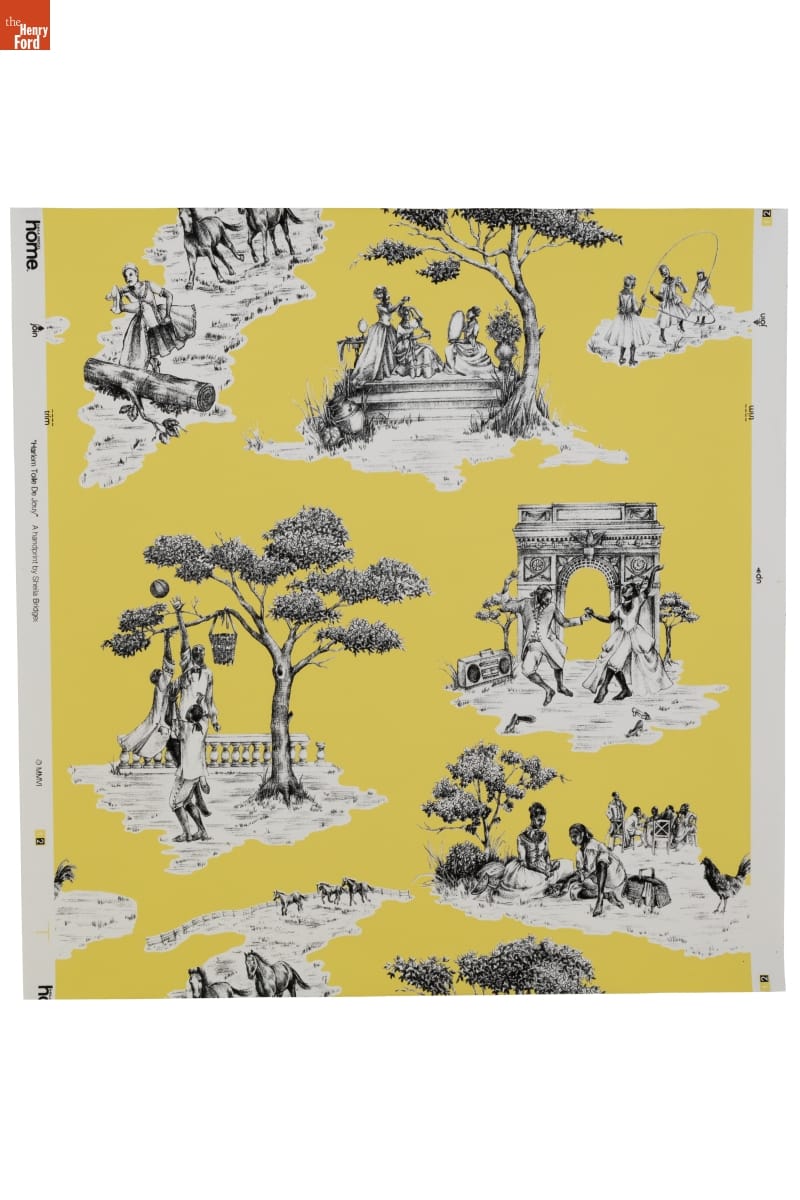
- Harlem Toile de Jouy Wallpaper, Designed by Sheila Bridges, 2022 - Sheila Bridges' Harlem Toile de Jouy pattern is a singular example of a historical design that has been successfully reimagined and speaks to Americans in the 21st century. Originally designed in 2007, the pattern featuring African Americans engaged in leisurely activities has morphed from a wallpaper design to appearing on a variety of objects, from clothing to dinnerware, both high style and vernacular.
- 2022
- Collections - Artifact
Harlem Toile de Jouy Wallpaper, Designed by Sheila Bridges, 2022
Sheila Bridges' Harlem Toile de Jouy pattern is a singular example of a historical design that has been successfully reimagined and speaks to Americans in the 21st century. Originally designed in 2007, the pattern featuring African Americans engaged in leisurely activities has morphed from a wallpaper design to appearing on a variety of objects, from clothing to dinnerware, both high style and vernacular.
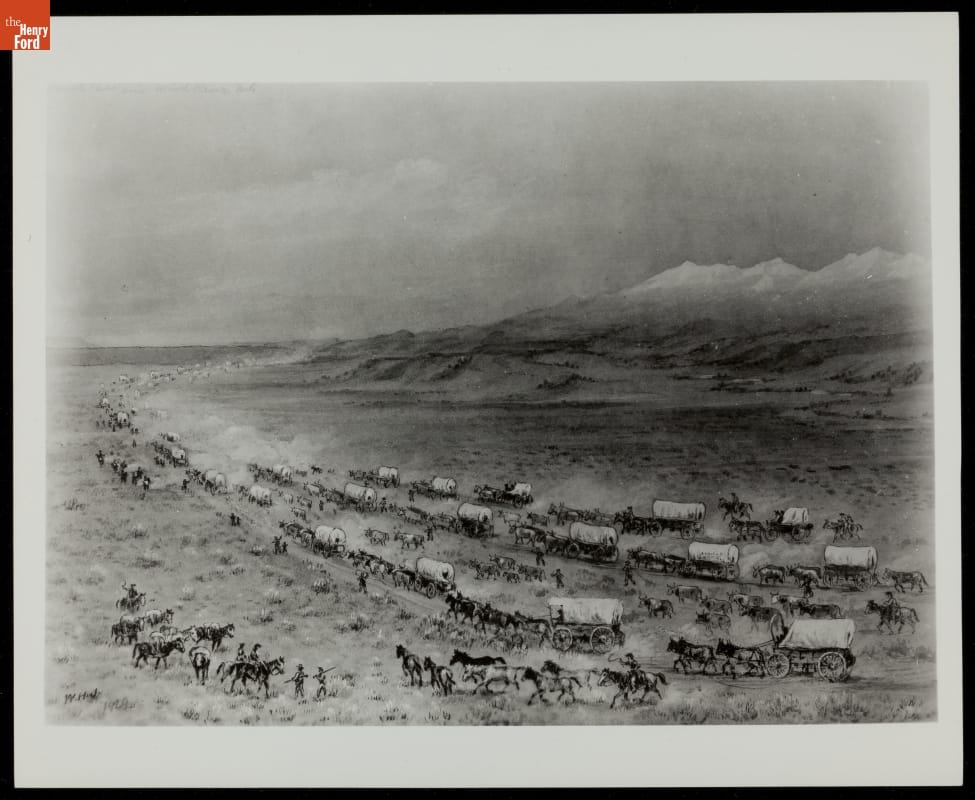
- Sketch of circa 1840 Wagon Train Heading for Fort Bridges, Wyoming -
- circa 1840
- Collections - Artifact
Sketch of circa 1840 Wagon Train Heading for Fort Bridges, Wyoming
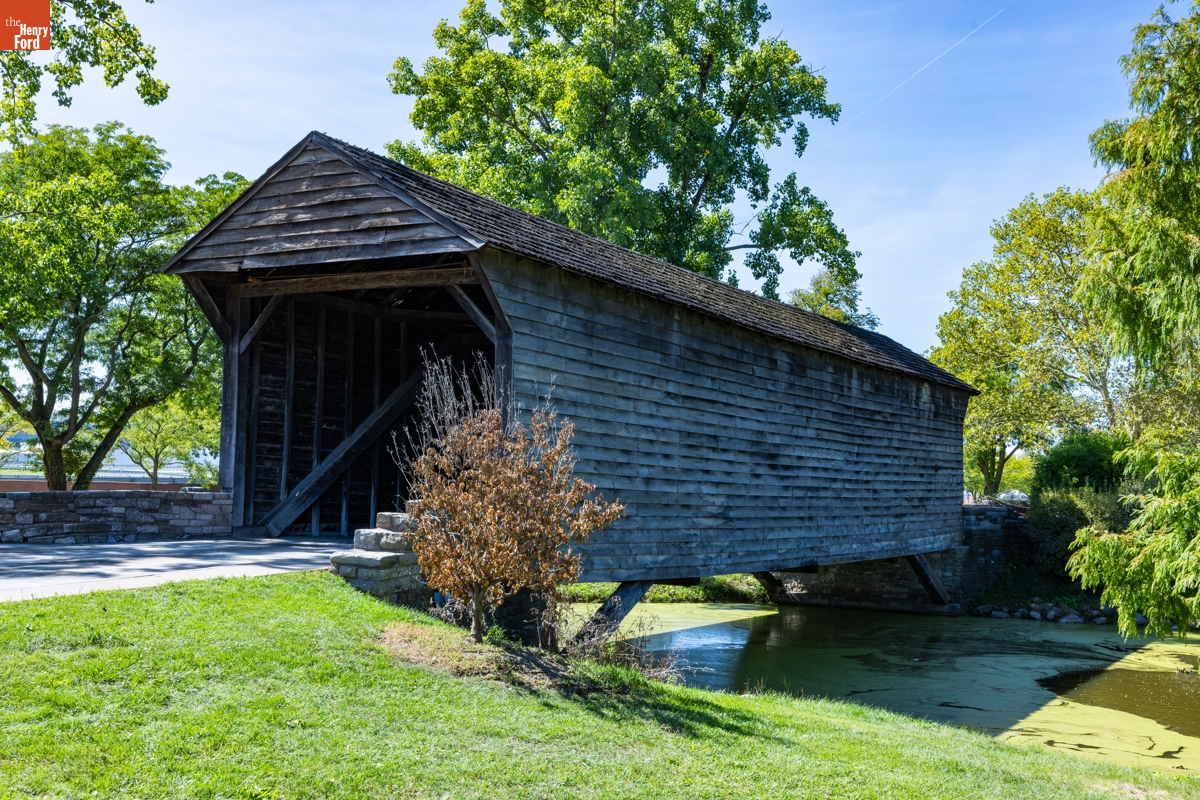
- Ackley Covered Bridge - In addition to lending some charm, covering a bridge protects its wooden truss work from weather, extending the structure's service life. Joshua Ackley and Daniel Clouse built the Ackley Covered Bridge in 1832, across Wheeling Creek in southwestern Pennsylvania. Henry Ford acquired the bridge in 1937, when it was scheduled to be torn down, and moved it to Greenfield Village.
- 1832
- Collections - Artifact
Ackley Covered Bridge
In addition to lending some charm, covering a bridge protects its wooden truss work from weather, extending the structure's service life. Joshua Ackley and Daniel Clouse built the Ackley Covered Bridge in 1832, across Wheeling Creek in southwestern Pennsylvania. Henry Ford acquired the bridge in 1937, when it was scheduled to be torn down, and moved it to Greenfield Village.
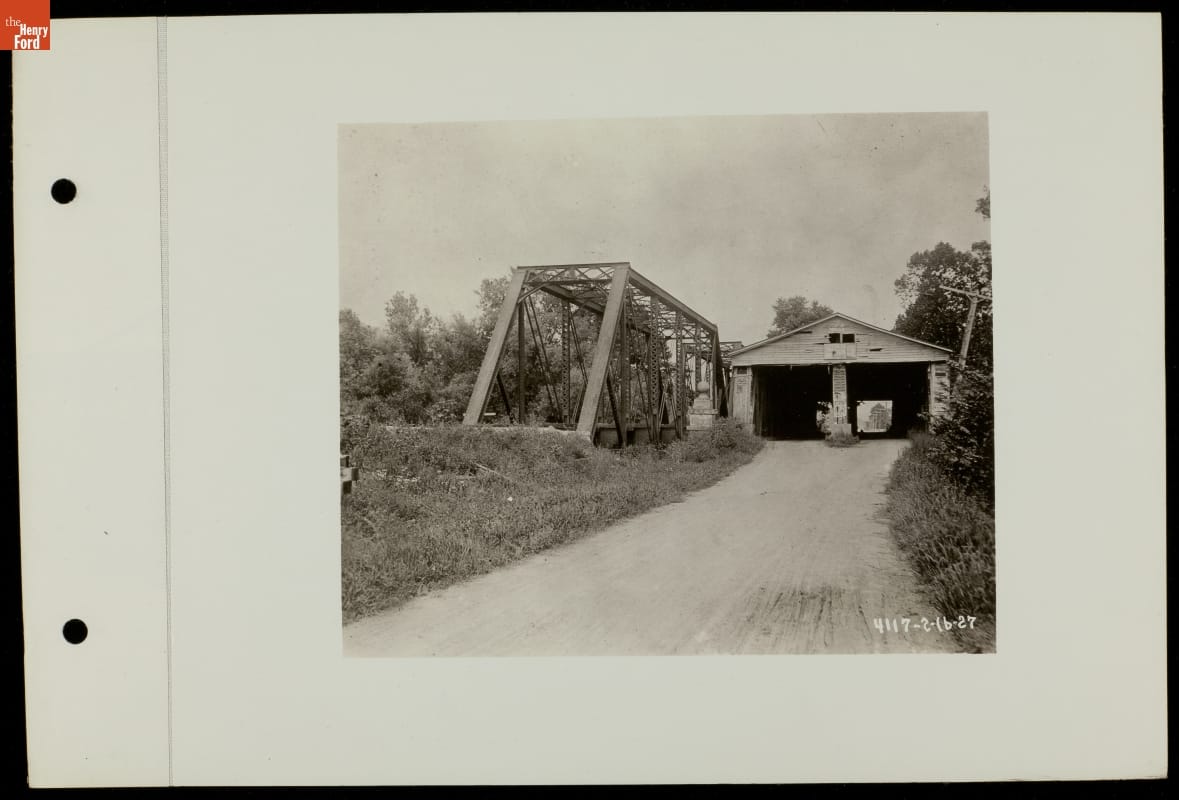
- Covered Wooden Bridge and Railroad Bridge, circa 1920 - Railroads and rural roads often traveled close to one another, as shown in this photograph taken along the Detroit, Toledo & Ironton Railroad. Despite differences in appearance, the two bridges are structurally similar. While the railroad bridge's rugged metal trusswork is exposed, the road bridge's wood trusswork is covered to protect it from weathering.
- circa 1920
- Collections - Artifact
Covered Wooden Bridge and Railroad Bridge, circa 1920
Railroads and rural roads often traveled close to one another, as shown in this photograph taken along the Detroit, Toledo & Ironton Railroad. Despite differences in appearance, the two bridges are structurally similar. While the railroad bridge's rugged metal trusswork is exposed, the road bridge's wood trusswork is covered to protect it from weathering.
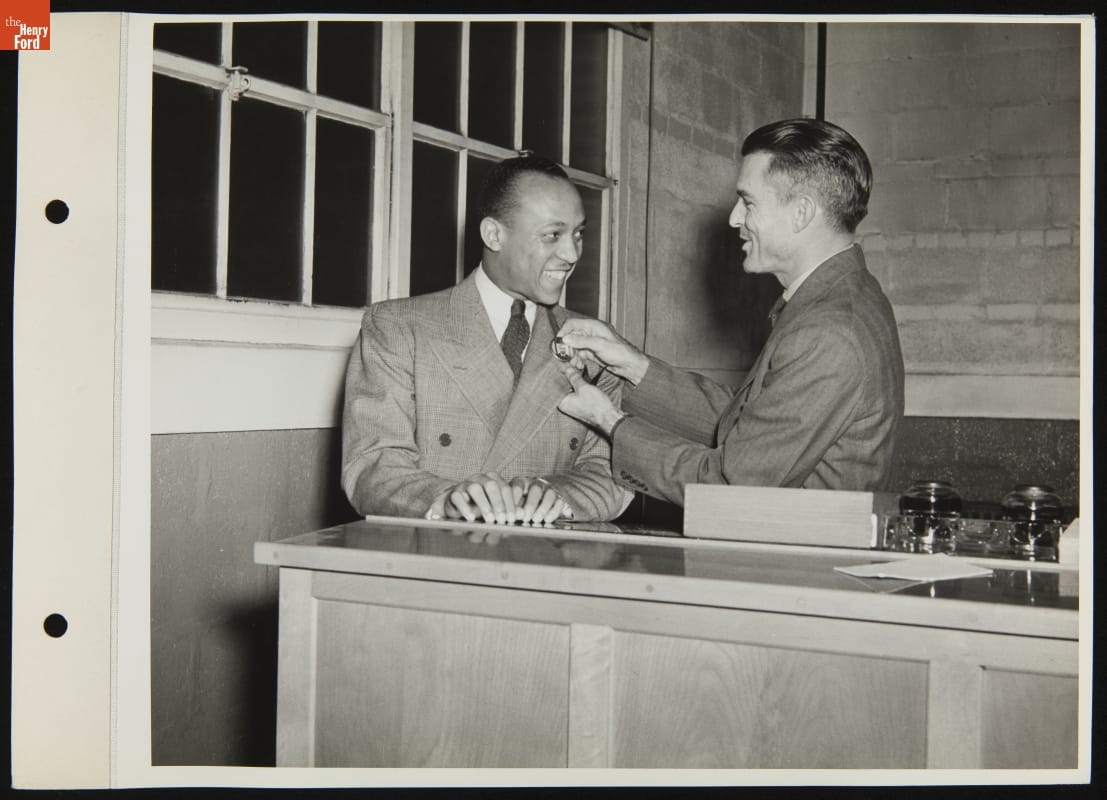
- Tommy Bridges Welcomes Jesse Owens to Work at Ford Motor Company, November 23, 1942 - Jesse Owens won four gold medals in track and field events at the 1936 Olympic Games in Berlin, Germany. In 1942, his friend Willis Ward encouraged Owens to join Ford Motor Company and ultimately succeed Ward as director of its personnel department for African American employees. Owens later worked in public relations at the company. He remained with Ford until 1946.
- November 23, 1942
- Collections - Artifact
Tommy Bridges Welcomes Jesse Owens to Work at Ford Motor Company, November 23, 1942
Jesse Owens won four gold medals in track and field events at the 1936 Olympic Games in Berlin, Germany. In 1942, his friend Willis Ward encouraged Owens to join Ford Motor Company and ultimately succeed Ward as director of its personnel department for African American employees. Owens later worked in public relations at the company. He remained with Ford until 1946.