
Search
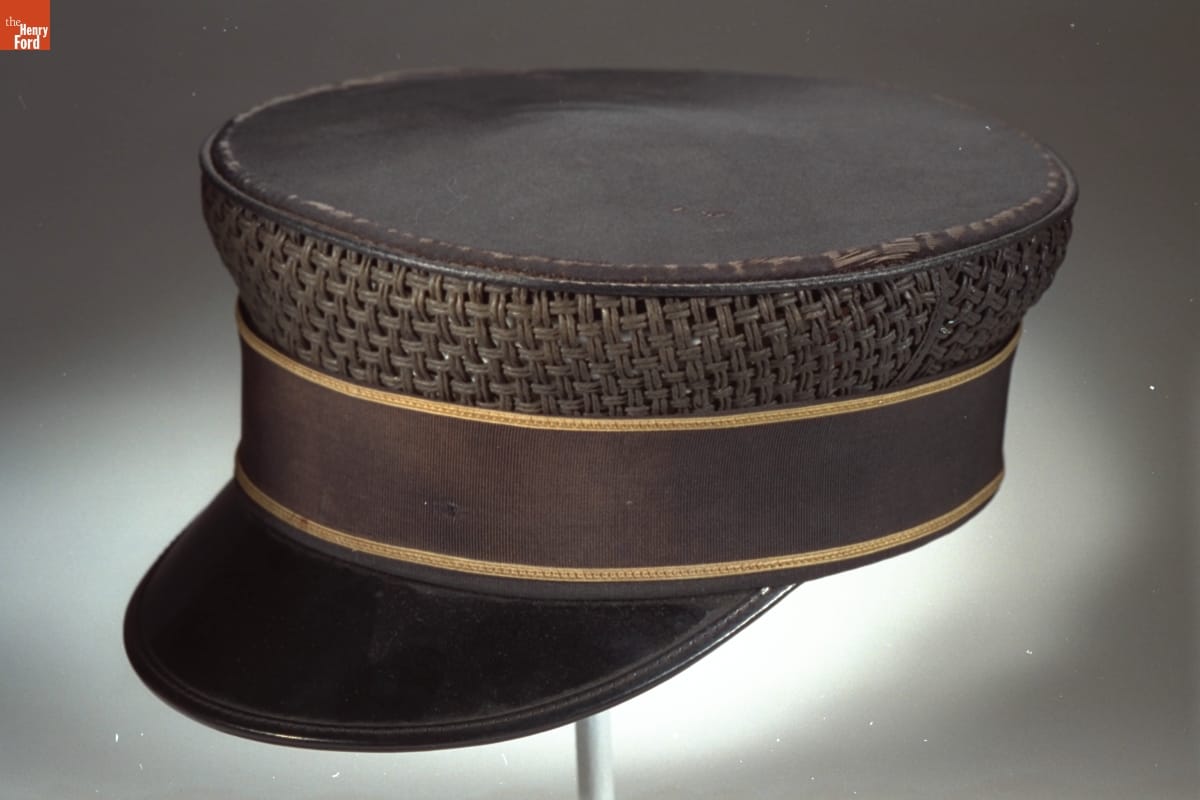
- Conductor's Cap, 1885-1920 - Standard uniforms and caps made railroad staff easily recognizable to passengers. This hat, by Marshall Field & Company of Chicago, projects authority while also providing practical benefits to the wearer. The patent leather visor shades the eyes while the ventilated crown prevents overheating. Marshall Field's supplied uniforms, linens and upholstery to the nearby Pullman Company, builder of railroad passenger cars.
- 1885-1920
- Collections - Artifact
Conductor's Cap, 1885-1920
Standard uniforms and caps made railroad staff easily recognizable to passengers. This hat, by Marshall Field & Company of Chicago, projects authority while also providing practical benefits to the wearer. The patent leather visor shades the eyes while the ventilated crown prevents overheating. Marshall Field's supplied uniforms, linens and upholstery to the nearby Pullman Company, builder of railroad passenger cars.
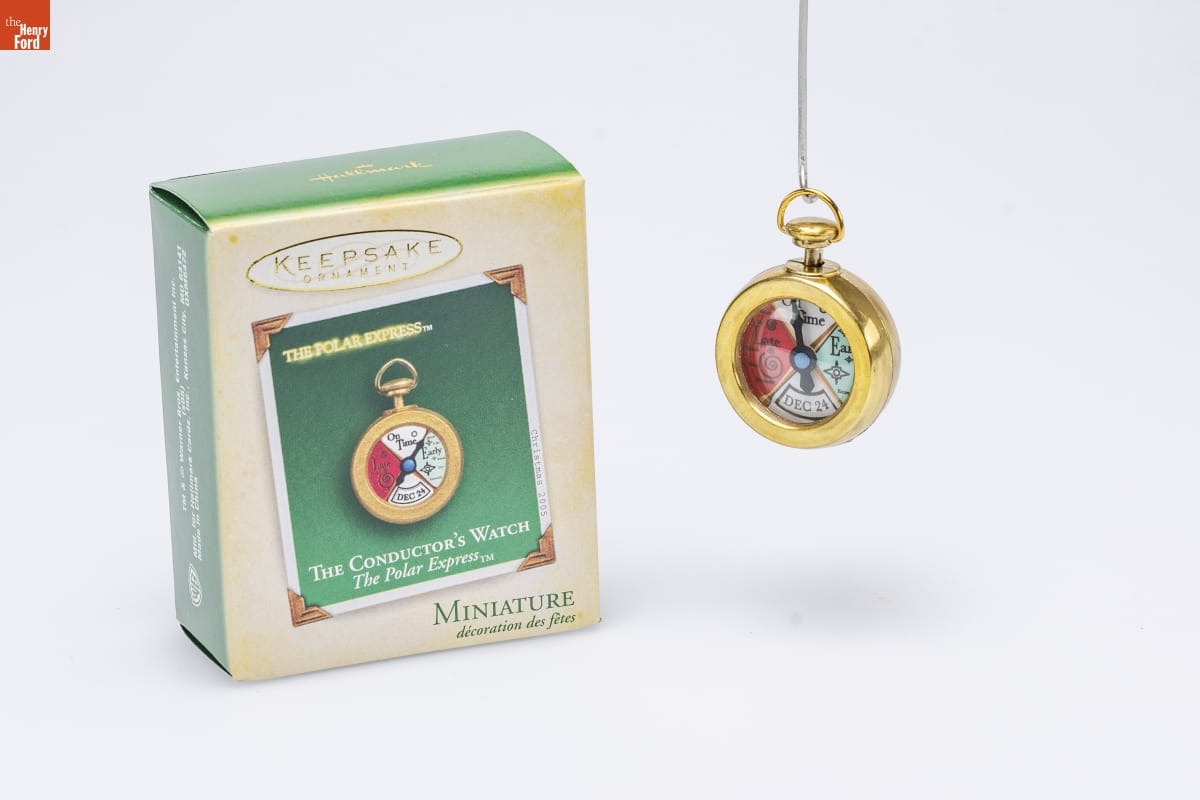
- Hallmark "The Polar Express: The Conductor's Watch" Miniature Christmas Ornament, 2005 - Already known for greeting cards, Hallmark introduced a line of Christmas ornaments in 1973. The company's annual release of an increasing array of ornaments revolutionized Christmas decorating, appealing to customers' interest in marking memories and milestones as well as expressing one's personality and unique tastes.
- 2005
- Collections - Artifact
Hallmark "The Polar Express: The Conductor's Watch" Miniature Christmas Ornament, 2005
Already known for greeting cards, Hallmark introduced a line of Christmas ornaments in 1973. The company's annual release of an increasing array of ornaments revolutionized Christmas decorating, appealing to customers' interest in marking memories and milestones as well as expressing one's personality and unique tastes.
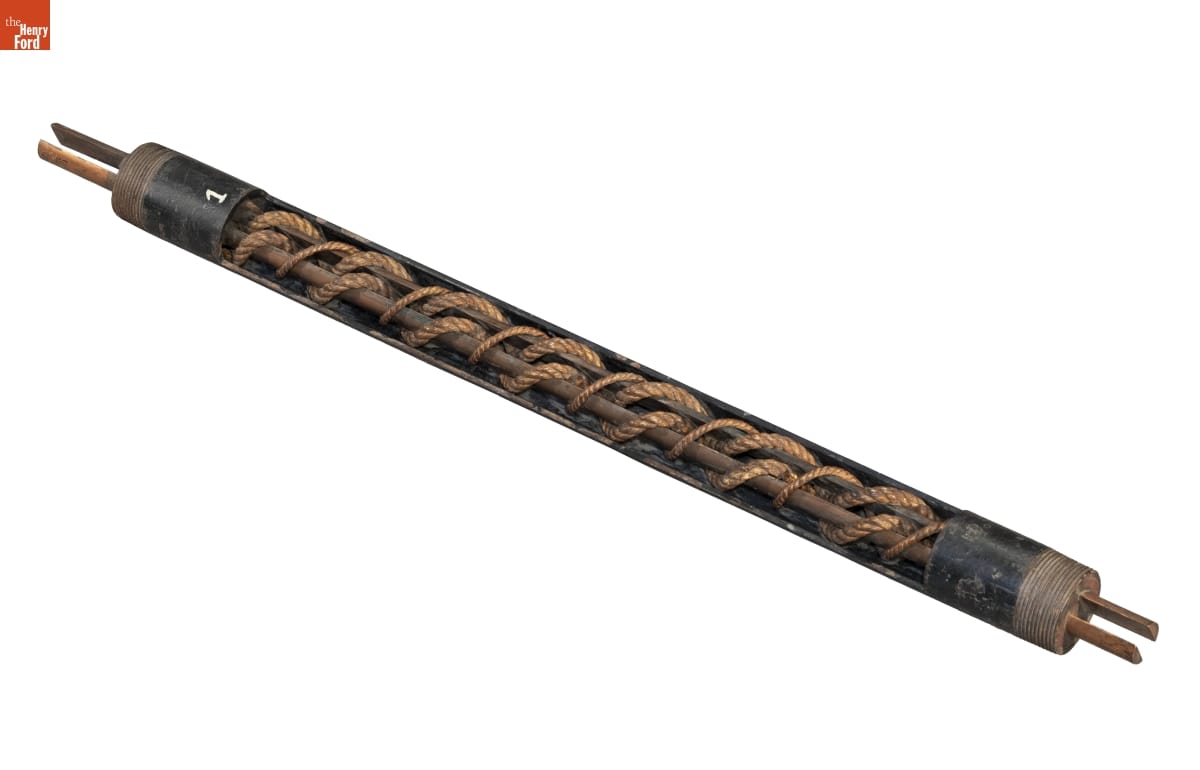
- Edison Underground Electric Conductor Cutaway Model, 1881-1883 -
- 1881-1883
- Collections - Artifact
Edison Underground Electric Conductor Cutaway Model, 1881-1883
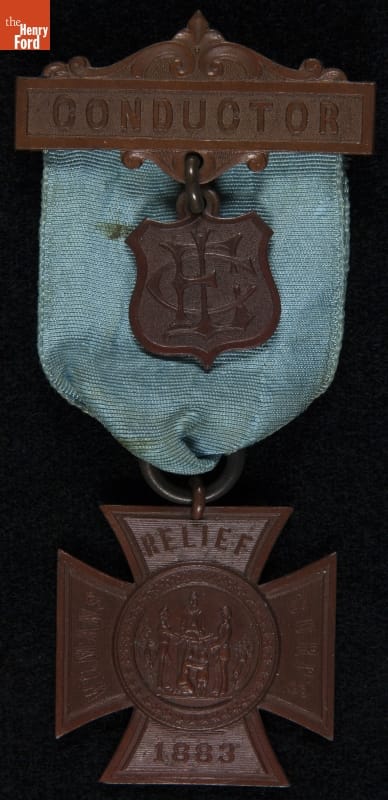
- Woman's Relief Corps (W.R.C.) Conductor Badge, 1883-1920 - In 1883, the Woman's Relief Corp (WRC) was recognized as an auxiliary organization to the Grand Army of the Republic (G.A.R.), a Civil War Union veterans' association. The WRC not only supported the G.A.R.'s mission to aid Union veterans, but also assisted former Army nurses and promoted patriotism through education. WRC conventions were usually held at the same time as the ones for the G.A.R.
- 1883-1920
- Collections - Artifact
Woman's Relief Corps (W.R.C.) Conductor Badge, 1883-1920
In 1883, the Woman's Relief Corp (WRC) was recognized as an auxiliary organization to the Grand Army of the Republic (G.A.R.), a Civil War Union veterans' association. The WRC not only supported the G.A.R.'s mission to aid Union veterans, but also assisted former Army nurses and promoted patriotism through education. WRC conventions were usually held at the same time as the ones for the G.A.R.
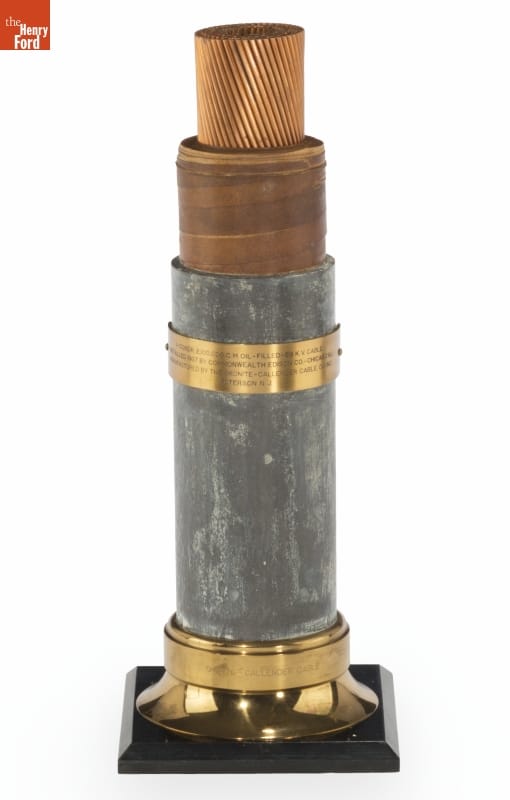
- Okonite-Callender Conductor Cable, circa 1937 -
- circa 1937
- Collections - Artifact
Okonite-Callender Conductor Cable, circa 1937
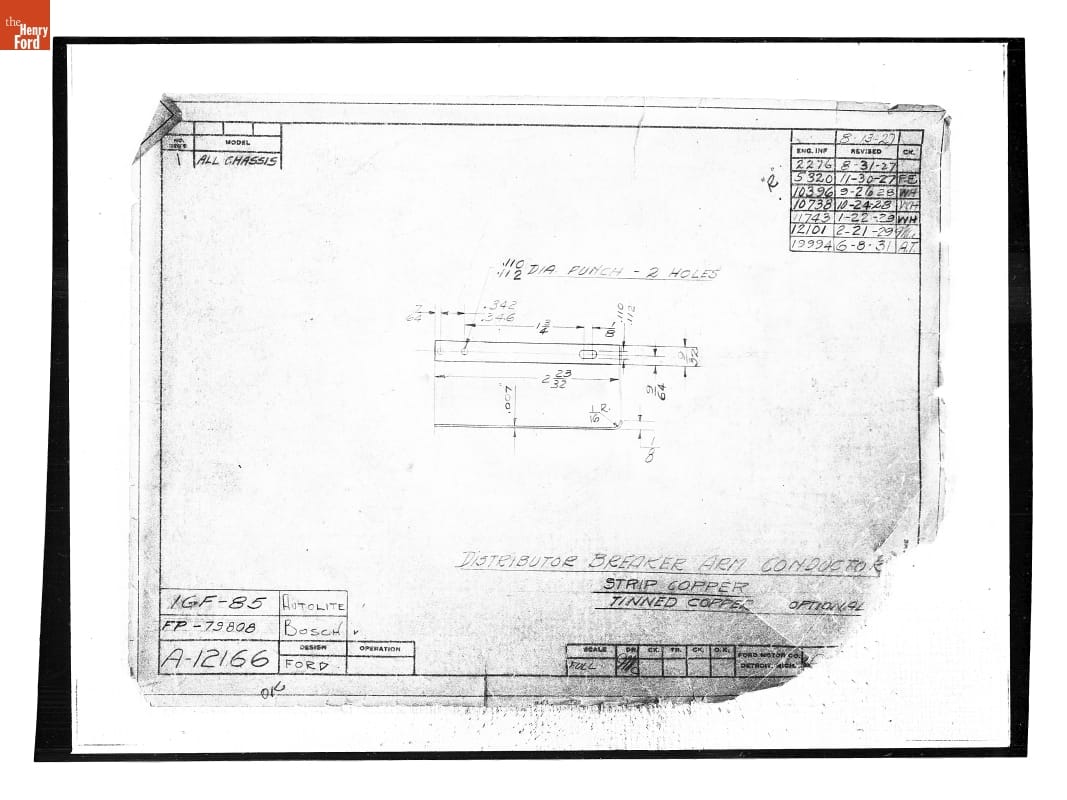
- Drawing, "Distributor Breaker Arm Conductor," Ford Model A, June 8, 1931 - The Ford Motor Company created over a million parts drawings from 1903 to 1957. Many of these drawings specify engineering requirements for the components of Ford-made vehicles--including automobiles, trucks, tractors, military vehicles and Tri-motor airplanes. Others document assembly components, stages of casting and forging, or experimental designs. Beginning in the 1940s, Ford transferred the drawings to microfilm.
- June 08, 1931
- Collections - Artifact
Drawing, "Distributor Breaker Arm Conductor," Ford Model A, June 8, 1931
The Ford Motor Company created over a million parts drawings from 1903 to 1957. Many of these drawings specify engineering requirements for the components of Ford-made vehicles--including automobiles, trucks, tractors, military vehicles and Tri-motor airplanes. Others document assembly components, stages of casting and forging, or experimental designs. Beginning in the 1940s, Ford transferred the drawings to microfilm.
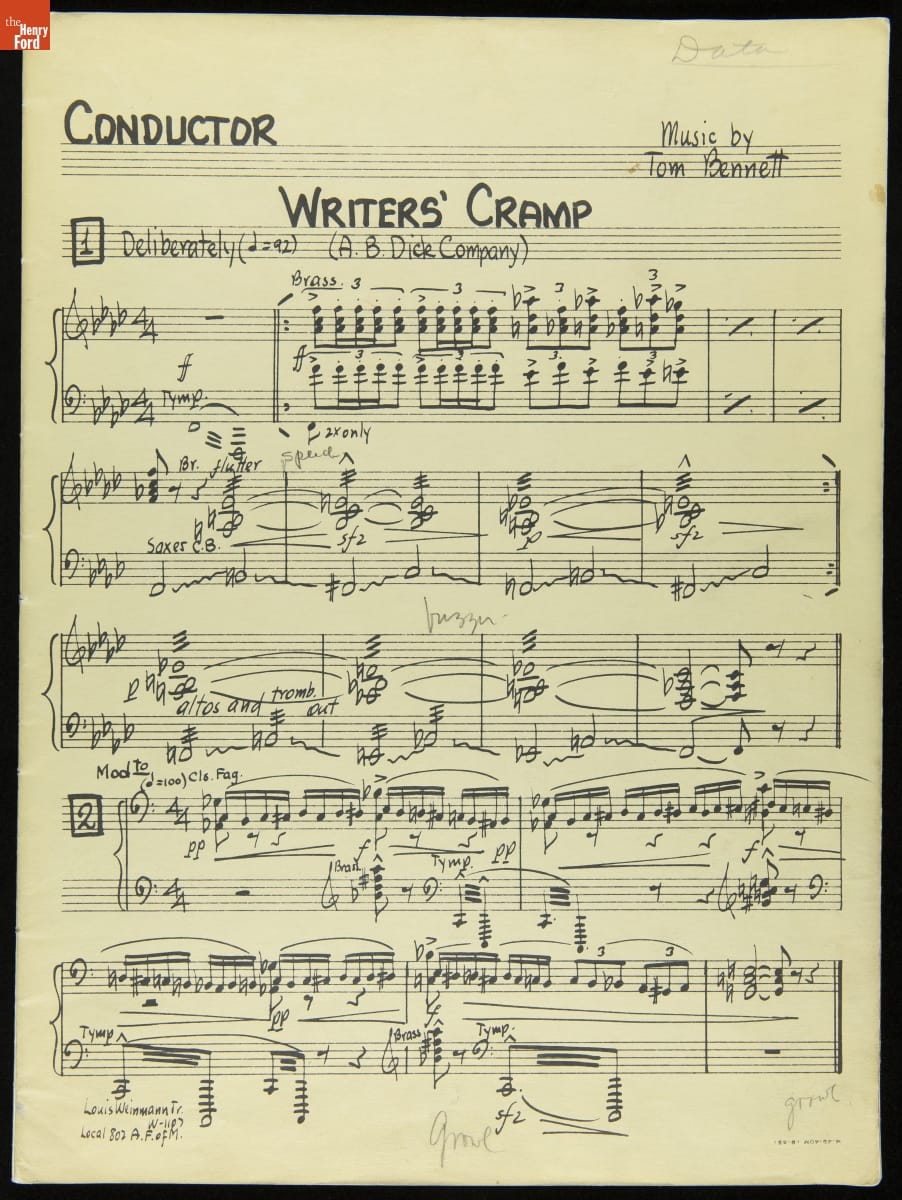
- Conductor's Score from "Writers' Cramp" Marionette Show, A.B. Dick Company Exhibit, New York World's Fair, 1939 -
- 1939
- Collections - Artifact
Conductor's Score from "Writers' Cramp" Marionette Show, A.B. Dick Company Exhibit, New York World's Fair, 1939
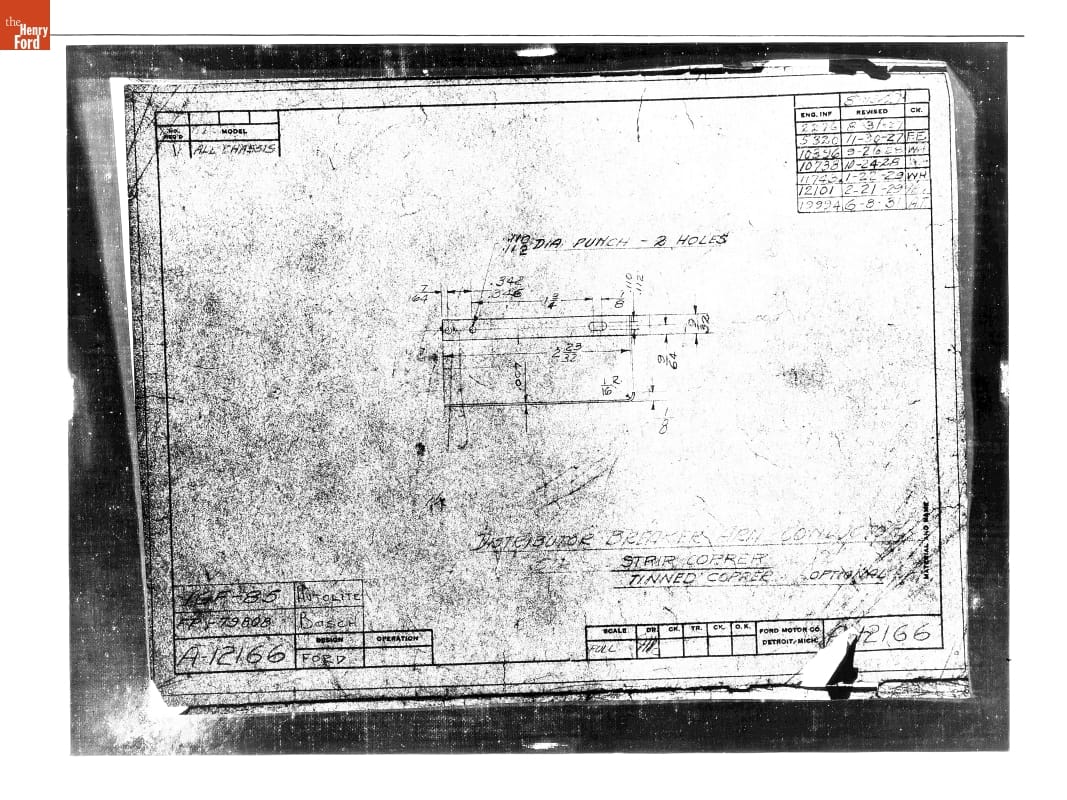
- Drawing, "Distributor Breaker Arm Conductor," Ford Model A, June 8, 1931 - The Ford Motor Company created over a million parts drawings from 1903 to 1957. Many of these drawings specify engineering requirements for the components of Ford-made vehicles--including automobiles, trucks, tractors, military vehicles and Tri-motor airplanes. Others document assembly components, stages of casting and forging, or experimental designs. Beginning in the 1940s, Ford transferred the drawings to microfilm.
- June 08, 1931
- Collections - Artifact
Drawing, "Distributor Breaker Arm Conductor," Ford Model A, June 8, 1931
The Ford Motor Company created over a million parts drawings from 1903 to 1957. Many of these drawings specify engineering requirements for the components of Ford-made vehicles--including automobiles, trucks, tractors, military vehicles and Tri-motor airplanes. Others document assembly components, stages of casting and forging, or experimental designs. Beginning in the 1940s, Ford transferred the drawings to microfilm.
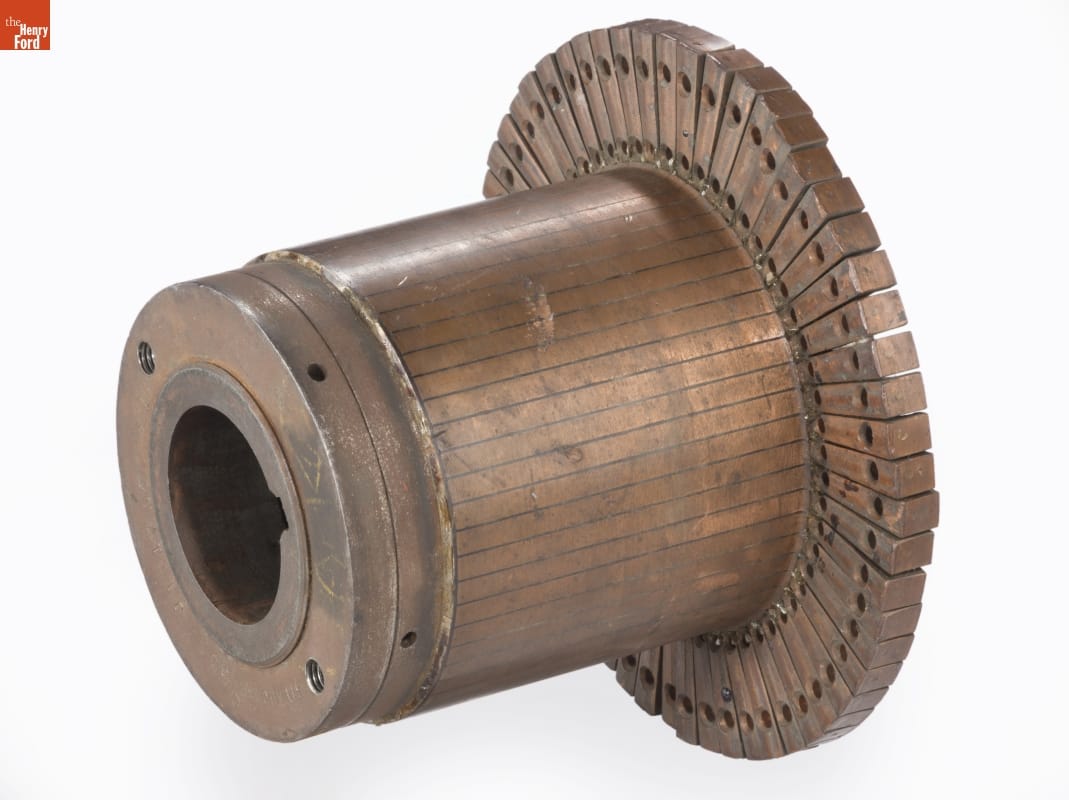
- General Electric Commutator for Edison Motor, circa 1892 -
- circa 1892
- Collections - Artifact
General Electric Commutator for Edison Motor, circa 1892
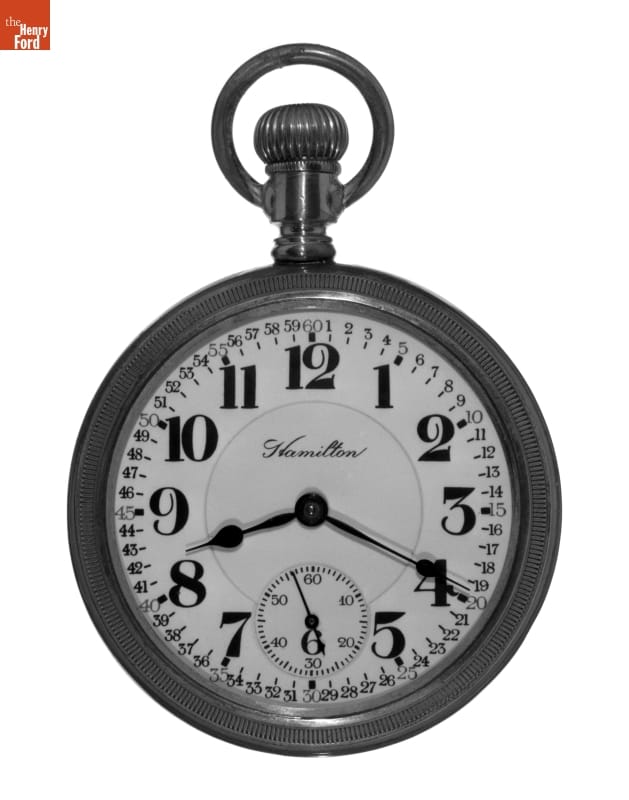
- Railroad Pocket Watch, 1910-1915 - After decades of disastrous railroad collisions due to the lack of coordination between different lines, railroad companies realized that accurate timekeeping was crucial to helping ensure the safe and efficient operation of the nation's railroad networks. As early as the 1860s, railroad companies collaborated with American watch manufacturers to produce precision watches for conductors and other railroad employees.
- 1910-1915
- Collections - Artifact
Railroad Pocket Watch, 1910-1915
After decades of disastrous railroad collisions due to the lack of coordination between different lines, railroad companies realized that accurate timekeeping was crucial to helping ensure the safe and efficient operation of the nation's railroad networks. As early as the 1860s, railroad companies collaborated with American watch manufacturers to produce precision watches for conductors and other railroad employees.