
Search
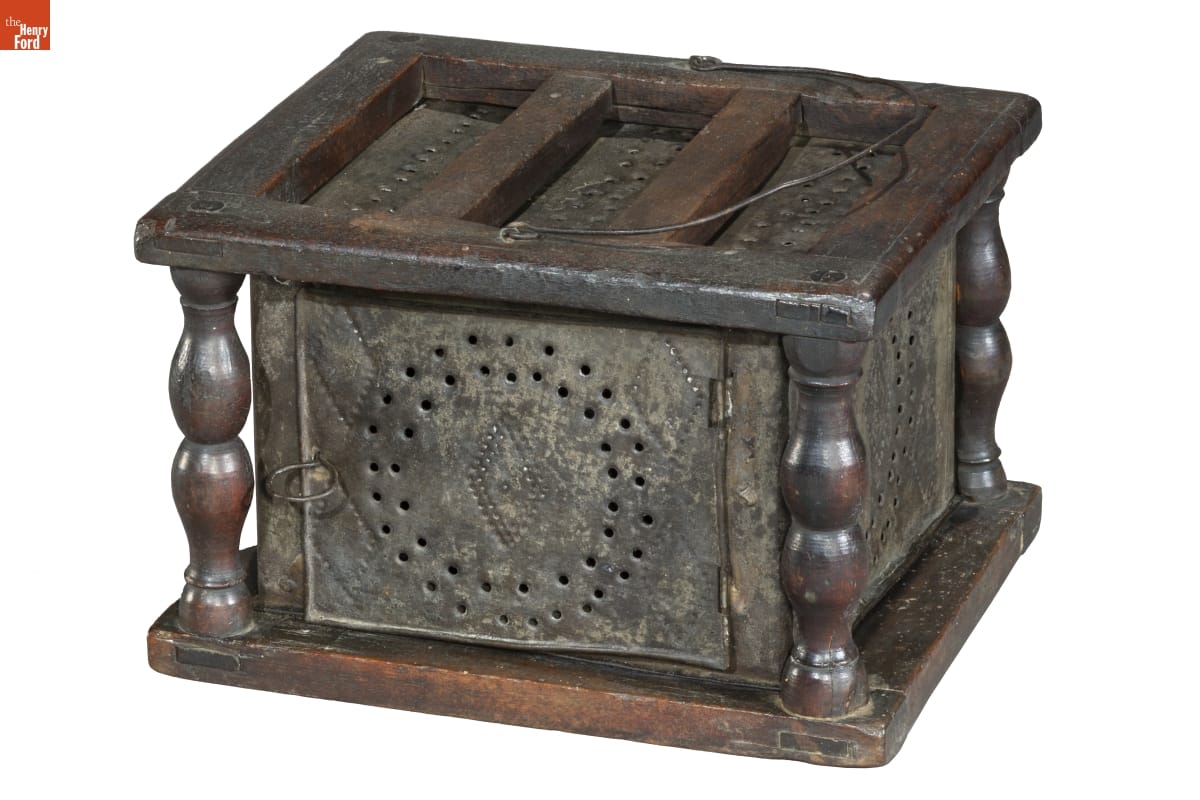
- Footwarmer, 1830-1860 - Nineteenth-century Americans filled this footwarmer's punched tin box with hot coals or charcoal to help keep their feet warm. People placed the footwarmer under their feet then wrapped a blanket around their legs, providing welcomed warmth when out for a carriage ride or attending church on a cold day. Other footwarmers used hot water or heated soapstone to solve the problem of cold feet.
- 1830-1860
- Collections - Artifact
Footwarmer, 1830-1860
Nineteenth-century Americans filled this footwarmer's punched tin box with hot coals or charcoal to help keep their feet warm. People placed the footwarmer under their feet then wrapped a blanket around their legs, providing welcomed warmth when out for a carriage ride or attending church on a cold day. Other footwarmers used hot water or heated soapstone to solve the problem of cold feet.
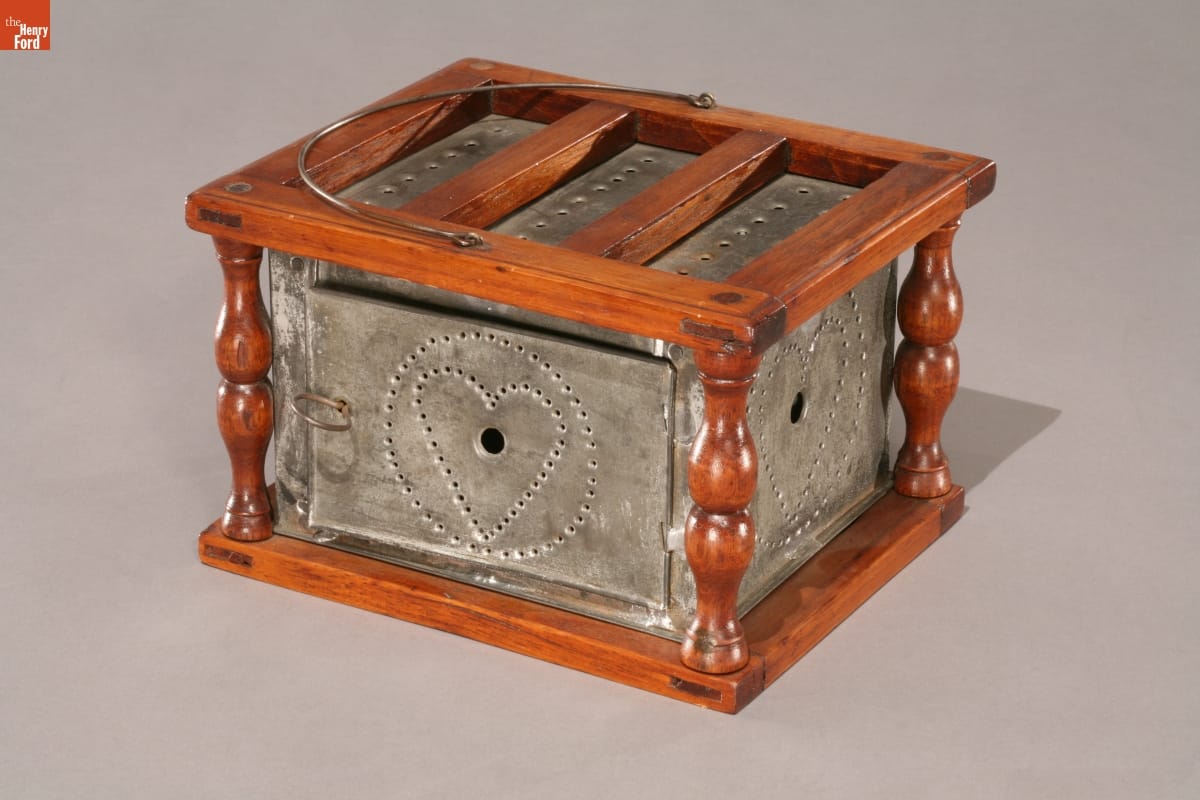
- Footwarmer, 1800-1840 - Nineteenth-century Americans filled this footwarmer's punched tin box with hot coals or charcoal to help keep their feet warm. People placed the footwarmer under their feet then wrapped a blanket around their legs, providing welcomed warmth when out for a carriage ride or attending church on a cold day. Other footwarmers used hot water or heated soapstone to solve the problem of cold feet.
- 1800-1840
- Collections - Artifact
Footwarmer, 1800-1840
Nineteenth-century Americans filled this footwarmer's punched tin box with hot coals or charcoal to help keep their feet warm. People placed the footwarmer under their feet then wrapped a blanket around their legs, providing welcomed warmth when out for a carriage ride or attending church on a cold day. Other footwarmers used hot water or heated soapstone to solve the problem of cold feet.
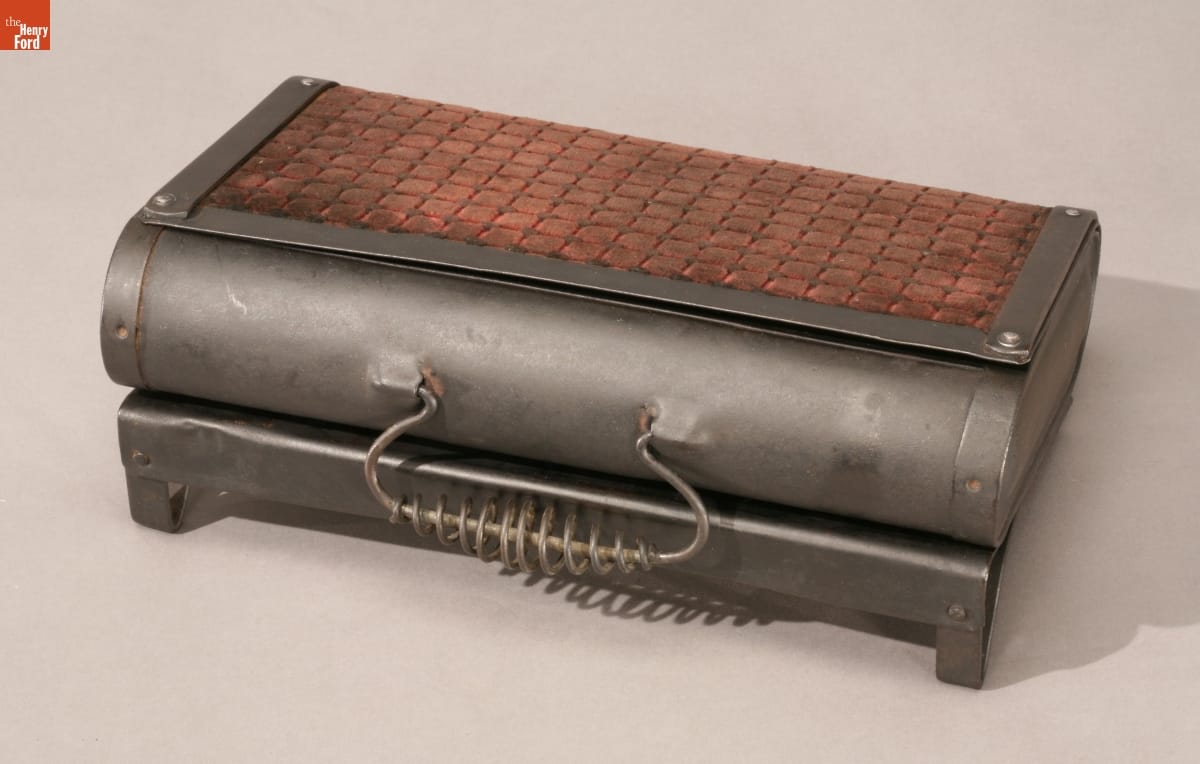
- Footwarmer, circa 1900 - This X-Radium footwarmer made by the Novelty Manufacturing Company in Jackson, Michigan, depended on radiant heat from a special patented brick placed inside. Users had to remember to heat the brick before their trip.
- circa 1900
- Collections - Artifact
Footwarmer, circa 1900
This X-Radium footwarmer made by the Novelty Manufacturing Company in Jackson, Michigan, depended on radiant heat from a special patented brick placed inside. Users had to remember to heat the brick before their trip.
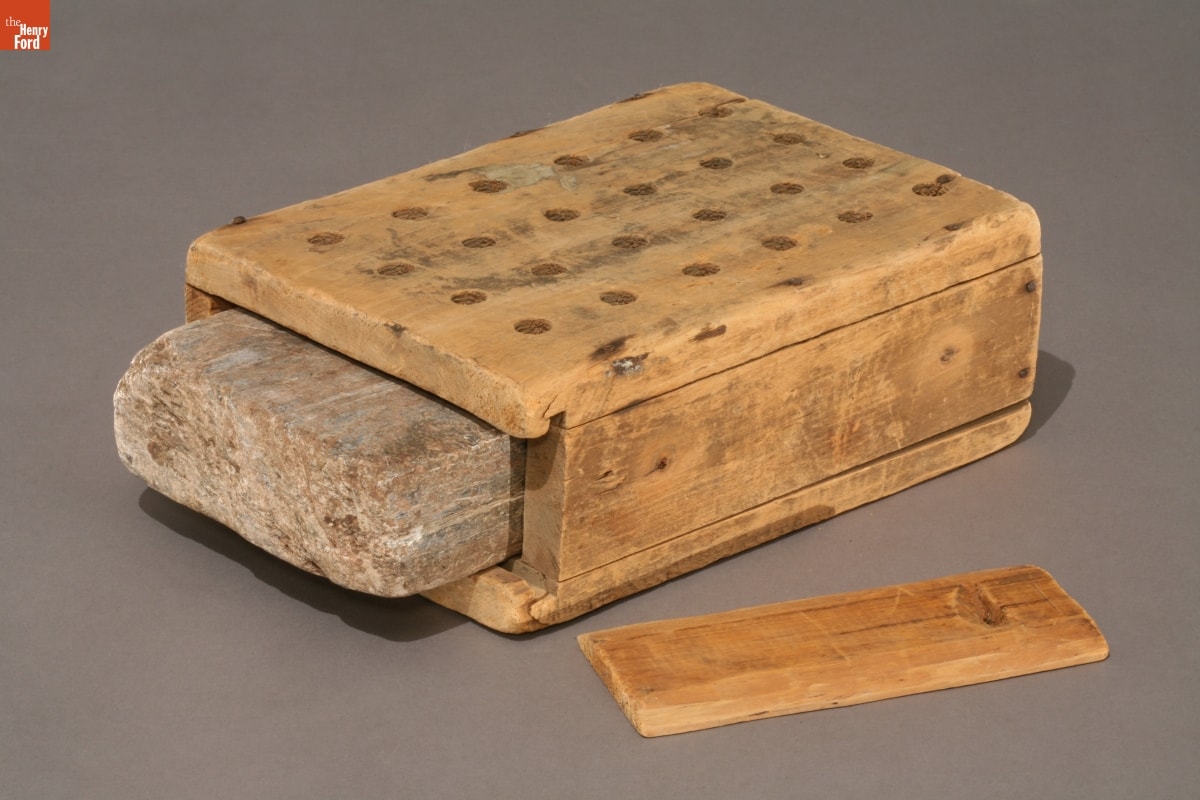
- Footwarmer Used in Horse-Drawn Vehicles, 1800-1829 - Foot warmers solved the problem of cold feet in past generations. Some warmers held charcoal, some held hot water and others, like this one, held heated soapstone. The warmer was kept under the feet and then the legs and feet were tucked into a blanket, providing welcome warmth in a cold carriage or church.
- 1800-1829
- Collections - Artifact
Footwarmer Used in Horse-Drawn Vehicles, 1800-1829
Foot warmers solved the problem of cold feet in past generations. Some warmers held charcoal, some held hot water and others, like this one, held heated soapstone. The warmer was kept under the feet and then the legs and feet were tucked into a blanket, providing welcome warmth in a cold carriage or church.
- Keeping Warm Behind the Wheel - <div><div><p>From millions of artifacts in The Henry Ford’s collections, our experts choose three and reveal the surprisingly curious connections between them. In the featured video below, discover what a footwarmer, a 1920s sedan and a 1950s concept car have in common.</p></div></div><div><div><div><div></div></div></div></div>

- December 22, 2017
- Collections - Video
Keeping Warm Behind the Wheel
From millions of artifacts in The Henry Ford’s collections, our experts choose three and reveal the surprisingly curious connections between them. In the featured video below, discover what a footwarmer, a 1920s sedan and a 1950s concept car have in common.
- Tinware - Tin-plated iron, commonly called "tin," was the dominant material for utilitarian items in 19th-century America. It was lightweight, inexpensive, easy to clean, non-toxic, and durable. Tinware resisted corrosion and had a pleasing silvery appearance that could be enhanced through decoration. Middle-class Americans happily purchased tinware in place of equivalent housewares made from earlier materials like wood or pottery.

- January 11, 2023
- Collections - Set
Tinware
Tin-plated iron, commonly called "tin," was the dominant material for utilitarian items in 19th-century America. It was lightweight, inexpensive, easy to clean, non-toxic, and durable. Tinware resisted corrosion and had a pleasing silvery appearance that could be enhanced through decoration. Middle-class Americans happily purchased tinware in place of equivalent housewares made from earlier materials like wood or pottery.