
Search
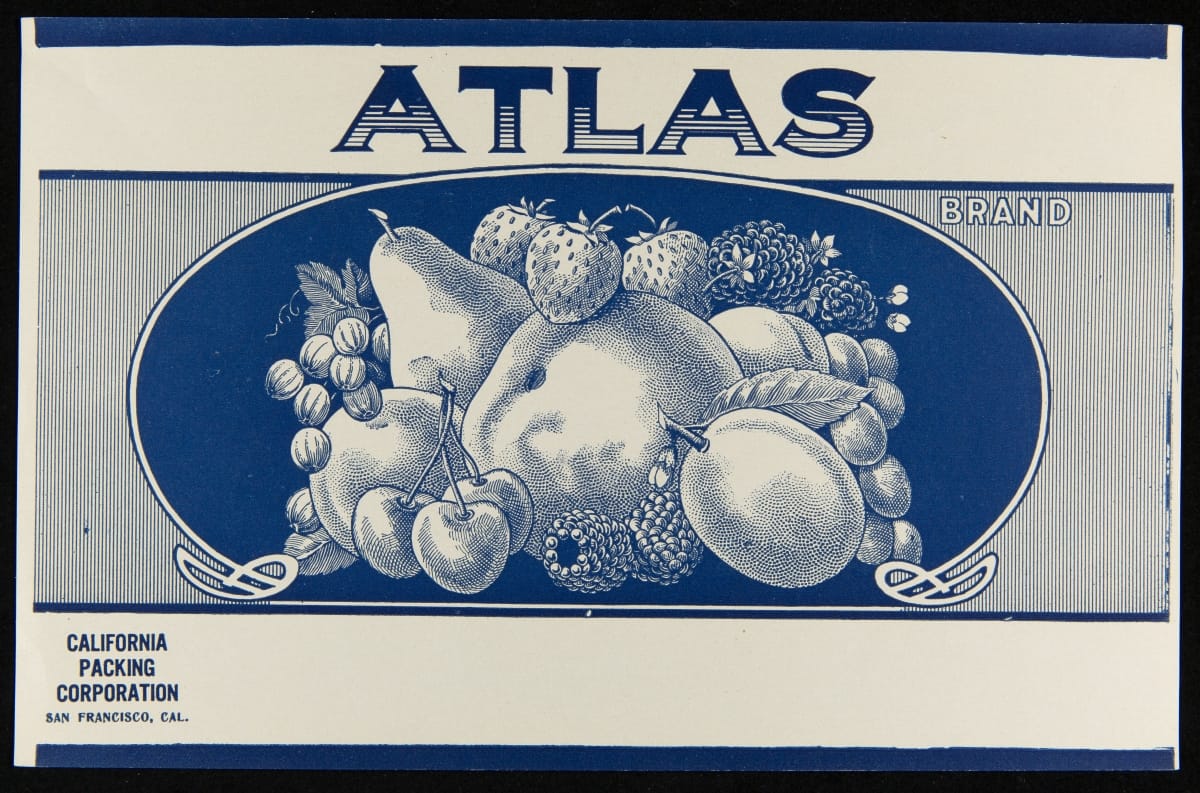
- Crate Label, "Atlas Brand Fruit," 1920-1930 - In 1869, the transcontinental railroad opened eastern markets to the West Coast produce industry for the first time. As produce companies shipped crates of fruits and vegetables across the country, they needed a way to distinguish their goods from their competitors'. Colorful, eye-catching labels, like this one for Atlas Brand Blackberries, were created to attract grocers purchasing goods from wholesale markets.
- 1920-1930
- Collections - Artifact
Crate Label, "Atlas Brand Fruit," 1920-1930
In 1869, the transcontinental railroad opened eastern markets to the West Coast produce industry for the first time. As produce companies shipped crates of fruits and vegetables across the country, they needed a way to distinguish their goods from their competitors'. Colorful, eye-catching labels, like this one for Atlas Brand Blackberries, were created to attract grocers purchasing goods from wholesale markets.
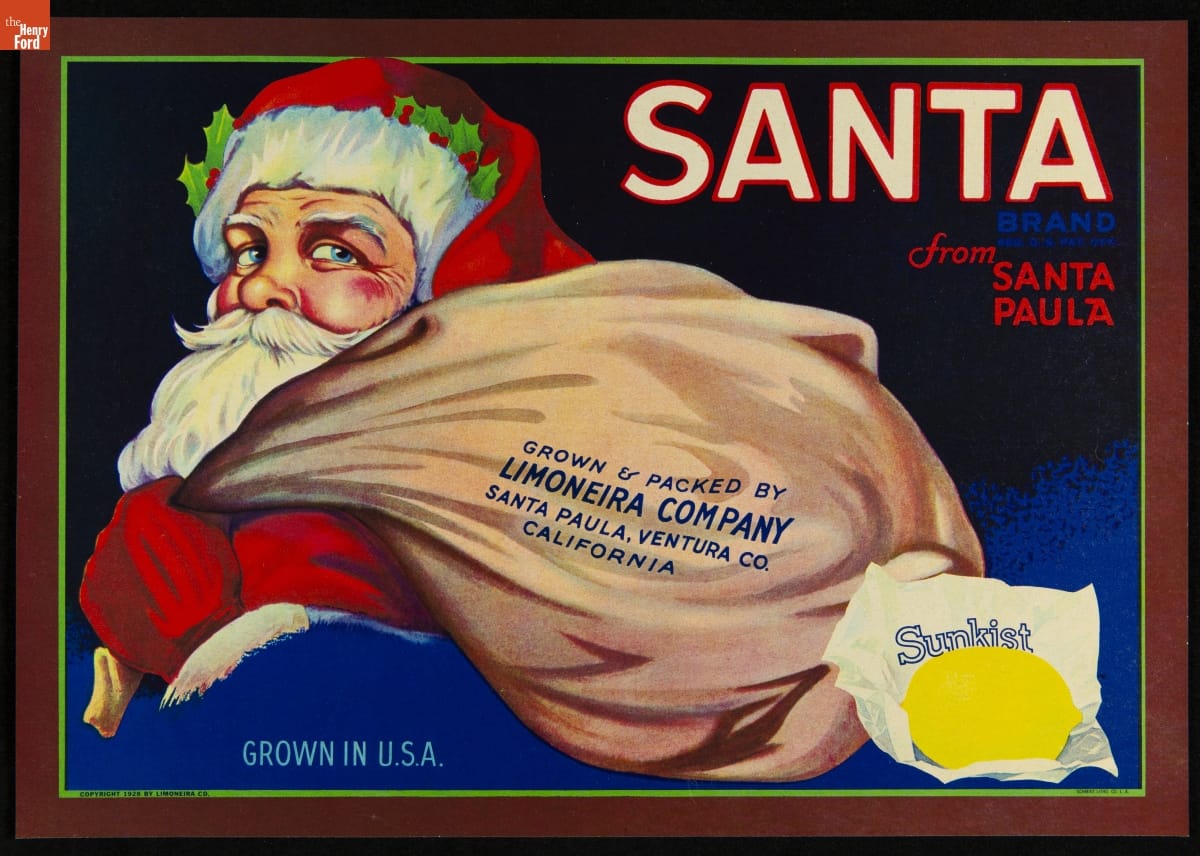
- Crate Label, "Santa Brand Fruits," 1928 - As produce companies shipped crates of fruits and vegetables across the country, they needed a way to distinguish their goods from their competitors'. Colorful, eye-catching labels were created to attract the attention of grocers purchasing goods from wholesale markets. The Sunkist Growers cooperative featured an orange or lemon on the corner of its labels-- a logo that consumers came to associate with high-quality citrus.
- 1928
- Collections - Artifact
Crate Label, "Santa Brand Fruits," 1928
As produce companies shipped crates of fruits and vegetables across the country, they needed a way to distinguish their goods from their competitors'. Colorful, eye-catching labels were created to attract the attention of grocers purchasing goods from wholesale markets. The Sunkist Growers cooperative featured an orange or lemon on the corner of its labels-- a logo that consumers came to associate with high-quality citrus.
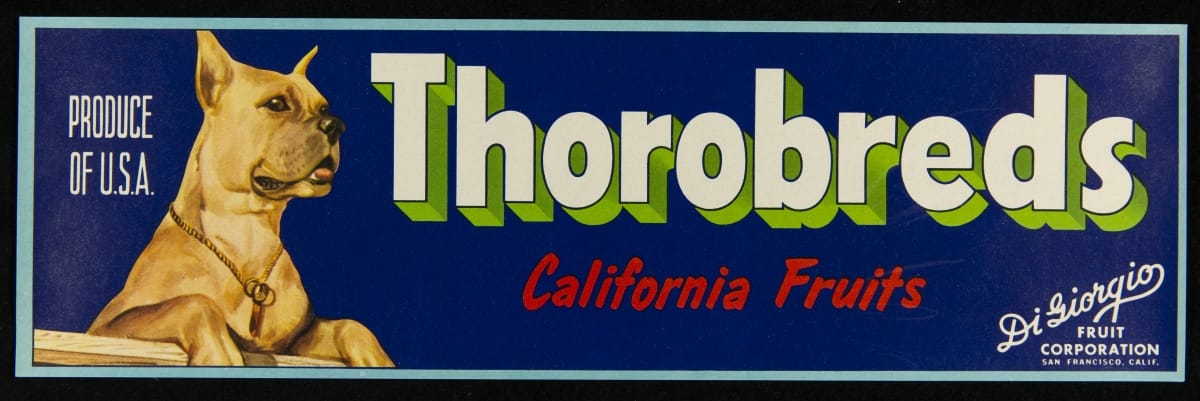
- Crate Label, "Thorobreds Brand California Fruits," 1940-1950 - In 1869, the transcontinental railroad opened eastern markets to the West Coast produce industry for the first time. As produce companies shipped crates of fruits and vegetables across the country, they needed a way to distinguish their goods from their competitors'. Colorful, eye-catching labels, like this one for Thorobreds Brand Fruits, were created to attract grocers purchasing goods from wholesale markets.
- 1940-1950
- Collections - Artifact
Crate Label, "Thorobreds Brand California Fruits," 1940-1950
In 1869, the transcontinental railroad opened eastern markets to the West Coast produce industry for the first time. As produce companies shipped crates of fruits and vegetables across the country, they needed a way to distinguish their goods from their competitors'. Colorful, eye-catching labels, like this one for Thorobreds Brand Fruits, were created to attract grocers purchasing goods from wholesale markets.
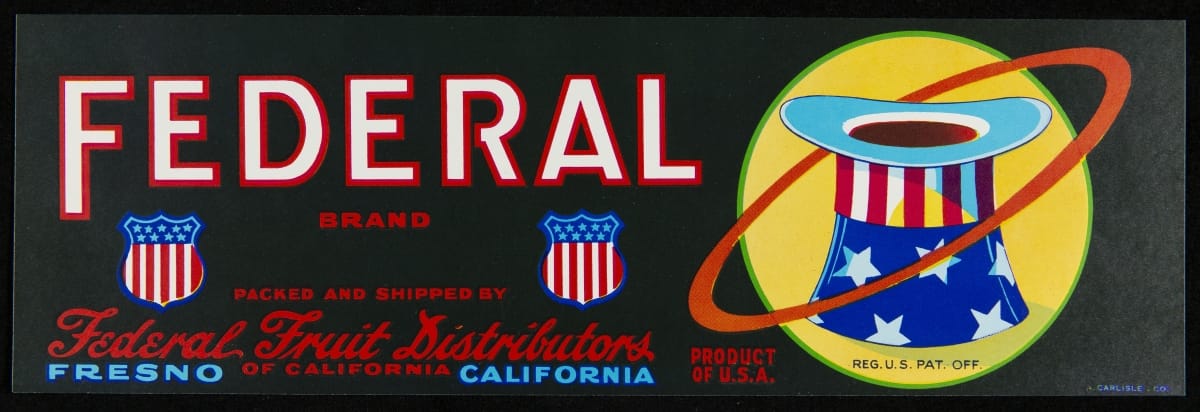
- Crate Label, "Federal Brand Fruit," circa 1950 - In 1869, the transcontinental railroad opened eastern markets to the West Coast produce industry for the first time. As produce companies shipped crates of fruits and vegetables across the country, they needed a way to distinguish their goods from their competitors'. Colorful, eye-catching labels, like this one for Federal Brand Fruits, were created to attract grocers purchasing goods from wholesale markets.
- circa 1950
- Collections - Artifact
Crate Label, "Federal Brand Fruit," circa 1950
In 1869, the transcontinental railroad opened eastern markets to the West Coast produce industry for the first time. As produce companies shipped crates of fruits and vegetables across the country, they needed a way to distinguish their goods from their competitors'. Colorful, eye-catching labels, like this one for Federal Brand Fruits, were created to attract grocers purchasing goods from wholesale markets.
- Crate Label, "Athlete Brand Fruit," 1930-1939 - As produce companies shipped crates of fruits and vegetables across the country, they needed a way to distinguish their goods from their competitors'. Colorful, eye-catching labels were created to attract the attention of grocers purchasing goods from wholesale markets. The Sunkist Growers cooperative featured an orange or lemon on the corner of its labels-- a logo that consumers came to associate with high-quality citrus.
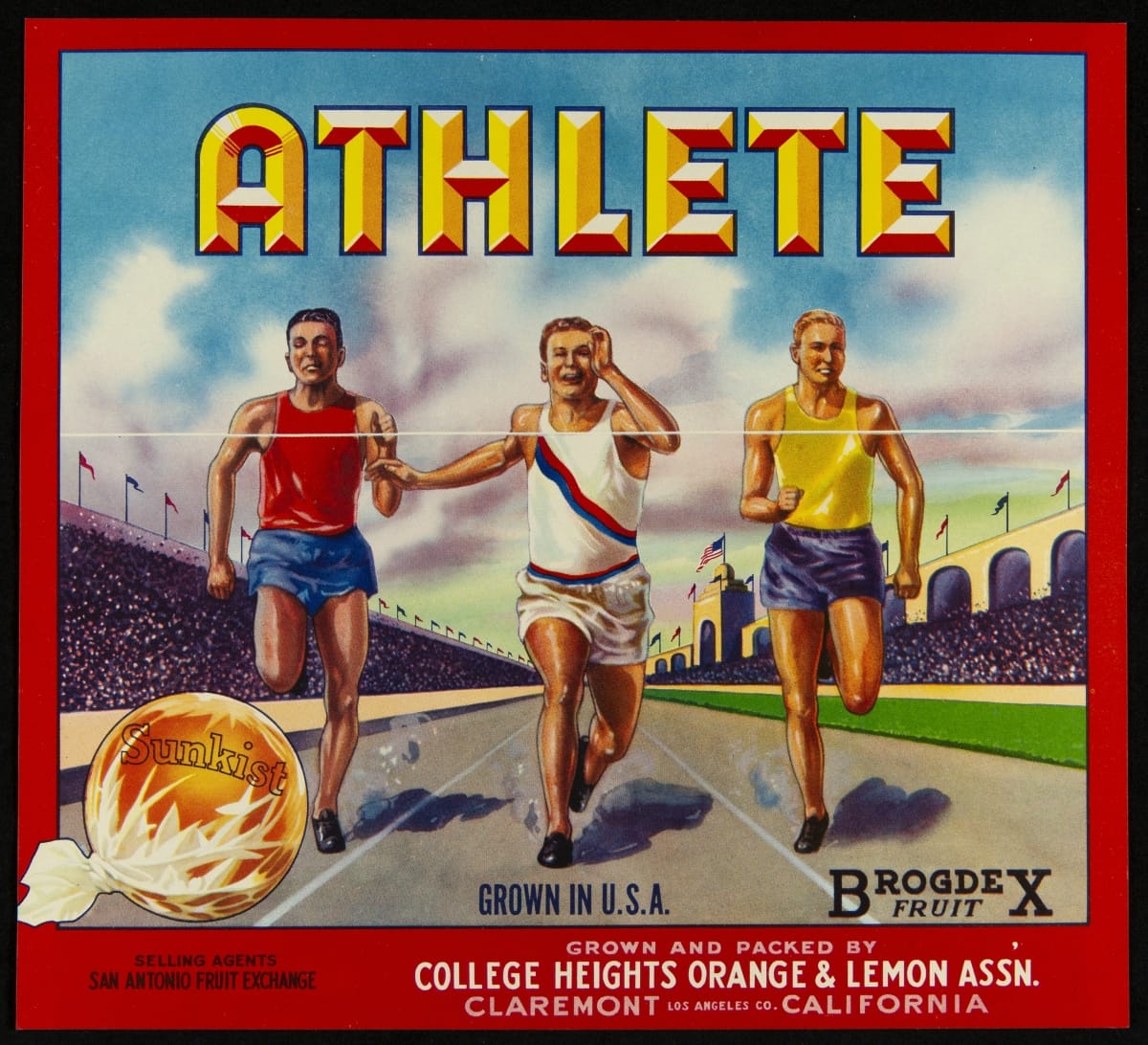
- 1930-1939
- Collections - Artifact
Crate Label, "Athlete Brand Fruit," 1930-1939
As produce companies shipped crates of fruits and vegetables across the country, they needed a way to distinguish their goods from their competitors'. Colorful, eye-catching labels were created to attract the attention of grocers purchasing goods from wholesale markets. The Sunkist Growers cooperative featured an orange or lemon on the corner of its labels-- a logo that consumers came to associate with high-quality citrus.
- Crate Label, "Rosy Brand California Fruits," circa 1950 - In 1869, the transcontinental railroad opened eastern markets to the West Coast produce industry for the first time. As produce companies shipped crates of fruits and vegetables across the country, they needed a way to distinguish their goods from their competitors'. Colorful, eye-catching labels, like this one for Rosy Brand Fruits, were created to attract grocers purchasing goods from wholesale markets.
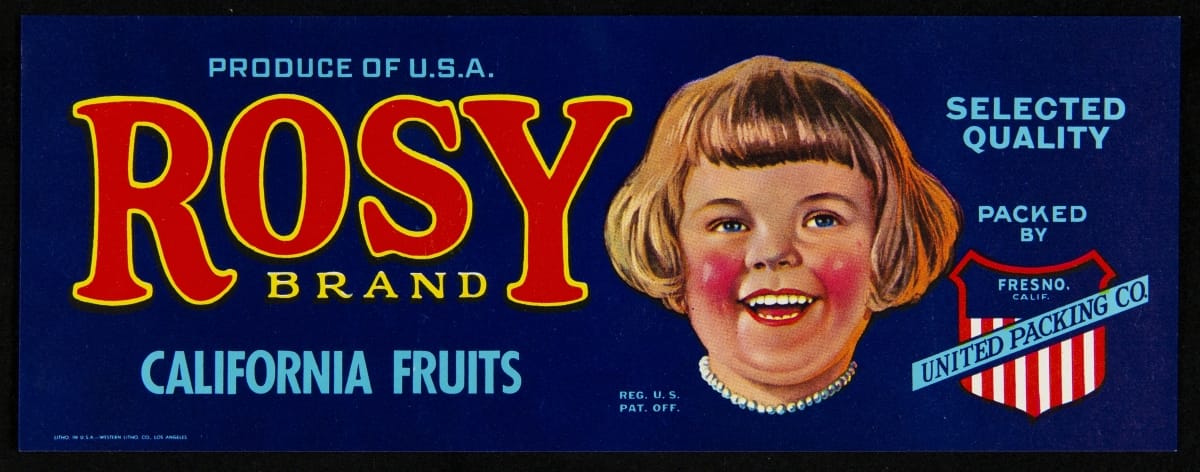
- circa 1950
- Collections - Artifact
Crate Label, "Rosy Brand California Fruits," circa 1950
In 1869, the transcontinental railroad opened eastern markets to the West Coast produce industry for the first time. As produce companies shipped crates of fruits and vegetables across the country, they needed a way to distinguish their goods from their competitors'. Colorful, eye-catching labels, like this one for Rosy Brand Fruits, were created to attract grocers purchasing goods from wholesale markets.
- Sorting and Crating Small Fruit in a Tent, circa 1923 -
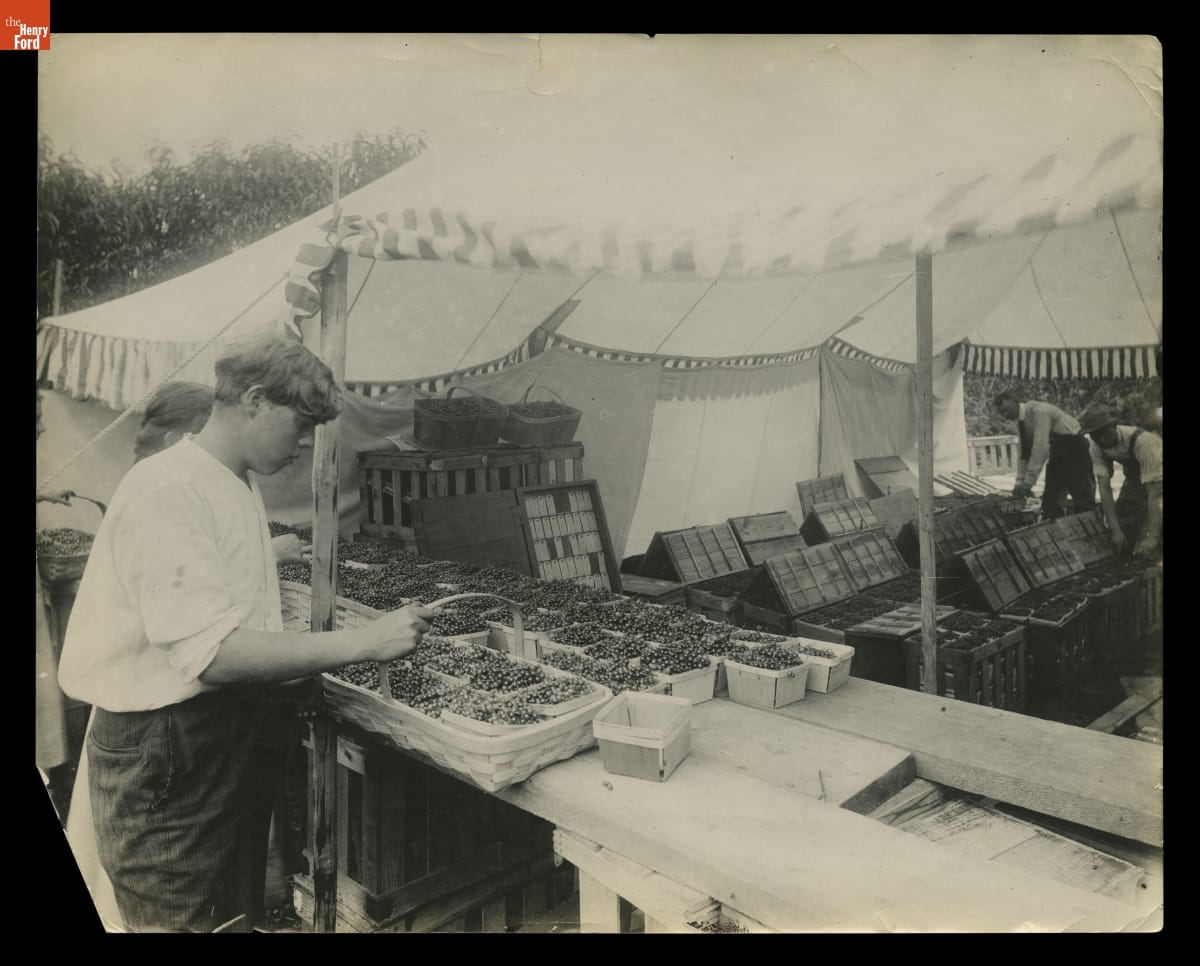
- circa 1923
- Collections - Artifact
Sorting and Crating Small Fruit in a Tent, circa 1923
- Crate Label, "Piney Woods Belle Brand Fruits," 1920-1940 - In 1869, the transcontinental railroad opened eastern markets to the West Coast produce industry for the first time. As produce companies shipped crates of fruits and vegetables across the country, they needed a way to distinguish their goods from their competitors'. Colorful, eye-catching labels, like this one for Piney Woods Belle Brand Fruits, were created to attract grocers purchasing goods from wholesale markets.
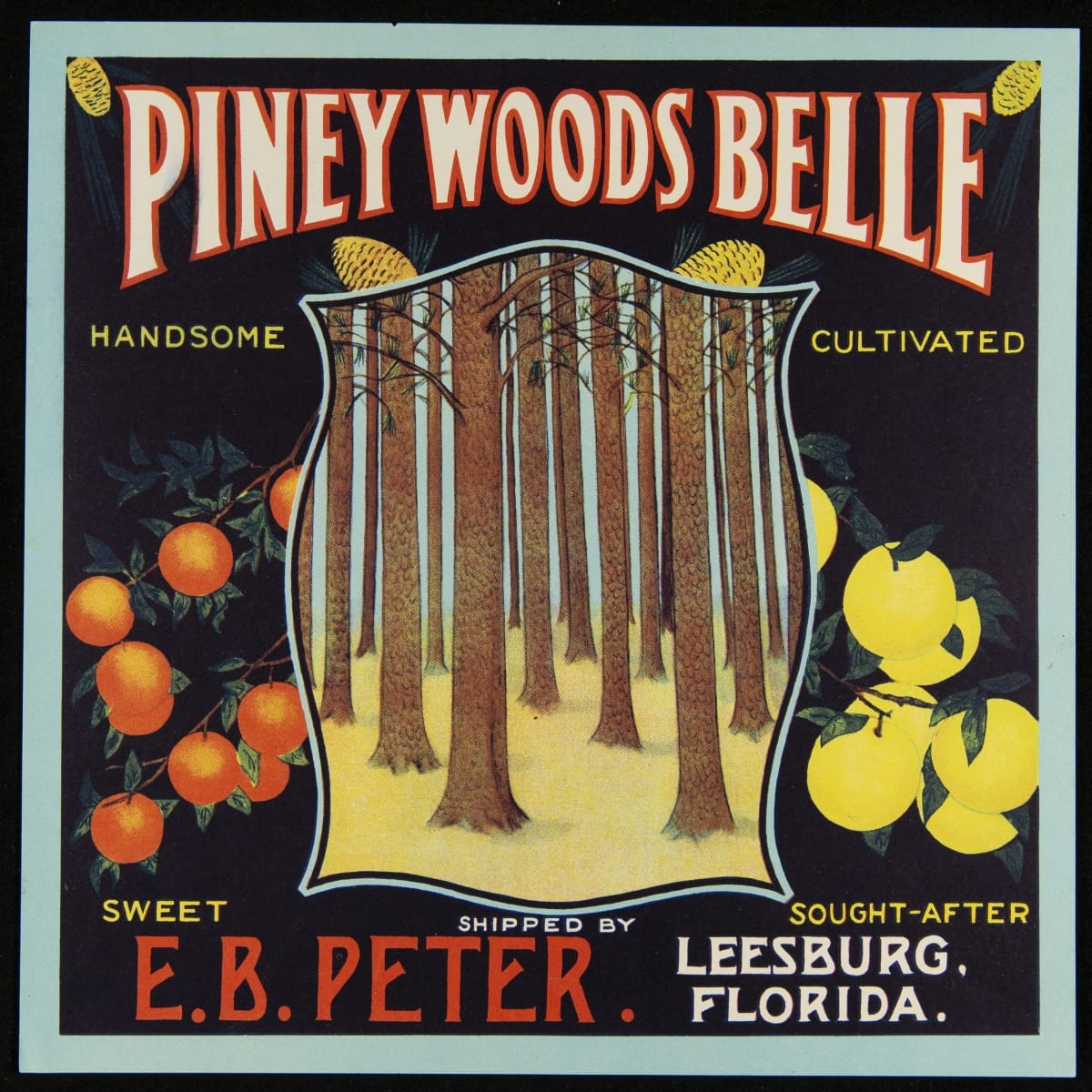
- 1920-1940
- Collections - Artifact
Crate Label, "Piney Woods Belle Brand Fruits," 1920-1940
In 1869, the transcontinental railroad opened eastern markets to the West Coast produce industry for the first time. As produce companies shipped crates of fruits and vegetables across the country, they needed a way to distinguish their goods from their competitors'. Colorful, eye-catching labels, like this one for Piney Woods Belle Brand Fruits, were created to attract grocers purchasing goods from wholesale markets.
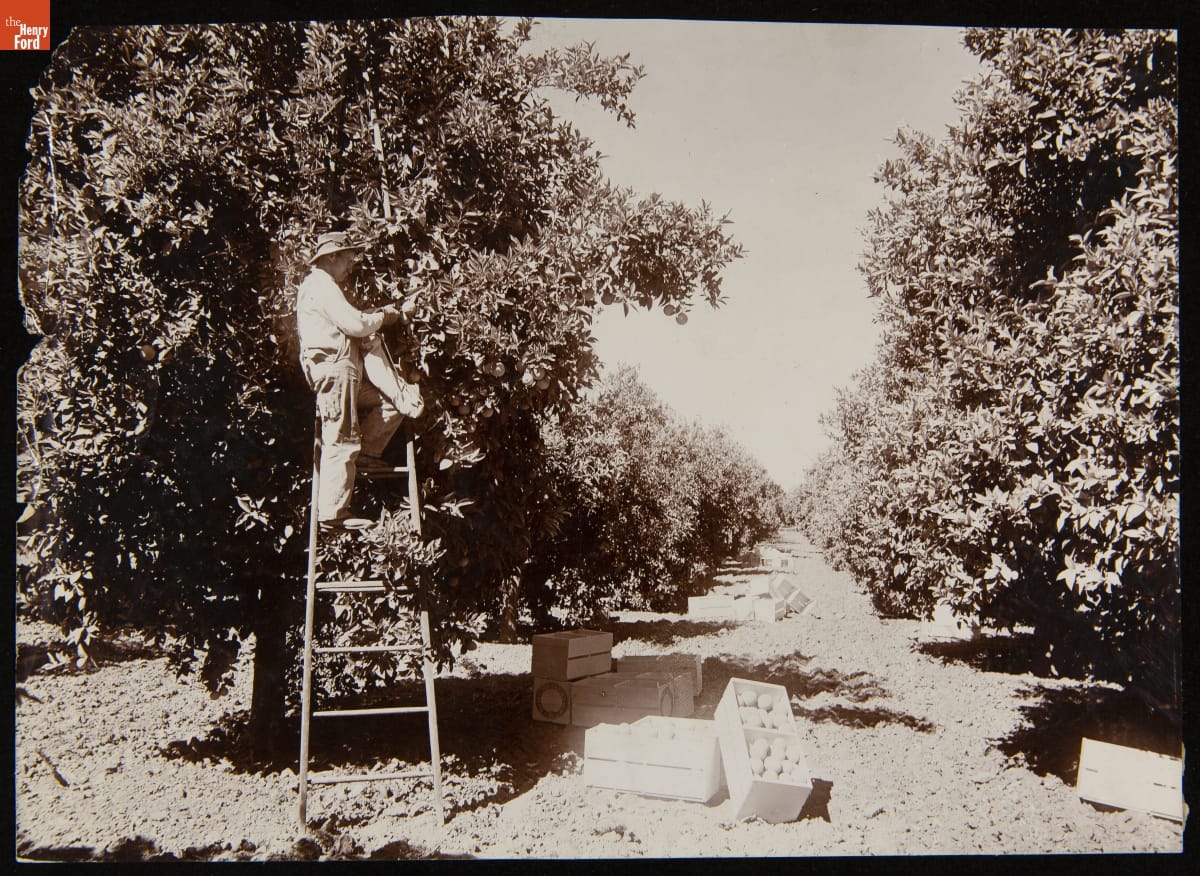
- Picking and Crating Grapefruit for Riverside Fruit Exchange, Riverside, California, 1893-1905 - The Riverside Fruit Exchange served California citrus growers and packers starting in 1893. Members of the exchange hand-picked and packed fruit into crates for transportation in refrigerated railcars to eastern markets. Commons crops included navel oranges and lemons. This worker harvested grapefruit, a crop promoted by the exchange in response to competition from grapefruit growers in Florida and Texas.
- 1893-1905
- Collections - Artifact
Picking and Crating Grapefruit for Riverside Fruit Exchange, Riverside, California, 1893-1905
The Riverside Fruit Exchange served California citrus growers and packers starting in 1893. Members of the exchange hand-picked and packed fruit into crates for transportation in refrigerated railcars to eastern markets. Commons crops included navel oranges and lemons. This worker harvested grapefruit, a crop promoted by the exchange in response to competition from grapefruit growers in Florida and Texas.
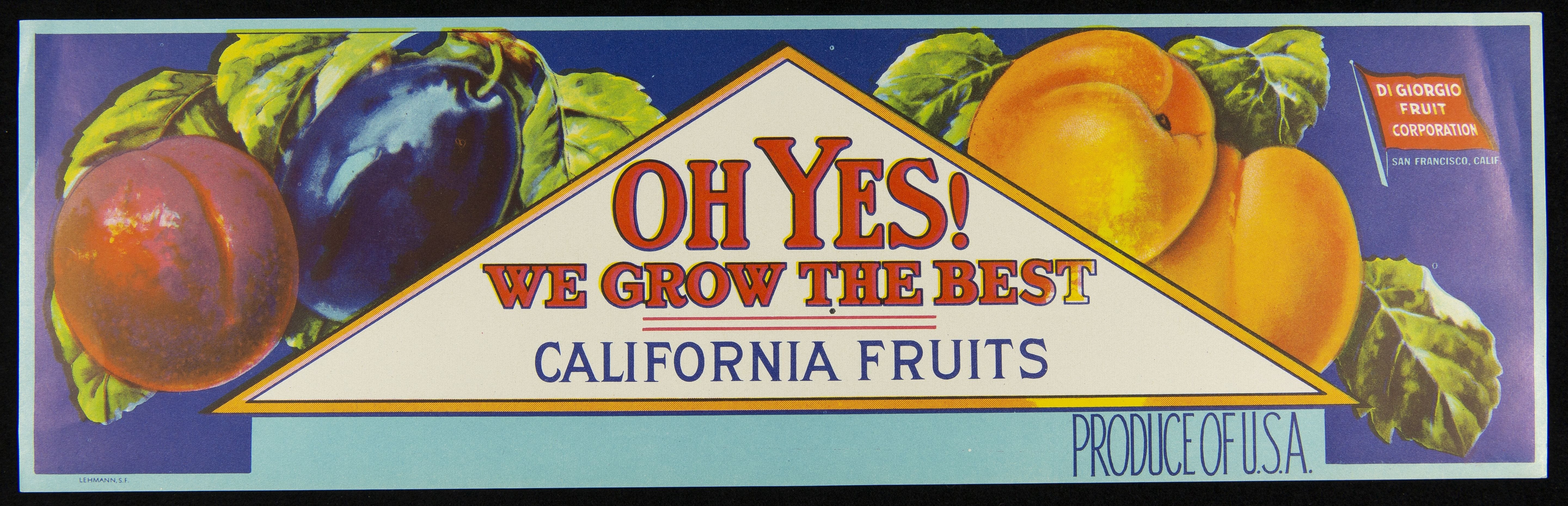
- Crate Label, "Oh Yes! We Grow The Best California Fruits," 1930-1940 - In 1869, the transcontinental railroad opened eastern markets to the West Coast produce industry for the first time. As competition among packing companies increased, labels were used to help companies distinguish themselves from their competitors. Colorful labels and catchy brand names, like the "Oh Yes! We Grow the Best" Brand by Di Giorgio Fruit Corporation, attracted the attention of grocers purchasing their goods at wholesale markets.
- 1930-1940
- Collections - Artifact
Crate Label, "Oh Yes! We Grow The Best California Fruits," 1930-1940
In 1869, the transcontinental railroad opened eastern markets to the West Coast produce industry for the first time. As competition among packing companies increased, labels were used to help companies distinguish themselves from their competitors. Colorful labels and catchy brand names, like the "Oh Yes! We Grow the Best" Brand by Di Giorgio Fruit Corporation, attracted the attention of grocers purchasing their goods at wholesale markets.