
Search
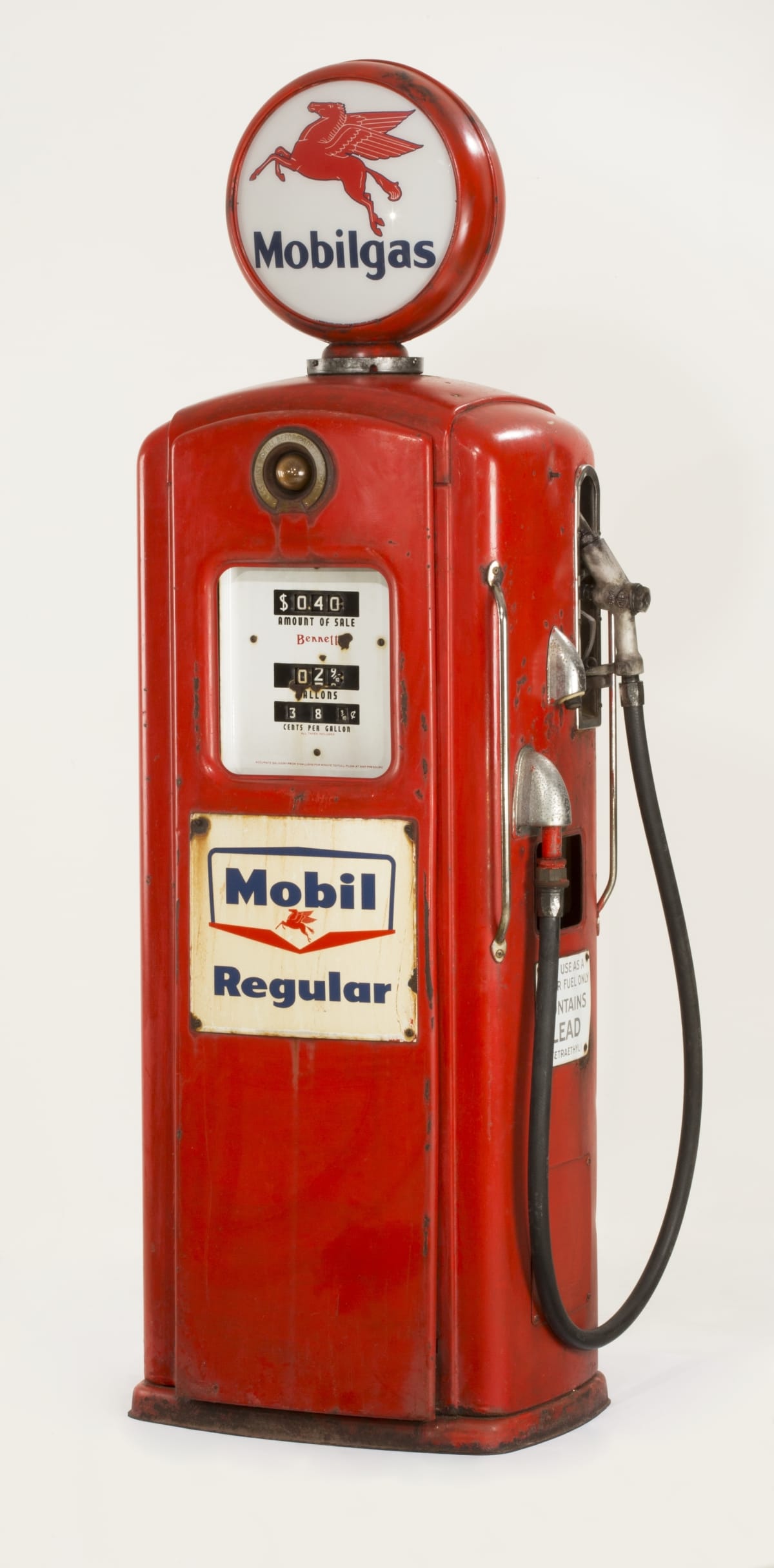
- Mobil Gas Pump, 1946-1960 - By the 1940s, "computing" pumps like this automatically calculated the amount of gasoline and the price. This type of pump did away with the price charts used by service station attendants. Mobil formed from a merger of Socony and Vacuum Oil in 1931 -- both with extensive networks of gas stations. Mobil began using Vacuum's flying red horse logo system-wide in 1934.
- 1946-1960
- Collections - Artifact
Mobil Gas Pump, 1946-1960
By the 1940s, "computing" pumps like this automatically calculated the amount of gasoline and the price. This type of pump did away with the price charts used by service station attendants. Mobil formed from a merger of Socony and Vacuum Oil in 1931 -- both with extensive networks of gas stations. Mobil began using Vacuum's flying red horse logo system-wide in 1934.
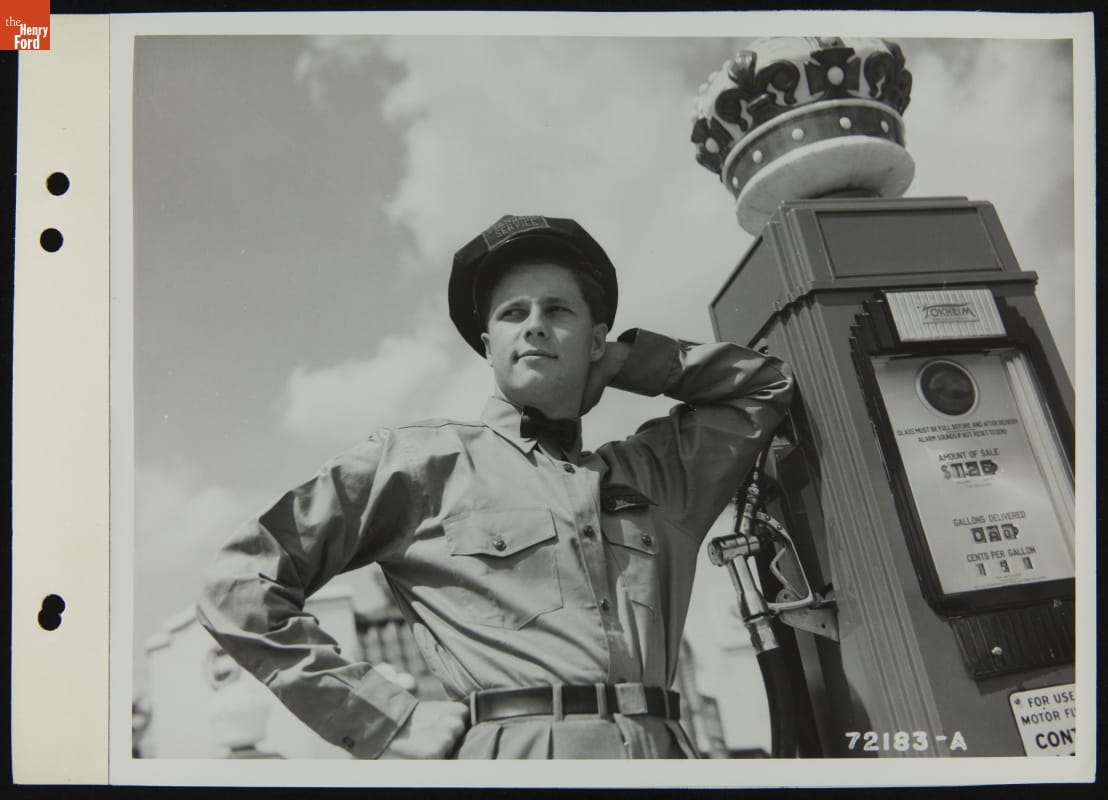
- Gas Station Attendant at Pump, 1939 - The first uniformed gas station attendants appeared around 1914. Attendants worked long hours in all weather, possessed a thorough knowledge of service requirements for various automobile makes and models, improvised quick repairs on the spot, provided directions to lost travelers, and did it all with a smile. Attendants disappeared with the widespread adoption of self-service pumps in the 1970s.
- August 02, 1939
- Collections - Artifact
Gas Station Attendant at Pump, 1939
The first uniformed gas station attendants appeared around 1914. Attendants worked long hours in all weather, possessed a thorough knowledge of service requirements for various automobile makes and models, improvised quick repairs on the spot, provided directions to lost travelers, and did it all with a smile. Attendants disappeared with the widespread adoption of self-service pumps in the 1970s.
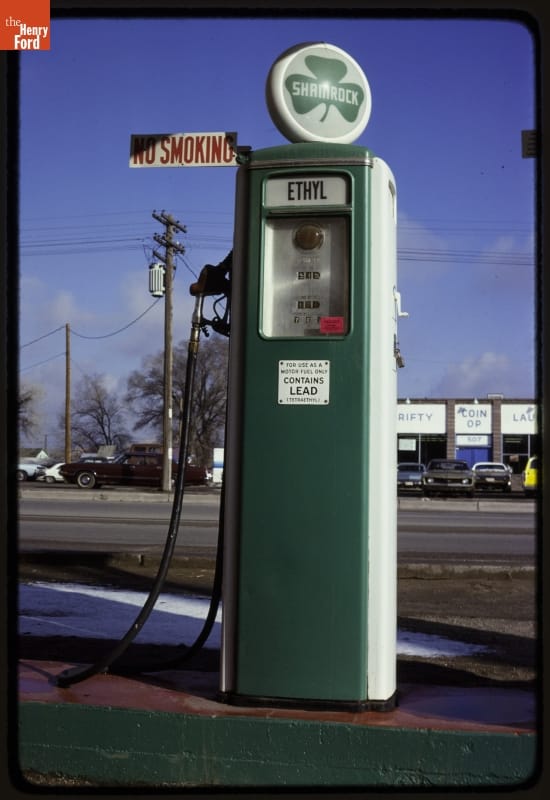
- Shamrock Gas Pump, Albuquerque, New Mexico, 1979 - In the mid-1970s, John Margolies began to assemble a visual record of America's built roadside landscape. Over the following three decades, he traveled thousands of miles to photograph the overlooked and often quickly vanishing structures that had grown out of American automobile culture and main street commerce. His photographs of hotels, motels, diners, service stations, drive-ins and attractions celebrate and capture a unique chapter of American history.
- 1979
- Collections - Artifact
Shamrock Gas Pump, Albuquerque, New Mexico, 1979
In the mid-1970s, John Margolies began to assemble a visual record of America's built roadside landscape. Over the following three decades, he traveled thousands of miles to photograph the overlooked and often quickly vanishing structures that had grown out of American automobile culture and main street commerce. His photographs of hotels, motels, diners, service stations, drive-ins and attractions celebrate and capture a unique chapter of American history.
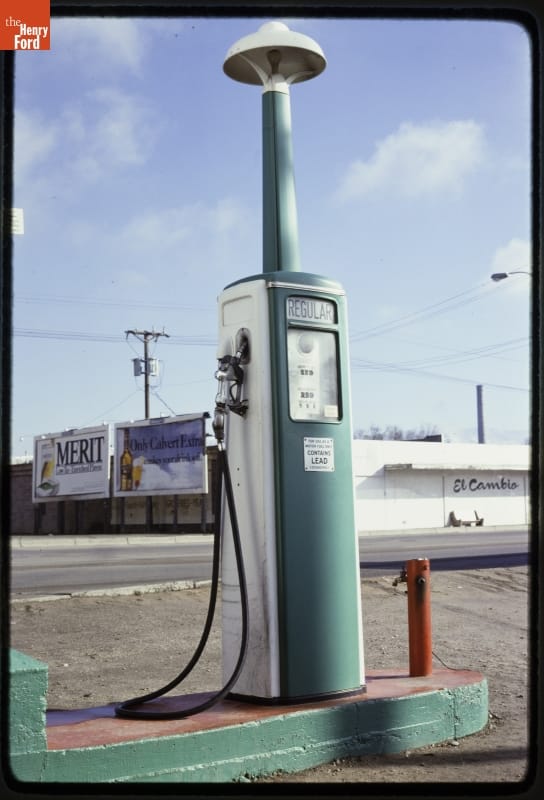
- Shamrock Gas Pump, Albuquerque, New Mexico, 1979 - In the mid-1970s, John Margolies began to assemble a visual record of America's built roadside landscape. Over the following three decades, he traveled thousands of miles to photograph the overlooked and often quickly vanishing structures that had grown out of American automobile culture and main street commerce. His photographs of hotels, motels, diners, service stations, drive-ins and attractions celebrate and capture a unique chapter of American history.
- 1979
- Collections - Artifact
Shamrock Gas Pump, Albuquerque, New Mexico, 1979
In the mid-1970s, John Margolies began to assemble a visual record of America's built roadside landscape. Over the following three decades, he traveled thousands of miles to photograph the overlooked and often quickly vanishing structures that had grown out of American automobile culture and main street commerce. His photographs of hotels, motels, diners, service stations, drive-ins and attractions celebrate and capture a unique chapter of American history.
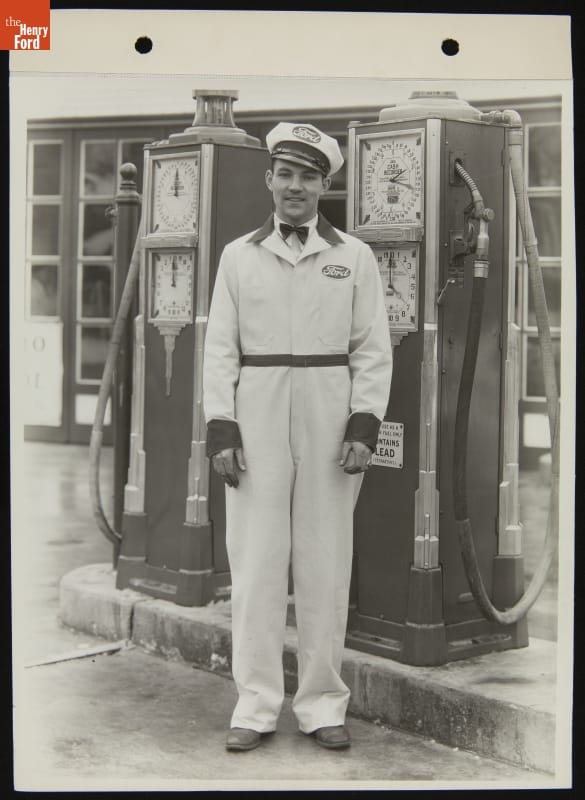
- Ford Gas Station Attendant at Gasoline Pumps, December 1934 - The first uniformed gas station attendants appeared around 1914. Attendants worked long hours in all weather, possessed a thorough knowledge of service requirements for various automobile makes and models, improvised quick repairs on the spot, provided directions to lost travelers, and did it all with a smile. Attendants disappeared with the widespread adoption of self-service pumps in the 1970s.
- December 22, 1934
- Collections - Artifact
Ford Gas Station Attendant at Gasoline Pumps, December 1934
The first uniformed gas station attendants appeared around 1914. Attendants worked long hours in all weather, possessed a thorough knowledge of service requirements for various automobile makes and models, improvised quick repairs on the spot, provided directions to lost travelers, and did it all with a smile. Attendants disappeared with the widespread adoption of self-service pumps in the 1970s.
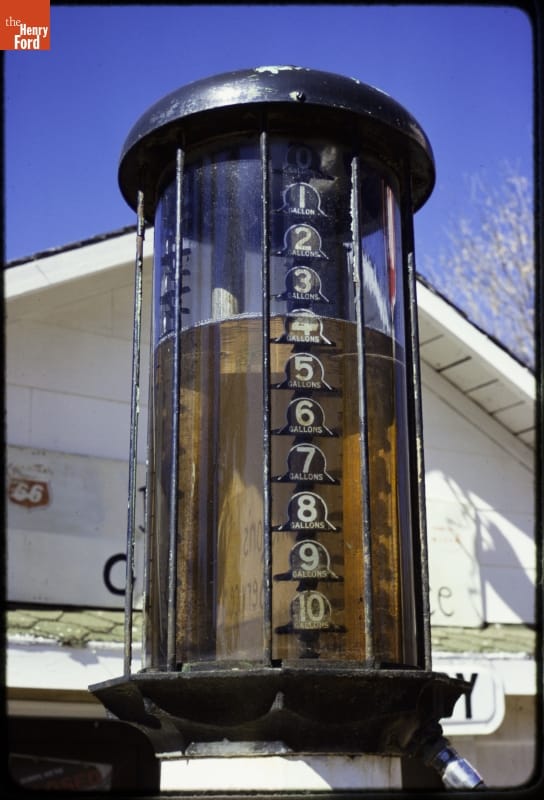
- Visible Gas Pump, Birch Tree, Missouri, 1979 - In the mid-1970s, John Margolies began to assemble a visual record of America's built roadside landscape. Over the following three decades, he traveled thousands of miles to photograph the overlooked and often quickly vanishing structures that had grown out of American automobile culture and main street commerce. His photographs of hotels, motels, diners, service stations, drive-ins and attractions celebrate and capture a unique chapter of American history.
- 1979
- Collections - Artifact
Visible Gas Pump, Birch Tree, Missouri, 1979
In the mid-1970s, John Margolies began to assemble a visual record of America's built roadside landscape. Over the following three decades, he traveled thousands of miles to photograph the overlooked and often quickly vanishing structures that had grown out of American automobile culture and main street commerce. His photographs of hotels, motels, diners, service stations, drive-ins and attractions celebrate and capture a unique chapter of American history.
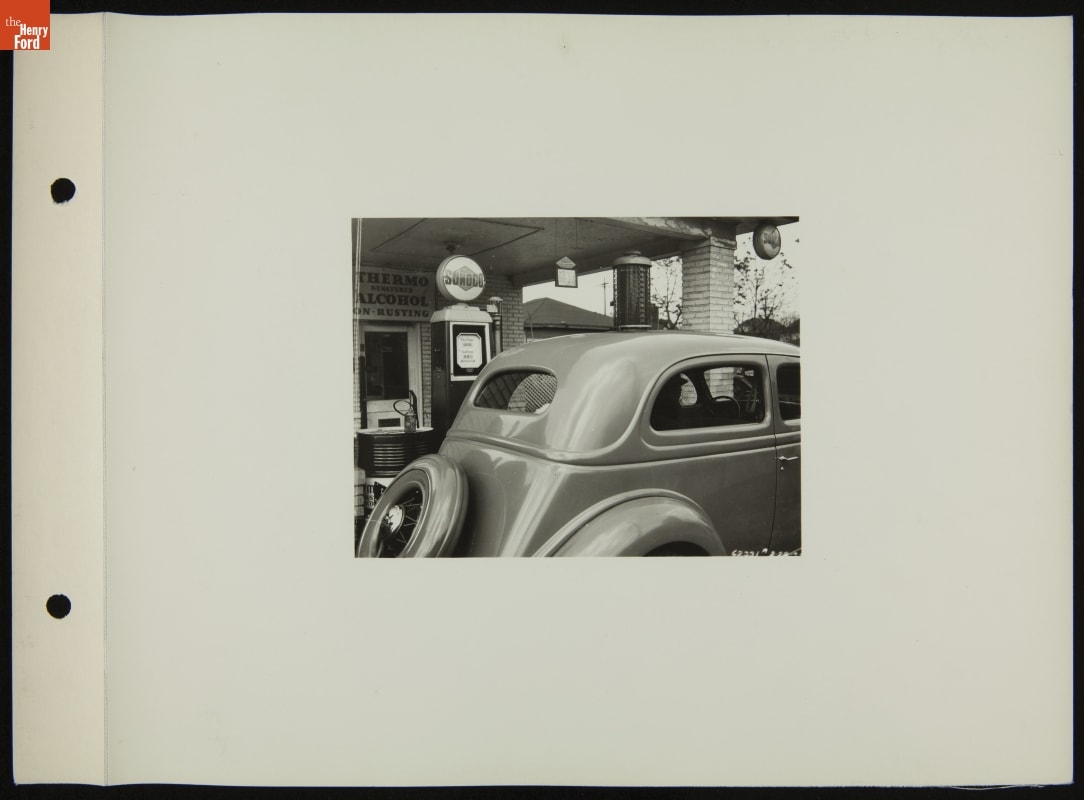
- Car at Gas Station Fuel Pump, February 1935 - Gas pump globes -- lighted glass spheres perched atop pumps -- first appeared in 1912. They evolved over time from simple ball or pill shapes to elaborate crowns, clover leafs, shells, and other forms. These globes not only attracted customers, they also provided light for pump attendants working at night. Globes disappeared in the 1950s as pump designs and marketing strategies changed.
- February 28, 1935
- Collections - Artifact
Car at Gas Station Fuel Pump, February 1935
Gas pump globes -- lighted glass spheres perched atop pumps -- first appeared in 1912. They evolved over time from simple ball or pill shapes to elaborate crowns, clover leafs, shells, and other forms. These globes not only attracted customers, they also provided light for pump attendants working at night. Globes disappeared in the 1950s as pump designs and marketing strategies changed.
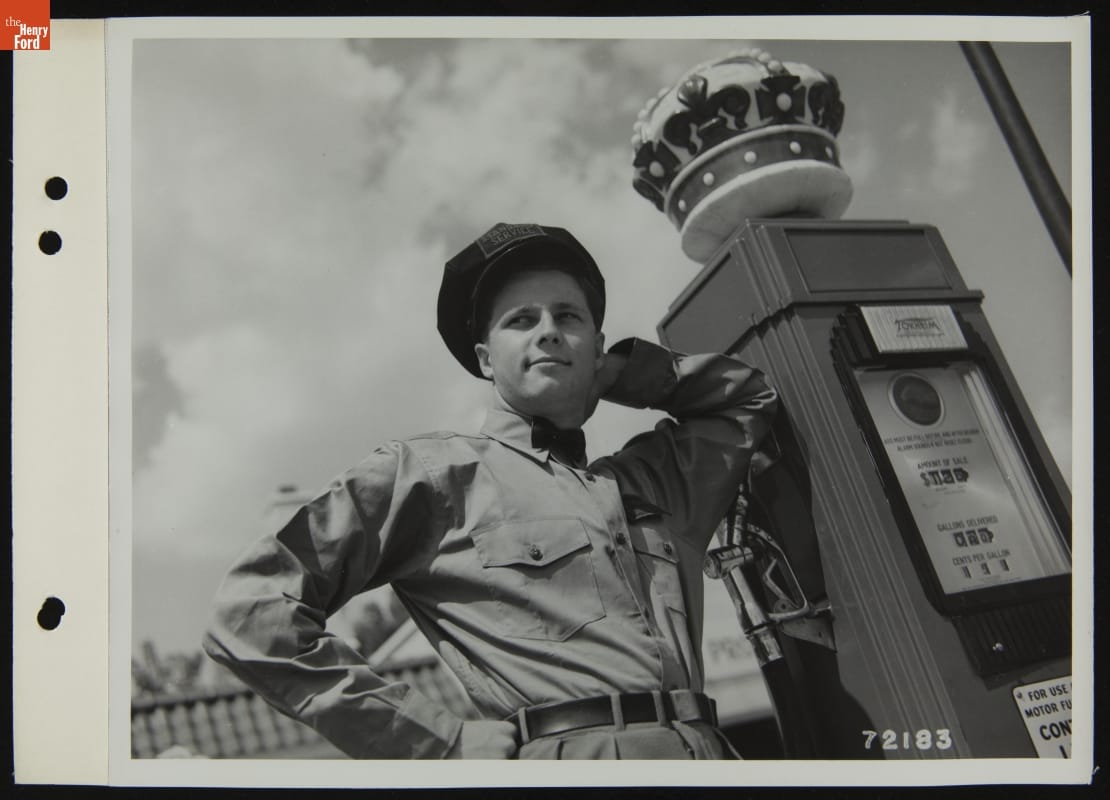
- Gas Station Attendant at Fuel Pump, August 1939 - The first uniformed gas station attendants appeared around 1914. Attendants worked long hours in all weather, possessed a thorough knowledge of service requirements for various automobile makes and models, improvised quick repairs on the spot, provided directions to lost travelers, and did it all with a smile. Attendants disappeared with the widespread adoption of self-service pumps in the 1970s.
- August 02, 1939
- Collections - Artifact
Gas Station Attendant at Fuel Pump, August 1939
The first uniformed gas station attendants appeared around 1914. Attendants worked long hours in all weather, possessed a thorough knowledge of service requirements for various automobile makes and models, improvised quick repairs on the spot, provided directions to lost travelers, and did it all with a smile. Attendants disappeared with the widespread adoption of self-service pumps in the 1970s.
- Gas Station Attendant at Fuel Pump, August 1939 - The first uniformed gas station attendants appeared around 1914. Attendants worked long hours in all weather, possessed a thorough knowledge of service requirements for various automobile makes and models, improvised quick repairs on the spot, provided directions to lost travelers, and did it all with a smile. Attendants disappeared with the widespread adoption of self-service pumps in the 1970s.
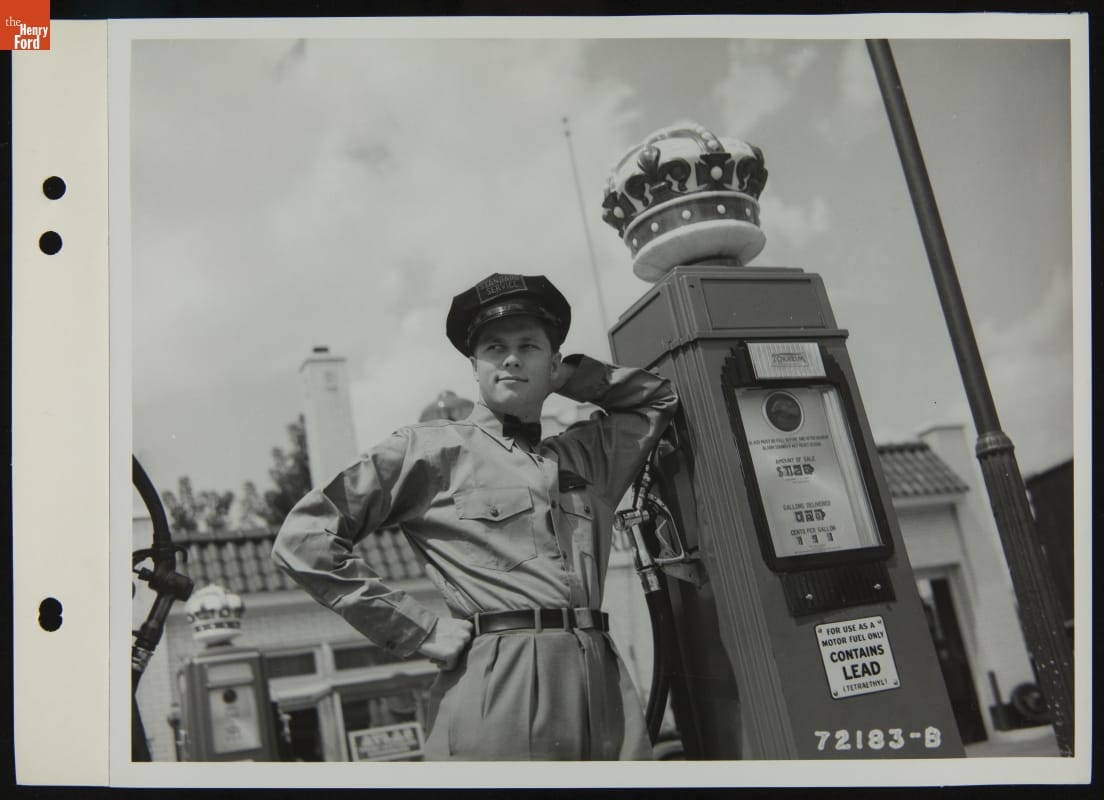
- August 02, 1939
- Collections - Artifact
Gas Station Attendant at Fuel Pump, August 1939
The first uniformed gas station attendants appeared around 1914. Attendants worked long hours in all weather, possessed a thorough knowledge of service requirements for various automobile makes and models, improvised quick repairs on the spot, provided directions to lost travelers, and did it all with a smile. Attendants disappeared with the widespread adoption of self-service pumps in the 1970s.
- Gas Station Attendant at Fuel Pump, August 1939 - The first uniformed gas station attendants appeared around 1914. Attendants worked long hours in all weather, possessed a thorough knowledge of service requirements for various automobile makes and models, improvised quick repairs on the spot, provided directions to lost travelers, and did it all with a smile. Attendants disappeared with the widespread adoption of self-service pumps in the 1970s.
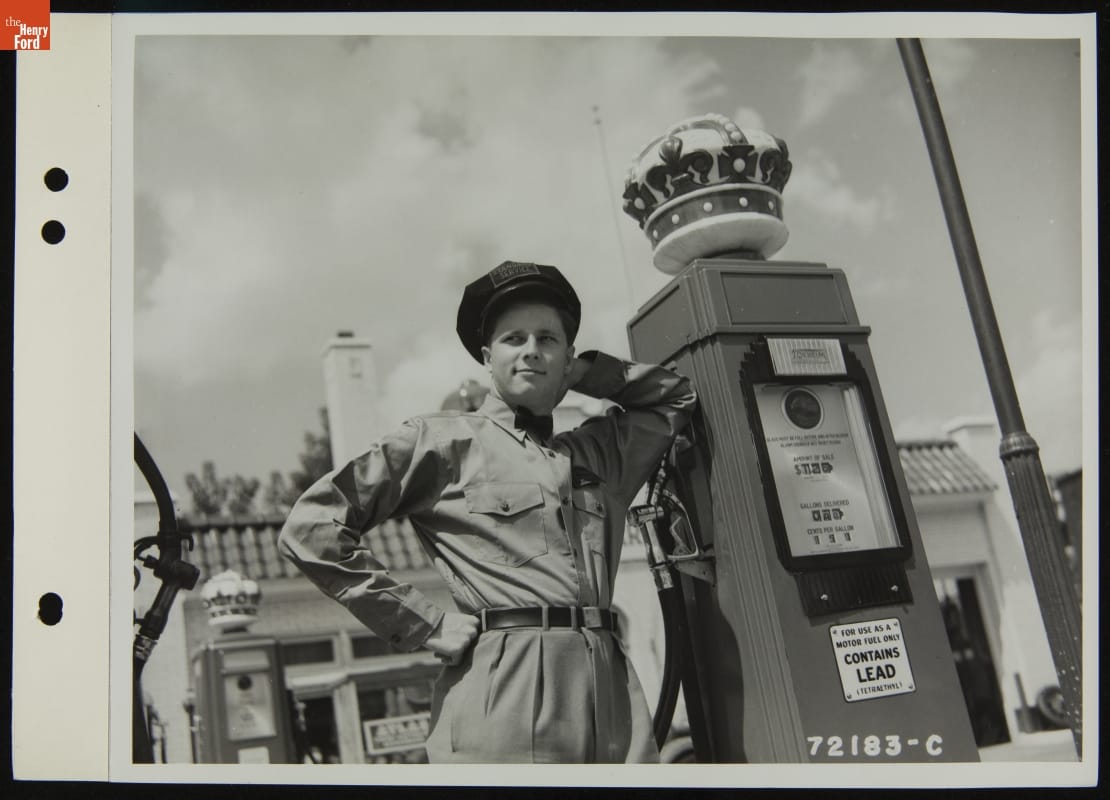
- August 02, 1939
- Collections - Artifact
Gas Station Attendant at Fuel Pump, August 1939
The first uniformed gas station attendants appeared around 1914. Attendants worked long hours in all weather, possessed a thorough knowledge of service requirements for various automobile makes and models, improvised quick repairs on the spot, provided directions to lost travelers, and did it all with a smile. Attendants disappeared with the widespread adoption of self-service pumps in the 1970s.