
Search
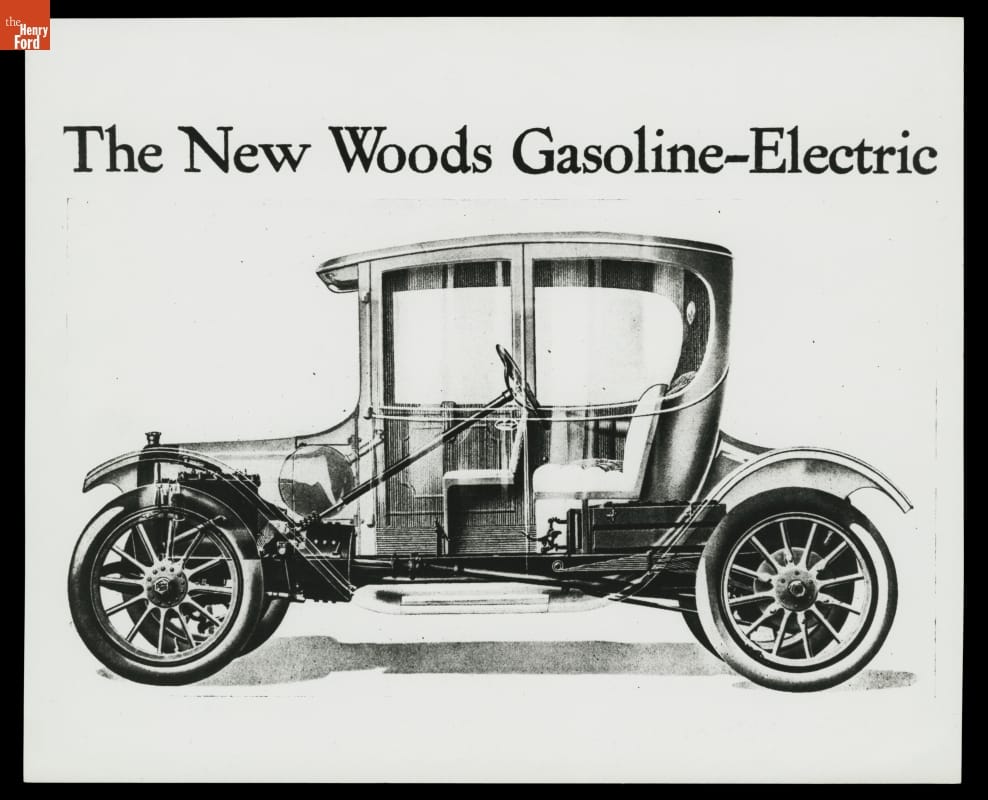
- Photograph of Line Drawing "The New Woods Gasoline-Electric Dual Power Automobile," circa 1916 - This image from a 1916 issue of <EM>The Horseless Age</EM> shows a cutaway version of the Woods Gasoline-Electric car. You can see the batteries under the driver's seat and the engine and gas tank in the front. The Woods Dual-Power vehicle supposedly combined the best of both. Customers, however, had other ideas and the car and company disappeared in 1918.
- 1916
- Collections - Artifact
Photograph of Line Drawing "The New Woods Gasoline-Electric Dual Power Automobile," circa 1916
This image from a 1916 issue of The Horseless Age shows a cutaway version of the Woods Gasoline-Electric car. You can see the batteries under the driver's seat and the engine and gas tank in the front. The Woods Dual-Power vehicle supposedly combined the best of both. Customers, however, had other ideas and the car and company disappeared in 1918.
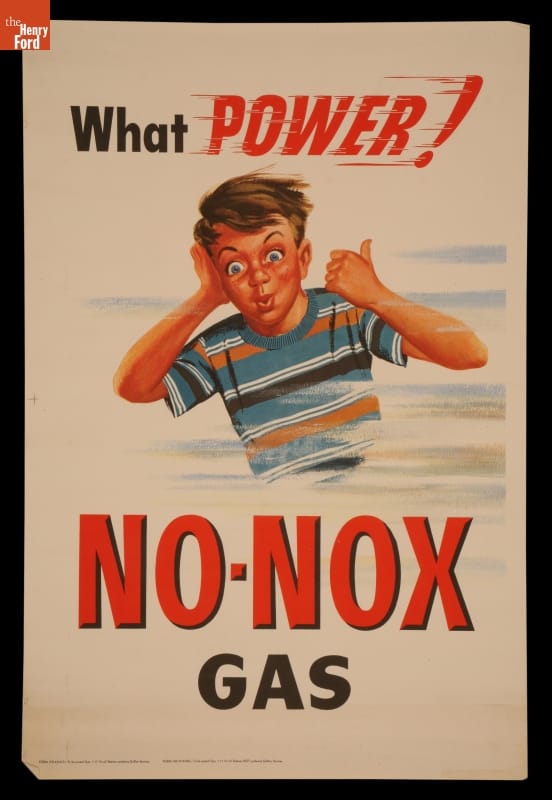
- Advertising Poster, "What Power! Use No-Nox Gasoline," 1950 - Gulf Oil's origins were in the 1901 Spindletop oil strike at Beaumont, Texas, near the Gulf of Mexico. Gulf built a nationwide presence with its recognizable orange disc logo and products like No-Nox gasoline. The company was active in motorsports, too, using a distinctive blue and orange color scheme on race cars it sponsored. Gulf merged with Chevron in 1985.
- 1950
- Collections - Artifact
Advertising Poster, "What Power! Use No-Nox Gasoline," 1950
Gulf Oil's origins were in the 1901 Spindletop oil strike at Beaumont, Texas, near the Gulf of Mexico. Gulf built a nationwide presence with its recognizable orange disc logo and products like No-Nox gasoline. The company was active in motorsports, too, using a distinctive blue and orange color scheme on race cars it sponsored. Gulf merged with Chevron in 1985.
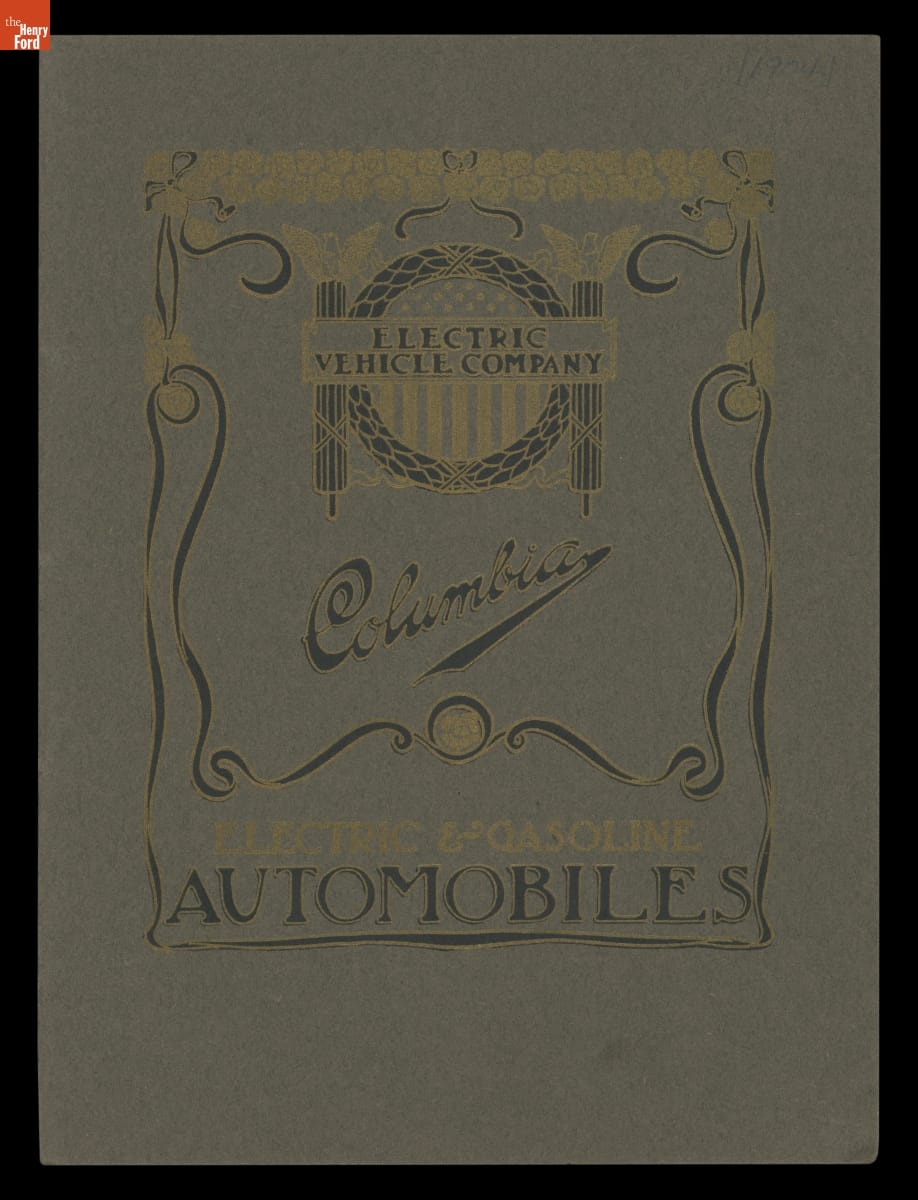
- "Columbia Electric & Gasoline Automobiles," 1904 - Columbia, built by the Pope Manufacturing Company of Hartford, Connecticut, was America's leading bicycle brand in the late 19th century. Founder Albert A. Pope hoped to duplicate that success with automobiles. Both electric and gasoline Columbia motor vehicles were produced in a range of body styles. But high prices hampered sales, and the last Columbia cars were built in 1913.
- 1904
- Collections - Artifact
"Columbia Electric & Gasoline Automobiles," 1904
Columbia, built by the Pope Manufacturing Company of Hartford, Connecticut, was America's leading bicycle brand in the late 19th century. Founder Albert A. Pope hoped to duplicate that success with automobiles. Both electric and gasoline Columbia motor vehicles were produced in a range of body styles. But high prices hampered sales, and the last Columbia cars were built in 1913.
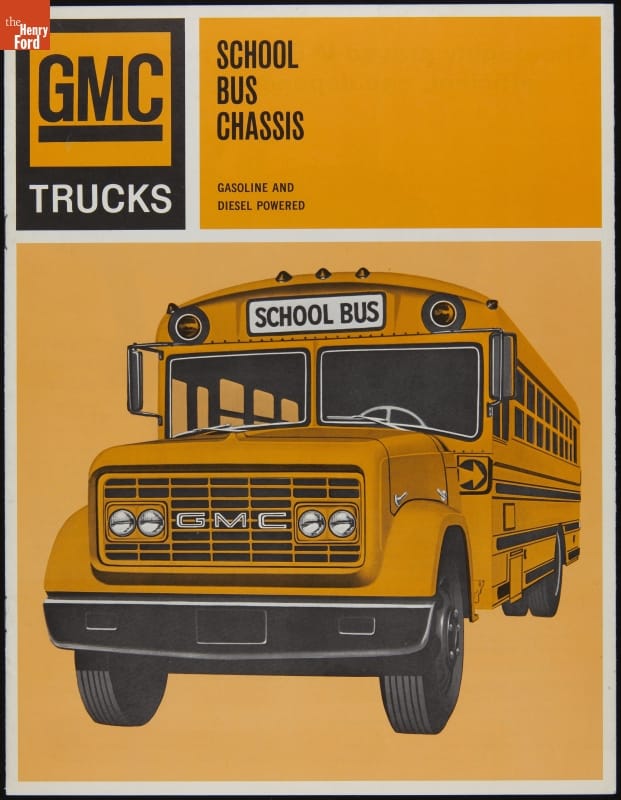
- GMC Trucks, School Bus Chassis, Gasoline and Diesel Powered, 1966 - In 1911, General Motors established its GMC Division in Pontiac, Michigan. In 1943, GMC acquired Yellow Coach, a manufacturer of buses and taxis. For decades GMC built urban transit buses, intercity motor coaches, and school buses. Growing competition in the 1970s and 1980s pushed the company out of the market. GMC built its last buses in 1987.
- 1966
- Collections - Artifact
GMC Trucks, School Bus Chassis, Gasoline and Diesel Powered, 1966
In 1911, General Motors established its GMC Division in Pontiac, Michigan. In 1943, GMC acquired Yellow Coach, a manufacturer of buses and taxis. For decades GMC built urban transit buses, intercity motor coaches, and school buses. Growing competition in the 1970s and 1980s pushed the company out of the market. GMC built its last buses in 1987.
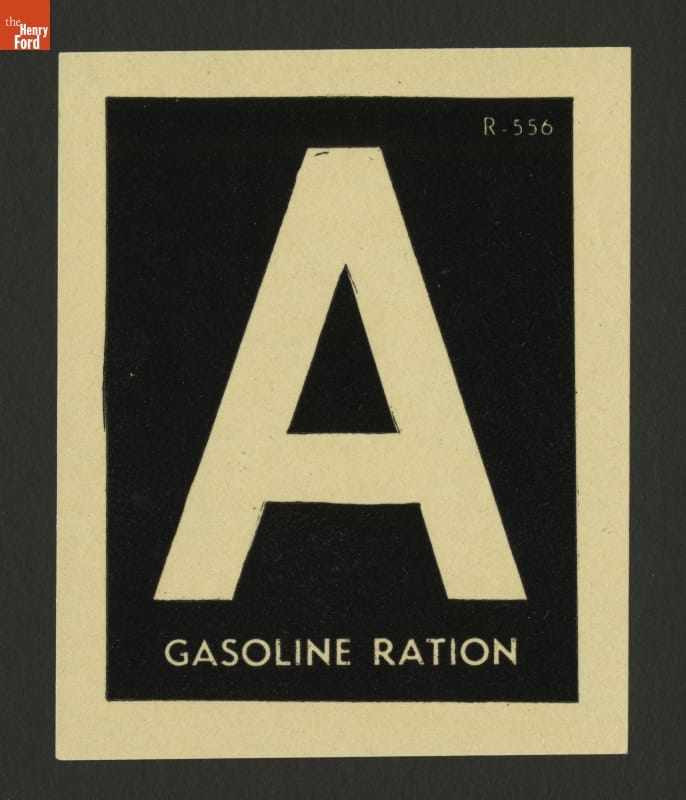
- Gasoline Rationing Sticker for Automobiles, Series "A," 1941-1945 - The amount of gasoline you received during World War II depended on whether your job was essential to the war effort. Drivers received a windshield sticker and ration coupons for gasoline. An "A" sticker, the most common, allowed the driver 3 or 4 gallons a week.
- 1941-1945
- Collections - Artifact
Gasoline Rationing Sticker for Automobiles, Series "A," 1941-1945
The amount of gasoline you received during World War II depended on whether your job was essential to the war effort. Drivers received a windshield sticker and ration coupons for gasoline. An "A" sticker, the most common, allowed the driver 3 or 4 gallons a week.
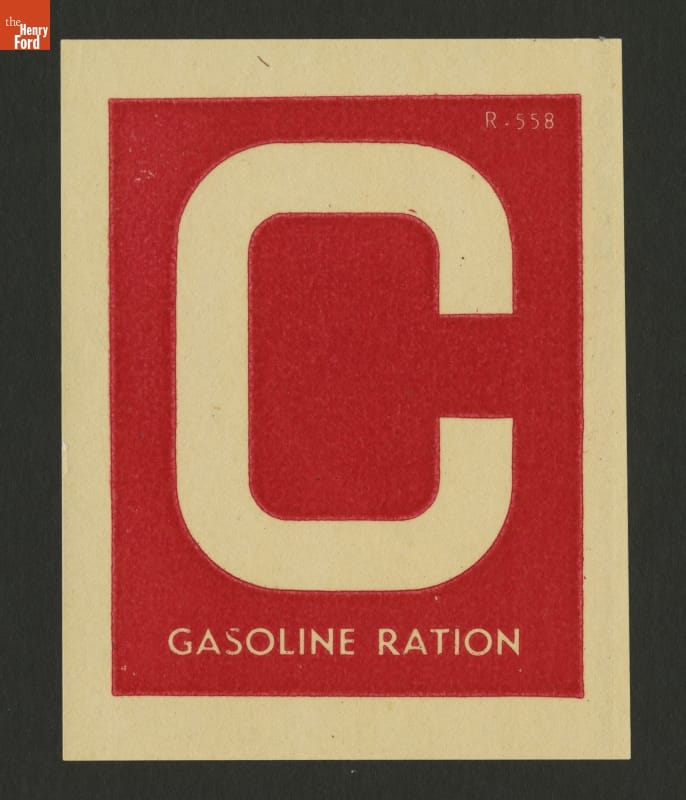
- Gasoline Rationing Sticker for Automobiles, Series "C," 1941-1945 - The amount of gasoline you received during World War II depended on whether your job was essential to the war effort. Drivers received a windshield sticker and ration coupons for gasoline. Essential workers who had special occupational travel requirements, like clergy, physicians, mail carriers, or government officials, received "C" stickers.
- 1941-10945
- Collections - Artifact
Gasoline Rationing Sticker for Automobiles, Series "C," 1941-1945
The amount of gasoline you received during World War II depended on whether your job was essential to the war effort. Drivers received a windshield sticker and ration coupons for gasoline. Essential workers who had special occupational travel requirements, like clergy, physicians, mail carriers, or government officials, received "C" stickers.
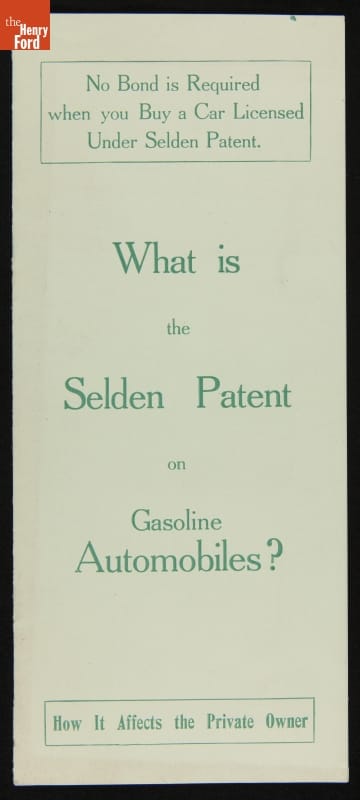
- "What is the Selden Patent on Gasoline Automobiles?," 1910 - The Association of Licensed Automobile Manufacturers believed that George Selden's 1895 patent covered any and all internal combustion automobiles. When Henry Ford refused to pay ALAM's requested royalties, the organization took him to court. After a lengthy legal battle, the U.S. Court of Appeals found in Ford's favor in 1911. Automakers were freed from patent fees and Ford became a folk hero.
- April 12, 1910
- Collections - Artifact
"What is the Selden Patent on Gasoline Automobiles?," 1910
The Association of Licensed Automobile Manufacturers believed that George Selden's 1895 patent covered any and all internal combustion automobiles. When Henry Ford refused to pay ALAM's requested royalties, the organization took him to court. After a lengthy legal battle, the U.S. Court of Appeals found in Ford's favor in 1911. Automakers were freed from patent fees and Ford became a folk hero.
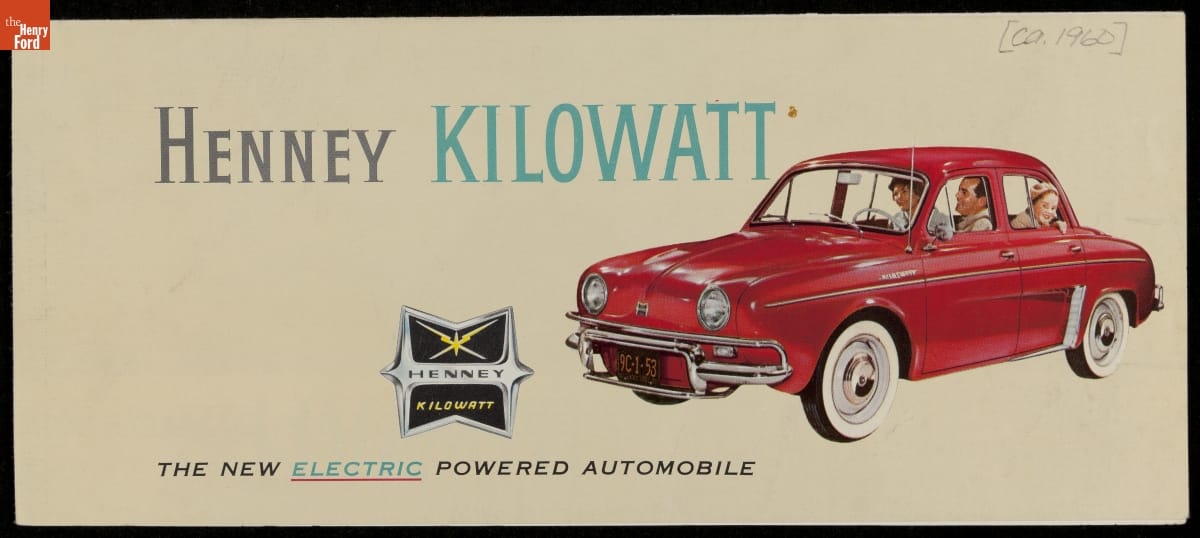
- Henney Kilowatt Catalog, "The New Electric Powered Automobile," circa 1960 - The Henney Motor Company produced an electric vehicle, based on the French-made Renault Dauphine, in 1959 and 1960. The cruising speed was around 30 miles per hour, with a range of about 40 miles between charges. This sales catalog for the Henney Kilowatt provided answers to questions buyers had about the vehicle.
- circa 1960
- Collections - Artifact
Henney Kilowatt Catalog, "The New Electric Powered Automobile," circa 1960
The Henney Motor Company produced an electric vehicle, based on the French-made Renault Dauphine, in 1959 and 1960. The cruising speed was around 30 miles per hour, with a range of about 40 miles between charges. This sales catalog for the Henney Kilowatt provided answers to questions buyers had about the vehicle.
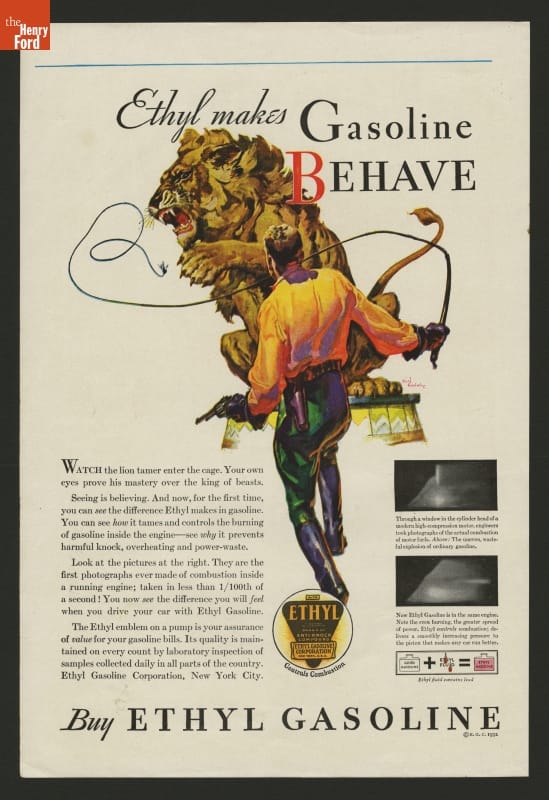
- Ethyl Gasoline Corporation Ad, "Ethyl Makes Gasoline Behave," 1932 - This 1932 magazine advertisement promotes the use of "ethyl" gasoline additive. Some people bought the more expensive "ethyl" (tetraethyl lead) gasoline to prevent engine knocks and other engine performance problems.
- 1932
- Collections - Artifact
Ethyl Gasoline Corporation Ad, "Ethyl Makes Gasoline Behave," 1932
This 1932 magazine advertisement promotes the use of "ethyl" gasoline additive. Some people bought the more expensive "ethyl" (tetraethyl lead) gasoline to prevent engine knocks and other engine performance problems.
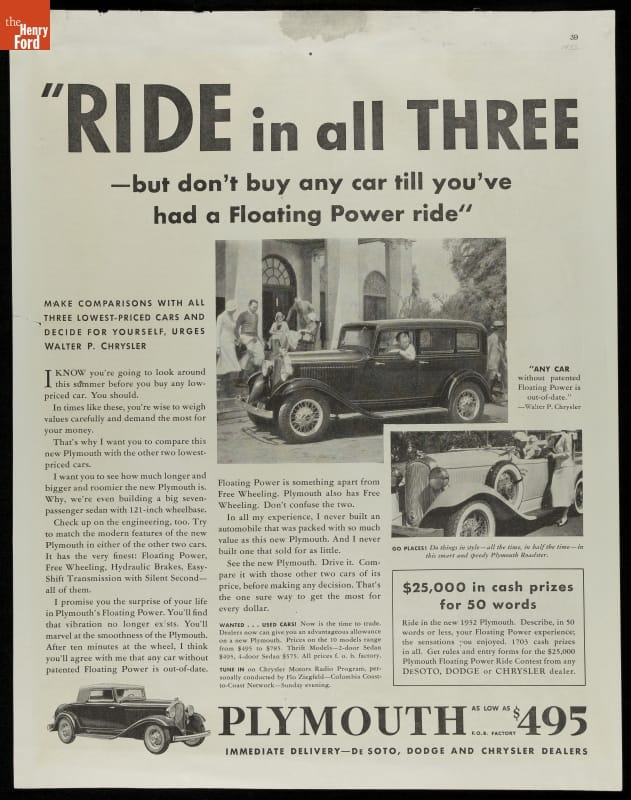
- Advertisement for Plymouth Automobiles with "Floating Power Ride," 1932 - Chrysler established its Plymouth line of automobiles in 1928. The low-priced brand competed directly with Chevrolet and Ford. Plymouth introduced its "Floating Power" engine-mounting system in 1931. Unlike competitors, who bolted engines directly to frames, Plymouth placed its engine on rubber mounts and stabilized it with a rubber-encased spring. The system reduced engine vibration and noise.
- 1932
- Collections - Artifact
Advertisement for Plymouth Automobiles with "Floating Power Ride," 1932
Chrysler established its Plymouth line of automobiles in 1928. The low-priced brand competed directly with Chevrolet and Ford. Plymouth introduced its "Floating Power" engine-mounting system in 1931. Unlike competitors, who bolted engines directly to frames, Plymouth placed its engine on rubber mounts and stabilized it with a rubber-encased spring. The system reduced engine vibration and noise.