
Search
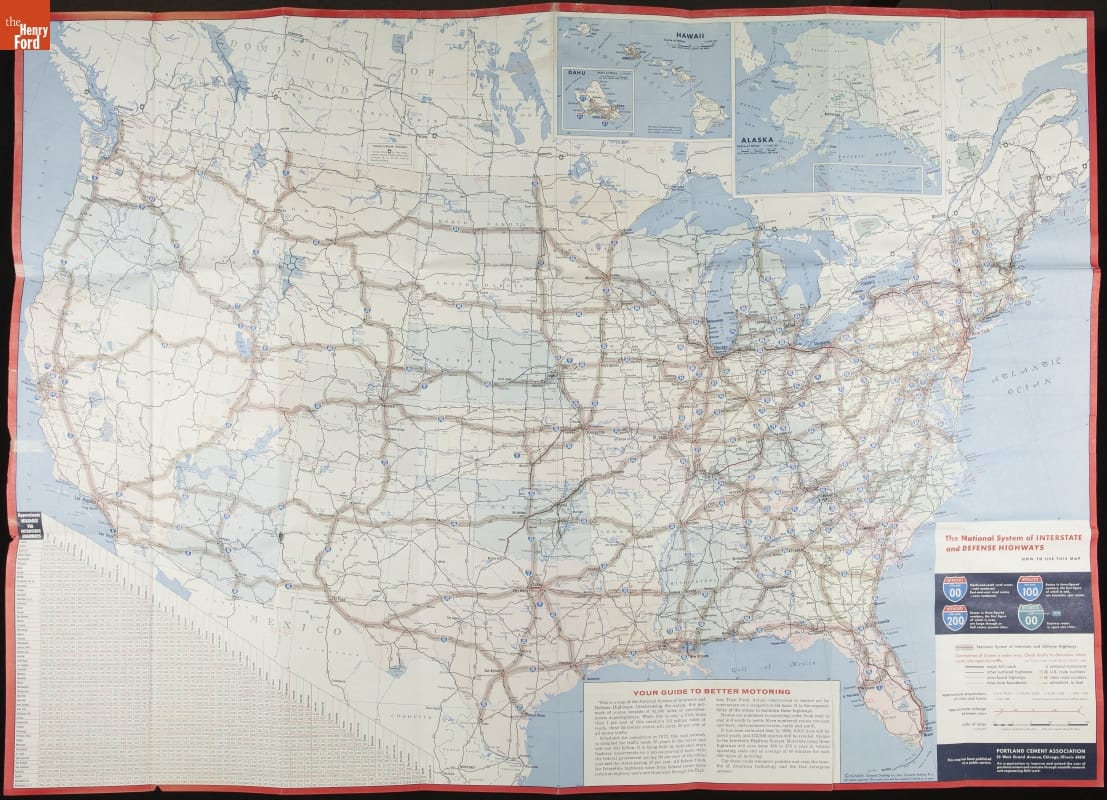
- "The National System of Interstate and Defense Highways," 1964 - The Interstate Highway System includes more than 48,000 miles of controlled-access roadways spanning the United States. Championed by President Dwight D. Eisenhower, the system was authorized by the Federal-Aid Highway Act of 1956. The network as originally envisioned was completed in 1992, but expansions continue. It remains the largest public works project in history.
- 1964
- Collections - Artifact
"The National System of Interstate and Defense Highways," 1964
The Interstate Highway System includes more than 48,000 miles of controlled-access roadways spanning the United States. Championed by President Dwight D. Eisenhower, the system was authorized by the Federal-Aid Highway Act of 1956. The network as originally envisioned was completed in 1992, but expansions continue. It remains the largest public works project in history.
- "The Road Ahead, the Exciting Story of the Nation's 50 Billion Dollar Road Program," 1956 - This 1956 publication, produced by Caterpillar Tractor Company, promoted the proposed Interstate Highway System. Photographs show well-laid-out interchanges and uncongested highways. A central map displays the 41,000 miles of expressways intended for completion by 1971. Authorized through the Federal-Aid Highway Act of 1956, the project's scope grew and it wasn't finished until 1992.

- 1956
- Collections - Artifact
"The Road Ahead, the Exciting Story of the Nation's 50 Billion Dollar Road Program," 1956
This 1956 publication, produced by Caterpillar Tractor Company, promoted the proposed Interstate Highway System. Photographs show well-laid-out interchanges and uncongested highways. A central map displays the 41,000 miles of expressways intended for completion by 1971. Authorized through the Federal-Aid Highway Act of 1956, the project's scope grew and it wasn't finished until 1992.
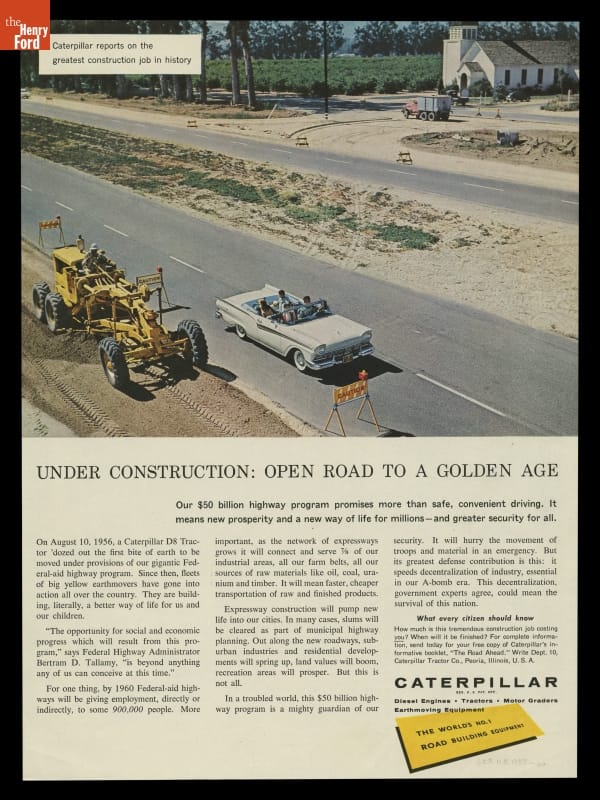
- Caterpillar Tractor Ad, "Under Construction: Open Road to a Golden Age," 1957 - Companies like Catepillar saw promise in the new Interstate Highway System of the late 1950s. This 1957 Catepillar advertisement highlighted not only the safety and convenience the new roads would afford drivers, but also the prosperity and security they would provide American citizens.
- 1957
- Collections - Artifact
Caterpillar Tractor Ad, "Under Construction: Open Road to a Golden Age," 1957
Companies like Catepillar saw promise in the new Interstate Highway System of the late 1950s. This 1957 Catepillar advertisement highlighted not only the safety and convenience the new roads would afford drivers, but also the prosperity and security they would provide American citizens.
- Placemat, Interstate Glass House Restaurant, circa 1950 -
- circa 1950
- Collections - Artifact
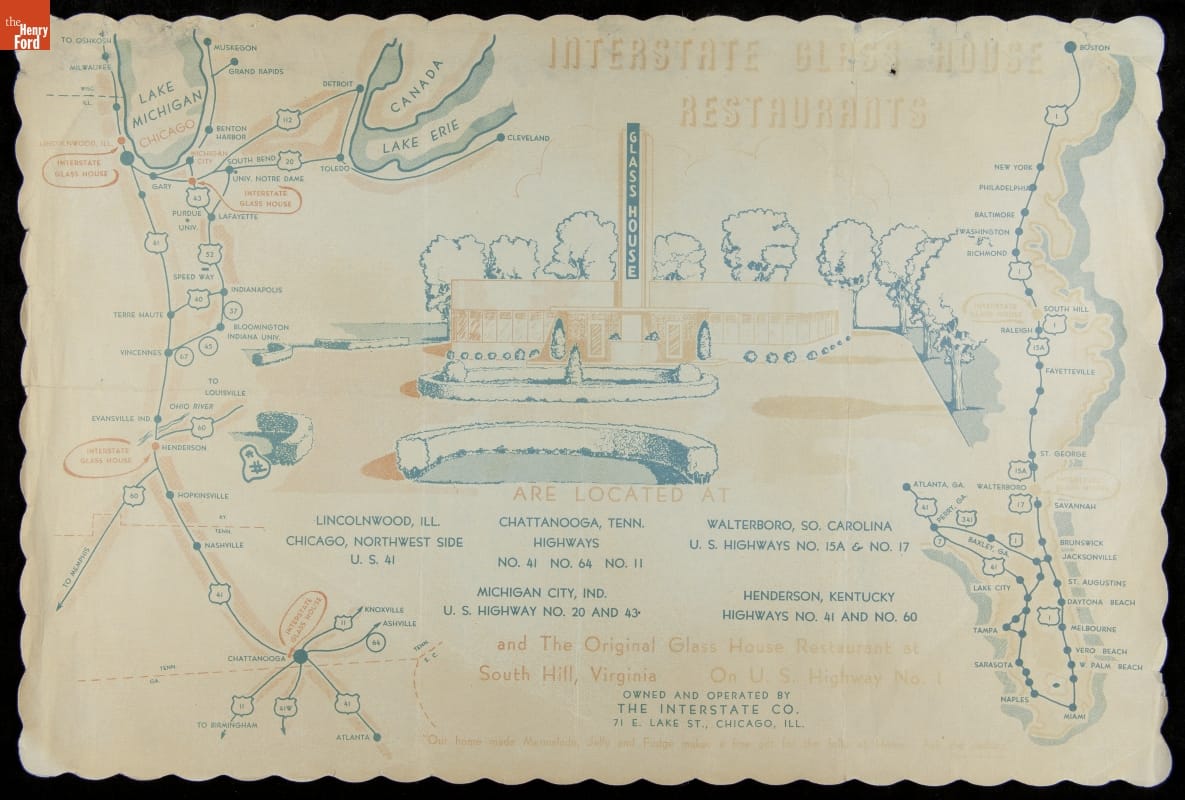
Placemat, Interstate Glass House Restaurant, circa 1950
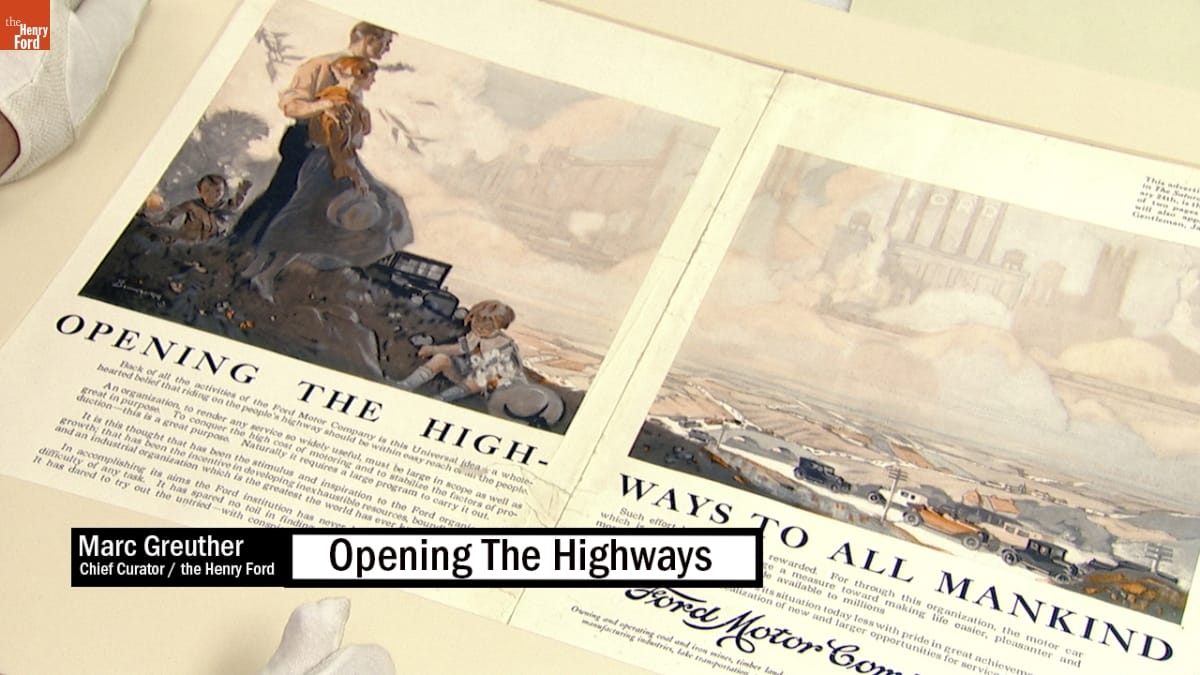
- "Opening The Highways" with Marc Greuther, 2013 - Marc Greuther is the Chief Curator and Curator of Industry and Design at The Henry Ford.
- 2013
- Collections - Artifact
"Opening The Highways" with Marc Greuther, 2013
Marc Greuther is the Chief Curator and Curator of Industry and Design at The Henry Ford.
- Cars Lined Up, Interstate Race, Tacoma, Washington, 1914 -
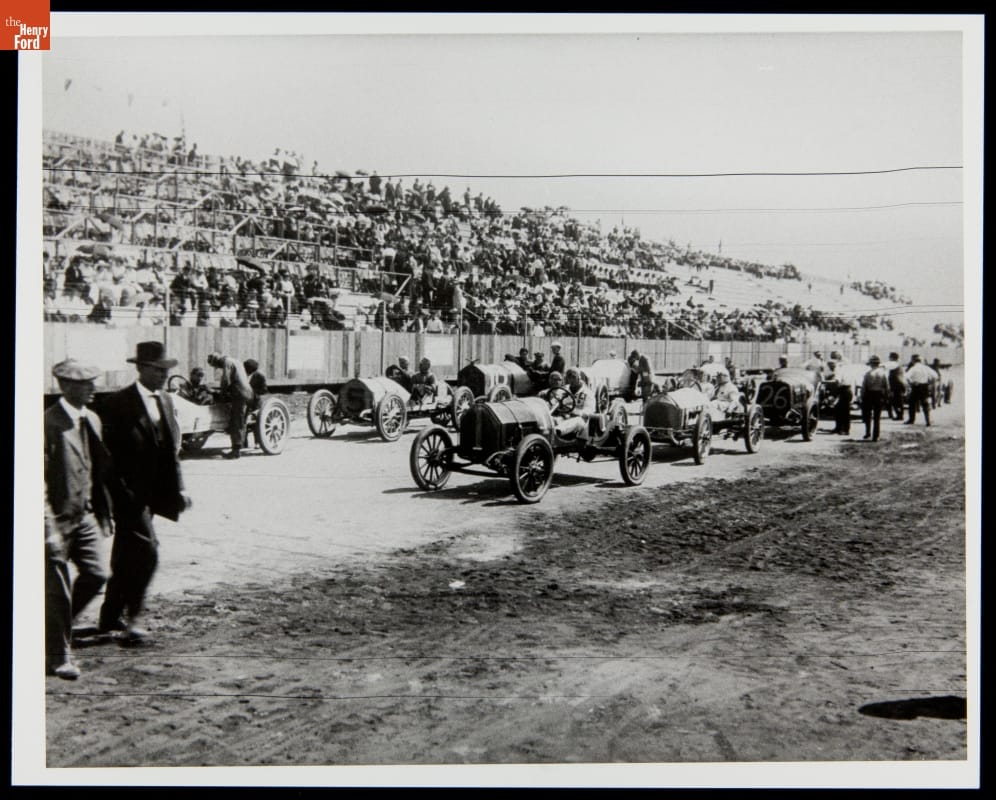
- 1914
- Collections - Artifact
Cars Lined Up, Interstate Race, Tacoma, Washington, 1914
- Funding the Interstate Highway System - The 48,000-mile Interstate Highway System connects all corners of the United States with high-speed, limited-access roadways. Funding for new construction and ongoing maintenance comes from taxes on vehicles, tires, and -- mostly -- fuel. But as cars get more efficient and drivers shift to hybrids and electrics, gas tax revenues get smaller. Highway funds shrink as the costs of caring for an aging system grow.

- December 10, 2020
- Collections - Set
Funding the Interstate Highway System
The 48,000-mile Interstate Highway System connects all corners of the United States with high-speed, limited-access roadways. Funding for new construction and ongoing maintenance comes from taxes on vehicles, tires, and -- mostly -- fuel. But as cars get more efficient and drivers shift to hybrids and electrics, gas tax revenues get smaller. Highway funds shrink as the costs of caring for an aging system grow.
- "Things to See at Highways and Horizons," 1940 - Many exhibits at the 1939-40 New York World's Fair tried to demonstrate to a depression-weary public that the future could be rosy if people just had faith. The hit of the General Motors pavilion, "Highways and Horizons," was Futurama, created by industrial designer Norman Bel Geddes and predicting a modernized America of 1960.
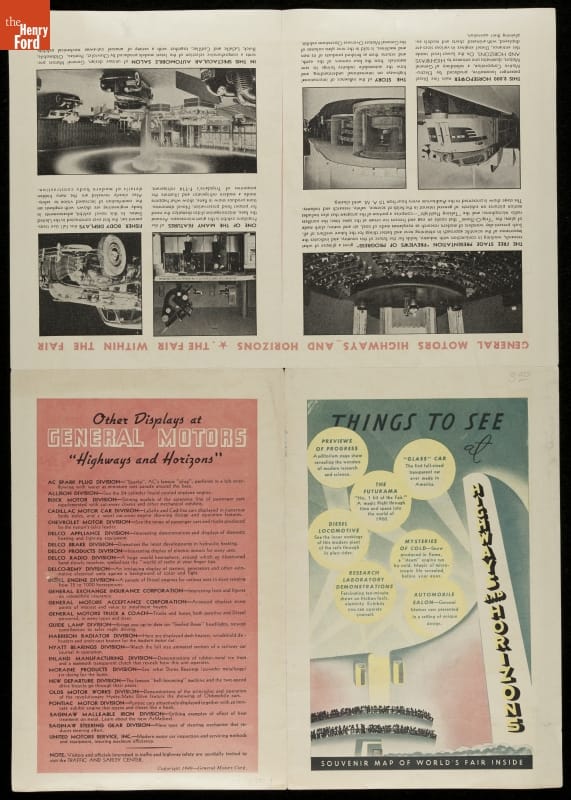
- 1939-1940
- Collections - Artifact
"Things to See at Highways and Horizons," 1940
Many exhibits at the 1939-40 New York World's Fair tried to demonstrate to a depression-weary public that the future could be rosy if people just had faith. The hit of the General Motors pavilion, "Highways and Horizons," was Futurama, created by industrial designer Norman Bel Geddes and predicting a modernized America of 1960.
- Sign, Commemorating the Opening of Indiana Interstate I-94, 1972 - Interstate 94 connects Port Huron, Michigan, with Billings, Montana, some 1,600 miles to the west. Along the way, I-94 passes through Detroit, Chicago, Milwaukee, Minneapolis, and Fargo. The last section of the route was opened between Portage, Indiana, and the Michigan state line in 1972.
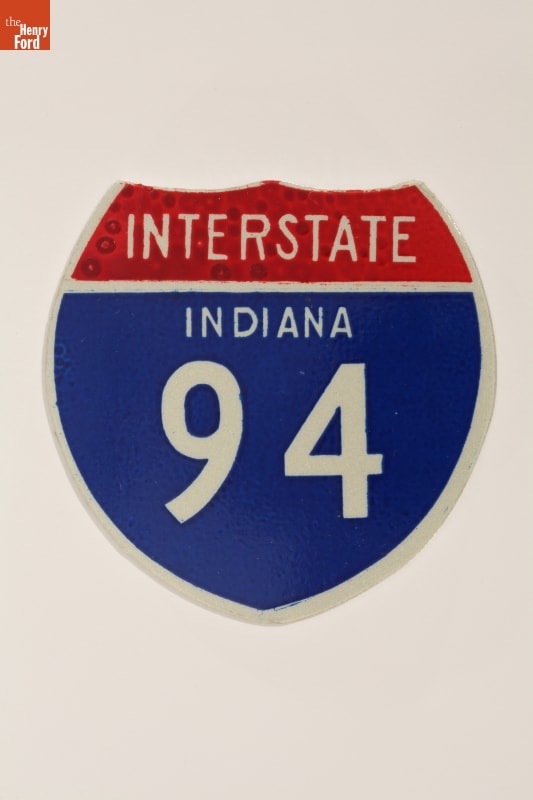
- November 02, 1972
- Collections - Artifact
Sign, Commemorating the Opening of Indiana Interstate I-94, 1972
Interstate 94 connects Port Huron, Michigan, with Billings, Montana, some 1,600 miles to the west. Along the way, I-94 passes through Detroit, Chicago, Milwaukee, Minneapolis, and Fargo. The last section of the route was opened between Portage, Indiana, and the Michigan state line in 1972.
- "The World's Highest Highway," Automobile on Pike's Peak Highway, Colorado, circa 1915 - From 1895 to 1924, the Detroit Publishing Company was one of the major image publishers in the world. It had a wide-ranging stock of original photographs, many of which were colored using the company's patented "Phostint" process. Popular "Phostint" postcards, the Detroit Publishing Company claimed, were delicately "executed in Nature's Coloring" to be truthful, tasteful, beautiful, and educational.
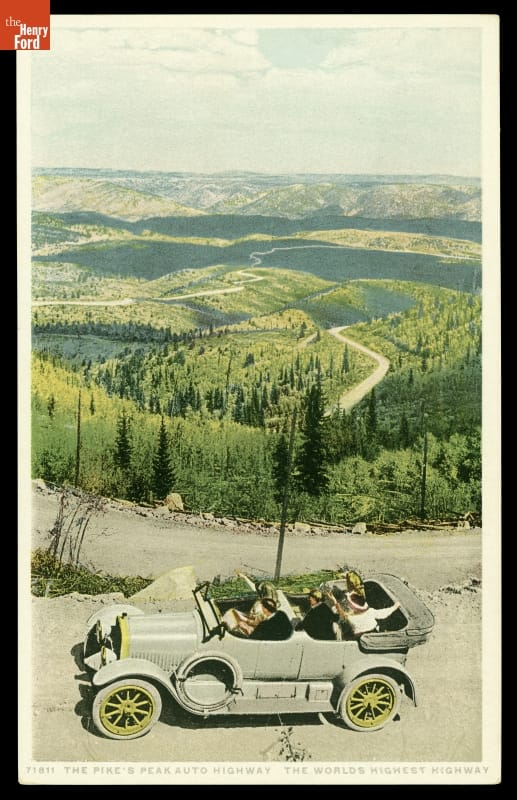
- circa 1915
- Collections - Artifact
"The World's Highest Highway," Automobile on Pike's Peak Highway, Colorado, circa 1915
From 1895 to 1924, the Detroit Publishing Company was one of the major image publishers in the world. It had a wide-ranging stock of original photographs, many of which were colored using the company's patented "Phostint" process. Popular "Phostint" postcards, the Detroit Publishing Company claimed, were delicately "executed in Nature's Coloring" to be truthful, tasteful, beautiful, and educational.