
Search
- Washington Press, circa 1848 - This peripatetic press was used to print newspapers in the 19th-century American West. Washington hand presses were rugged and extremely popular; this one crossed the Isthmus of Panama on its way from New Orleans to California's gold fields. In 1851, the press's owner, John Judson Ames, started San Diego's first newspaper. The press also printed newspapers in San Bernardino and Independence, California, and in Aurora, Nevada.
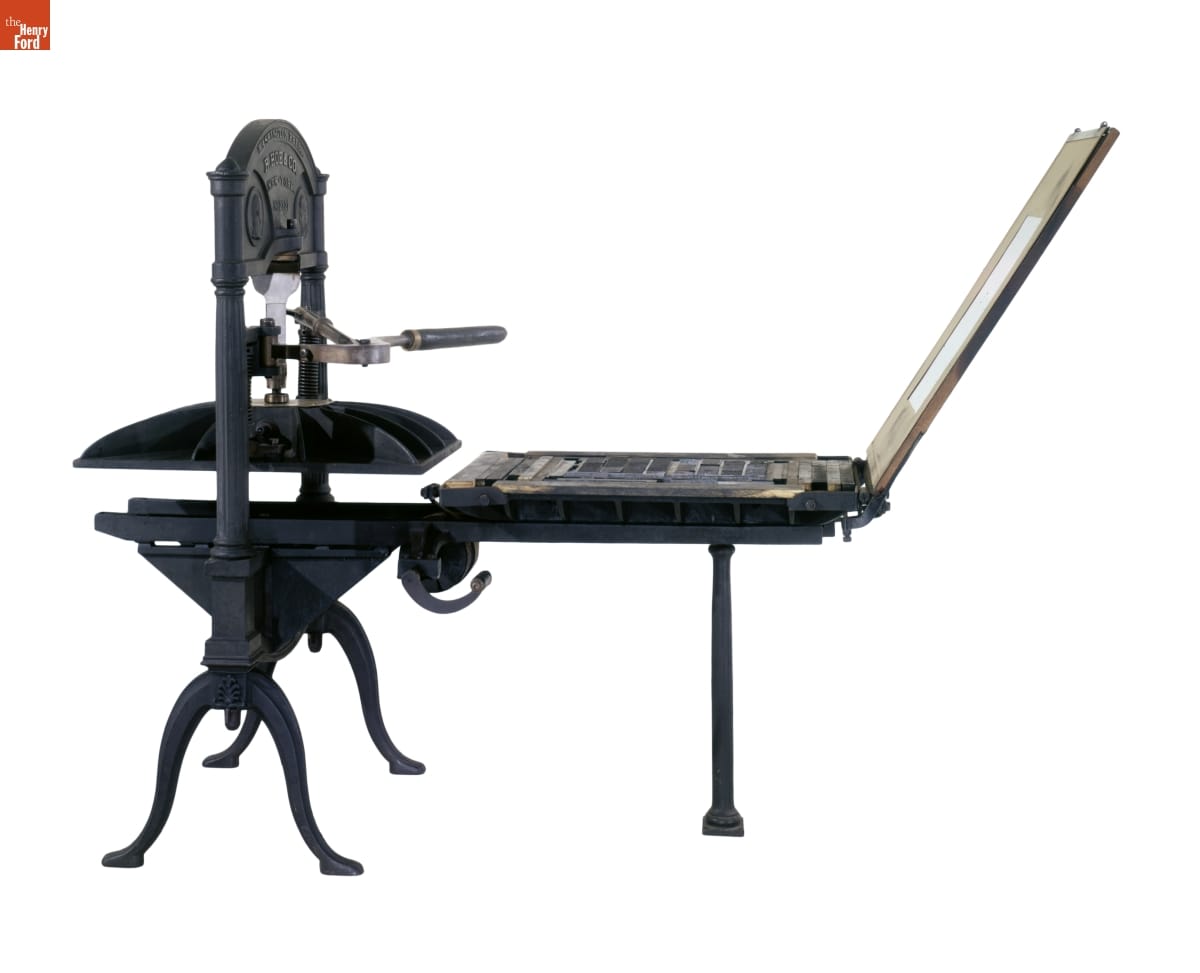
- circa 1848
- Collections - Artifact
Washington Press, circa 1848
This peripatetic press was used to print newspapers in the 19th-century American West. Washington hand presses were rugged and extremely popular; this one crossed the Isthmus of Panama on its way from New Orleans to California's gold fields. In 1851, the press's owner, John Judson Ames, started San Diego's first newspaper. The press also printed newspapers in San Bernardino and Independence, California, and in Aurora, Nevada.
- Silhouette of George Washington, 1775-1800 -
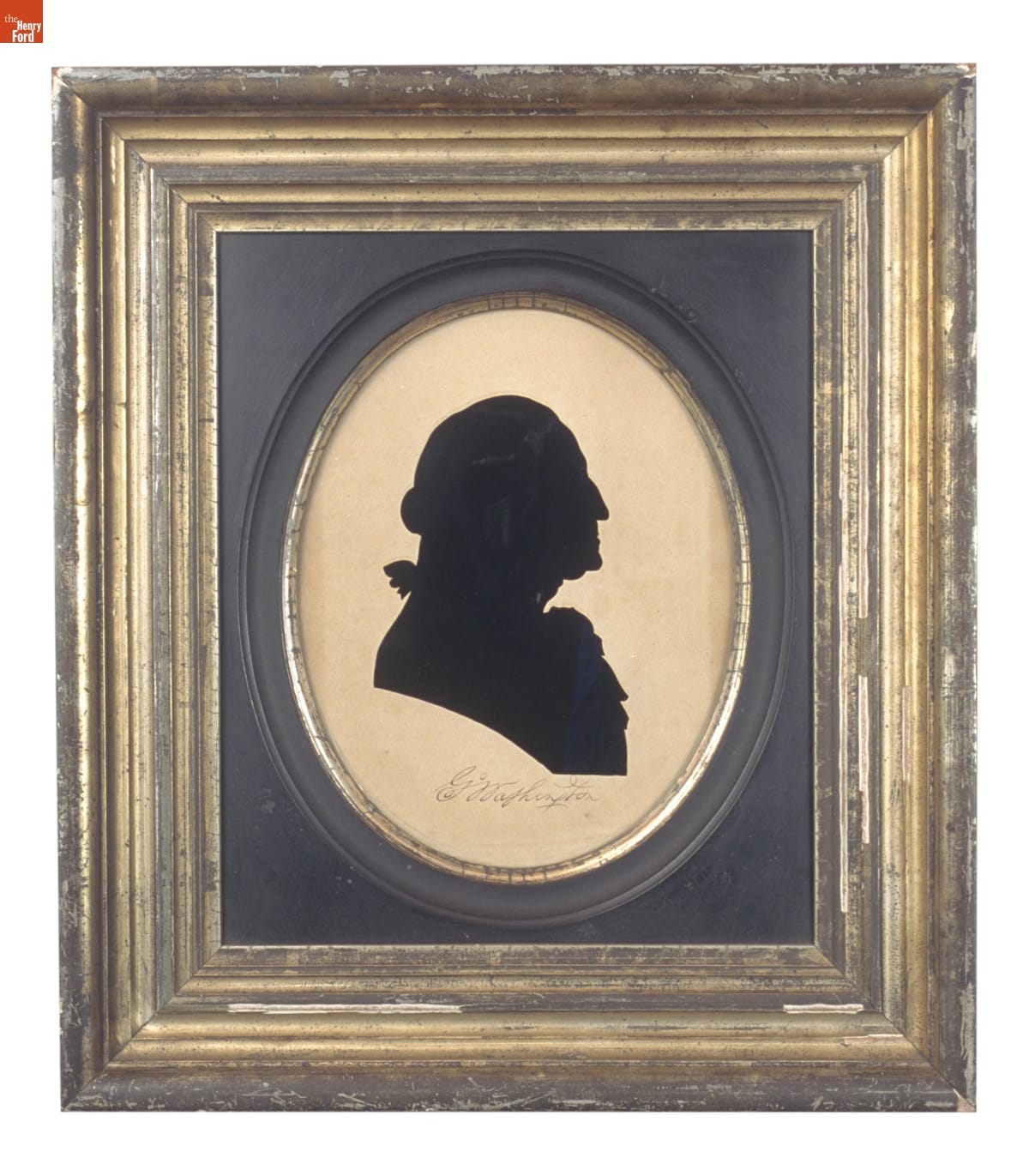
- 1775-1800
- Collections - Artifact
Silhouette of George Washington, 1775-1800
- Portrait of George Washington, 1800-1820 - George Washington (1732-1799) was revered during his lifetime. In death, Washington became an enduring symbol of the struggle for liberty and the new American republic. This early nineteenth-century portrait of the statesman -- painted by an unknown artist after a famous painting by portraitist Gilbert Stuart -- would have hung in a home or public building.
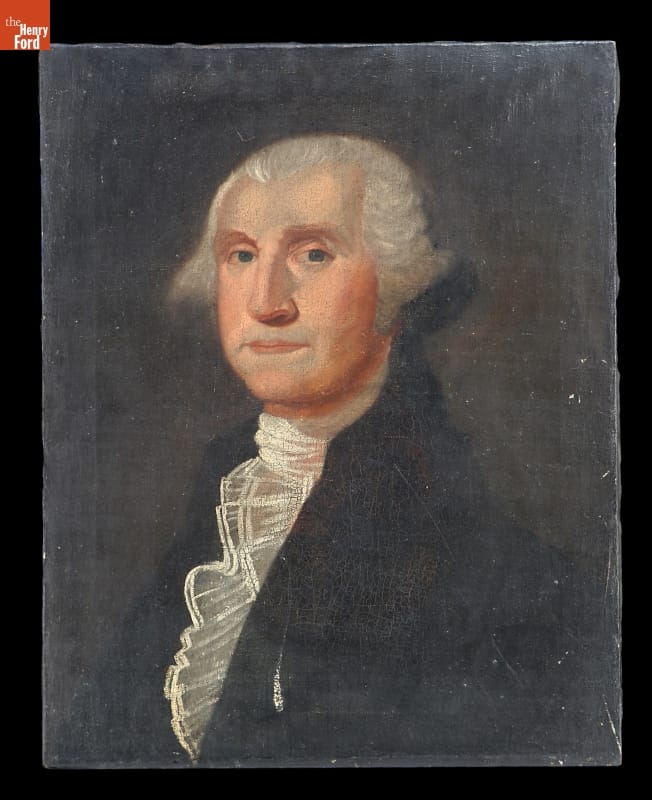
- 1800-1820
- Collections - Artifact
Portrait of George Washington, 1800-1820
George Washington (1732-1799) was revered during his lifetime. In death, Washington became an enduring symbol of the struggle for liberty and the new American republic. This early nineteenth-century portrait of the statesman -- painted by an unknown artist after a famous painting by portraitist Gilbert Stuart -- would have hung in a home or public building.
- Washington Press, Used by the Hostetter Company - This press represents the original form of the Washington Hand Press. It established two innovations in printing history: a lightened metal frame for easier transport, and a toggle-joint mechanism to create impressions. This press was used by the Hostetter Company in Pittsburgh. As proprietors of "medicinal" tonics with high alcohol content, the company was successful during the Temperance and Civil War eras.
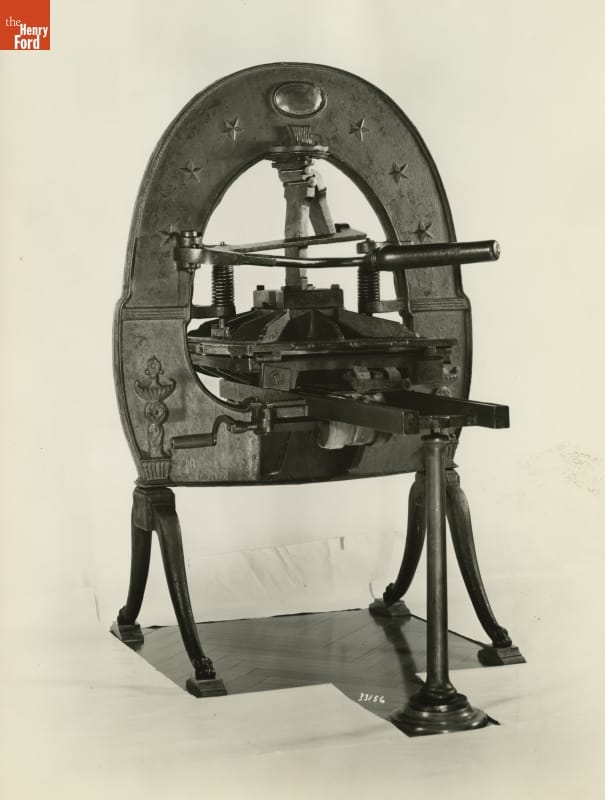
- circa 1825
- Collections - Artifact
Washington Press, Used by the Hostetter Company
This press represents the original form of the Washington Hand Press. It established two innovations in printing history: a lightened metal frame for easier transport, and a toggle-joint mechanism to create impressions. This press was used by the Hostetter Company in Pittsburgh. As proprietors of "medicinal" tonics with high alcohol content, the company was successful during the Temperance and Civil War eras.
- Flax Wheel, Made by S. Hillard, 1800-1850 -
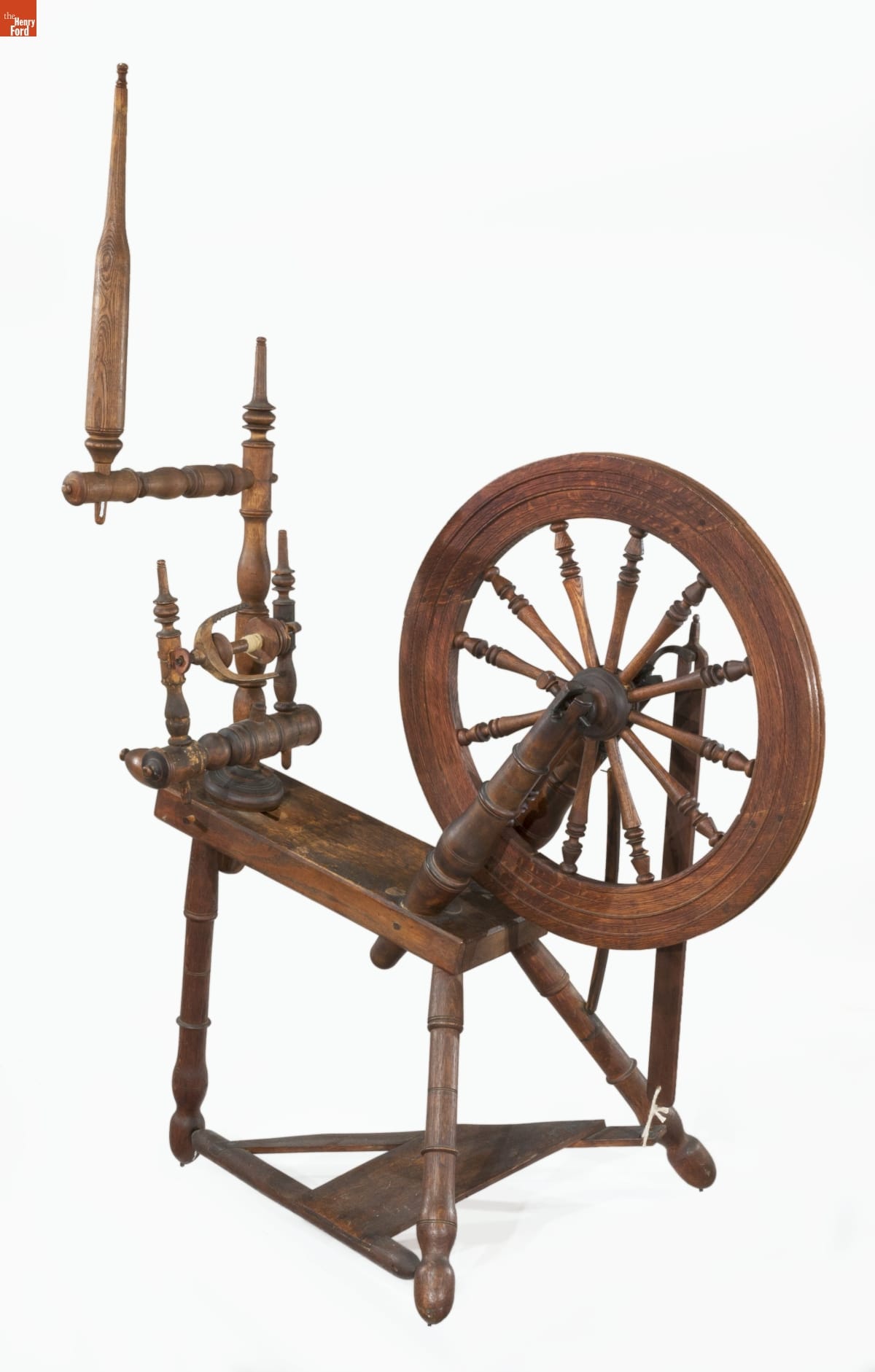
- 1800-1850
- Collections - Artifact
Flax Wheel, Made by S. Hillard, 1800-1850
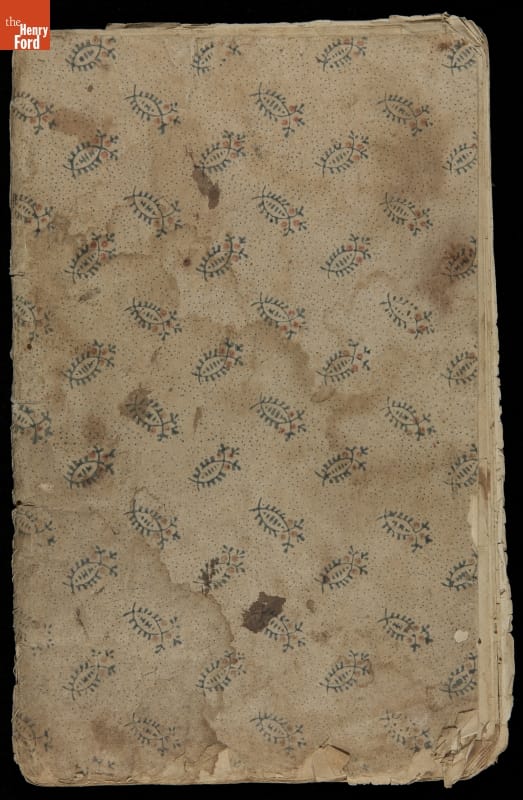
- Copybook of Mary S. Lewis, "Her Book," 1800 - This copybook reveals arithmetic rules and examples and a student practicing numeration (place value), addition, subtraction, multiplication, division and conversions. The real-life problems reveal how Americans used math in their daily lives in 1800: measuring, buying and selling, making things, farming, eating and drinking, and more.
- 1800
- Collections - Artifact
Copybook of Mary S. Lewis, "Her Book," 1800
This copybook reveals arithmetic rules and examples and a student practicing numeration (place value), addition, subtraction, multiplication, division and conversions. The real-life problems reveal how Americans used math in their daily lives in 1800: measuring, buying and selling, making things, farming, eating and drinking, and more.
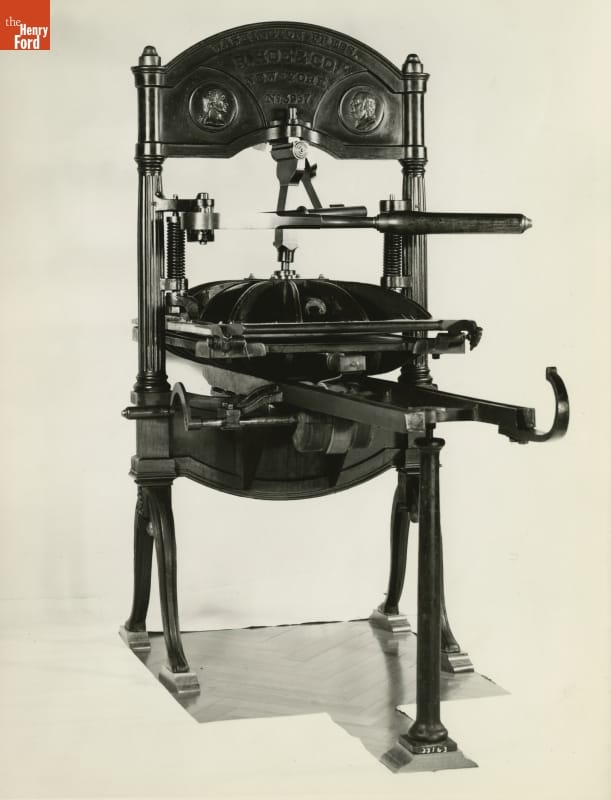
- Washington Press, Used at the Cranbrook Academy of Art - The Washington Press established two innovations in printing history: a lightened metal frame for easier transport, and a toggle-joint mechanism to create impressions. Over 6000 of these rugged hand presses were sold between 1835-1902; many specialist printers continue to use them today. This press was donated by George Booth, <em>Detroit News</em> publisher and founder of the Cranbrook Educational Community.
- 1840-1850
- Collections - Artifact
Washington Press, Used at the Cranbrook Academy of Art
The Washington Press established two innovations in printing history: a lightened metal frame for easier transport, and a toggle-joint mechanism to create impressions. Over 6000 of these rugged hand presses were sold between 1835-1902; many specialist printers continue to use them today. This press was donated by George Booth, Detroit News publisher and founder of the Cranbrook Educational Community.
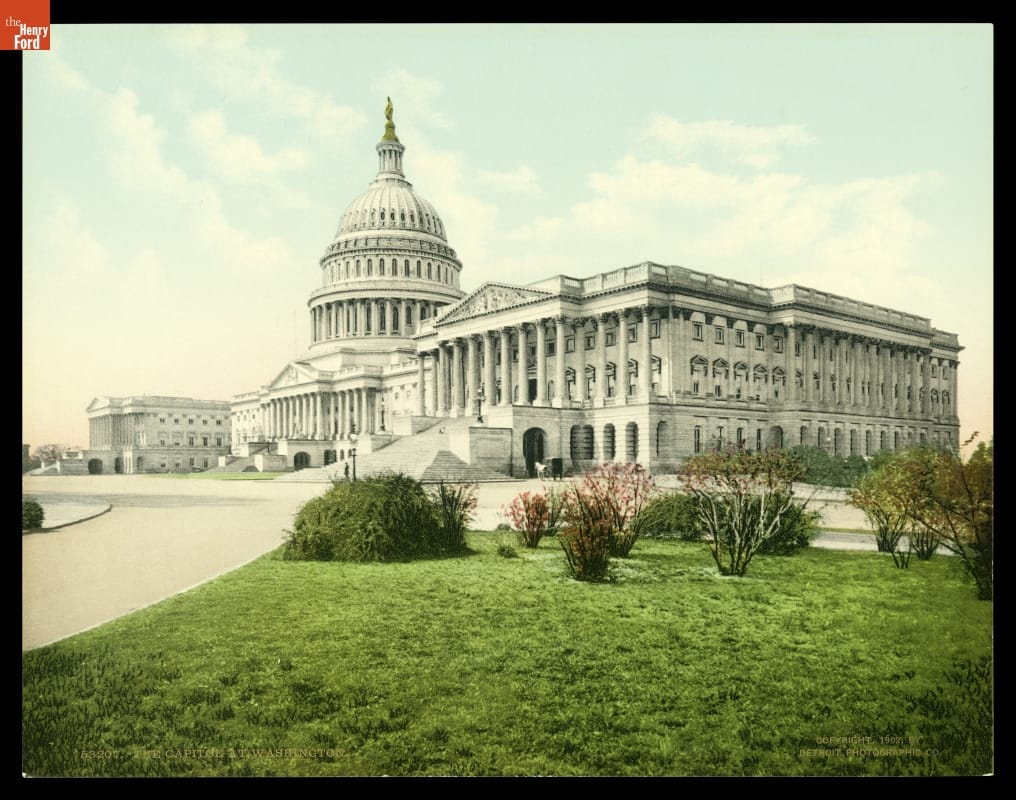
- U. S. Capitol Building, Washington, D.C., 1902 - From 1895 to 1924, the Detroit Publishing Company was one of the major image publishers in the world. The company had a wide-ranging stock of original photographs, including many scenes from around the world. These colorful prints were reproduced for ads, purchased to decorate homes and offices, bought as souvenirs, and used as teaching tools in schools and libraries.
- 1902
- Collections - Artifact
U. S. Capitol Building, Washington, D.C., 1902
From 1895 to 1924, the Detroit Publishing Company was one of the major image publishers in the world. The company had a wide-ranging stock of original photographs, including many scenes from around the world. These colorful prints were reproduced for ads, purchased to decorate homes and offices, bought as souvenirs, and used as teaching tools in schools and libraries.
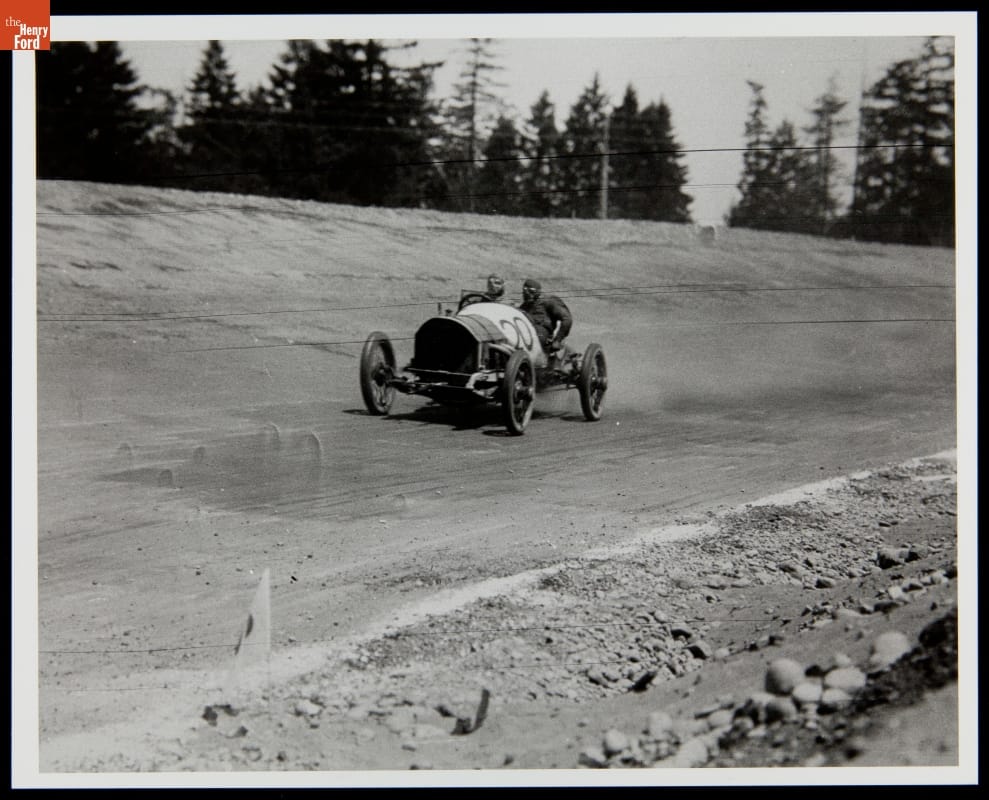
- S.F. Brock, #20 Ray, Tacoma, Washington, 1914 -
- 1914
- Collections - Artifact
S.F. Brock, #20 Ray, Tacoma, Washington, 1914
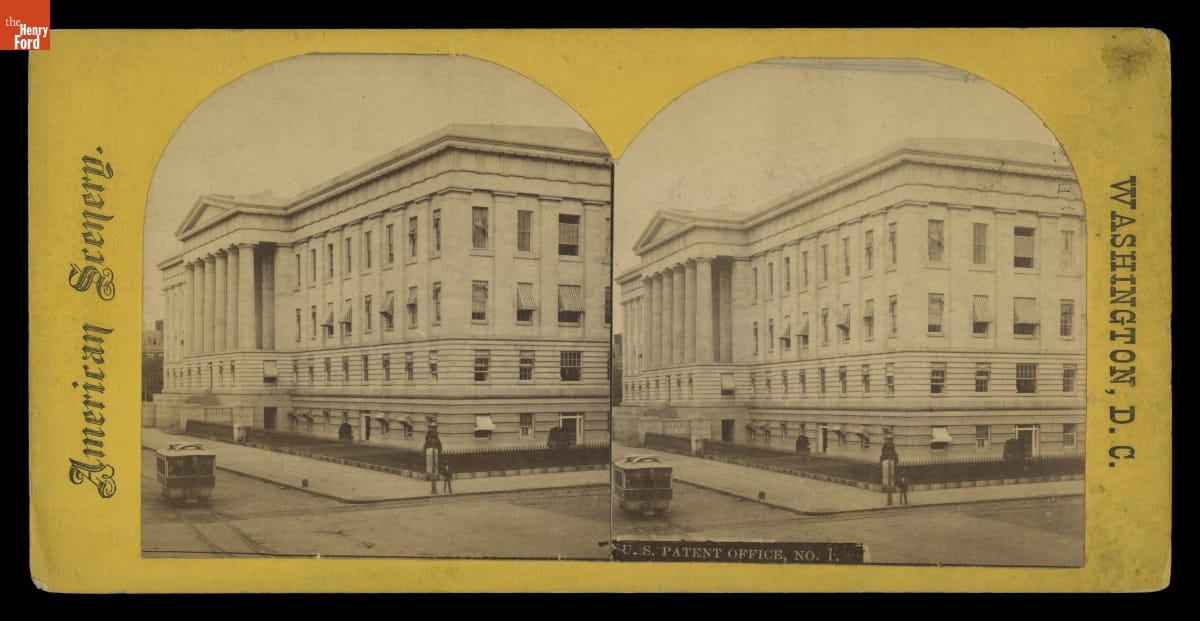
- The U.S. Patent Office, Washington, D.C., 1880-1900 - In 1836, the U.S. Congress authorized the building of a new patent office. The white marble neoclassical building, located in the center of Washington, D.C., was to be a general repository of American inventions and improvements in machinery and manufactures. Inside the three-story building, government officials displayed thousands of patent models along with other national treasures.
- 1880-1900
- Collections - Artifact
The U.S. Patent Office, Washington, D.C., 1880-1900
In 1836, the U.S. Congress authorized the building of a new patent office. The white marble neoclassical building, located in the center of Washington, D.C., was to be a general repository of American inventions and improvements in machinery and manufactures. Inside the three-story building, government officials displayed thousands of patent models along with other national treasures.