
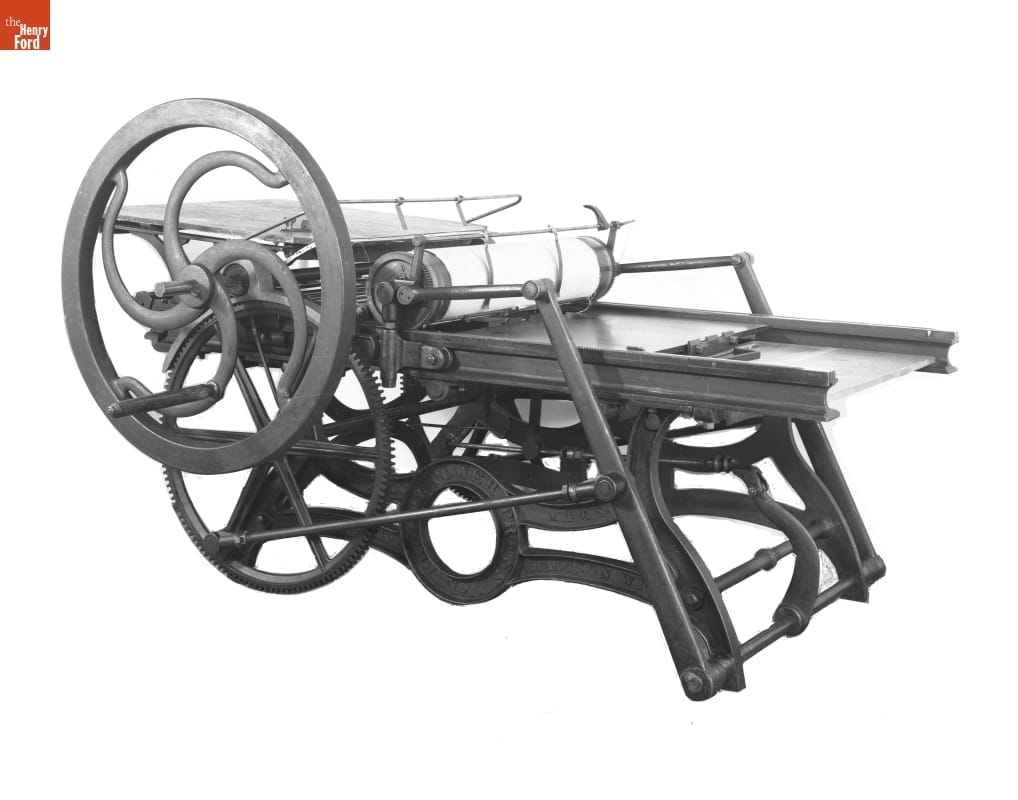
Washington Press, Used at the Cranbrook Academy of Art
THF132525 / Washington Press, Used at the Cranbrook Academy of Art
01
Artifact Overview
The Washington Press established two innovations in printing history: a lightened metal frame for easier transport, and a toggle-joint mechanism to create impressions. Over 6000 of these rugged hand presses were sold between 1835-1902; many specialist printers continue to use them today. This press was donated by George Booth, Detroit News publisher and founder of the Cranbrook Educational Community.
Artifact Details
Artifact
Printing press
Date Made
1840-1850
Creators
Place of Creation
Creator Notes
Made by R. Hoe & Company in New York, New York. Patented by Samuel Rust.
Location
at Greenfield Village in Print & Tin Shop
Object ID
35.689.1
Credit
From the Collections of The Henry Ford. Gift of George G. Booth.
Material
Cast Iron
Iron (Metal)
Wood (Plant material)
Color
Black (Color)
Dimensions
Height: 68.5 in
Width: 37.0 in
Depth: 68.0 in
Inscriptions
front:
WASHINGTON PRESS / R. HOE & CO. / NEW YORK / NO. 3957
Keywords |
|---|
02
Related Content
 Set
SetInformation Machines: Printing Presses at The Henry Ford
- 18 Artifacts
Enoch Prouty was a Baptist minister who wanted to print a temperance newspaper. He could not afford a press--so he invented one. The long arms and rods on this "grasshopper" press move when operated. In 1892 and 1893, it received merit awards at Chicago's Columbian Exposition. This particular press printed an agricultural journal in Ohio in the 1920s.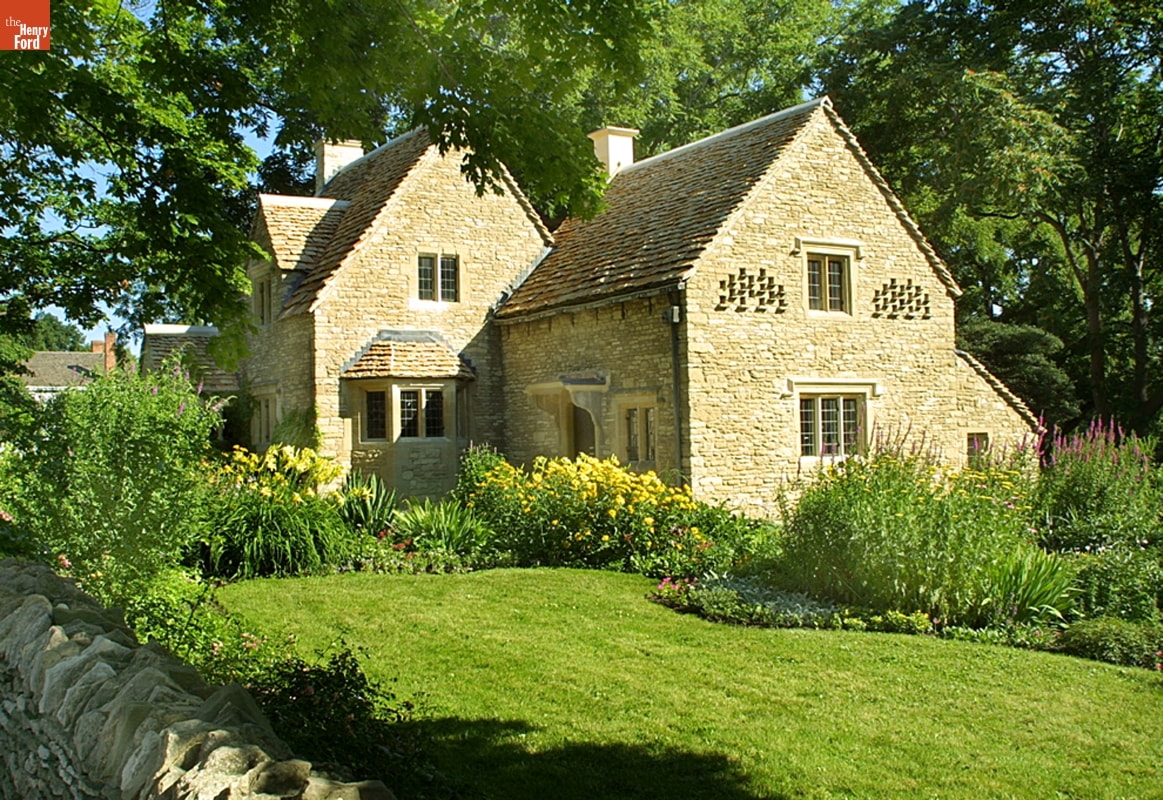 Set
SetFeatured on The Henry Ford's Innovation Nation: Season 5
- 26 Artifacts
Cotswold Cottage is from the Cotswold Hills in southwest England. The Fords were attracted to the distinctive character of Cotswold buildings, which are characterized by the yellow-brown stone, tall gables, steeply pitched roofs, and stone ornamentation around windows and doors. Several decorative additions were made to the house in England, before dismantling and re-erecting it in Greenfield Village. article
Printing Presses: Information Machines
In honor of our current exhibit House Industries: A Type of Learning, we take a closer look at printing presses in our collection.