
Search
- Newspaper Racks -
- Collections - Artifact
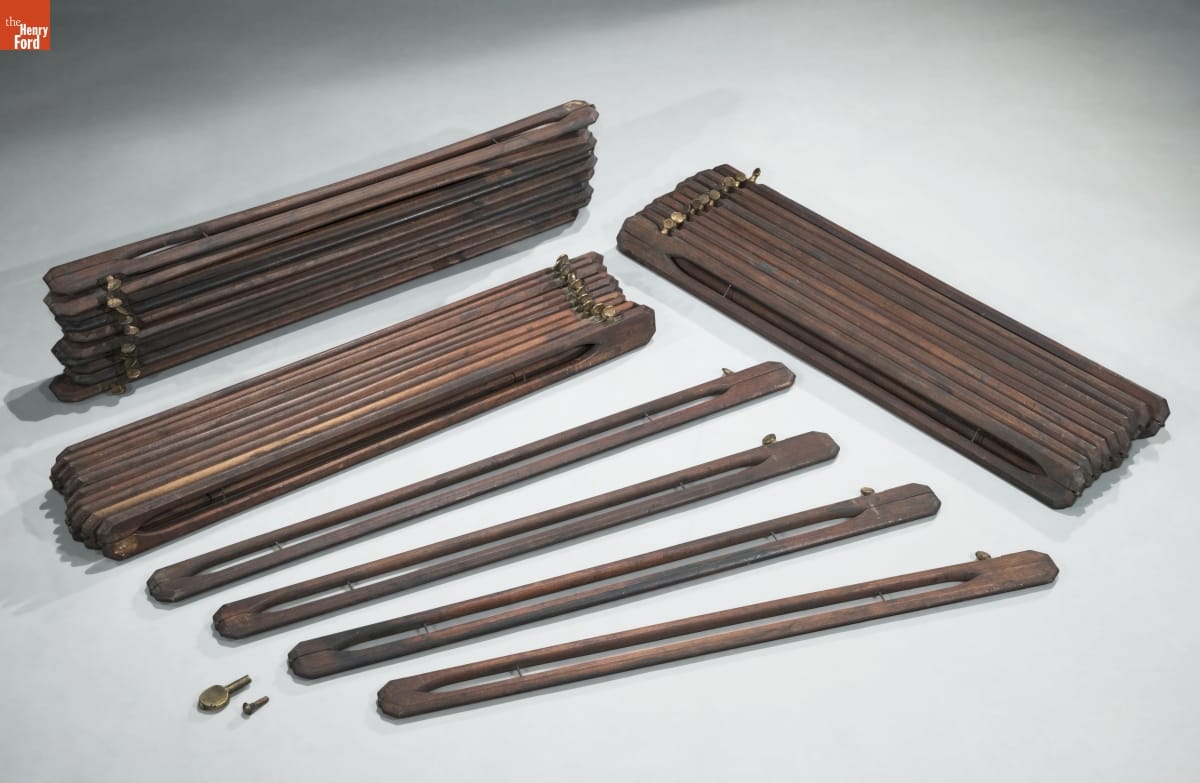
Newspaper Racks
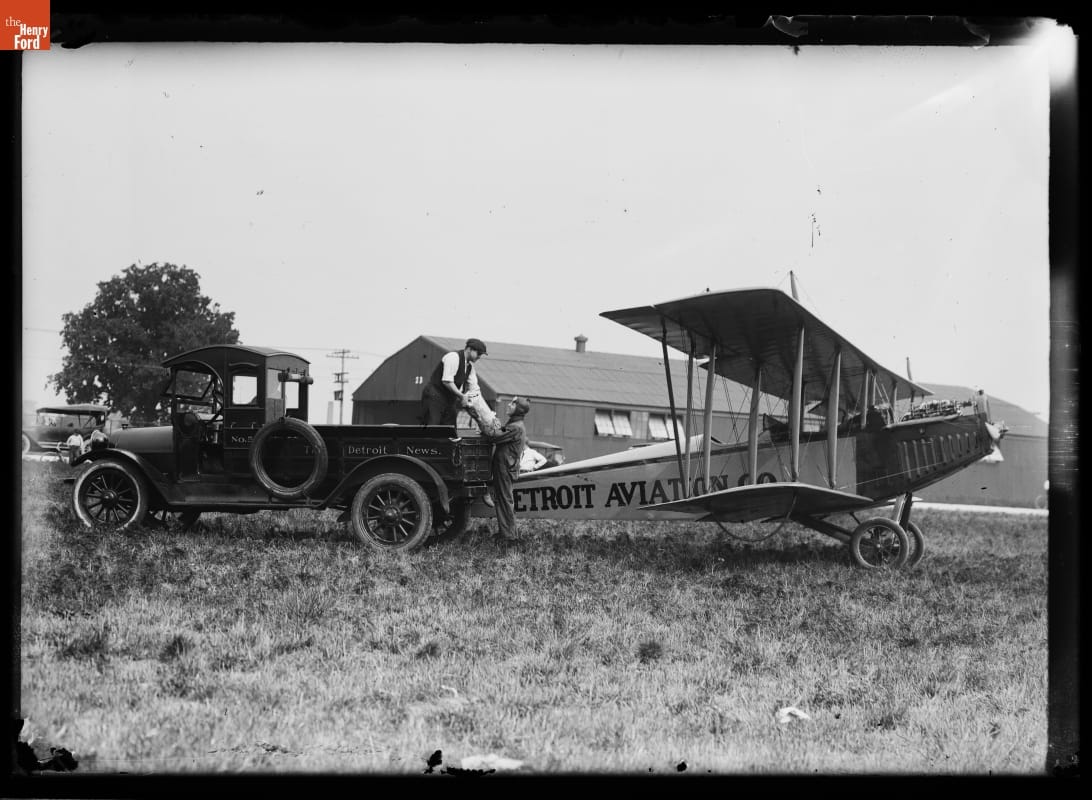
- Detroit News--Aircraft--Airplanes to Ship--Newspapers--Item1 -
- 1927
- Collections - Artifact
Detroit News--Aircraft--Airplanes to Ship--Newspapers--Item1
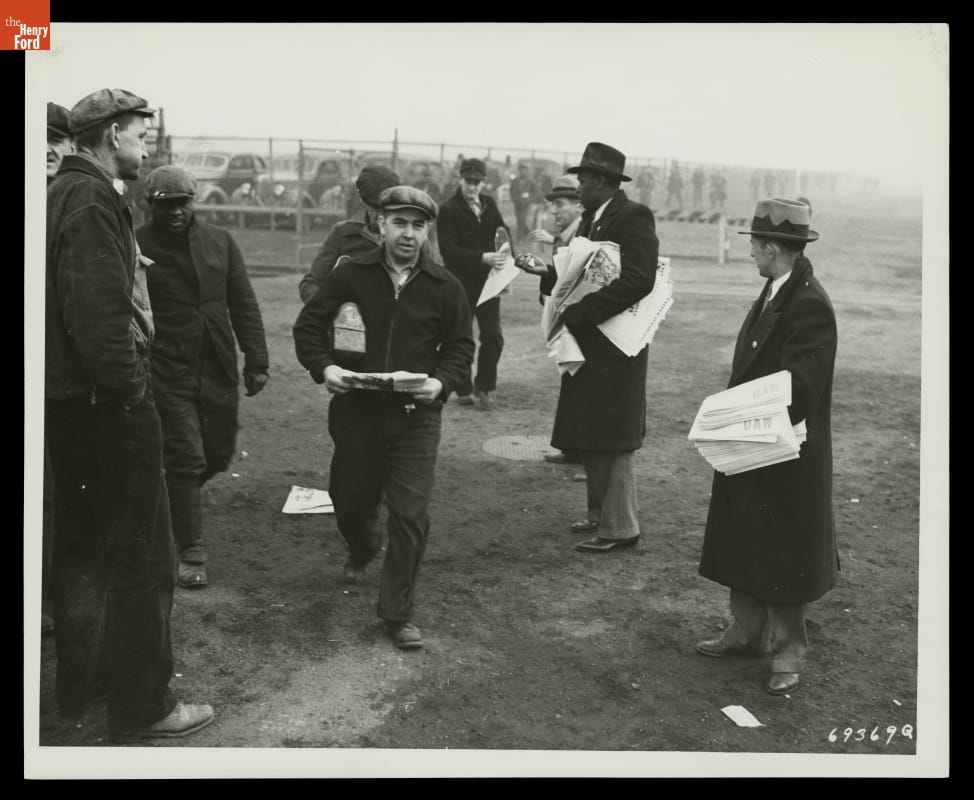
- Distributing Union Newspapers, Ford Rouge Plant Gates, Dearborn, Michigan, 1937 - The struggle to unionize Ford Motor Company workers was long and--at times--violent. This photograph shows labor organizers distributing United Auto Workers (UAW) newspapers outside Ford's Rouge Plant gates in November 1937. Years later, after a turbulent ten-day strike in April 1941, Ford became the last major automotive manufacturer to recognize the UAW and agree to union demands.
- November 17, 1937
- Collections - Artifact
Distributing Union Newspapers, Ford Rouge Plant Gates, Dearborn, Michigan, 1937
The struggle to unionize Ford Motor Company workers was long and--at times--violent. This photograph shows labor organizers distributing United Auto Workers (UAW) newspapers outside Ford's Rouge Plant gates in November 1937. Years later, after a turbulent ten-day strike in April 1941, Ford became the last major automotive manufacturer to recognize the UAW and agree to union demands.
- Detroit Times Newspaper Stand -
- Collections - Artifact
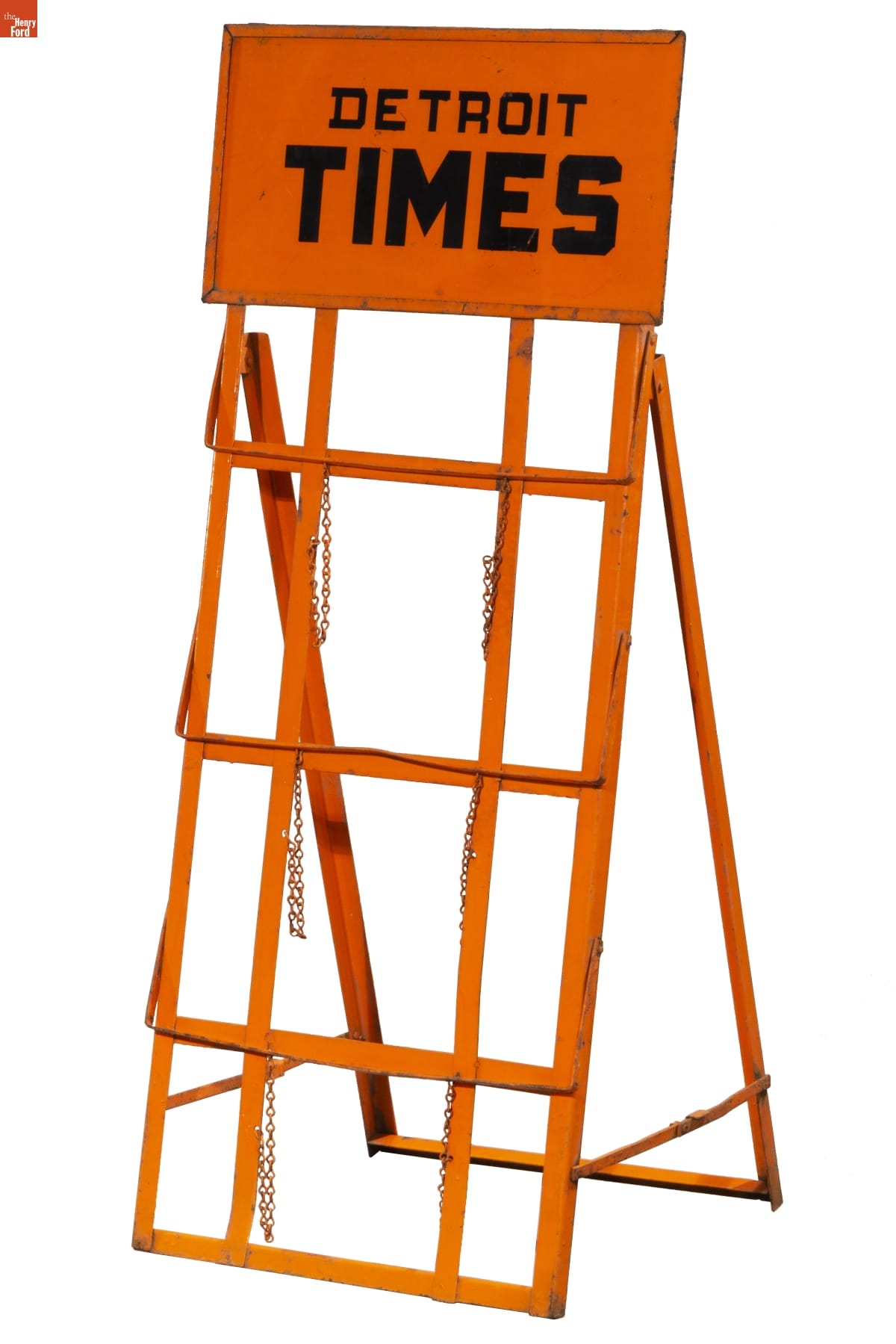
Detroit Times Newspaper Stand
- Scrapbook of Newspaper Articles, 1856-1860 -
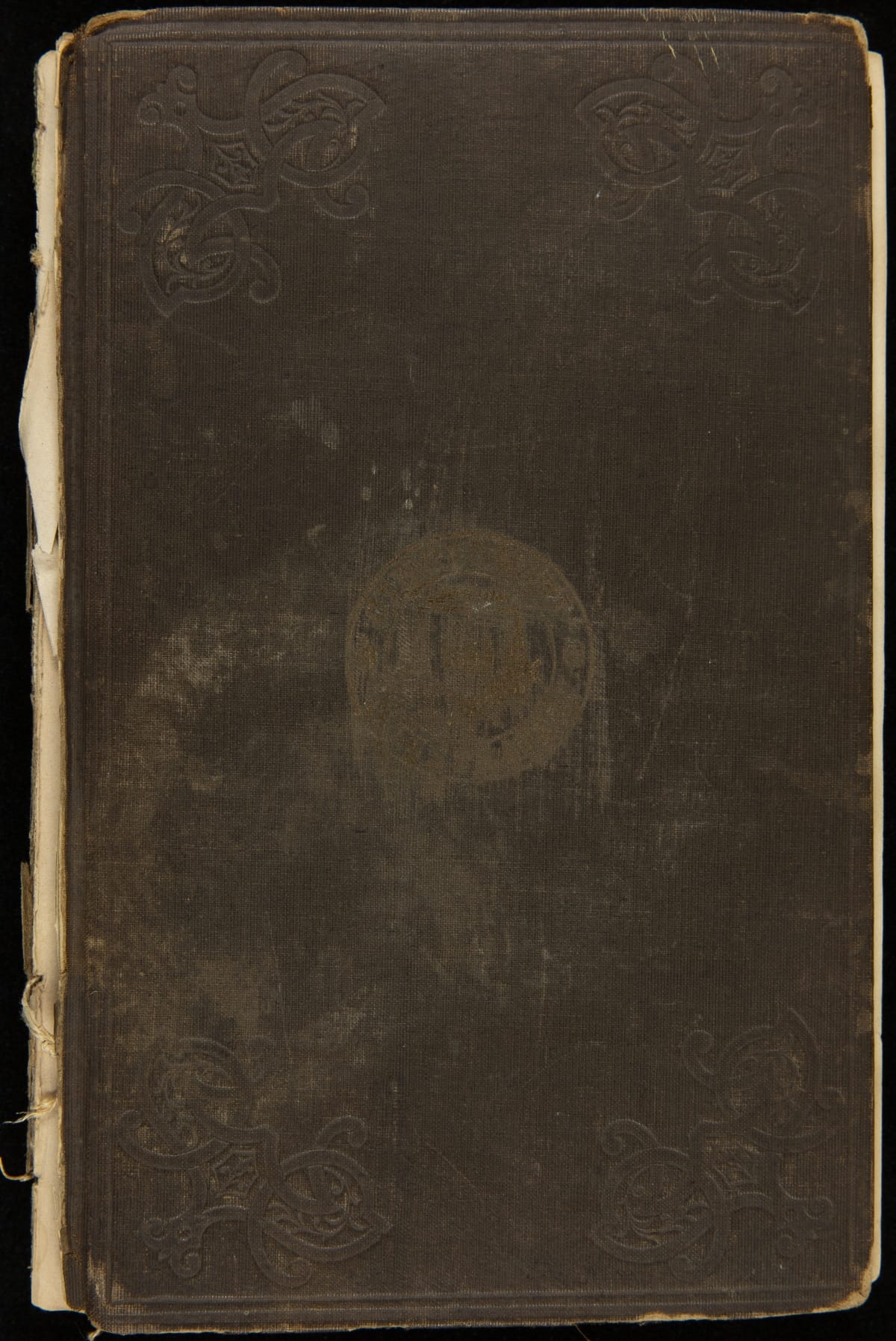
- 1856-1860
- Collections - Artifact
Scrapbook of Newspaper Articles, 1856-1860
- "Art: Machines Fascinate," Newspaper Article, 1968-1969 - Lillian Schwartz is a pioneer of computer-generated art. From 1969-2002, she was a "resident visitor" at Bell Laboratories, producing groundbreaking films, videos, and multimedia works. The Schwartz Collection spans Lillian's childhood into her late career, documenting an expansive mindset, mastery over traditional and experimental mediums alike--and above all--an ability to create inspirational connections between science, art, and technology.
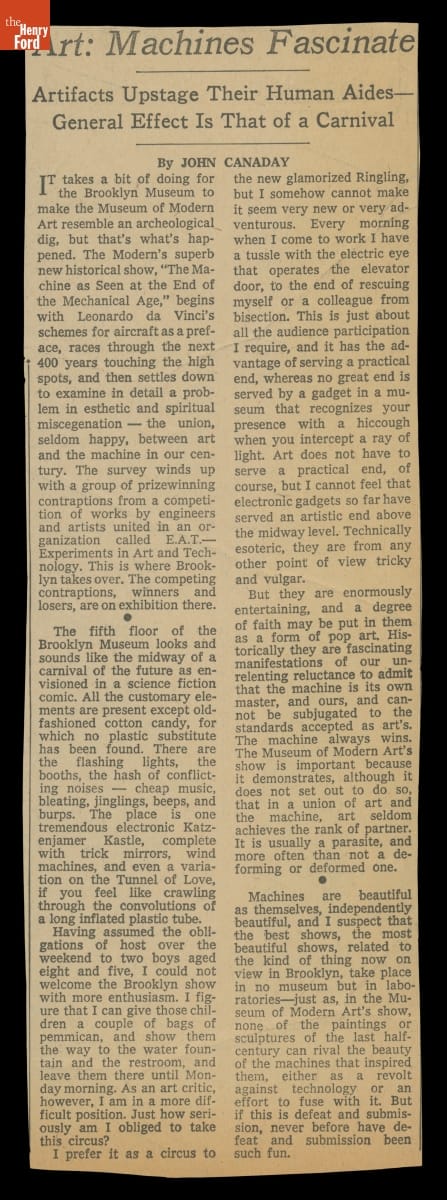
- 1968-1969
- Collections - Artifact
"Art: Machines Fascinate," Newspaper Article, 1968-1969
Lillian Schwartz is a pioneer of computer-generated art. From 1969-2002, she was a "resident visitor" at Bell Laboratories, producing groundbreaking films, videos, and multimedia works. The Schwartz Collection spans Lillian's childhood into her late career, documenting an expansive mindset, mastery over traditional and experimental mediums alike--and above all--an ability to create inspirational connections between science, art, and technology.
- Newspaper Delivery on Bicycles, circa 1935 - In America during most of the twentieth century, while adults motored around, children pedaled. Bikes transported children to and from school and around the neighborhood with friends. Bikes also were a vehicle for doing odd jobs. This young entrepreneur used his bike to deliver newspapers in Olean, New York.
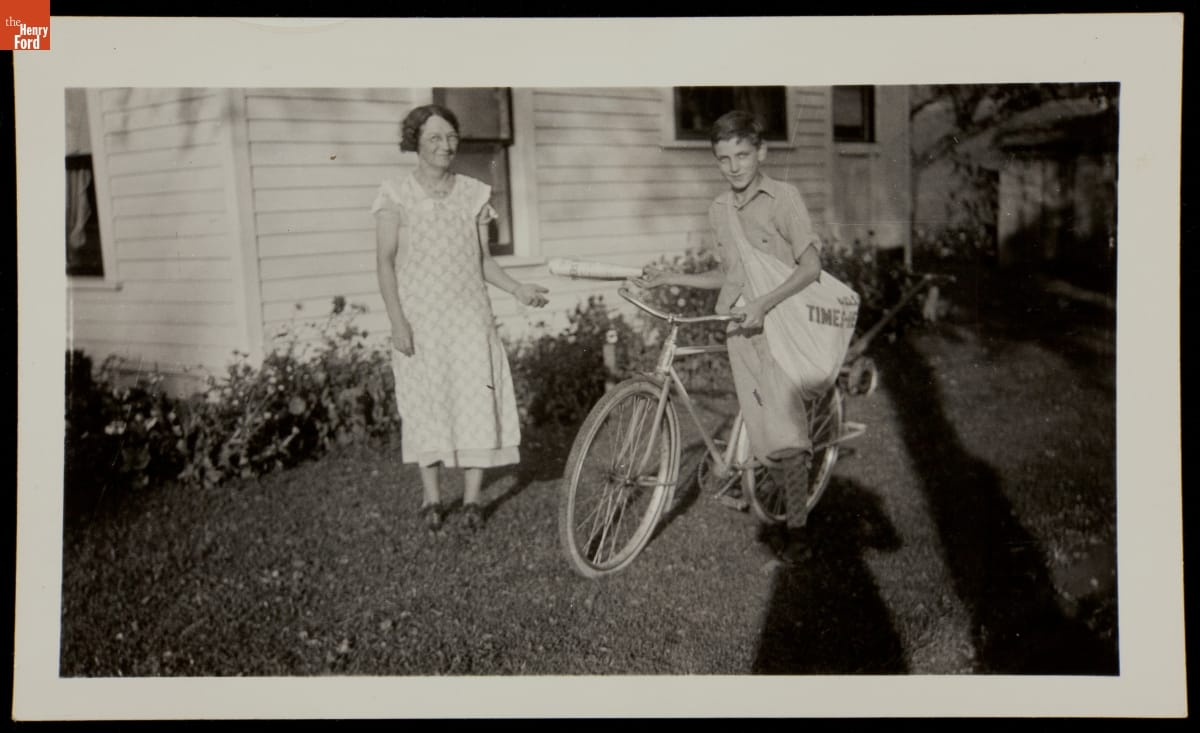
- circa 1935
- Collections - Artifact
Newspaper Delivery on Bicycles, circa 1935
In America during most of the twentieth century, while adults motored around, children pedaled. Bikes transported children to and from school and around the neighborhood with friends. Bikes also were a vehicle for doing odd jobs. This young entrepreneur used his bike to deliver newspapers in Olean, New York.
- Newspaper, Selma Times-Journal, March 22, 1965 -
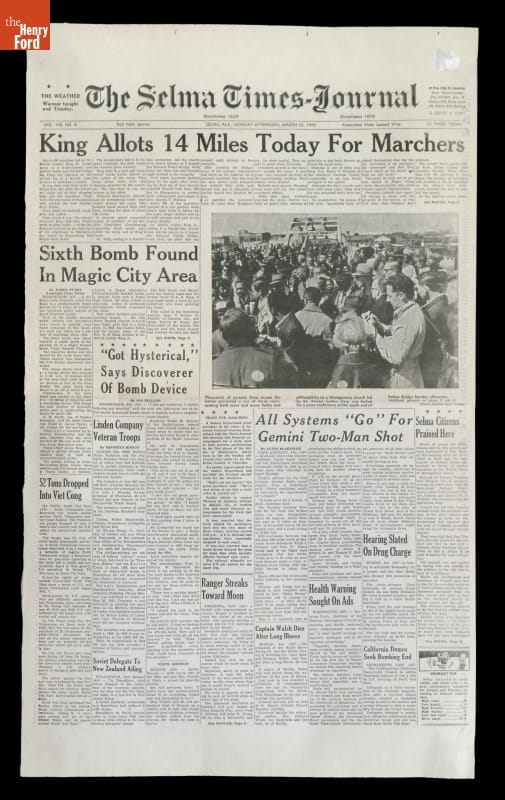
- March 22, 1965
- Collections - Artifact
Newspaper, Selma Times-Journal, March 22, 1965
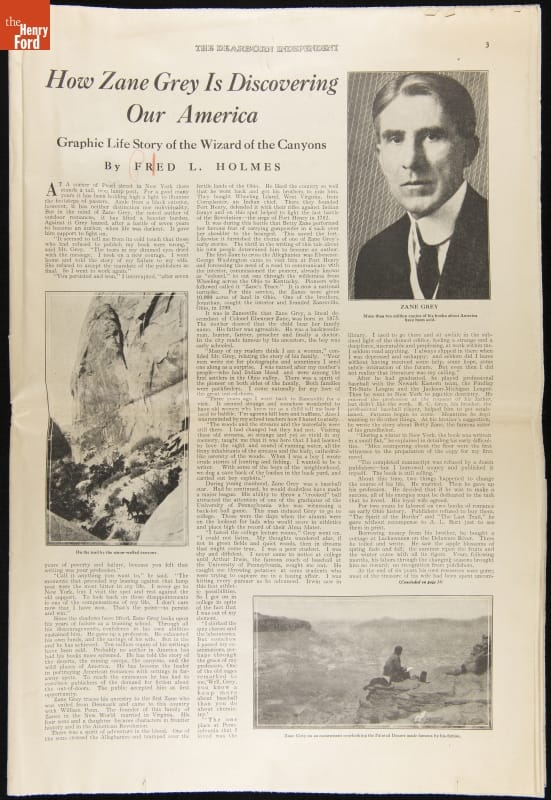
- Dearborn Independent Newspaper for August 9, 1924 - Henry Ford purchased <em>The Dearborn Independent</em> and published it under his name from 1919 to 1927. It served as a forum for Ford's views, free from other media outlets that had attacked his work and values and were outside his control. <em>The Dearborn Independent</em> covered world events, business and economic news, and fiction from noted authors. Sadly, it also served as an outlet for Ford's anti-Semitic sentiments. Between 1920 and 1922, the weekly paper ran a series of front-page articles that denounced all things Jewish. Even after this series, many articles contained anti-Jewish language. Though Ford later apologized and printed a retraction, these notoriously anti-Semitic editorials and articles forever tarnished the influential automaker's reputation.
- August 09, 1924
- Collections - Artifact
Dearborn Independent Newspaper for August 9, 1924
Henry Ford purchased The Dearborn Independent and published it under his name from 1919 to 1927. It served as a forum for Ford's views, free from other media outlets that had attacked his work and values and were outside his control. The Dearborn Independent covered world events, business and economic news, and fiction from noted authors. Sadly, it also served as an outlet for Ford's anti-Semitic sentiments. Between 1920 and 1922, the weekly paper ran a series of front-page articles that denounced all things Jewish. Even after this series, many articles contained anti-Jewish language. Though Ford later apologized and printed a retraction, these notoriously anti-Semitic editorials and articles forever tarnished the influential automaker's reputation.
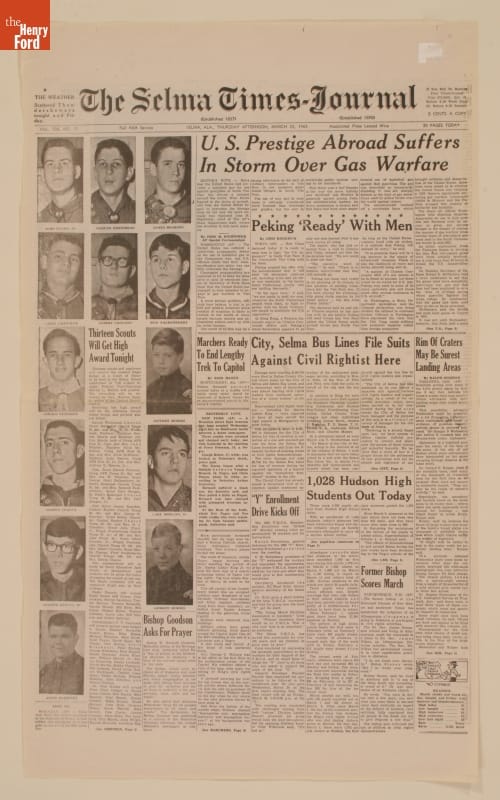
- Newspaper, Selma Times-Journal, March 25, 1965 -
- March 25, 1965
- Collections - Artifact
Newspaper, Selma Times-Journal, March 25, 1965