
Search
- Radio Transmitter -
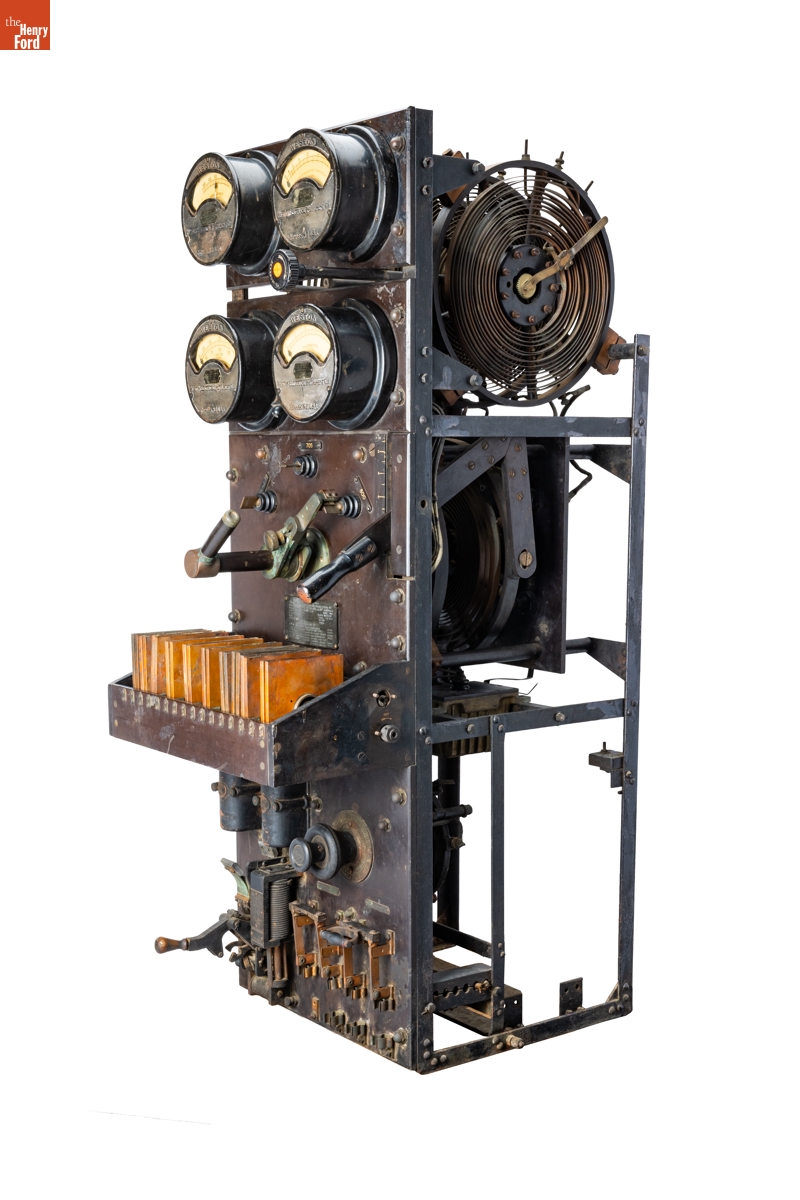
- Collections - Artifact
Radio Transmitter
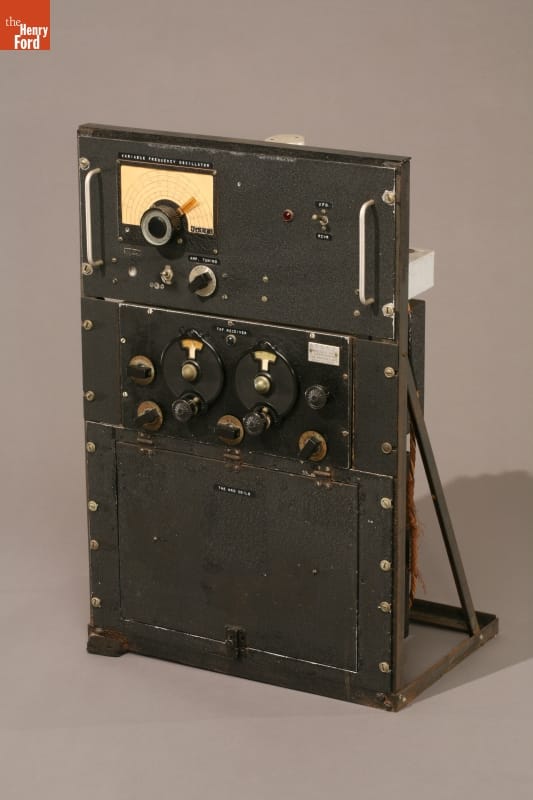
- Radio Receiver, Used by Amateur Radio Station W6DQZ, 1933 - Hamid (Charlie) Durmisevich, call sign W6DQZ, connected to the world from his ham radio station in Los Angeles. Amateur radio operators use two-way radios to talk to global networks of other "hams" about technology, weather, emergency preparedness and daily life. This ham, who emigrated from Eastern Europe in 1920, was active in amateur radio communities from the 1930s to 1990s.
- 1933
- Collections - Artifact
Radio Receiver, Used by Amateur Radio Station W6DQZ, 1933
Hamid (Charlie) Durmisevich, call sign W6DQZ, connected to the world from his ham radio station in Los Angeles. Amateur radio operators use two-way radios to talk to global networks of other "hams" about technology, weather, emergency preparedness and daily life. This ham, who emigrated from Eastern Europe in 1920, was active in amateur radio communities from the 1930s to 1990s.
- Clock Radio, 1961 -
- 1961
- Collections - Artifact
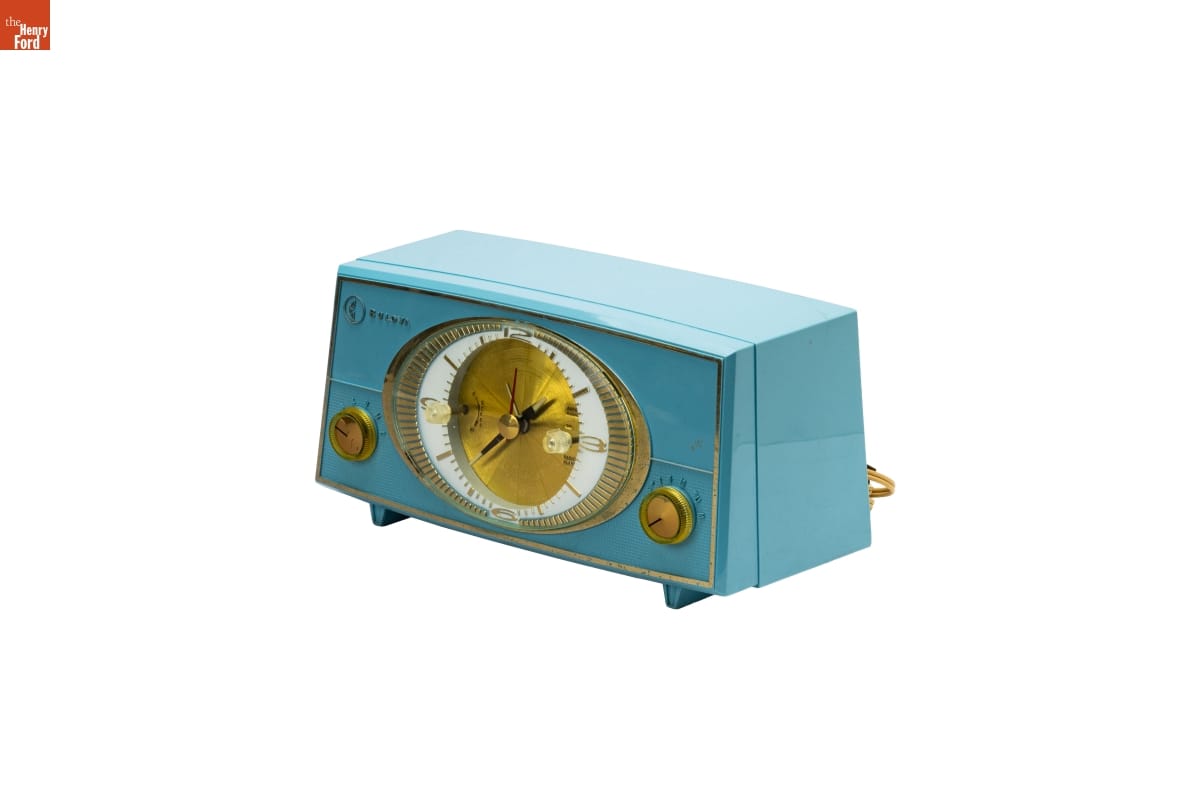
Clock Radio, 1961
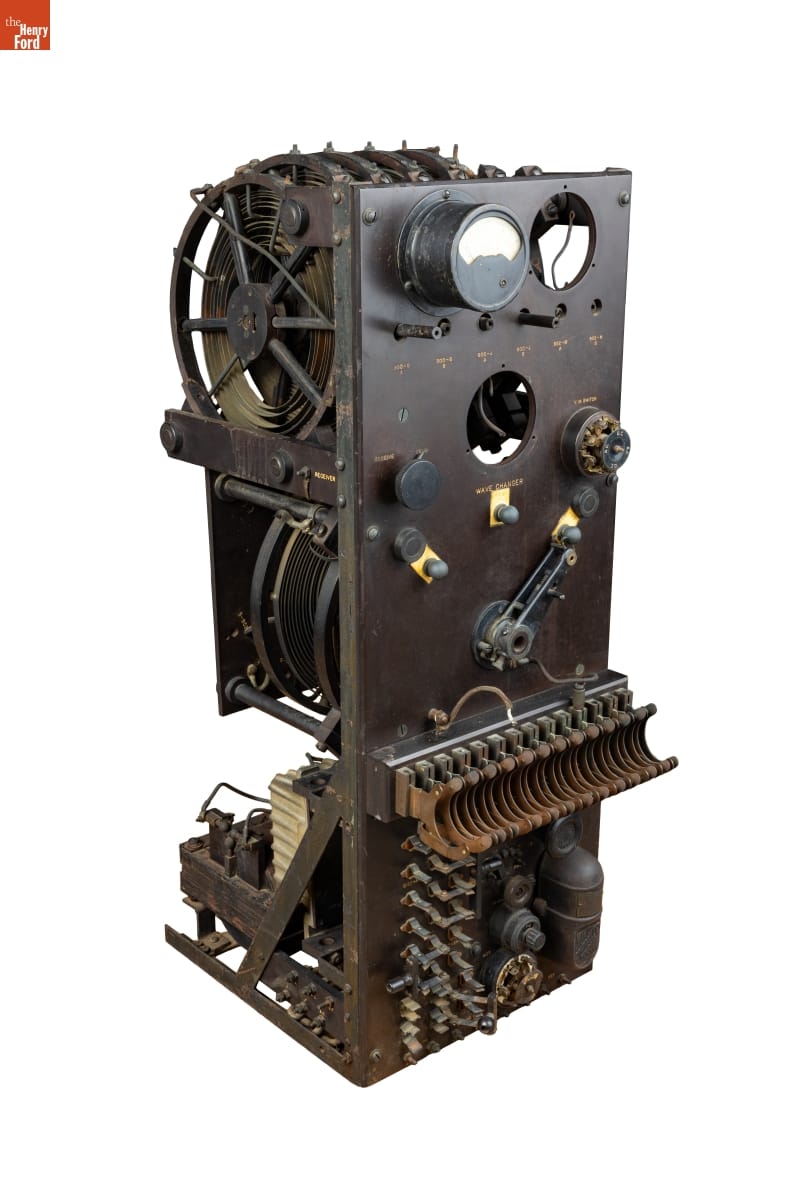
- Radio Transformer, 1920 - Radio transformers are used to increase or decrease the voltage of electrical currents carried between pieces of equipment. They play an essential part in supporting strong transmissions necessary for clear communication. This radio transformer was used for ship-to-shore communication, between vessels at sea and radio stations on land.
- 1920
- Collections - Artifact
Radio Transformer, 1920
Radio transformers are used to increase or decrease the voltage of electrical currents carried between pieces of equipment. They play an essential part in supporting strong transmissions necessary for clear communication. This radio transformer was used for ship-to-shore communication, between vessels at sea and radio stations on land.
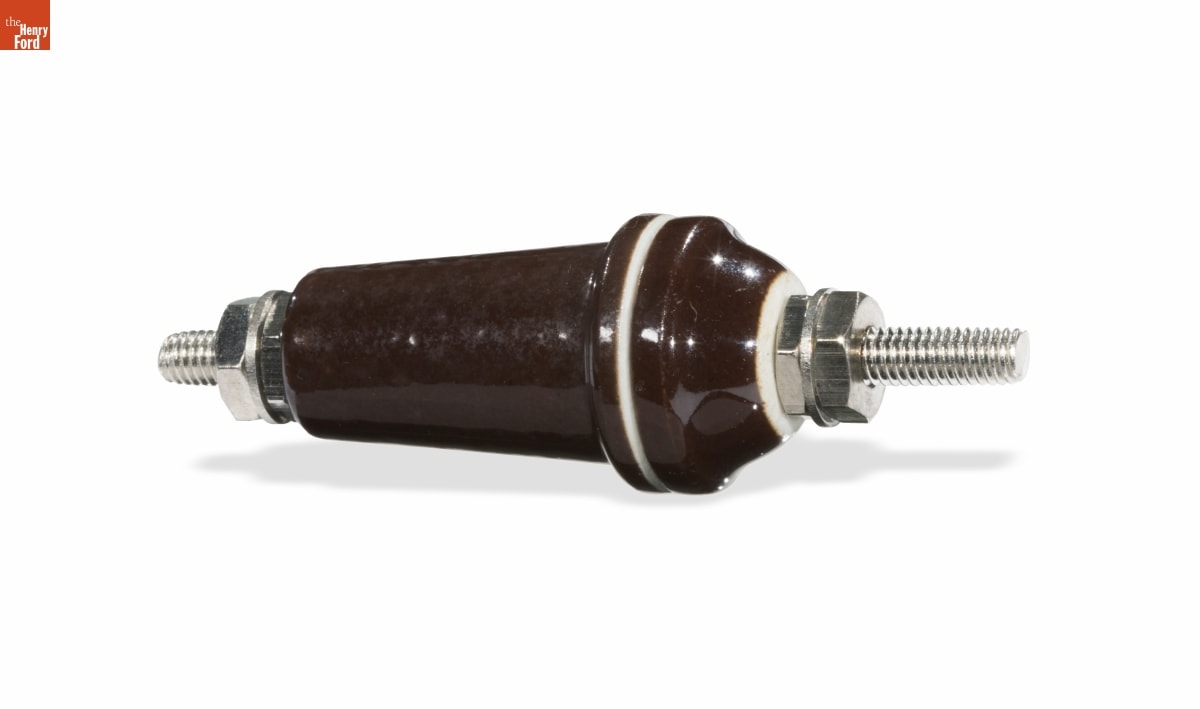
- Birnbach Radio Company, Inc. Radio Chassis Insulator, 1930-1939 - Insulators--made of poor electrical conductors such as glass, ceramic, plastic, or composite materials--help make electric power and communication transmission lines safe. They isolate wires from utility poles, transmission towers, and buildings--structures that are made of conductive materials that could cause signal degradation, power loss, fire, or pose a shock hazard if the lines touched them.
- 1930-1939
- Collections - Artifact
Birnbach Radio Company, Inc. Radio Chassis Insulator, 1930-1939
Insulators--made of poor electrical conductors such as glass, ceramic, plastic, or composite materials--help make electric power and communication transmission lines safe. They isolate wires from utility poles, transmission towers, and buildings--structures that are made of conductive materials that could cause signal degradation, power loss, fire, or pose a shock hazard if the lines touched them.
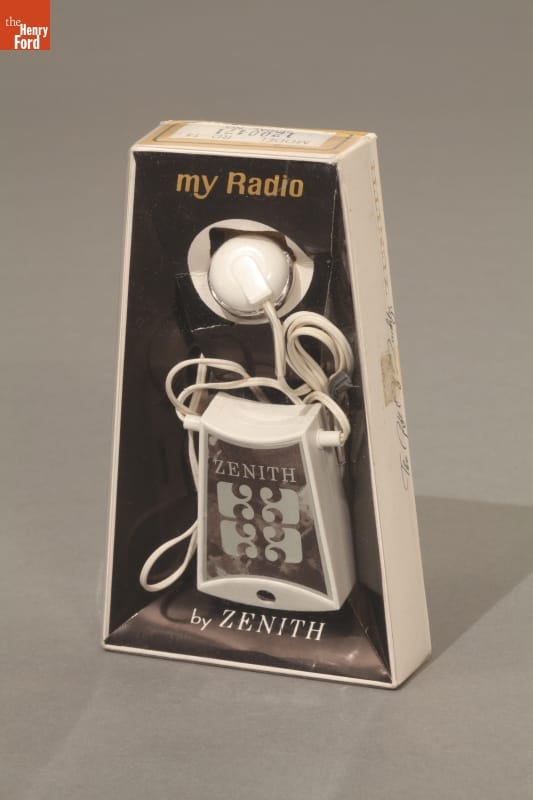
- Zenith "My Radio" Pendant Transistor Radio, circa 1970 - The size of radios shrank following the advent of transistor technology. Even the smallest vacuum tubes were bulky, and their power consumption ensured the need for large batteries. Transistor radios made of lightweight plastics were cheap and truly portable. With the addition of an earphone a radio such as this allowed the listener to enjoy a completely personal listening experience.
- circa 1970
- Collections - Artifact
Zenith "My Radio" Pendant Transistor Radio, circa 1970
The size of radios shrank following the advent of transistor technology. Even the smallest vacuum tubes were bulky, and their power consumption ensured the need for large batteries. Transistor radios made of lightweight plastics were cheap and truly portable. With the addition of an earphone a radio such as this allowed the listener to enjoy a completely personal listening experience.
- "Radio Telemetry," 1956 -
- 1956
- Collections - Artifact
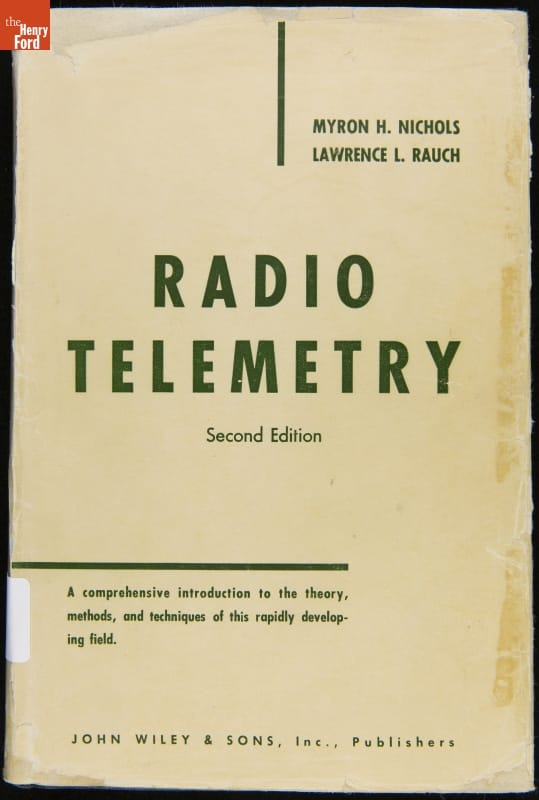
"Radio Telemetry," 1956
- Wireless Towers at Naval Radio Station, Radio, Virginia, circa 1930 -
- circa 1930
- Collections - Artifact
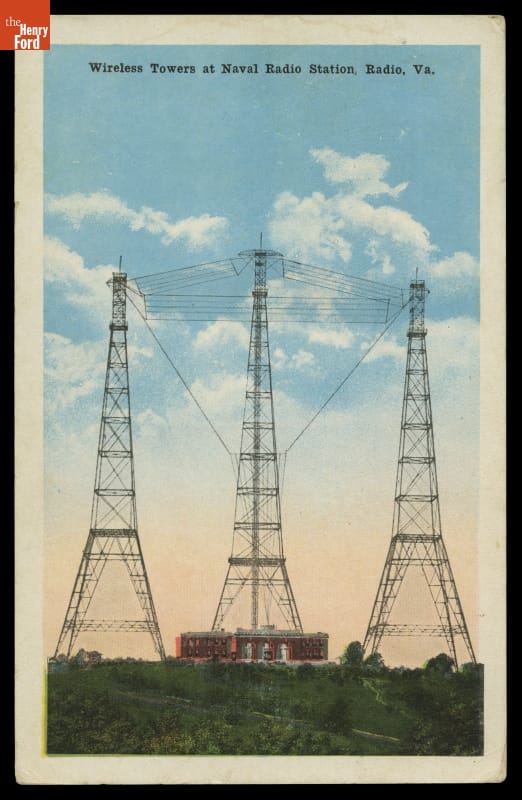
Wireless Towers at Naval Radio Station, Radio, Virginia, circa 1930
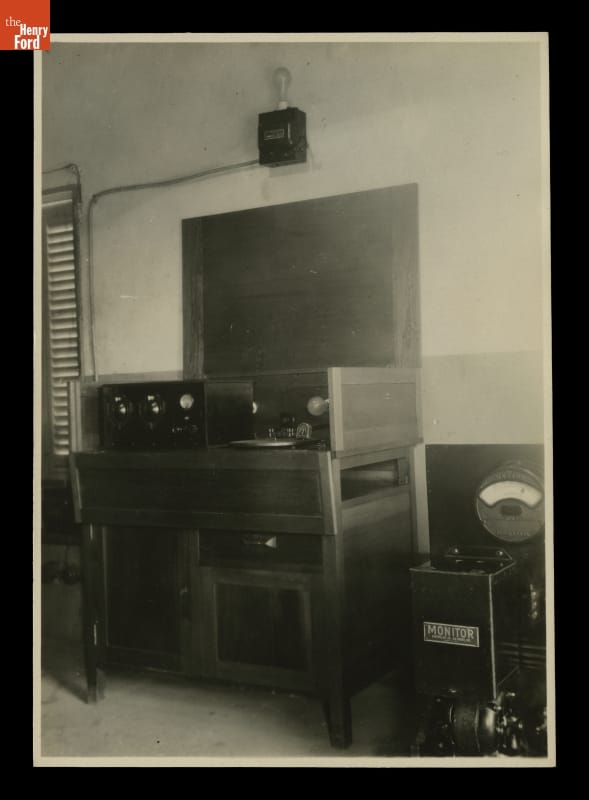
- Radio Receiver, Fordlandia, Brazil -
- 1926 - 1946
- Collections - Artifact
Radio Receiver, Fordlandia, Brazil
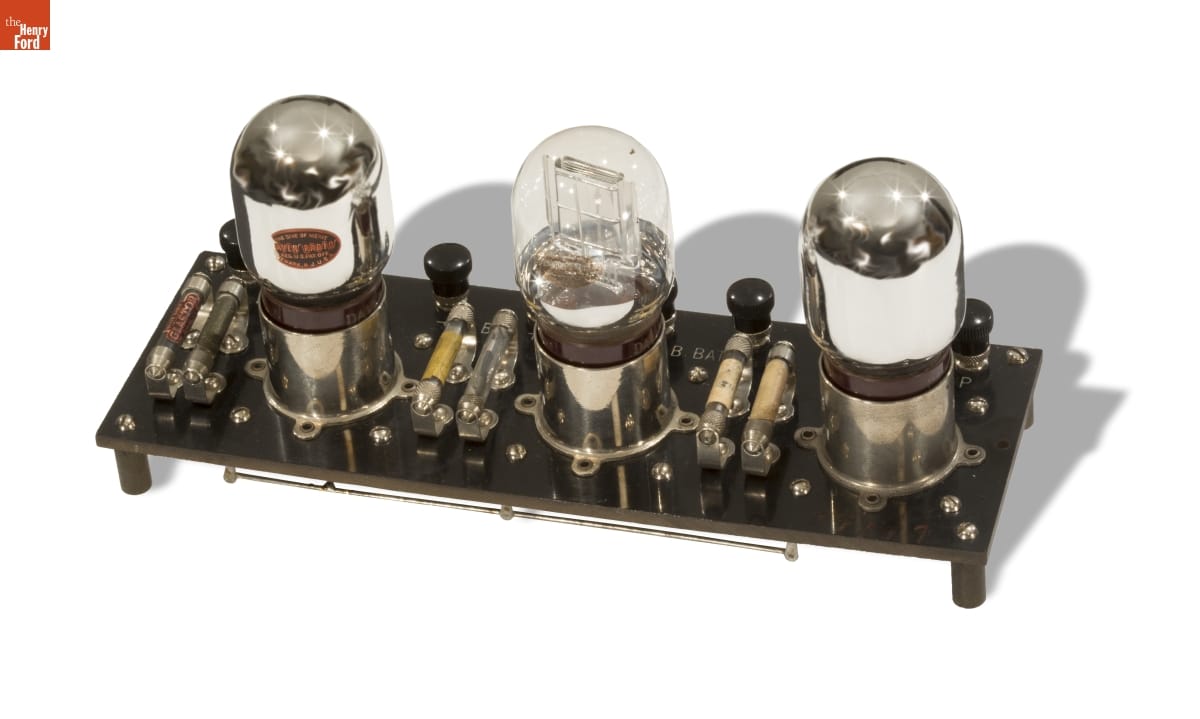
- Radio Amplifier, 1925-1926 - This amplifier would have connected to a tuner to form a complete radio receiver. The standalone nature of this component is typical of the era, when radio was a complex web of parts requiring specialized knowledge to operate. Housed on an open Bakelite base, users had a complete view of its operation. Daven's packaging declared it "The Aristocrat of Amplifiers."
- 1925-1926
- Collections - Artifact
Radio Amplifier, 1925-1926
This amplifier would have connected to a tuner to form a complete radio receiver. The standalone nature of this component is typical of the era, when radio was a complex web of parts requiring specialized knowledge to operate. Housed on an open Bakelite base, users had a complete view of its operation. Daven's packaging declared it "The Aristocrat of Amplifiers."