
Search
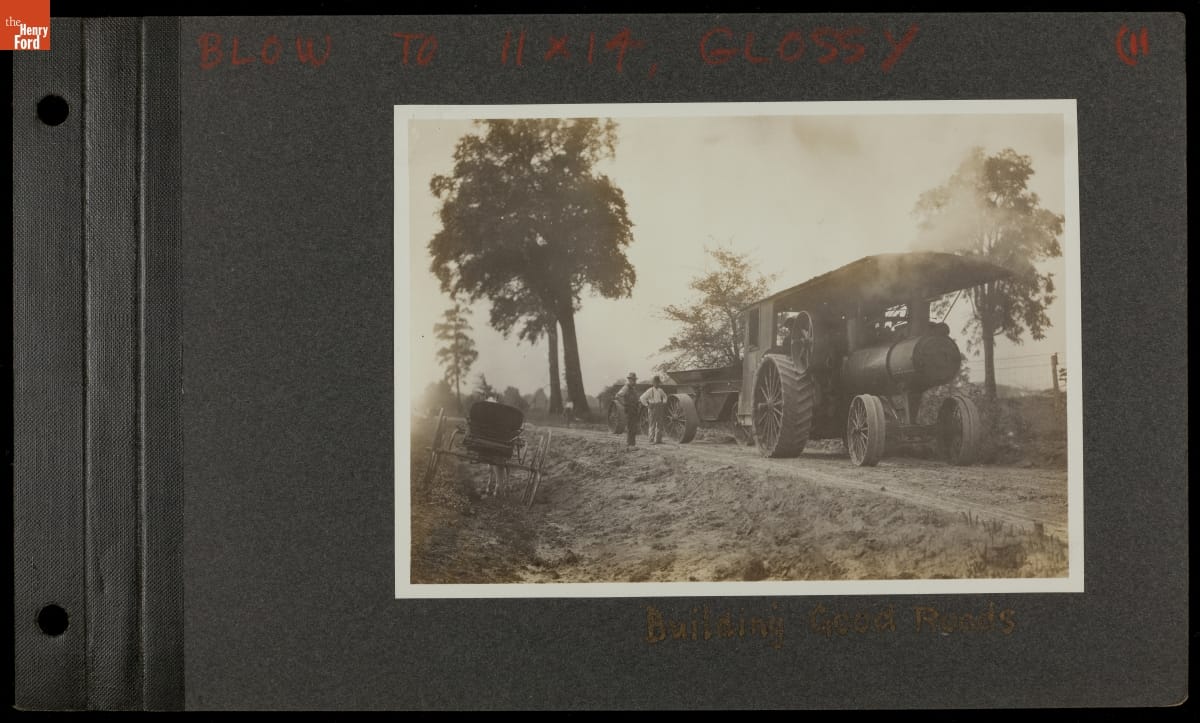
- "Building Good Roads," circa 1910 - In 1913, Henry Ford established Ford Motor Company's photographic department. Though few internal records describe company photography, remaining photographs reveal a wide range of departmental activity. Among many other things, Ford photographers documented a variety of road conditions and road building. This photograph of a construction site includes a horse-drawn wagon and a large steam traction engine.
- circa 1910
- Collections - Artifact
"Building Good Roads," circa 1910
In 1913, Henry Ford established Ford Motor Company's photographic department. Though few internal records describe company photography, remaining photographs reveal a wide range of departmental activity. Among many other things, Ford photographers documented a variety of road conditions and road building. This photograph of a construction site includes a horse-drawn wagon and a large steam traction engine.
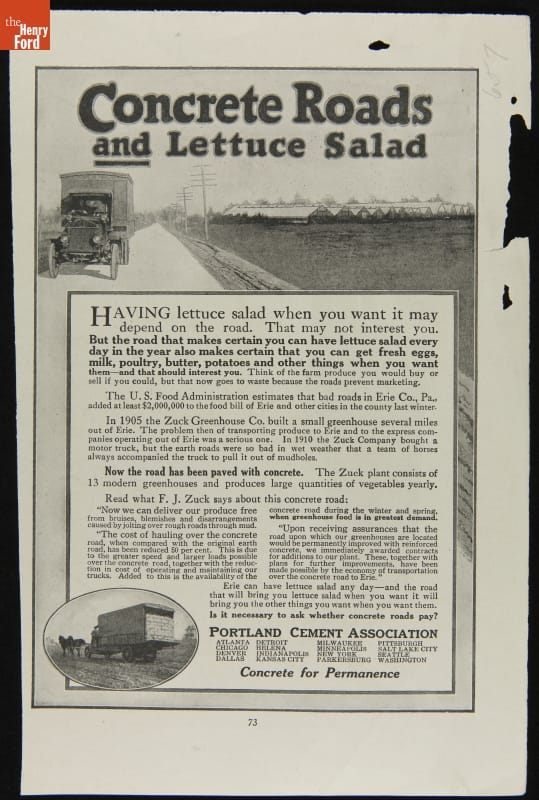
- Portland Cement Association Advertisement Promoting Good Roads "Concrete Roads and Lettuce Salad," April 1919 - The Portland Cement Association, a trade group promoting the use of Portland cement, published this advertisement in 1919 to support road improvements. The ad used the example of fresh lettuce, stating that it could be delivered more economically over paved highways versus dirt roads. Of course, cement producers stood to profit from the construction of paved roads.
- April 01, 1919
- Collections - Artifact
Portland Cement Association Advertisement Promoting Good Roads "Concrete Roads and Lettuce Salad," April 1919
The Portland Cement Association, a trade group promoting the use of Portland cement, published this advertisement in 1919 to support road improvements. The ad used the example of fresh lettuce, stating that it could be delivered more economically over paved highways versus dirt roads. Of course, cement producers stood to profit from the construction of paved roads.
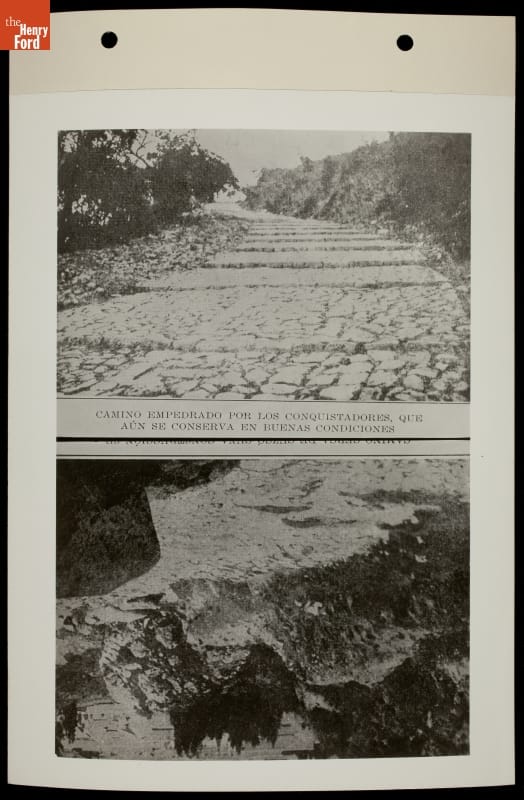
- Two Historic South American Roads, circa 1930 - "Roads of the Pacific" was part of the Ford Exhibit, the most popular attraction at the 1935 California Pacific International Exposition. Visitors rode in brand new Ford V-8s over 14 reproductions of famous roads. Crews used reference photographs to construct a realistic, immersive visitor experience. These images helped them recreate part of the Inca Road, which spanned the South American Andes.
- circa 1930
- Collections - Artifact
Two Historic South American Roads, circa 1930
"Roads of the Pacific" was part of the Ford Exhibit, the most popular attraction at the 1935 California Pacific International Exposition. Visitors rode in brand new Ford V-8s over 14 reproductions of famous roads. Crews used reference photographs to construct a realistic, immersive visitor experience. These images helped them recreate part of the Inca Road, which spanned the South American Andes.
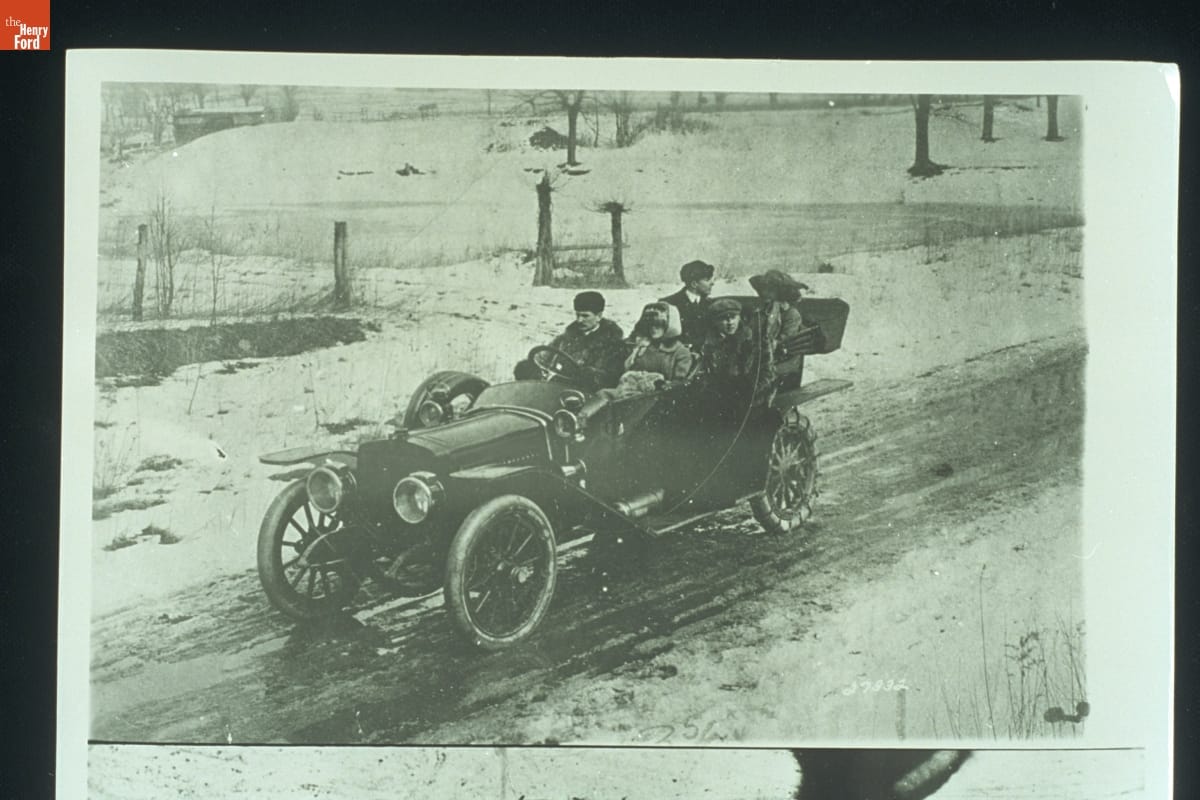
- Driving on Winter Roads, circa 1915 - Early motorists tended to avoid wintertime driving, especially in rural areas where roads were poor even in warm weather. But some adventurous drivers refused to be intimidated by cold and snow. Chains on the tires improved a car's traction in icy conditions, but using an open automobile in winter still required warm clothing and steely determination.
- circa 1915
- Collections - Artifact
Driving on Winter Roads, circa 1915
Early motorists tended to avoid wintertime driving, especially in rural areas where roads were poor even in warm weather. But some adventurous drivers refused to be intimidated by cold and snow. Chains on the tires improved a car's traction in icy conditions, but using an open automobile in winter still required warm clothing and steely determination.
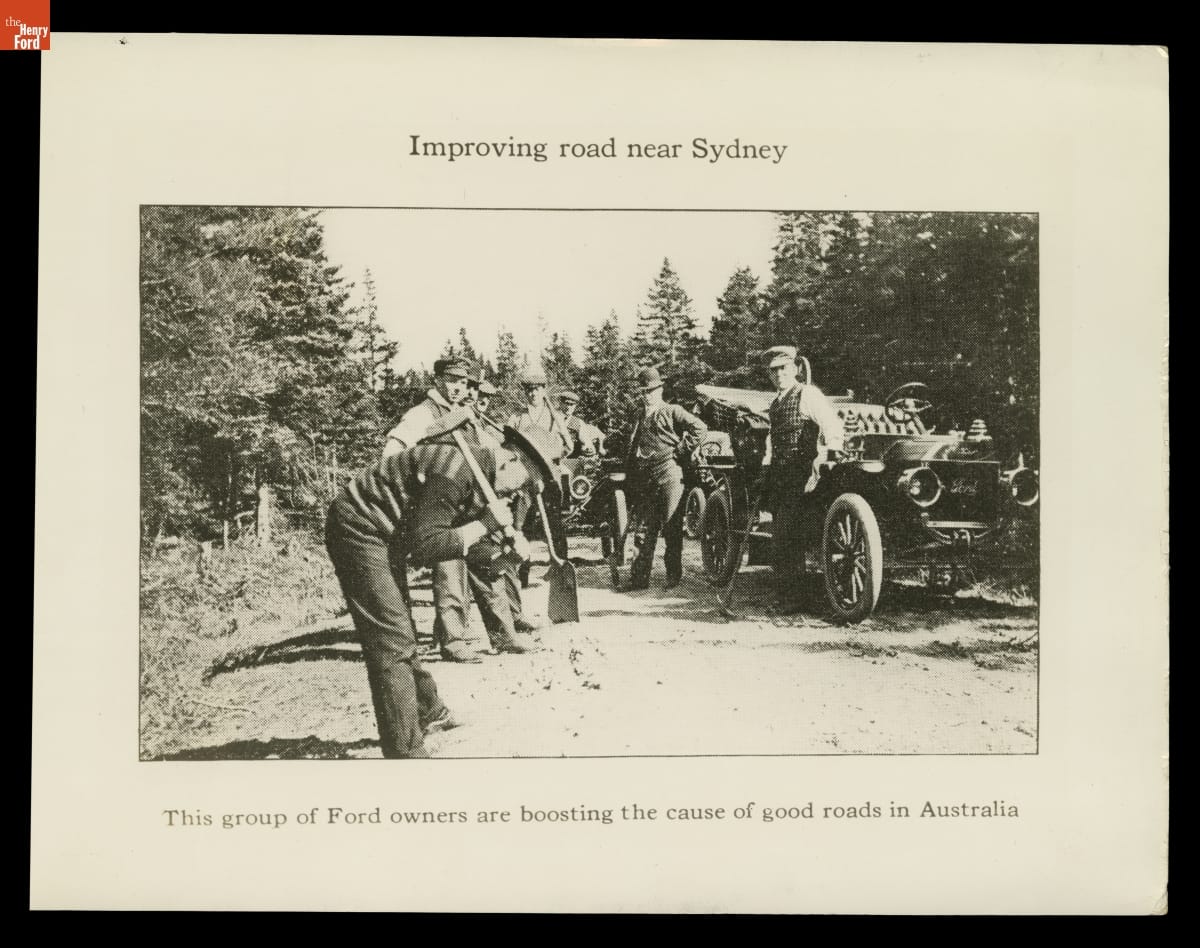
- "Improving Roads near Sydney, Australia," 1927 - The automobile's appeal was worldwide, and with it came a global demand for better roads. This photo shows a group of Ford owners working on road improvements near Sydney, Australia, in 1927. Ford Motor Company of Canada established an Australian subsidiary in 1925. Ford Australia's headquarters were in Geelong, but Sydney was home to an assembly plant.
- 1910-1927
- Collections - Artifact
"Improving Roads near Sydney, Australia," 1927
The automobile's appeal was worldwide, and with it came a global demand for better roads. This photo shows a group of Ford owners working on road improvements near Sydney, Australia, in 1927. Ford Motor Company of Canada established an Australian subsidiary in 1925. Ford Australia's headquarters were in Geelong, but Sydney was home to an assembly plant.
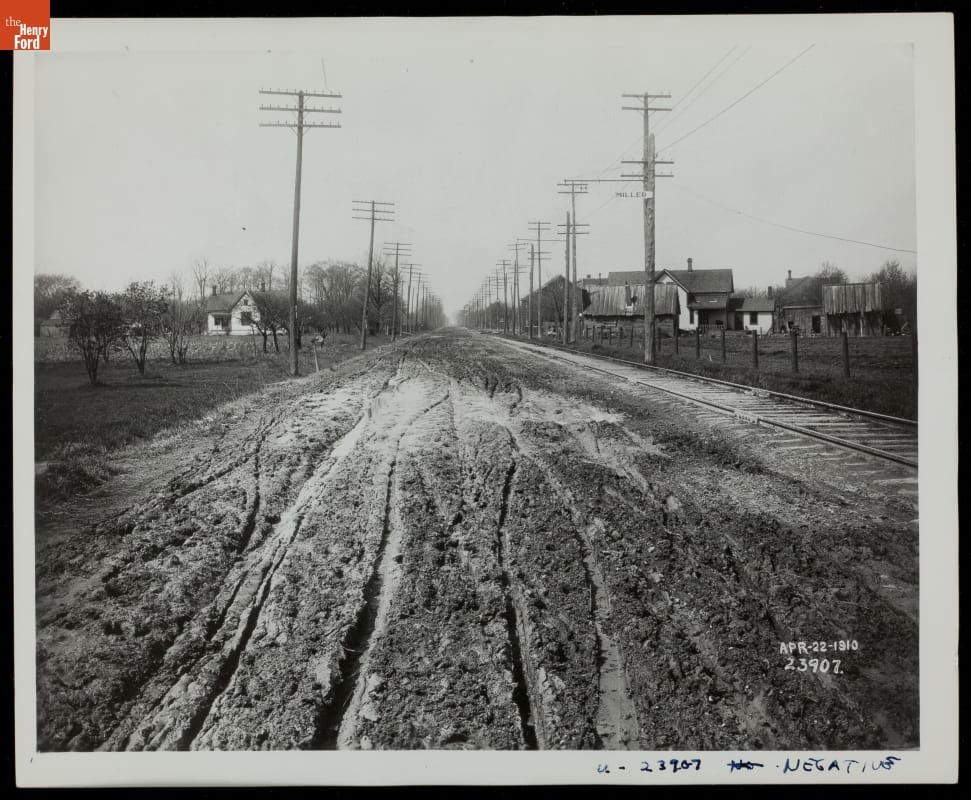
- Michigan and Miller Roads, Dearborn, Michigan, 1910 - In the early 1900s, hard surfaced roadways existed only in cities. Most roads were bumpy dirt paths carved with ruts from the narrow wheels of horse-drawn vehicles and torn up by the tires of heavy automobiles. They became rivers of mud at the slightest turn of weather.
- April 22, 1910
- Collections - Artifact
Michigan and Miller Roads, Dearborn, Michigan, 1910
In the early 1900s, hard surfaced roadways existed only in cities. Most roads were bumpy dirt paths carved with ruts from the narrow wheels of horse-drawn vehicles and torn up by the tires of heavy automobiles. They became rivers of mud at the slightest turn of weather.
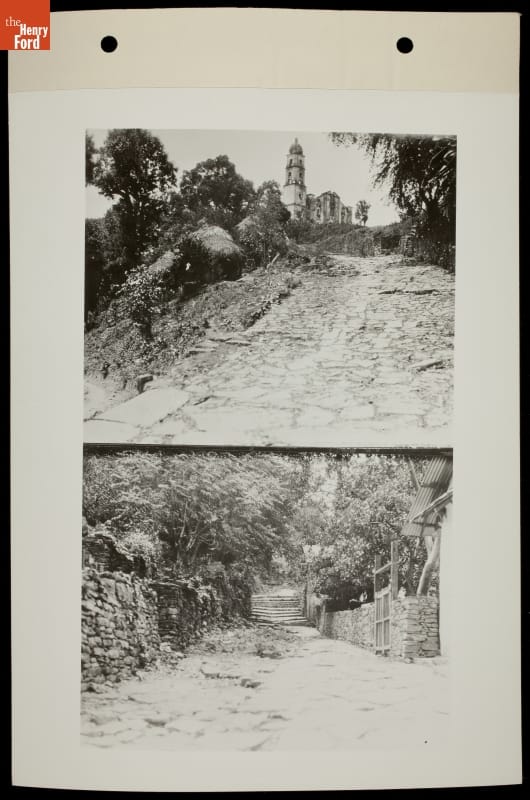
- Two Views of South American Roads, circa 1930 - "Roads of the Pacific" was part of the Ford Exhibit, the most popular attraction at the 1935 California Pacific International Exposition. Visitors rode in brand new Ford V-8s over 14 reproductions of famous roads. Crews used reference photographs to construct a realistic, immersive visitor experience. These images helped them recreate part of the Inca Road, which spanned the South American Andes.
- circa 1930
- Collections - Artifact
Two Views of South American Roads, circa 1930
"Roads of the Pacific" was part of the Ford Exhibit, the most popular attraction at the 1935 California Pacific International Exposition. Visitors rode in brand new Ford V-8s over 14 reproductions of famous roads. Crews used reference photographs to construct a realistic, immersive visitor experience. These images helped them recreate part of the Inca Road, which spanned the South American Andes.
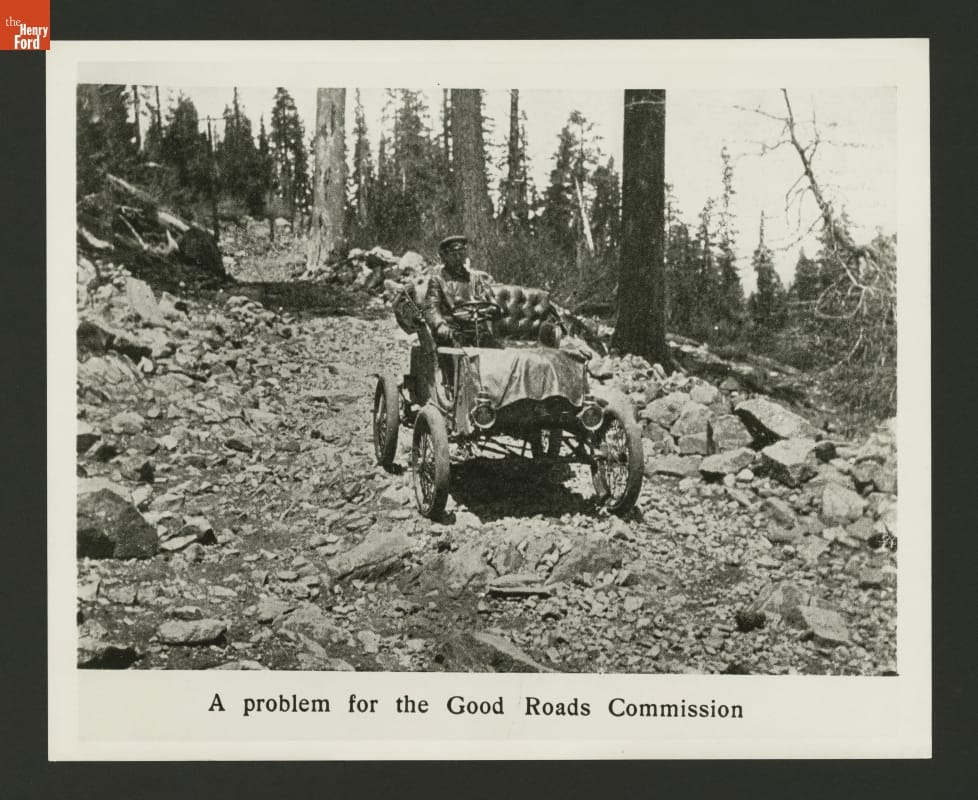
- "A Problem for the Good Roads Commission," 1902 - "A problem for the Good Roads Commission" was the original caption for this photo from about 1902. This barely passable road was never intended for automobiles.
- 1902
- Collections - Artifact
"A Problem for the Good Roads Commission," 1902
"A problem for the Good Roads Commission" was the original caption for this photo from about 1902. This barely passable road was never intended for automobiles.
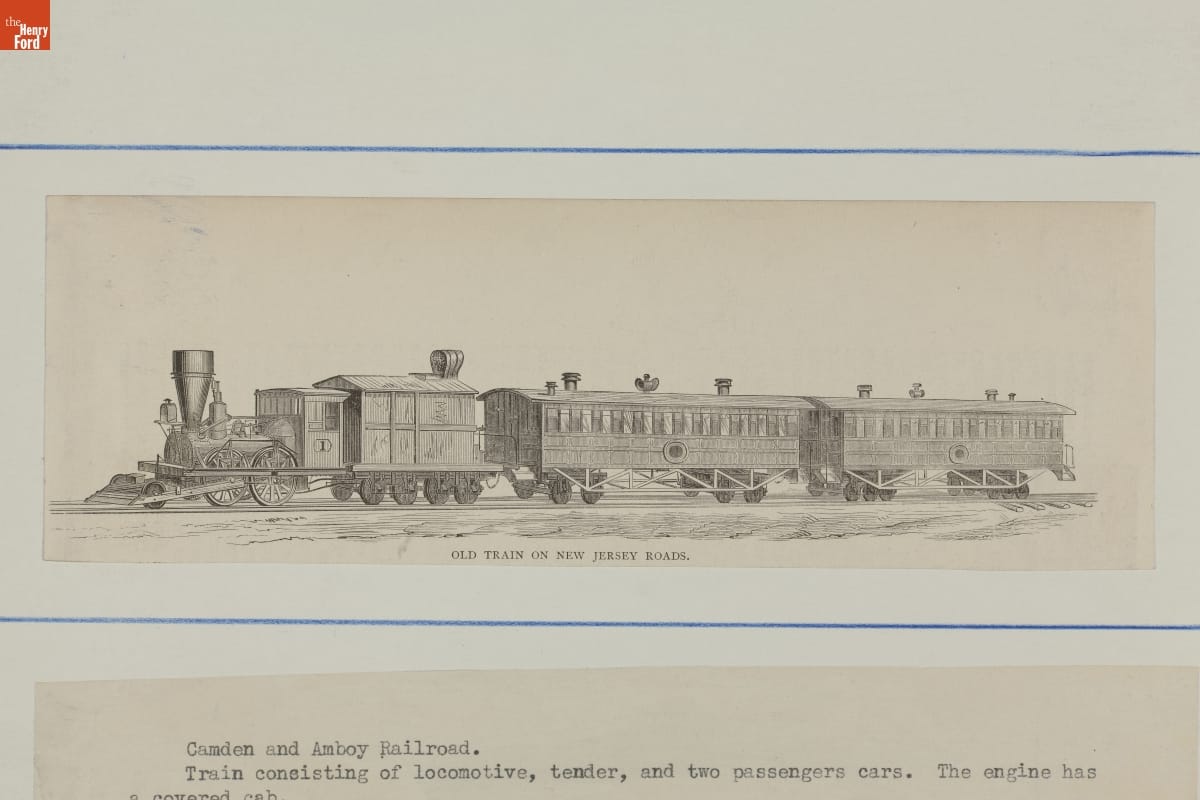
- "Old Train on New Jersey Roads," circa 1857 - The Camden & Amboy Railroad, connecting greater Philadelphia with greater New York City, opened in 1832. The railroad's first locomotive, shown in this illustration, was imported from England and named <EM>John Bull</EM> in honor of its heritage. Mechanic Isaac Dripps assembled the locomotive and, about 1833, installed a cowcatcher at front. The device became a hallmark of early American locomotives.
- circa 1857
- Collections - Artifact
"Old Train on New Jersey Roads," circa 1857
The Camden & Amboy Railroad, connecting greater Philadelphia with greater New York City, opened in 1832. The railroad's first locomotive, shown in this illustration, was imported from England and named John Bull in honor of its heritage. Mechanic Isaac Dripps assembled the locomotive and, about 1833, installed a cowcatcher at front. The device became a hallmark of early American locomotives.
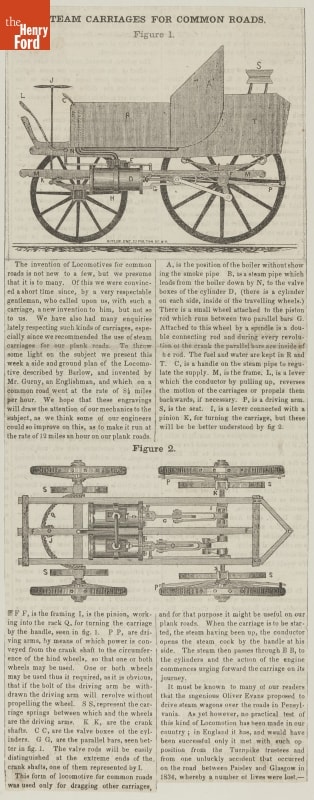
- Wood Engraving, Steam Carriages for Common Roads, circa 1848 - British inventor Goldsworthy Gurney built a series of self-propelled steam carriages in the 1820s. Although successful technologically -- one of Gurney's carriages made the 100-mile trip from London to Bath at an average speed of 15 miles per hour -- the vehicles failed commercially. The growing British railroad network and pressure from horse-carriage interests forced Gurney out of business.
- circa 1848
- Collections - Artifact
Wood Engraving, Steam Carriages for Common Roads, circa 1848
British inventor Goldsworthy Gurney built a series of self-propelled steam carriages in the 1820s. Although successful technologically -- one of Gurney's carriages made the 100-mile trip from London to Bath at an average speed of 15 miles per hour -- the vehicles failed commercially. The growing British railroad network and pressure from horse-carriage interests forced Gurney out of business.