
Search
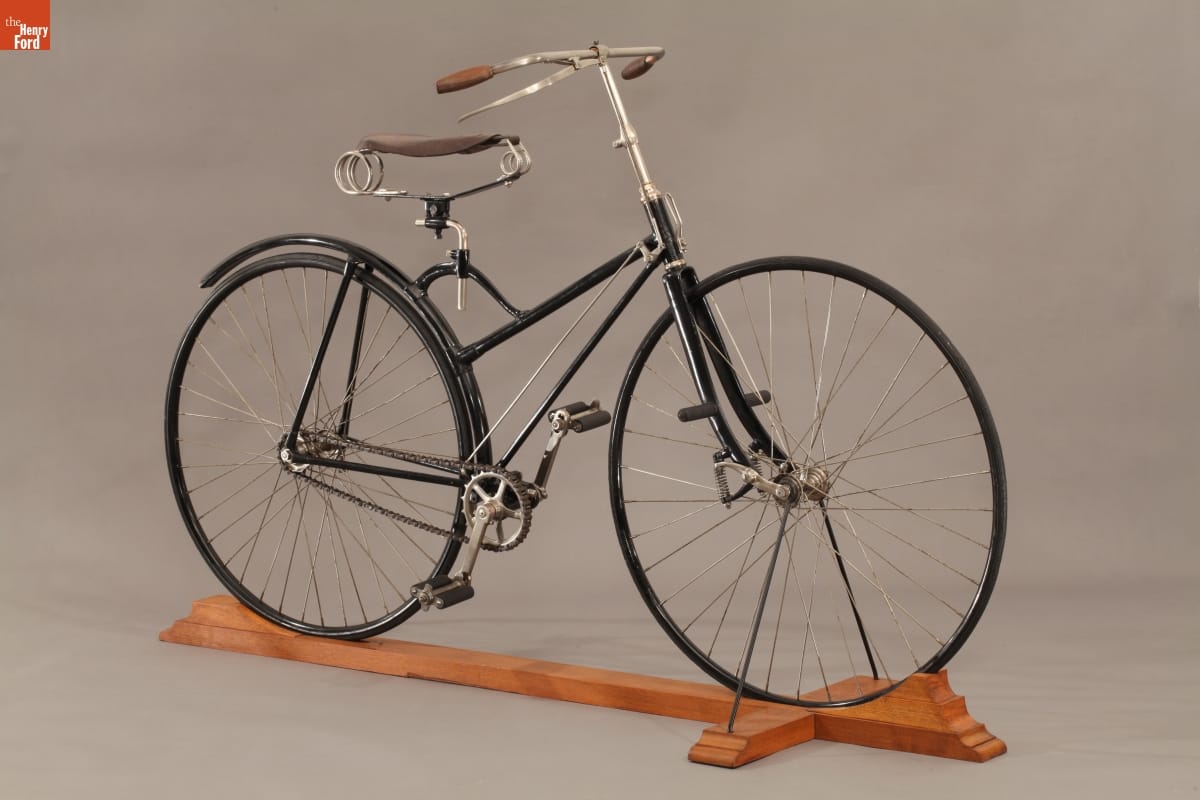
- Pope Columbia Safety Bicycle, 1889 - New "safety" bicycles, like this Pope Columbia, touched off a bicycle craze in the 1880s and 1890s. More stable with two same-sized wheels and less expensive than the high-wheeled "ordinaries," safety bicycles allowed many Americans to discover the sheer joy of riding.
- 1889
- Collections - Artifact
Pope Columbia Safety Bicycle, 1889
New "safety" bicycles, like this Pope Columbia, touched off a bicycle craze in the 1880s and 1890s. More stable with two same-sized wheels and less expensive than the high-wheeled "ordinaries," safety bicycles allowed many Americans to discover the sheer joy of riding.
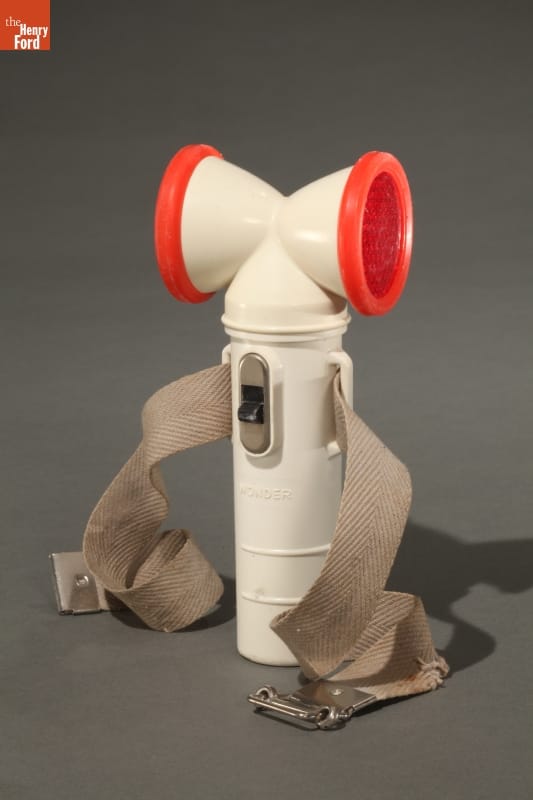
- Bicycle Safety Light, 1965-1975 - After a hiatus of almost three-quarters of a century, bicycling experienced a revival among American adults during the 1970s -- especially with the introduction of ten-speed bikes. This led to a plethora of specialized accessories and accoutrements, like this bicycle lamp that tied to a rider's leg for added safety at night.
- 1965-1975
- Collections - Artifact
Bicycle Safety Light, 1965-1975
After a hiatus of almost three-quarters of a century, bicycling experienced a revival among American adults during the 1970s -- especially with the introduction of ten-speed bikes. This led to a plethora of specialized accessories and accoutrements, like this bicycle lamp that tied to a rider's leg for added safety at night.
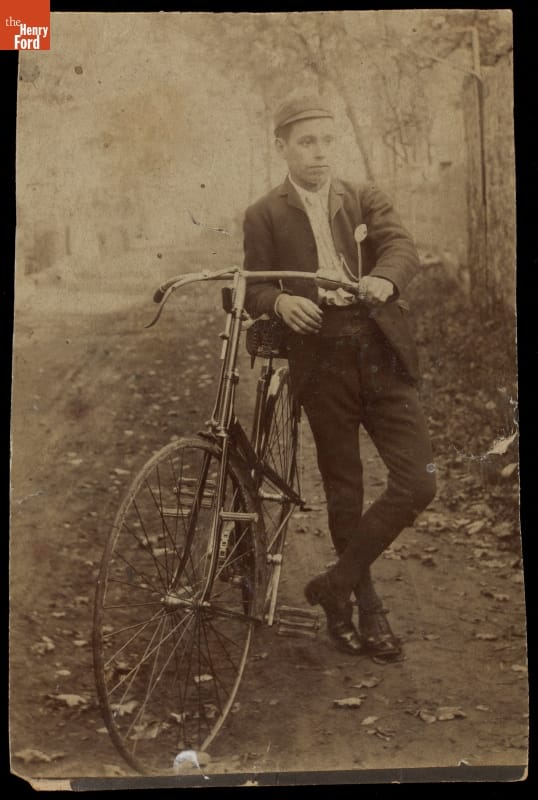
- Man with a Safety Bicycle, circa 1890 - An unidentified man stands next to his "safety" bicycle in this circa 1890 photograph. These easy-to-mount, same-sized wheel bicycles with chain drives allowed more Americans to pedal to work, race around a course, or enjoy a trip down a country lane.
- circa 1890
- Collections - Artifact
Man with a Safety Bicycle, circa 1890
An unidentified man stands next to his "safety" bicycle in this circa 1890 photograph. These easy-to-mount, same-sized wheel bicycles with chain drives allowed more Americans to pedal to work, race around a course, or enjoy a trip down a country lane.
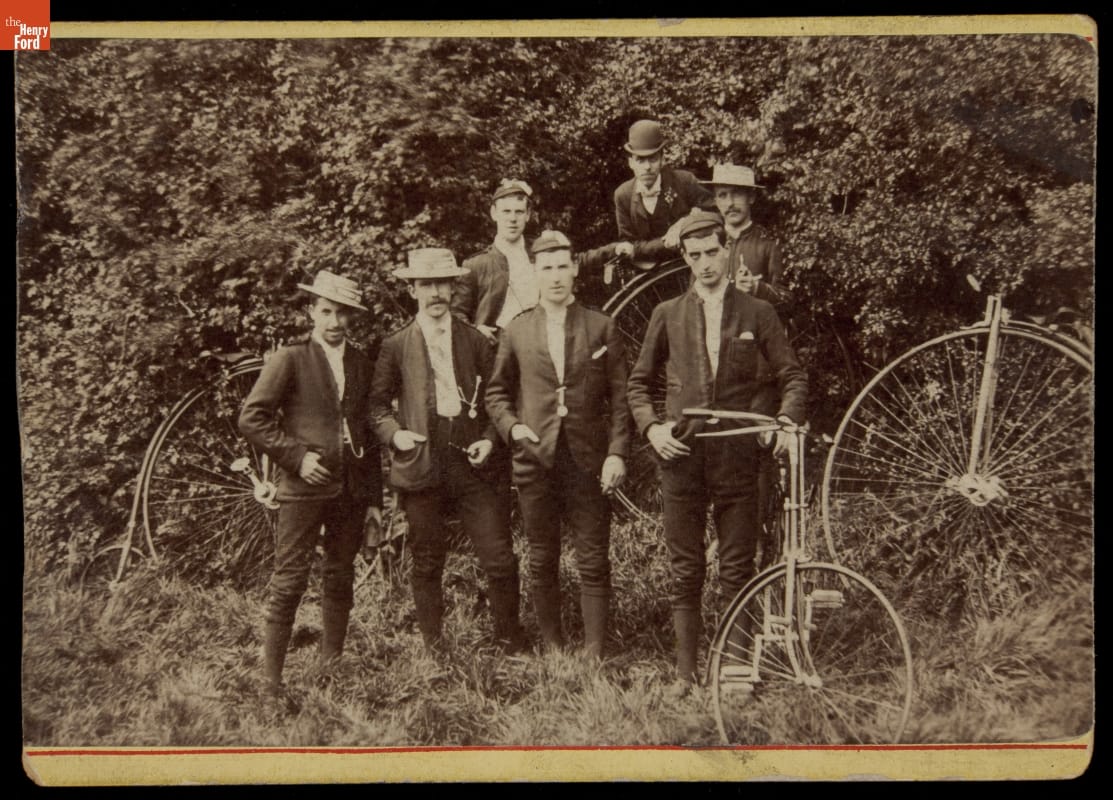
- Young Men with High-Wheel Bicycles and Safety Bicycle, circa 1885 - Bicycles were very popular for recreation in the late nineteenth century, especially after the invention of the "safety bicycle," whose equally sized wheels made accidents much less likely. But the earlier high-wheeled "ordinaries" had nonetheless been a favorite of bicycle clubs and young people in search of leisure adventures. This photograph features riders of both types of bicycles.
- circa 1885
- Collections - Artifact
Young Men with High-Wheel Bicycles and Safety Bicycle, circa 1885
Bicycles were very popular for recreation in the late nineteenth century, especially after the invention of the "safety bicycle," whose equally sized wheels made accidents much less likely. But the earlier high-wheeled "ordinaries" had nonetheless been a favorite of bicycle clubs and young people in search of leisure adventures. This photograph features riders of both types of bicycles.
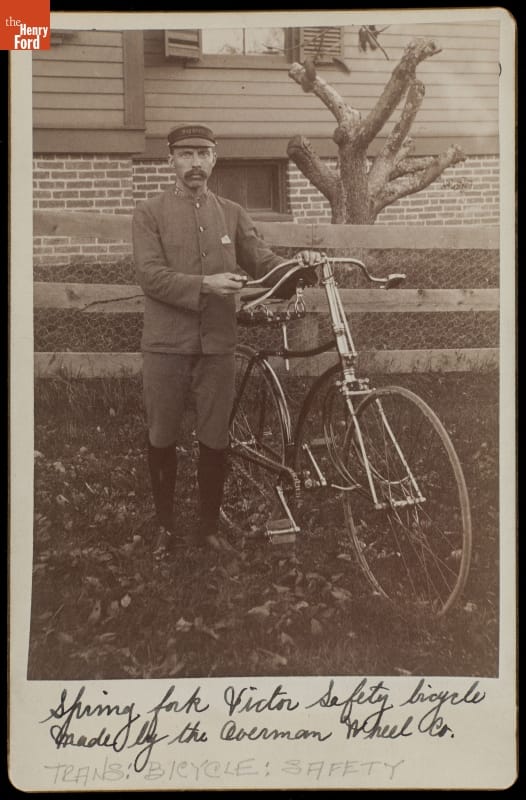
- Man with a Safety Bicycle, circa 1890 - An unidentified cyclist poses with a Victor safety bicycle built by Overman Wheel Company of Chicopee, Massachusetts. An early complaint with the safety was its rough ride. Overman designed the spring fork -- notice the large C-shape curving down from the handlebars -- to counter vibration. True riding comfort however came with the invention and adoption of pneumatic tires.
- circa 1890
- Collections - Artifact
Man with a Safety Bicycle, circa 1890
An unidentified cyclist poses with a Victor safety bicycle built by Overman Wheel Company of Chicopee, Massachusetts. An early complaint with the safety was its rough ride. Overman designed the spring fork -- notice the large C-shape curving down from the handlebars -- to counter vibration. True riding comfort however came with the invention and adoption of pneumatic tires.
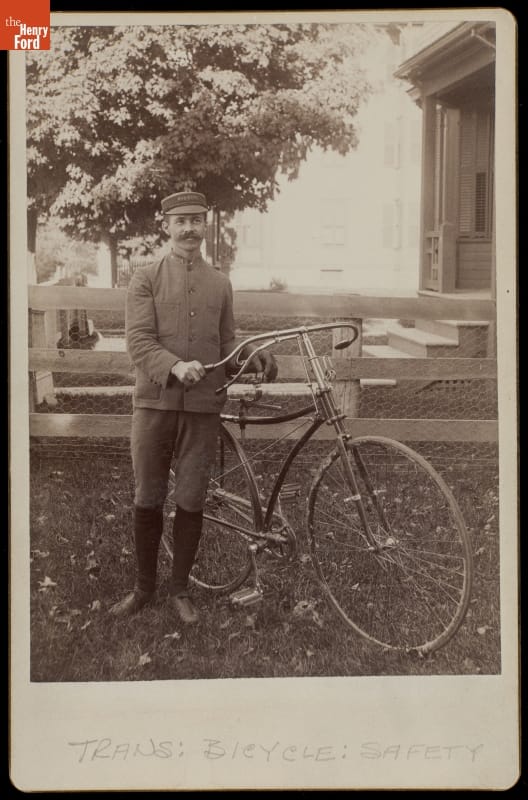
- Man with a Safety Bicycle; 1880-1900 - Bicycles were very popular for recreation beginning in the late nineteenth century, especially after the invention of the "safety bicycle," whose equally sized wheels made accidents much less likely. This uniformed rider posing with his safety bike is probably part of a cycling club.
- 1880-1900
- Collections - Artifact
Man with a Safety Bicycle; 1880-1900
Bicycles were very popular for recreation beginning in the late nineteenth century, especially after the invention of the "safety bicycle," whose equally sized wheels made accidents much less likely. This uniformed rider posing with his safety bike is probably part of a cycling club.
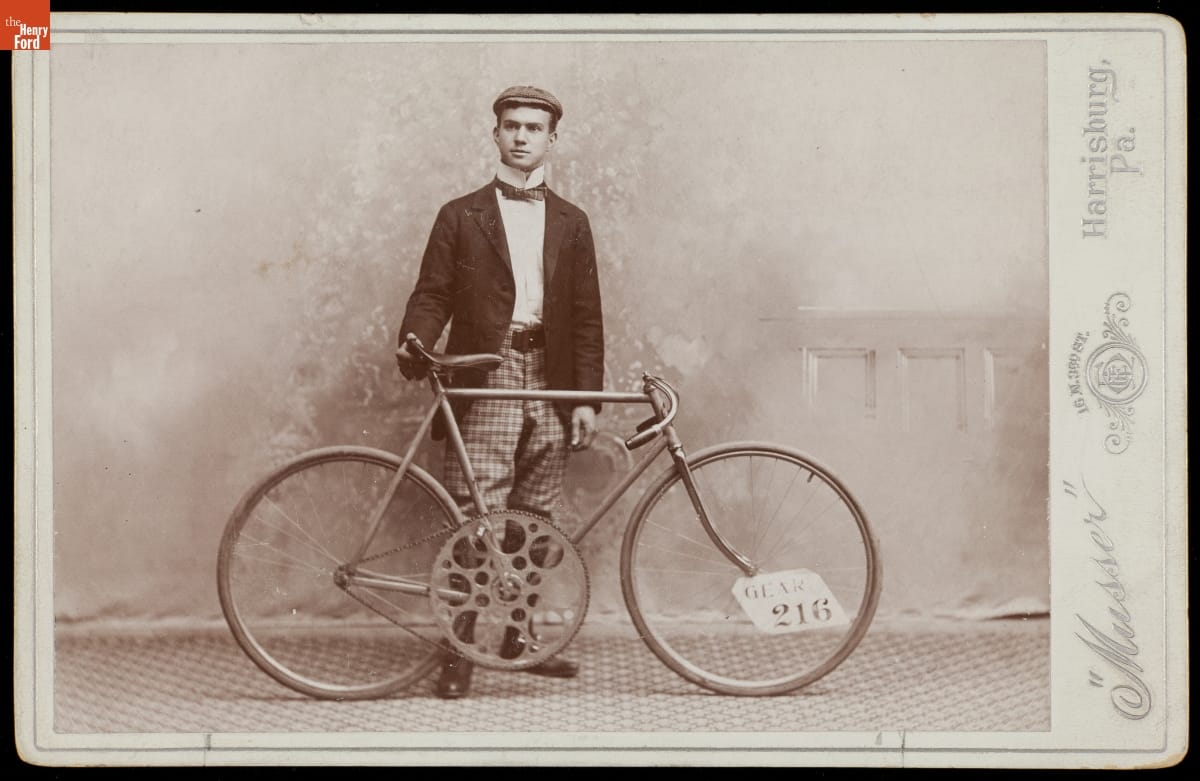
- Man with a Safety Bicycle, circa 1895 - Innovators in the 1890s sought to improve on the safety bicycle. Some ideas, like the pneumatic tire, succeeded; but others did not catch on. This photograph shows a safety with a large-diameter front chain sprocket. Though it provided a high gear ratio (one turn of the crank producing multiple turns of the rear wheel) useful for racing, this fixed-gear design failed to entice everyday cyclists.
- circa 1895
- Collections - Artifact
Man with a Safety Bicycle, circa 1895
Innovators in the 1890s sought to improve on the safety bicycle. Some ideas, like the pneumatic tire, succeeded; but others did not catch on. This photograph shows a safety with a large-diameter front chain sprocket. Though it provided a high gear ratio (one turn of the crank producing multiple turns of the rear wheel) useful for racing, this fixed-gear design failed to entice everyday cyclists.
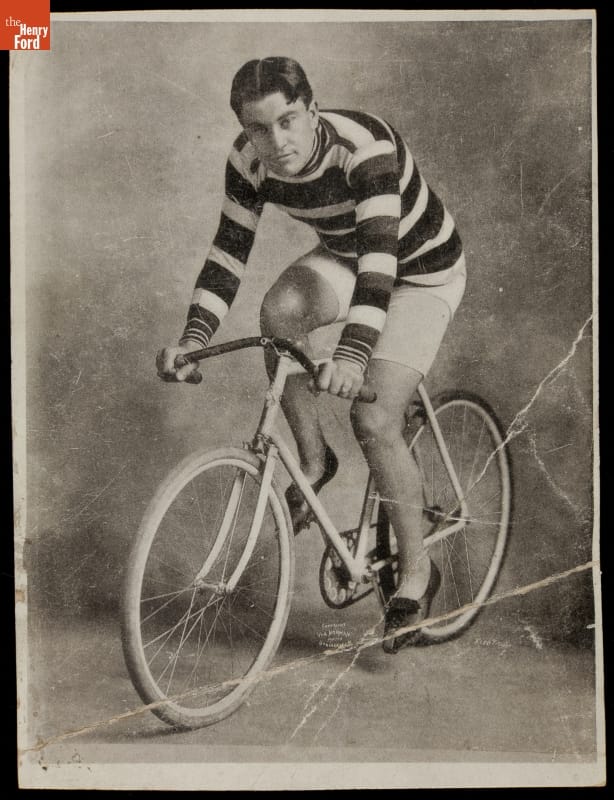
- Fred J. Titus on Safety Bicycle, circa 1895 - Frederick J. Titus is pictured in an eye-catching striped athletic uniform in this cabinet photograph from the 1890s. Titus was a professional bicycle racer and at one time raced for A. B. Spalding and Brothers, a large sporting goods company.
- circa 1895
- Collections - Artifact
Fred J. Titus on Safety Bicycle, circa 1895
Frederick J. Titus is pictured in an eye-catching striped athletic uniform in this cabinet photograph from the 1890s. Titus was a professional bicycle racer and at one time raced for A. B. Spalding and Brothers, a large sporting goods company.
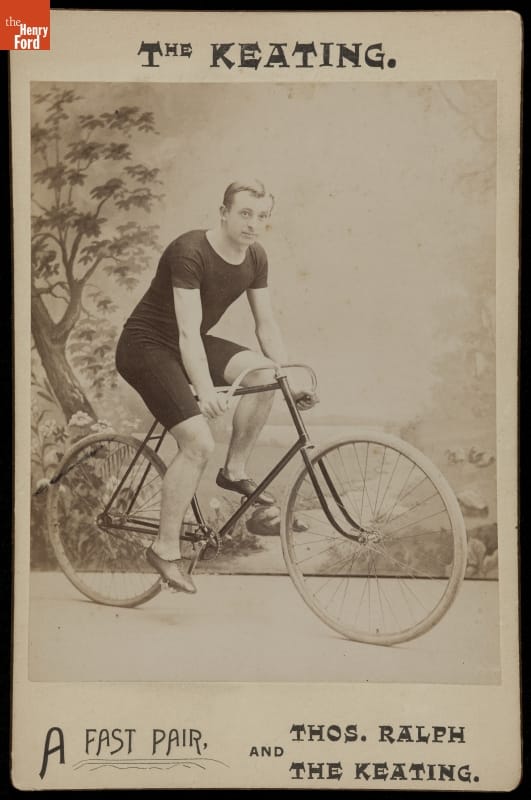
- Thomas Ralph on a Keating Safety Bicycle, 1892 - One way bicycle companies advertised was by distributing cabinet cards with images of their product. The Keating Wheel Company paired racer Thomas Ralph with one of its bicycles. With this promotional item, fans of Ralph got a photo of the cyclist, while company officials attracted other potential speedsters to take a look at their product before buying another bicycle.
- 1892
- Collections - Artifact
Thomas Ralph on a Keating Safety Bicycle, 1892
One way bicycle companies advertised was by distributing cabinet cards with images of their product. The Keating Wheel Company paired racer Thomas Ralph with one of its bicycles. With this promotional item, fans of Ralph got a photo of the cyclist, while company officials attracted other potential speedsters to take a look at their product before buying another bicycle.
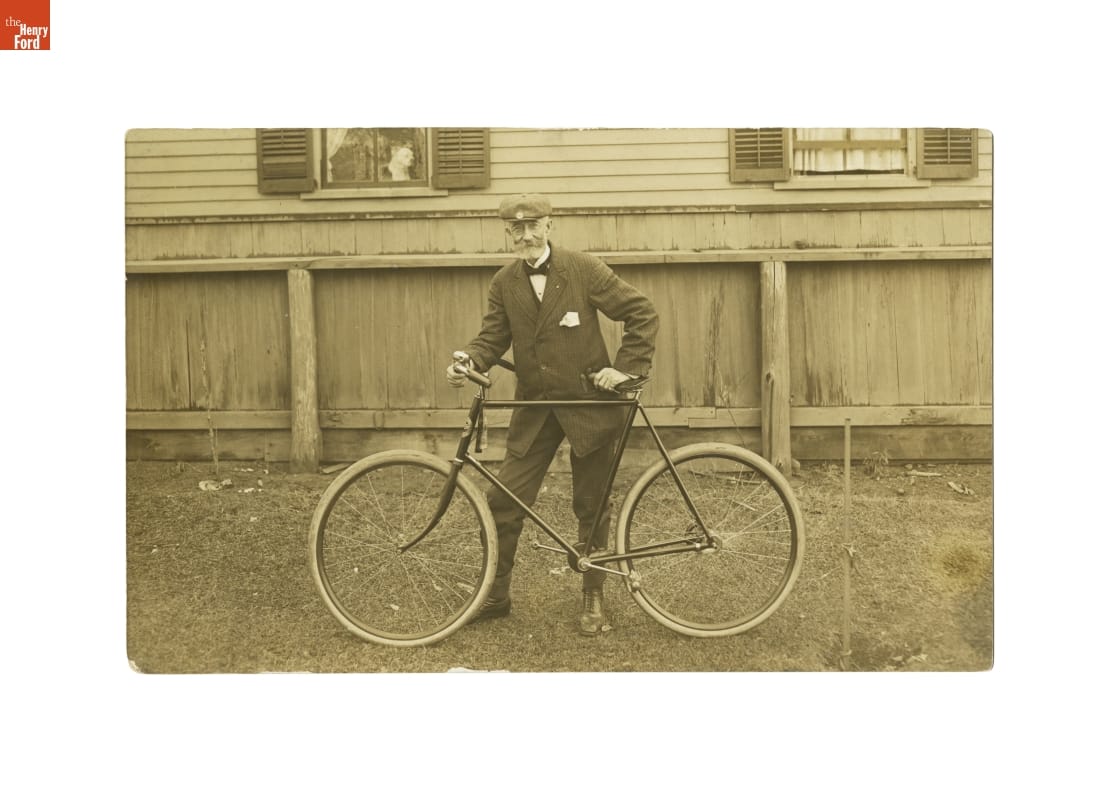
- Cyclist Posing with a Pope Safety Bicycle, circa 1897 - In 1897 the Pope Manufacturing Company introduced its shaft-driven "chainless" -- like the one seen in this photograph. The company hoped the chainless would revive demand and boost lagging sales. However, the promises of a chainless bicycle -- greater efficiency, a smoother ride, and clothing free from chain-oil stains -- never materialized or were not enough to compel cyclists to purchase this expensive innovation.
- circa 1897
- Collections - Artifact
Cyclist Posing with a Pope Safety Bicycle, circa 1897
In 1897 the Pope Manufacturing Company introduced its shaft-driven "chainless" -- like the one seen in this photograph. The company hoped the chainless would revive demand and boost lagging sales. However, the promises of a chainless bicycle -- greater efficiency, a smoother ride, and clothing free from chain-oil stains -- never materialized or were not enough to compel cyclists to purchase this expensive innovation.