Search
- Flask, 1840-1860 - Glass factories in America began producing inexpensive, mold-formed flasks in the early 1800s. These figured flasks, often decorated with symbols of national pride or political or cultural affiliation, appealed to America's common man. Other images, like the tree, may have been purely decorative. Variation of this design include a tree in bloom (summer) and a tree without leaves (winter).

- 1840-1860
- Collections - Artifact
Flask, 1840-1860
Glass factories in America began producing inexpensive, mold-formed flasks in the early 1800s. These figured flasks, often decorated with symbols of national pride or political or cultural affiliation, appealed to America's common man. Other images, like the tree, may have been purely decorative. Variation of this design include a tree in bloom (summer) and a tree without leaves (winter).
- Flask, 1840-1860 - Glass factories in America began producing inexpensive, mold-formed flasks in the early 1800s. These figured flasks, often decorated with symbols of national pride or political or cultural affiliation, appealed to America's common man. Other images, like the tree, may have been purely decorative. Variation of this design include a tree in bloom (summer) and a tree without leaves (winter).

- 1840-1860
- Collections - Artifact
Flask, 1840-1860
Glass factories in America began producing inexpensive, mold-formed flasks in the early 1800s. These figured flasks, often decorated with symbols of national pride or political or cultural affiliation, appealed to America's common man. Other images, like the tree, may have been purely decorative. Variation of this design include a tree in bloom (summer) and a tree without leaves (winter).
- Print, "Harper's August," 1896 - For a few years in the 1890s, a poster craze swept America. Bold, colorful art posters printed for bookstores and newsstands became collectors' items--sometimes more popular than the books and magazines they were designed to promote. Many posters, like this one by Edward Penfield for an issue of <em>Harper's New Monthly Magazine</em>, featured eye-catching illustrations inspired by Art Nouveau trends.

- 1896
- Collections - Artifact
Print, "Harper's August," 1896
For a few years in the 1890s, a poster craze swept America. Bold, colorful art posters printed for bookstores and newsstands became collectors' items--sometimes more popular than the books and magazines they were designed to promote. Many posters, like this one by Edward Penfield for an issue of Harper's New Monthly Magazine, featured eye-catching illustrations inspired by Art Nouveau trends.
- Scale Model of Goldenrod Land Speed Record Race Car, 1963-1964 - Brothers Bob and Bill Summers of Ontario, California, set a new land speed record for a wheel-driven car with Goldenrod, their streamlined racer. The bullet-like vehicle, powered by four Chrysler "Hemi" V-8 engines, averaged 409.277 miles per hour in its November 1965 run. Goldenrod's achievement resonated with purists who thought that jet-powered land speed racers weren't true cars.

- 1963-1964
- Collections - Artifact
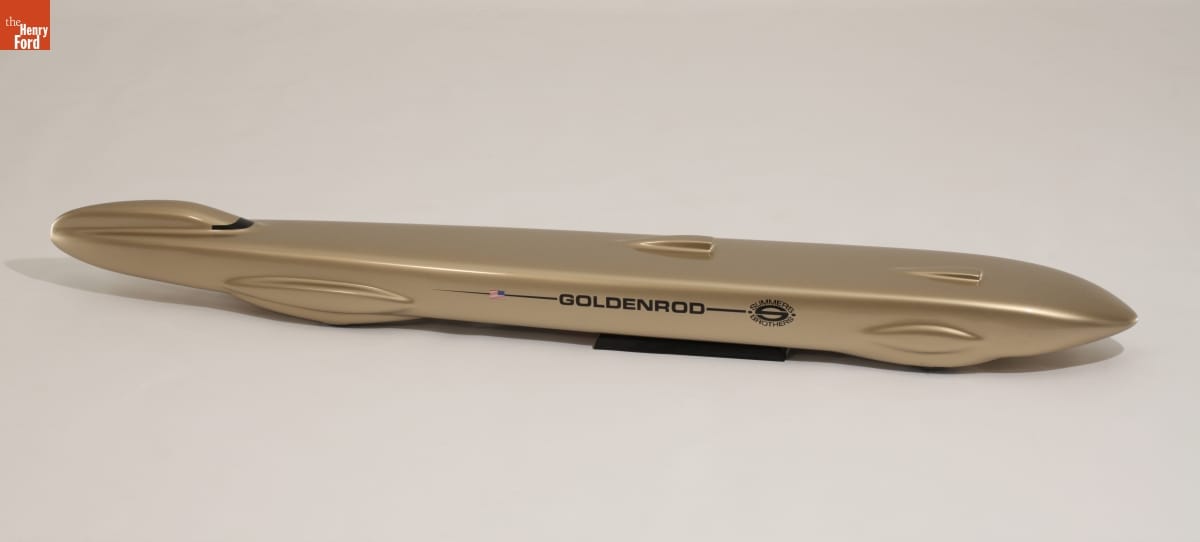
Scale Model of Goldenrod Land Speed Record Race Car, 1963-1964
Brothers Bob and Bill Summers of Ontario, California, set a new land speed record for a wheel-driven car with Goldenrod, their streamlined racer. The bullet-like vehicle, powered by four Chrysler "Hemi" V-8 engines, averaged 409.277 miles per hour in its November 1965 run. Goldenrod's achievement resonated with purists who thought that jet-powered land speed racers weren't true cars.
- The Fastest Men in the World, On Wheels, 1971 - This book examines the quest for the land speed record. Images from the book show a converted vegetable stand where Bob and Bill Summers built Goldenrod, the vehicle that broke the land speed record for wheel-driven cars in 1965.

- 1971
- Collections - Artifact
The Fastest Men in the World, On Wheels, 1971
This book examines the quest for the land speed record. Images from the book show a converted vegetable stand where Bob and Bill Summers built Goldenrod, the vehicle that broke the land speed record for wheel-driven cars in 1965.
- 1965 Goldenrod Land Speed Race Car - On November 12, 1965, Goldenrod streaked across Utah's Bonneville Salt Flats at 409.277 miles per hour, setting a new land speed record for wheel-driven cars. Builders Bob and Bill Summers powered Goldenrod with four massive Chrysler V-8 engines. Although other car builders copied its sleek design, Goldenrod held the record until 1991.

- November 12, 1965
- Collections - Artifact
1965 Goldenrod Land Speed Race Car
On November 12, 1965, Goldenrod streaked across Utah's Bonneville Salt Flats at 409.277 miles per hour, setting a new land speed record for wheel-driven cars. Builders Bob and Bill Summers powered Goldenrod with four massive Chrysler V-8 engines. Although other car builders copied its sleek design, Goldenrod held the record until 1991.
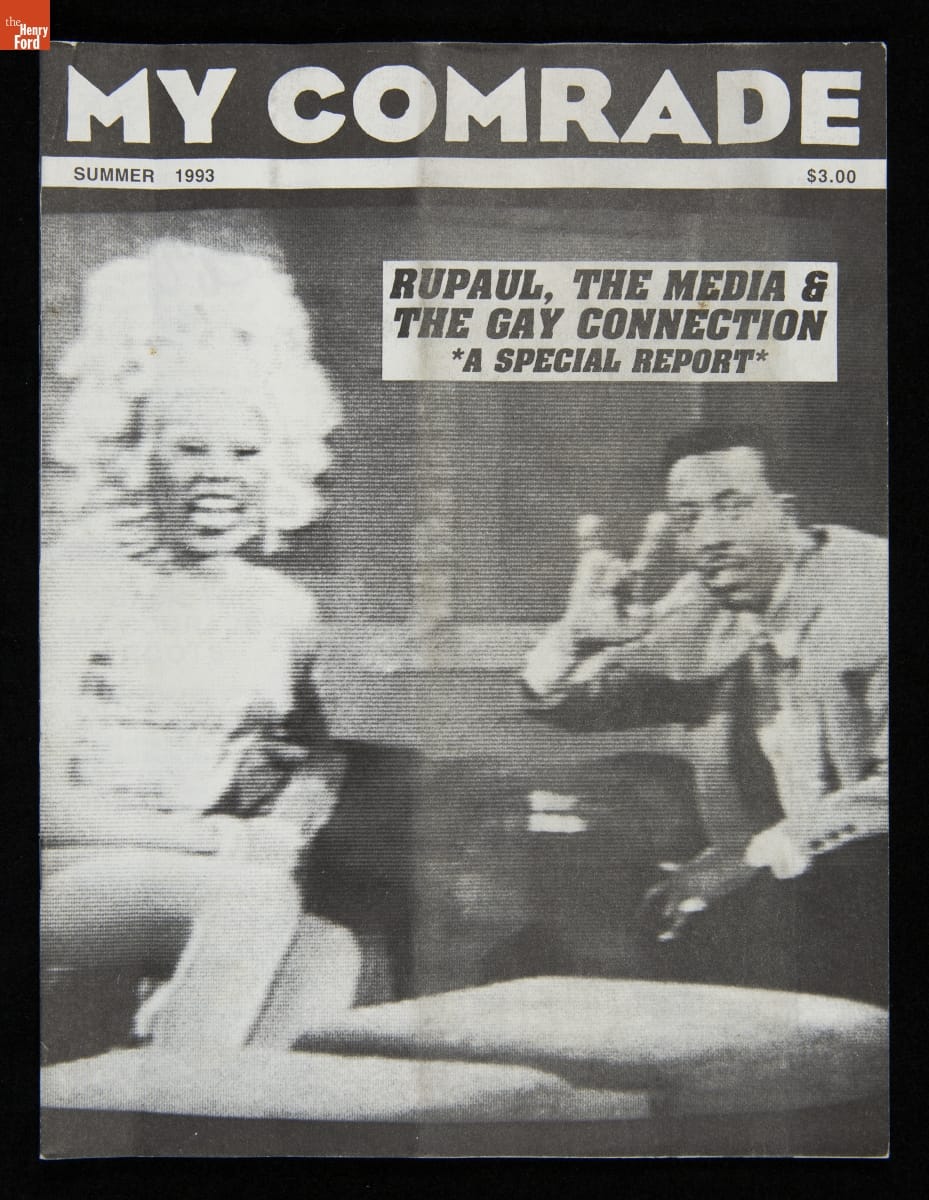
- "My Comrade," Summer 1993 - <em>My Comrade</em> was an underground "zine" launched in 1987 by drag queen Linda Simpson. The magazine was an irreverent platform for LGBTQ+ culture and politics in NYC's East Village, advertising itself as "the court jester of the queer press." <em>My Comrade</em> focused on drag queens, and the flip side of each issue also contained <em>Sister!</em>--a zine celebrating lesbian community.
- 1993
- Collections - Artifact
"My Comrade," Summer 1993
My Comrade was an underground "zine" launched in 1987 by drag queen Linda Simpson. The magazine was an irreverent platform for LGBTQ+ culture and politics in NYC's East Village, advertising itself as "the court jester of the queer press." My Comrade focused on drag queens, and the flip side of each issue also contained Sister!--a zine celebrating lesbian community.
- "Hot Rod" Magazine for January 1966 - Bob and Bill Summers posed with their record-breaking wheel-driven car for <em>Hot Rod</em>'s January 1966 issue. It took clever engineering to pack four massive Chrysler engines and the machinery to drive all four wheels into its long, slim shape. Many purists feel that the faster jet- and rocket-powered machines, like those pictured on the right, are not real cars.

- January 01, 1966
- Collections - Artifact
"Hot Rod" Magazine for January 1966
Bob and Bill Summers posed with their record-breaking wheel-driven car for Hot Rod's January 1966 issue. It took clever engineering to pack four massive Chrysler engines and the machinery to drive all four wheels into its long, slim shape. Many purists feel that the faster jet- and rocket-powered machines, like those pictured on the right, are not real cars.
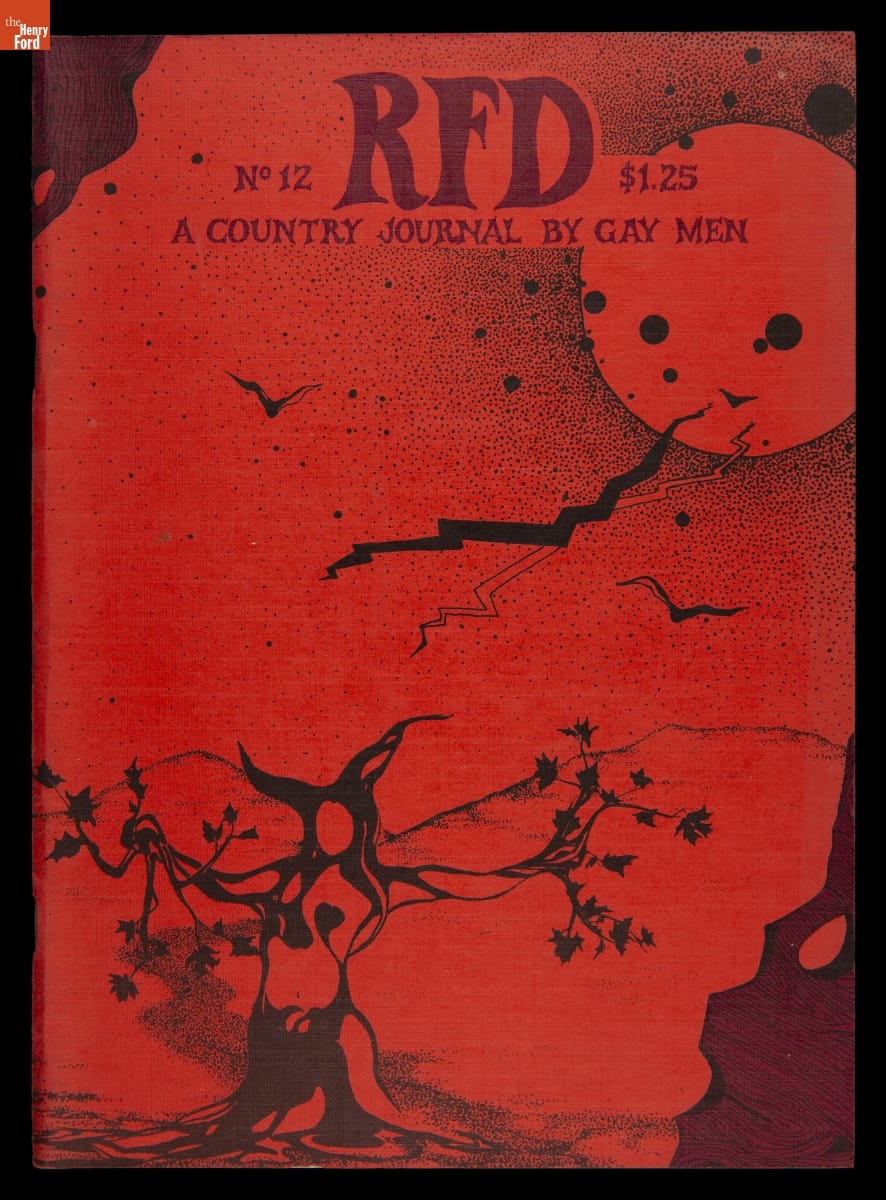
- RFD Magazine, Issue #12, Summer 1977 - Stewart Scofield, Carl Wittman, and Allen Troxler launched the journal "RFD: A Country Journal for Gay Men Everywhere" in 1974. The journal documents the experiences of gay men in rural American communities, rejecting the mindset that gay men can only have fulfilling lives in urban areas with large LGBTQ+ communities. First published in Grinnell, Iowa, the journal is still published today.
- 1977
- Collections - Artifact
RFD Magazine, Issue #12, Summer 1977
Stewart Scofield, Carl Wittman, and Allen Troxler launched the journal "RFD: A Country Journal for Gay Men Everywhere" in 1974. The journal documents the experiences of gay men in rural American communities, rejecting the mindset that gay men can only have fulfilling lives in urban areas with large LGBTQ+ communities. First published in Grinnell, Iowa, the journal is still published today.
- Montgomery Ward & Co. Catalog for Spring and Summer, 1930 - Montgomery Ward's 1930 spring and summer catalog featured several bicycles, including some from store-brand Hawthorne. Children's bikes of the 1930s took inspiration from motorcycles, and many featured faux fuel tanks, loud horns and electric headlights. The catalog's listing for the Hawthorne Flyer bike boasts of its "sturdy motorcycle construction" starting at $33.00 and shipped for only $5.50 down.

- 1930
- Collections - Artifact
Montgomery Ward & Co. Catalog for Spring and Summer, 1930
Montgomery Ward's 1930 spring and summer catalog featured several bicycles, including some from store-brand Hawthorne. Children's bikes of the 1930s took inspiration from motorcycles, and many featured faux fuel tanks, loud horns and electric headlights. The catalog's listing for the Hawthorne Flyer bike boasts of its "sturdy motorcycle construction" starting at $33.00 and shipped for only $5.50 down.