
Search
- Program, "70th Annual Chicago Auto Show," February 25 through March 5, 1978 - Auto shows use glamour, giveaways, spectacle, and sex appeal to show off manufacturers' latest offerings. Part entertainment and part consumer education, auto shows have their roots in 19th Century industrial exhibitions and world's fairs. New York City hosted America's first auto show in 1900 and the idea caught on. Paying crowds took away this program from the 1978 Chicago show.
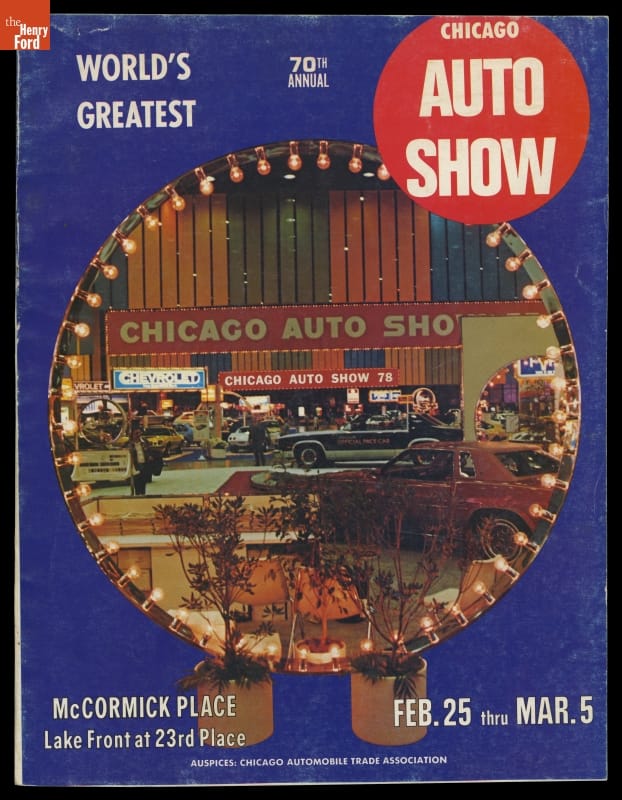
- 25 February 1978-05 March 19
- Collections - Artifact
Program, "70th Annual Chicago Auto Show," February 25 through March 5, 1978
Auto shows use glamour, giveaways, spectacle, and sex appeal to show off manufacturers' latest offerings. Part entertainment and part consumer education, auto shows have their roots in 19th Century industrial exhibitions and world's fairs. New York City hosted America's first auto show in 1900 and the idea caught on. Paying crowds took away this program from the 1978 Chicago show.
- "Ford Care and Home Repairs," circa 1921 - The Ford Model T -- a simple car that was relatively easy to fix -- was "the great teacher" in terms of basic auto repair. Many owners built skills and gained confidence working on their Model Ts. Books like this one provided these owners with a handy reference for understanding how to maintain and repair their cars at home.
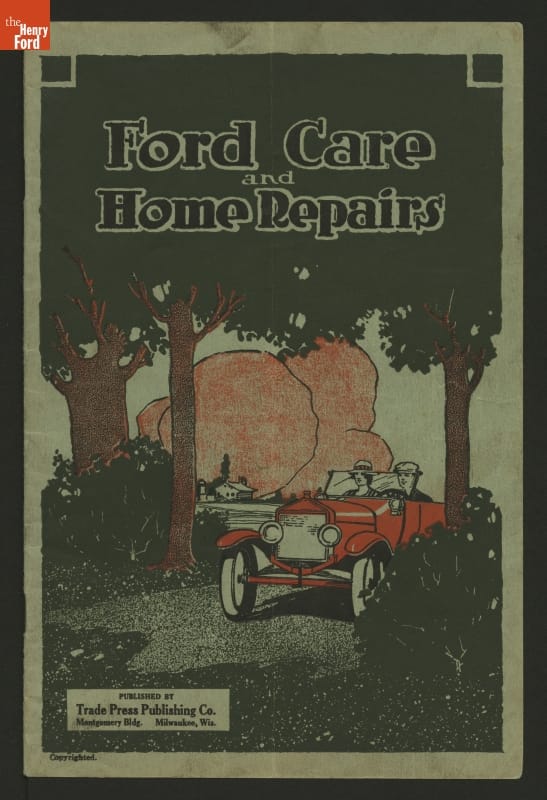
- circa 1921
- Collections - Artifact
"Ford Care and Home Repairs," circa 1921
The Ford Model T -- a simple car that was relatively easy to fix -- was "the great teacher" in terms of basic auto repair. Many owners built skills and gained confidence working on their Model Ts. Books like this one provided these owners with a handy reference for understanding how to maintain and repair their cars at home.
- Program for the "44th Annual Chicago Auto Show," 1952 - Auto shows use glamour, giveaways, spectacle, and sex appeal to show off manufacturers' latest offerings. Part entertainment and part consumer education, auto shows have their roots in 19th Century industrial exhibitions and world's fairs. New York City hosted America's first auto show in 1900 and the idea caught on. Paying crowds took away this program from the 1952 Chicago show.
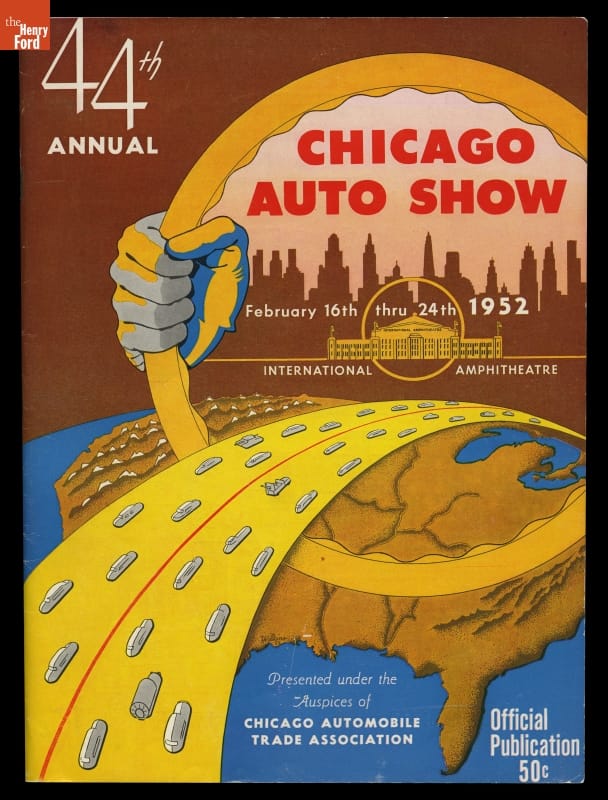
- 16 February 1952-24 February 1952
- Collections - Artifact
Program for the "44th Annual Chicago Auto Show," 1952
Auto shows use glamour, giveaways, spectacle, and sex appeal to show off manufacturers' latest offerings. Part entertainment and part consumer education, auto shows have their roots in 19th Century industrial exhibitions and world's fairs. New York City hosted America's first auto show in 1900 and the idea caught on. Paying crowds took away this program from the 1952 Chicago show.
- Reproduction of Thomas A. Edison's Original Tinfoil Phonograph, circa 1920 -
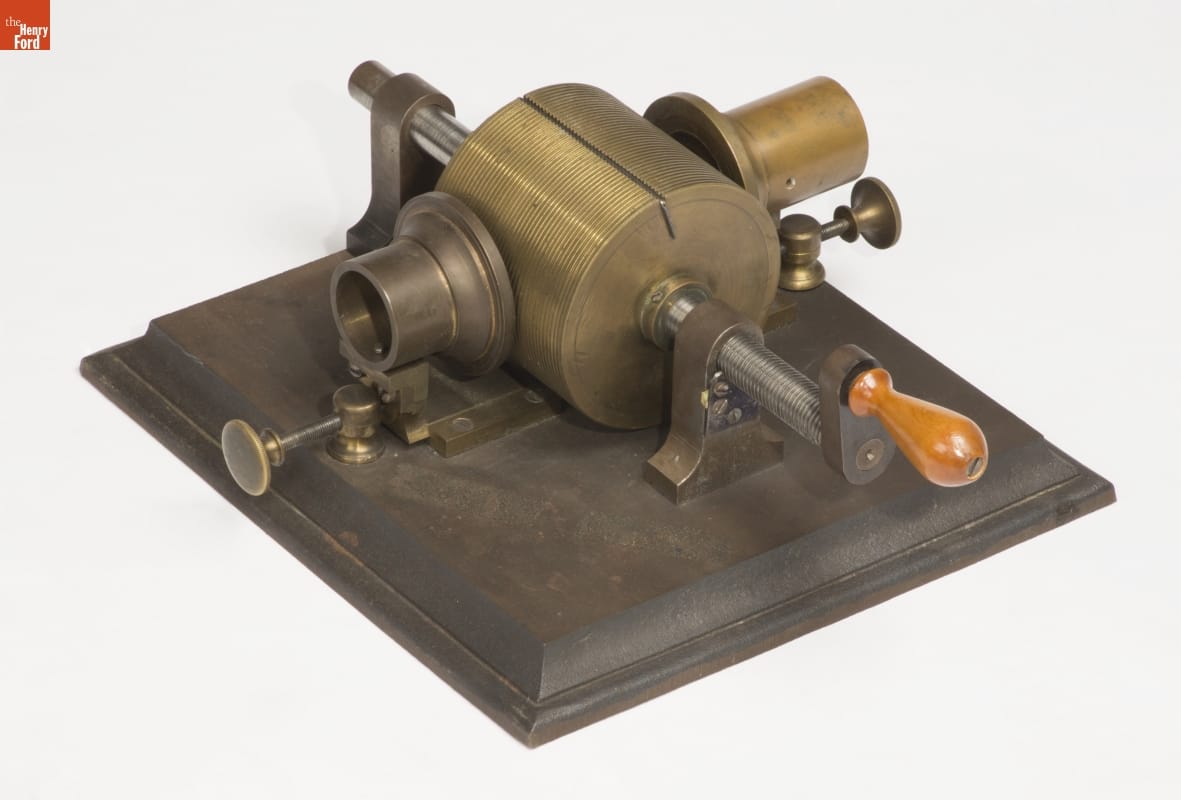
- circa 1920
- Collections - Artifact
Reproduction of Thomas A. Edison's Original Tinfoil Phonograph, circa 1920
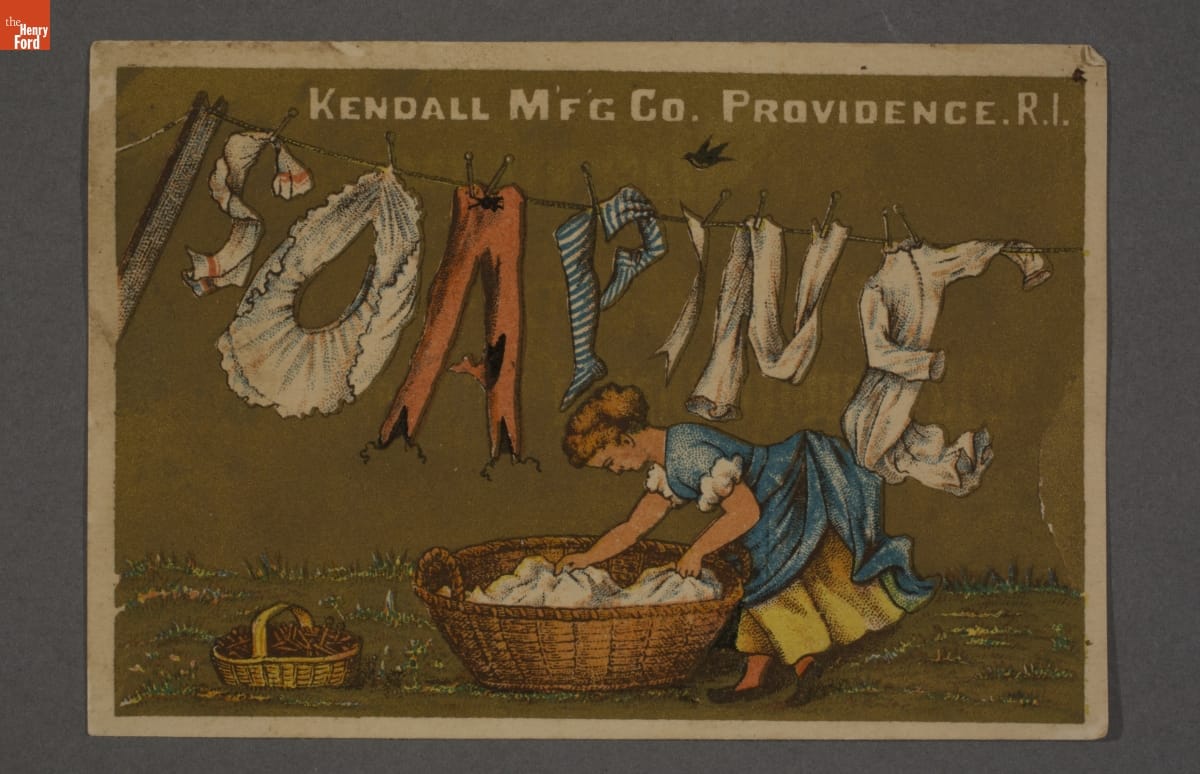
- Soapine Trade Card, 1870-1889 - In the last third of the nineteenth century, an unprecedented variety of consumer goods and services flooded the American market. Advertisers, armed with new methods of color printing, bombarded potential customers with trade cards. Americans enjoyed and often saved the vibrant little advertisements found in product packages or distributed by local merchants. Many survive as historical records of commercialism in the United States.
- 1870-1889
- Collections - Artifact
Soapine Trade Card, 1870-1889
In the last third of the nineteenth century, an unprecedented variety of consumer goods and services flooded the American market. Advertisers, armed with new methods of color printing, bombarded potential customers with trade cards. Americans enjoyed and often saved the vibrant little advertisements found in product packages or distributed by local merchants. Many survive as historical records of commercialism in the United States.
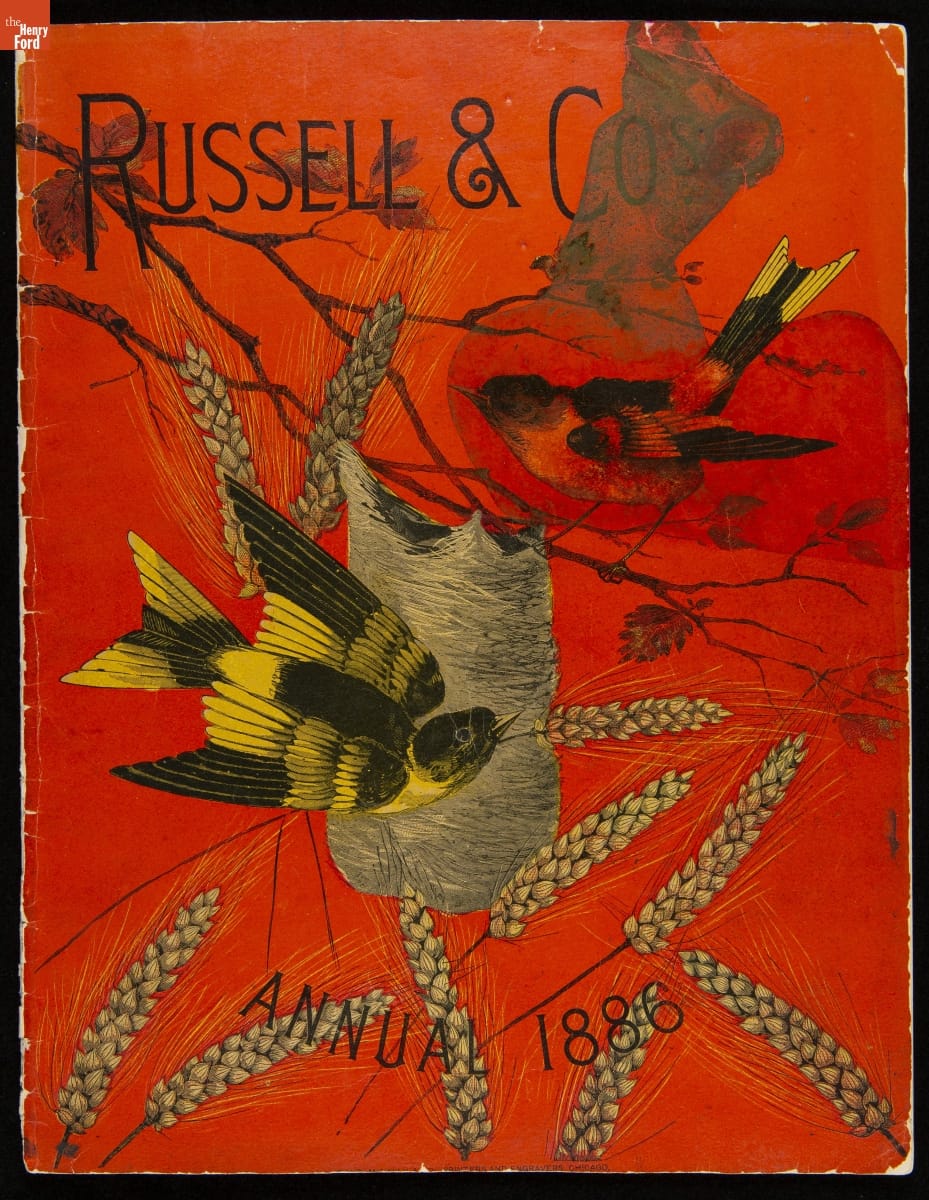
- Russell & Co. Trade Catalog, 1886 - As farmers mechanized barn and farmyard work in the nineteenth century, they began to use stationary power sources. These included portable steam engines and devices that converted animals' movement to drive a variety of agricultural machines. Enterprising manufacturers, like Ohio-based Russell & Co., specialized in producing and selling both power sources and the machines they were designed to run.
- 1886
- Collections - Artifact
Russell & Co. Trade Catalog, 1886
As farmers mechanized barn and farmyard work in the nineteenth century, they began to use stationary power sources. These included portable steam engines and devices that converted animals' movement to drive a variety of agricultural machines. Enterprising manufacturers, like Ohio-based Russell & Co., specialized in producing and selling both power sources and the machines they were designed to run.
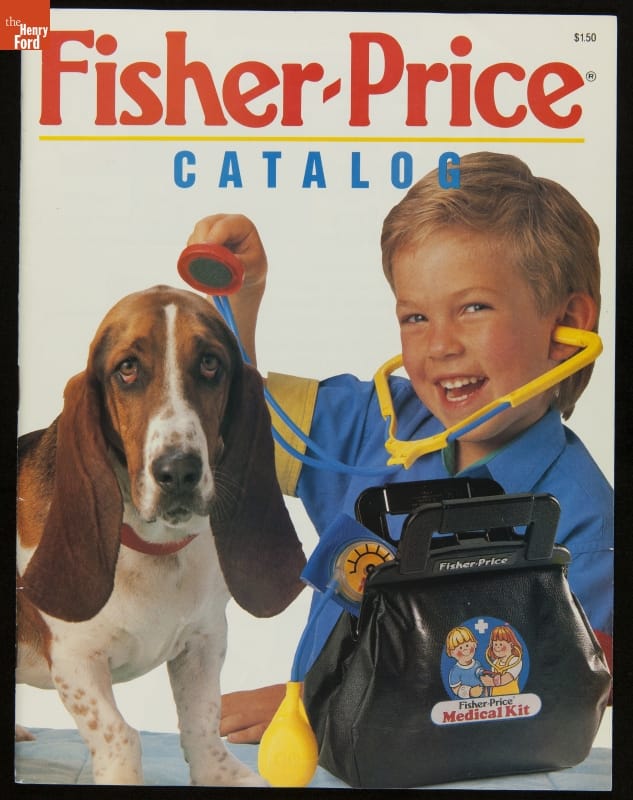
- Trade Catalog, Fisher-Price, 1989 - Three founders--a game manufacturer, an F.W. Woolworth & Company retiree, and a toy store owner--created Fisher-Price with a similar vision. They insisted that their toys must have "intrinsic play value, ingenuity, strong construction good value for the money, and action." The baby rattles pictured in this 1989 catalog each involve active play and encourage child development.
- 1989
- Collections - Artifact
Trade Catalog, Fisher-Price, 1989
Three founders--a game manufacturer, an F.W. Woolworth & Company retiree, and a toy store owner--created Fisher-Price with a similar vision. They insisted that their toys must have "intrinsic play value, ingenuity, strong construction good value for the money, and action." The baby rattles pictured in this 1989 catalog each involve active play and encourage child development.
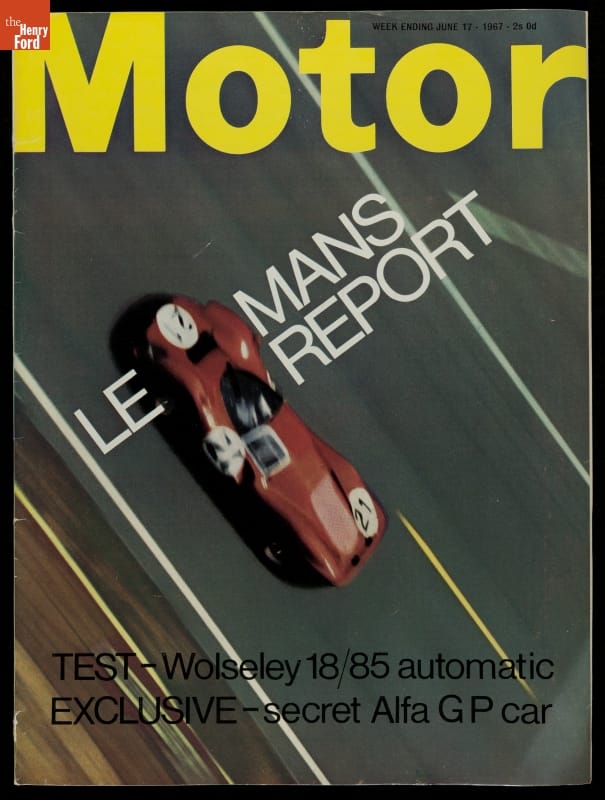
- Magazine, "Motor," for June 14, 1967 - <em>Motor</em> magazine, which billed itself on the masthead as "Britain's best motoring magazine," included a full report on the 24 Hours of Le Mans in its June 14, 1967, issue. Co-drivers Dan Gurney and A.J. Foyt earned the overall victory that year for Ford Motor Company and Shelby American in the #1 Ford Mark IV.
- June 17, 1967
- Collections - Artifact
Magazine, "Motor," for June 14, 1967
Motor magazine, which billed itself on the masthead as "Britain's best motoring magazine," included a full report on the 24 Hours of Le Mans in its June 14, 1967, issue. Co-drivers Dan Gurney and A.J. Foyt earned the overall victory that year for Ford Motor Company and Shelby American in the #1 Ford Mark IV.
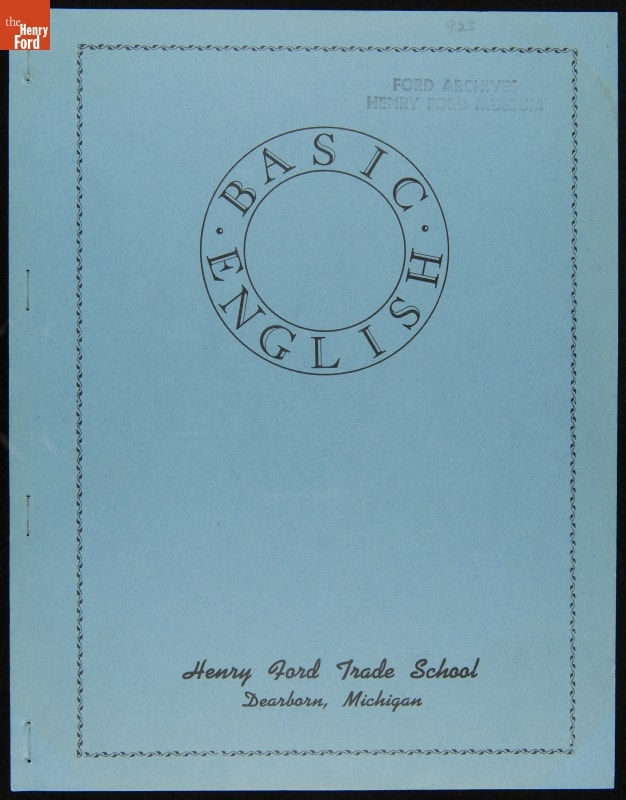
- Textbook, "Basic English," Henry Ford Trade School, Dearborn, Michigan, 1916 - Boys who attended the Henry Ford Trade School learned by doing. The school, the brainchild of Henry Ford, trained teenage boys in a variety of skilled industrial trade work -- machining, metallurgy, drafting, and engine design, among others. Students created useful components for local factories in hands-on lab and shop classes. In addition to the manual training received, academic classes were required.
- 1916
- Collections - Artifact
Textbook, "Basic English," Henry Ford Trade School, Dearborn, Michigan, 1916
Boys who attended the Henry Ford Trade School learned by doing. The school, the brainchild of Henry Ford, trained teenage boys in a variety of skilled industrial trade work -- machining, metallurgy, drafting, and engine design, among others. Students created useful components for local factories in hands-on lab and shop classes. In addition to the manual training received, academic classes were required.
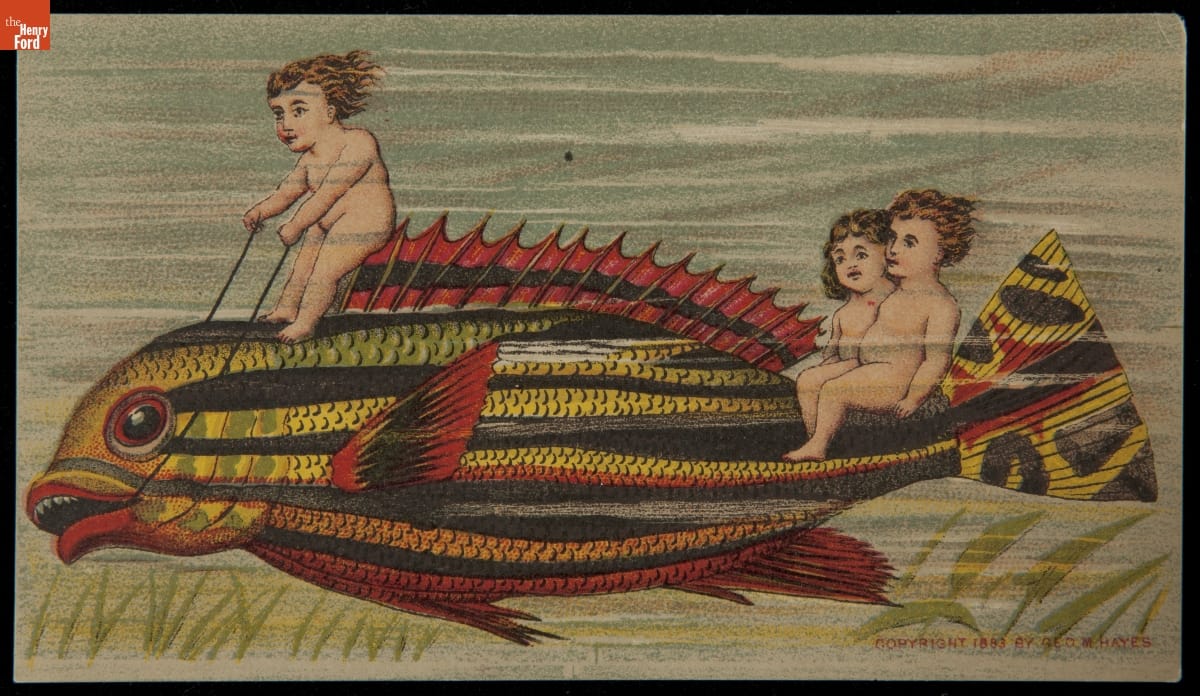
- Trade Card for Gibbs & Osborne, 1883 - In the last third of the nineteenth century, an unprecedented variety of consumer goods and services flooded the American market. Advertisers, armed with new methods of color printing, bombarded potential customers with trade cards. Americans enjoyed and often saved the vibrant little advertisements found in product packages or distributed by local merchants. Many survive as historical records of commercialism in the United States.
- 1883
- Collections - Artifact
Trade Card for Gibbs & Osborne, 1883
In the last third of the nineteenth century, an unprecedented variety of consumer goods and services flooded the American market. Advertisers, armed with new methods of color printing, bombarded potential customers with trade cards. Americans enjoyed and often saved the vibrant little advertisements found in product packages or distributed by local merchants. Many survive as historical records of commercialism in the United States.