
Search
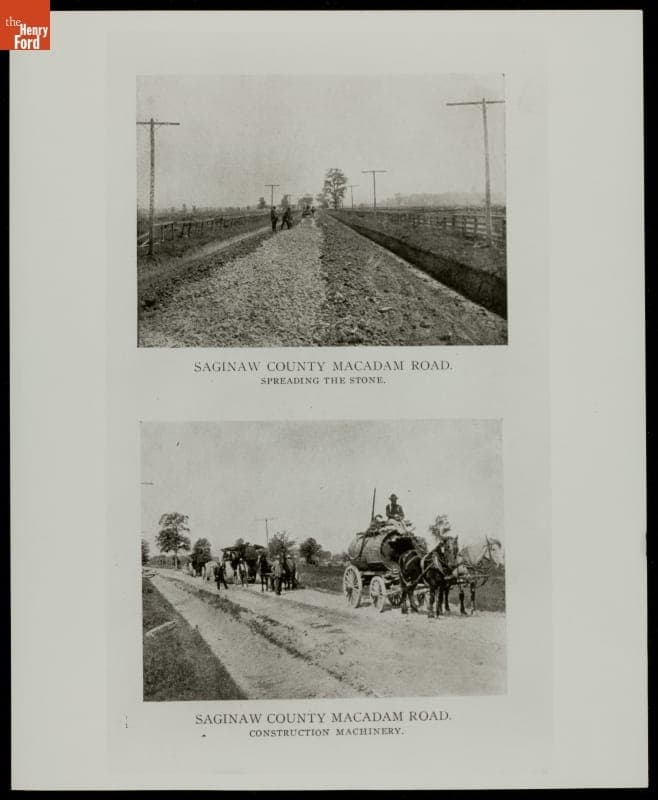
- Saginaw County Macadam Road Construction Machinery, and Stone Spreading, 1905-1906 - The establishment of the Michigan State Highway Department in 1905 made state funding available to township and county road commissions for improvements and repairs. The State Highway Commissioner published biennial reports highlighting the progress of "reward roads"--projects funded by the state. These images from his first report illustrate some of the equipment and construction methods used in Saginaw County.
- 1905-1906
- Collections - Artifact
Saginaw County Macadam Road Construction Machinery, and Stone Spreading, 1905-1906
The establishment of the Michigan State Highway Department in 1905 made state funding available to township and county road commissions for improvements and repairs. The State Highway Commissioner published biennial reports highlighting the progress of "reward roads"--projects funded by the state. These images from his first report illustrate some of the equipment and construction methods used in Saginaw County.
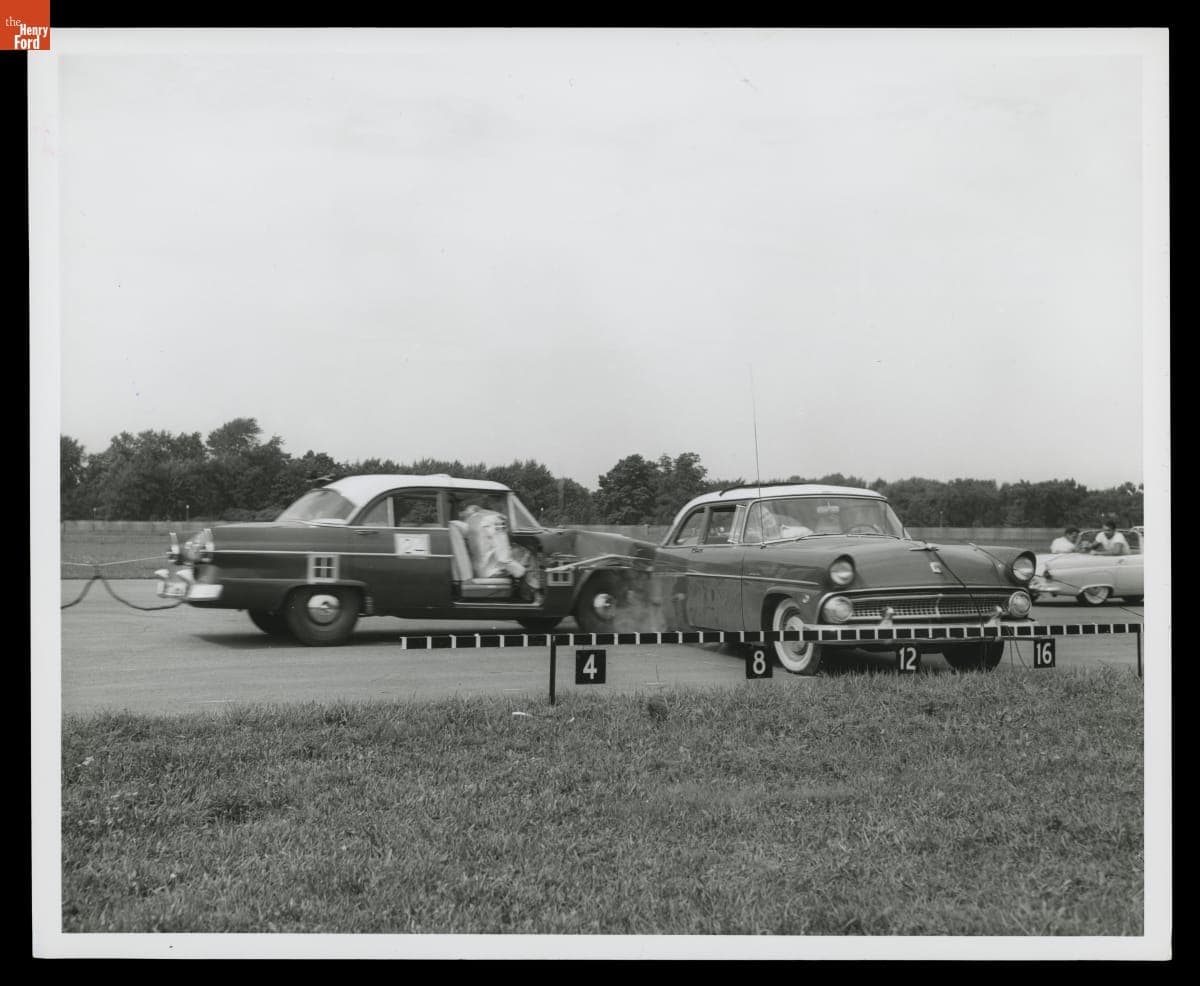
- Crash Testing at Ford Test Track, Dearborn, Michigan, 1955 - As automobiles grew larger and faster, dangers from accidents increased. Automakers began testing their vehicles in controlled collisions. In the 1950s, anthropomorphic dummies were added to the tests, to observe a crash's impact on the human body. More recently, dummies were equipped with highly sensitive instruments measuring the precise speeds and forces involved in a collision.
- August 16, 1955
- Collections - Artifact
Crash Testing at Ford Test Track, Dearborn, Michigan, 1955
As automobiles grew larger and faster, dangers from accidents increased. Automakers began testing their vehicles in controlled collisions. In the 1950s, anthropomorphic dummies were added to the tests, to observe a crash's impact on the human body. More recently, dummies were equipped with highly sensitive instruments measuring the precise speeds and forces involved in a collision.
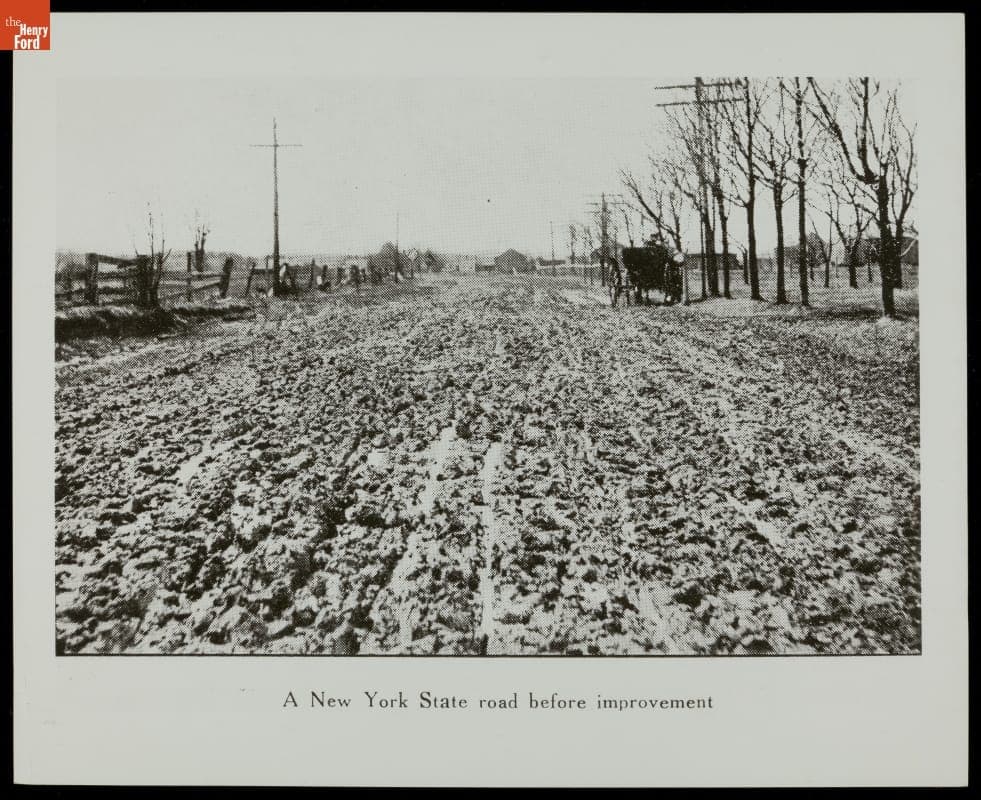
- New York State Road Before Improvement, 1910 - In the early 1900s, hard surfaced roadways existed only in cities. Most roads were bumpy dirt paths carved with ruts from the narrow wheels of horse-drawn vehicles and torn up by the tires of heavy automobiles. They became rivers of mud at the slightest turn of weather.
- January 15, 1910
- Collections - Artifact
New York State Road Before Improvement, 1910
In the early 1900s, hard surfaced roadways existed only in cities. Most roads were bumpy dirt paths carved with ruts from the narrow wheels of horse-drawn vehicles and torn up by the tires of heavy automobiles. They became rivers of mud at the slightest turn of weather.
- Thatched-Roof House Alongside a Road, circa 1930 - "Roads of the Pacific" was part of the Ford Exhibit, the most popular attraction at the 1935 California Pacific International Exposition. Visitors rode in brand new Ford V-8s over 14 reproductions of famous roads from around the world. To construct a realistic, immersive experience, crews used reference photographs -- like this one -- to recreate sections of historic and modern routes.

- circa 1930
- Collections - Artifact
Thatched-Roof House Alongside a Road, circa 1930
"Roads of the Pacific" was part of the Ford Exhibit, the most popular attraction at the 1935 California Pacific International Exposition. Visitors rode in brand new Ford V-8s over 14 reproductions of famous roads from around the world. To construct a realistic, immersive experience, crews used reference photographs -- like this one -- to recreate sections of historic and modern routes.
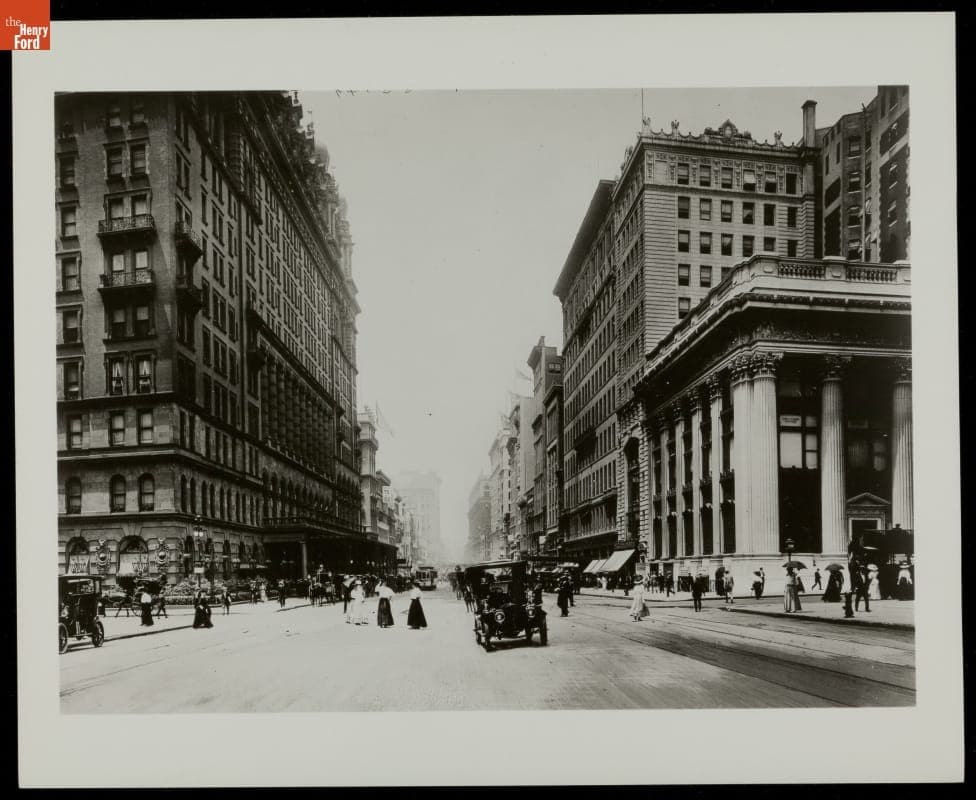
- 5th Avenue, New York City, 1908 - This Detroit Publishing Company photograph shows a busy day in downtown New York City. As one of the world's major image publishers from 1895 to 1924, the Detroit Publishing Company had a wide-ranging stock of original photographs, including many scenes from across North America.
- 1908
- Collections - Artifact
5th Avenue, New York City, 1908
This Detroit Publishing Company photograph shows a busy day in downtown New York City. As one of the world's major image publishers from 1895 to 1924, the Detroit Publishing Company had a wide-ranging stock of original photographs, including many scenes from across North America.
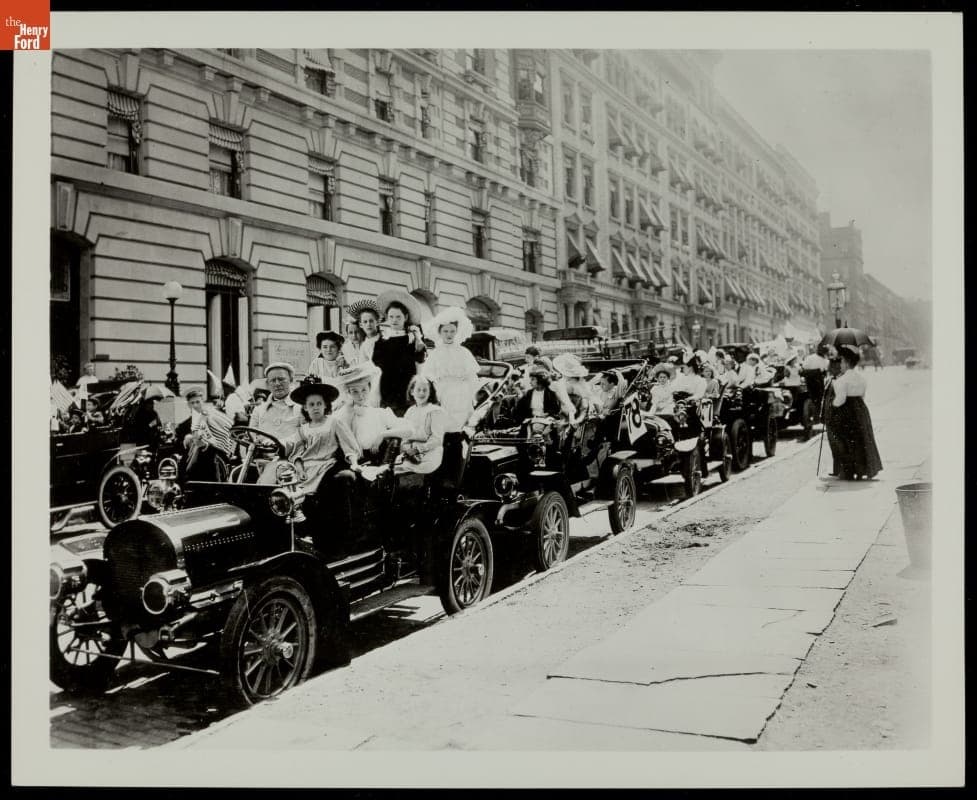
- Children in Automobiles on a City Street Ready for a Procession, circa 1908 -
- circa 1908
- Collections - Artifact
Children in Automobiles on a City Street Ready for a Procession, circa 1908
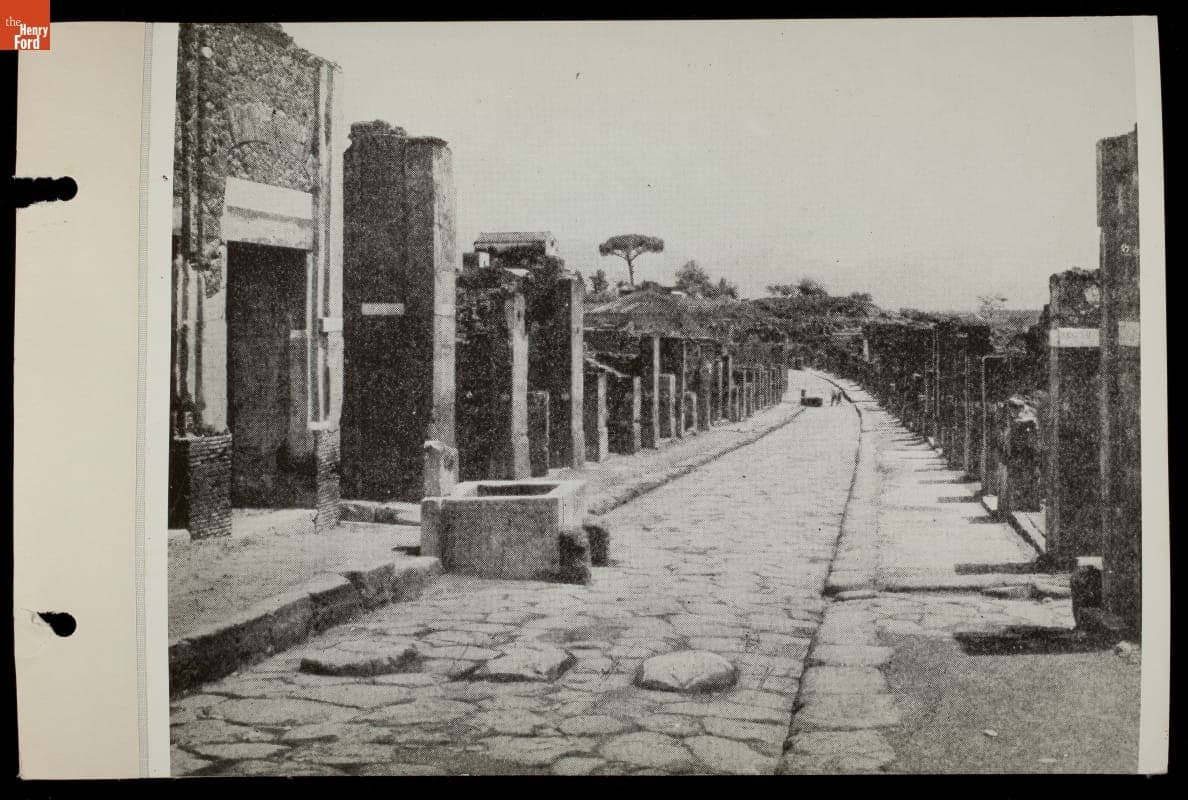
- Stone Road in the Ruin of a City, 1934 - "Roads of the World" was part of the Ford Rotunda in Dearborn, Michigan. Visitors rode new Ford vehicles through reproductions of famous roadways from around the world. Ford spent $176,000 landscaping the attraction into historic and modern sections. To ensure a realistic, immersive experience, crews used reference photographs--like this one--to recreate the 19 "Roads of the World."
- circa 1934
- Collections - Artifact
Stone Road in the Ruin of a City, 1934
"Roads of the World" was part of the Ford Rotunda in Dearborn, Michigan. Visitors rode new Ford vehicles through reproductions of famous roadways from around the world. Ford spent $176,000 landscaping the attraction into historic and modern sections. To ensure a realistic, immersive experience, crews used reference photographs--like this one--to recreate the 19 "Roads of the World."
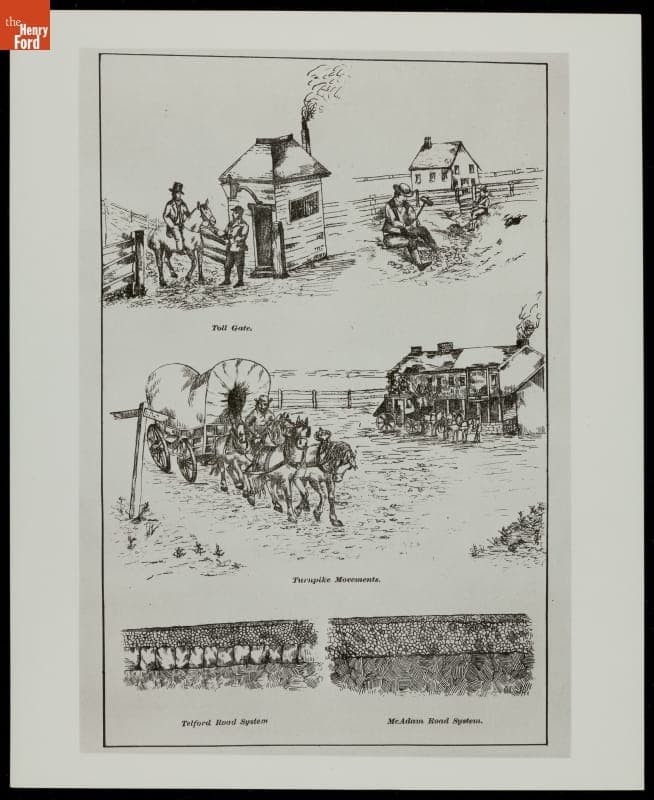
- "Toll Gate, Turnpike Movements, Telford Road System, McAdam Road System" - In the 19th century, road improvements in the United States tended to be private efforts financed by investors and supported by tolls. This illustration shows two methods of road construction. The Telford system used a base layer of stone blocks and an upper layer of smaller interlocking stones to support the road surface. Macadam (or McAdam) roads eliminated the stone-block foundation.
- 1850-1900
- Collections - Artifact
"Toll Gate, Turnpike Movements, Telford Road System, McAdam Road System"
In the 19th century, road improvements in the United States tended to be private efforts financed by investors and supported by tolls. This illustration shows two methods of road construction. The Telford system used a base layer of stone blocks and an upper layer of smaller interlocking stones to support the road surface. Macadam (or McAdam) roads eliminated the stone-block foundation.
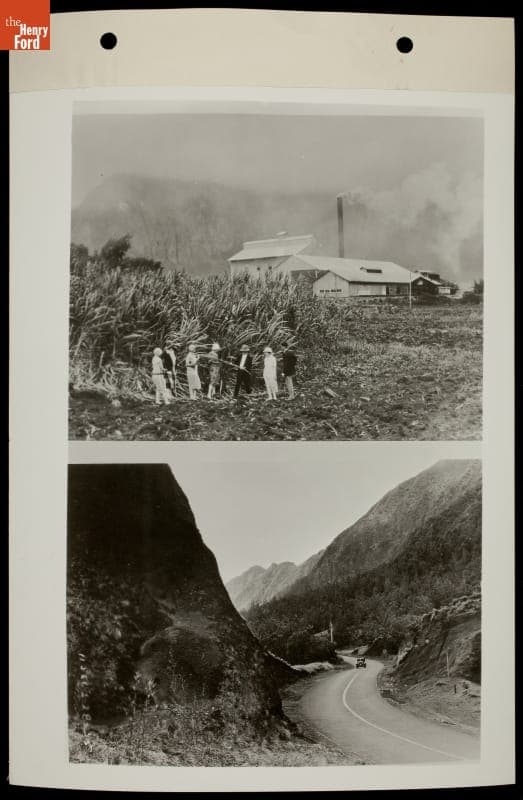
- Travel in South America: Visiting a Sugar Cane Plant and Driving in the Mountains, South America, circa 1930 - "Roads of the Pacific" was part of the Ford Exhibit, the most popular attraction at the 1935 California Pacific International Exposition. Visitors rode in brand new Ford V-8s over 14 reproductions of famous roads. Crews used reference photographs to construct a realistic, immersive visitor experience. These images helped them recreate part of the Inca Road, which spanned the South American Andes.
- circa 1930
- Collections - Artifact
Travel in South America: Visiting a Sugar Cane Plant and Driving in the Mountains, South America, circa 1930
"Roads of the Pacific" was part of the Ford Exhibit, the most popular attraction at the 1935 California Pacific International Exposition. Visitors rode in brand new Ford V-8s over 14 reproductions of famous roads. Crews used reference photographs to construct a realistic, immersive visitor experience. These images helped them recreate part of the Inca Road, which spanned the South American Andes.
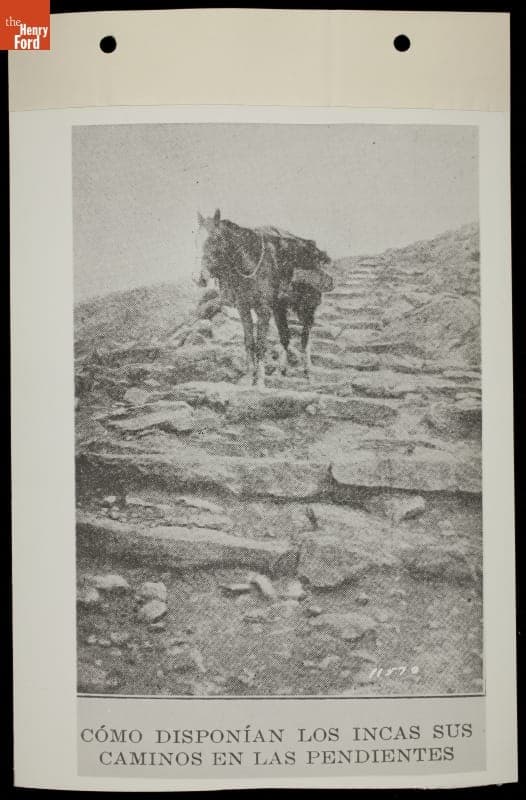
- Horse Walking Down Slope, South America, circa 1930 - "Roads of the Pacific" was part of the Ford Exhibit, the most popular attraction at the 1935 California Pacific International Exposition. Visitors rode in brand new Ford V-8s over 14 reproductions of famous roads. Crews used reference photographs to construct a realistic, immersive visitor experience. This image helped them recreate part of the Inca Road, which spanned the South American Andes.
- circa 1930
- Collections - Artifact
Horse Walking Down Slope, South America, circa 1930
"Roads of the Pacific" was part of the Ford Exhibit, the most popular attraction at the 1935 California Pacific International Exposition. Visitors rode in brand new Ford V-8s over 14 reproductions of famous roads. Crews used reference photographs to construct a realistic, immersive visitor experience. This image helped them recreate part of the Inca Road, which spanned the South American Andes.