
Search
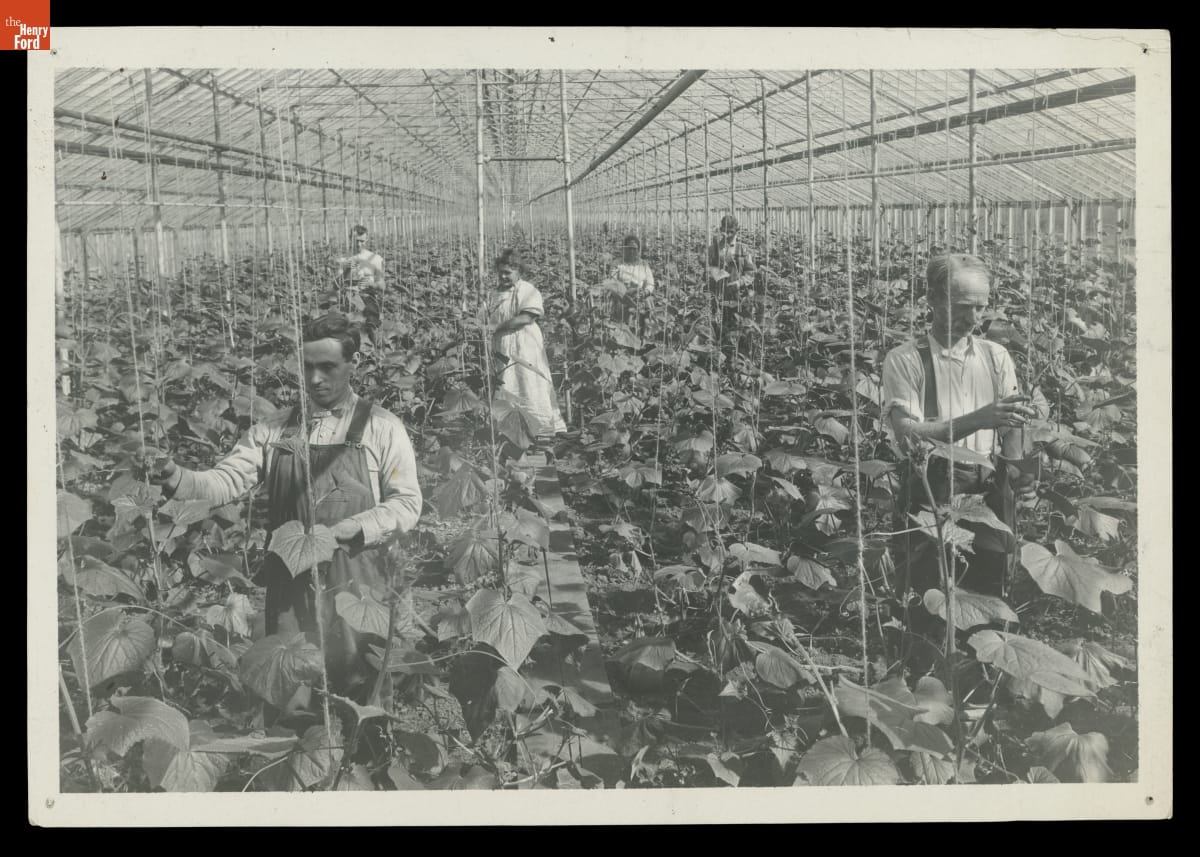
- Workers in a Cucumber Greenhouse, circa 1923 -
- circa 1923
- Collections - Artifact
Workers in a Cucumber Greenhouse, circa 1923
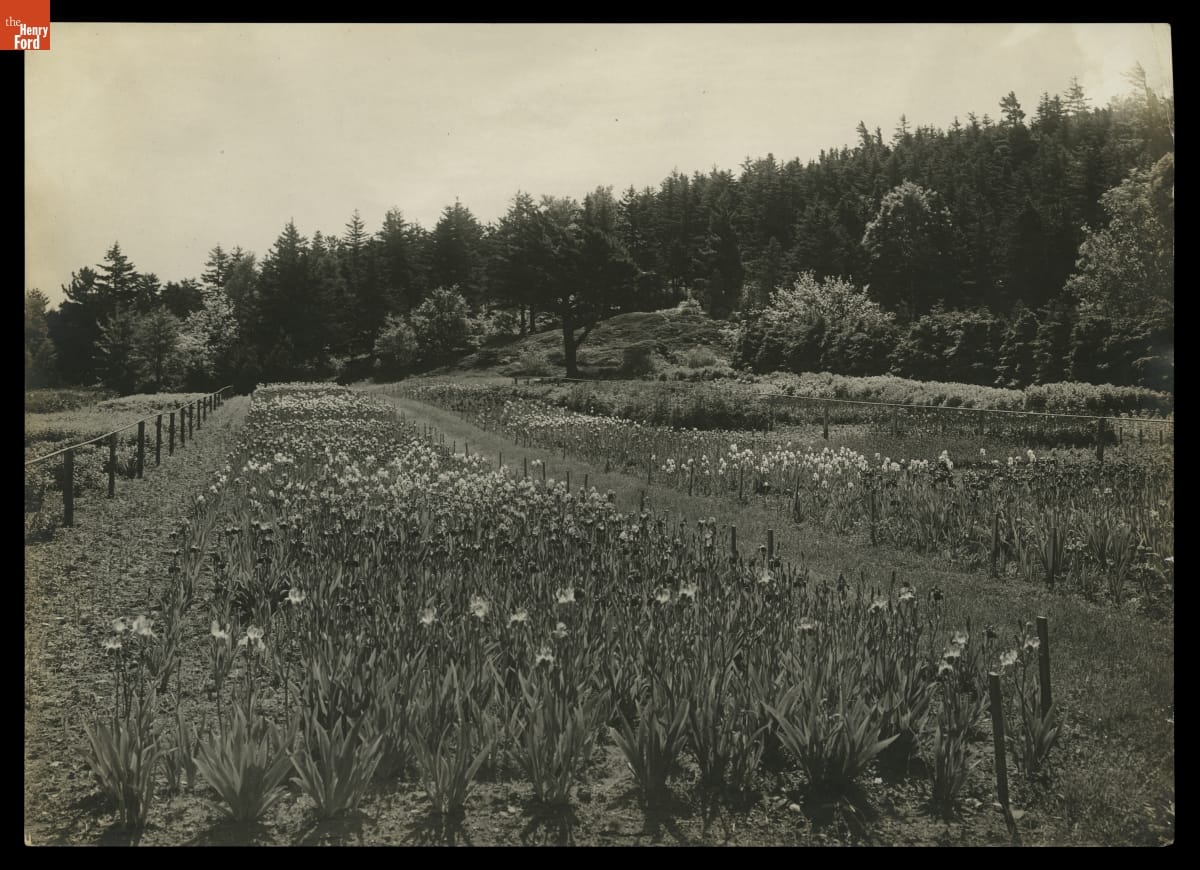
- German Irises Growing in a Nursery, circa 1923 -
- circa 1923
- Collections - Artifact
German Irises Growing in a Nursery, circa 1923
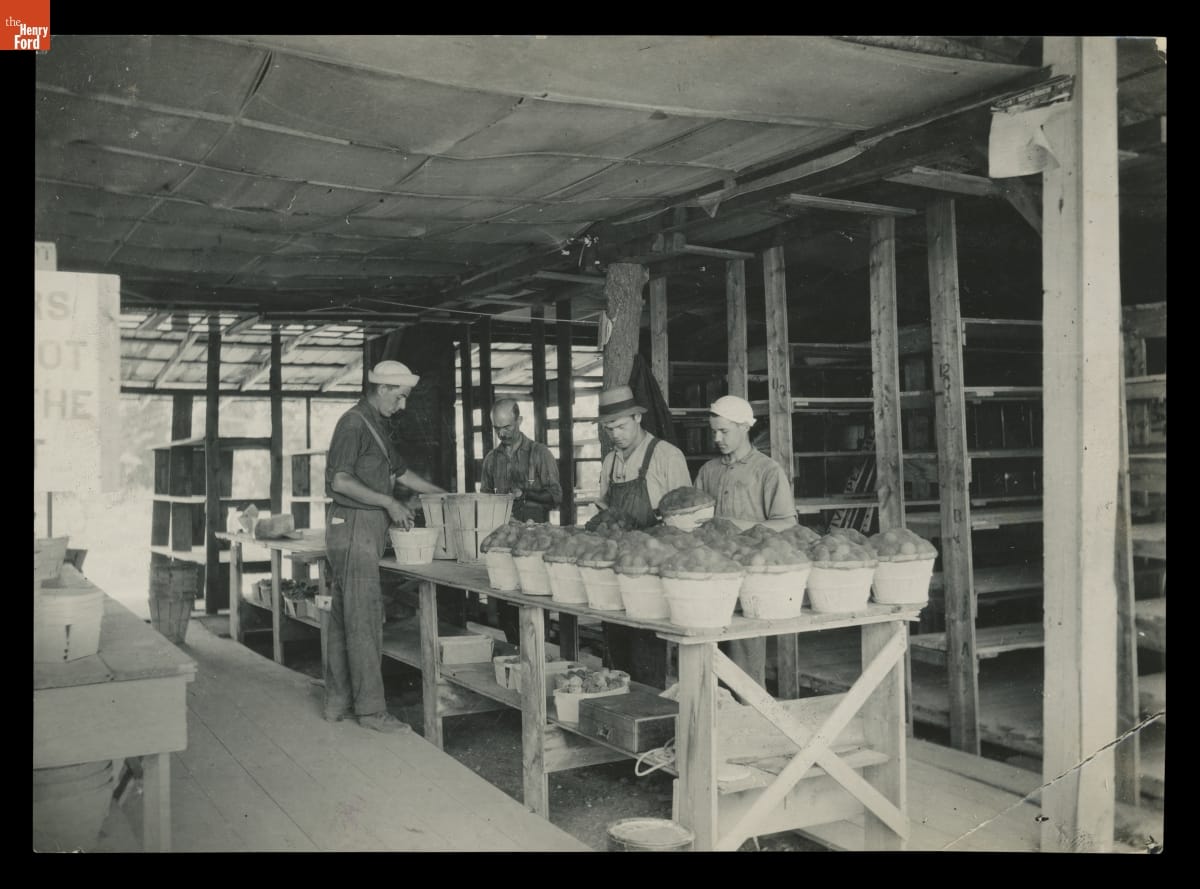
- Packing Peaches, circa 1923 -
- circa 1923
- Collections - Artifact
Packing Peaches, circa 1923
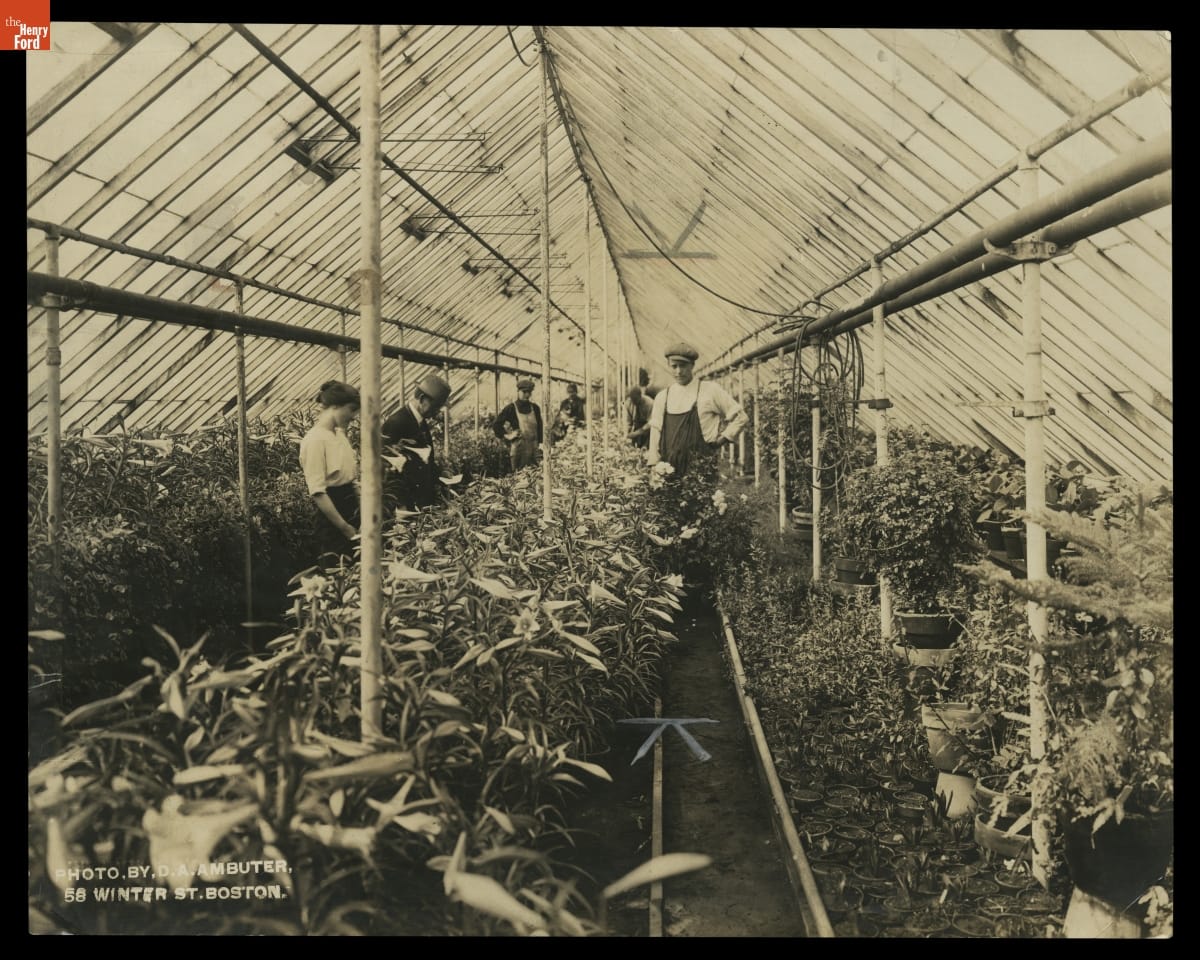
- Workers in a Greenhouse, circa 1923 -
- circa 1923
- Collections - Artifact
Workers in a Greenhouse, circa 1923
- Disabled Veteran Carl Bronner Displays Typing Abilities, Dearborn Independent, September 1922 -
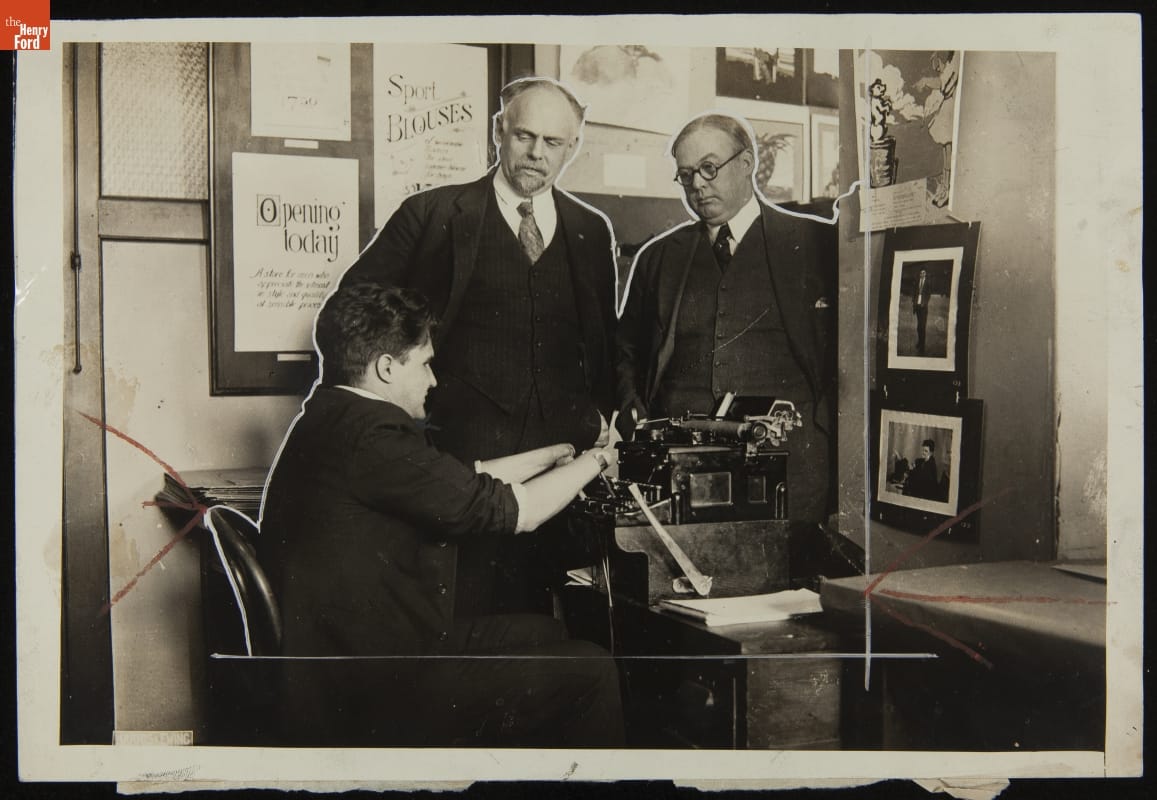
- 1921-1922
- Collections - Artifact
Disabled Veteran Carl Bronner Displays Typing Abilities, Dearborn Independent, September 1922
- Aerial View of Los Angeles Harbor and Part of the Pacific Fleet, circa 1922 - Military aerial reconnaissance during World War I accelerated the evolution of domestic aerial photography after the war. The sprawling city of Los Angeles became an important center for commercial aerial photography. Survey companies like Cross Aerial Photos, which captured this view, created images that remain important documents of the rapid urbanization of Southern California in the 1920s.
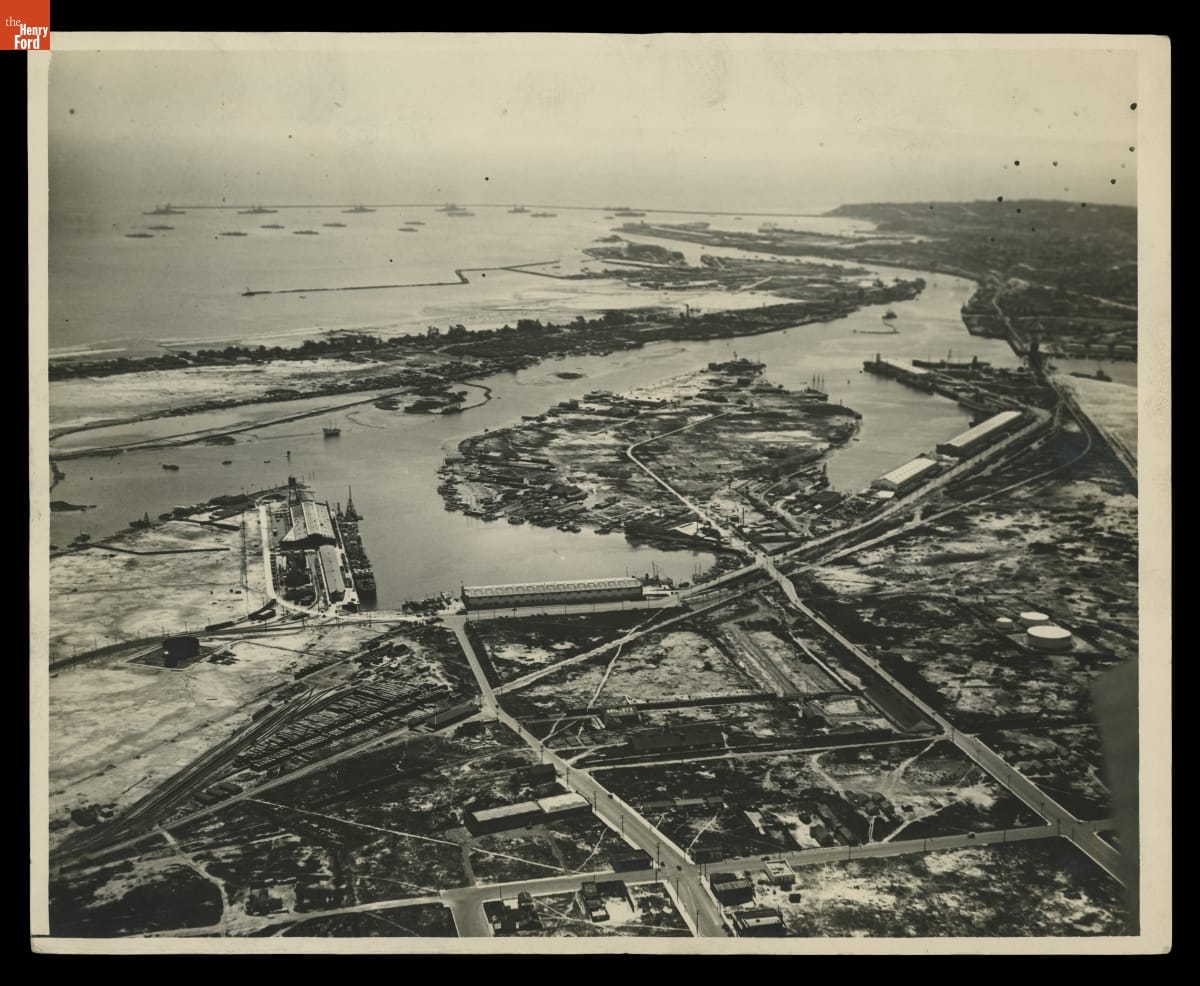
- circa 1922
- Collections - Artifact
Aerial View of Los Angeles Harbor and Part of the Pacific Fleet, circa 1922
Military aerial reconnaissance during World War I accelerated the evolution of domestic aerial photography after the war. The sprawling city of Los Angeles became an important center for commercial aerial photography. Survey companies like Cross Aerial Photos, which captured this view, created images that remain important documents of the rapid urbanization of Southern California in the 1920s.
- Newly Completed State Flour Mill, Minneapolis, Minnesota, 1921-1922 -
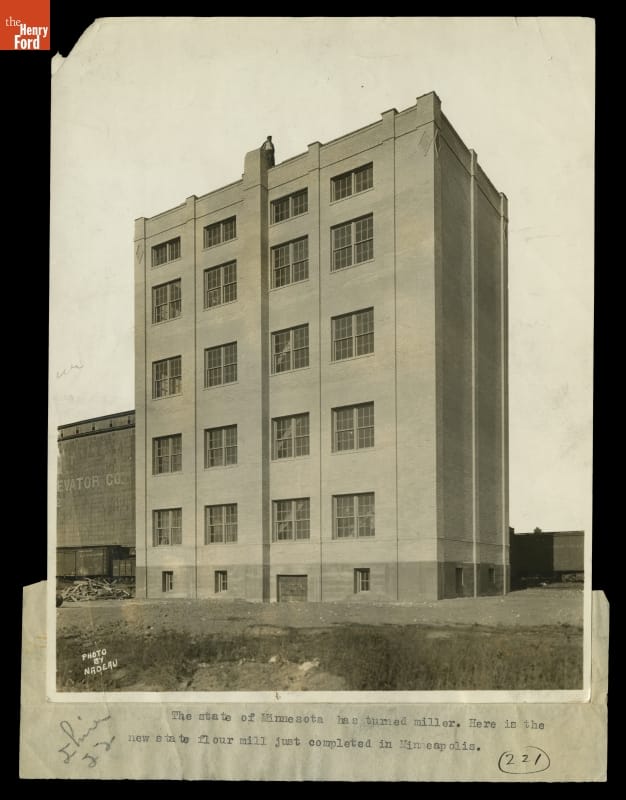
- 1921-1922
- Collections - Artifact
Newly Completed State Flour Mill, Minneapolis, Minnesota, 1921-1922
- Aerial View of Cincinnati, Ohio, circa 1923 - Military aerial reconnaissance during World War I accelerated the evolution of domestic aerial photography after the war. During the 1920s, aerial images like this one taken over Cincinnati by the U.S. Army Air Service helped document population shifts and environmental changes. They also informed urban planning, agricultural practices, and engineering projects.
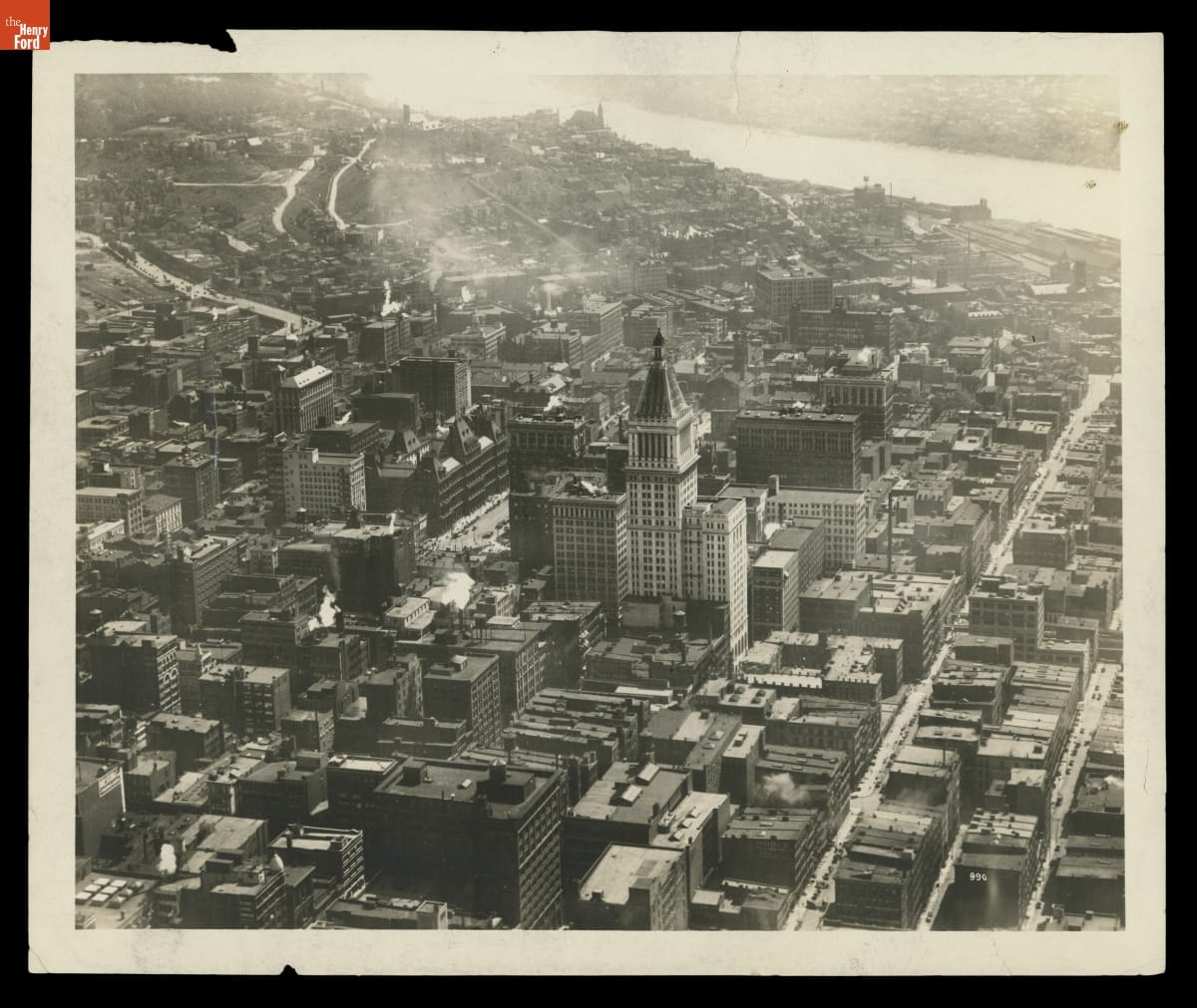
- circa 1923
- Collections - Artifact
Aerial View of Cincinnati, Ohio, circa 1923
Military aerial reconnaissance during World War I accelerated the evolution of domestic aerial photography after the war. During the 1920s, aerial images like this one taken over Cincinnati by the U.S. Army Air Service helped document population shifts and environmental changes. They also informed urban planning, agricultural practices, and engineering projects.
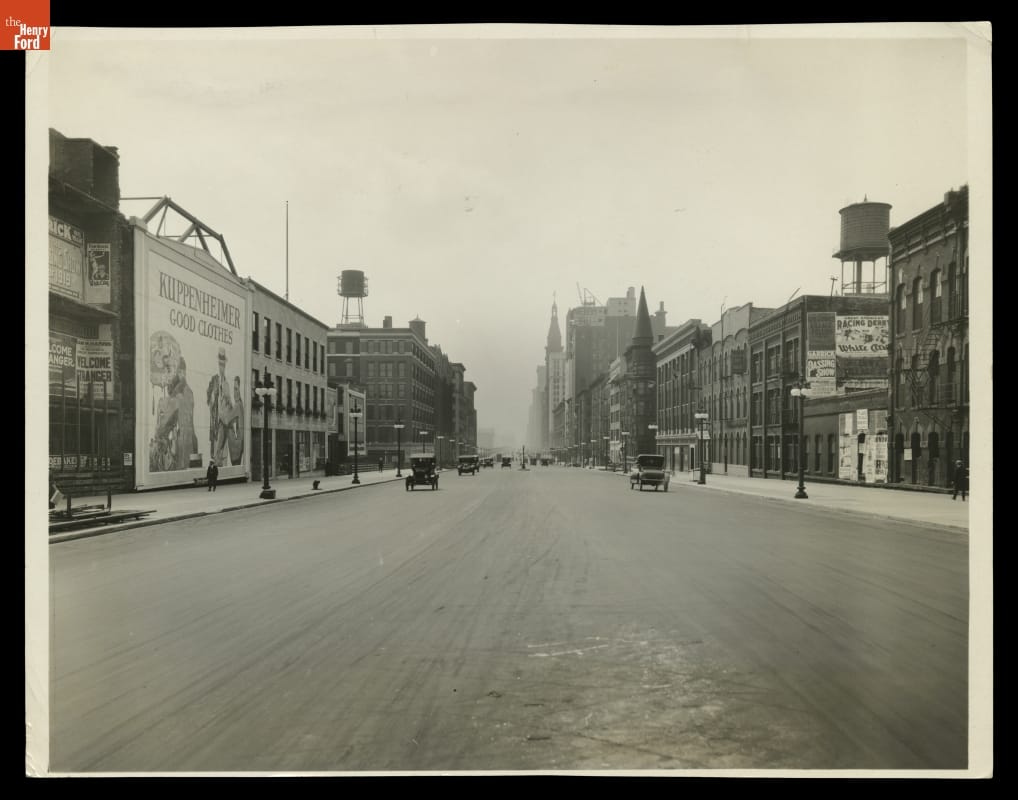
- Looking South toward Randolph Street from the Michigan Avenue Bridge, Chicago, Illinois, 1920-1922 -
- 1920-1922
- Collections - Artifact
Looking South toward Randolph Street from the Michigan Avenue Bridge, Chicago, Illinois, 1920-1922
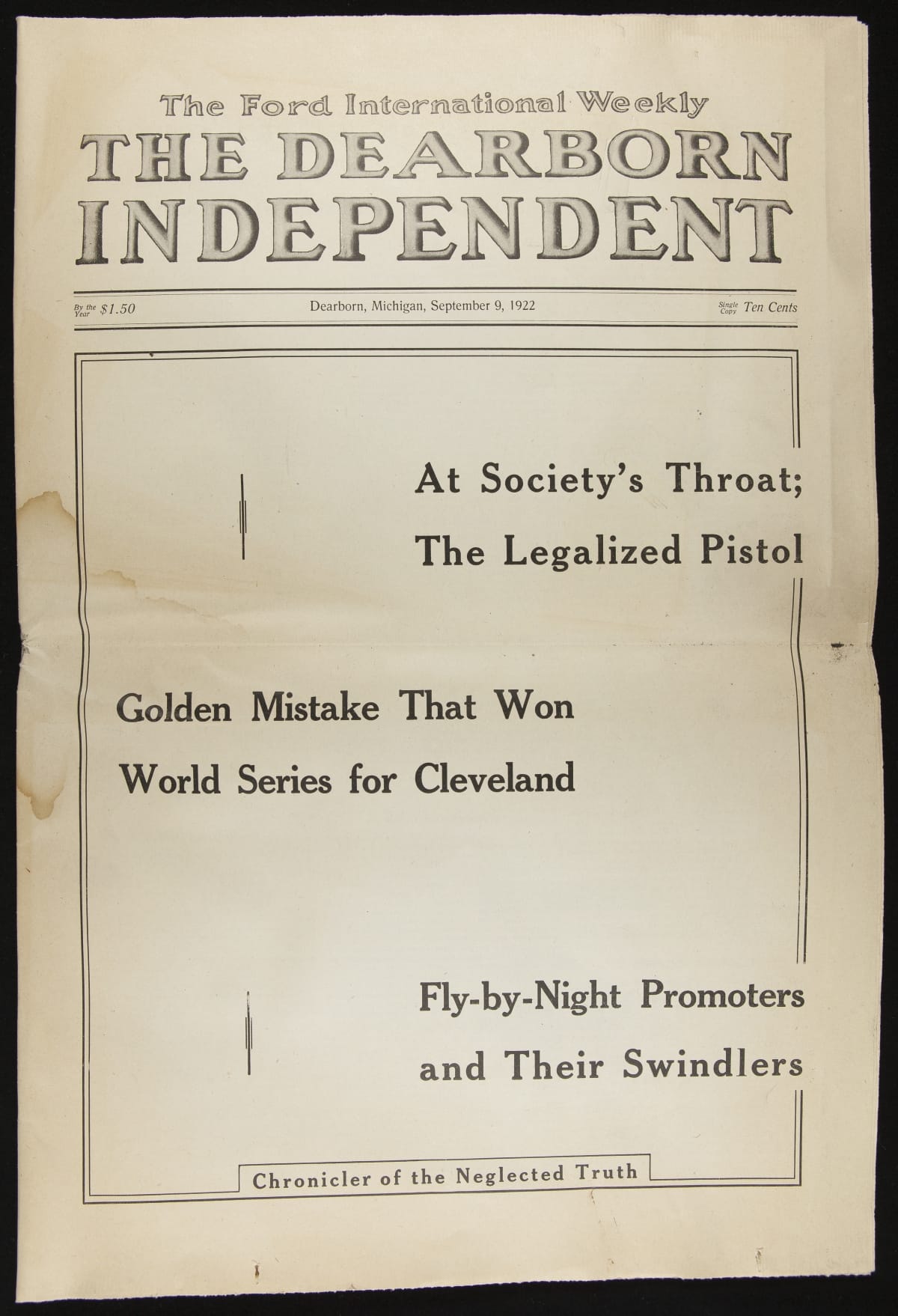
- Dearborn Independent Newspaper for September 9, 1922 - Henry Ford purchased <em>The Dearborn Independent</em> and published it under his name from 1919 to 1927. It served as a forum for Ford's views, free from other media outlets that had attacked his work and values and were outside his control. <em>The Dearborn Independent</em> covered world events, business and economic news, and fiction from noted authors. Sadly, it also served as an outlet for Ford's anti-Semitic sentiments. Between 1920 and 1922, the weekly paper ran a series of front-page articles that denounced all things Jewish. Even after this series, many articles contained anti-Jewish language. Though Ford later apologized and printed a retraction, these notoriously anti-Semitic editorials and articles forever tarnished the influential automaker's reputation.
- September 09, 1922
- Collections - Artifact
Dearborn Independent Newspaper for September 9, 1922
Henry Ford purchased The Dearborn Independent and published it under his name from 1919 to 1927. It served as a forum for Ford's views, free from other media outlets that had attacked his work and values and were outside his control. The Dearborn Independent covered world events, business and economic news, and fiction from noted authors. Sadly, it also served as an outlet for Ford's anti-Semitic sentiments. Between 1920 and 1922, the weekly paper ran a series of front-page articles that denounced all things Jewish. Even after this series, many articles contained anti-Jewish language. Though Ford later apologized and printed a retraction, these notoriously anti-Semitic editorials and articles forever tarnished the influential automaker's reputation.