
Search
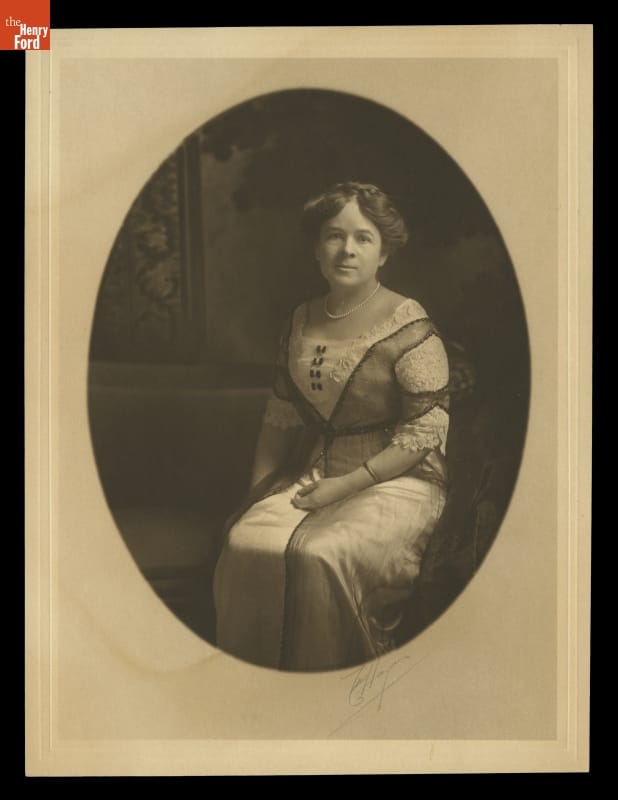
- Portrait of Clara Ford, circa 1908 - In 1908, Clara Ford moved into a large new home with her husband, Henry, and son, Edsel. The Italian Renaissance Revival house was built on the corner of Edison and Second Avenues in Detroit. Ford Motor Company's success had brought new prosperity to the family -- and that success would only grow with the introduction of the Model T that fall.
- circa 1908
- Collections - Artifact
Portrait of Clara Ford, circa 1908
In 1908, Clara Ford moved into a large new home with her husband, Henry, and son, Edsel. The Italian Renaissance Revival house was built on the corner of Edison and Second Avenues in Detroit. Ford Motor Company's success had brought new prosperity to the family -- and that success would only grow with the introduction of the Model T that fall.
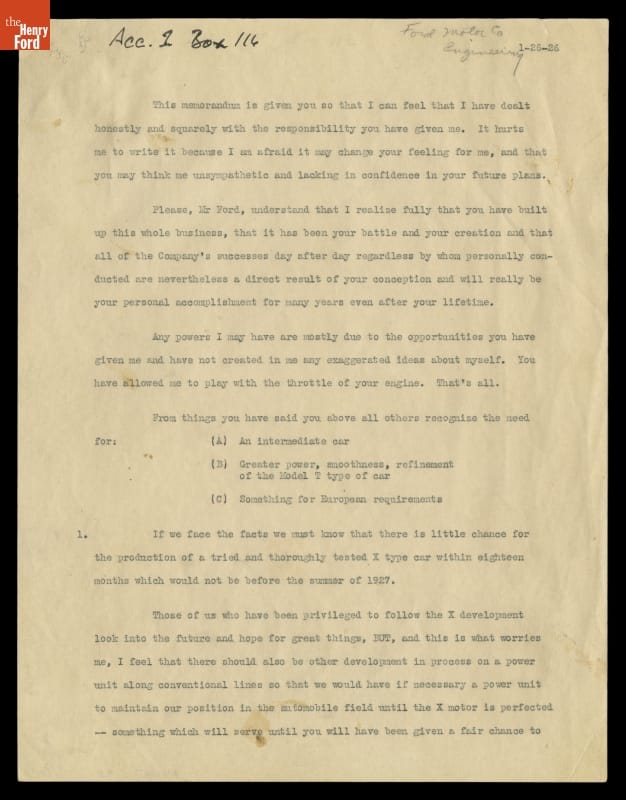
- Memorandum from Ernest Kanzler to Henry Ford regarding Replacing the Model T, 1926 - In January 1926, Ernest Kanzler wrote this eight-page memorandum to Henry Ford. In it Kanzler detailed his reasoning for replacing the aging Model T. While many other executives, including Ford's son, Edsel, secretly agreed, Henry resisted. Kanzler was forced out -- although the following year the last Model T rolled off the assembly line and was replaced with the new, modern Model A.
- January 26, 1926
- Collections - Artifact
Memorandum from Ernest Kanzler to Henry Ford regarding Replacing the Model T, 1926
In January 1926, Ernest Kanzler wrote this eight-page memorandum to Henry Ford. In it Kanzler detailed his reasoning for replacing the aging Model T. While many other executives, including Ford's son, Edsel, secretly agreed, Henry resisted. Kanzler was forced out -- although the following year the last Model T rolled off the assembly line and was replaced with the new, modern Model A.
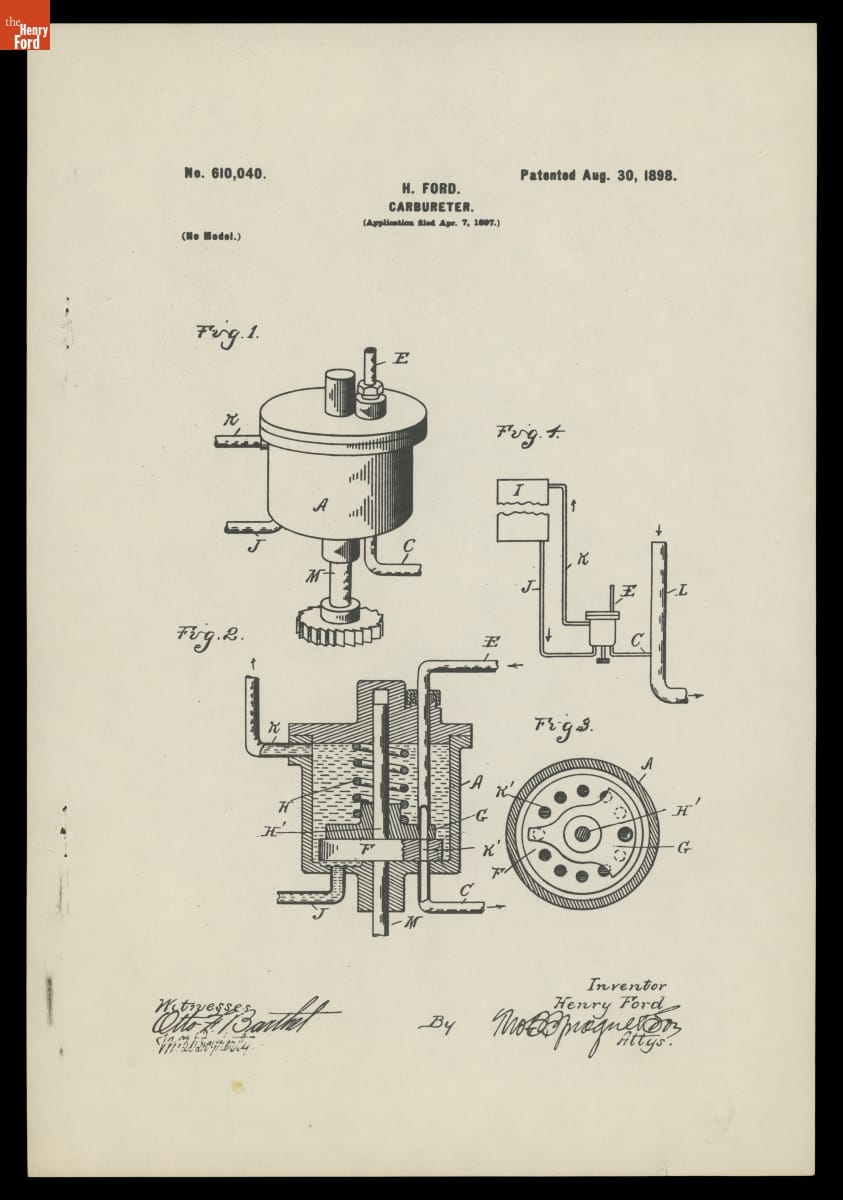
- Patent #610,040, Carburetor Improvements by Henry Ford, Granted August 30, 1898 - Henry Ford received a patent in August 1898 for an improved automobile carburetor -- the device that mixes the fuel and air sent to an engine's cylinders. It was part of Ford's work to design and build his first marketable automobile. Ford's first company, the Detroit Automobile Company, was formed in July 1899 but closed after 15 months.
- August 30, 1898
- Collections - Artifact
Patent #610,040, Carburetor Improvements by Henry Ford, Granted August 30, 1898
Henry Ford received a patent in August 1898 for an improved automobile carburetor -- the device that mixes the fuel and air sent to an engine's cylinders. It was part of Ford's work to design and build his first marketable automobile. Ford's first company, the Detroit Automobile Company, was formed in July 1899 but closed after 15 months.
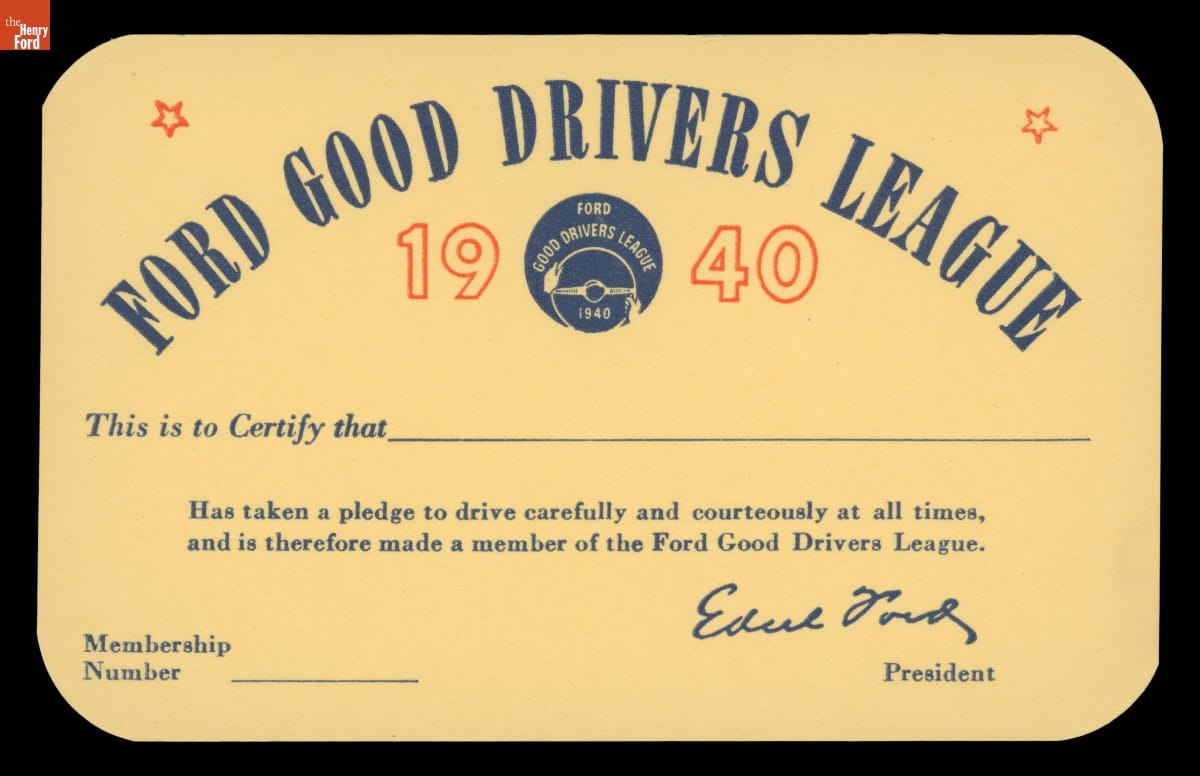
- Ford Good Drivers League Membership Card, 1940 - Ford Motor Company created the Good Drivers League in 1940. Headed by Edsel Ford, the League promoted safe driving habits among high school students. The League initially invited boys to compete in state and national championships--girls would join in 1941. Contestants wrote essays and participated in driving tests. National champions won trophies and scholarships. America's entry into World War II ended the program.
- 1940
- Collections - Artifact
Ford Good Drivers League Membership Card, 1940
Ford Motor Company created the Good Drivers League in 1940. Headed by Edsel Ford, the League promoted safe driving habits among high school students. The League initially invited boys to compete in state and national championships--girls would join in 1941. Contestants wrote essays and participated in driving tests. National champions won trophies and scholarships. America's entry into World War II ended the program.
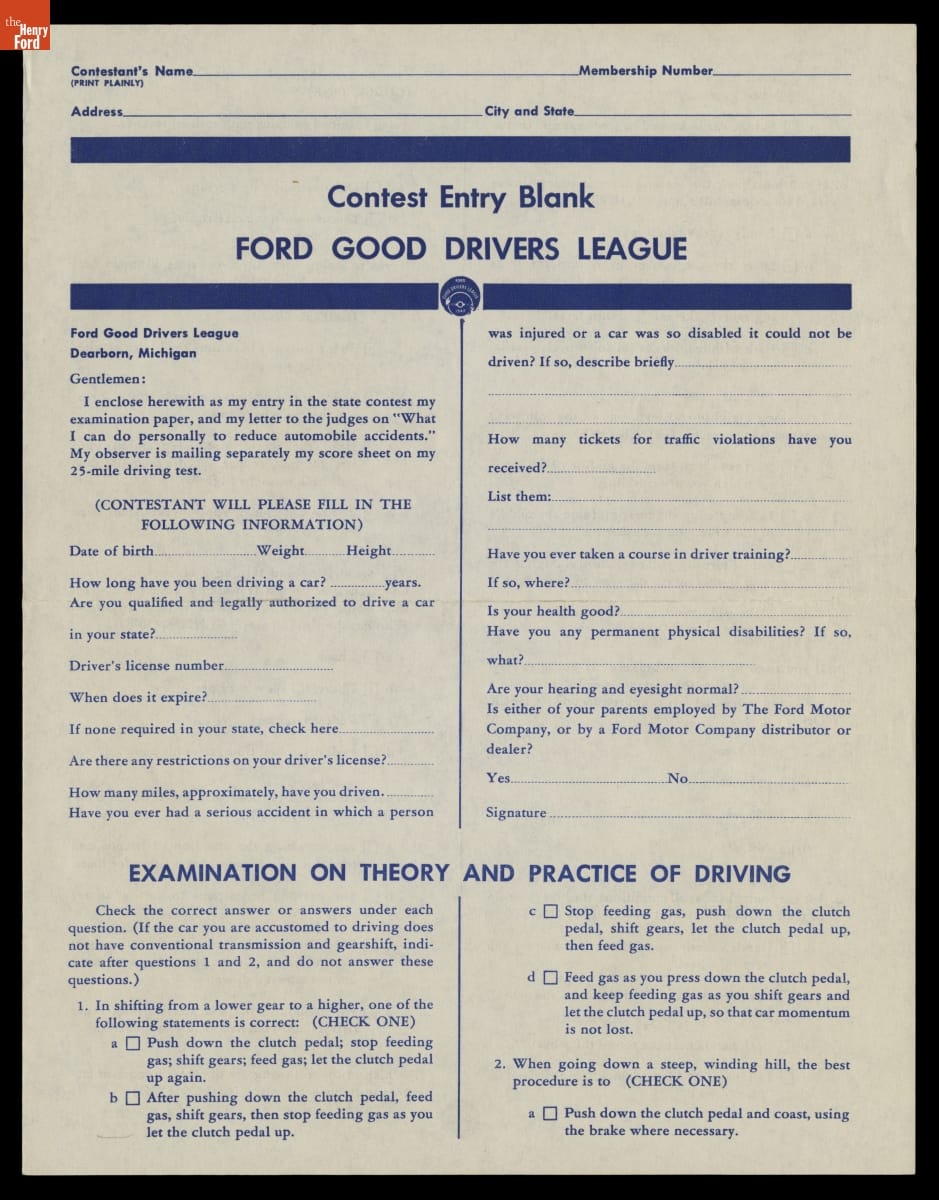
- Ford Good Drivers League Contest Entry Blank, April 1940 - Ford Motor Company created the Good Drivers League in 1940. Headed by Edsel Ford, the League promoted safe driving habits among high school students. The League initially invited boys to compete in state and national championships--girls would join in 1941. Contestants wrote essays and participated in driving tests. National champions won trophies and scholarships. America's entry into World War II ended the program.
- April 01, 1940
- Collections - Artifact
Ford Good Drivers League Contest Entry Blank, April 1940
Ford Motor Company created the Good Drivers League in 1940. Headed by Edsel Ford, the League promoted safe driving habits among high school students. The League initially invited boys to compete in state and national championships--girls would join in 1941. Contestants wrote essays and participated in driving tests. National champions won trophies and scholarships. America's entry into World War II ended the program.
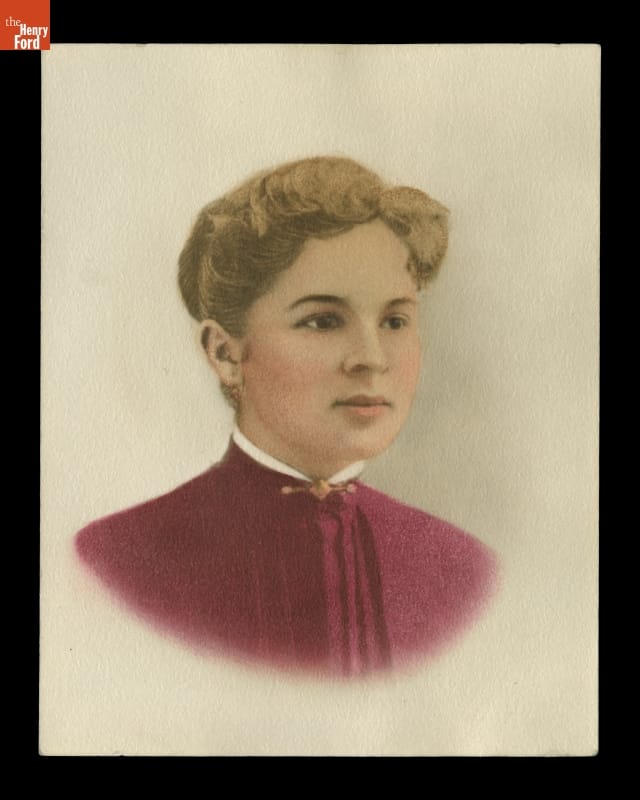
- Portrait of Clara Bryant Ford, circa 1888 - The year 1888 was an important one for Clara Jane Bryant. She married Henry Ford on April 11 -- her 22nd birthday -- at her parents' home in Greenfield Township, Michigan. Clara had met Henry at a New Year's dance in 1885. After a year of courtship, they became engaged in April 1886.
- circa 1888
- Collections - Artifact
Portrait of Clara Bryant Ford, circa 1888
The year 1888 was an important one for Clara Jane Bryant. She married Henry Ford on April 11 -- her 22nd birthday -- at her parents' home in Greenfield Township, Michigan. Clara had met Henry at a New Year's dance in 1885. After a year of courtship, they became engaged in April 1886.
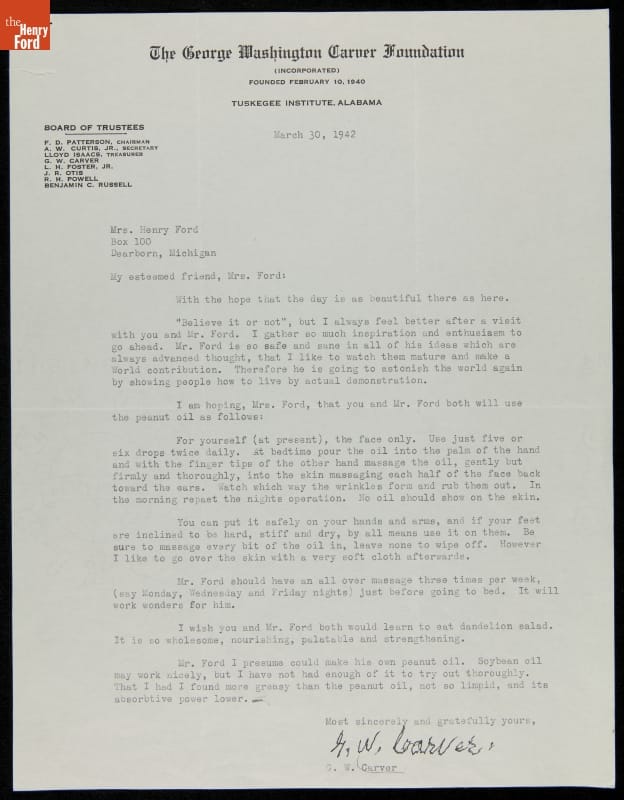
- Letter from George Washington Carver to Clara Ford, March 30, 1942 - George Washington Carver and Henry Ford became friends in the late 1930s, drawn together by a mutual interest in plants and industry. Carver's warm letters to both Henry and Clara Ford speak to the genuine depth of the friendship. In this letter to Clara, which was presumably accompanied a bottle of peanut oil, Carver offered advice on how to use the oil for natural health.
- March 30, 1942
- Collections - Artifact
Letter from George Washington Carver to Clara Ford, March 30, 1942
George Washington Carver and Henry Ford became friends in the late 1930s, drawn together by a mutual interest in plants and industry. Carver's warm letters to both Henry and Clara Ford speak to the genuine depth of the friendship. In this letter to Clara, which was presumably accompanied a bottle of peanut oil, Carver offered advice on how to use the oil for natural health.
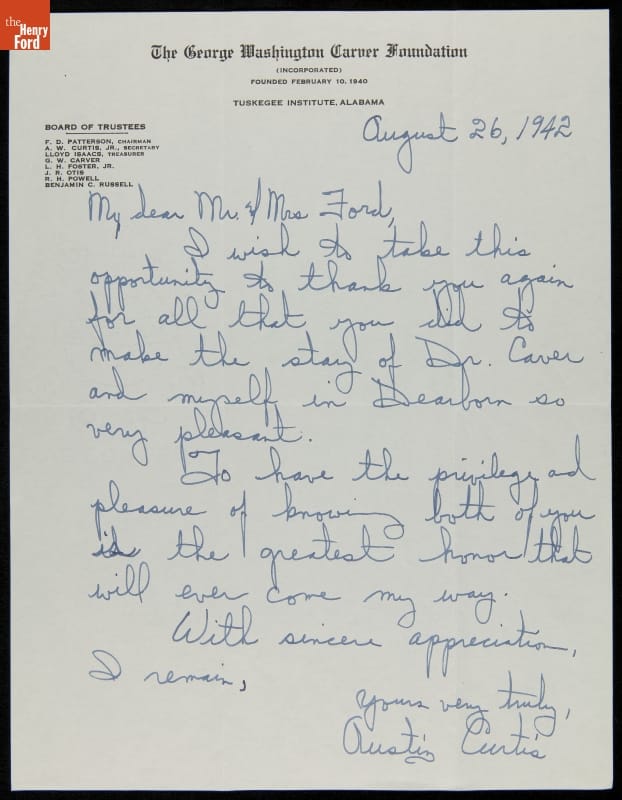
- Letter from Austin Curtis, Jr. to Henry and Clara Ford, August 26, 1942 - Chemist Austin Curtis, Jr., came to the Tuskegee Institute in Alabama in 1935 to assist the increasingly frail George Washington Carver and carry on his work. Curtis accompanied Carver on his many trips, including one to Greenfield Village in the summer of 1942. In this letter he thanks Henry and Clara Ford for their hospitality on the recent visit.
- August 26, 1942
- Collections - Artifact
Letter from Austin Curtis, Jr. to Henry and Clara Ford, August 26, 1942
Chemist Austin Curtis, Jr., came to the Tuskegee Institute in Alabama in 1935 to assist the increasingly frail George Washington Carver and carry on his work. Curtis accompanied Carver on his many trips, including one to Greenfield Village in the summer of 1942. In this letter he thanks Henry and Clara Ford for their hospitality on the recent visit.
- Letter from George Washington Carver to Frank Campsall, September 28, 1942 - George Washington Carver and Henry Ford became friends in the late 1930s, drawn together by a mutual interest in developing new industrial products from the fruits of the soil. Carver's warm letters to Ford, Clara Ford, and Ford's secretary Frank Campsall speak to the genuine depth of the friendship. Carver often gives Ford advice on research avenues to pursue and suggests recipes for natural health.
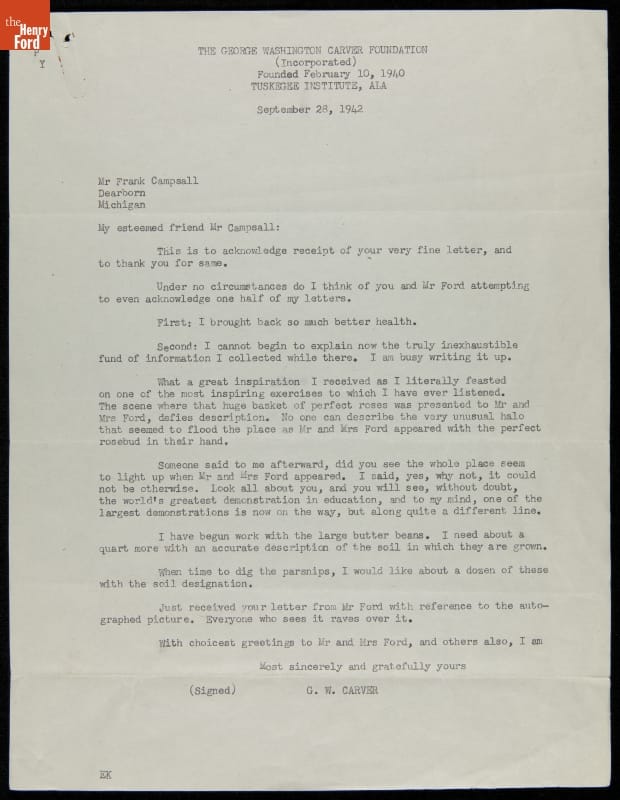
- September 28, 1942
- Collections - Artifact
Letter from George Washington Carver to Frank Campsall, September 28, 1942
George Washington Carver and Henry Ford became friends in the late 1930s, drawn together by a mutual interest in developing new industrial products from the fruits of the soil. Carver's warm letters to Ford, Clara Ford, and Ford's secretary Frank Campsall speak to the genuine depth of the friendship. Carver often gives Ford advice on research avenues to pursue and suggests recipes for natural health.
- Report of Branch Thrift Garden Progress, July 1932 -
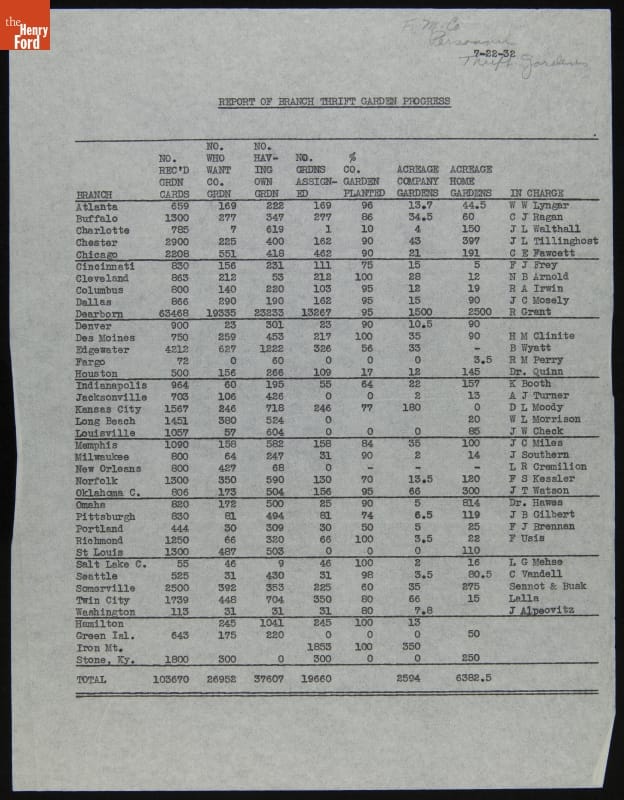
- July 22, 1932
- Collections - Artifact
Report of Branch Thrift Garden Progress, July 1932