
Search
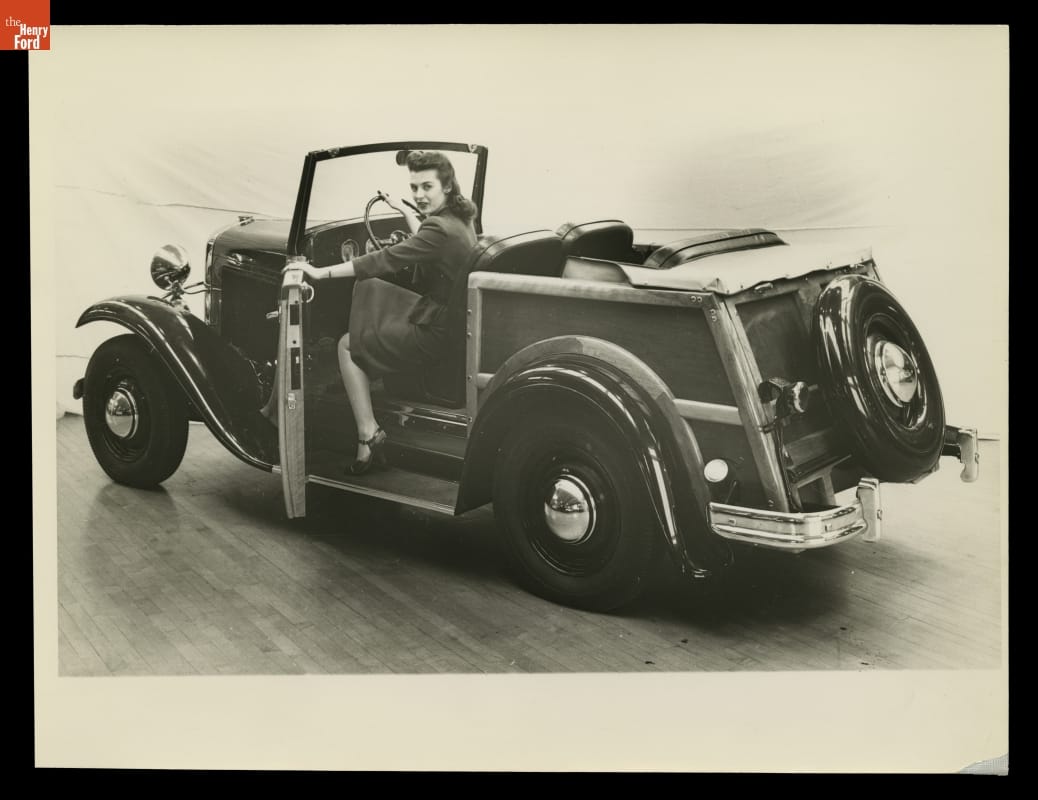
- Designer Doris Dickason Modeling the Ford "Estate Wagon" Custom-Built for Henry Ford II, February 1945 - Doris Dickason was one of a handful pioneering women hired into the Ford Motor Company's Design Department during World War II. In 1944, she worked on the Estate Wagon -- a special Model A-based vehicle created for Henry Ford II by Bob Gregorie. Later, she was assigned to the staff of John Najjar, designing steering wheels and instrument panels.
- February 03, 1945
- Collections - Artifact
Designer Doris Dickason Modeling the Ford "Estate Wagon" Custom-Built for Henry Ford II, February 1945
Doris Dickason was one of a handful pioneering women hired into the Ford Motor Company's Design Department during World War II. In 1944, she worked on the Estate Wagon -- a special Model A-based vehicle created for Henry Ford II by Bob Gregorie. Later, she was assigned to the staff of John Najjar, designing steering wheels and instrument panels.
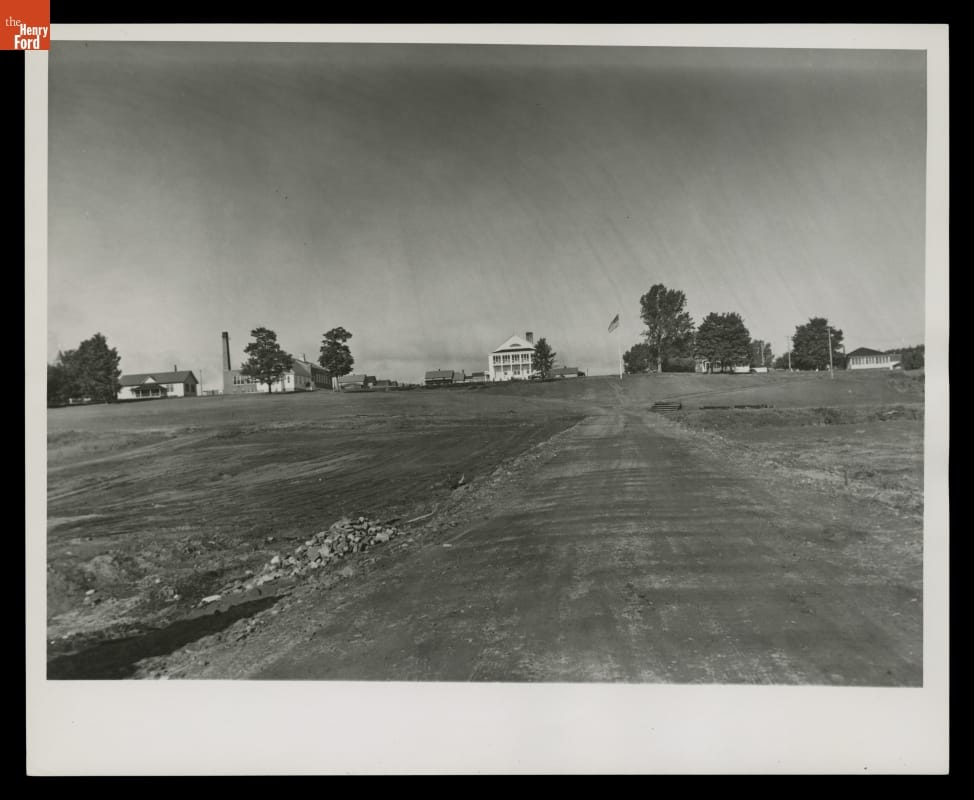
- Big Bay Hotel, General Store and Surrounding Buildings at Big Bay, Michigan, circa 1930 - In pursuit of self-sufficient automobile manufacture, Henry Ford and Ford Motor Company purchased over 313,000 acres of timberland for logging in the Upper Peninsula of Michigan. Ford established remote milling sites in several places, but Big Bay was unique. In 1943, Henry Ford purchased not only the sawmill and power plant, but nearly every other building in town.
- circa 1930
- Collections - Artifact
Big Bay Hotel, General Store and Surrounding Buildings at Big Bay, Michigan, circa 1930
In pursuit of self-sufficient automobile manufacture, Henry Ford and Ford Motor Company purchased over 313,000 acres of timberland for logging in the Upper Peninsula of Michigan. Ford established remote milling sites in several places, but Big Bay was unique. In 1943, Henry Ford purchased not only the sawmill and power plant, but nearly every other building in town.
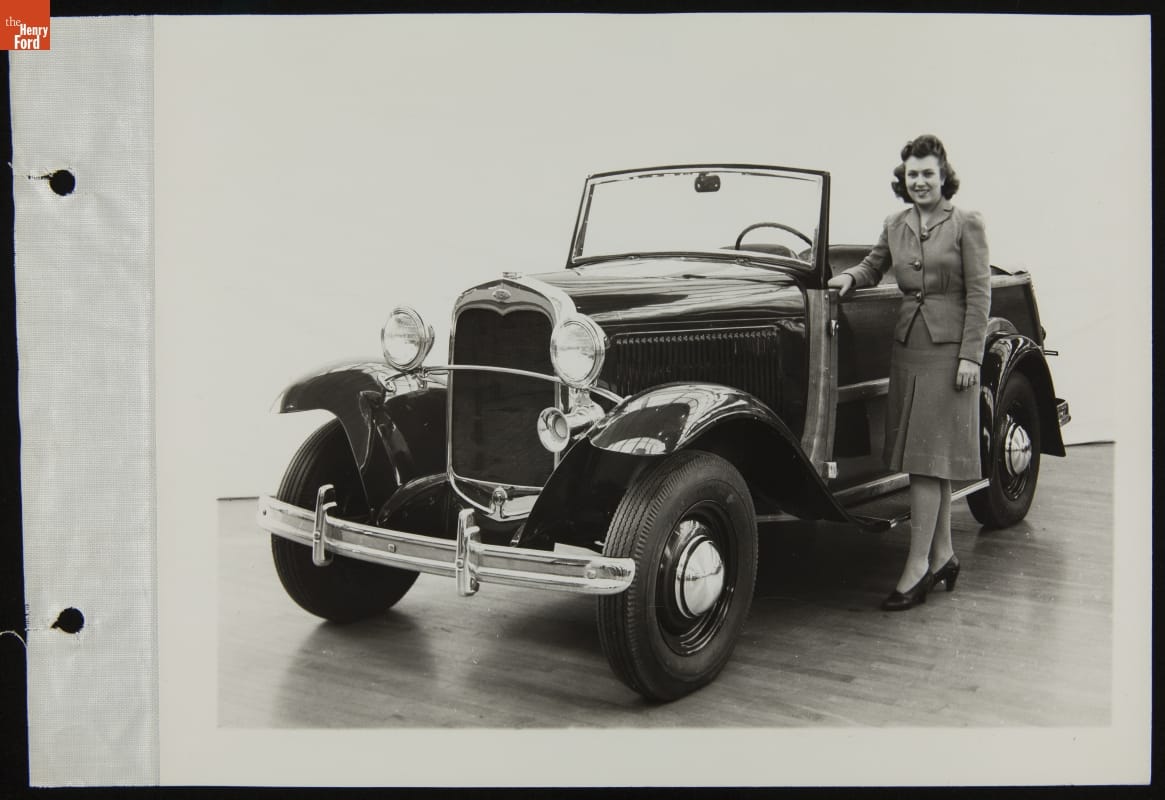
- Woman Modeling the Ford "Estate Wagon" Custom-Built for Henry Ford II, February 1945 - In 1944, Ford Motor Company president Henry Ford II requested the head of the Design Department, Bob Gregorie, to refurbish an unused 1931 Model A into a vehicle that Ford could use around his summer home. Gregorie, seeing the postwar potential of this type of vehicle, took the challenge. He knit together unused Ford parts with unrestricted wartime material to create this wood-bodied Estate Wagon.
- February 17, 1945
- Collections - Artifact
Woman Modeling the Ford "Estate Wagon" Custom-Built for Henry Ford II, February 1945
In 1944, Ford Motor Company president Henry Ford II requested the head of the Design Department, Bob Gregorie, to refurbish an unused 1931 Model A into a vehicle that Ford could use around his summer home. Gregorie, seeing the postwar potential of this type of vehicle, took the challenge. He knit together unused Ford parts with unrestricted wartime material to create this wood-bodied Estate Wagon.
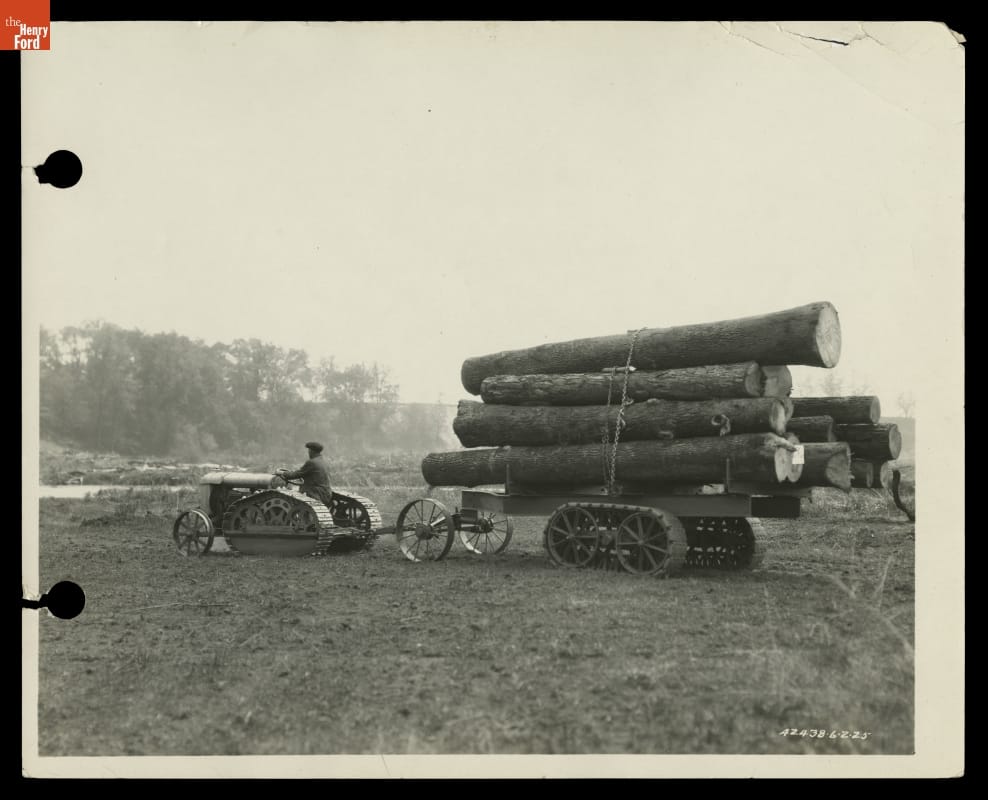
- Logging Operations with Tractor and Log Hauling Trailer, Michigan, 1925 - In pursuit of self-sufficient automobile manufacture, Henry Ford and Ford Motor Company purchased over 313,000 acres of timberland for logging in the Upper Peninsula of Michigan. Ford built a large lumber camp in Sidnaw, where well-fed, well-dressed, and well-housed lumberjacks like this worker harvested mature trees. The wood would be made into automobile parts at a plant 65 miles southeast.
- June 02, 1925
- Collections - Artifact
Logging Operations with Tractor and Log Hauling Trailer, Michigan, 1925
In pursuit of self-sufficient automobile manufacture, Henry Ford and Ford Motor Company purchased over 313,000 acres of timberland for logging in the Upper Peninsula of Michigan. Ford built a large lumber camp in Sidnaw, where well-fed, well-dressed, and well-housed lumberjacks like this worker harvested mature trees. The wood would be made into automobile parts at a plant 65 miles southeast.
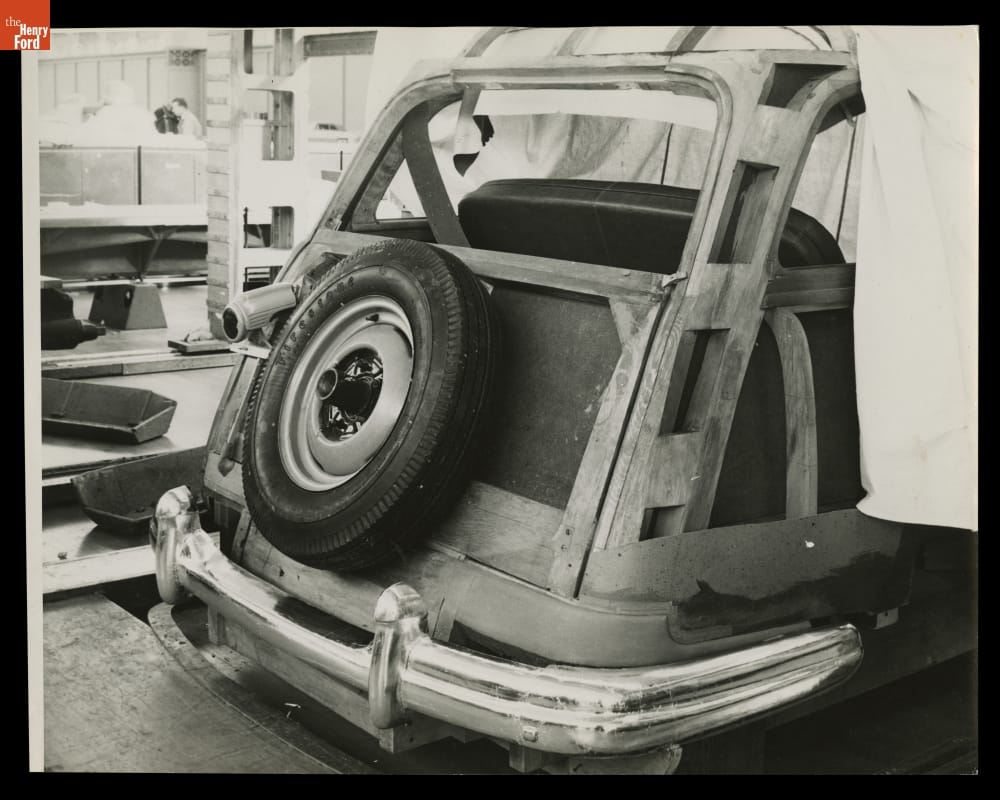
- View of Rear Tire Carrier of Woody Station Wagon, 1946 - In March 1946, Ford Motor Company sent photographers to its Iron Mountain plant on the Menominee River in Michigan's Upper Peninsula, where workers produced handcrafted station wagon bodies from local hardwood. This photo shows the spare tire carrier and tailgate on what appears to be an early mock-up of the 1949 Ford wagon.
- February 08, 1946
- Collections - Artifact
View of Rear Tire Carrier of Woody Station Wagon, 1946
In March 1946, Ford Motor Company sent photographers to its Iron Mountain plant on the Menominee River in Michigan's Upper Peninsula, where workers produced handcrafted station wagon bodies from local hardwood. This photo shows the spare tire carrier and tailgate on what appears to be an early mock-up of the 1949 Ford wagon.
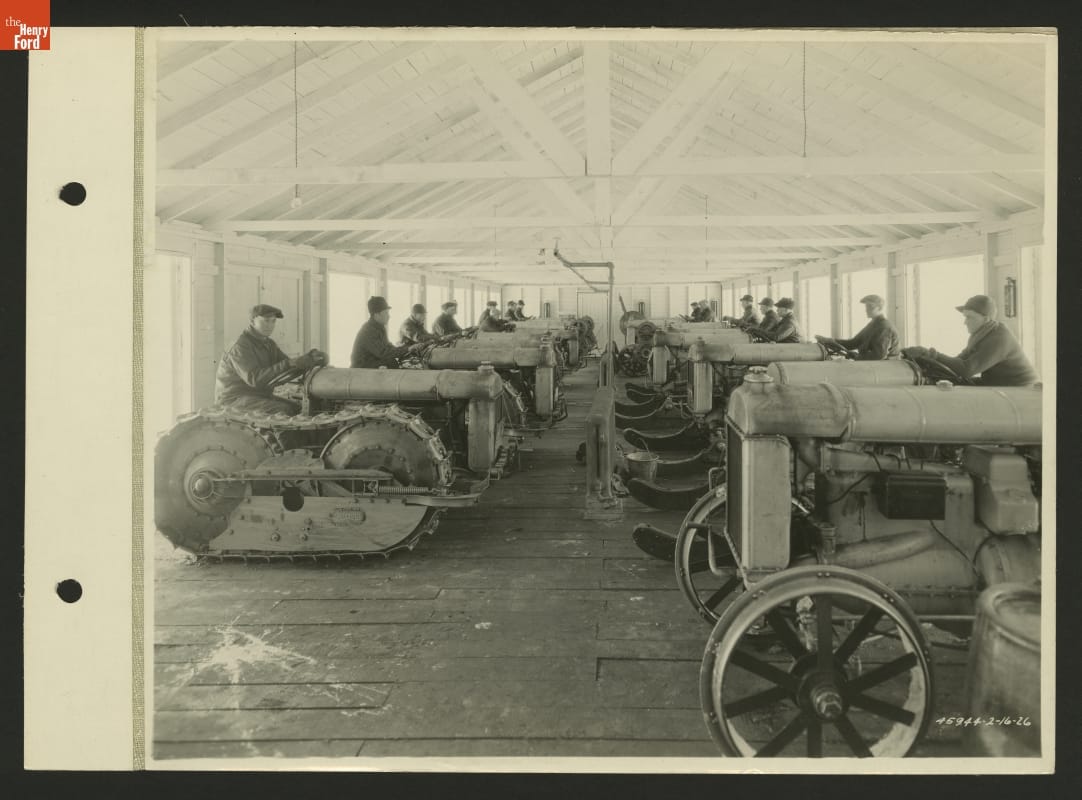
- Fordson Tractors Lined Up Inside Building at Keating Spur, L'Anse, Michigan, 1926 - In pursuit of self-sufficient automobile manufacture, Henry Ford and Ford Motor Company purchased over 313,000 acres of timberland for logging in the Upper Peninsula of Michigan. Here, workers pose at one of Ford's remote milling sites on Keweenaw Bay. Lumber harvested from the hardwood forests at L'Anse would be shipped out and made into parts for Ford automobiles.
- February 16, 1926
- Collections - Artifact
Fordson Tractors Lined Up Inside Building at Keating Spur, L'Anse, Michigan, 1926
In pursuit of self-sufficient automobile manufacture, Henry Ford and Ford Motor Company purchased over 313,000 acres of timberland for logging in the Upper Peninsula of Michigan. Here, workers pose at one of Ford's remote milling sites on Keweenaw Bay. Lumber harvested from the hardwood forests at L'Anse would be shipped out and made into parts for Ford automobiles.
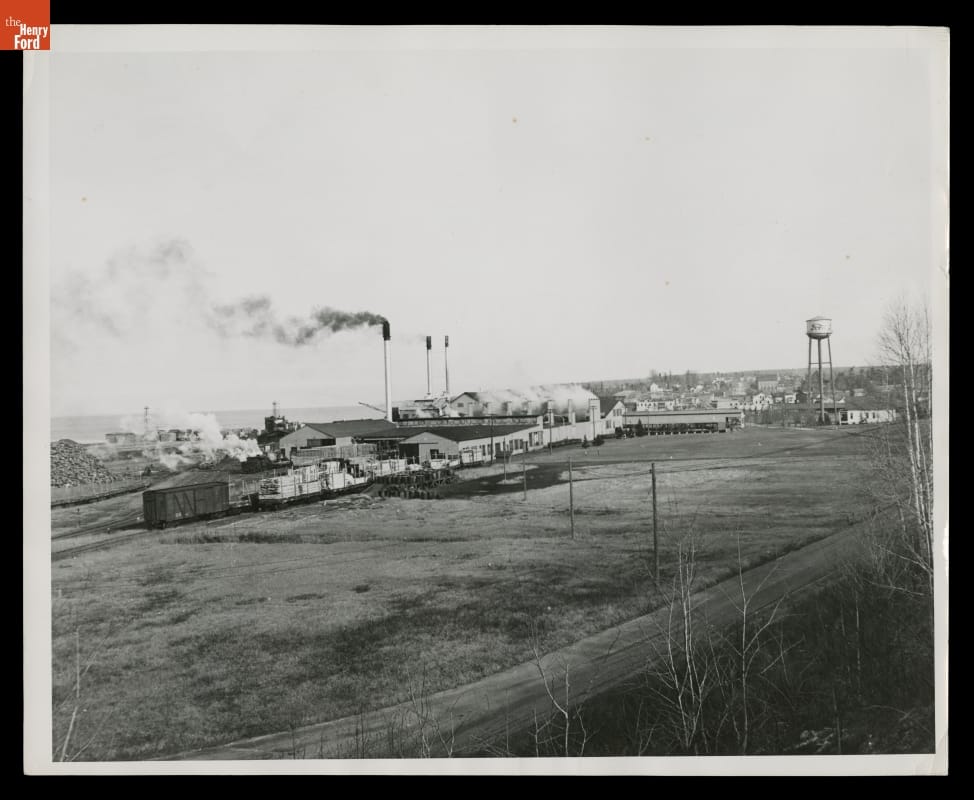
- Sawmill and Surrounding Ford Motor Company Buildings at L'Anse, Michigan, circa 1930 - In pursuit of self-sufficient automobile manufacture, Henry Ford and Ford Motor Company purchased over 313,000 acres of timberland for logging in the Upper Peninsula of Michigan. Ford established several remote milling sites, including this one at L'Anse on Keweenaw Bay. Lumber produced here was shipped to a plant at Iron Mountain and made into parts for Ford automobiles.
- circa 1930
- Collections - Artifact
Sawmill and Surrounding Ford Motor Company Buildings at L'Anse, Michigan, circa 1930
In pursuit of self-sufficient automobile manufacture, Henry Ford and Ford Motor Company purchased over 313,000 acres of timberland for logging in the Upper Peninsula of Michigan. Ford established several remote milling sites, including this one at L'Anse on Keweenaw Bay. Lumber produced here was shipped to a plant at Iron Mountain and made into parts for Ford automobiles.
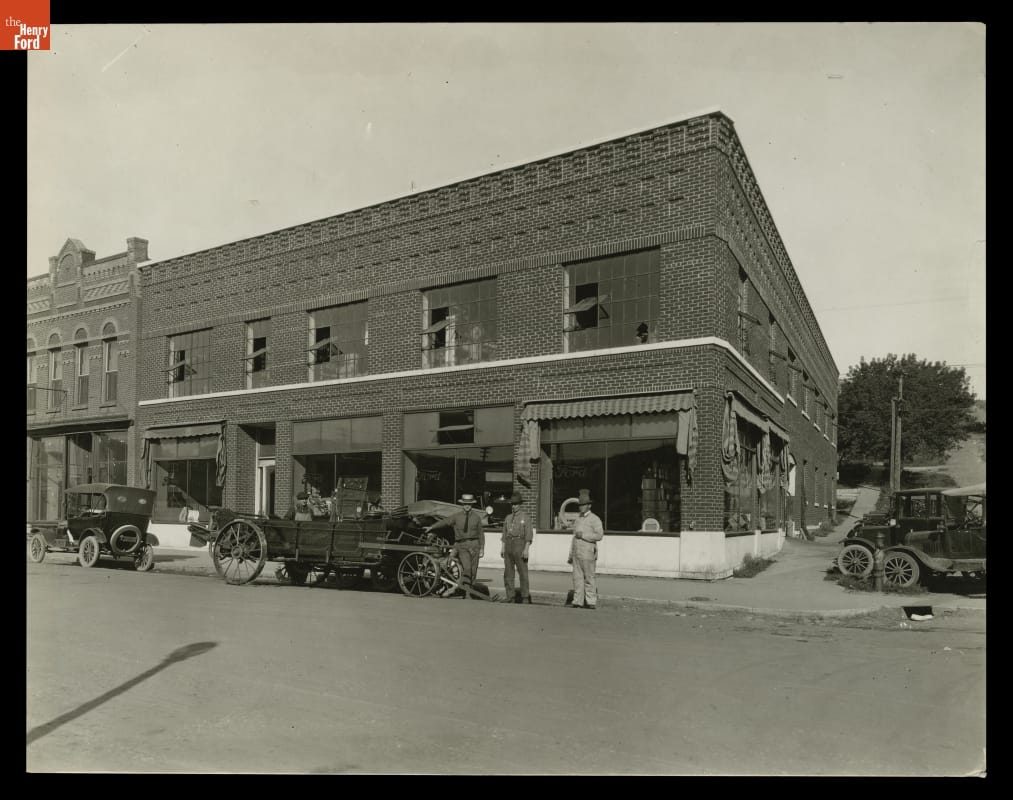
- E. G. Kingsford Ford Dealership, Iron Mountain, Michigan, circa 1927 - Early automobile bodies were made of wood. Henry Ford wanted to secure a timber supply in the hardwood forests of Michigan's Upper Peninsula. He contracted E. G. Kingsford, the authorized Ford dealer in Iron Mountain (and his cousin-in-law), to purchase land for company use. Iron Mountain quickly became the center of Ford's logging and manufacturing operations in northern Michigan.
- circa 1927
- Collections - Artifact
E. G. Kingsford Ford Dealership, Iron Mountain, Michigan, circa 1927
Early automobile bodies were made of wood. Henry Ford wanted to secure a timber supply in the hardwood forests of Michigan's Upper Peninsula. He contracted E. G. Kingsford, the authorized Ford dealer in Iron Mountain (and his cousin-in-law), to purchase land for company use. Iron Mountain quickly became the center of Ford's logging and manufacturing operations in northern Michigan.
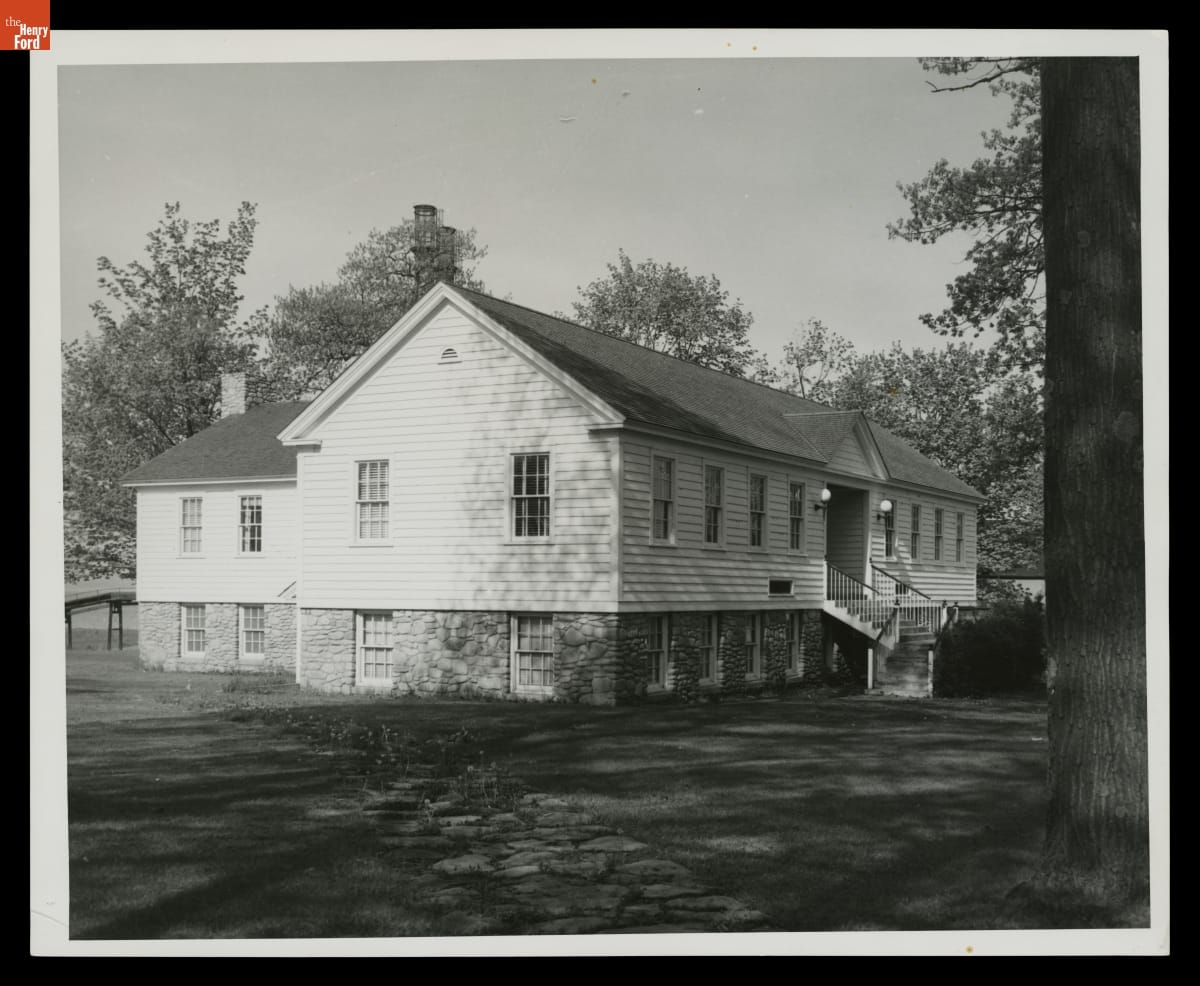
- Pequaming High School, Pequaming, Michigan, circa 1935 -
- circa 1935
- Collections - Artifact
Pequaming High School, Pequaming, Michigan, circa 1935
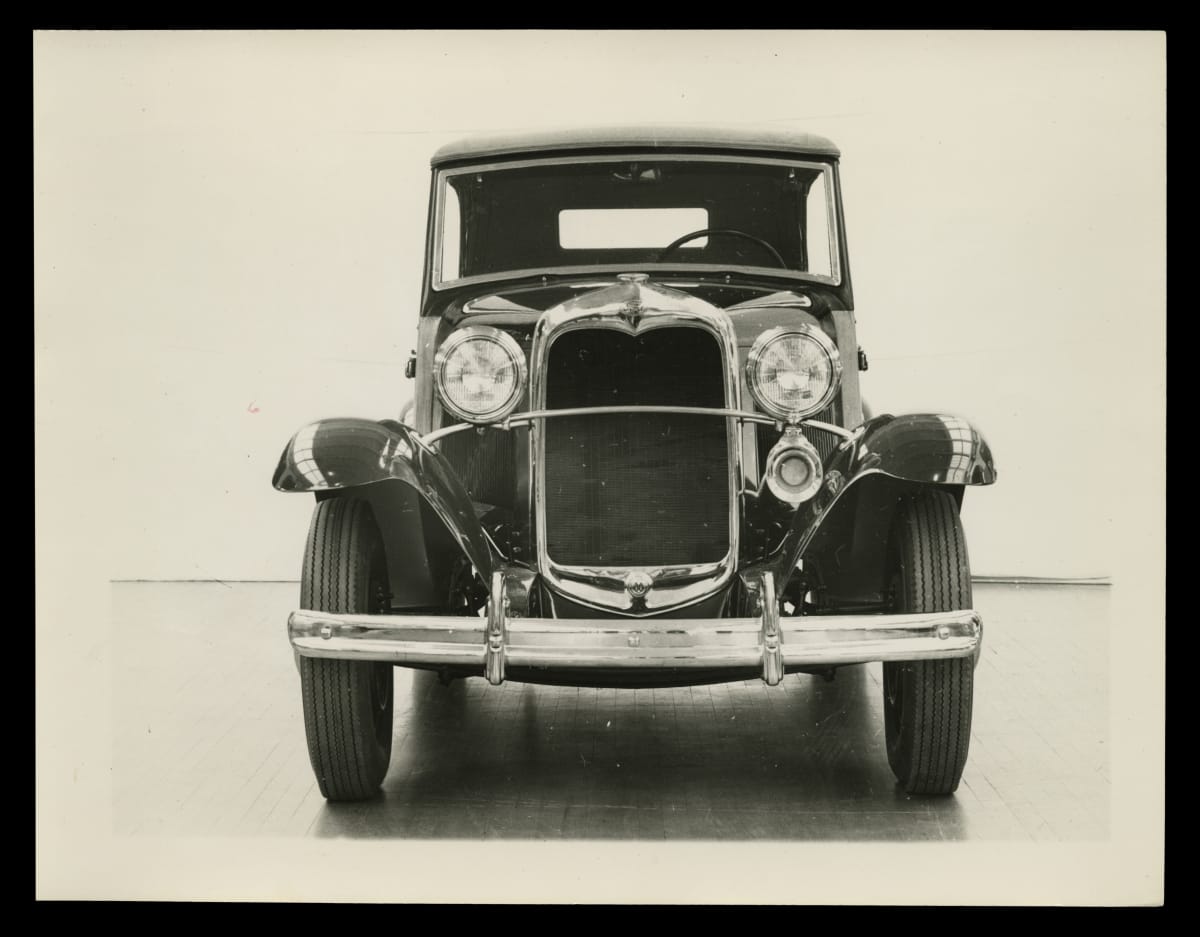
- Ford "Estate Wagon" Custom-Built for Henry Ford II, February 1945 - In 1944, Ford Motor Company president Henry Ford II requested the head of the Design Department, Bob Gregorie, to refurbish an unused 1931 Model A into a vehicle that Ford could use around his summer home. Gregorie, seeing the postwar potential of this type of vehicle, took the challenge. He knit together unused Ford parts with unrestricted wartime material to create this wood-bodied Estate Wagon.
- February 03, 1945
- Collections - Artifact
Ford "Estate Wagon" Custom-Built for Henry Ford II, February 1945
In 1944, Ford Motor Company president Henry Ford II requested the head of the Design Department, Bob Gregorie, to refurbish an unused 1931 Model A into a vehicle that Ford could use around his summer home. Gregorie, seeing the postwar potential of this type of vehicle, took the challenge. He knit together unused Ford parts with unrestricted wartime material to create this wood-bodied Estate Wagon.