
Search
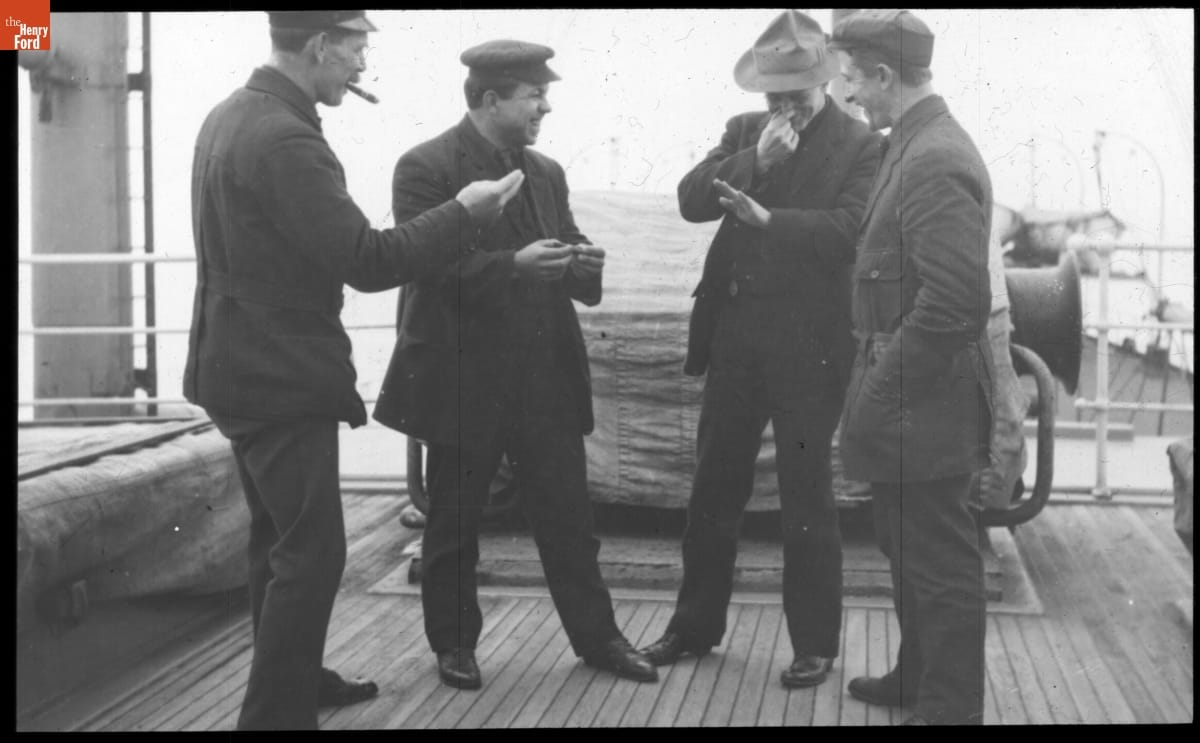
- The Thomas Flyer Team aboard the SS Shawmut, Journeying to Japan, New York to Paris Race, 1908 - In early April, officials for the 1908 New York to Paris race decided that the remaining teams should ship their vehicles from the west coast of the United States to Asia. Instead of crossing the Bering Strait from Alaska into Russia, the race would begin again in Vladivostok. The now-trailing American team crossed the Pacific on the SS <em>Shawmut</em>.
- 1908
- Collections - Artifact
The Thomas Flyer Team aboard the SS Shawmut, Journeying to Japan, New York to Paris Race, 1908
In early April, officials for the 1908 New York to Paris race decided that the remaining teams should ship their vehicles from the west coast of the United States to Asia. Instead of crossing the Bering Strait from Alaska into Russia, the race would begin again in Vladivostok. The now-trailing American team crossed the Pacific on the SS Shawmut.
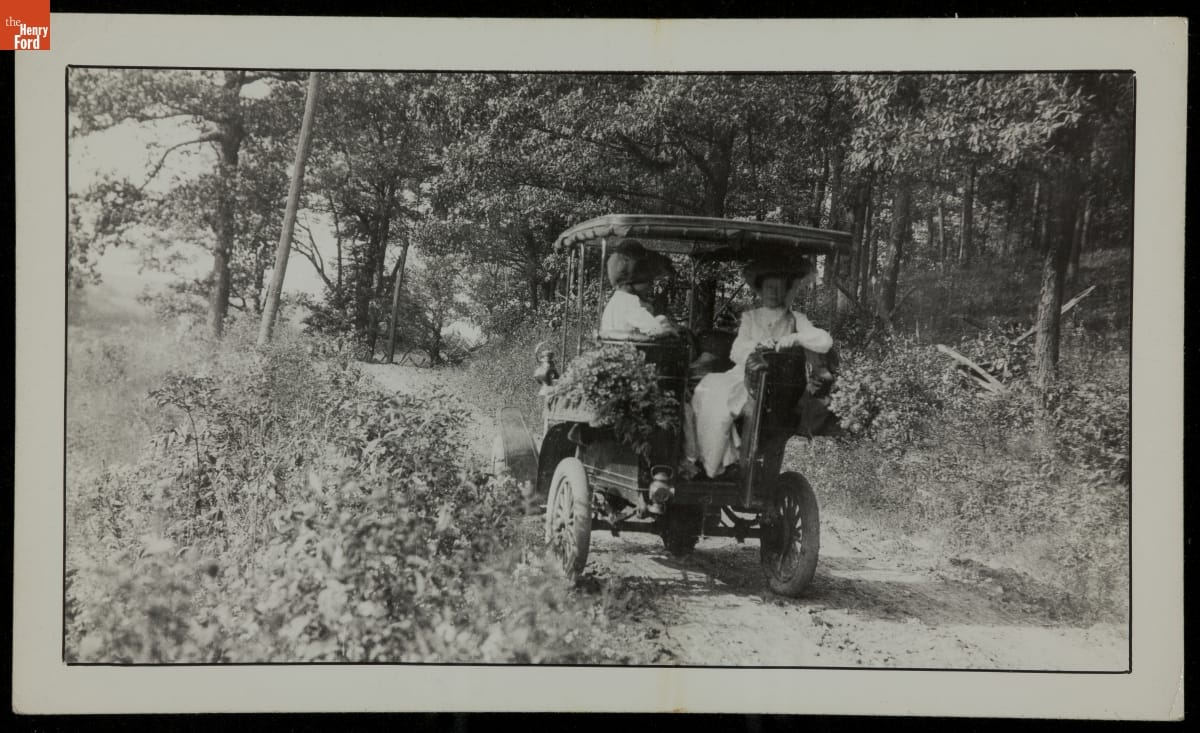
- Two Women Looking Out the Back of 1904 Packard, circa 1905 - This 1904 Packard had a rear center door, which was common on horse-drawn vehicles of the time. Automobiles were in transition. They were playthings for the wealthy, yet to replace buggies for everyday transportation. These well-to-do women use a custom-made wicker hamper to carry flowers they may have gathered during their expensive excursion.
- circa 1905
- Collections - Artifact
Two Women Looking Out the Back of 1904 Packard, circa 1905
This 1904 Packard had a rear center door, which was common on horse-drawn vehicles of the time. Automobiles were in transition. They were playthings for the wealthy, yet to replace buggies for everyday transportation. These well-to-do women use a custom-made wicker hamper to carry flowers they may have gathered during their expensive excursion.
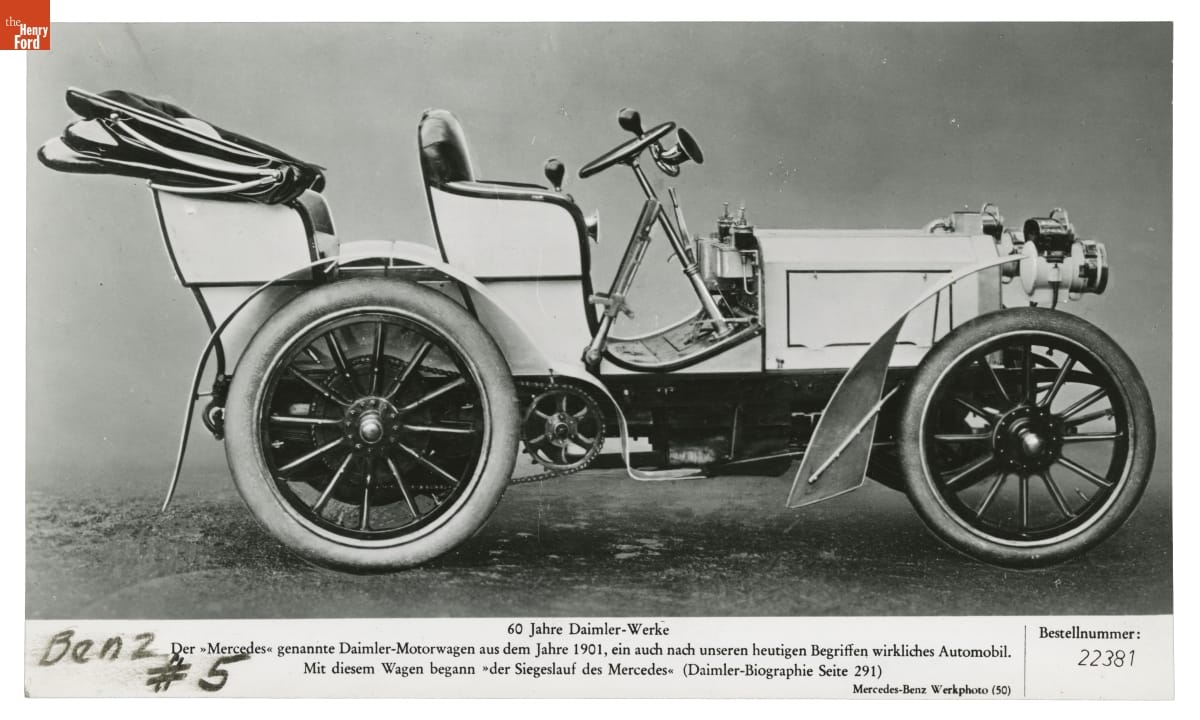
- 1901 Mercedes-Benz Number 5, circa 1955 - The 1901 Mercedes, built by the German firm Daimler, was one of the first automobiles with the engine up front rather than under the seat. That gave more room for bigger engines and also allowed the chassis to be lowered for easier entry and better road holding. It set the pattern for future cars.
- 1901
- Collections - Artifact
1901 Mercedes-Benz Number 5, circa 1955
The 1901 Mercedes, built by the German firm Daimler, was one of the first automobiles with the engine up front rather than under the seat. That gave more room for bigger engines and also allowed the chassis to be lowered for easier entry and better road holding. It set the pattern for future cars.
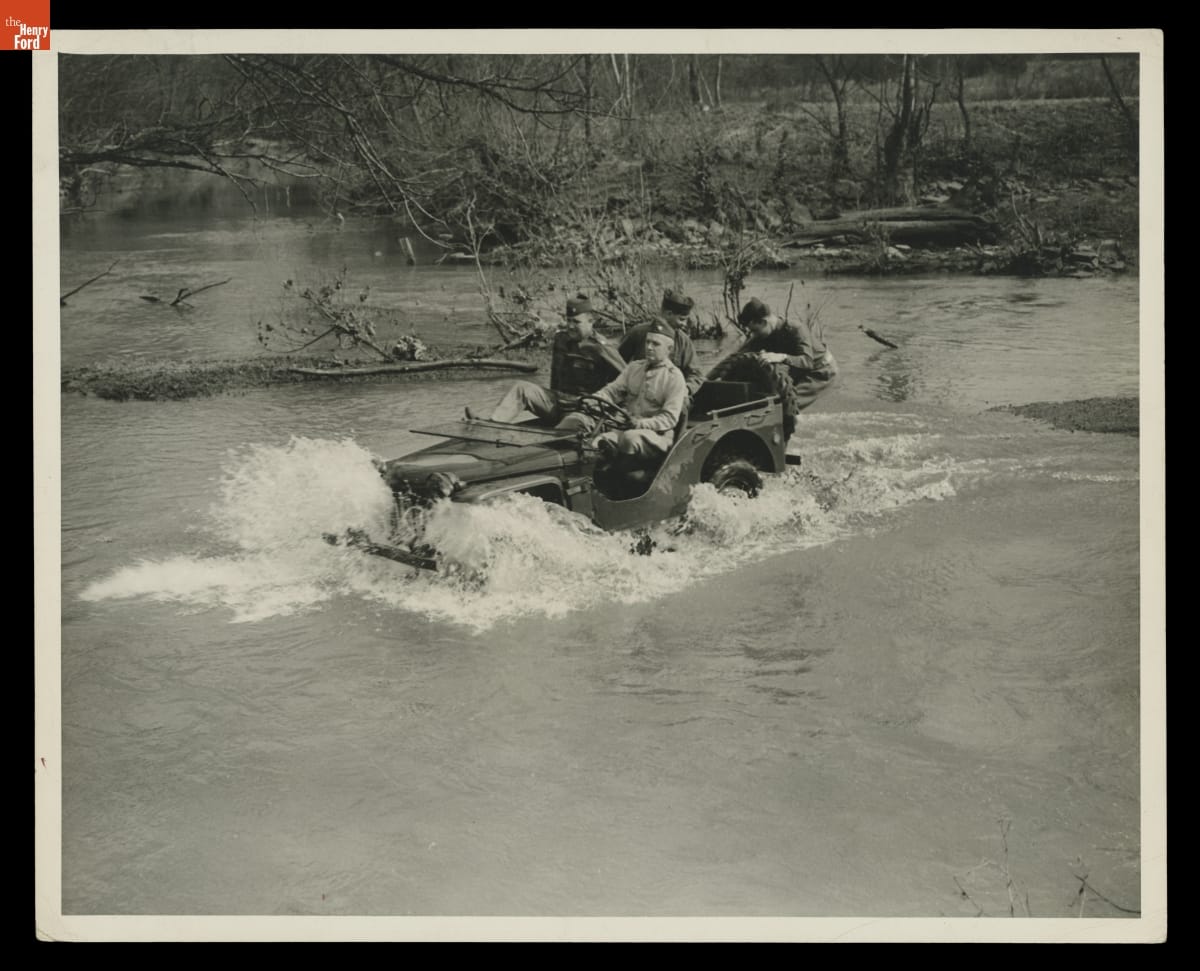
- Crossing a Stream in a Willys Military Jeep, circa 1943 - Few things are as iconic of World War II as the jeep. American Bantam created the design in response to a call from the U.S. Army, but Bantam couldn't produce it in the quantities required. Willys-Overland and Ford built the majority of the 650,000 jeeps manufactured for the war effort. Willys built Jeeps for the civilian market after the war.
- circa 1943
- Collections - Artifact
Crossing a Stream in a Willys Military Jeep, circa 1943
Few things are as iconic of World War II as the jeep. American Bantam created the design in response to a call from the U.S. Army, but Bantam couldn't produce it in the quantities required. Willys-Overland and Ford built the majority of the 650,000 jeeps manufactured for the war effort. Willys built Jeeps for the civilian market after the war.
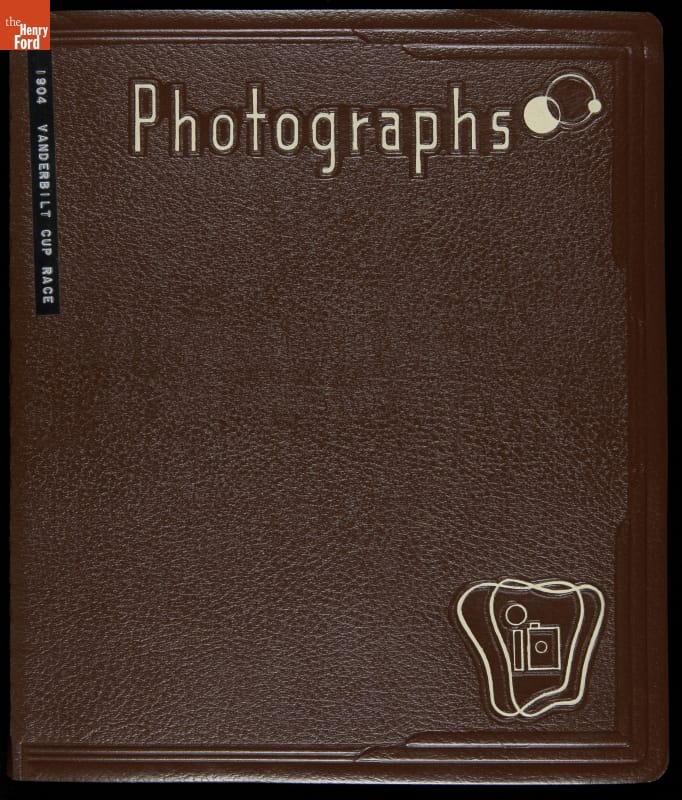
- Photograph Album, 1904 Vanderbilt Cup Race - The Vanderbilt Cup, held on New York's Long Island from 1904 to 1910, was America's first internationally prominent automobile race. William K. Vanderbilt, Jr., a wealthy railroad heir, organized the competition over public roads. European cars dominated the event's first years. This photo album documents the 1904 race, won by American driver George Heath in a French-built Panhard.
- 1904
- Collections - Artifact
Photograph Album, 1904 Vanderbilt Cup Race
The Vanderbilt Cup, held on New York's Long Island from 1904 to 1910, was America's first internationally prominent automobile race. William K. Vanderbilt, Jr., a wealthy railroad heir, organized the competition over public roads. European cars dominated the event's first years. This photo album documents the 1904 race, won by American driver George Heath in a French-built Panhard.
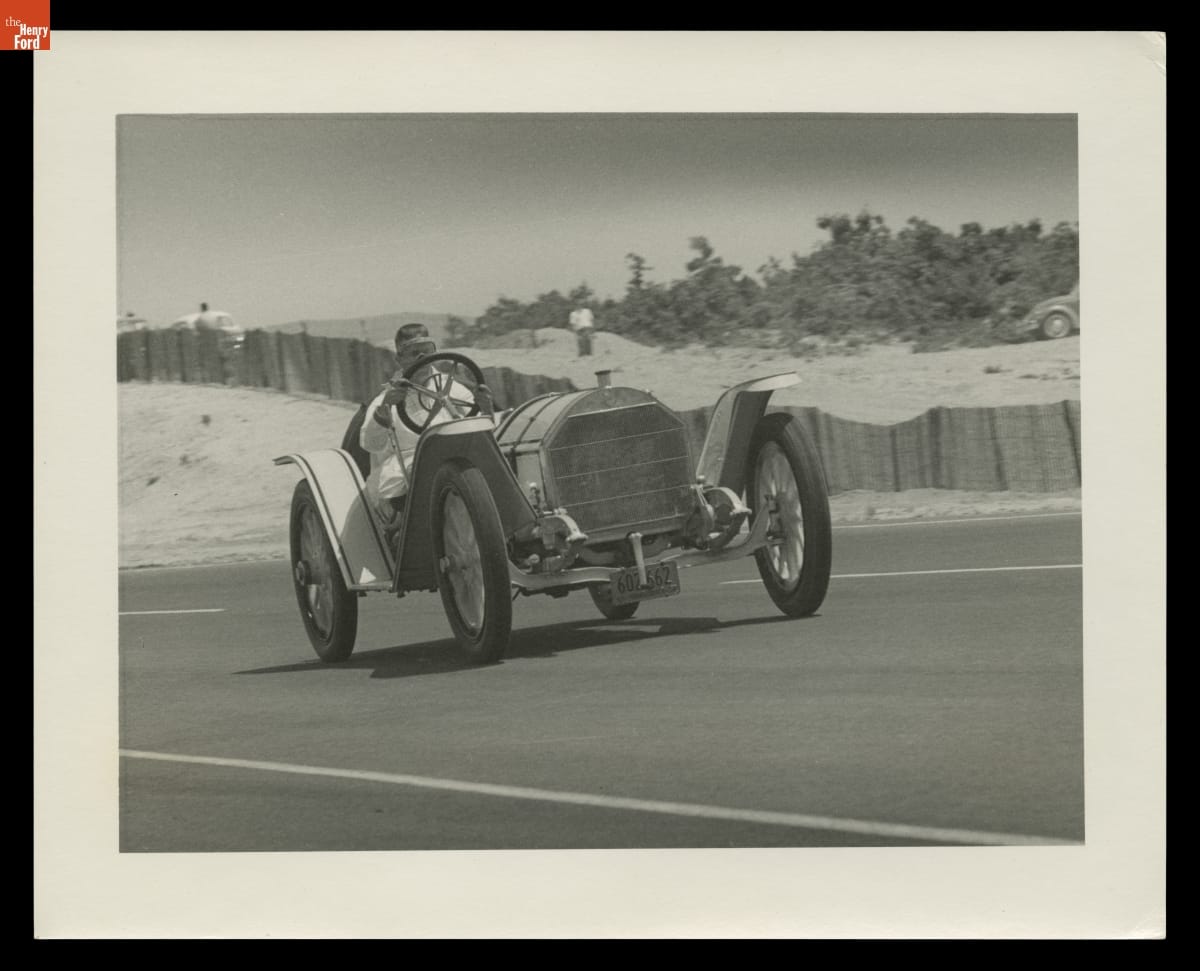
- Raymond Petersen Driving 1911 Mercer Raceabout, Bridgehampton, New York, May 31, 1959 - The Mercer Type 35 Raceabout, designed by Finley R. Porter, was the high-performance sports car of its day. It could top 90 miles per hour. This 1911 example belonged to Henry Austin Clark, Jr., the foremost automotive collector and historian of his day. Clark acquired the Raceabout in 1949, and it remained in his family for the next 65 years.
- May 31, 1959
- Collections - Artifact
Raymond Petersen Driving 1911 Mercer Raceabout, Bridgehampton, New York, May 31, 1959
The Mercer Type 35 Raceabout, designed by Finley R. Porter, was the high-performance sports car of its day. It could top 90 miles per hour. This 1911 example belonged to Henry Austin Clark, Jr., the foremost automotive collector and historian of his day. Clark acquired the Raceabout in 1949, and it remained in his family for the next 65 years.
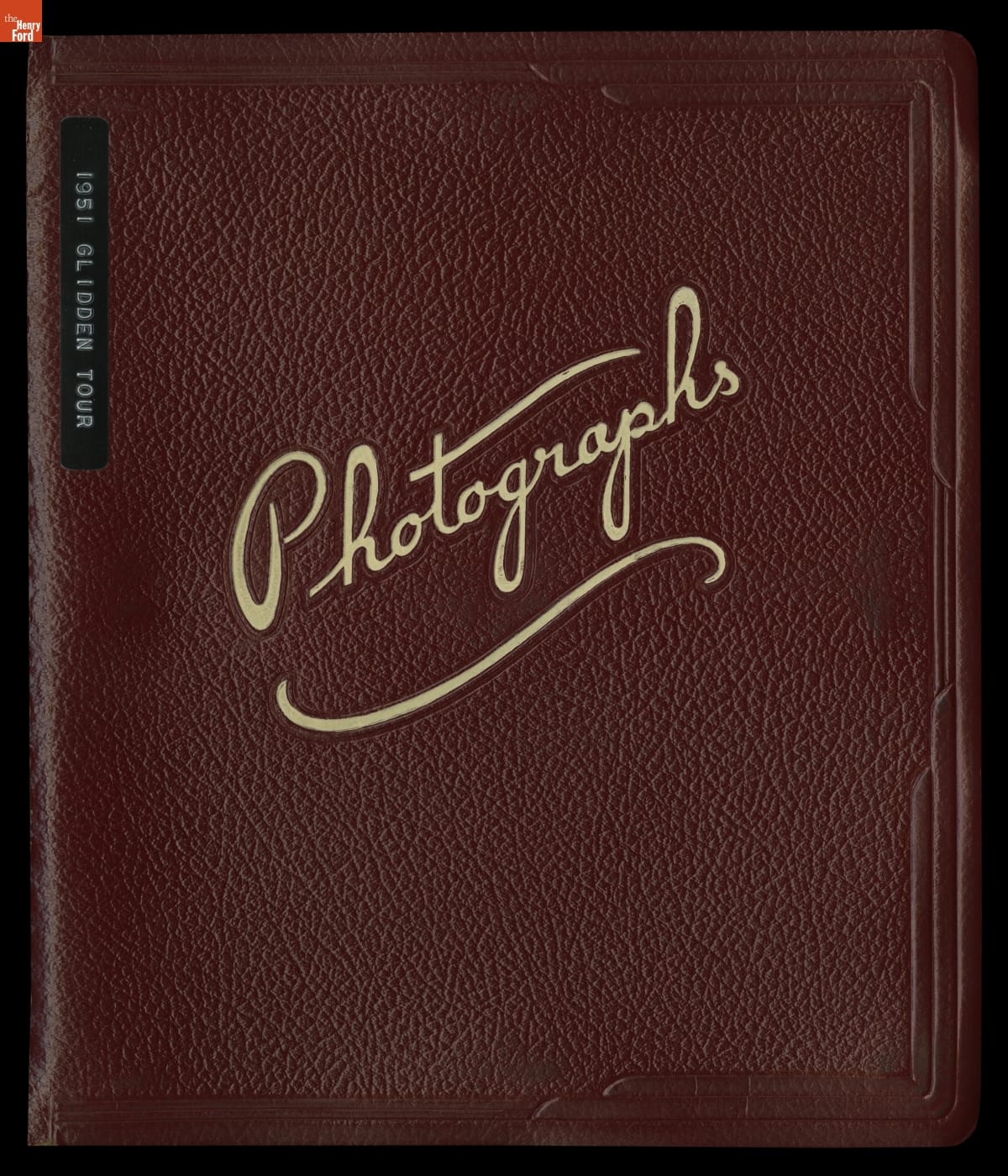
- Photograph Album, 1951 Glidden Tour - The original Glidden Tours, sponsored by AAA from 1904-1913, promoted both automobiles and road improvements. AAA and the Veteran Motor Car Club of America revived the annual tours in 1946 for owners of vintage automobiles. This time, the focus was more on pleasure than promotion. Participants often dressed in period costume, and they staged impromptu car shows along the way.
- September 01, 1951
- Collections - Artifact
Photograph Album, 1951 Glidden Tour
The original Glidden Tours, sponsored by AAA from 1904-1913, promoted both automobiles and road improvements. AAA and the Veteran Motor Car Club of America revived the annual tours in 1946 for owners of vintage automobiles. This time, the focus was more on pleasure than promotion. Participants often dressed in period costume, and they staged impromptu car shows along the way.
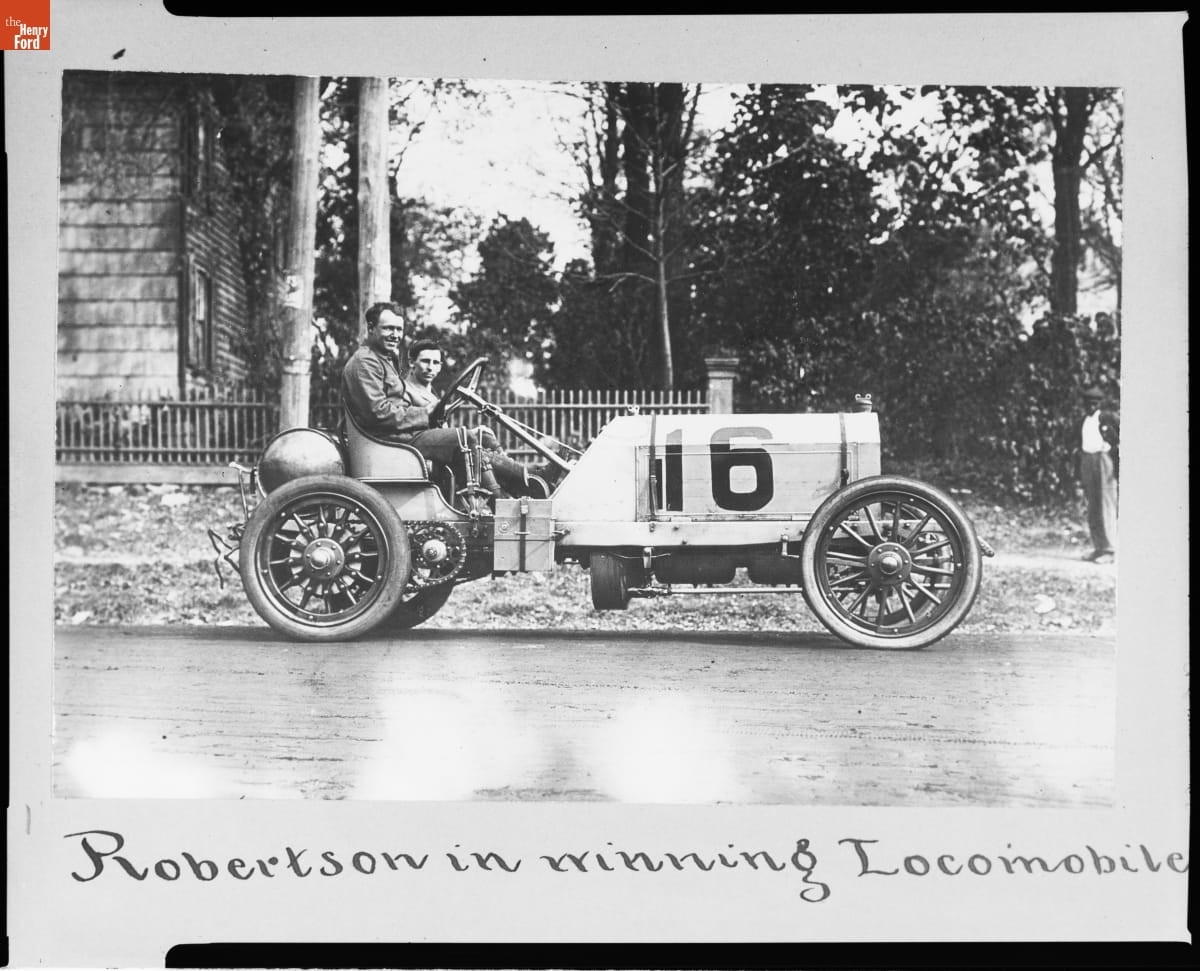
- George Robertson in the Winning Locomobile #16 at the 1908 Vanderbilt Cup Race - Driver George Robertson and riding mechanic Glenn Ethridge won the 1908 Vanderbilt Cup with a 1906 Locomobile. It was the first American-built car to win America's first great automobile race. The Locomobile competed while wearing number 16, and it's been known as "Old 16" ever since.
- October 24, 1908
- Collections - Artifact
George Robertson in the Winning Locomobile #16 at the 1908 Vanderbilt Cup Race
Driver George Robertson and riding mechanic Glenn Ethridge won the 1908 Vanderbilt Cup with a 1906 Locomobile. It was the first American-built car to win America's first great automobile race. The Locomobile competed while wearing number 16, and it's been known as "Old 16" ever since.
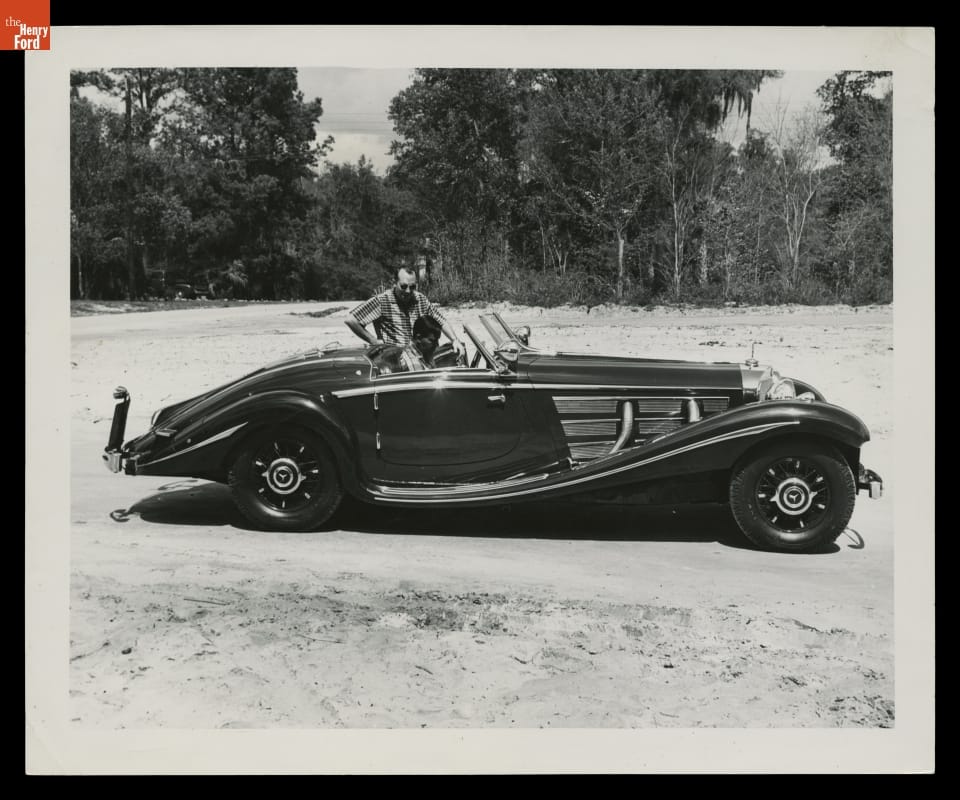
- 1937 Mercedes-Benz 540K Once Owned by Mohammed Zahir Shah of Afghanistan, in Silver Springs, Florida, 1955 - Germany's Mercedez-Benz built its 540K grand touring car from 1936-1940. The "K" stood for the German word "Kompressor" -- a reference to the engine's supercharger. The 5.4-liter, 8-cylinder engine produced up to 180 horsepower and could move the car at speeds over 110 miles per hour. This 540K once belonged to Mohammed Zahir Shah, King of Afghanistan from 1933-1973.
- June 11, 1955
- Collections - Artifact
1937 Mercedes-Benz 540K Once Owned by Mohammed Zahir Shah of Afghanistan, in Silver Springs, Florida, 1955
Germany's Mercedez-Benz built its 540K grand touring car from 1936-1940. The "K" stood for the German word "Kompressor" -- a reference to the engine's supercharger. The 5.4-liter, 8-cylinder engine produced up to 180 horsepower and could move the car at speeds over 110 miles per hour. This 540K once belonged to Mohammed Zahir Shah, King of Afghanistan from 1933-1973.
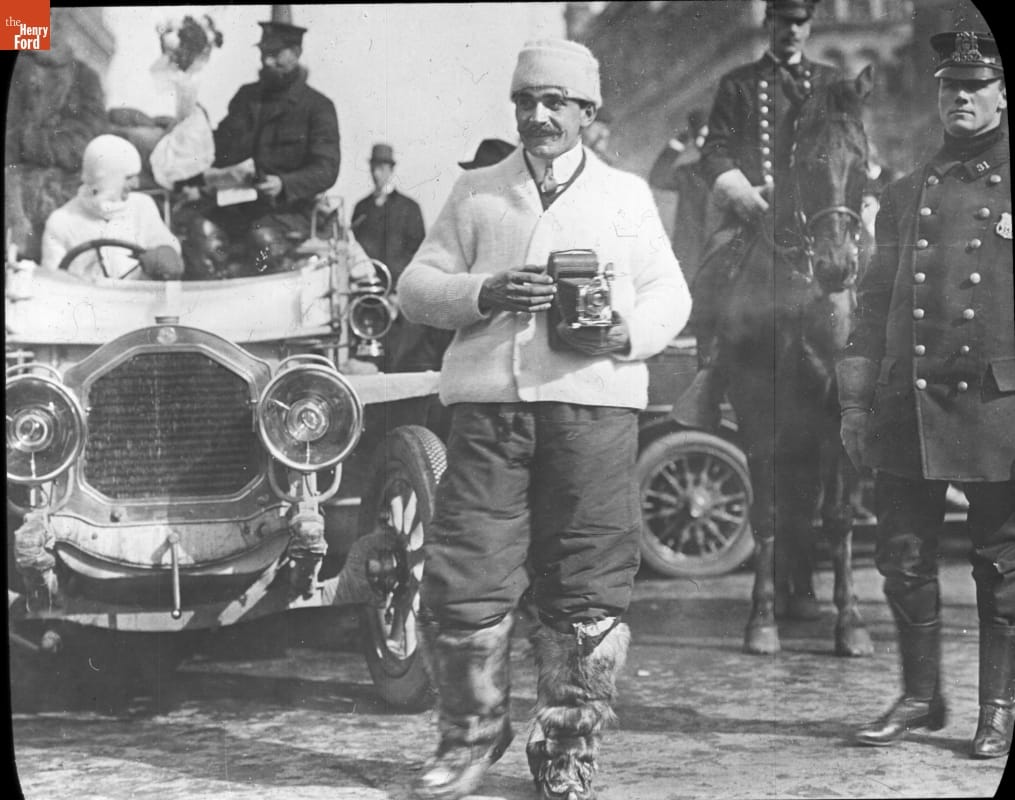
- De Dion-Bouton Mechanic Alphonse Autran with Camera before the New York to Paris Race, New York City, 1908 - In 1908, six automobiles raced around the globe from New York City to Paris, France. The contest took 169 days, covered 22,000 miles and spanned three continents. The cars and their racing teams had to endure cold, snow, mud, poor roads and other hardships. The cars started from New York's Times Square on February 12 and attracted a great crowd.
- February 12, 1908
- Collections - Artifact
De Dion-Bouton Mechanic Alphonse Autran with Camera before the New York to Paris Race, New York City, 1908
In 1908, six automobiles raced around the globe from New York City to Paris, France. The contest took 169 days, covered 22,000 miles and spanned three continents. The cars and their racing teams had to endure cold, snow, mud, poor roads and other hardships. The cars started from New York's Times Square on February 12 and attracted a great crowd.