
Search
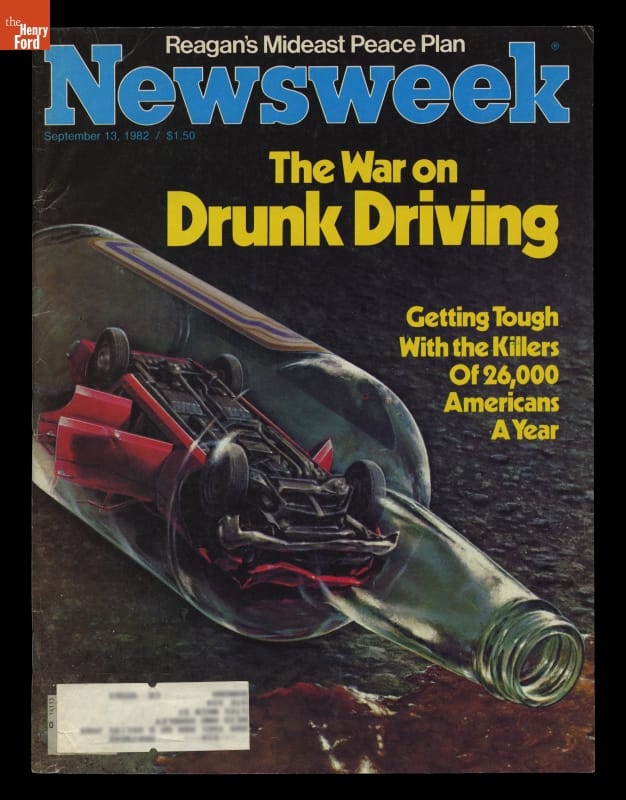
- "Newsweek," September 13, 1982 - In the 1980s, efforts by organizations, such as Mothers Against Drunk Driving (MADD), focused attention on the human cost of drunk driving. Drunk driving and the loss of life could no longer be tolerated. This shift in American attitudes was highlighted on the cover of this September 13, 1982 issue of <EM>Newsweek</EM>.
- September 13, 1982
- Collections - Artifact
"Newsweek," September 13, 1982
In the 1980s, efforts by organizations, such as Mothers Against Drunk Driving (MADD), focused attention on the human cost of drunk driving. Drunk driving and the loss of life could no longer be tolerated. This shift in American attitudes was highlighted on the cover of this September 13, 1982 issue of Newsweek.
- "Popular Science," March 1949 -
- March 01, 1949
- Collections - Artifact
"Popular Science," March 1949
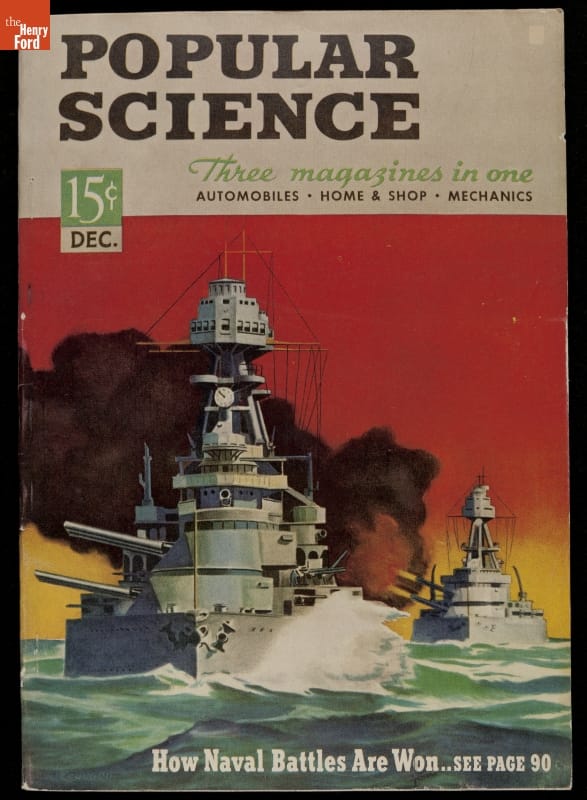
- "Popular Science," December 1940 - <EM>Popular Science</EM> provided information about scientific and technological advancements. In the early 1900s articles about the automobile -- and its driver -- became commonplace in the monthly's pages. In this December 1940 issue, readers learned about new car models, gained maintenance and safety tips, and discovered how drivers cope with 'traffic jitters.'
- December 01, 1940
- Collections - Artifact
"Popular Science," December 1940
Popular Science provided information about scientific and technological advancements. In the early 1900s articles about the automobile -- and its driver -- became commonplace in the monthly's pages. In this December 1940 issue, readers learned about new car models, gained maintenance and safety tips, and discovered how drivers cope with 'traffic jitters.'
- "McCall's" Magazine for December 1934 -
- December 01, 1934
- Collections - Artifact
"McCall's" Magazine for December 1934
- Henry Ford Museum & Greenfield Village Herald, Vol. 12, No. 1, 1983 -
- 1983
- Collections - Artifact
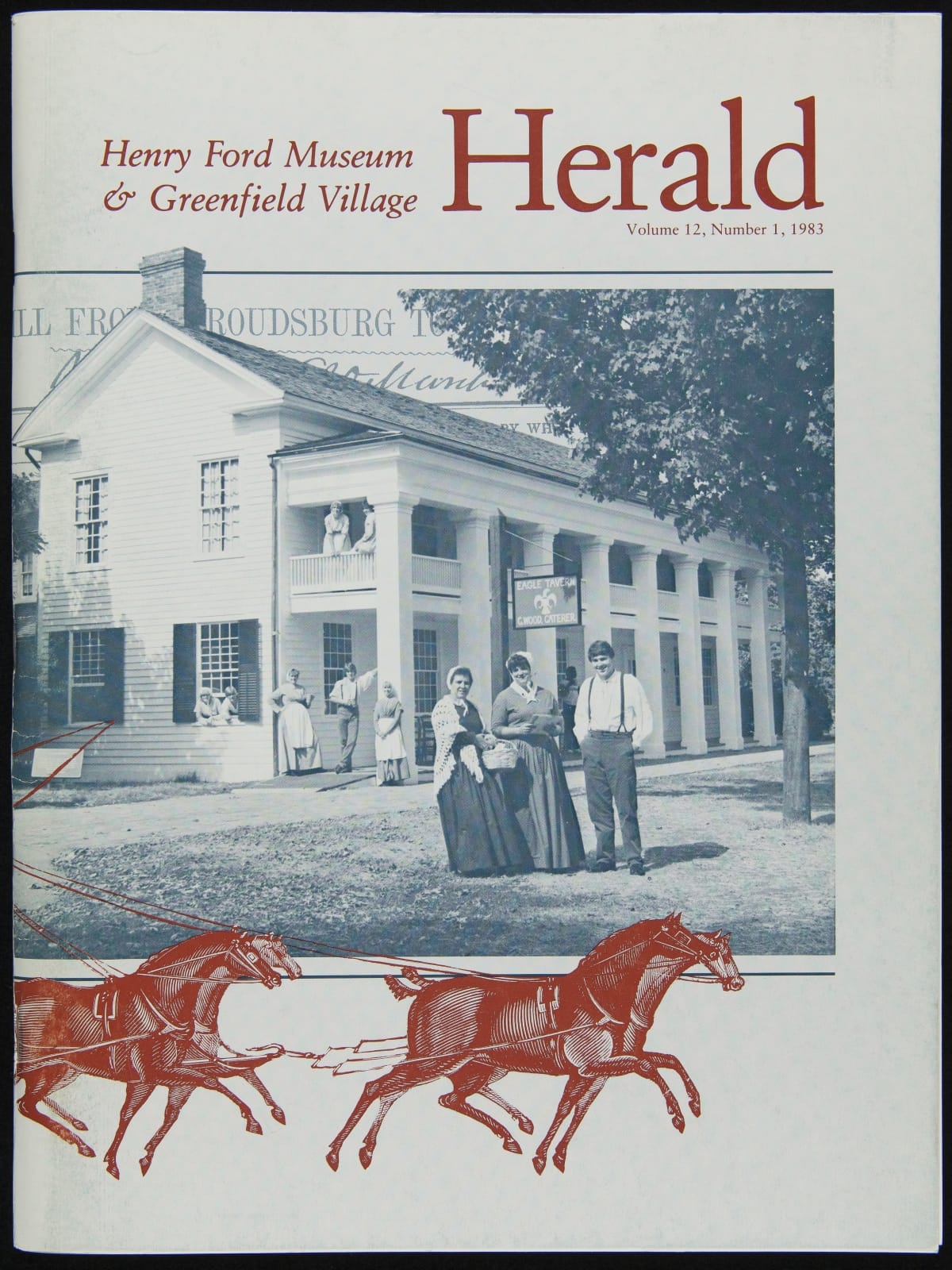
Henry Ford Museum & Greenfield Village Herald, Vol. 12, No. 1, 1983
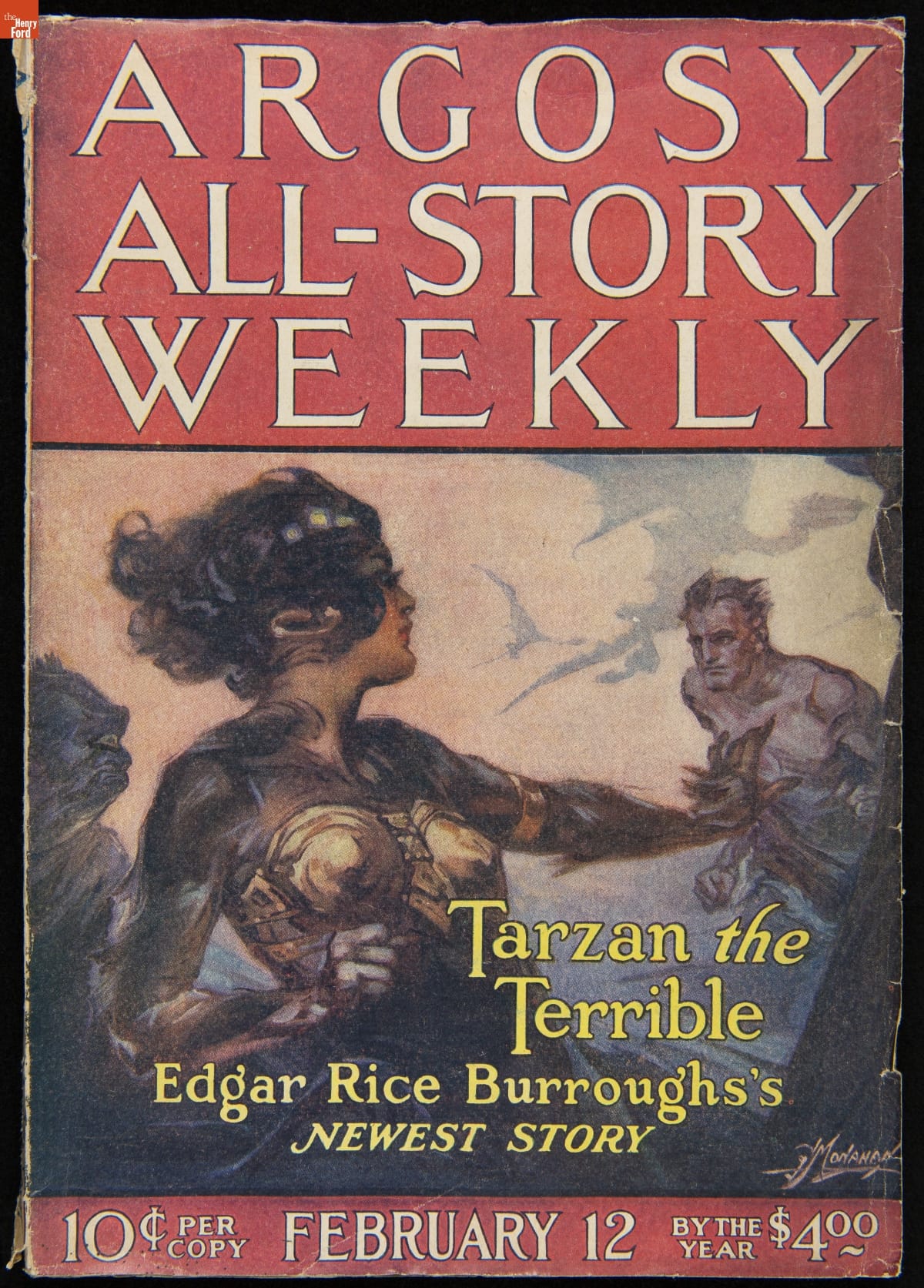
- Argosy All-Story Weekly, February 12, 1921 - Newspaper and magazine publisher Frank A. Munsey printed <em>Argosy</em> magazine with all fiction stories in 1896, launching a new form of popular literature--the pulp magazine. Named for the rough, inexpensive woodpulp paper they were printed on, "pulps" reached their peak of popularity in the 1920s. Readers could choose from action and adventure stories, like those published in <em>Argosy</em>, as well detective stories, love stories, and westerns.
- February 12, 1921
- Collections - Artifact
Argosy All-Story Weekly, February 12, 1921
Newspaper and magazine publisher Frank A. Munsey printed Argosy magazine with all fiction stories in 1896, launching a new form of popular literature--the pulp magazine. Named for the rough, inexpensive woodpulp paper they were printed on, "pulps" reached their peak of popularity in the 1920s. Readers could choose from action and adventure stories, like those published in Argosy, as well detective stories, love stories, and westerns.
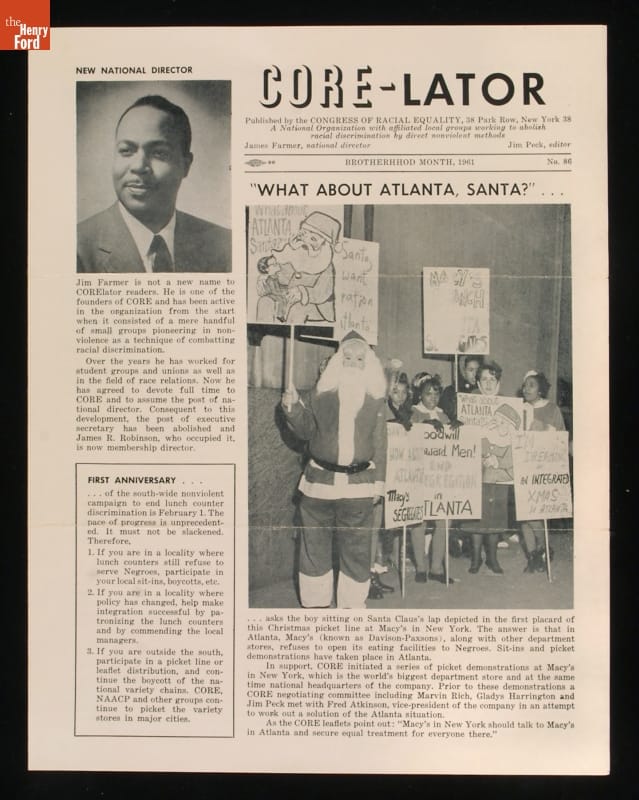
- "CORE-Lator" Magazine, No. 86, February 1961 - The Congress of Racial Equality (CORE), founded in 1942, pioneered nonviolent civil rights activism. Members organized and participated in many sit-ins, freedom rides and other nonviolent actions during the Civil Rights era. This newsletter from 1961 pictures Jim Farmer, one of the founders of CORE, and informs readers about the continuing struggle to desegregate lunch counters throughout the country.
- February 01, 1961
- Collections - Artifact
"CORE-Lator" Magazine, No. 86, February 1961
The Congress of Racial Equality (CORE), founded in 1942, pioneered nonviolent civil rights activism. Members organized and participated in many sit-ins, freedom rides and other nonviolent actions during the Civil Rights era. This newsletter from 1961 pictures Jim Farmer, one of the founders of CORE, and informs readers about the continuing struggle to desegregate lunch counters throughout the country.
- Life Magazine for August 15, 1949 -
- August 15, 1949
- Collections - Artifact
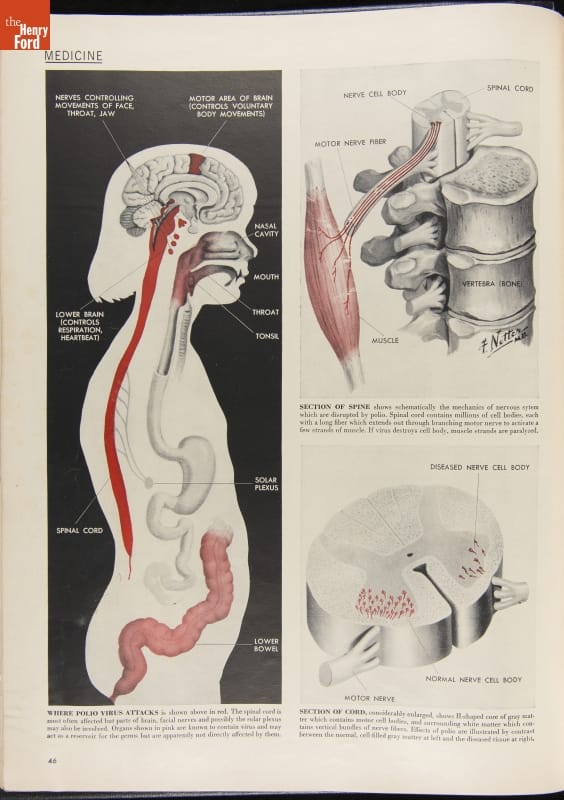
Life Magazine for August 15, 1949
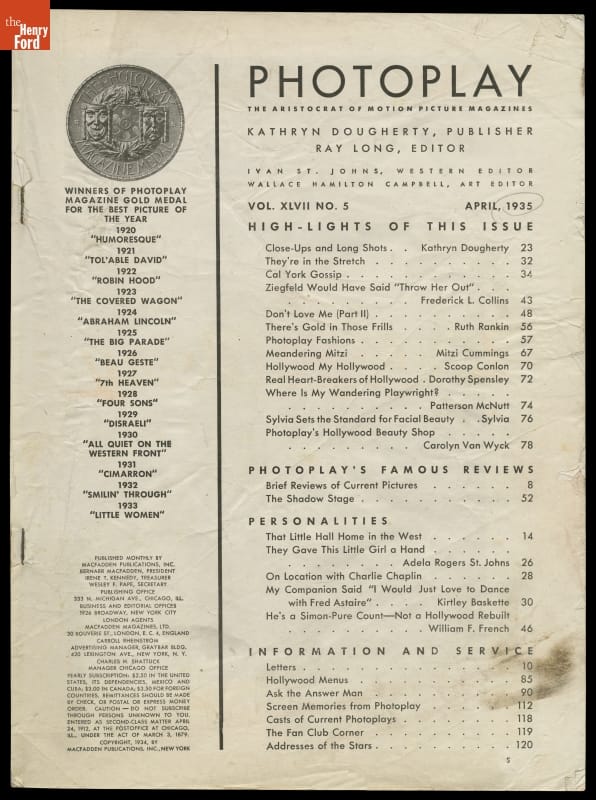
- "Photoplay" Magazine for April 1935 - From the beginning of the movie business, Americans wanted to know about the movies and their stars. <EM>Photoplay</EM> was one of the first movie fan magazines. For nearly seventy years -- from 1911 to 1980 -- this publication provided fans with updates on the film industry, the going-ons in Hollywood and glimpses into the lives of the stars.
- April 01, 1935
- Collections - Artifact
"Photoplay" Magazine for April 1935
From the beginning of the movie business, Americans wanted to know about the movies and their stars. Photoplay was one of the first movie fan magazines. For nearly seventy years -- from 1911 to 1980 -- this publication provided fans with updates on the film industry, the going-ons in Hollywood and glimpses into the lives of the stars.
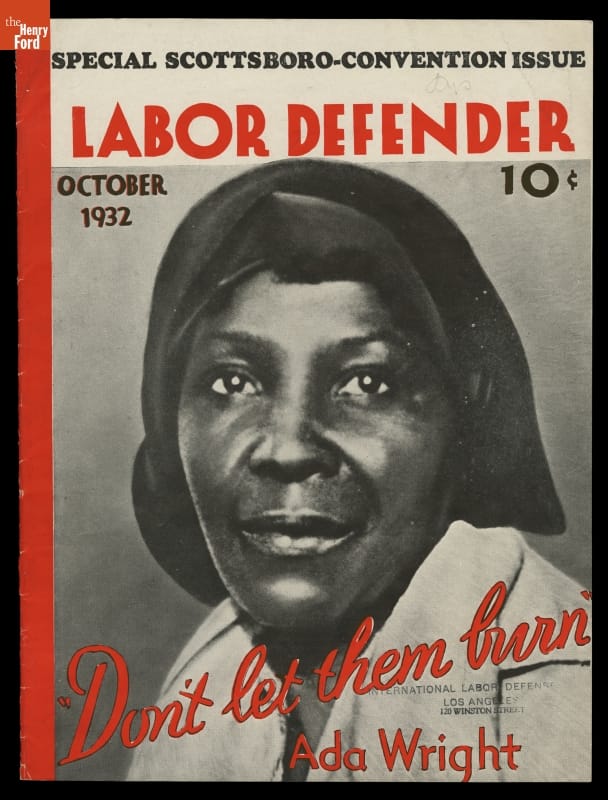
- Magazine, "Labor Defender; Special Scottsboro - Convention Issue," October 1932 - In 1931, nine black youths were unjustly accused of raping two white women in Alabama. White juries quickly convicted and sentenced eight of the defendants to death. The cover of this 1932 issue of the Labor Defender, a publication of the International Labor Defense, contains a plea for public support from the mother of two of the "Scottsboro Boys."
- October 01, 1932
- Collections - Artifact
Magazine, "Labor Defender; Special Scottsboro - Convention Issue," October 1932
In 1931, nine black youths were unjustly accused of raping two white women in Alabama. White juries quickly convicted and sentenced eight of the defendants to death. The cover of this 1932 issue of the Labor Defender, a publication of the International Labor Defense, contains a plea for public support from the mother of two of the "Scottsboro Boys."