
Search
- Letter from Albert B. Chandler to Marilla Stedman, October 14, 1863 - Albert B. Chandler served as a cipher operator at the War Department office in Washington, D.C., during the Civil War. He transmitted coded messages to and decoded messages from Union military field commanders. While at this post, he became acquainted with President Abraham Lincoln. Chandler describes some of his wartime experiences in this letter to Marilla Stedman, his future bride.
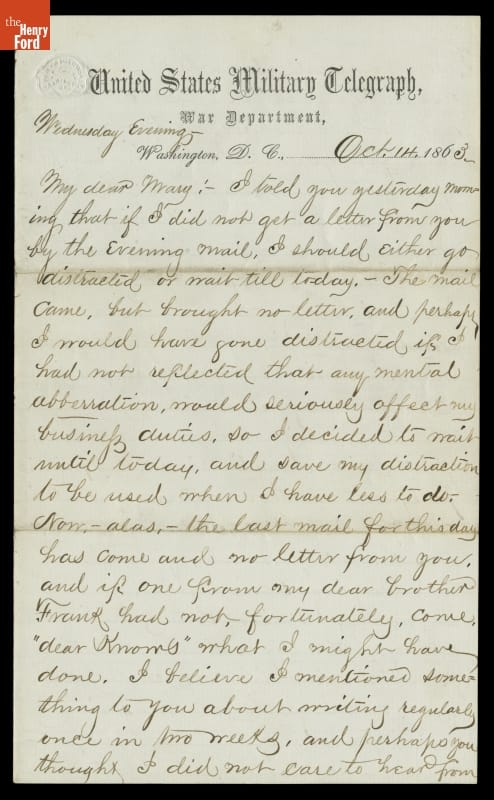
- October 14, 1863
- Collections - Artifact
Letter from Albert B. Chandler to Marilla Stedman, October 14, 1863
Albert B. Chandler served as a cipher operator at the War Department office in Washington, D.C., during the Civil War. He transmitted coded messages to and decoded messages from Union military field commanders. While at this post, he became acquainted with President Abraham Lincoln. Chandler describes some of his wartime experiences in this letter to Marilla Stedman, his future bride.
- Letter from E.P. Goodrich to Ann Goodrich, 1851 - This 1851 letter describes a trip on the Michigan Central Railroad from Detroit to Chicago. Author E.P. Goodrich colorfully relates the trials of mid-19th-century rail travel. Equipment breakdowns, smoke, and cinders were common, and average speeds were low. Because the Michigan Central wasn't completed into Chicago until 1852, Goodrich finished his journey by steamboat from New Buffalo across Lake Michigan.
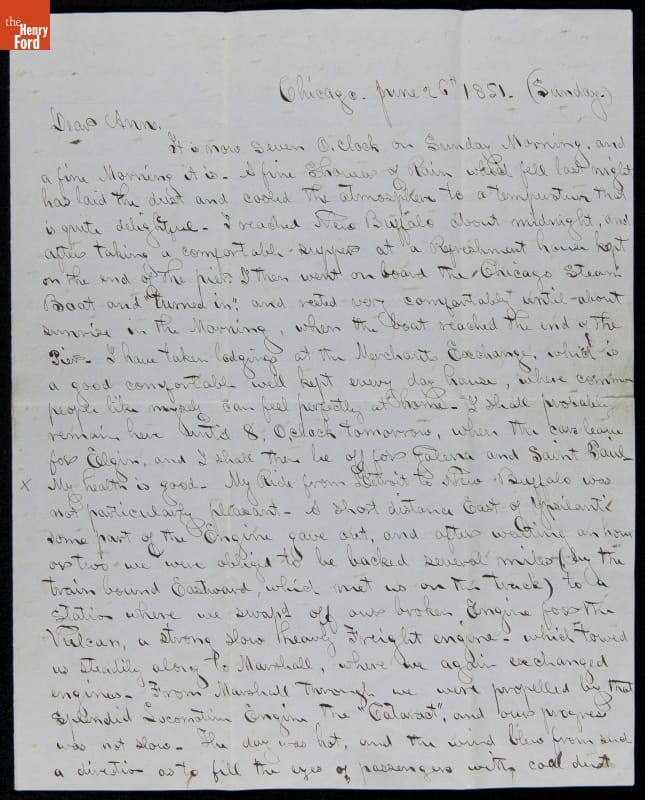
- June 26, 1851
- Collections - Artifact
Letter from E.P. Goodrich to Ann Goodrich, 1851
This 1851 letter describes a trip on the Michigan Central Railroad from Detroit to Chicago. Author E.P. Goodrich colorfully relates the trials of mid-19th-century rail travel. Equipment breakdowns, smoke, and cinders were common, and average speeds were low. Because the Michigan Central wasn't completed into Chicago until 1852, Goodrich finished his journey by steamboat from New Buffalo across Lake Michigan.
- Letter from John Quincy Adams to William Vans Murray, 1799 -
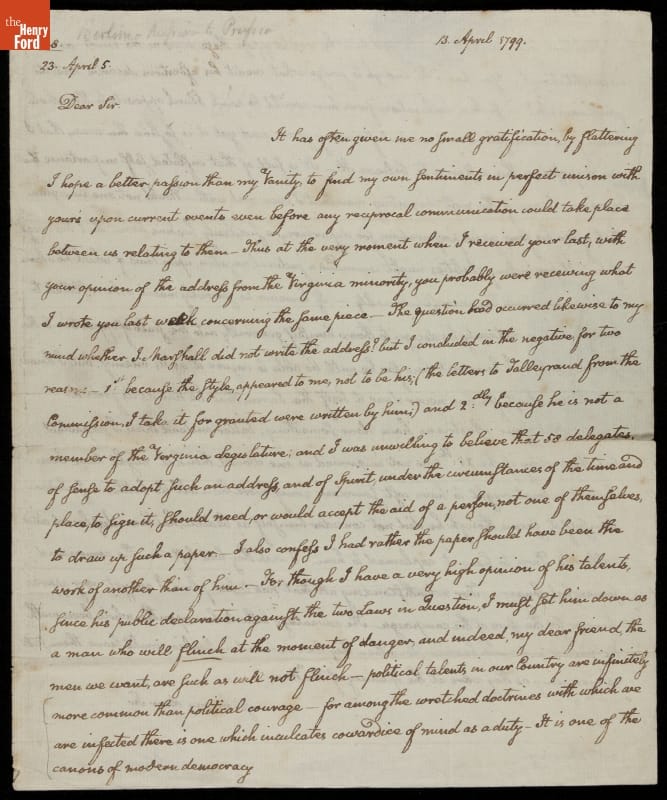
- April 13, 1799
- Collections - Artifact
Letter from John Quincy Adams to William Vans Murray, 1799
- Martha W. Martin Autograph Album, 1837-1858 -
- 1837-1858
- Collections - Artifact
Martha W. Martin Autograph Album, 1837-1858
- Letter from James W. Gerard to Frank Hopley, April 29, 1921, "The Most Thrilling Moment of My Life" - Frank Dorrance Hopley (1872-1933) wrote a number of boys' books and authored stories and articles for national magazines and newspapers. In 1921, Hopley had an idea for an article -- he would ask famous individuals to share their life's most thrilling moment. James W. Gerard, U.S. Ambassador to Germany during the First World War, chose his encounter with the German Kaiser.
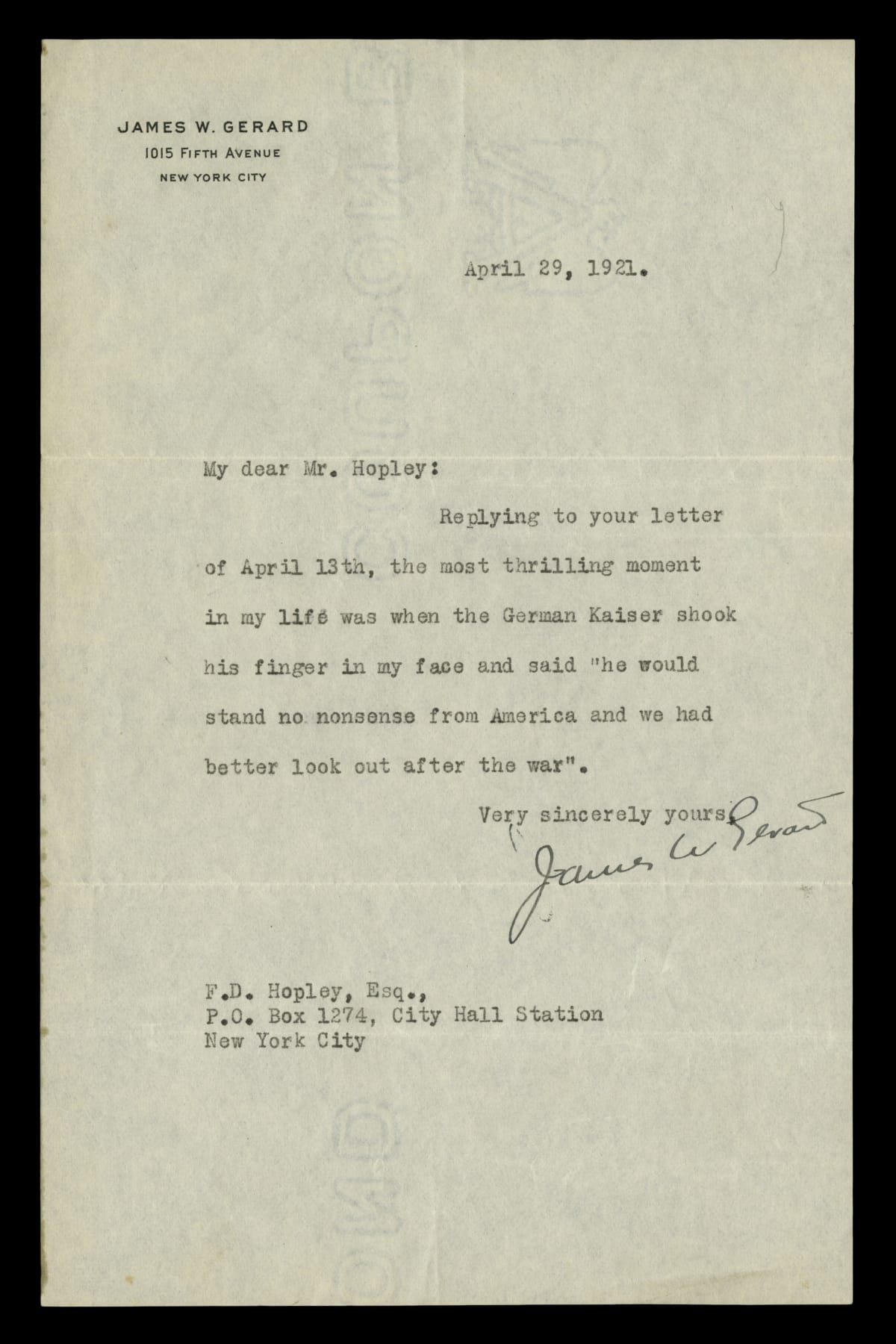
- April 29, 1921
- Collections - Artifact
Letter from James W. Gerard to Frank Hopley, April 29, 1921, "The Most Thrilling Moment of My Life"
Frank Dorrance Hopley (1872-1933) wrote a number of boys' books and authored stories and articles for national magazines and newspapers. In 1921, Hopley had an idea for an article -- he would ask famous individuals to share their life's most thrilling moment. James W. Gerard, U.S. Ambassador to Germany during the First World War, chose his encounter with the German Kaiser.
- Letter from Samuel Finley Breese Morse to Stephen Van Rensselaer, 1834 -
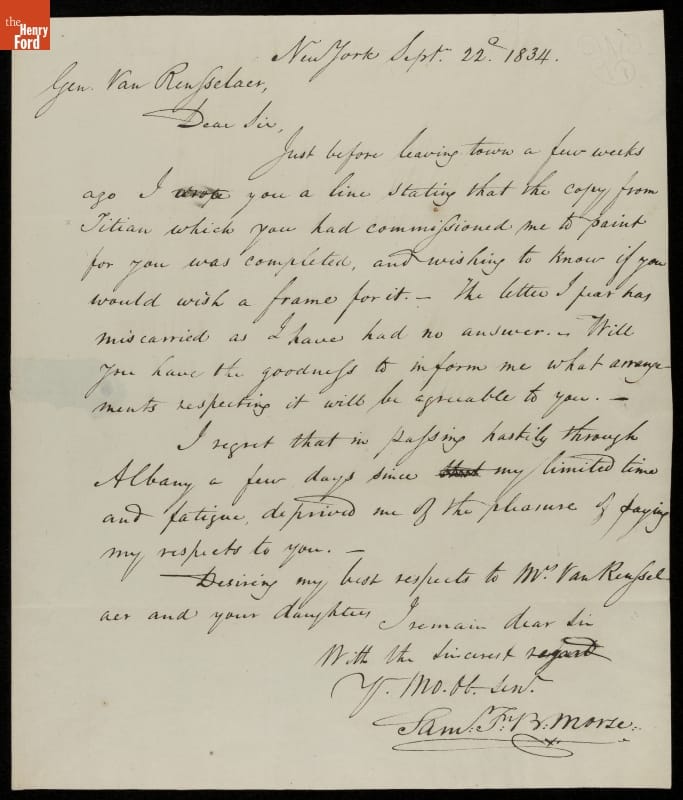
- September 22, 1834
- Collections - Artifact
Letter from Samuel Finley Breese Morse to Stephen Van Rensselaer, 1834
- Letter from William Jennings Bryan to Dr. Frederick Lynch, 1917 -
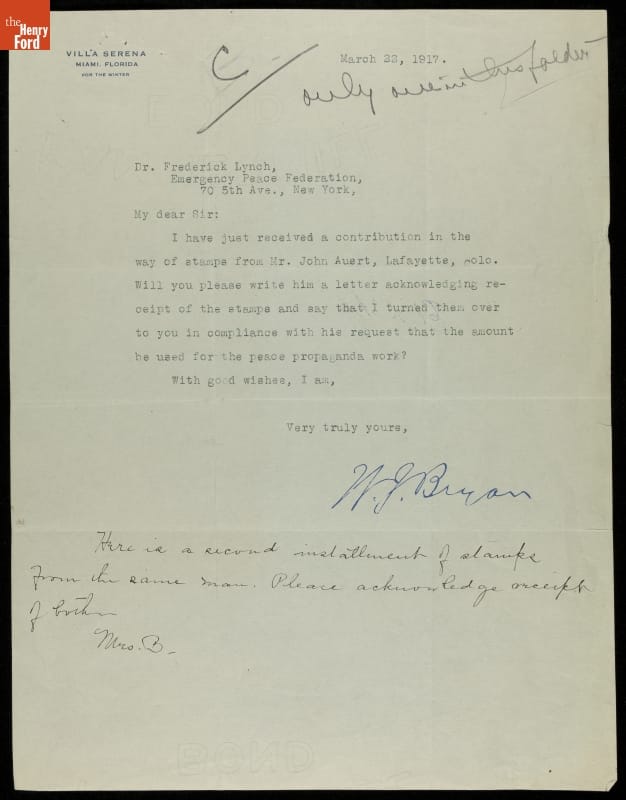
- March 22, 1917
- Collections - Artifact
Letter from William Jennings Bryan to Dr. Frederick Lynch, 1917
- Letter from John Quincy Adams to James Madison, 1819 -
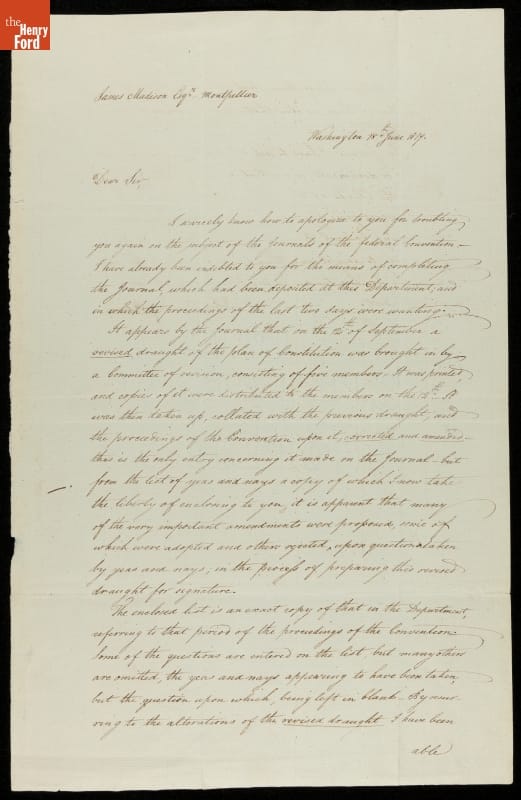
- June 18, 1819
- Collections - Artifact
Letter from John Quincy Adams to James Madison, 1819
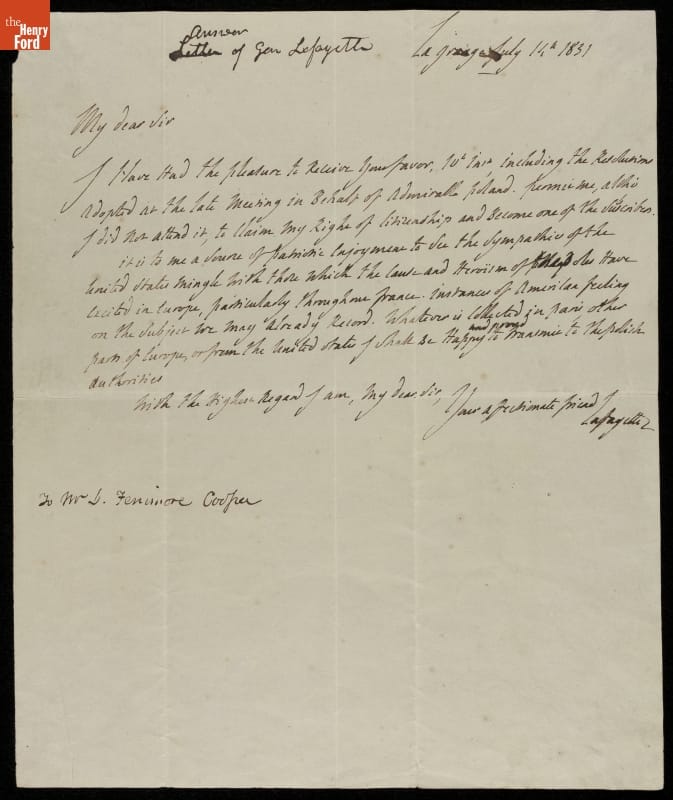
- Letter from Marquis de Lafayette to James Fenimore Cooper, 1831 -
- July 14, 1831
- Collections - Artifact
Letter from Marquis de Lafayette to James Fenimore Cooper, 1831
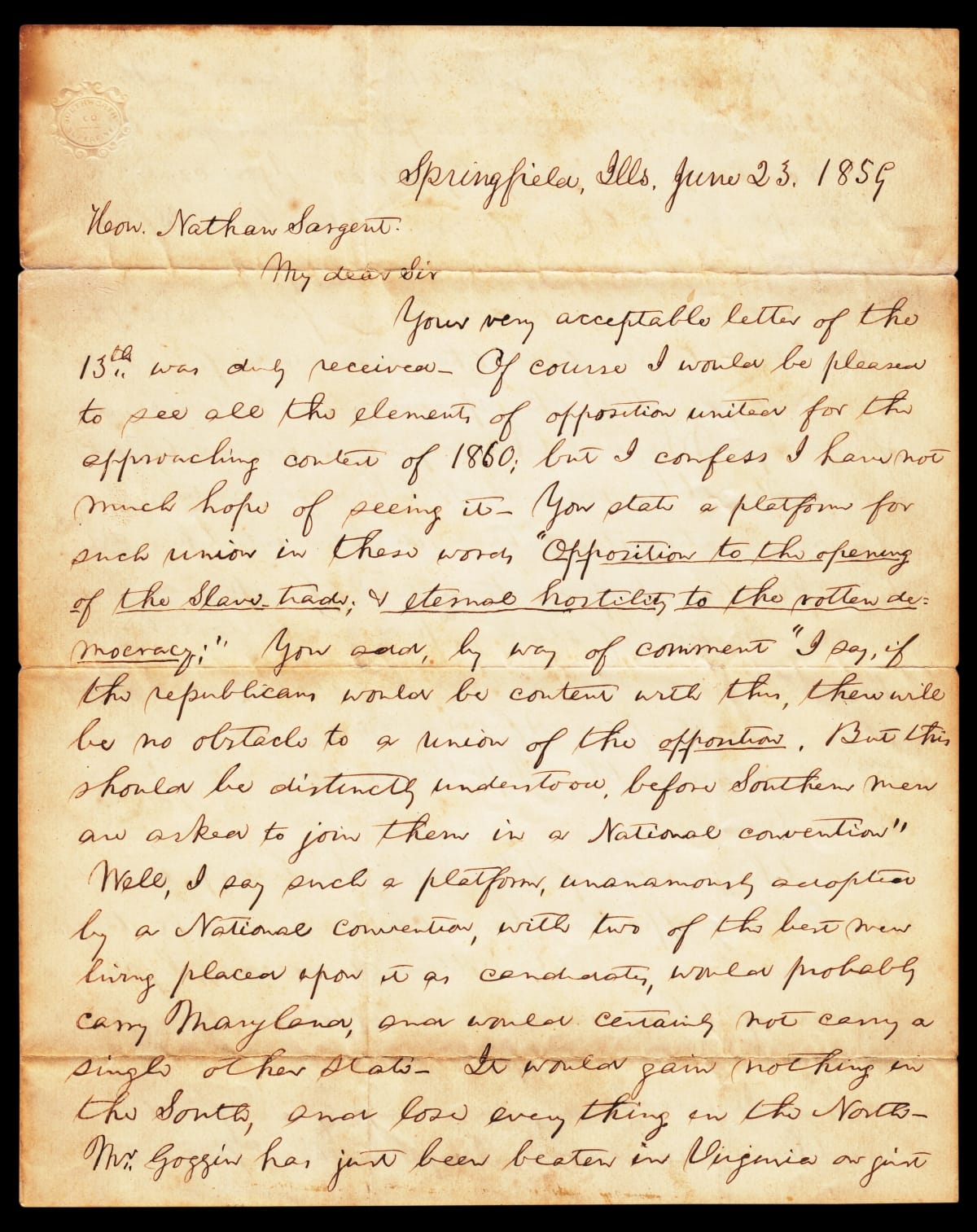
- Letter from Abraham Lincoln to Nathan Sargent, 1859 - This 1859 letter to Nathan Sargent, a fellow member of the emerging Republican Party, lays out Abraham Lincoln's rapidly crystallizing views on the question of extending slavery to new states. Lincoln foresees a proposed moderation in the Republican platform--allowing the spread of slavery unhindered--as working against the Party's chances in the North in the upcoming 1860 presidential election.
- June 23, 1859
- Collections - Artifact
Letter from Abraham Lincoln to Nathan Sargent, 1859
This 1859 letter to Nathan Sargent, a fellow member of the emerging Republican Party, lays out Abraham Lincoln's rapidly crystallizing views on the question of extending slavery to new states. Lincoln foresees a proposed moderation in the Republican platform--allowing the spread of slavery unhindered--as working against the Party's chances in the North in the upcoming 1860 presidential election.