
Search
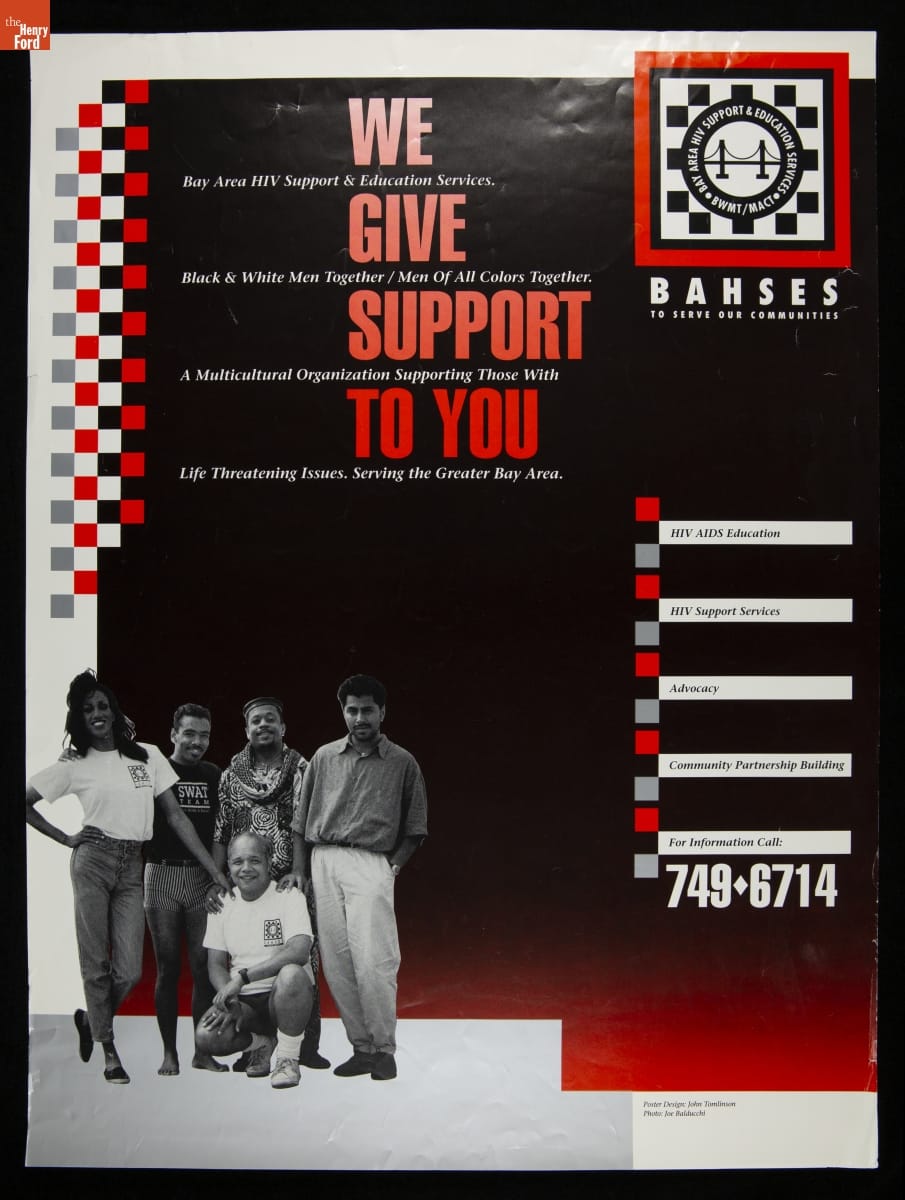
- "We Give Support to You," 1988-1999 -
- 1988-1999
- Collections - Artifact
"We Give Support to You," 1988-1999
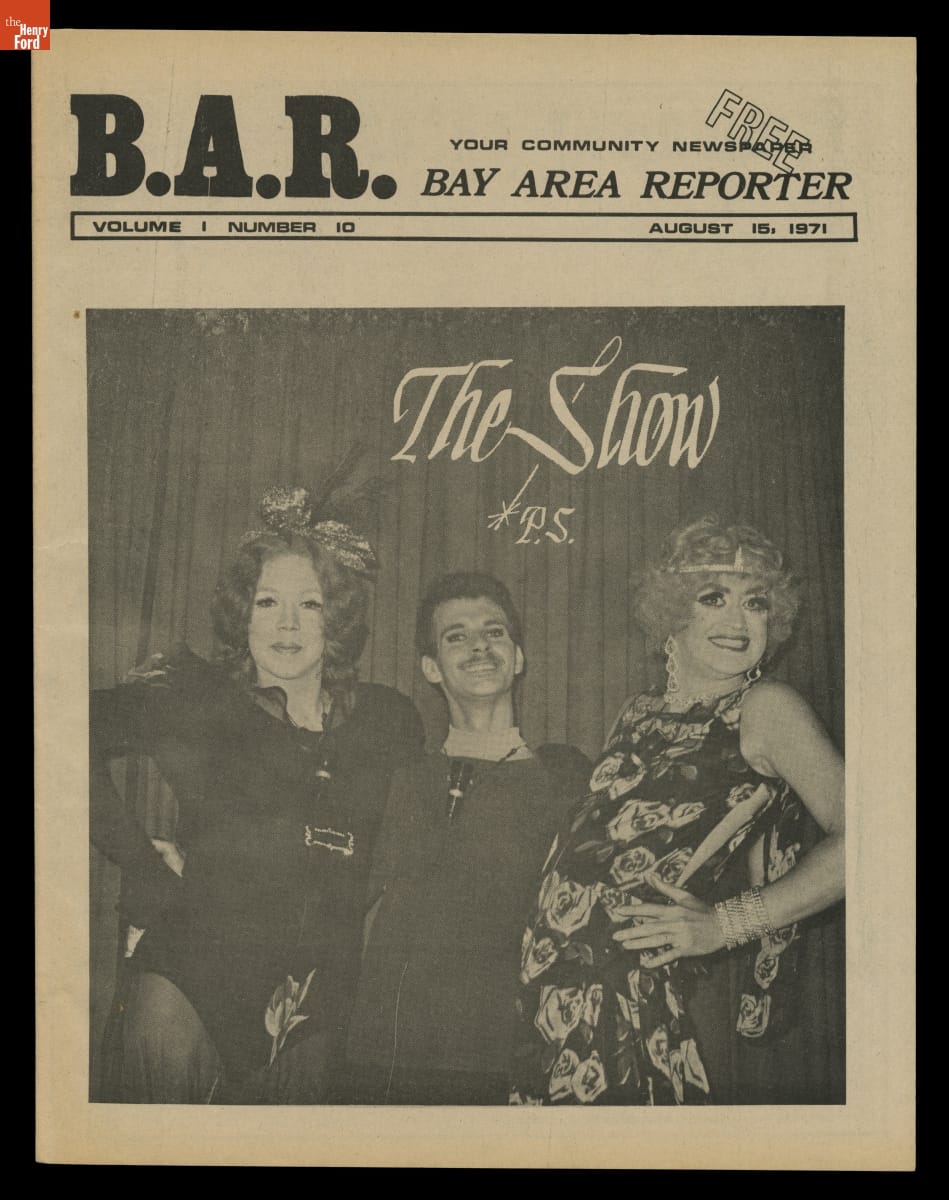
- "B.A.R.: Bay Area Reporter," Volume 1, Number 10, August 15, 1971 -
- August 15, 1971
- Collections - Artifact
"B.A.R.: Bay Area Reporter," Volume 1, Number 10, August 15, 1971
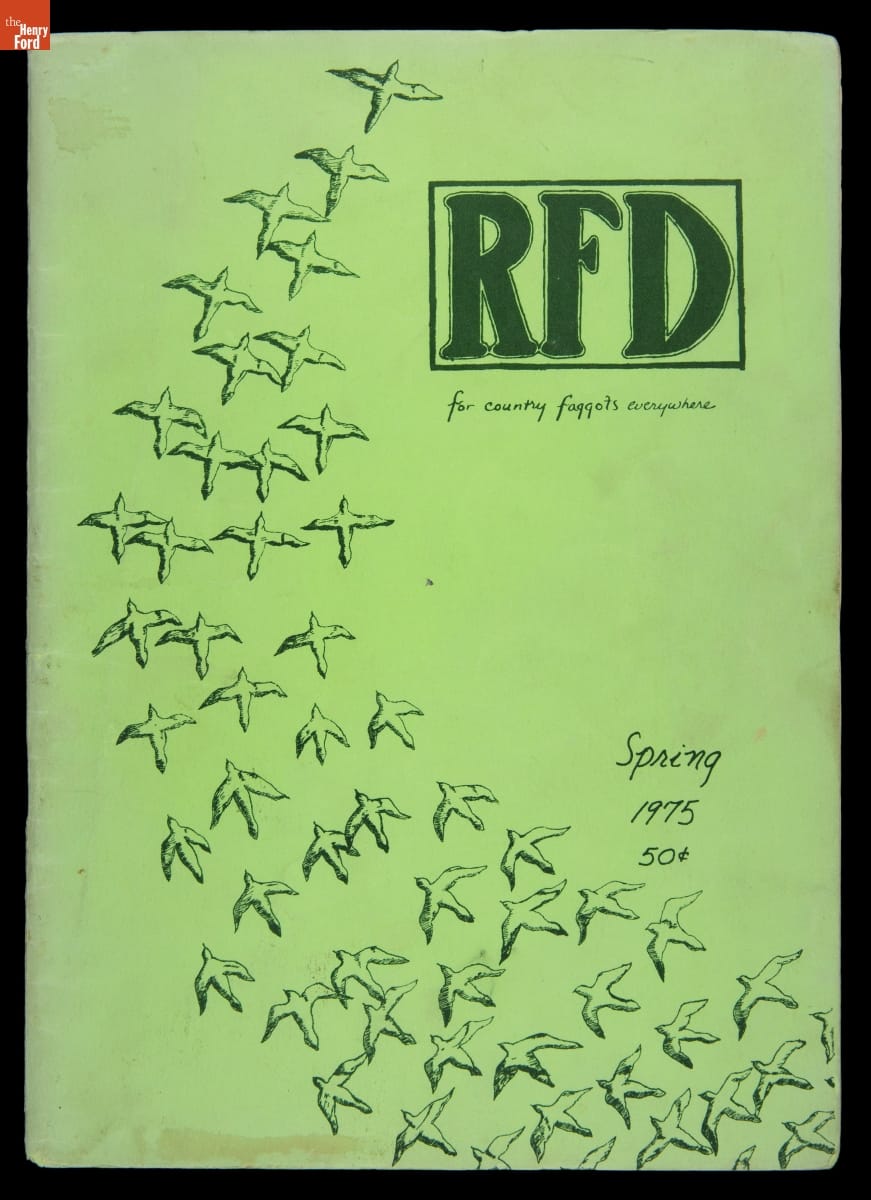
- RFD Magazine, Issue #3, Spring 1975 - Stewart Scofield, Carl Wittman, and Allen Troxler launched the journal "RFD: A Country Journal for Gay Men Everywhere" in 1974. The journal documents the experiences of gay men in rural American communities, rejecting the mindset that gay men can only have fulfilling lives in urban areas with large LGBTQ+ communities. First published in Grinnell, Iowa, the journal is still published today.
- 1975
- Collections - Artifact
RFD Magazine, Issue #3, Spring 1975
Stewart Scofield, Carl Wittman, and Allen Troxler launched the journal "RFD: A Country Journal for Gay Men Everywhere" in 1974. The journal documents the experiences of gay men in rural American communities, rejecting the mindset that gay men can only have fulfilling lives in urban areas with large LGBTQ+ communities. First published in Grinnell, Iowa, the journal is still published today.
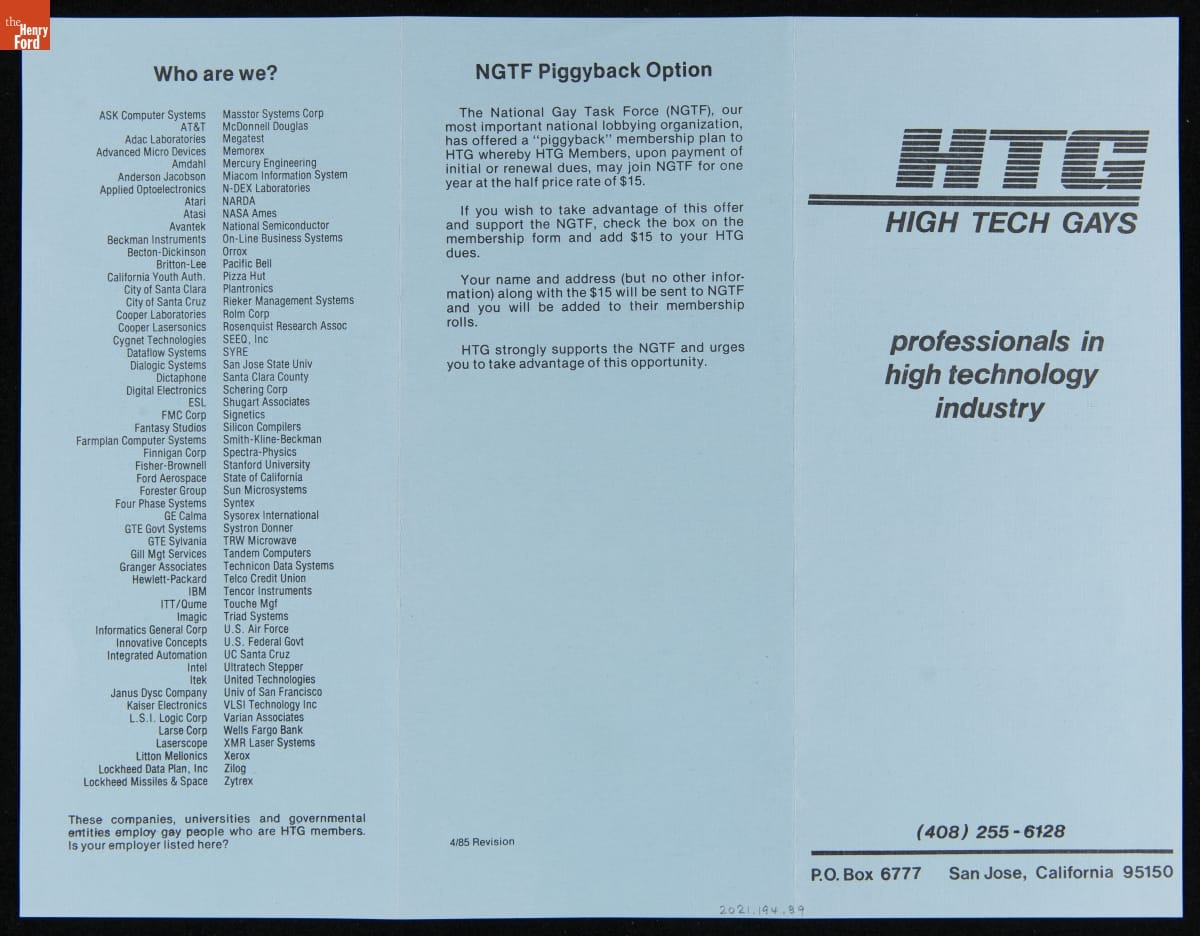
- High Tech Gays Brochure, 1985-1986 - High Tech Gays (HTGs) began in 1983 as a Silicon Valley-based social club and political action group. In 1984, the group was a co-defendant in a federal court case--High Tech Gays vs. DISCO--arguing that LGBTQ+ people were being denied access clearance to work in military and sensitive tech industries. The court ruled in favor of the High Tech Gays but was later overturned and appealed.
- 1985-1986
- Collections - Artifact
High Tech Gays Brochure, 1985-1986
High Tech Gays (HTGs) began in 1983 as a Silicon Valley-based social club and political action group. In 1984, the group was a co-defendant in a federal court case--High Tech Gays vs. DISCO--arguing that LGBTQ+ people were being denied access clearance to work in military and sensitive tech industries. The court ruled in favor of the High Tech Gays but was later overturned and appealed.
- Ticket for a Performance of "The Fascinating Widow," Saturday Matinee, January 14, 1911 -
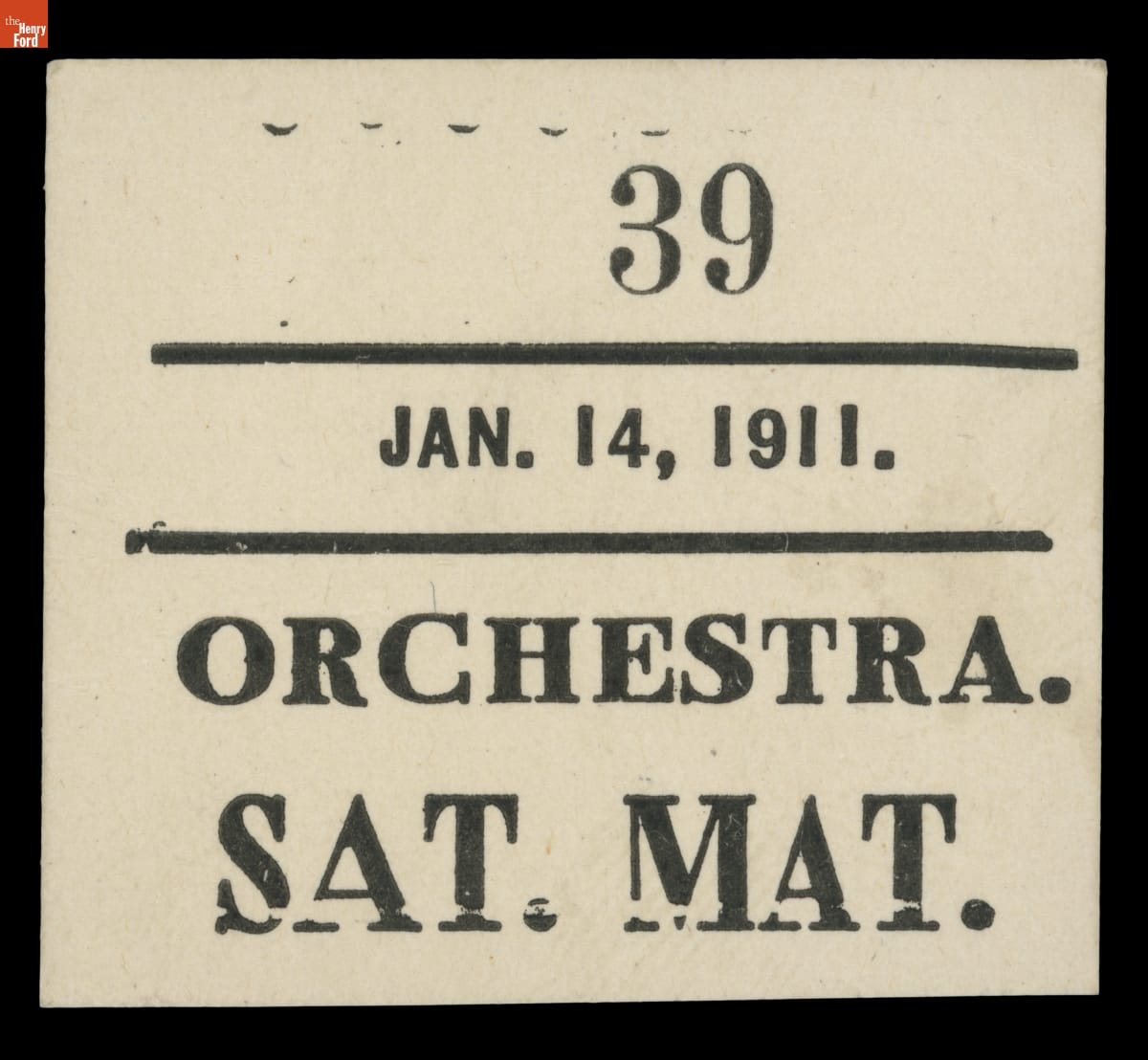
- January 14, 1911
- Collections - Artifact
Ticket for a Performance of "The Fascinating Widow," Saturday Matinee, January 14, 1911
- "San Francisco General Hospital Welcome the Sixth International Conference on AIDS," June 1990 -
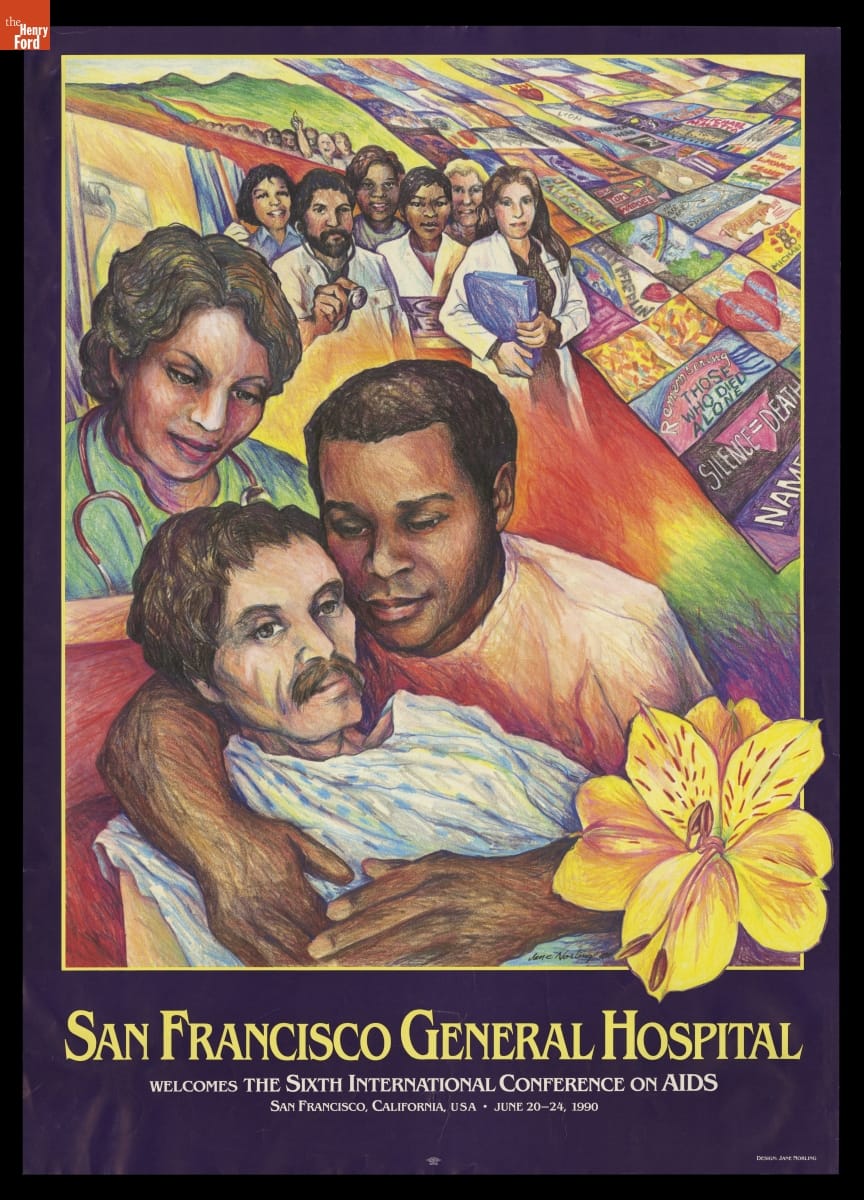
- 20 June 1990-24 June 1990
- Collections - Artifact
"San Francisco General Hospital Welcome the Sixth International Conference on AIDS," June 1990
- Cruise News & World Report, Volume I, Number 2, circa 1965 - LGBTQ+ newspapers became more available beginning in the 1950s as organizations added print media to their activist tool kit. These newspapers were a regionally focused way to rally the LGBTQ+ community, share information, and fight discrimination. Many of these newspapers came to rely on gay bars as a location for disbursement as they were among the only private gay spaces in many cities.
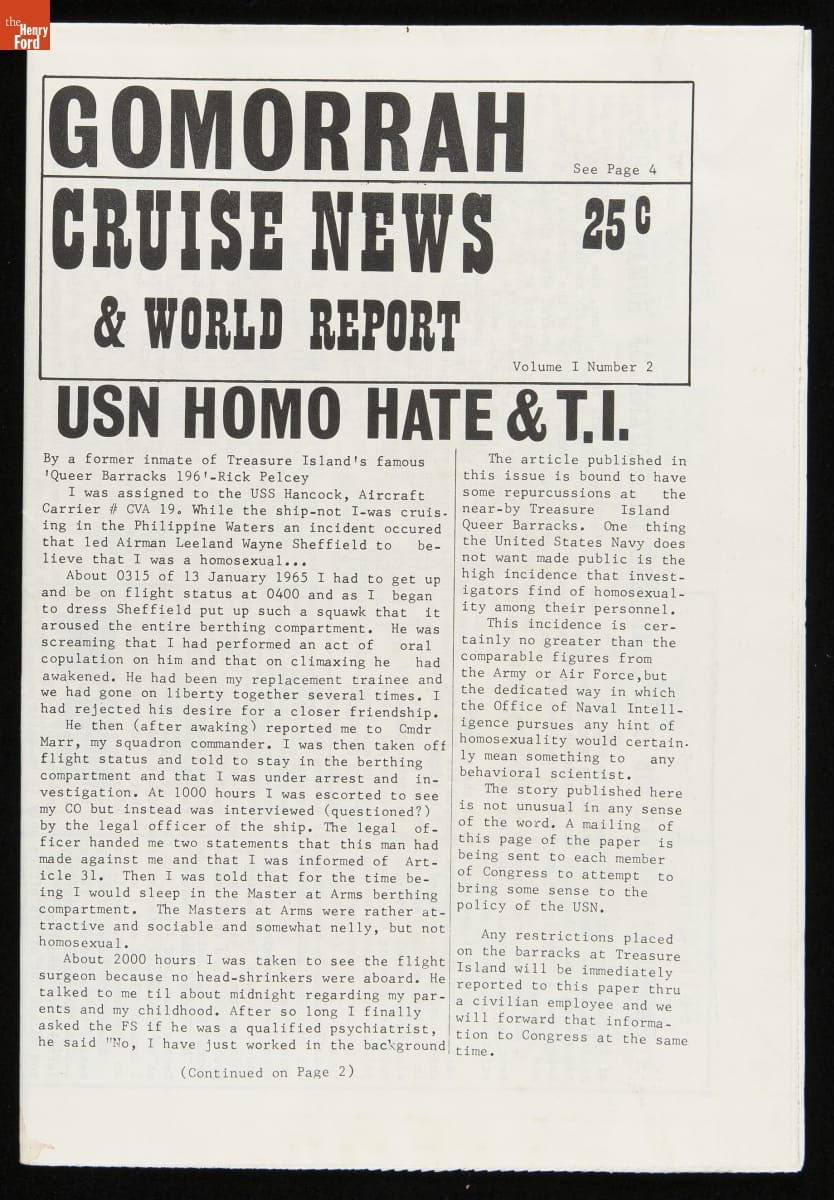
- circa 1965
- Collections - Artifact
Cruise News & World Report, Volume I, Number 2, circa 1965
LGBTQ+ newspapers became more available beginning in the 1950s as organizations added print media to their activist tool kit. These newspapers were a regionally focused way to rally the LGBTQ+ community, share information, and fight discrimination. Many of these newspapers came to rely on gay bars as a location for disbursement as they were among the only private gay spaces in many cities.
- Citizens News, Volume V, Number 1, November 1965 - LGBTQ+ newspapers became more available beginning in the 1950s as organizations added print media to their activist tool kit. These newspapers were a regionally focused way to rally the LGBTQ+ community, share information, and fight discrimination. Many of these newspapers came to rely on gay bars as a location for disbursement as they were among the only private gay spaces in many cities.
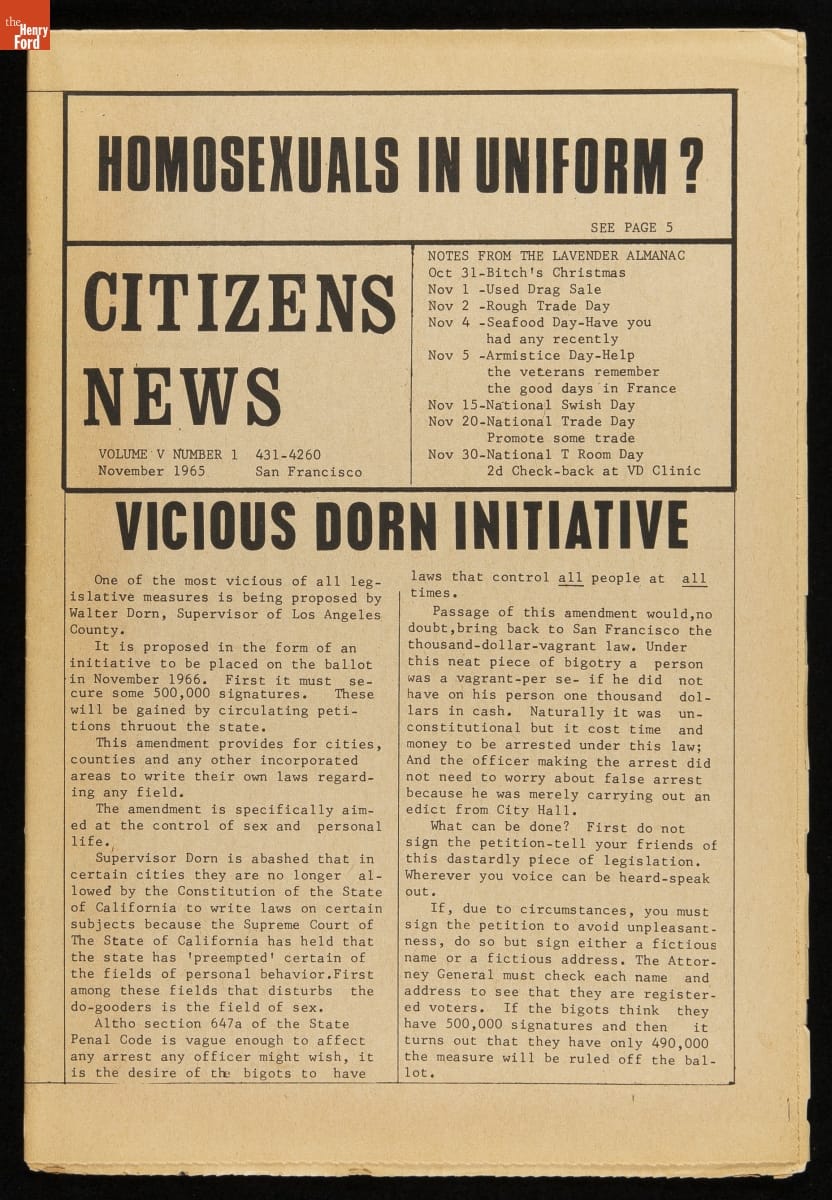
- November 01, 1965
- Collections - Artifact
Citizens News, Volume V, Number 1, November 1965
LGBTQ+ newspapers became more available beginning in the 1950s as organizations added print media to their activist tool kit. These newspapers were a regionally focused way to rally the LGBTQ+ community, share information, and fight discrimination. Many of these newspapers came to rely on gay bars as a location for disbursement as they were among the only private gay spaces in many cities.
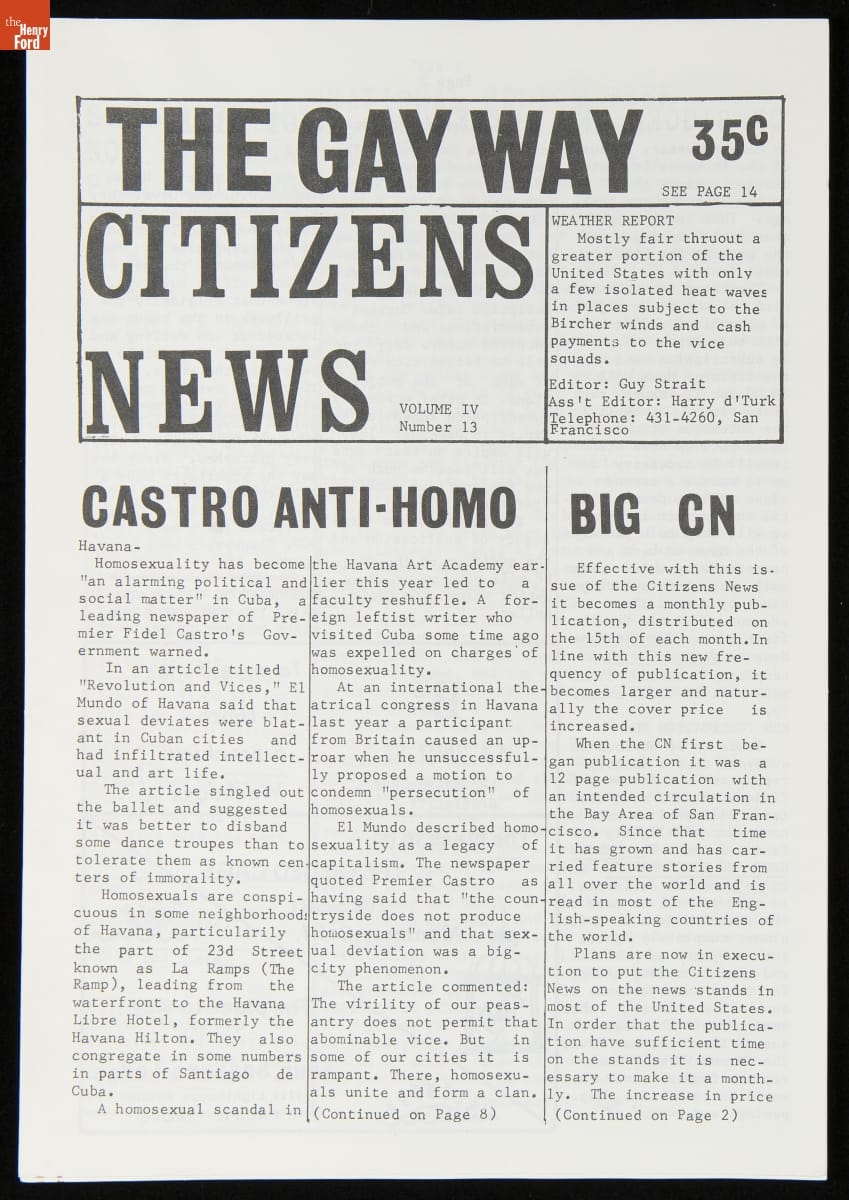
- Citizens News, Volume IV, Number13, 1964-1965 - LGBTQ+ newspapers became more available beginning in the 1950s as organizations added print media to their activist tool kit. These newspapers were a regionally focused way to rally the LGBTQ+ community, share information, and fight discrimination. Many of these newspapers came to rely on gay bars as a location for disbursement as they were among the only private gay spaces in many cities.
- 1964-1965
- Collections - Artifact
Citizens News, Volume IV, Number13, 1964-1965
LGBTQ+ newspapers became more available beginning in the 1950s as organizations added print media to their activist tool kit. These newspapers were a regionally focused way to rally the LGBTQ+ community, share information, and fight discrimination. Many of these newspapers came to rely on gay bars as a location for disbursement as they were among the only private gay spaces in many cities.
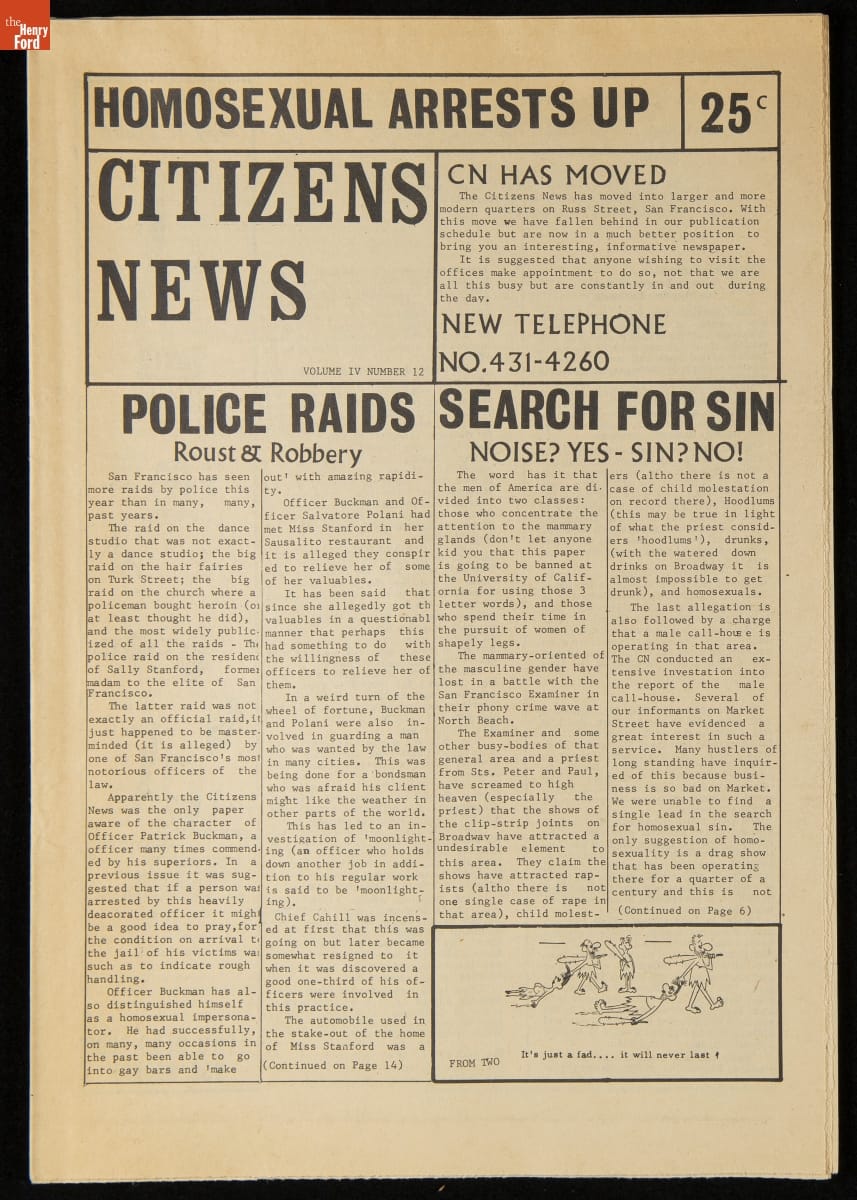
- Citizens News, Volume IV, Number 12, 1964-1965 - LGBTQ+ newspapers became more available beginning in the 1950s as organizations added print media to their activist tool kit. These newspapers were a regionally focused way to rally the LGBTQ+ community, share information, and fight discrimination. Many of these newspapers came to rely on gay bars as a location for disbursement as they were among the only private gay spaces in many cities.
- 1964-1965
- Collections - Artifact
Citizens News, Volume IV, Number 12, 1964-1965
LGBTQ+ newspapers became more available beginning in the 1950s as organizations added print media to their activist tool kit. These newspapers were a regionally focused way to rally the LGBTQ+ community, share information, and fight discrimination. Many of these newspapers came to rely on gay bars as a location for disbursement as they were among the only private gay spaces in many cities.