
Search
- Trade Card for McLaughlin's XXXX Coffee, W.F. McLaughlin & Co., 1892 - In the last third of the nineteenth century, an unprecedented variety of consumer goods and services flooded the American market. Advertisers, armed with new methods of color printing, bombarded potential customers with trade cards. Americans enjoyed and often saved the vibrant little advertisements found in product packages or distributed by local merchants. Many survive as historical records of commercialism in the United States.
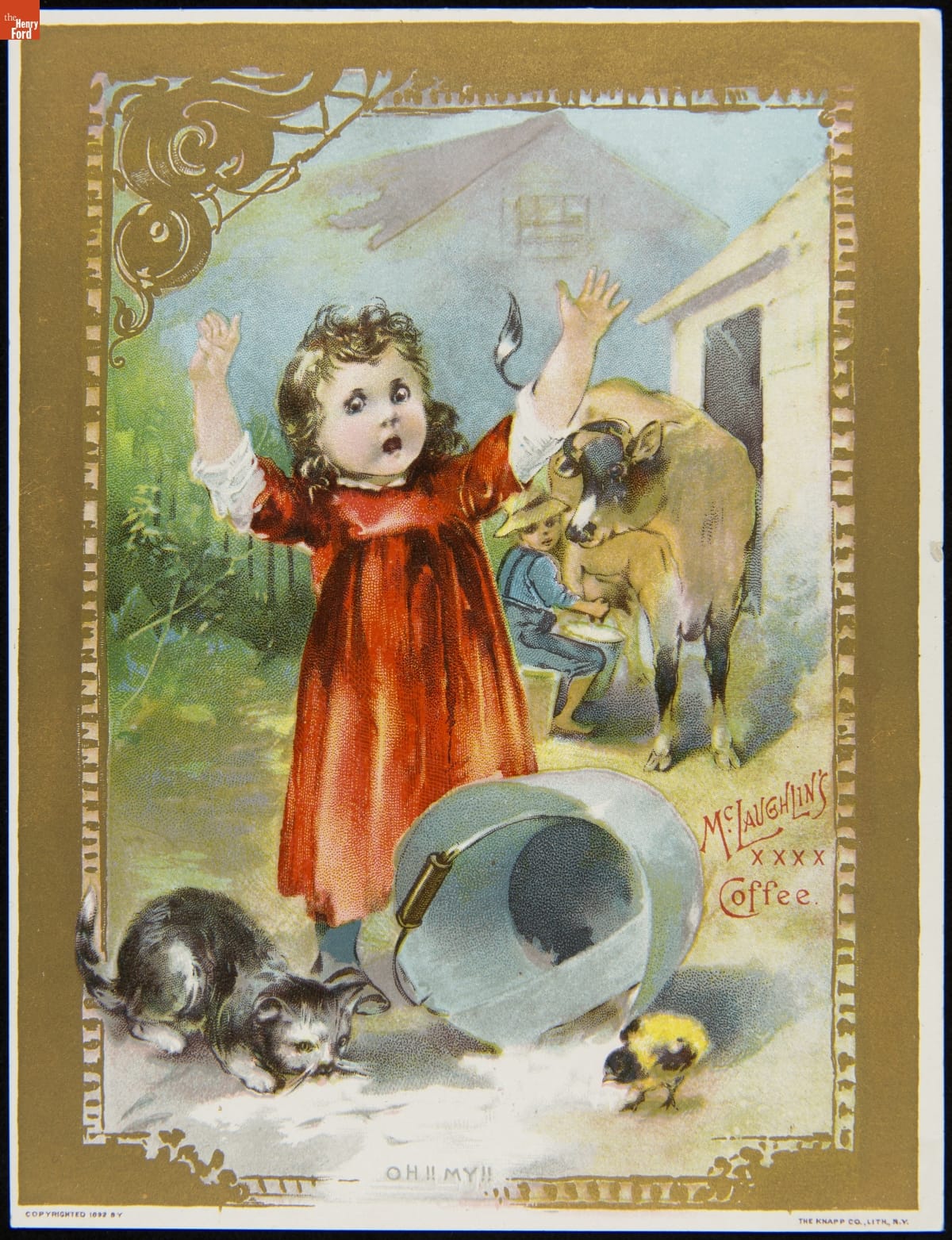
- 1892
- Collections - Artifact
Trade Card for McLaughlin's XXXX Coffee, W.F. McLaughlin & Co., 1892
In the last third of the nineteenth century, an unprecedented variety of consumer goods and services flooded the American market. Advertisers, armed with new methods of color printing, bombarded potential customers with trade cards. Americans enjoyed and often saved the vibrant little advertisements found in product packages or distributed by local merchants. Many survive as historical records of commercialism in the United States.
- Trade Card for McLaughlin's XXXX Coffee, W.F. McLaughlin & Co., 1892 - In the last third of the nineteenth century, an unprecedented variety of consumer goods and services flooded the American market. Advertisers, armed with new methods of color printing, bombarded potential customers with trade cards. Americans enjoyed and often saved the vibrant little advertisements found in product packages or distributed by local merchants. Many survive as historical records of commercialism in the United States.
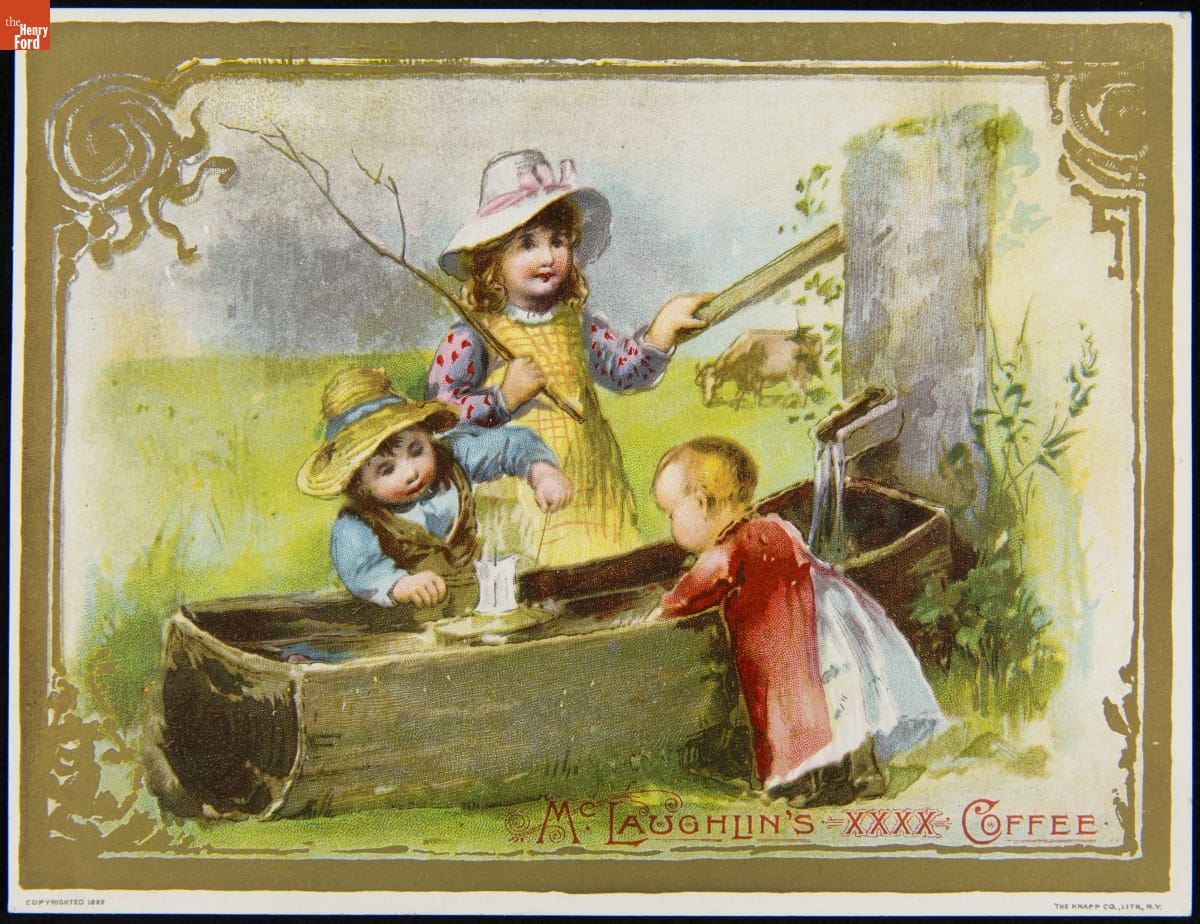
- 1892
- Collections - Artifact
Trade Card for McLaughlin's XXXX Coffee, W.F. McLaughlin & Co., 1892
In the last third of the nineteenth century, an unprecedented variety of consumer goods and services flooded the American market. Advertisers, armed with new methods of color printing, bombarded potential customers with trade cards. Americans enjoyed and often saved the vibrant little advertisements found in product packages or distributed by local merchants. Many survive as historical records of commercialism in the United States.
- Trade Card for McLaughlin's XXXX Coffee, W.F. McLaughlin & Co., 1892 - In the last third of the nineteenth century, an unprecedented variety of consumer goods and services flooded the American market. Advertisers, armed with new methods of color printing, bombarded potential customers with trade cards. Americans enjoyed and often saved the vibrant little advertisements found in product packages or distributed by local merchants. Many survive as historical records of commercialism in the United States.
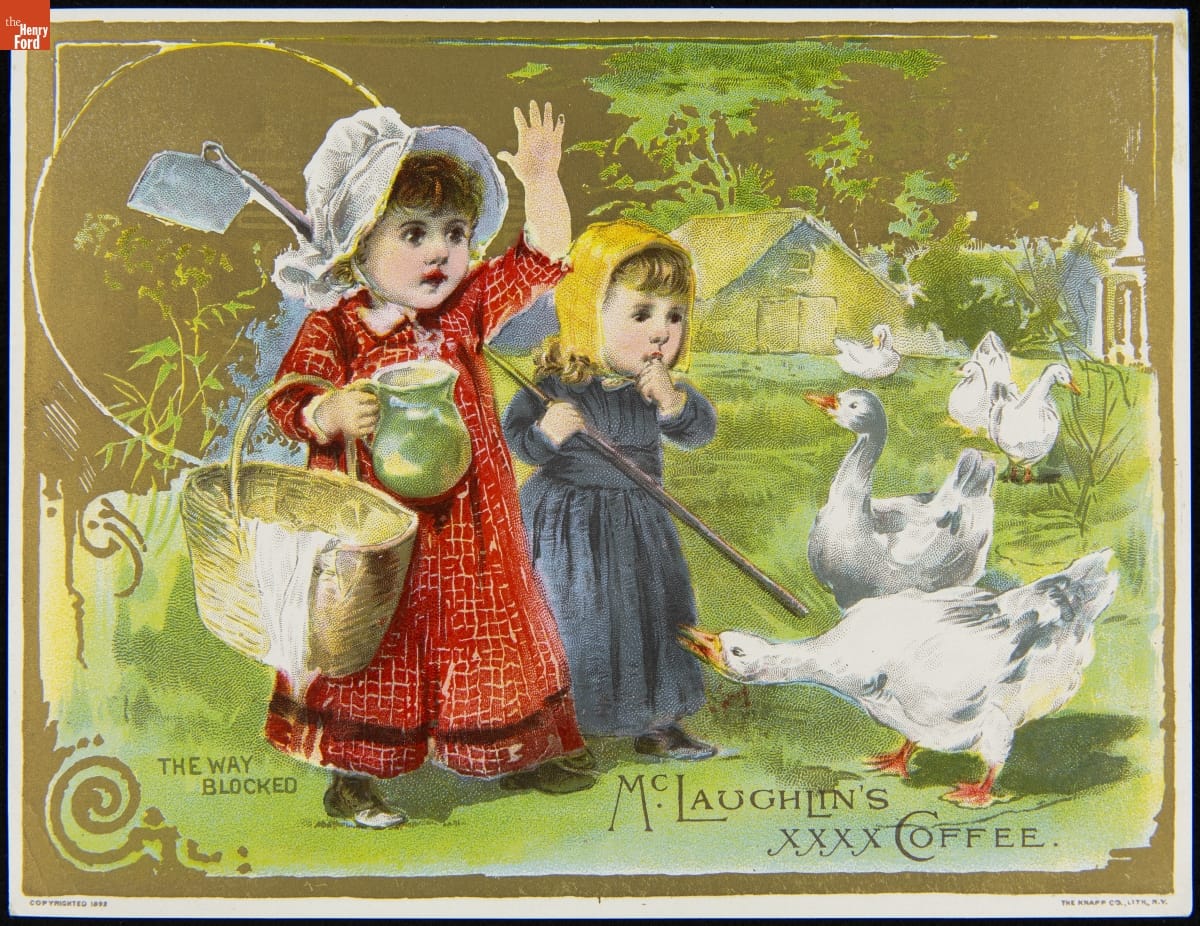
- 1892
- Collections - Artifact
Trade Card for McLaughlin's XXXX Coffee, W.F. McLaughlin & Co., 1892
In the last third of the nineteenth century, an unprecedented variety of consumer goods and services flooded the American market. Advertisers, armed with new methods of color printing, bombarded potential customers with trade cards. Americans enjoyed and often saved the vibrant little advertisements found in product packages or distributed by local merchants. Many survive as historical records of commercialism in the United States.
- Pernambuco Milk Carton, circa 1941 - The quest for a shatter-proof milk container prompted John Van Wormer to patent a paper carton in 1915. Many processors and distributors continued to use breakable glass bottles, but, after 1937, mechanized production made the disposable, wax-coated folded cartons inexpensive and indispensable liquid containers. The iconic design, a box with a gable-end top with a pouring or drinking spout, remains the industry standard today.
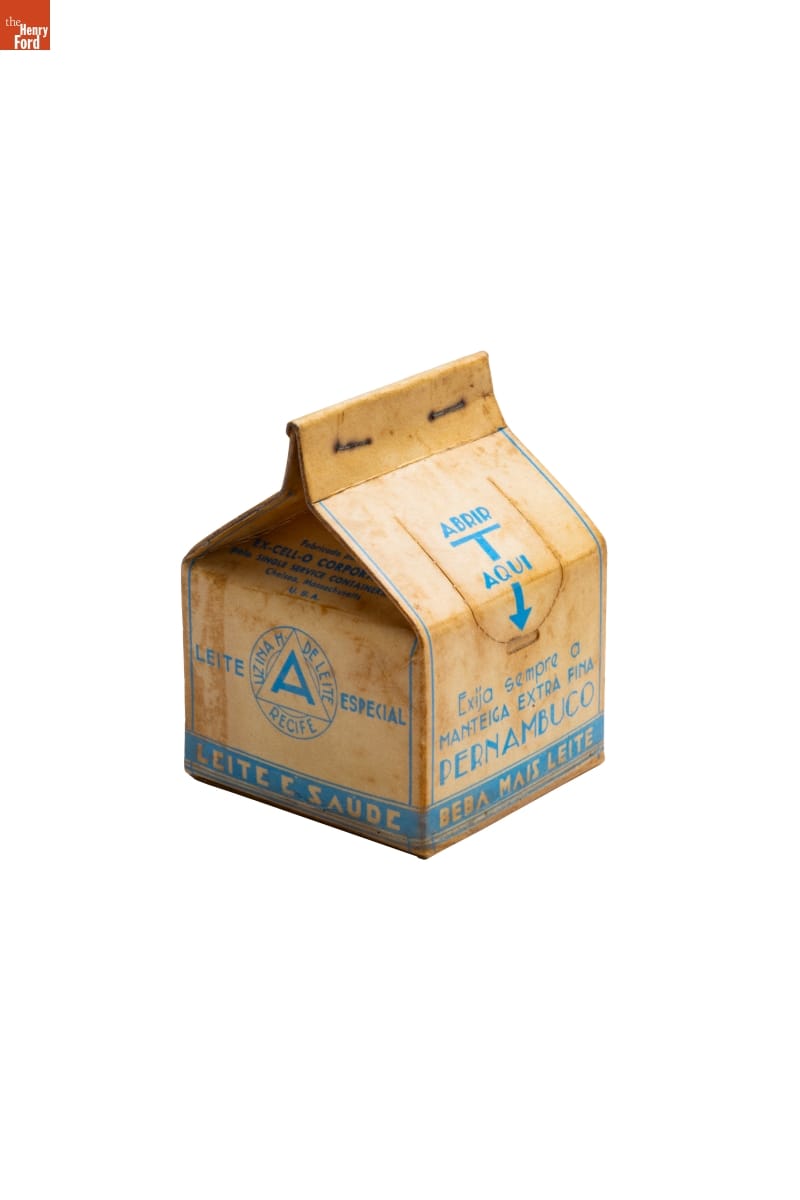
- circa 1941
- Collections - Artifact
Pernambuco Milk Carton, circa 1941
The quest for a shatter-proof milk container prompted John Van Wormer to patent a paper carton in 1915. Many processors and distributors continued to use breakable glass bottles, but, after 1937, mechanized production made the disposable, wax-coated folded cartons inexpensive and indispensable liquid containers. The iconic design, a box with a gable-end top with a pouring or drinking spout, remains the industry standard today.
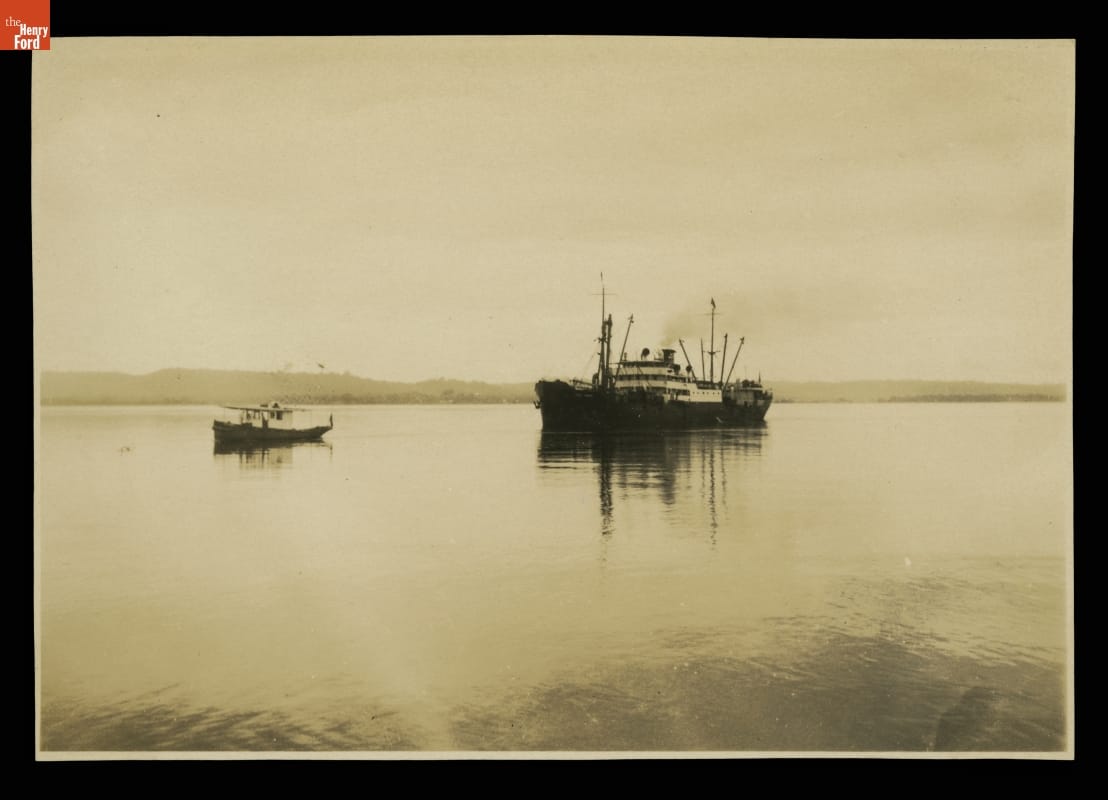
- Steamer "Lake Ormoc" Being Towed by the Tugboat Santarem, Fordlandia, Brazil, 1930 - Henry Ford established Fordlandia and Belterra in the Brazilian rainforest to supply rubber for automobile production. He began shipping machinery and supplies to the Amazon in 1928. Ford paid the indigenous workers good wages and supplied various amenities -- he also imposed foreign work traditions and behavioral restrictions which the workers resented. The plantations failed and Ford Motor Company disposed of the project in 1945.
- April 01, 1930
- Collections - Artifact
Steamer "Lake Ormoc" Being Towed by the Tugboat Santarem, Fordlandia, Brazil, 1930
Henry Ford established Fordlandia and Belterra in the Brazilian rainforest to supply rubber for automobile production. He began shipping machinery and supplies to the Amazon in 1928. Ford paid the indigenous workers good wages and supplied various amenities -- he also imposed foreign work traditions and behavioral restrictions which the workers resented. The plantations failed and Ford Motor Company disposed of the project in 1945.
- "Nude is Not a Color" Quilt, Made by Hillary Goodwin, Rachael Dorr, and Contributors from around the World, 2017 - Fashion and cosmetics companies have long used the term nude for products made in a pale beige--reflecting lighter skin tones and marginalizing people of color. After one company repeatedly dismissed a customer's concerns, a global community of quilters produced this quilt to oppose this racial bias. To create the shirt designs, the women chose fabric that best represented their own skin tones.

- 2017
- Collections - Artifact
"Nude is Not a Color" Quilt, Made by Hillary Goodwin, Rachael Dorr, and Contributors from around the World, 2017
Fashion and cosmetics companies have long used the term nude for products made in a pale beige--reflecting lighter skin tones and marginalizing people of color. After one company repeatedly dismissed a customer's concerns, a global community of quilters produced this quilt to oppose this racial bias. To create the shirt designs, the women chose fabric that best represented their own skin tones.
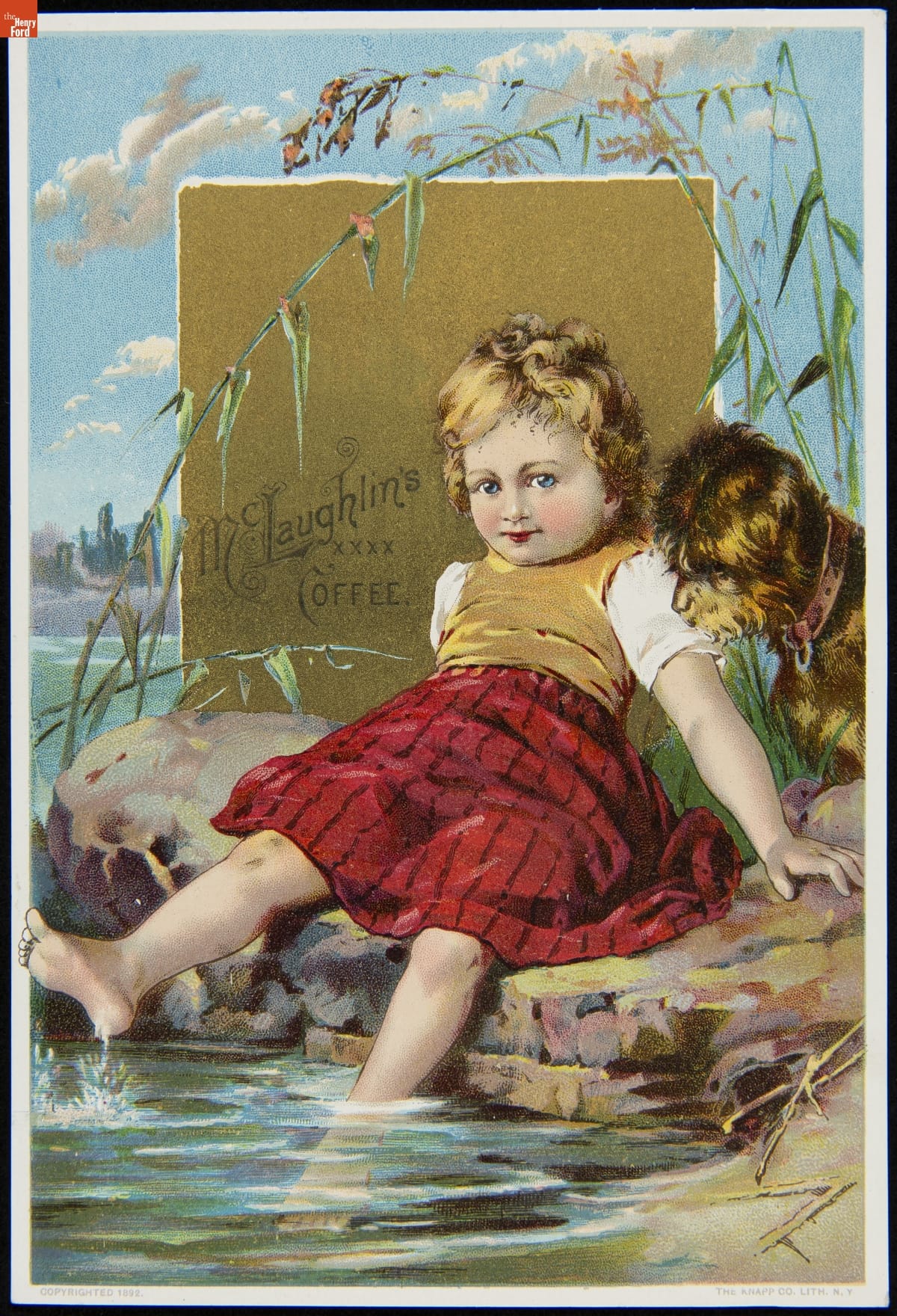
- Trade Card for McLaughlin's XXXX Coffee, W.F. McLaughlin & Co., 1892 - In the last third of the nineteenth century, an unprecedented variety of consumer goods and services flooded the American market. Advertisers, armed with new methods of color printing, bombarded potential customers with trade cards. Americans enjoyed and often saved the vibrant little advertisements found in product packages or distributed by local merchants. Many survive as historical records of commercialism in the United States.
- 1892
- Collections - Artifact
Trade Card for McLaughlin's XXXX Coffee, W.F. McLaughlin & Co., 1892
In the last third of the nineteenth century, an unprecedented variety of consumer goods and services flooded the American market. Advertisers, armed with new methods of color printing, bombarded potential customers with trade cards. Americans enjoyed and often saved the vibrant little advertisements found in product packages or distributed by local merchants. Many survive as historical records of commercialism in the United States.
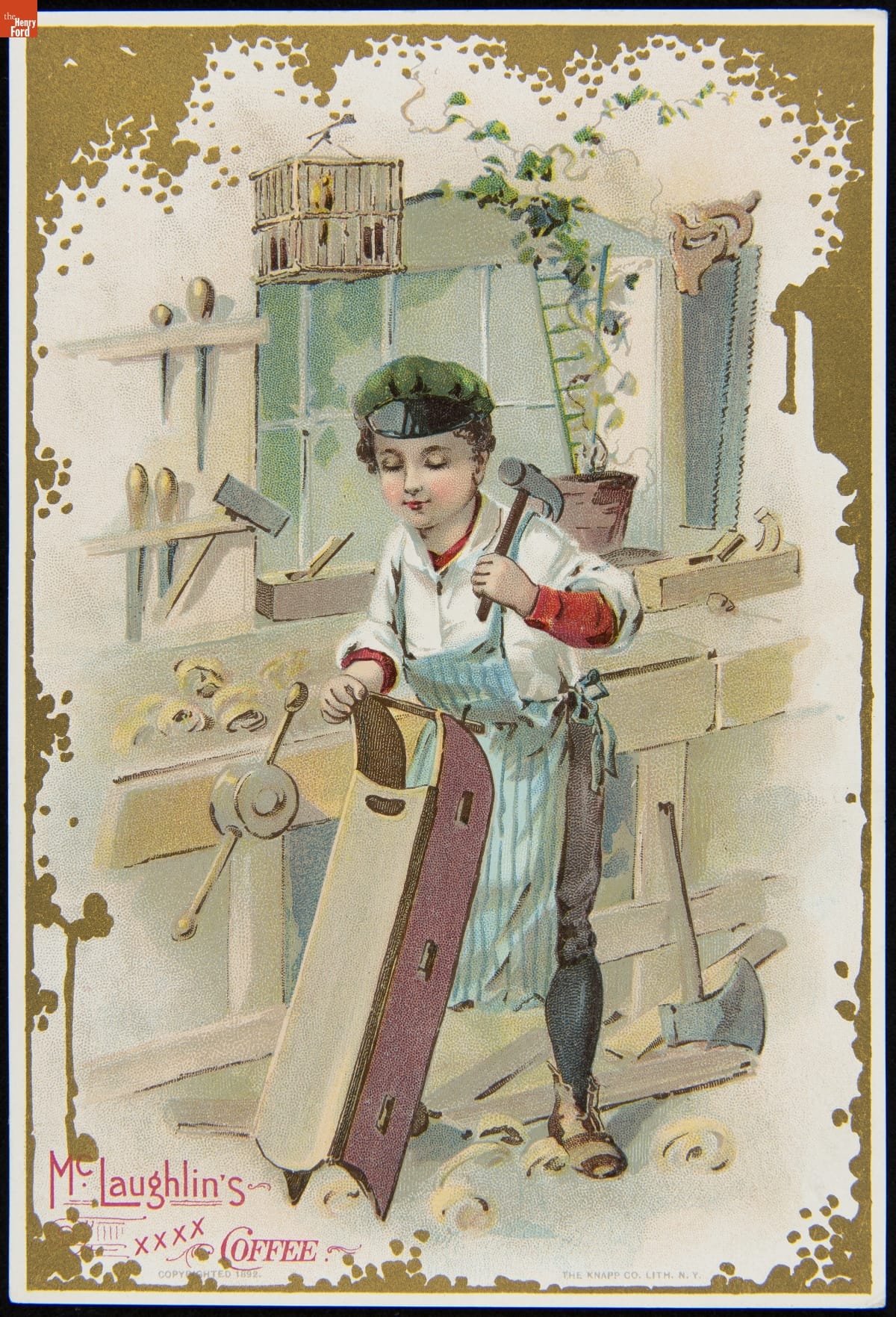
- Trade Card for McLaughlin's XXXX Coffee, W.F. McLaughlin & Co., 1892 - In the last third of the nineteenth century, an unprecedented variety of consumer goods and services flooded the American market. Advertisers, armed with new methods of color printing, bombarded potential customers with trade cards. Americans enjoyed and often saved the vibrant little advertisements found in product packages or distributed by local merchants. Many survive as historical records of commercialism in the United States.
- 1892
- Collections - Artifact
Trade Card for McLaughlin's XXXX Coffee, W.F. McLaughlin & Co., 1892
In the last third of the nineteenth century, an unprecedented variety of consumer goods and services flooded the American market. Advertisers, armed with new methods of color printing, bombarded potential customers with trade cards. Americans enjoyed and often saved the vibrant little advertisements found in product packages or distributed by local merchants. Many survive as historical records of commercialism in the United States.
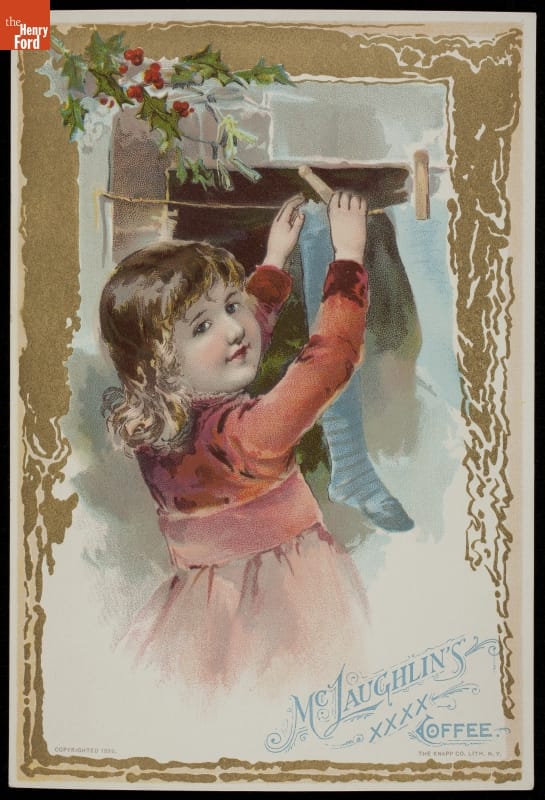
- Trade Card for McLaughlin's XXXX Coffee, W.F. McLaughlin & Co., 1892 - In the last third of the nineteenth century, an unprecedented variety of consumer goods and services flooded the American market. Advertisers, armed with new methods of color printing, bombarded potential customers with trade cards. Americans enjoyed and often saved the vibrant little advertisements found in product packages or distributed by local merchants. Many survive as historical records of commercialism in the United States.
- 1892
- Collections - Artifact
Trade Card for McLaughlin's XXXX Coffee, W.F. McLaughlin & Co., 1892
In the last third of the nineteenth century, an unprecedented variety of consumer goods and services flooded the American market. Advertisers, armed with new methods of color printing, bombarded potential customers with trade cards. Americans enjoyed and often saved the vibrant little advertisements found in product packages or distributed by local merchants. Many survive as historical records of commercialism in the United States.
- Trade Card for McLaughlin's XXXX Coffee, W.F. McLaughlin & Co., 1892 - In the last third of the nineteenth century, an unprecedented variety of consumer goods and services flooded the American market. Advertisers, armed with new methods of color printing, bombarded potential customers with trade cards. Americans enjoyed and often saved the vibrant little advertisements found in product packages or distributed by local merchants. Many survive as historical records of commercialism in the United States.
- 1892
- Collections - Artifact
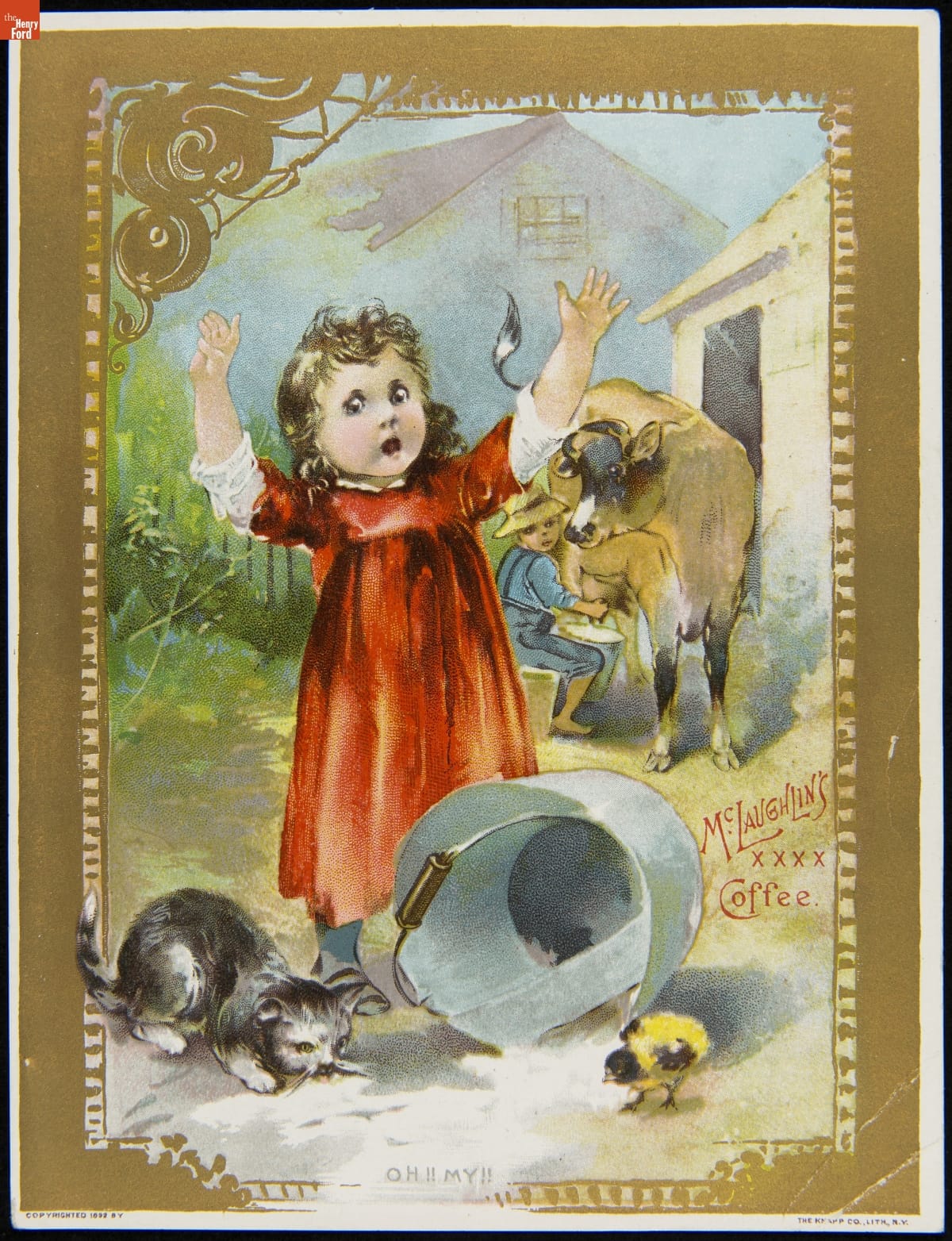
Trade Card for McLaughlin's XXXX Coffee, W.F. McLaughlin & Co., 1892
In the last third of the nineteenth century, an unprecedented variety of consumer goods and services flooded the American market. Advertisers, armed with new methods of color printing, bombarded potential customers with trade cards. Americans enjoyed and often saved the vibrant little advertisements found in product packages or distributed by local merchants. Many survive as historical records of commercialism in the United States.