
Search
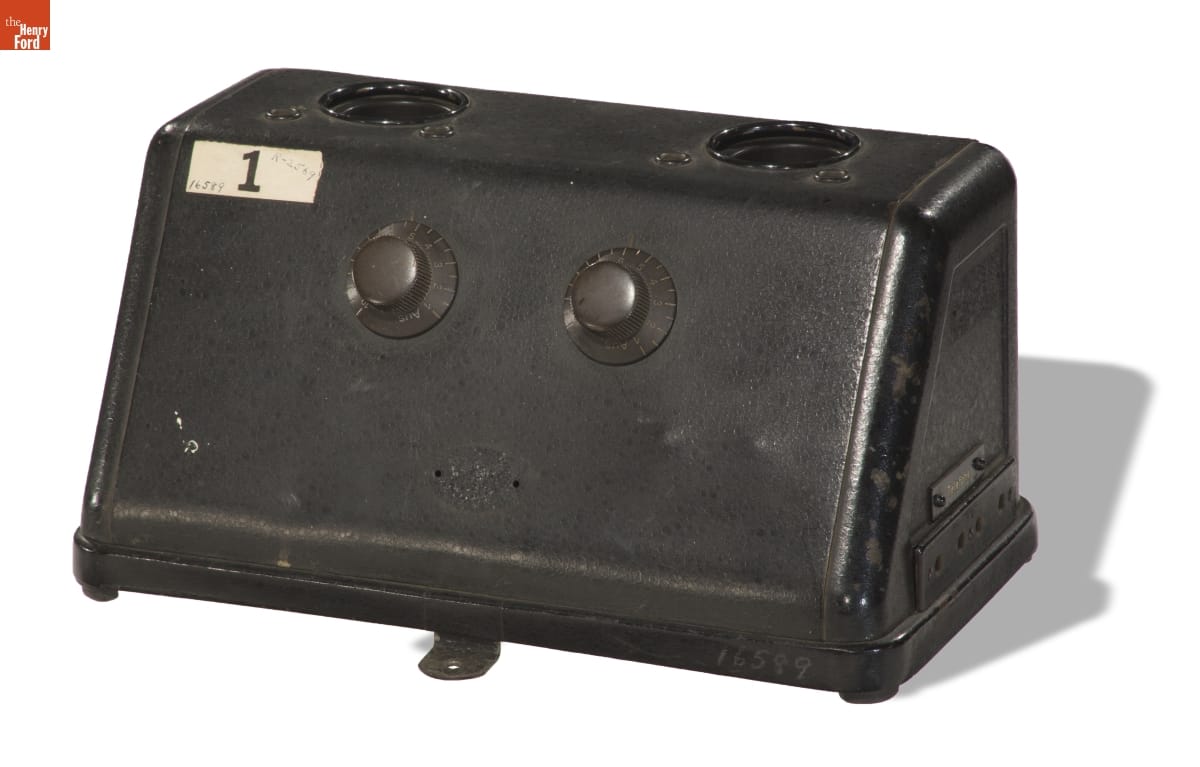
- Telefunken Audio Frequency Amplifier, circa 1920 - This radio equipment was used at the German-built Tuckerton Wireless Station in New Jersey. A powerful 820-foot antenna communicated with an identical station in Germany. National security concerns during WWI led to the seizure of Tuckerton by the U.S. government in 1917. It is cited to be the origin of information leaks leading to the RMS <em>Lusitania</em> disaster through U-boat attack.
- circa 1920
- Collections - Artifact
Telefunken Audio Frequency Amplifier, circa 1920
This radio equipment was used at the German-built Tuckerton Wireless Station in New Jersey. A powerful 820-foot antenna communicated with an identical station in Germany. National security concerns during WWI led to the seizure of Tuckerton by the U.S. government in 1917. It is cited to be the origin of information leaks leading to the RMS Lusitania disaster through U-boat attack.
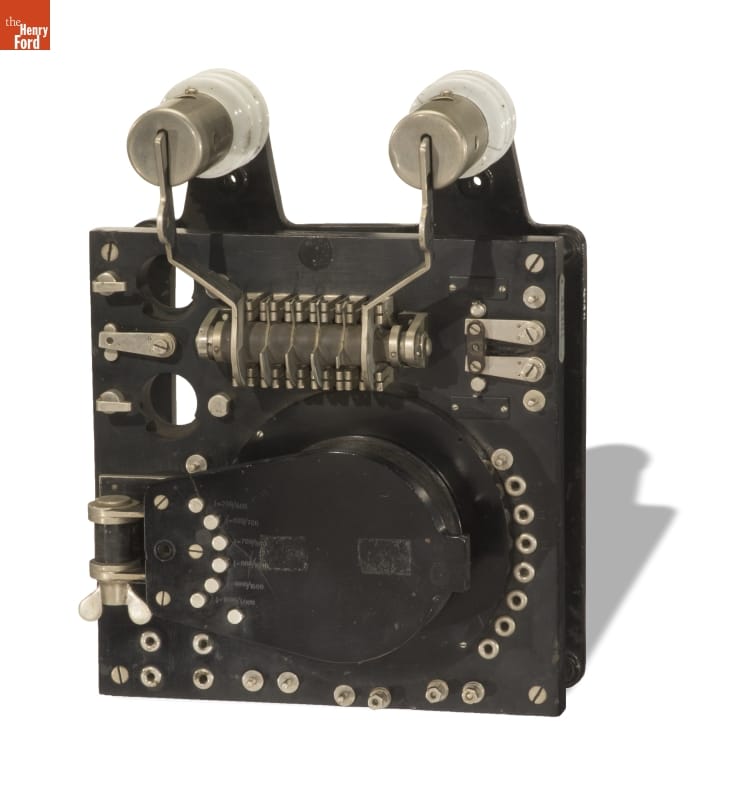
- Telefunken Wireless Radio Receiver with Crystal Detector, 1912-1917 - This radio equipment was used at the German-built Tuckerton Wireless Station in New Jersey. A powerful 820-foot antenna communicated with an identical station in Germany. National security concerns during WWI led to the seizure of Tuckerton by the U.S. government in 1917. It is cited to be the origin of information leaks leading to the RMS <em>Lusitania</em> disaster through U-boat attack.
- 1912-1917
- Collections - Artifact
Telefunken Wireless Radio Receiver with Crystal Detector, 1912-1917
This radio equipment was used at the German-built Tuckerton Wireless Station in New Jersey. A powerful 820-foot antenna communicated with an identical station in Germany. National security concerns during WWI led to the seizure of Tuckerton by the U.S. government in 1917. It is cited to be the origin of information leaks leading to the RMS Lusitania disaster through U-boat attack.
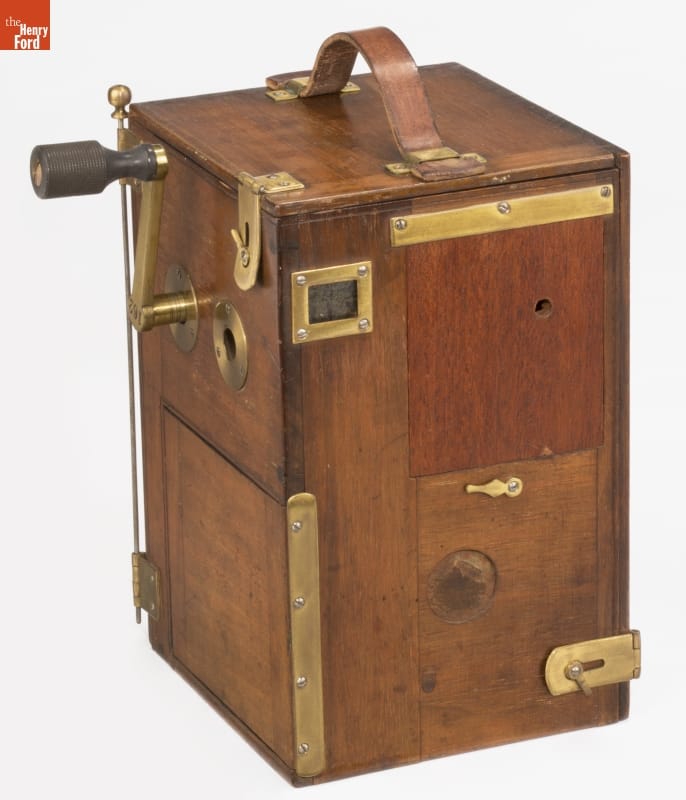
- Kine-Messter Movie Camera, circa 1900 - This hand-cranked 35mm movie camera was used in motion picture experiments by the Thomas A. Edison Company. Available commercially, this camera was designed by Oskar Messter, "Father of the German Film Industry." Messter made many technical improvements to cinema apparatus, built the first film studio in Germany, and hosted the first projected sound films at his Apollo Theatre in Berlin.
- circa 1900
- Collections - Artifact
Kine-Messter Movie Camera, circa 1900
This hand-cranked 35mm movie camera was used in motion picture experiments by the Thomas A. Edison Company. Available commercially, this camera was designed by Oskar Messter, "Father of the German Film Industry." Messter made many technical improvements to cinema apparatus, built the first film studio in Germany, and hosted the first projected sound films at his Apollo Theatre in Berlin.
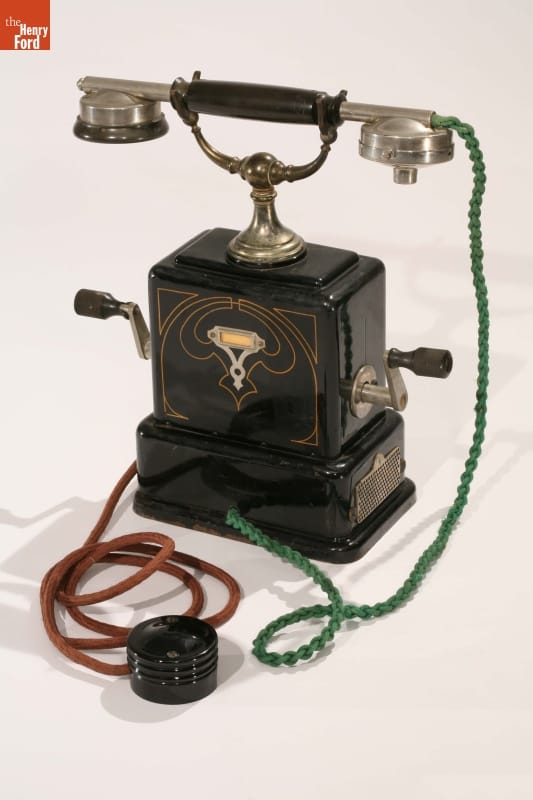
- Two Magneto Desk Stand Telephone, 1910-1919 -
- 1910-1919
- Collections - Artifact
Two Magneto Desk Stand Telephone, 1910-1919
- Family Portrait of James C. Hipple, circa 1883 -
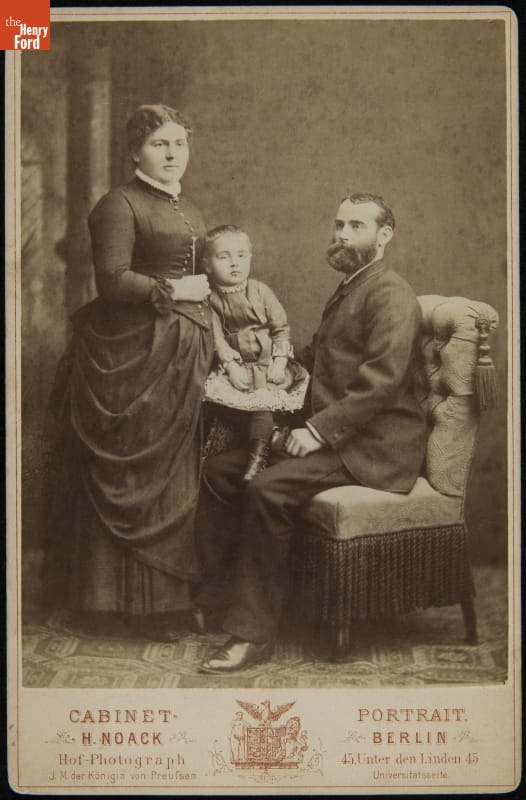
- circa 1883
- Collections - Artifact
Family Portrait of James C. Hipple, circa 1883
- A Woman Posing with a Pug, circa 1865 -
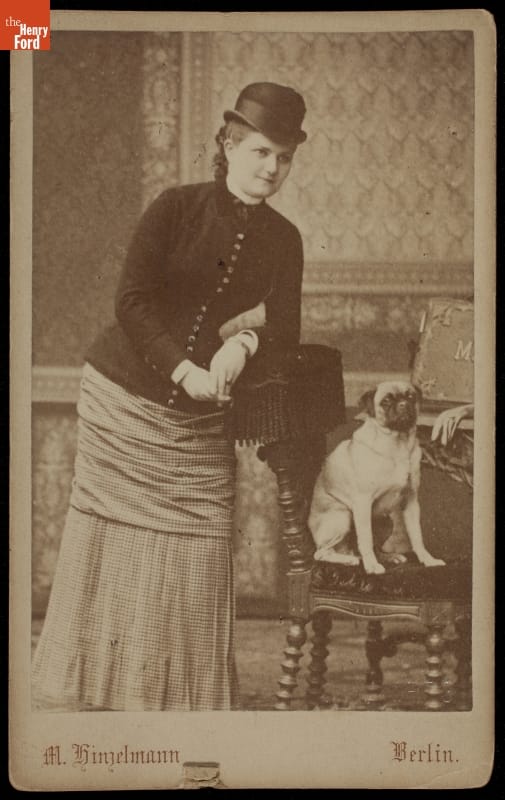
- circa 1865
- Collections - Artifact
A Woman Posing with a Pug, circa 1865
- C.P. Goerz Optical Company Dagor Camera Lens with Case, 1900-1908 -
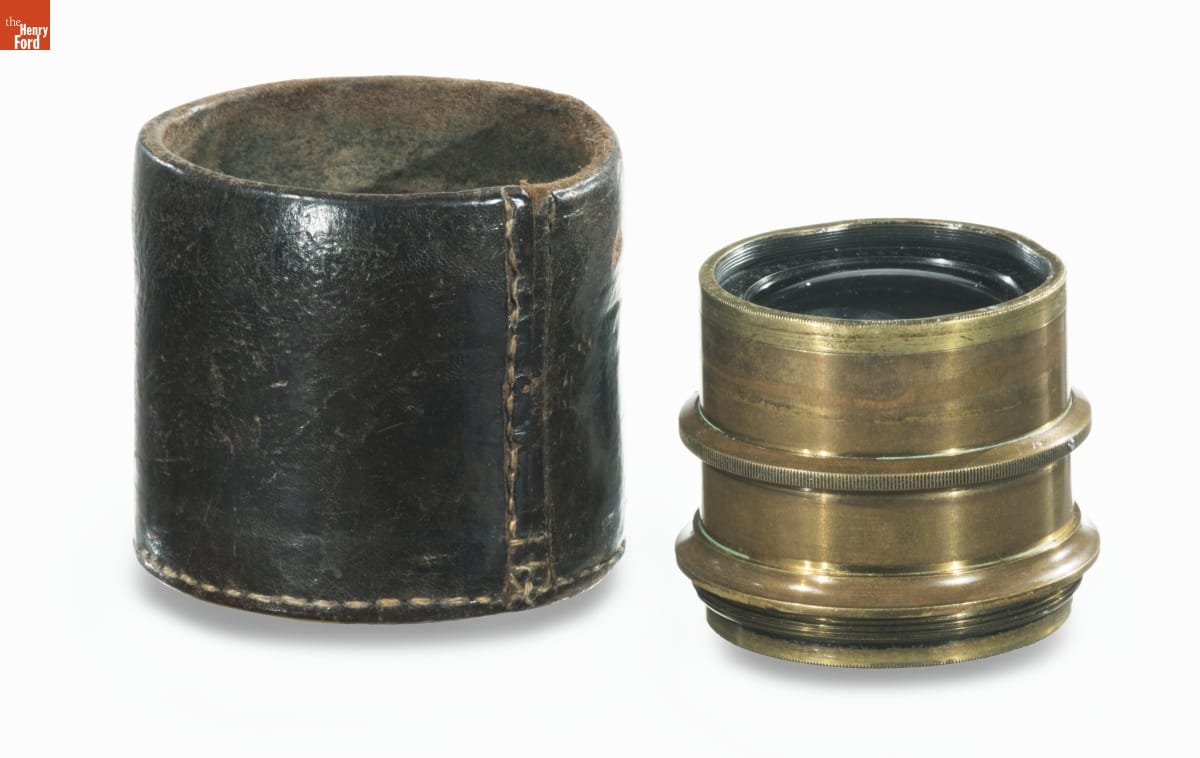
- 1900-1908
- Collections - Artifact
C.P. Goerz Optical Company Dagor Camera Lens with Case, 1900-1908
- Ruhmer Coherer, Used at Hammond Radio Research Laboratory, circa 1905 - John Hays Hammond, Jr., was largely responsible for launching the field of radio control. In 1926, he built a medieval-inspired castle in Gloucester, Massachusetts. This site served as his home and research laboratory. With over 400 patents to his name, Hammond developed ideas for radio control, autopilot function, and targeted missile detonation. This device was used in Hammond's laboratory.
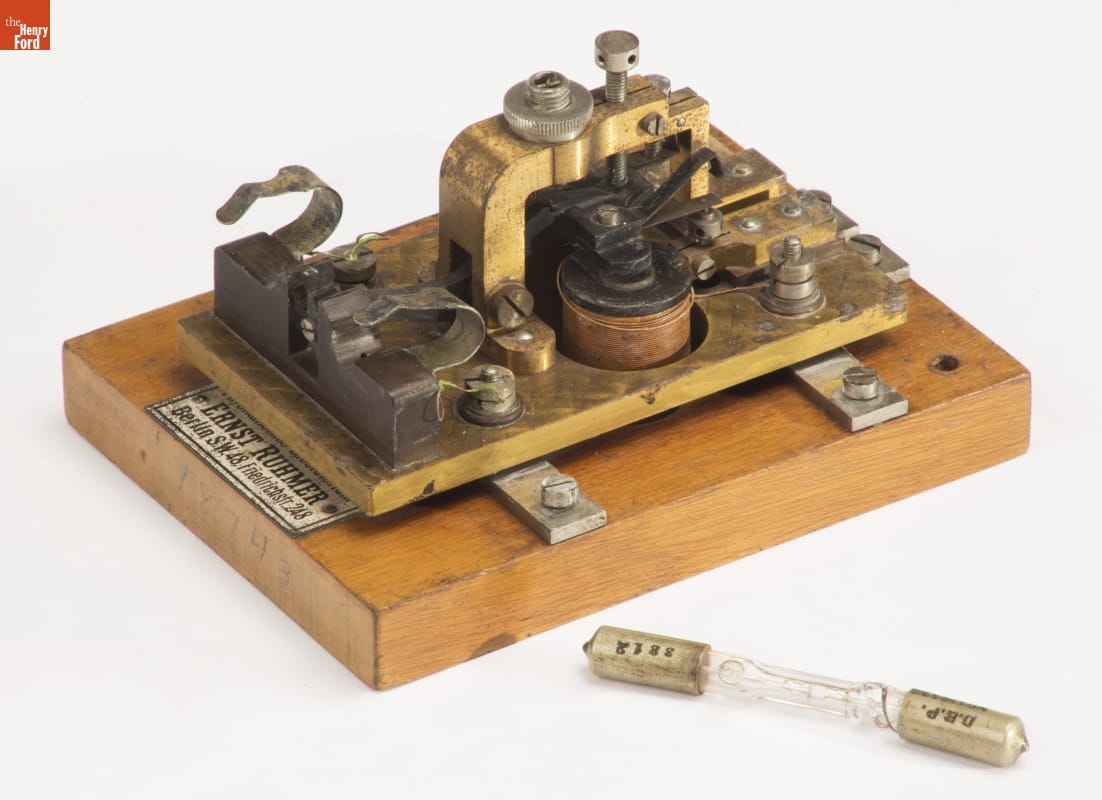
- circa 1905
- Collections - Artifact
Ruhmer Coherer, Used at Hammond Radio Research Laboratory, circa 1905
John Hays Hammond, Jr., was largely responsible for launching the field of radio control. In 1926, he built a medieval-inspired castle in Gloucester, Massachusetts. This site served as his home and research laboratory. With over 400 patents to his name, Hammond developed ideas for radio control, autopilot function, and targeted missile detonation. This device was used in Hammond's laboratory.
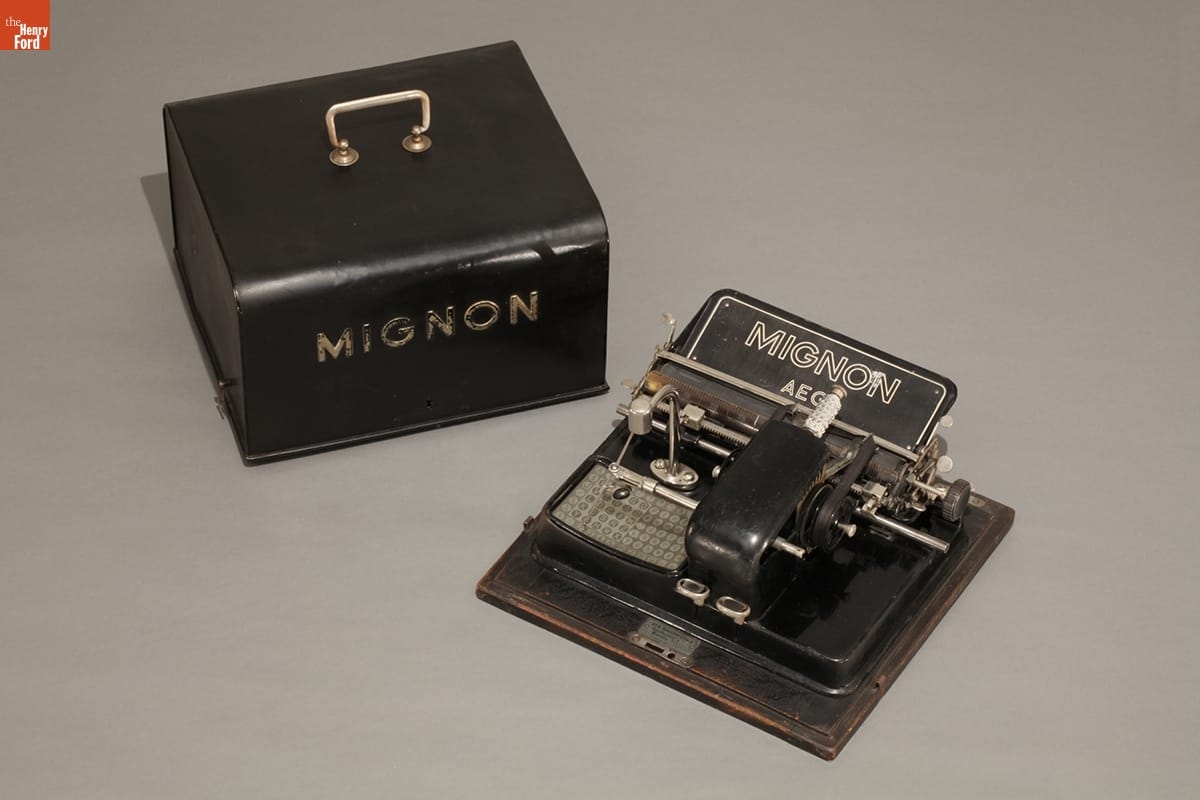
- Mignon Typewriter, 1904-1915 - This German-made index typewriter remained popular long after typewriters with QWERTY keyboards were thought to have conquered the market. On the Mignon, the user would select a letter with the pointer and push down to print from a cylindrical typewheel. Though most index typewriters' popularity peaked around 1890, the Mignon was still being manufactured and sold into the 1930s as an inexpensive business machine, not a novelty.
- 1904-1915
- Collections - Artifact
Mignon Typewriter, 1904-1915
This German-made index typewriter remained popular long after typewriters with QWERTY keyboards were thought to have conquered the market. On the Mignon, the user would select a letter with the pointer and push down to print from a cylindrical typewheel. Though most index typewriters' popularity peaked around 1890, the Mignon was still being manufactured and sold into the 1930s as an inexpensive business machine, not a novelty.
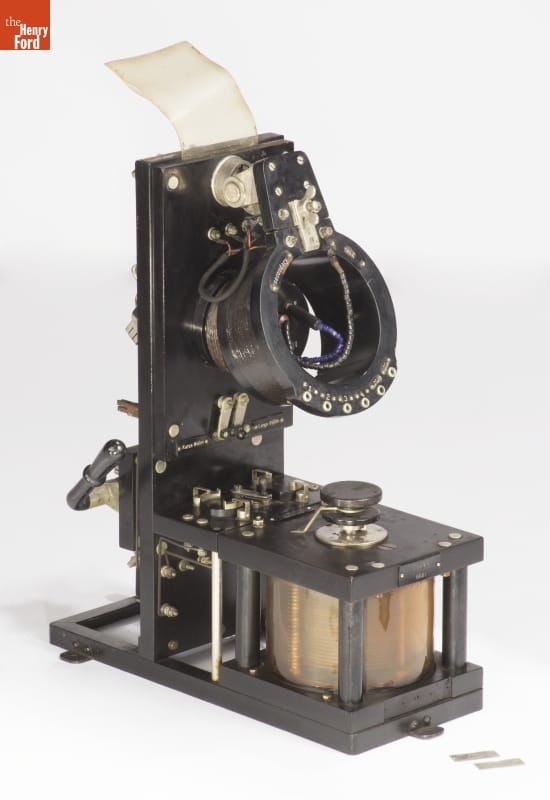
- Telefunken Radio Receiver, 1912 - This is an early radio receiver with a crystal detector, manufactured by the German Telefunken company. This company's equipment was used in commercial radio installations in the US, including Tuckerton Station, NJ. These stations, and the equipment contained within, were seized by the US military during WWI. This object was not designed for passive entertainment use, but for trained communications experts.
- 1912
- Collections - Artifact
Telefunken Radio Receiver, 1912
This is an early radio receiver with a crystal detector, manufactured by the German Telefunken company. This company's equipment was used in commercial radio installations in the US, including Tuckerton Station, NJ. These stations, and the equipment contained within, were seized by the US military during WWI. This object was not designed for passive entertainment use, but for trained communications experts.