
Search
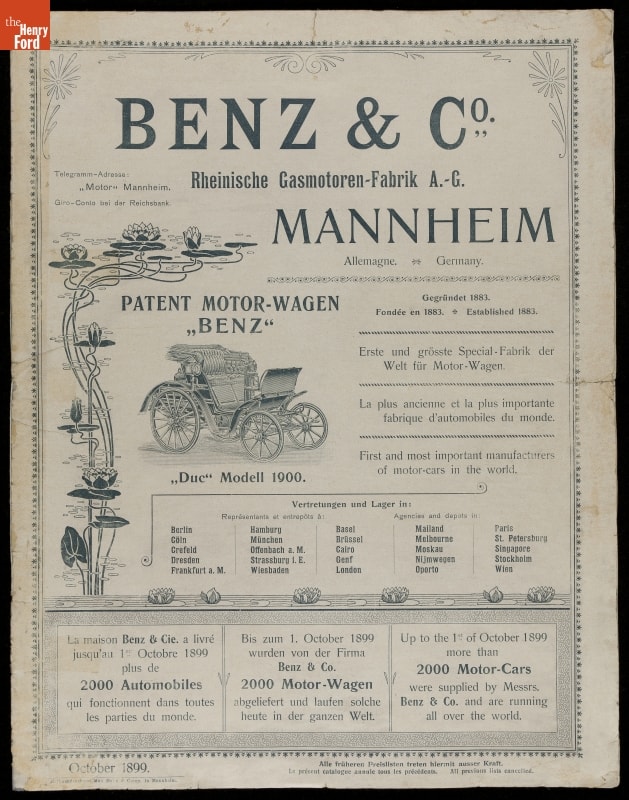
- Sales Brochure for the Patent Motor-Wagen "Benz," Benz & Company, 1899 - German engineer Karl Benz built his original Patent-Motorwagen in 1885, widely regarded as the first self-propelled vehicle designed around the internal combustion engine. Benz's design became the basis for the world's first production automobile in 1888. By the end of the 19th century, Benz's company was building more than 500 automobiles a year. Benz merged with Daimler Motors in 1926.
- October 01, 1899
- Collections - Artifact
Sales Brochure for the Patent Motor-Wagen "Benz," Benz & Company, 1899
German engineer Karl Benz built his original Patent-Motorwagen in 1885, widely regarded as the first self-propelled vehicle designed around the internal combustion engine. Benz's design became the basis for the world's first production automobile in 1888. By the end of the 19th century, Benz's company was building more than 500 automobiles a year. Benz merged with Daimler Motors in 1926.
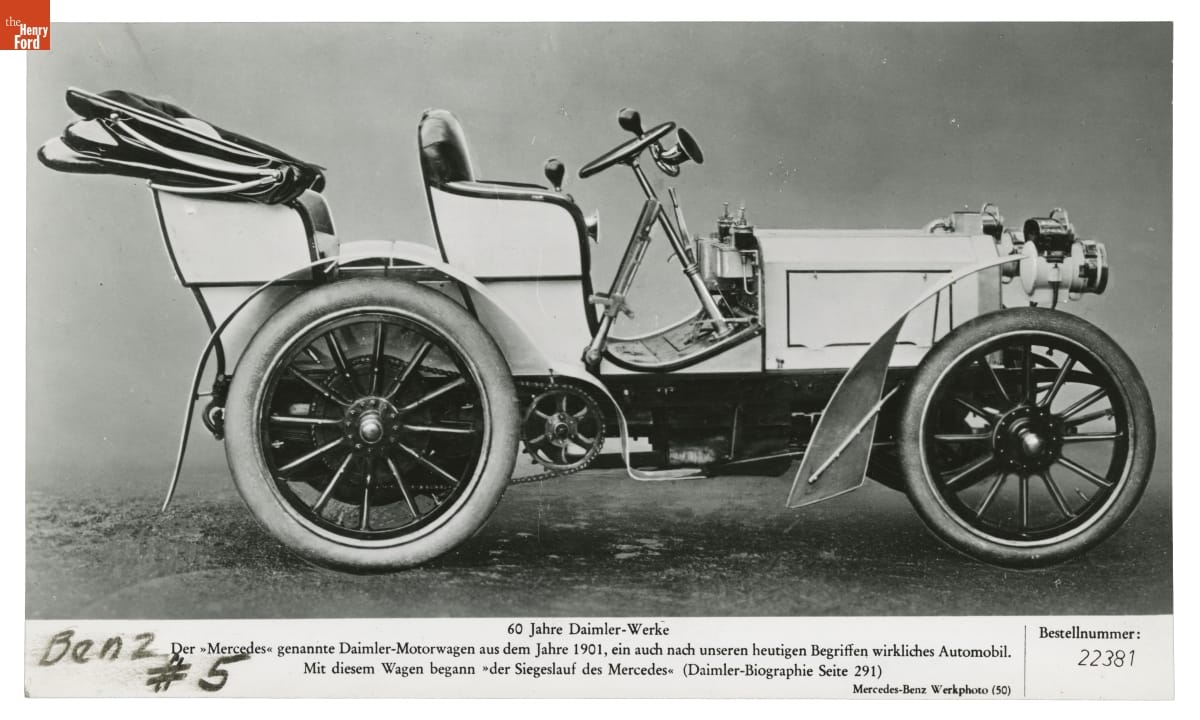
- 1901 Mercedes-Benz Number 5, circa 1955 - The 1901 Mercedes, built by the German firm Daimler, was one of the first automobiles with the engine up front rather than under the seat. That gave more room for bigger engines and also allowed the chassis to be lowered for easier entry and better road holding. It set the pattern for future cars.
- 1901
- Collections - Artifact
1901 Mercedes-Benz Number 5, circa 1955
The 1901 Mercedes, built by the German firm Daimler, was one of the first automobiles with the engine up front rather than under the seat. That gave more room for bigger engines and also allowed the chassis to be lowered for easier entry and better road holding. It set the pattern for future cars.
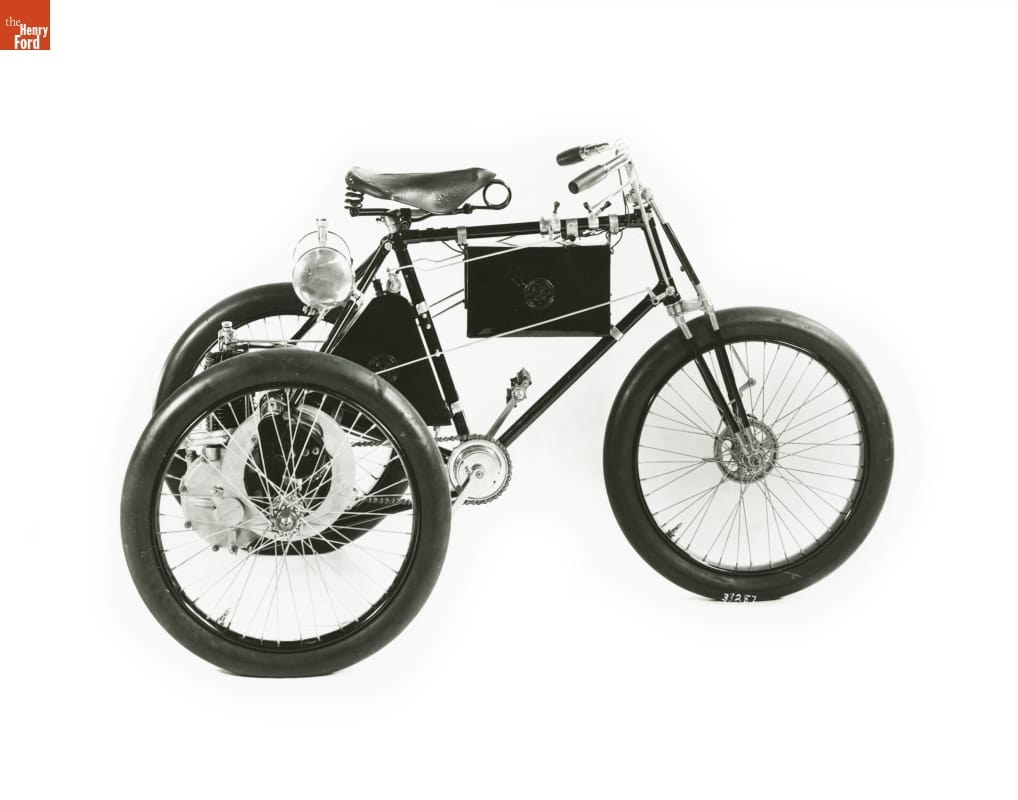
- De Dion-Bouton Motor Tricycle, circa 1898 - French builders Albert Comte De Dion and Georges Bouton produced their first gasoline tricycles in 1895. Their three-wheel design provided more room for mounting the engine, and it eliminated the risk of "highsider" accidents -- in which a motorcycle loses traction and skids, then suddenly regains traction, throwing the rider from the bike. De Dion-Bouton's successful design was widely copied.
- 1898
- Collections - Artifact
De Dion-Bouton Motor Tricycle, circa 1898
French builders Albert Comte De Dion and Georges Bouton produced their first gasoline tricycles in 1895. Their three-wheel design provided more room for mounting the engine, and it eliminated the risk of "highsider" accidents -- in which a motorcycle loses traction and skids, then suddenly regains traction, throwing the rider from the bike. De Dion-Bouton's successful design was widely copied.
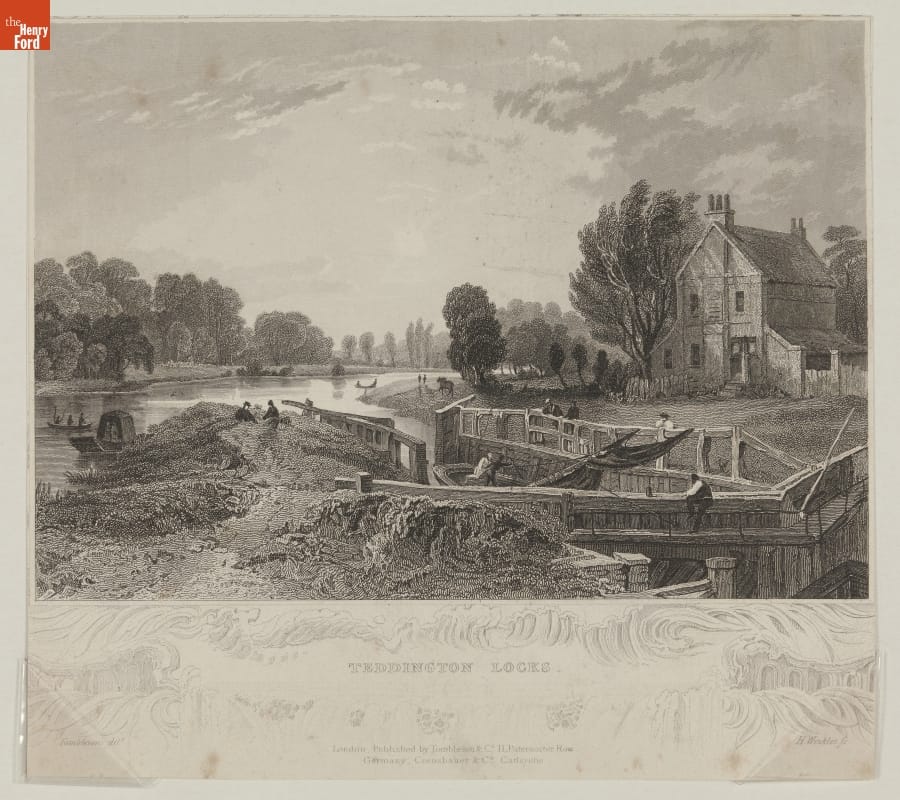
- Steel Engraving, "Teddington Locks," circa 1837 - Before railroads, rivers provided quick transportation routes for people and goods. But rapids and dams impeded a boat's movement. To avert these obstacles, a lock was built to lift or lower a boat from one navigable section of a waterway to another. This steel engraving, done about 1837, depicts the Teddington locks on the River Thames in England.
- 1835-1840
- Collections - Artifact
Steel Engraving, "Teddington Locks," circa 1837
Before railroads, rivers provided quick transportation routes for people and goods. But rapids and dams impeded a boat's movement. To avert these obstacles, a lock was built to lift or lower a boat from one navigable section of a waterway to another. This steel engraving, done about 1837, depicts the Teddington locks on the River Thames in England.
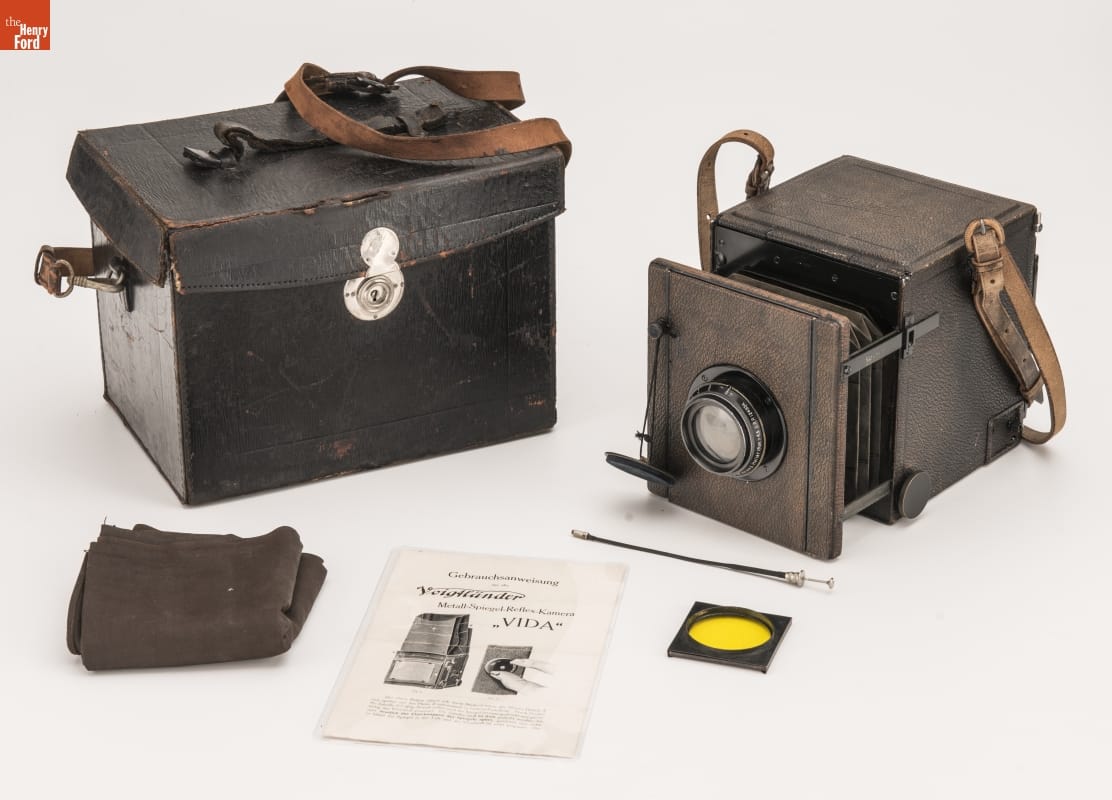
- Voigtlander & Sons Single Lens Reflex Camera, 1900-1920 -
- 1900-1920
- Collections - Artifact
Voigtlander & Sons Single Lens Reflex Camera, 1900-1920
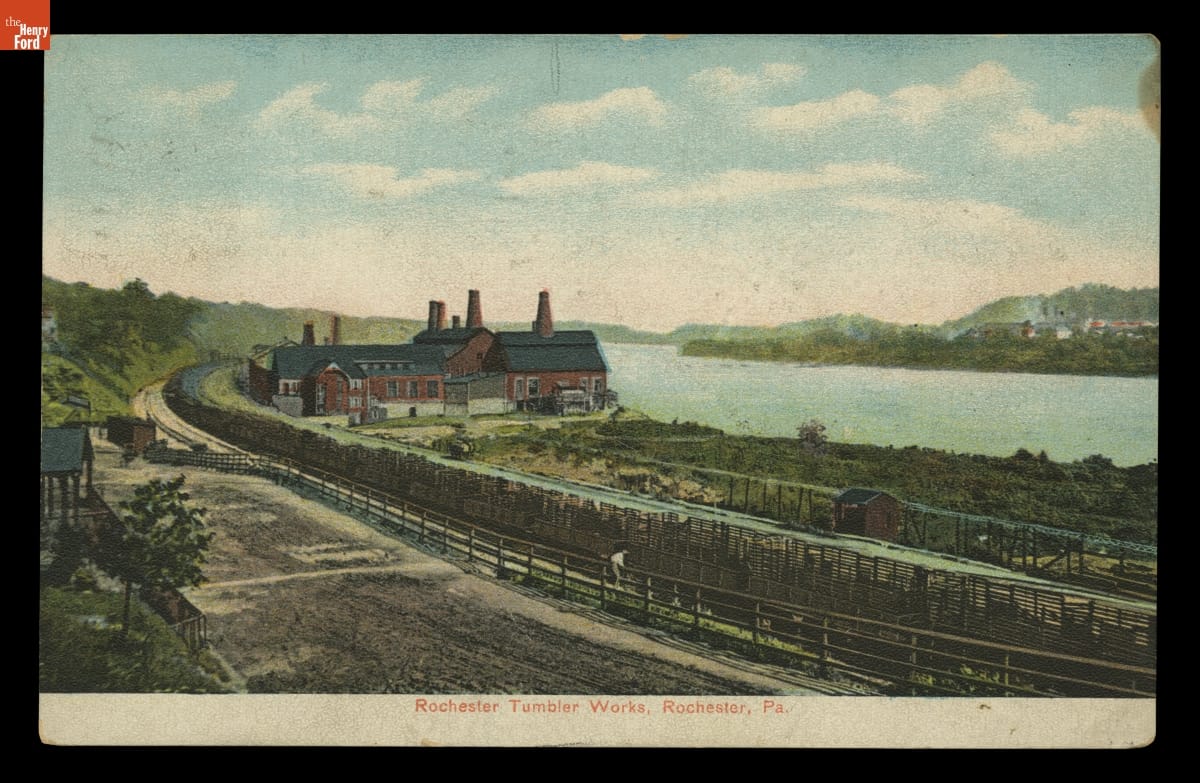
- Rochester Tumbler Works, Rochester, Pennsylvania, Postcard Mailed October 1911 - In 1900, the Rochester Tumbler Works with its 1200 employees could produce tens of thousands of tumblers and other glass tableware a week. The Pennsylvania factory was part of the National Glass Company, a combination of several independent glass firms created in 1899. Tragically, the glassworks burned in 1901, but a new factory, seen in this postcard, was built.
- October 01, 1911
- Collections - Artifact
Rochester Tumbler Works, Rochester, Pennsylvania, Postcard Mailed October 1911
In 1900, the Rochester Tumbler Works with its 1200 employees could produce tens of thousands of tumblers and other glass tableware a week. The Pennsylvania factory was part of the National Glass Company, a combination of several independent glass firms created in 1899. Tragically, the glassworks burned in 1901, but a new factory, seen in this postcard, was built.
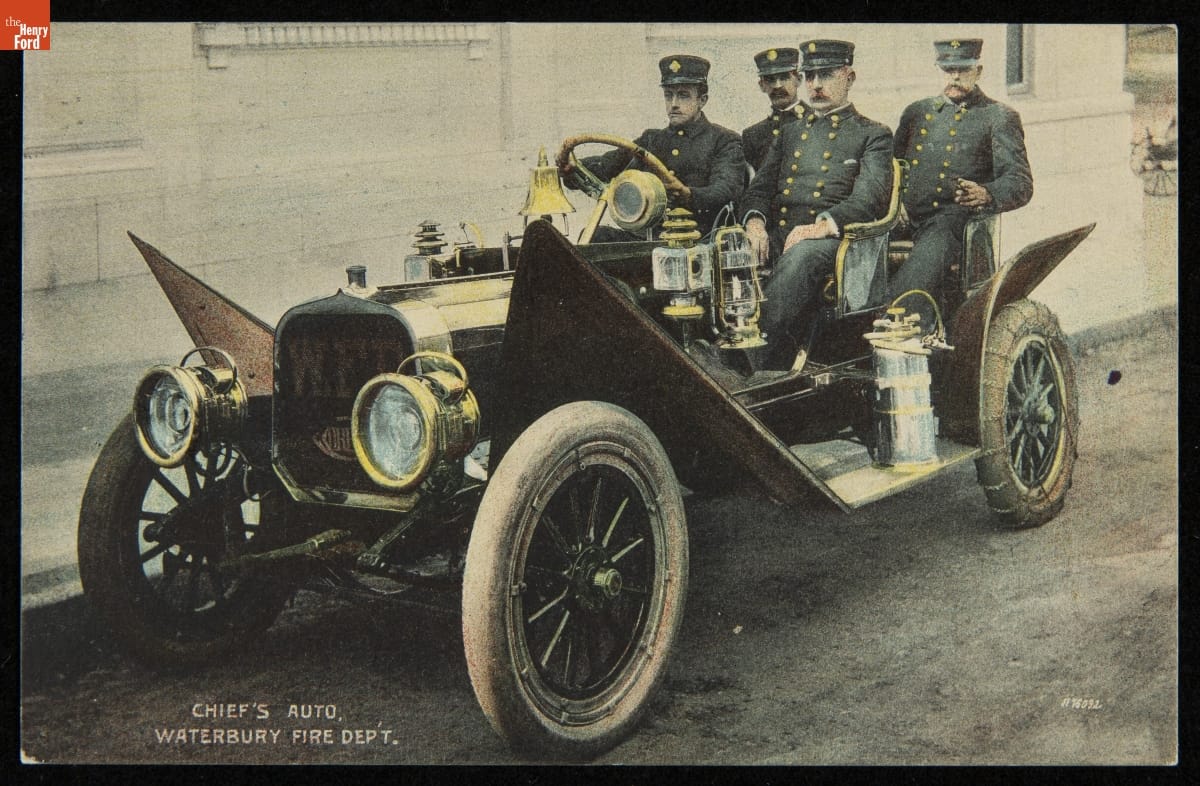
- Postcard, "Chief's Auto, Waterbury Fire Dept.," 1912 - Fire departments, eager to eliminate the costs and complications of horses, were quick to adopt motor vehicles. In addition to motorized pumpers and trucks, many departments purchased automobiles for use by fire chiefs. With a car, a fire chief and staff could travel swiftly to the scene of a fire.
- February 28, 1912
- Collections - Artifact
Postcard, "Chief's Auto, Waterbury Fire Dept.," 1912
Fire departments, eager to eliminate the costs and complications of horses, were quick to adopt motor vehicles. In addition to motorized pumpers and trucks, many departments purchased automobiles for use by fire chiefs. With a car, a fire chief and staff could travel swiftly to the scene of a fire.
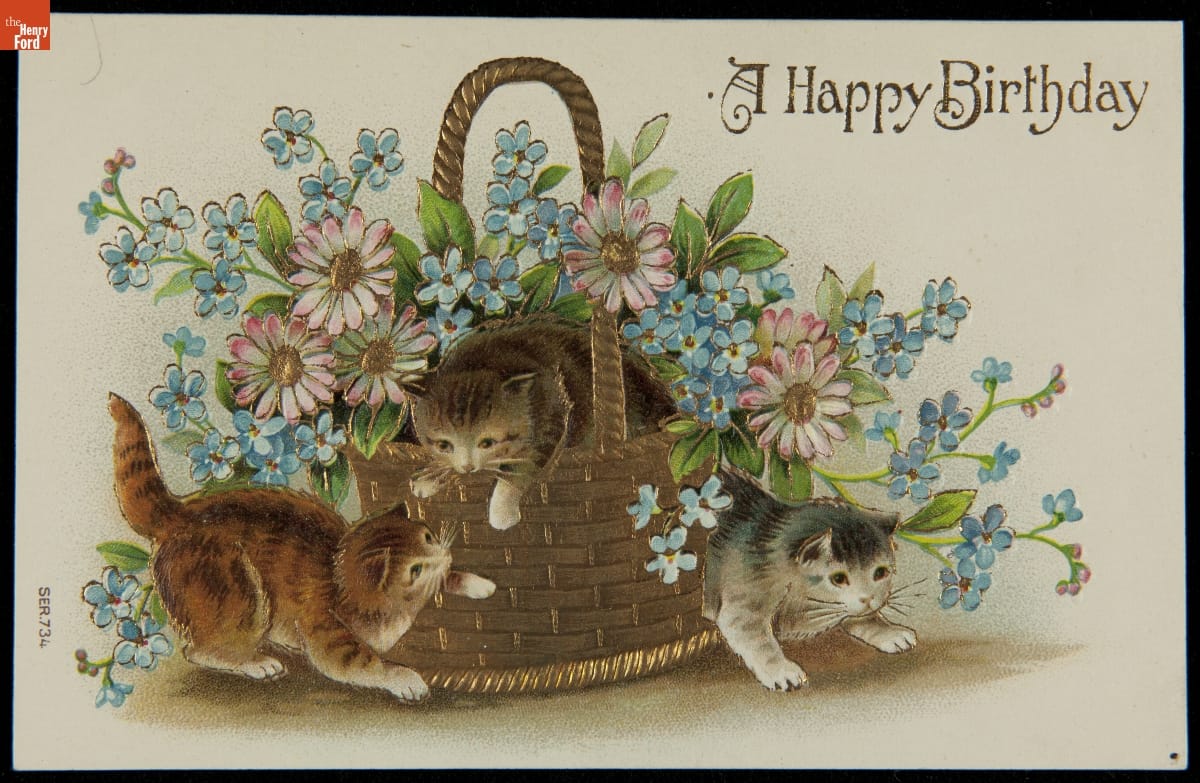
- Postcard, Cats with a Basket of Flowers, "A Happy Birthday," 1908 - Depictions of cats and kittens often appeared in art and folk art in the United States. Inexpensive lithograph prints made in the mid-19th century helped to make this topic popular. Starting in the late 1890s picture postcards included these types of popular illustrations of cats. Sending colorful postcards through the U.S. mail continued to be widespread well into the 1910s.
- 1908
- Collections - Artifact
Postcard, Cats with a Basket of Flowers, "A Happy Birthday," 1908
Depictions of cats and kittens often appeared in art and folk art in the United States. Inexpensive lithograph prints made in the mid-19th century helped to make this topic popular. Starting in the late 1890s picture postcards included these types of popular illustrations of cats. Sending colorful postcards through the U.S. mail continued to be widespread well into the 1910s.
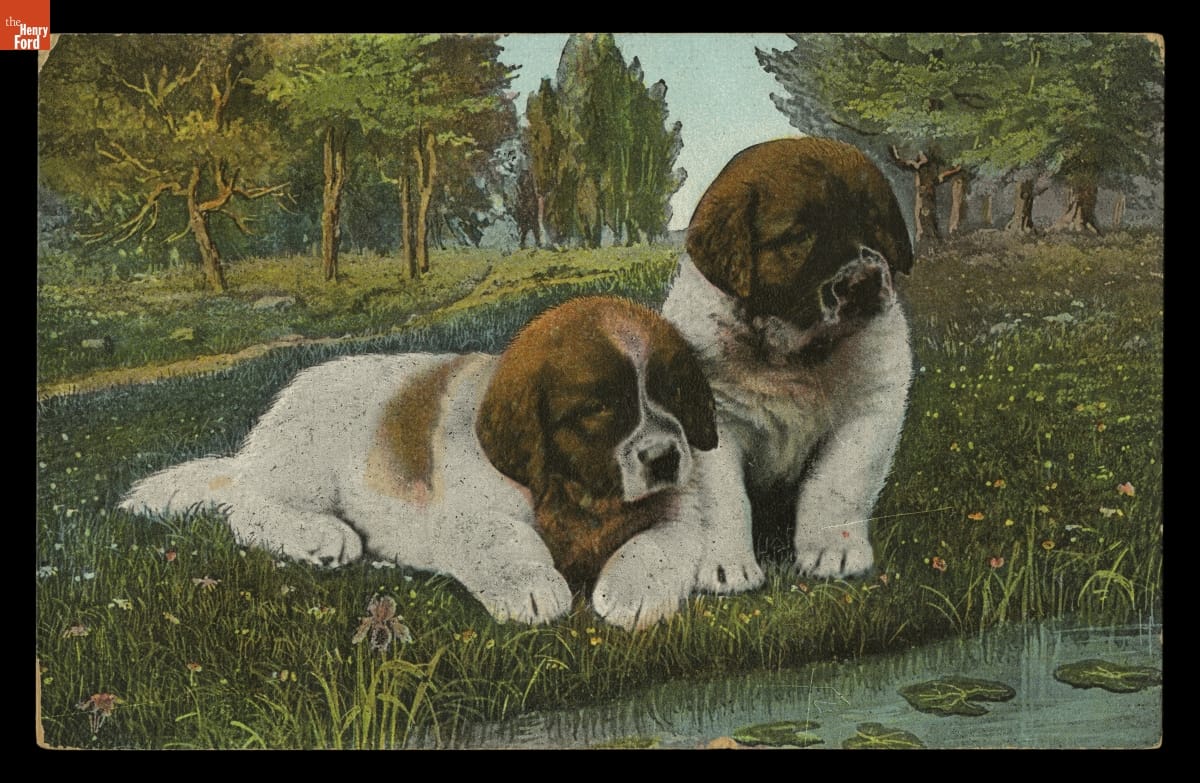
- Postcard, St. Bernard Puppies by a Pond, 1909 - Depictions of dogs and puppies often appeared in art and folk art in the United States. Inexpensive lithograph prints made in the mid-19th century emphasized people's relationship with dogs. Starting in the late 1890s picture postcards included these types of popular illustrations of dogs. Sending colorful postcards through the U.S. mail continued to be widespread well into the 1910s.
- January 06, 1909
- Collections - Artifact
Postcard, St. Bernard Puppies by a Pond, 1909
Depictions of dogs and puppies often appeared in art and folk art in the United States. Inexpensive lithograph prints made in the mid-19th century emphasized people's relationship with dogs. Starting in the late 1890s picture postcards included these types of popular illustrations of dogs. Sending colorful postcards through the U.S. mail continued to be widespread well into the 1910s.
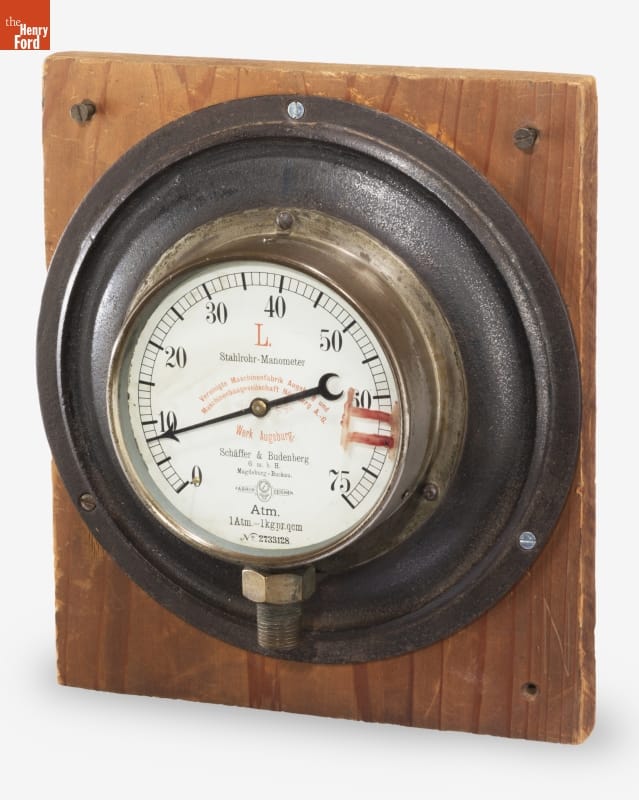
- Schaffer & Budenberg Manometer, 1898-1908 - The German firm of Schaeffner and Budenberg began manufacturing gauges in the 19th century. This manometer measures the pressure of a fluid or gas through a pipe -- such as those found on steam engines -- alerting workers so they can avoid any problems that may occur.
- 1898-1908
- Collections - Artifact
Schaffer & Budenberg Manometer, 1898-1908
The German firm of Schaeffner and Budenberg began manufacturing gauges in the 19th century. This manometer measures the pressure of a fluid or gas through a pipe -- such as those found on steam engines -- alerting workers so they can avoid any problems that may occur.