
Search
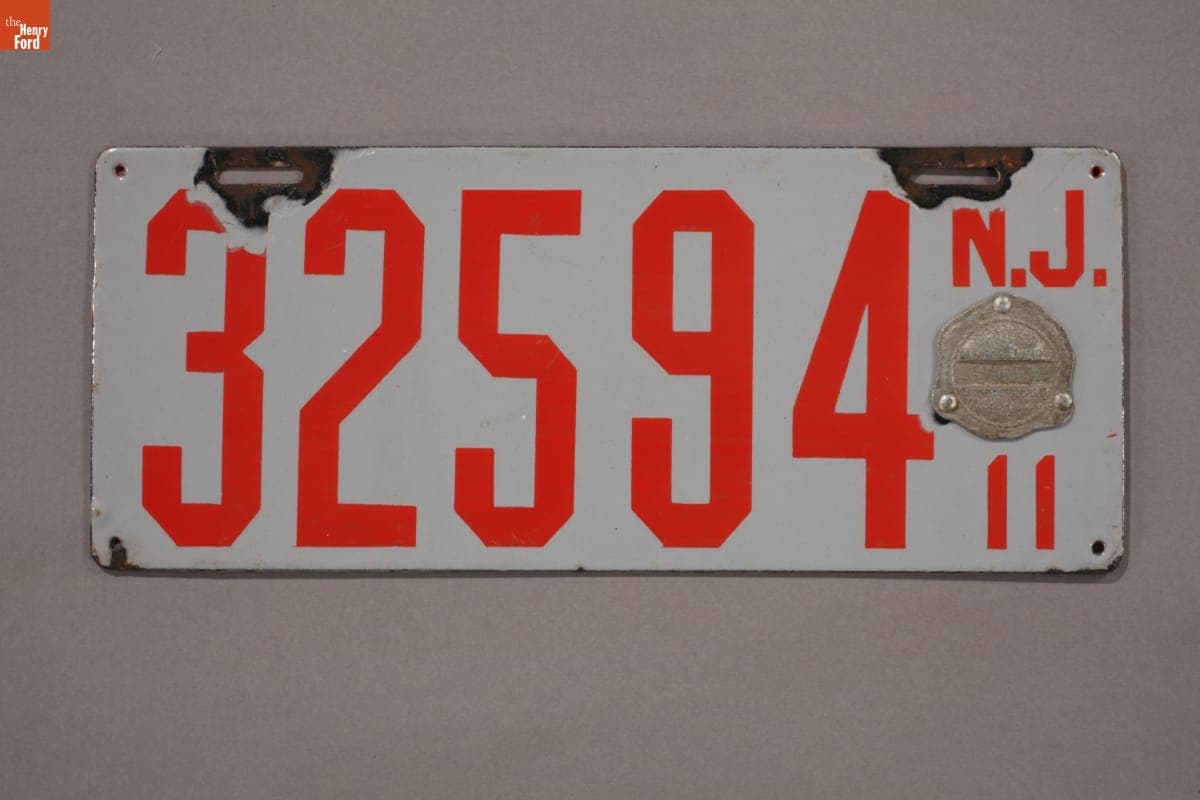
- New Jersey License Plate, 1911 - Early state-issued license plates were made of porcelain-coated iron. Later, states stamped tin, steel, or even copper to make plates. During the Second World War several states used fiberboard. Plate colors varied and some states added symbols, mottoes, or other design elements. Today, states use reflective sheeting to coat a standard-sized aluminum blank which is then stamped and decorated.
- 1911
- Collections - Artifact
New Jersey License Plate, 1911
Early state-issued license plates were made of porcelain-coated iron. Later, states stamped tin, steel, or even copper to make plates. During the Second World War several states used fiberboard. Plate colors varied and some states added symbols, mottoes, or other design elements. Today, states use reflective sheeting to coat a standard-sized aluminum blank which is then stamped and decorated.
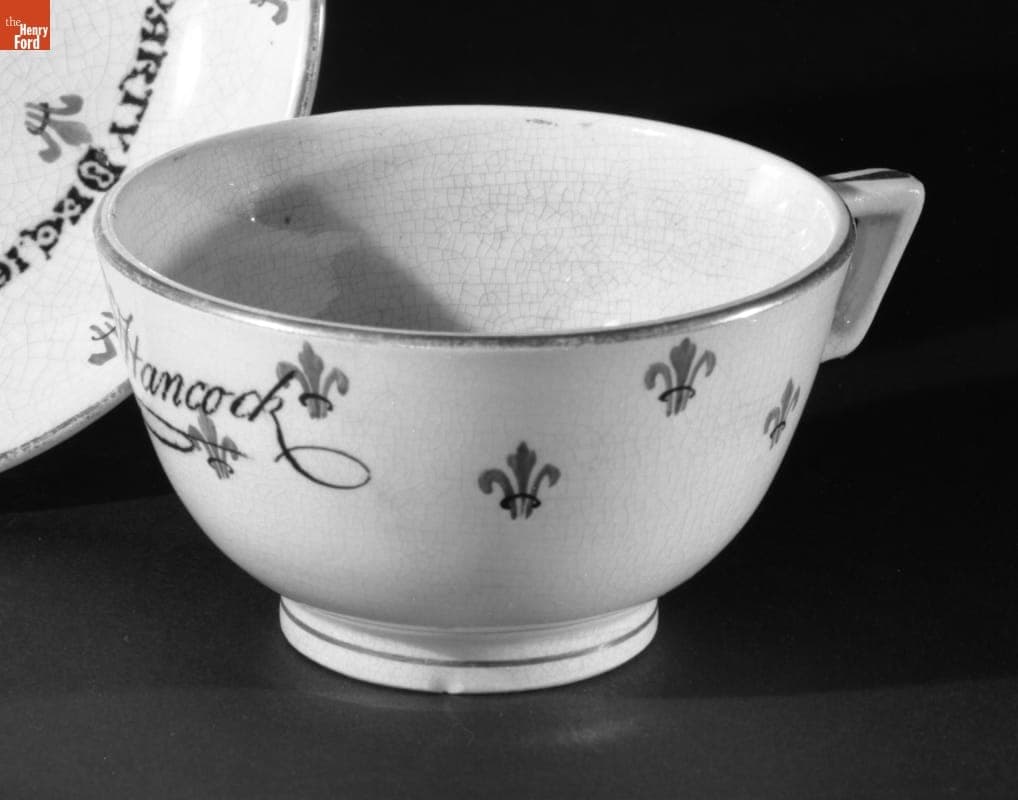
- Commemorative Cup, Boston Tea Party, circa 1873 - The Boston Tea Party, a 1773 protest against the British government, became an enduring symbol of American independence. To celebrate the event's 100th anniversary, the Glasgow Pottery Company of Trenton, New Jersey, produced commemorative cups with matching saucers. The cups featured the signature of John Hancock, who was an influential Bostonian, Patriot, and the first to sign the Declaration of Independence.
- circa 1873
- Collections - Artifact
Commemorative Cup, Boston Tea Party, circa 1873
The Boston Tea Party, a 1773 protest against the British government, became an enduring symbol of American independence. To celebrate the event's 100th anniversary, the Glasgow Pottery Company of Trenton, New Jersey, produced commemorative cups with matching saucers. The cups featured the signature of John Hancock, who was an influential Bostonian, Patriot, and the first to sign the Declaration of Independence.
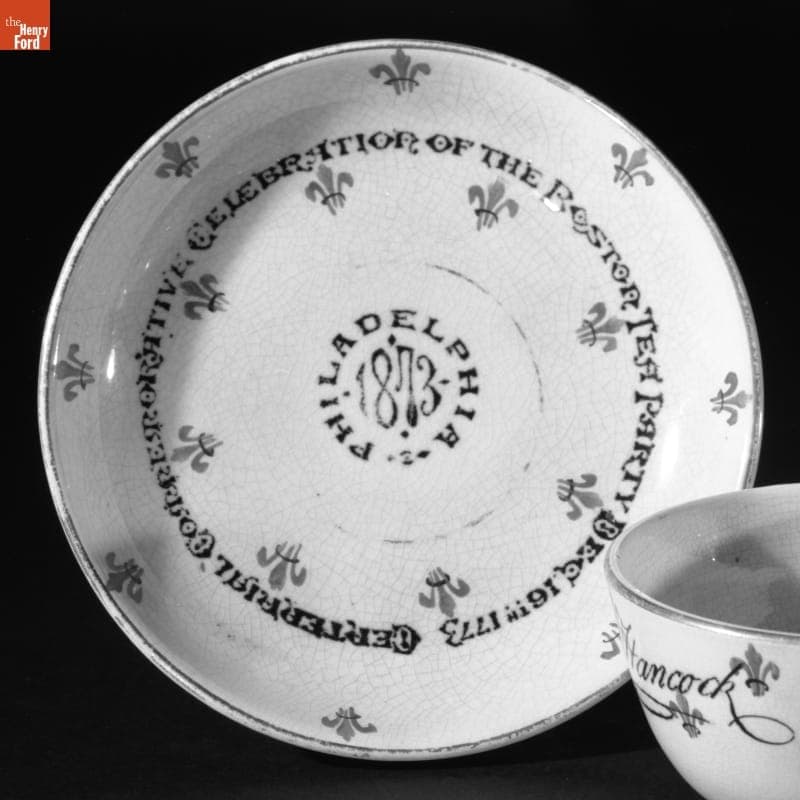
- Commemorative Saucer, Boston Tea Party, circa 1873 - The Boston Tea Party, a political protest against the British government in December 1773, became an enduring symbol of American independence. A similar protest had occurred two months earlier in Philadelphia. The Glasgow Pottery Company of Trenton, New Jersey, produced commemorative cup and saucer sets to celebrate the 100th anniversary of these historic events in 1873.
- circa 1873
- Collections - Artifact
Commemorative Saucer, Boston Tea Party, circa 1873
The Boston Tea Party, a political protest against the British government in December 1773, became an enduring symbol of American independence. A similar protest had occurred two months earlier in Philadelphia. The Glasgow Pottery Company of Trenton, New Jersey, produced commemorative cup and saucer sets to celebrate the 100th anniversary of these historic events in 1873.
- Pitcher, 1887-1910 -
- 1887-1910
- Collections - Artifact
Pitcher, 1887-1910
- Set of Dishes, circa 1890 - George Newhall of San Francisco, California, used these dishes for picnics and outings. They were packed in his fancy "Park Drag" carriage. Well-to-do gentlemen like Newhall drove carriages like these to social events like horse races. There they could enjoy an excellent view from their high seat atop the vehicle while servants served them food and drinks from inside.
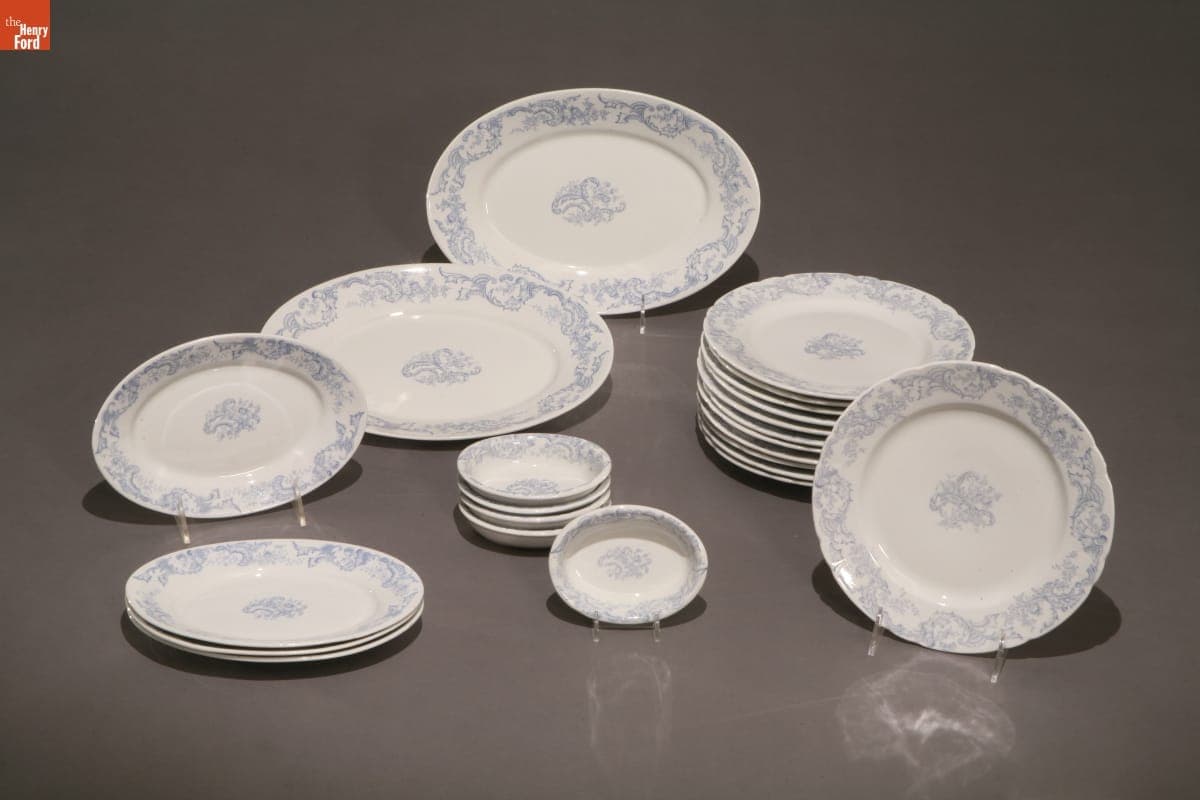
- circa 1890
- Collections - Artifact
Set of Dishes, circa 1890
George Newhall of San Francisco, California, used these dishes for picnics and outings. They were packed in his fancy "Park Drag" carriage. Well-to-do gentlemen like Newhall drove carriages like these to social events like horse races. There they could enjoy an excellent view from their high seat atop the vehicle while servants served them food and drinks from inside.
- Trade Card for Baumgartner & Tindall Dry Goods Store, 1870-1900 - Business establishments during the 1870s to 1890s readily embraced illustrations of popular holidays to market their goods and services. Taking advantage of new color printing methods, companies placed these small trade cards in their product packages or sent them to local merchants to distribute. For advertising during the spring, they used images symbolic of the season, such as flowers, eggs, children, birds, and rabbits.
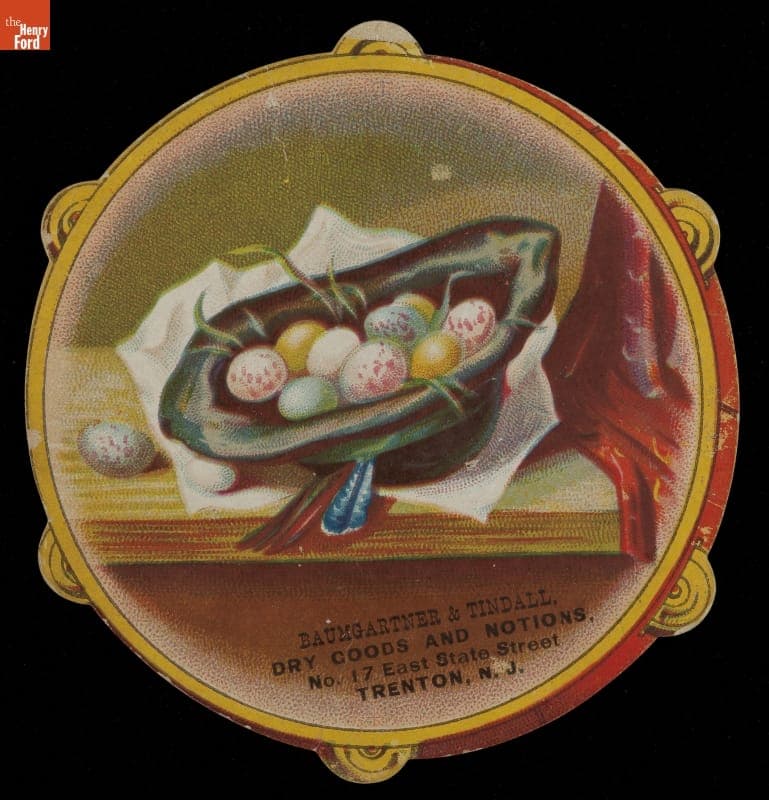
- 1870-1900
- Collections - Artifact
Trade Card for Baumgartner & Tindall Dry Goods Store, 1870-1900
Business establishments during the 1870s to 1890s readily embraced illustrations of popular holidays to market their goods and services. Taking advantage of new color printing methods, companies placed these small trade cards in their product packages or sent them to local merchants to distribute. For advertising during the spring, they used images symbolic of the season, such as flowers, eggs, children, birds, and rabbits.
- Sample Saucer in Pattern of the Truman Service of Presidential China, 1952-1961 - This is a sample saucer from the presidential dinnerware service made by Lenox Incorporated. The pattern was created in 1952 for President Truman and continued in use during the Eisenhower and Kennedy administrations. The china features the seal of the president surrounded by 48 stars. Lenox began making china for the White House in 1918 -- the first American company to do so.
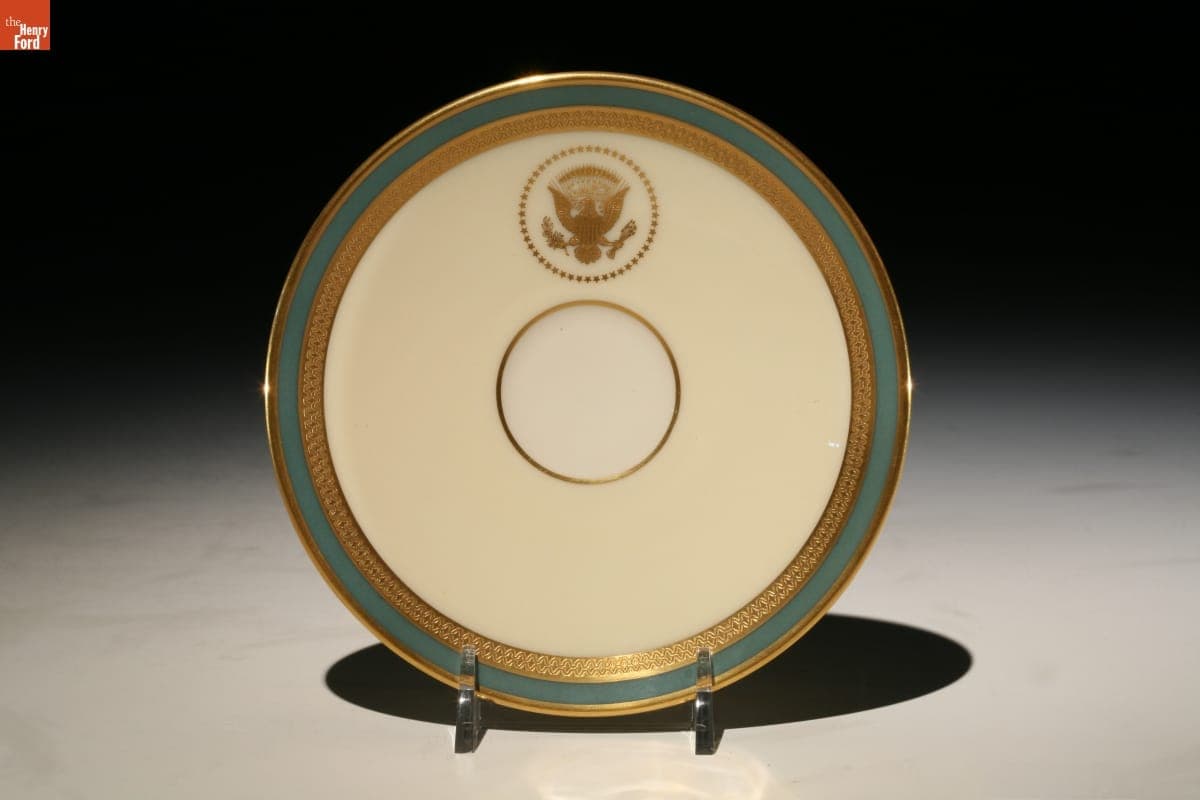
- 1952-1961
- Collections - Artifact
Sample Saucer in Pattern of the Truman Service of Presidential China, 1952-1961
This is a sample saucer from the presidential dinnerware service made by Lenox Incorporated. The pattern was created in 1952 for President Truman and continued in use during the Eisenhower and Kennedy administrations. The china features the seal of the president surrounded by 48 stars. Lenox began making china for the White House in 1918 -- the first American company to do so.
- Horse Registration Tag from the Hewitt Estate, Ringwood Manor, 1918 - Abram Hewitt and Edward Cooper formed the Trenton Iron Works in 1847. Hewitt married Cooper's sister, Sarah Amelia Cooper, in 1855. The Cooper and Hewitt families co-owned several subsequent businesses, and they shared a summer estate, Ringwood Manor, in northern New Jersey. This registration tag was a sort of "license plate" for one of the Hewitts' horses.
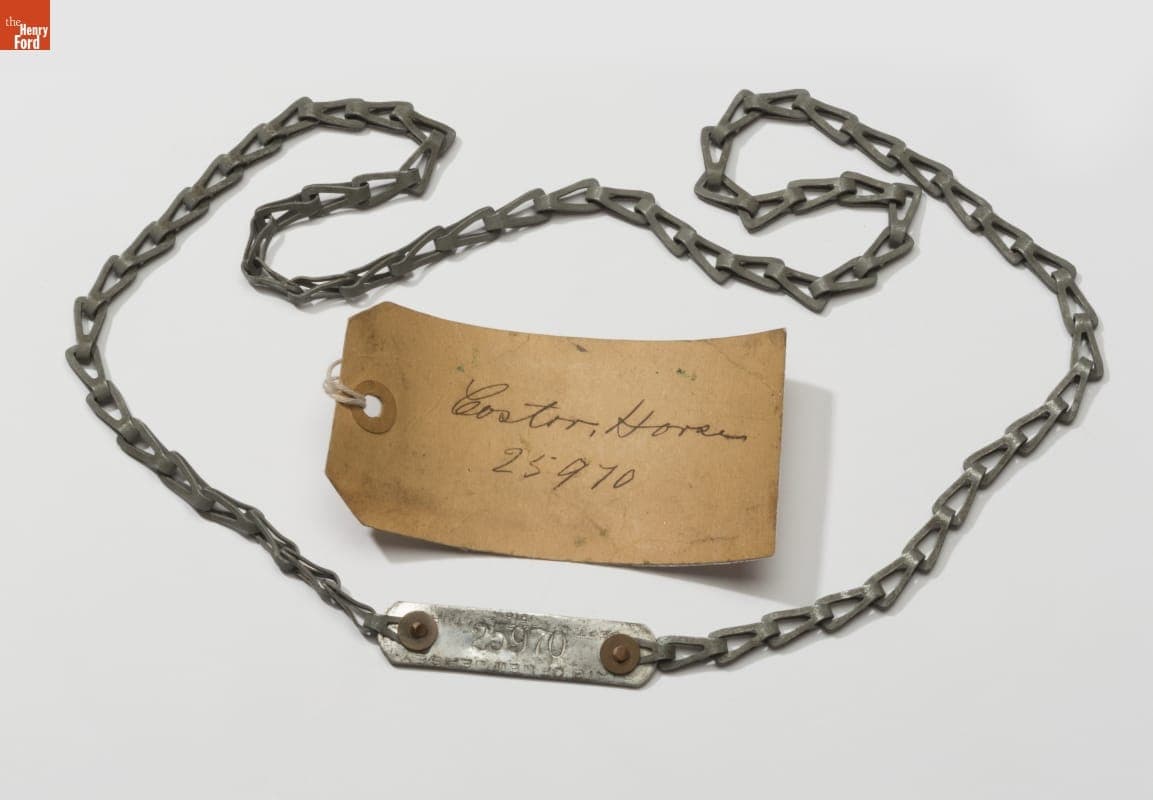
- 1918
- Collections - Artifact
Horse Registration Tag from the Hewitt Estate, Ringwood Manor, 1918
Abram Hewitt and Edward Cooper formed the Trenton Iron Works in 1847. Hewitt married Cooper's sister, Sarah Amelia Cooper, in 1855. The Cooper and Hewitt families co-owned several subsequent businesses, and they shared a summer estate, Ringwood Manor, in northern New Jersey. This registration tag was a sort of "license plate" for one of the Hewitts' horses.
- Horse Registration Tag from the Hewitt Estate, Ringwood Manor, 1918 - Abram Hewitt and Edward Cooper formed the Trenton Iron Works in 1847. Hewitt married Cooper's sister, Sarah Amelia Cooper, in 1855. The Cooper and Hewitt families co-owned several subsequent businesses, and they shared a summer estate, Ringwood Manor, in northern New Jersey. This registration tag was a sort of "license plate" for one of the Hewitts' horses.
- 1918
- Collections - Artifact
Horse Registration Tag from the Hewitt Estate, Ringwood Manor, 1918
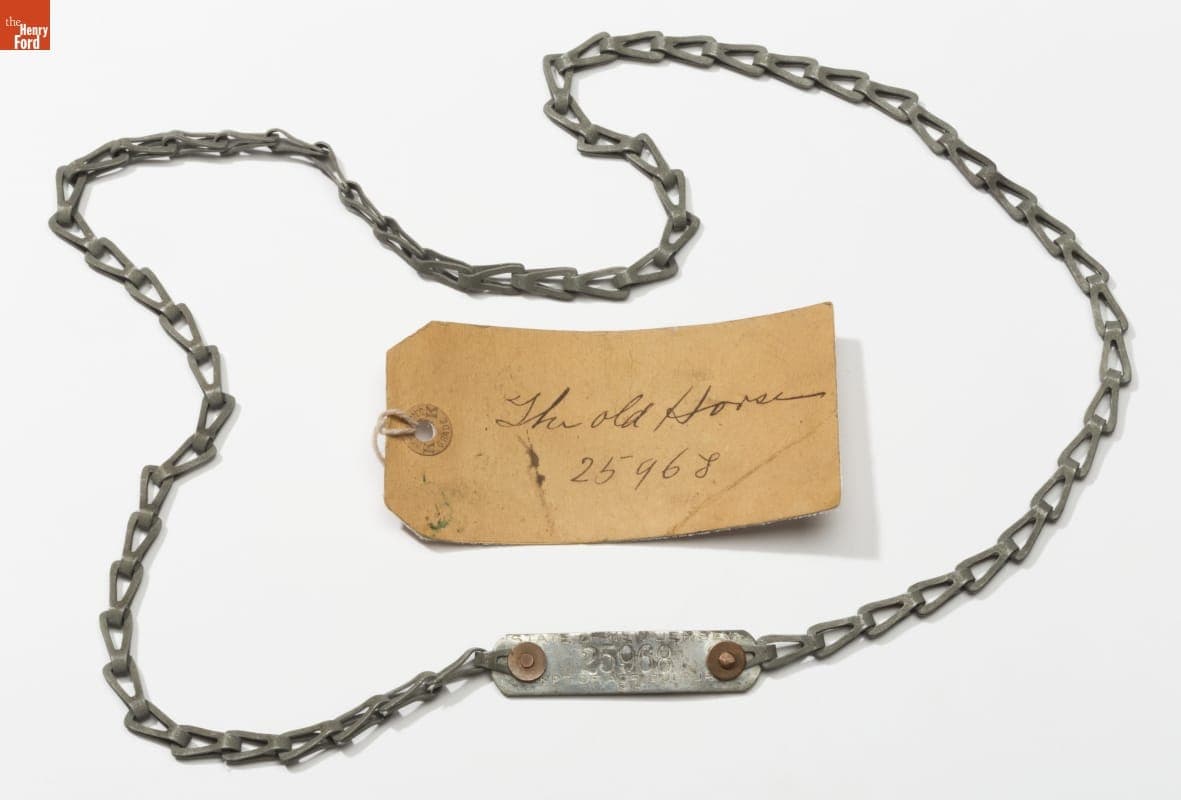
Abram Hewitt and Edward Cooper formed the Trenton Iron Works in 1847. Hewitt married Cooper's sister, Sarah Amelia Cooper, in 1855. The Cooper and Hewitt families co-owned several subsequent businesses, and they shared a summer estate, Ringwood Manor, in northern New Jersey. This registration tag was a sort of "license plate" for one of the Hewitts' horses.
- Westinghouse Model AW200 Vacuum Tube, 1930-1934 -
- 1930-1934
- Collections - Artifact
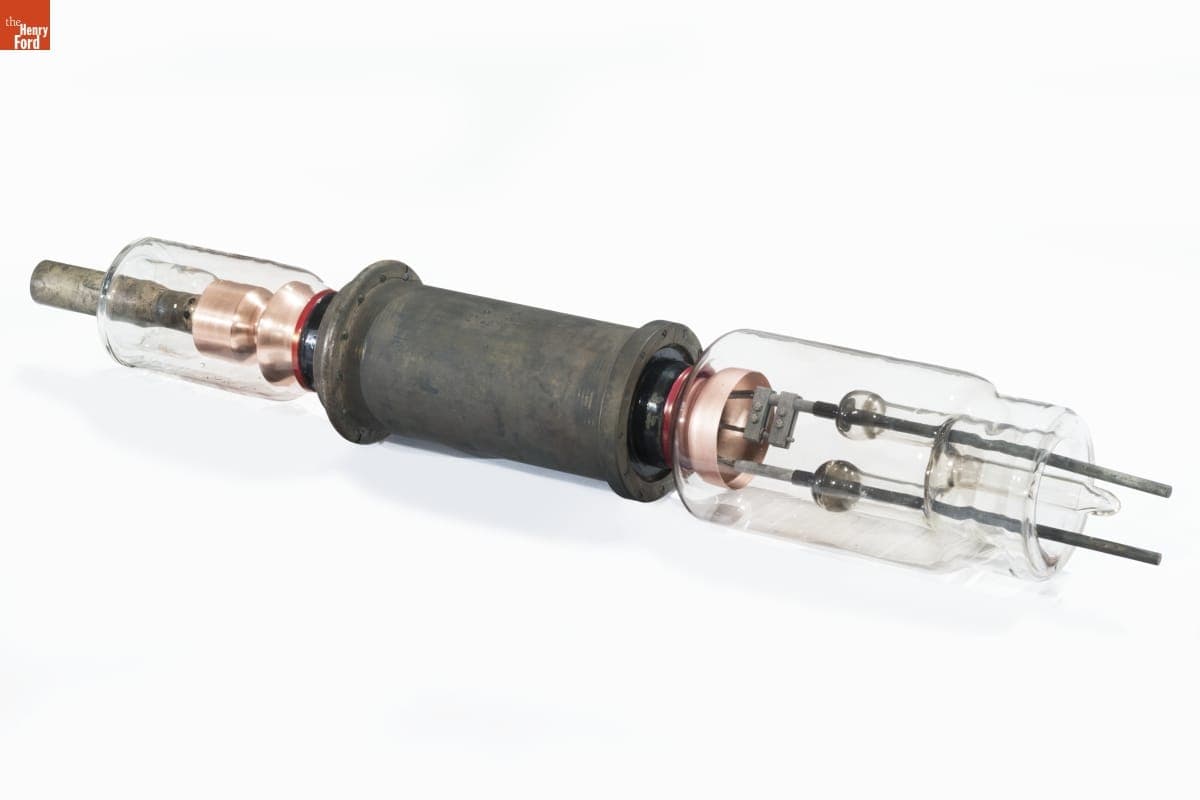
Westinghouse Model AW200 Vacuum Tube, 1930-1934