Search
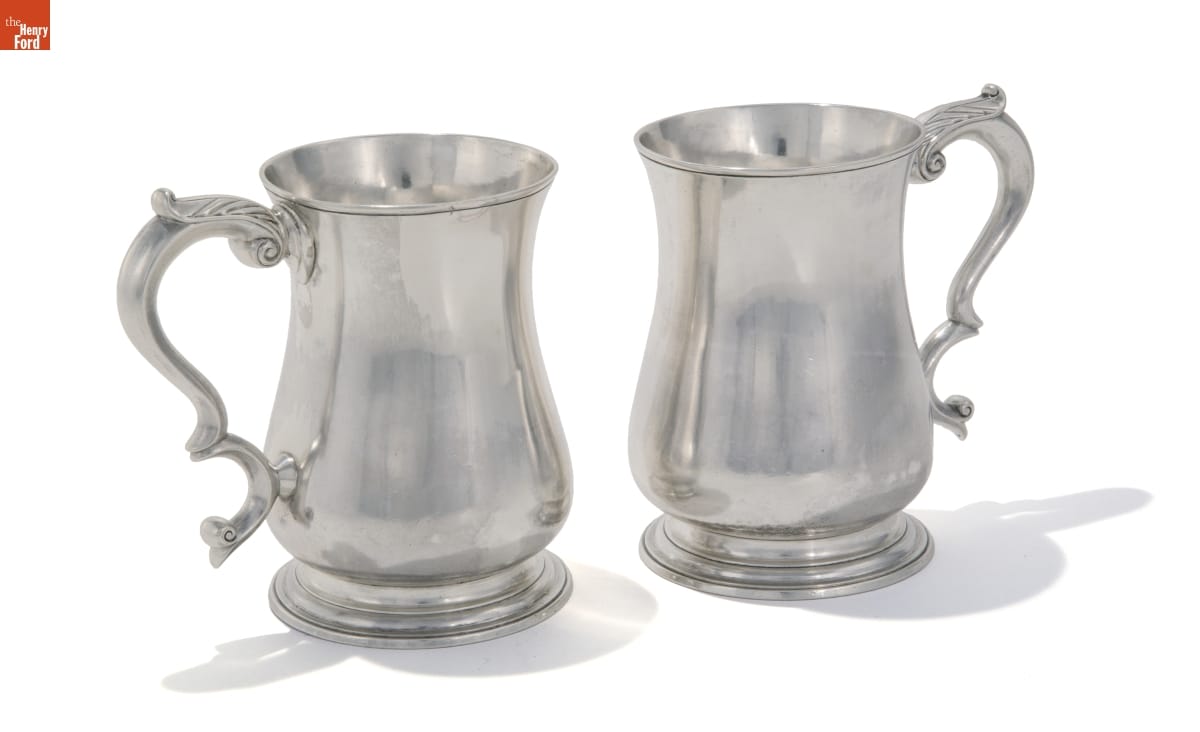
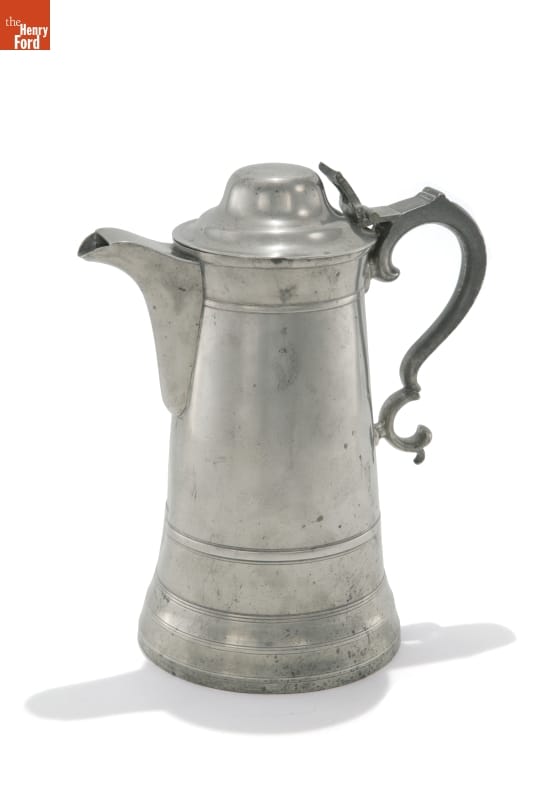
- Flagon, 1817-1856 -

- 1817-1856
- Collections - Artifact
Flagon, 1817-1856
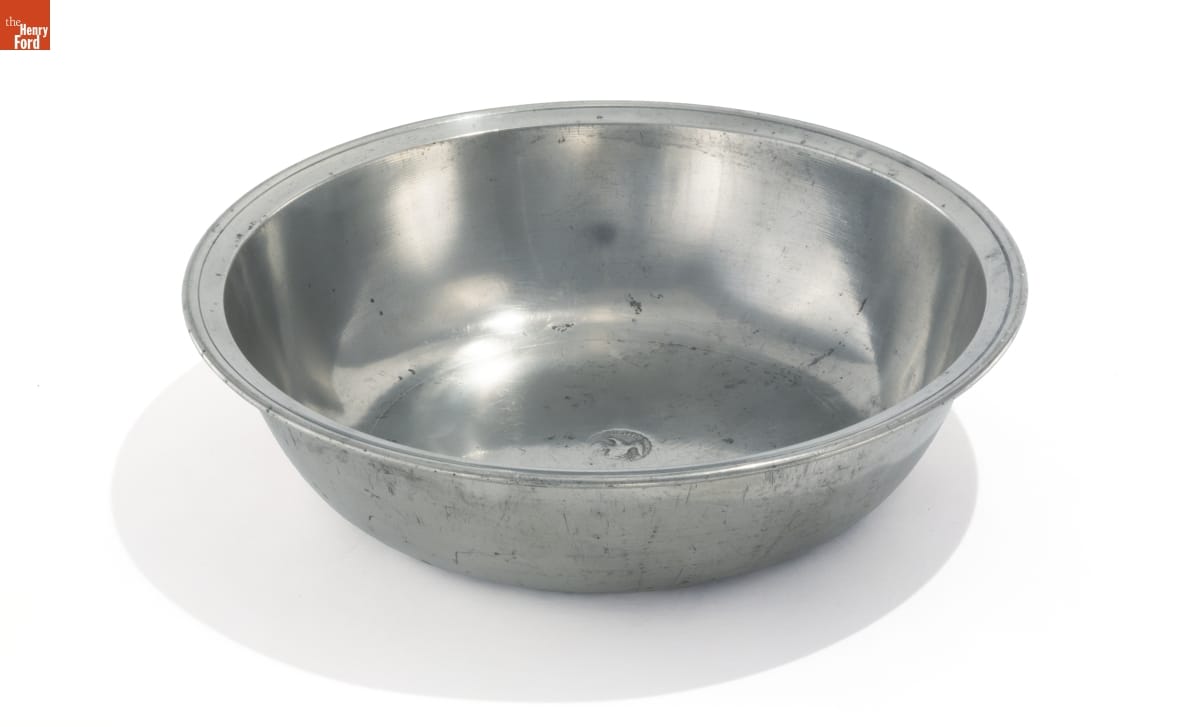
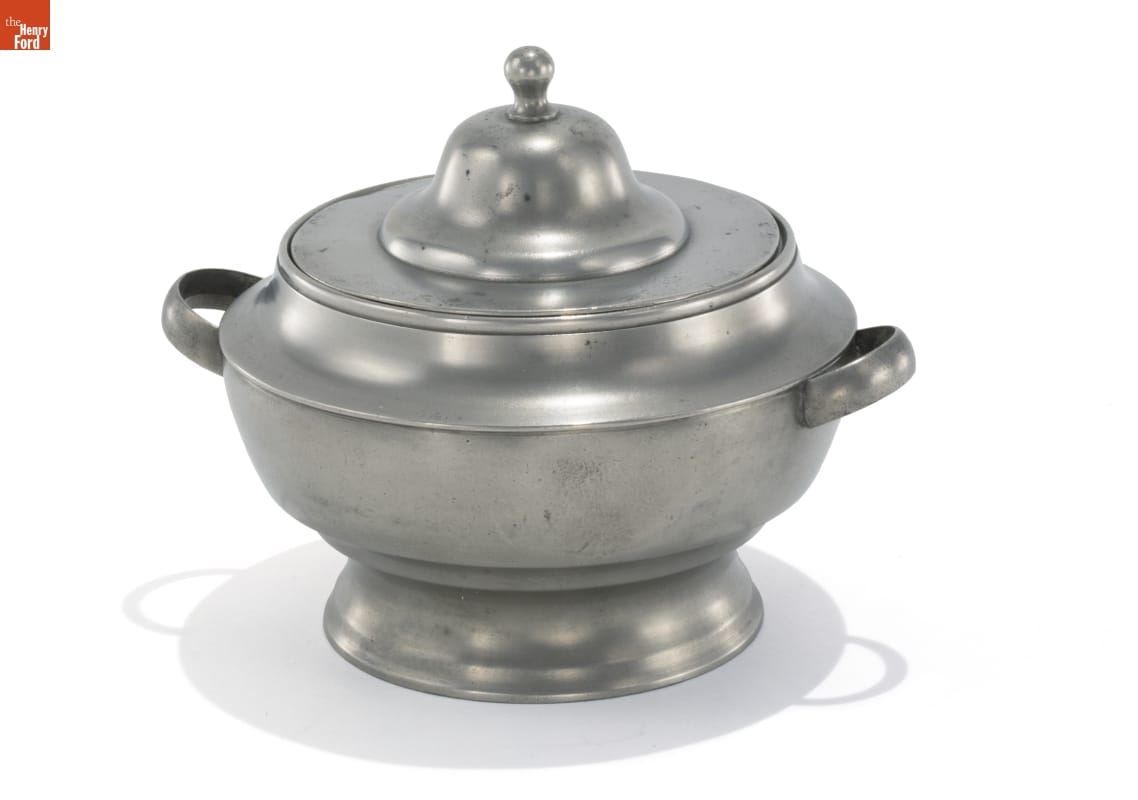
- Basin, 1817-1856 - Pewter goods could be found in many American homes and public buildings in the late 18th and early 19th centuries. Most Americans of modest means could afford to have pewter spoons, ladles, tankards, dishes, plates or other items. Basins, such as this one, generally held puddings, stews or other semi-liquid foods served at meals.

- 1817-1856
- Collections - Artifact
Basin, 1817-1856
Pewter goods could be found in many American homes and public buildings in the late 18th and early 19th centuries. Most Americans of modest means could afford to have pewter spoons, ladles, tankards, dishes, plates or other items. Basins, such as this one, generally held puddings, stews or other semi-liquid foods served at meals.
- Sugar Bowl, 1828-1845 - Pewter goods could be found in many American homes and public buildings in the late 18th and early 19th centuries. Most Americans of modest means could afford to have pewter spoons, tankards, dishes, plates or other items, such as this covered sugar bowl.

- 1828-1845
- Collections - Artifact
Sugar Bowl, 1828-1845
Pewter goods could be found in many American homes and public buildings in the late 18th and early 19th centuries. Most Americans of modest means could afford to have pewter spoons, tankards, dishes, plates or other items, such as this covered sugar bowl.
- Gordon Oscillating Press, circa 1864 - Large cylinder presses were typically used to print newspapers. A curved printing plate attached to the drum rolled over the flat paper surface, leaving an impression behind. Designed for higher capacity than smaller platen hand presses, cylinder and rotary presses produced thousands of copies per hour. This particular press was used to print the Constantine Advertiser Record in Michigan.

- circa 1864
- Collections - Artifact
Gordon Oscillating Press, circa 1864
Large cylinder presses were typically used to print newspapers. A curved printing plate attached to the drum rolled over the flat paper surface, leaving an impression behind. Designed for higher capacity than smaller platen hand presses, cylinder and rotary presses produced thousands of copies per hour. This particular press was used to print the Constantine Advertiser Record in Michigan.
- Trade Card for Rosenbloom Brothers, Providence, Rhode Island, 1882 - Business establishments during the 1870s to 1890s readily embraced illustrations of popular holidays to market their goods and services. Taking advantage of new color printing methods, companies placed these small trade cards in their product packages or sent them to local merchants to distribute. For advertising during the spring, they used images symbolic of the season, such as flowers, eggs, children, birds, and rabbits.

- 1882
- Collections - Artifact
Trade Card for Rosenbloom Brothers, Providence, Rhode Island, 1882
Business establishments during the 1870s to 1890s readily embraced illustrations of popular holidays to market their goods and services. Taking advantage of new color printing methods, companies placed these small trade cards in their product packages or sent them to local merchants to distribute. For advertising during the spring, they used images symbolic of the season, such as flowers, eggs, children, birds, and rabbits.
- Trade Card for Prof. Horsford's Phosphatic Baking Powder, Rumford Chemical Works, 1869-1895 - In the last third of the nineteenth century, an unprecedented variety of consumer goods and services flooded the American market. Advertisers, armed with new methods of color printing, bombarded potential customers with trade cards. Americans enjoyed and often saved the vibrant little advertisements found in product packages or distributed by local merchants. Many survive as historical records of commercialism in the United States.

- 1869-1895
- Collections - Artifact
Trade Card for Prof. Horsford's Phosphatic Baking Powder, Rumford Chemical Works, 1869-1895
In the last third of the nineteenth century, an unprecedented variety of consumer goods and services flooded the American market. Advertisers, armed with new methods of color printing, bombarded potential customers with trade cards. Americans enjoyed and often saved the vibrant little advertisements found in product packages or distributed by local merchants. Many survive as historical records of commercialism in the United States.
- Trade Card for Horsford's Self-Raising Bread Preparation, Rumford Chemical Works, 1876-1900 - In the last third of the nineteenth century, an unprecedented variety of consumer goods and services flooded the American market. Advertisers, armed with new methods of color printing, bombarded potential customers with trade cards. Americans enjoyed and often saved the vibrant little advertisements found in product packages or distributed by local merchants. Many survive as historical records of commercialism in the United States.

- 1876-1900
- Collections - Artifact
Trade Card for Horsford's Self-Raising Bread Preparation, Rumford Chemical Works, 1876-1900
In the last third of the nineteenth century, an unprecedented variety of consumer goods and services flooded the American market. Advertisers, armed with new methods of color printing, bombarded potential customers with trade cards. Americans enjoyed and often saved the vibrant little advertisements found in product packages or distributed by local merchants. Many survive as historical records of commercialism in the United States.
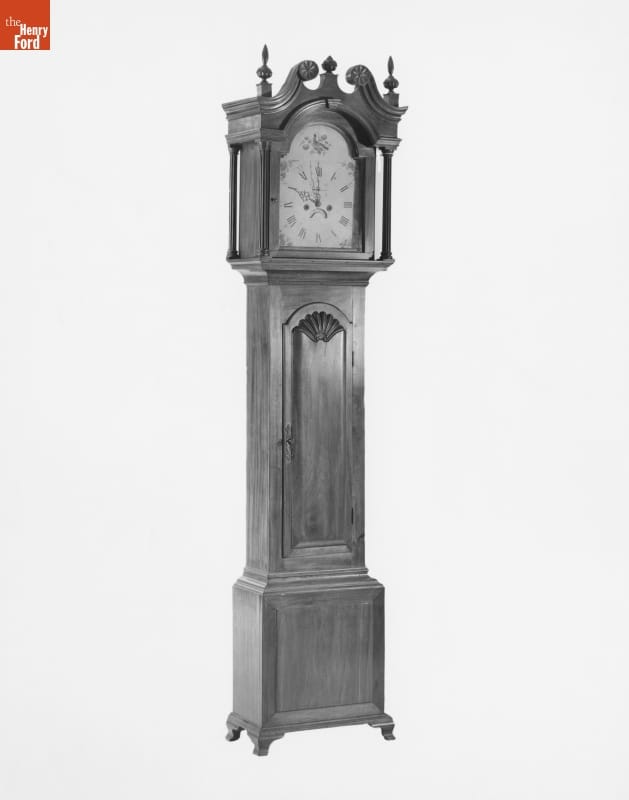
- Tall Case Clock, Made by John Goddard, 1770-1785 - This 18th-century, tall case clock was made by John Goddard, a renowned Newport, Rhode Island, cabinetmaker. Goddard used a cherry-stained mahogany case to house the English-made clockworks. Its shell motif, seen adorning the case's door front, was a favorite ornament in Goddard's furniture and points to its Newport origins. This piece probably graced a wealthy Rhode Island merchant's residence.
- 1770-1785
- Collections - Artifact
Tall Case Clock, Made by John Goddard, 1770-1785
This 18th-century, tall case clock was made by John Goddard, a renowned Newport, Rhode Island, cabinetmaker. Goddard used a cherry-stained mahogany case to house the English-made clockworks. Its shell motif, seen adorning the case's door front, was a favorite ornament in Goddard's furniture and points to its Newport origins. This piece probably graced a wealthy Rhode Island merchant's residence.
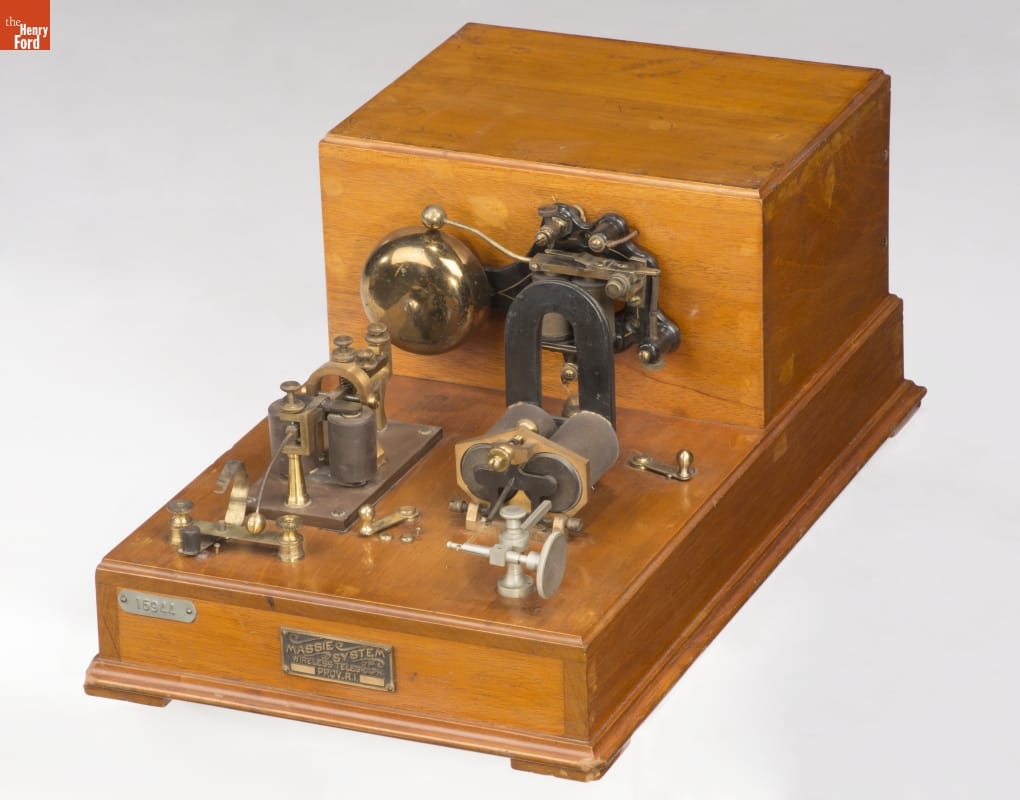
- Bell Alarm Used with Massie Radio Receiver, 1903-1912 -
- 1903-1912
- Collections - Artifact
Bell Alarm Used with Massie Radio Receiver, 1903-1912
- Martha W. Martin Autograph Album, 1837-1858 -
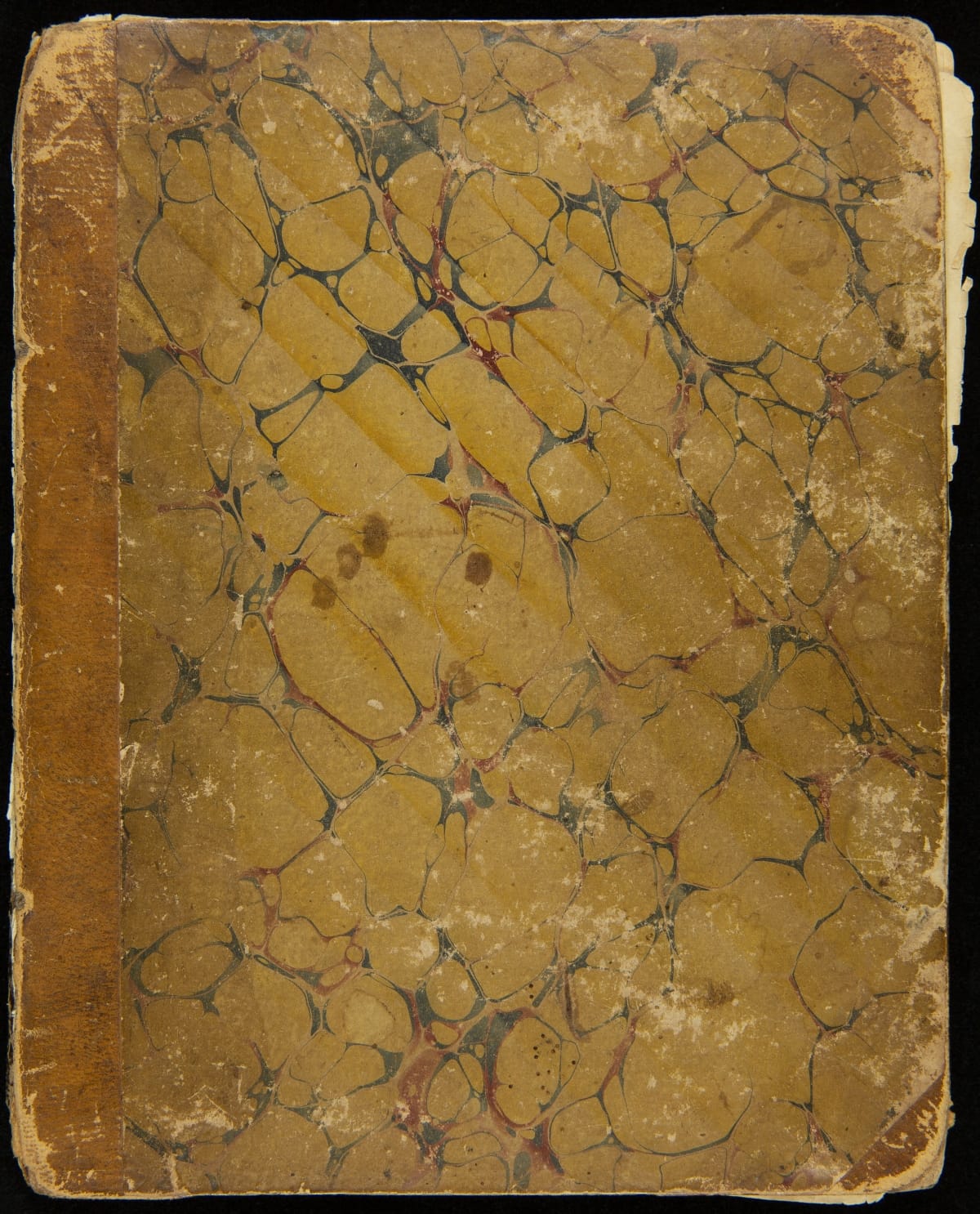
- 1837-1858
- Collections - Artifact
Martha W. Martin Autograph Album, 1837-1858